 The sheet, as you receive it
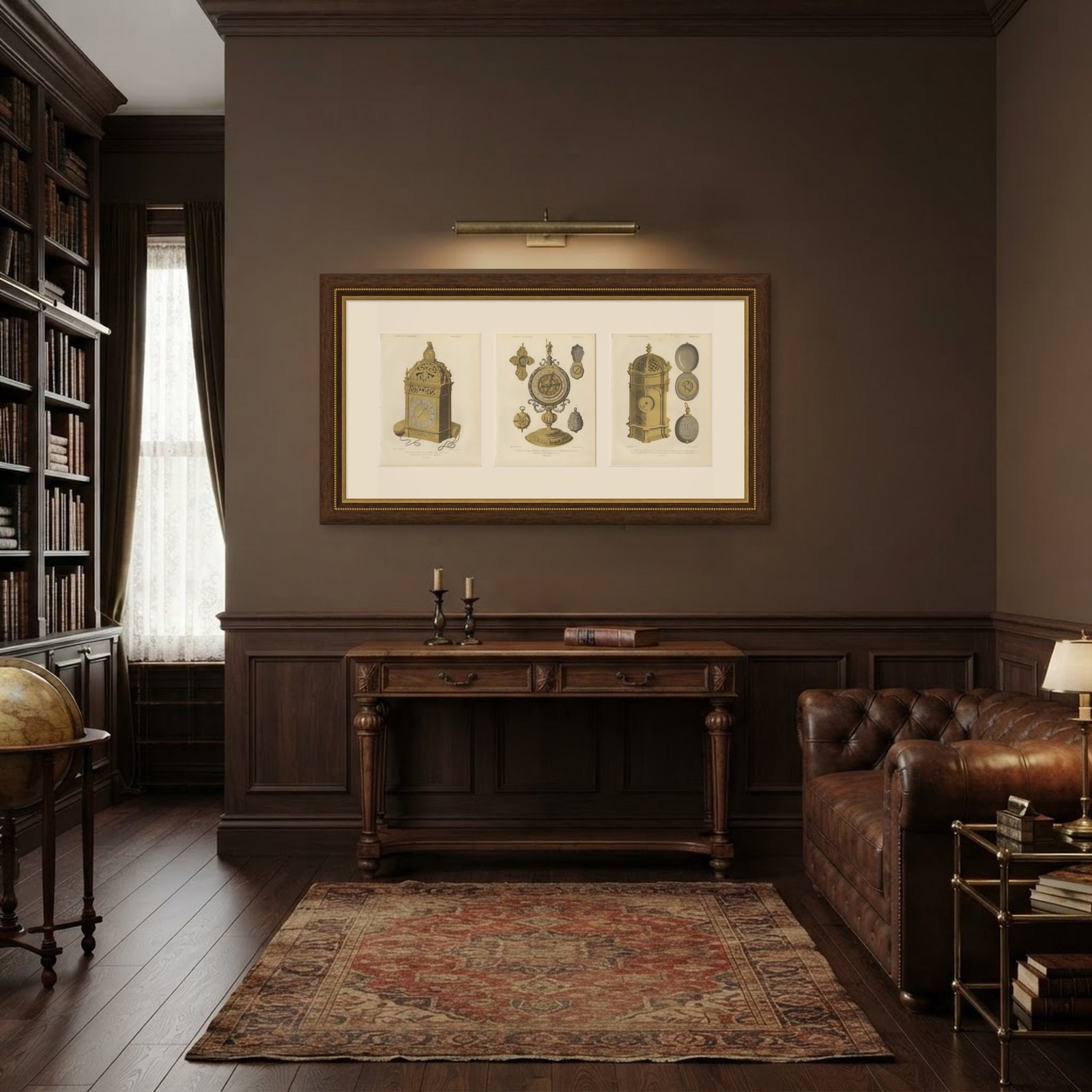 In the room 1
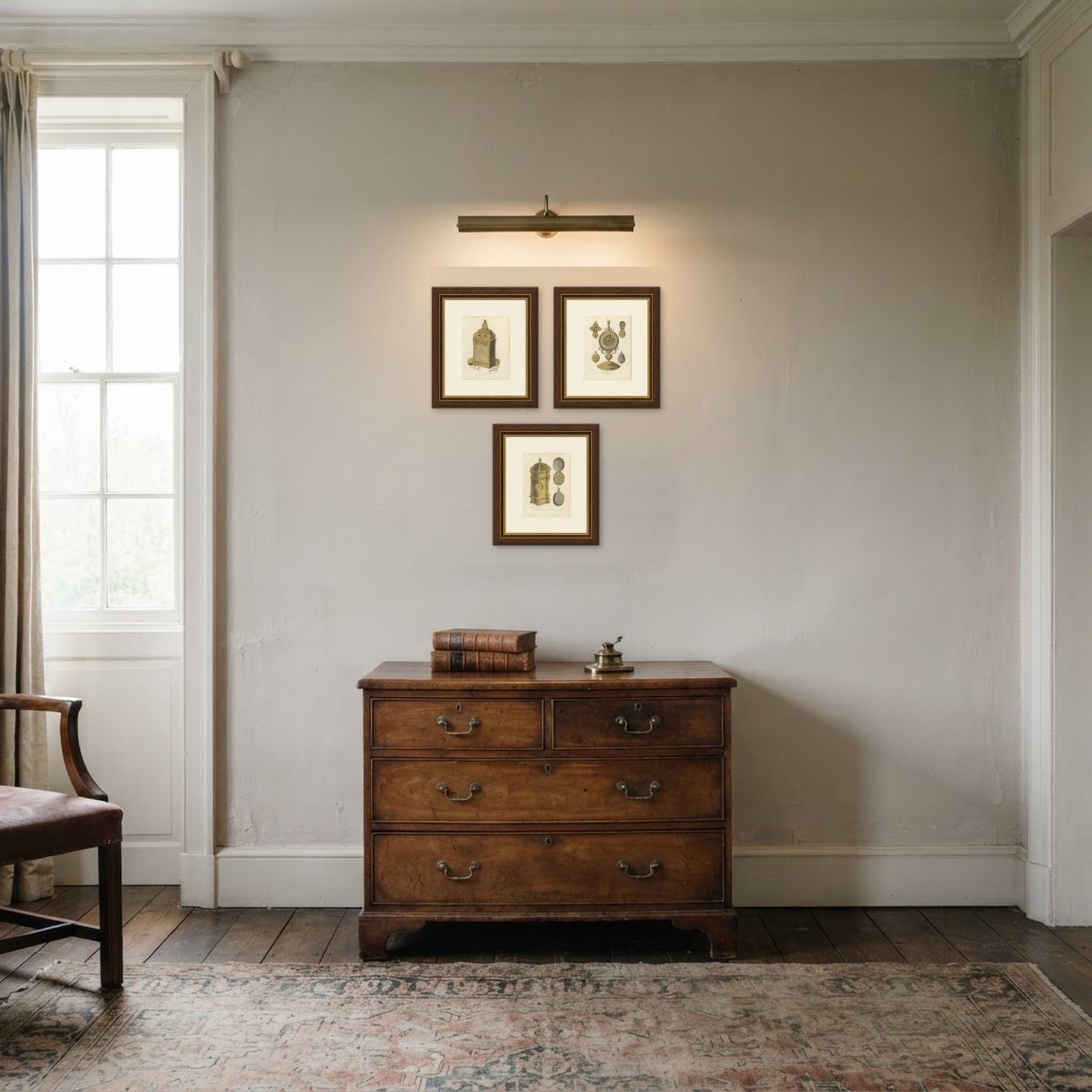


Interior designers: BarTrade members buy at their trade price. How it works
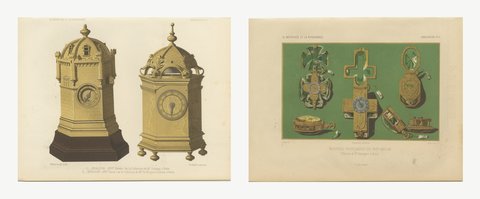
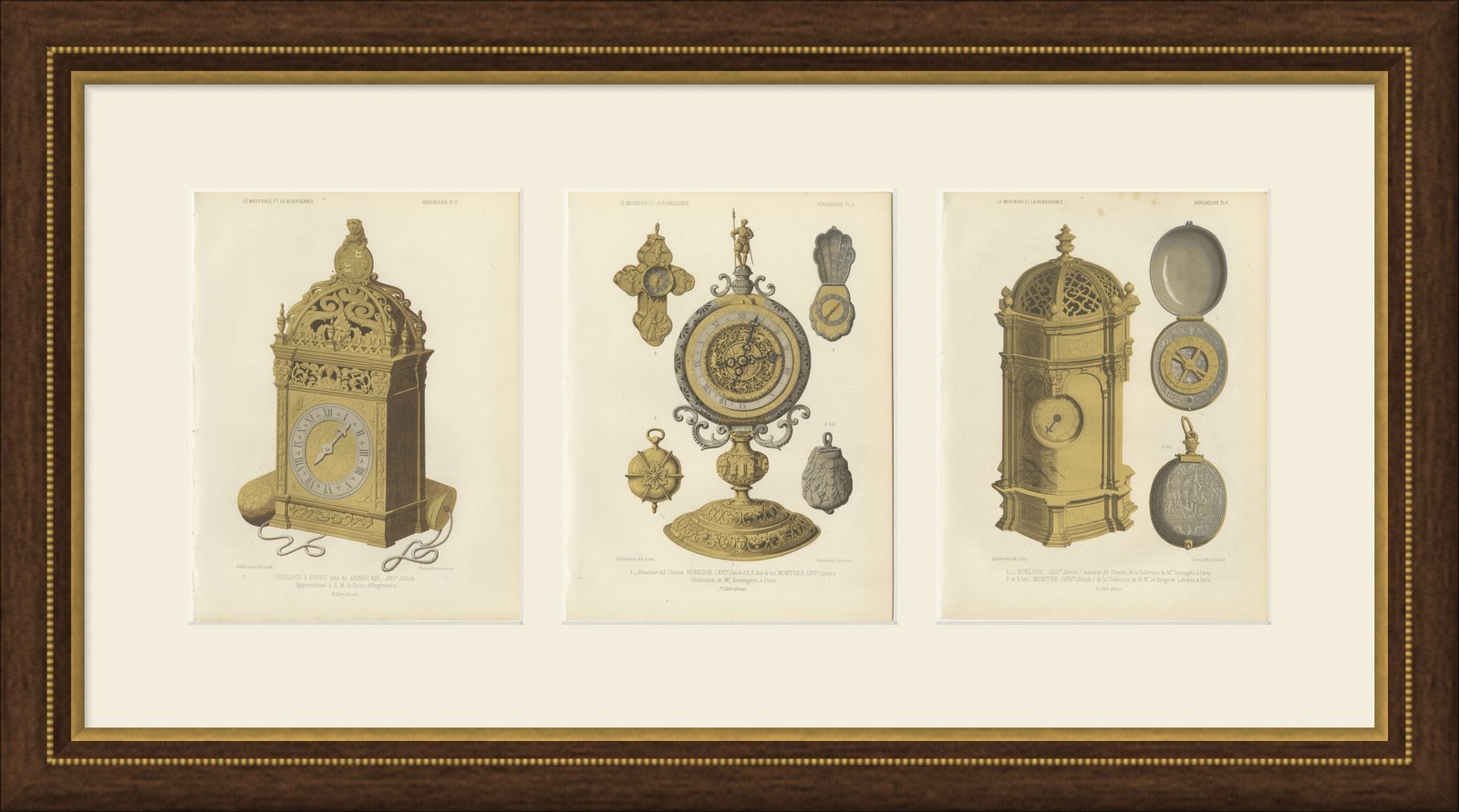
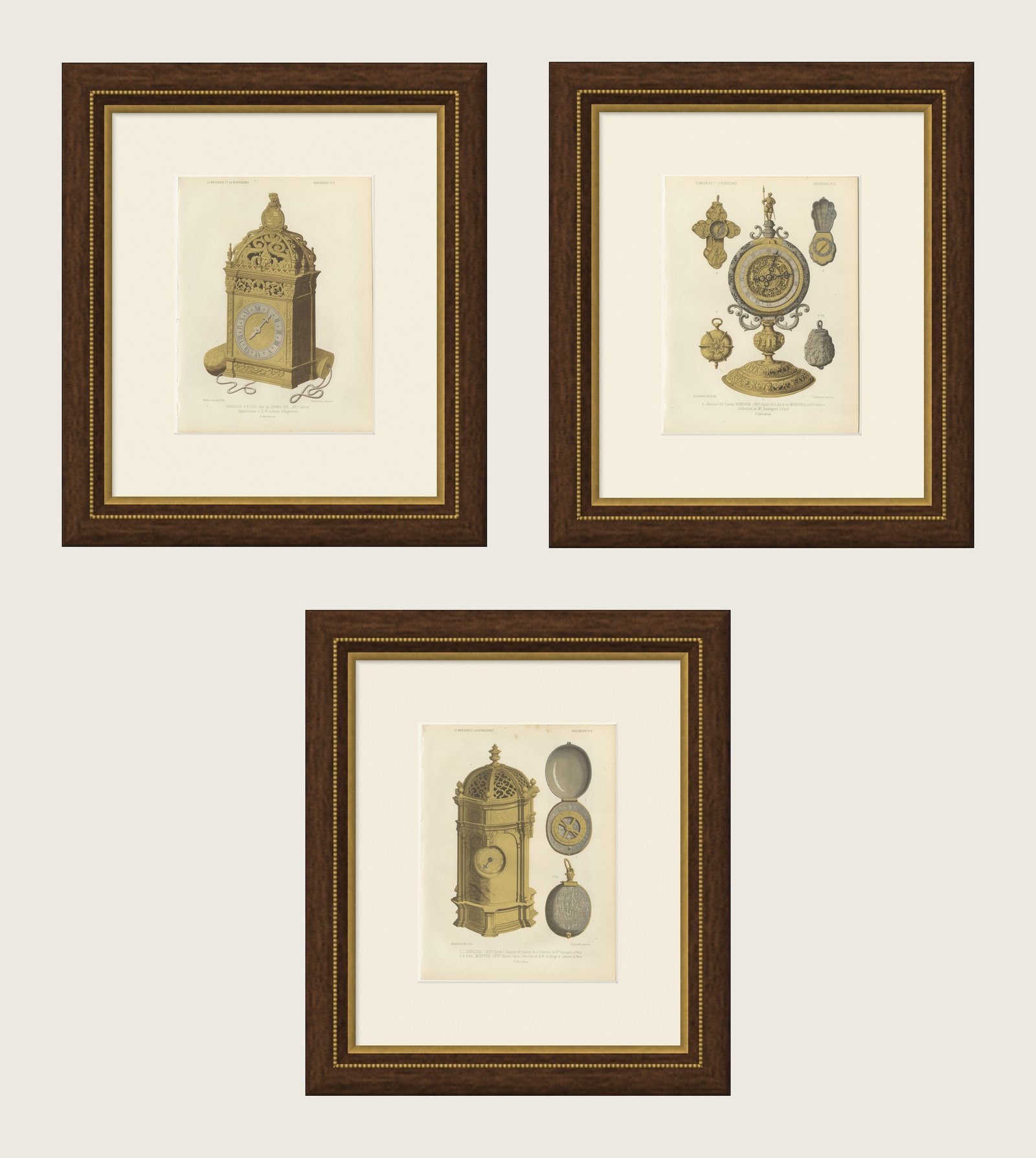
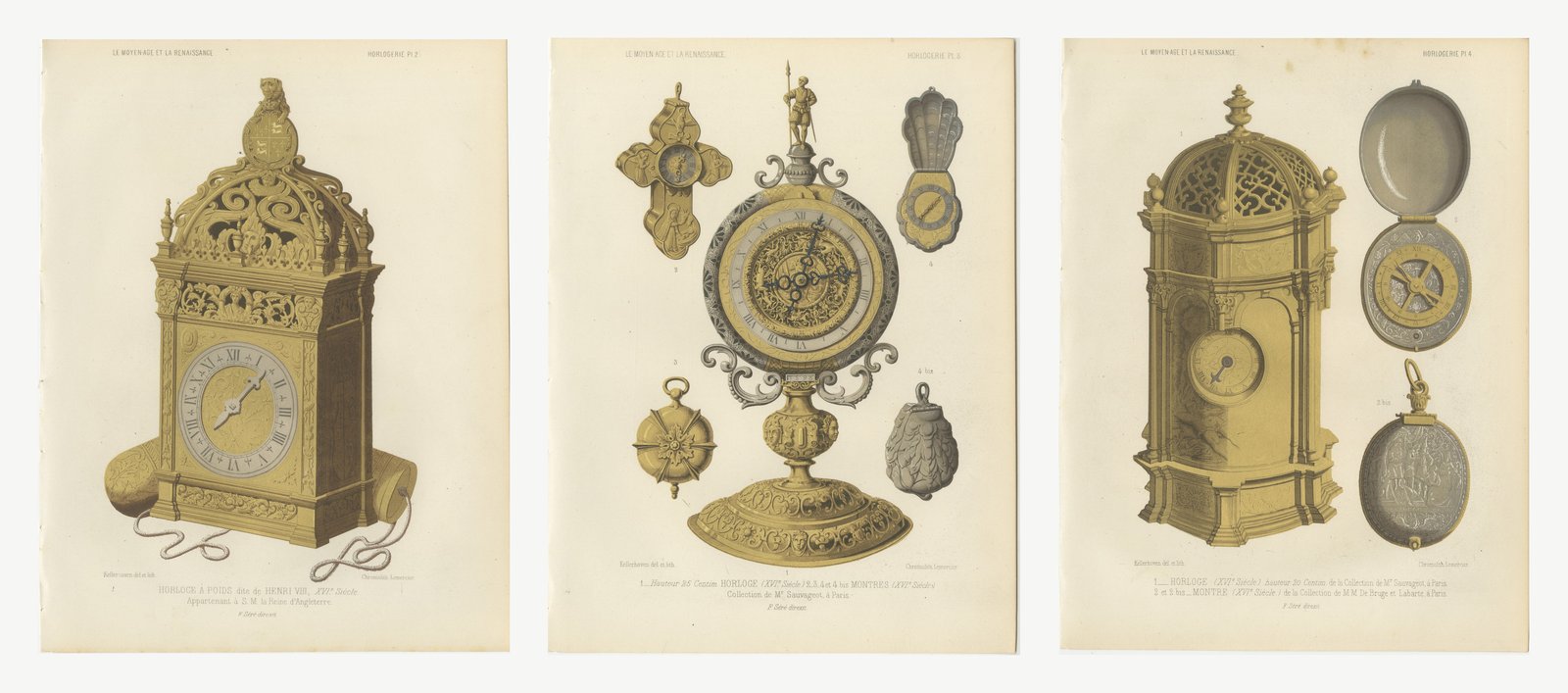
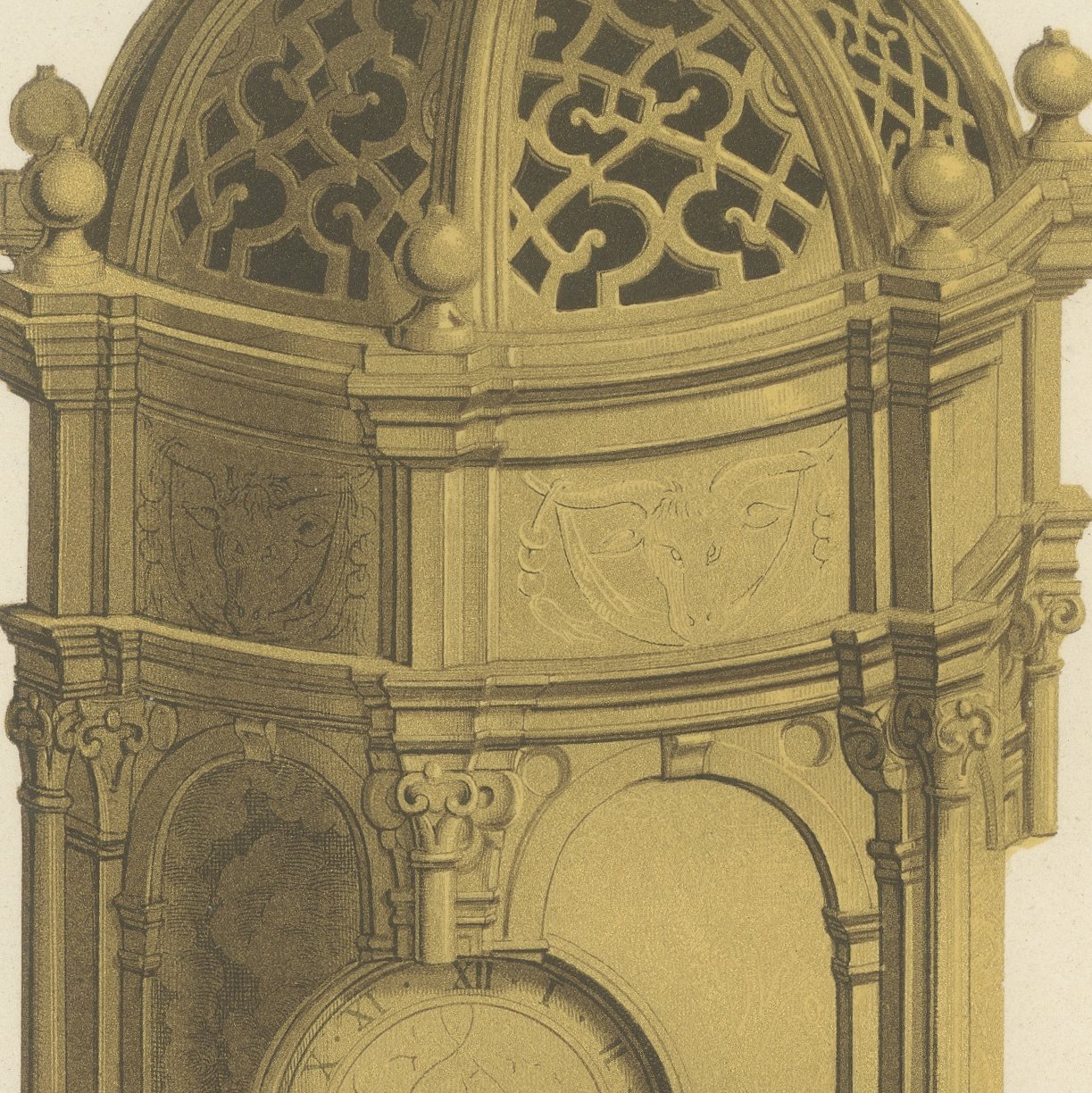
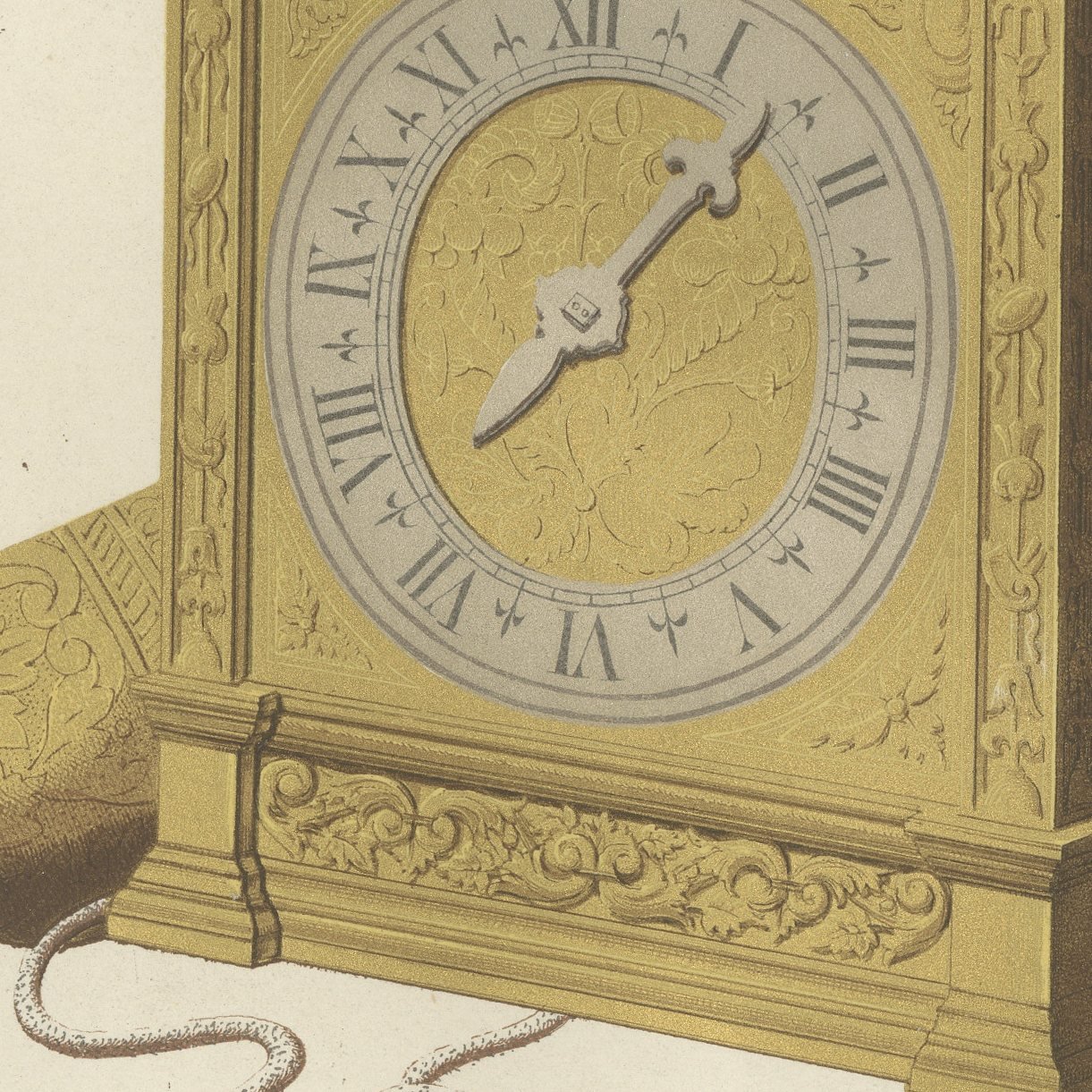
A set of three original antique chromolithographs of sixteenth century clocks and watches, sold together and not separately. All three were drawn and lithographed by Kellerhoven for the Horlogerie section of Lacroix and Sere's Le Moyen Age et la Renaissance, and each is lettered with the Paris collection the object came from: the royal collection in England for the first, and the cabinets of Monsieur Sauvageot and of Messieurs De Bruge and Labarte for the other two. The objects are drawn in gold and brown against open cream grounds, with the dials, the chasing and the pierced work of the movements rendered exactly. They are three original sheets sold together as one lot, and the set is never split.
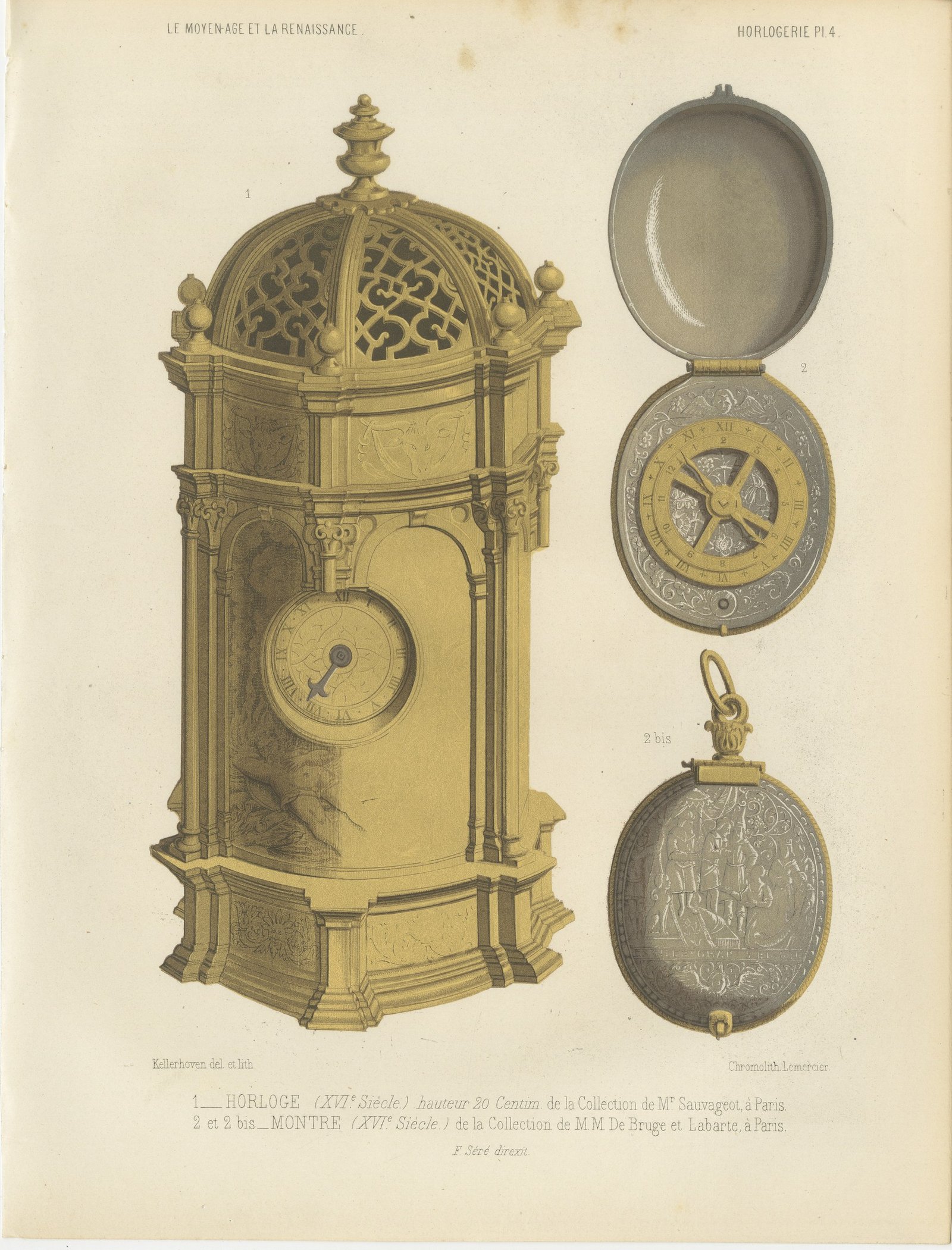
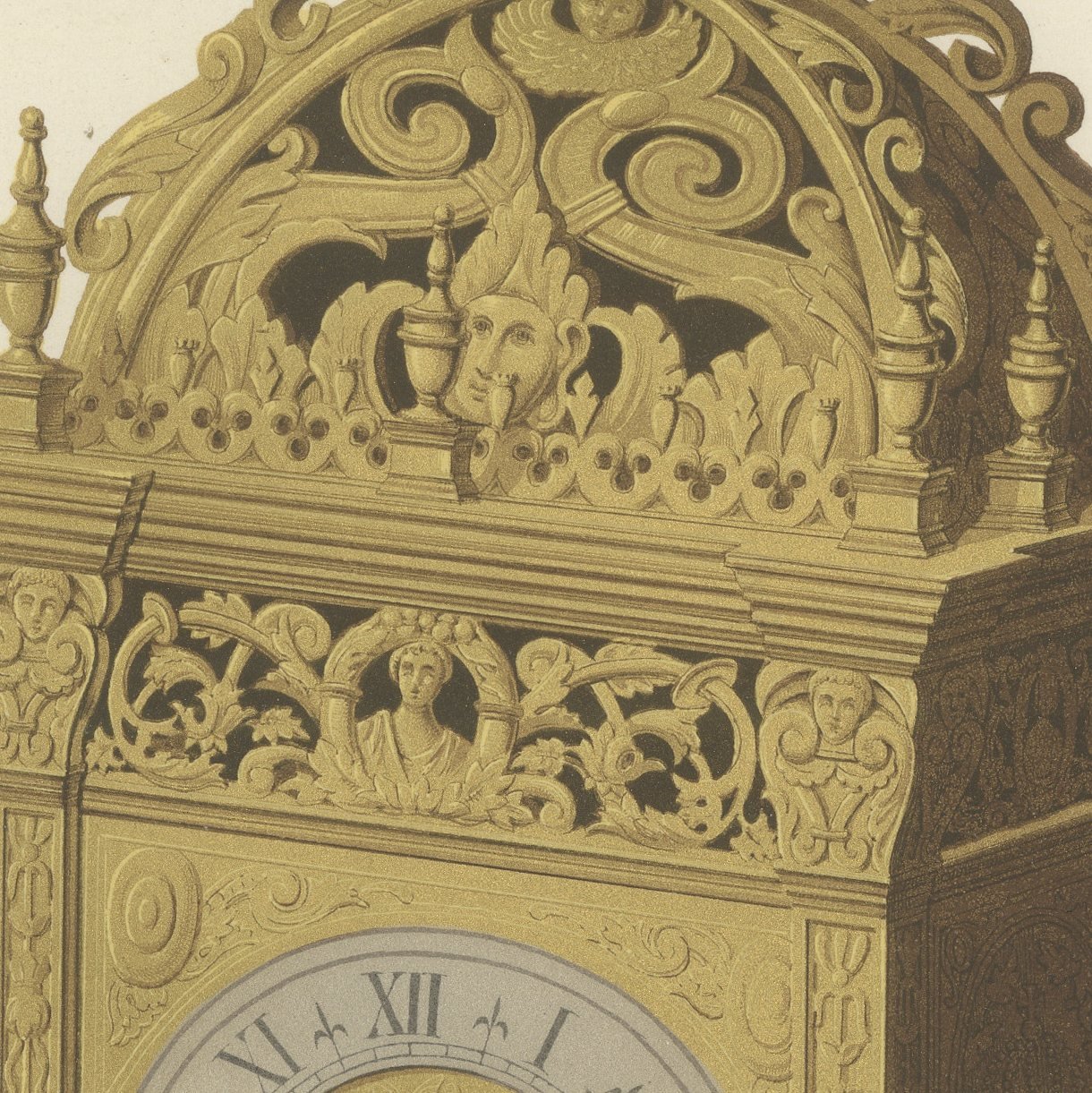
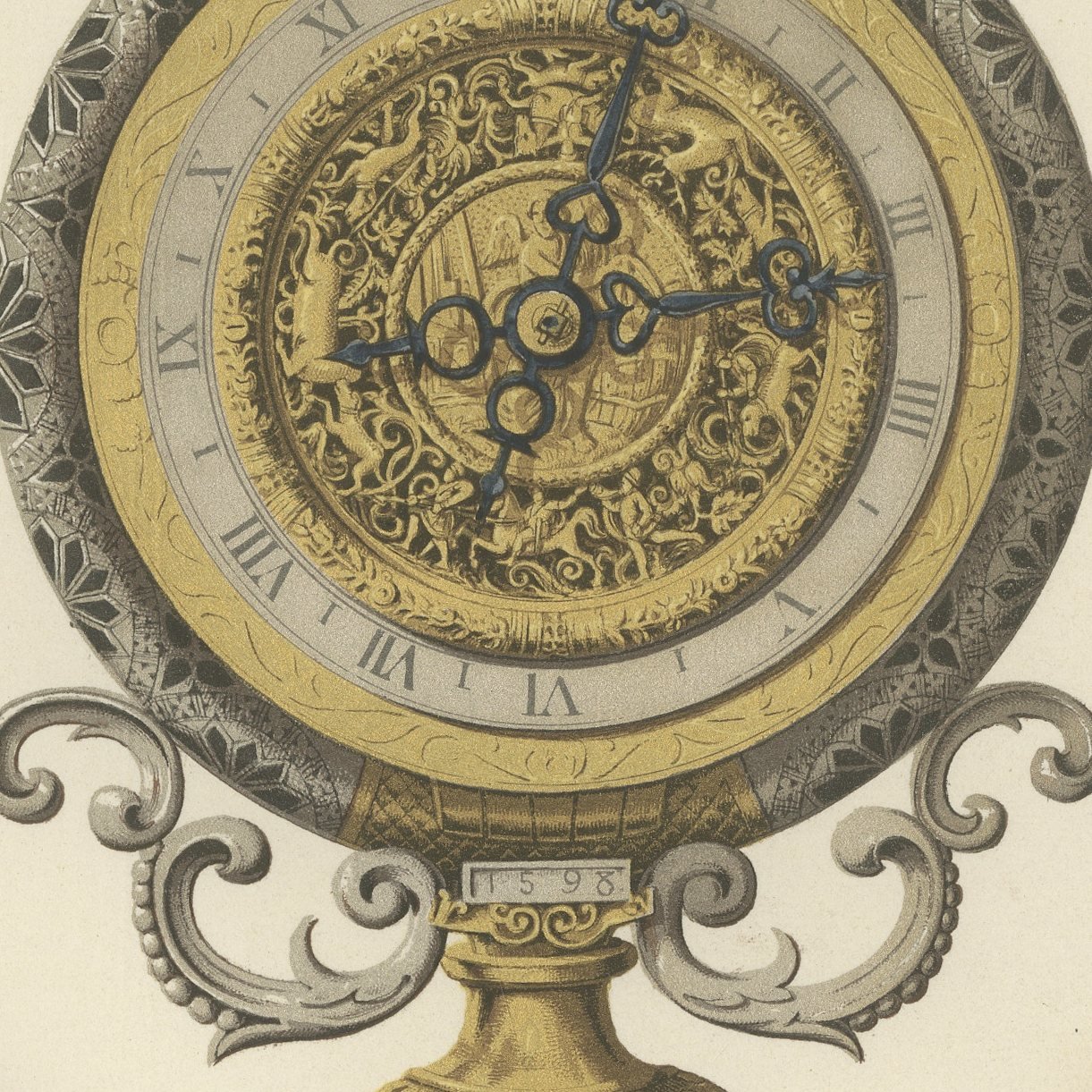
The first of the three is the clock said to have belonged to Henry the Eighth and then in the possession of Queen Victoria: a gilt case chased with grotesque ornament, a square silvered dial with Gothic numerals, and two long cords with their weights falling away beneath it. The second gathers a clock twenty five centimeters high with a figure of an armed man on its dome, together with four watches, one of them a crucifix watch and one a cockle shell, all lettered as from the collection of Monsieur Sauvageot in Paris. The third shows a clock twenty centimeters high from the Sauvageot collection beside a watch drawn twice, once closed and once with the case opened to show the pierced and engraved movement within, from the collection of Messieurs De Bruge and Labarte.
Le Moyen Age et la Renaissance was issued in Paris between 1848 and 1851 in five volumes under the literary direction of Paul Lacroix and the artistic direction of Ferdinand Sere. This plate belongs to the second volume, dated 1849. Its chromolithographs were drawn from the originals by artists sent into the libraries and collections of France, Belgium and Germany, and printed by Lemercier of Paris or by Engelmann et Graf. Early horology has one of the most committed collector followings of any antiquarian subject, and colored plates of sixteenth century clocks are far less common than the monochrome technical engravings that fill most horological books. The three sheets share a size, an upright format, a draughtsman and a palette, so they hang as a column or a row without any further thought. They are the natural group for a watchmaker's office, a collector's cabinet or a study.
Light uneven toning, browner towards the edges. Marked handling soiling along the edges of all three sheets. Scattered foxing in the margins of all three sheets. Slight wear at the corners of two of the three sheets.
These are original antique prints, not modern reproductions. This item is sold unframed.