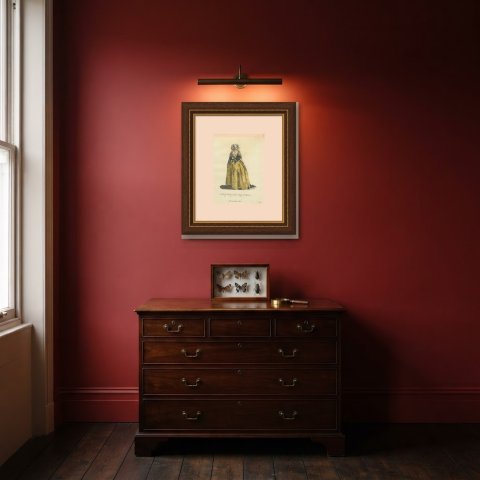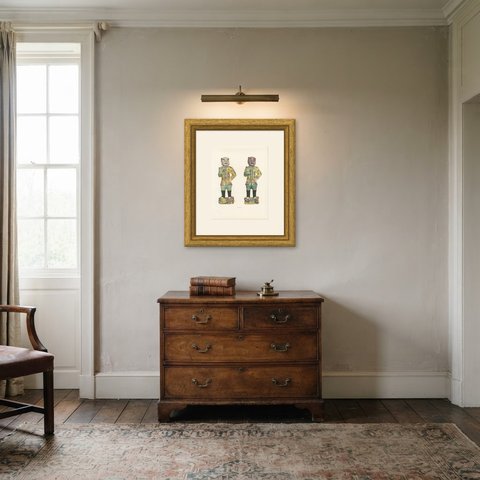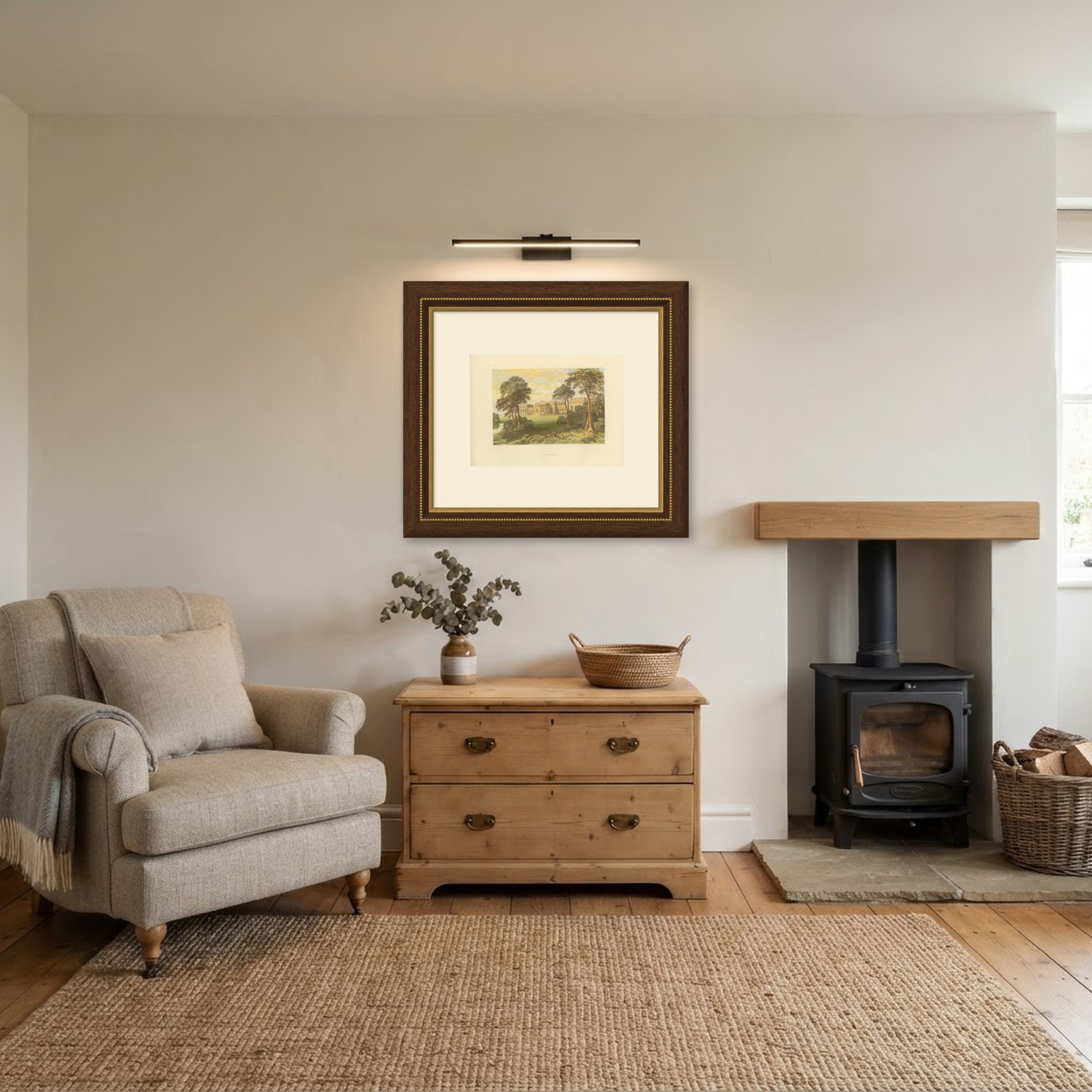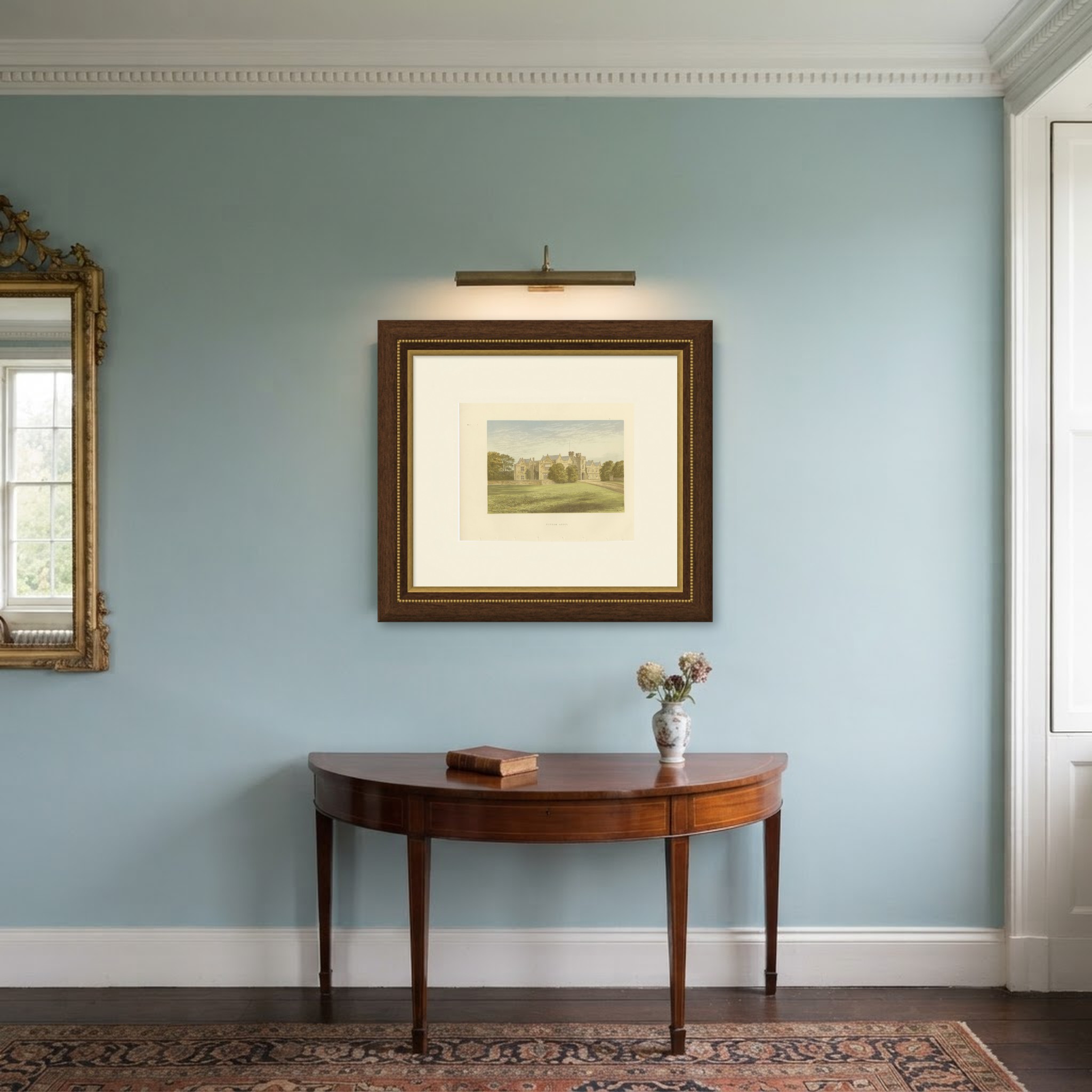
 The sheet, as you receive it
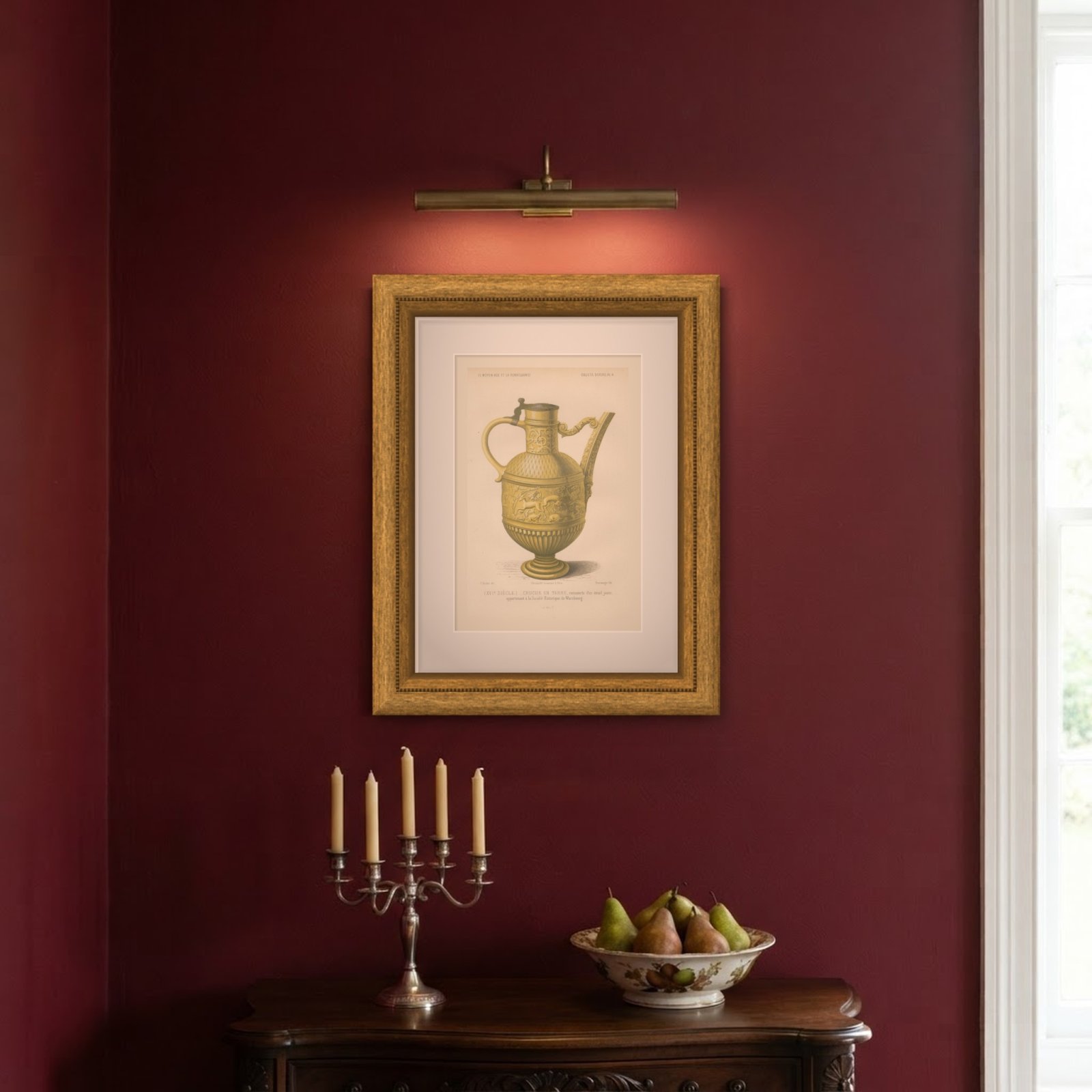
 In the room
Interior designers: BarTrade members buy at their trade price. How it works
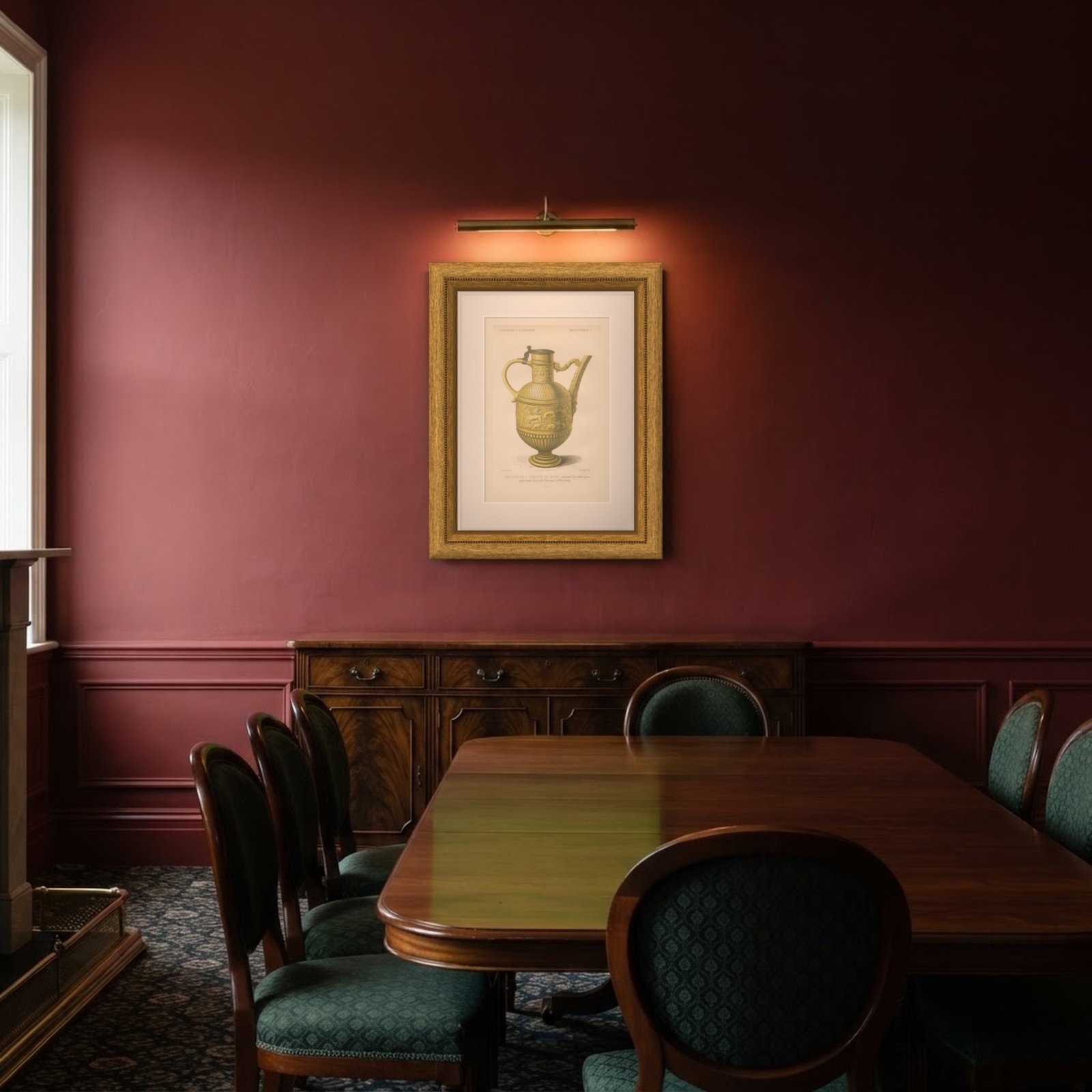
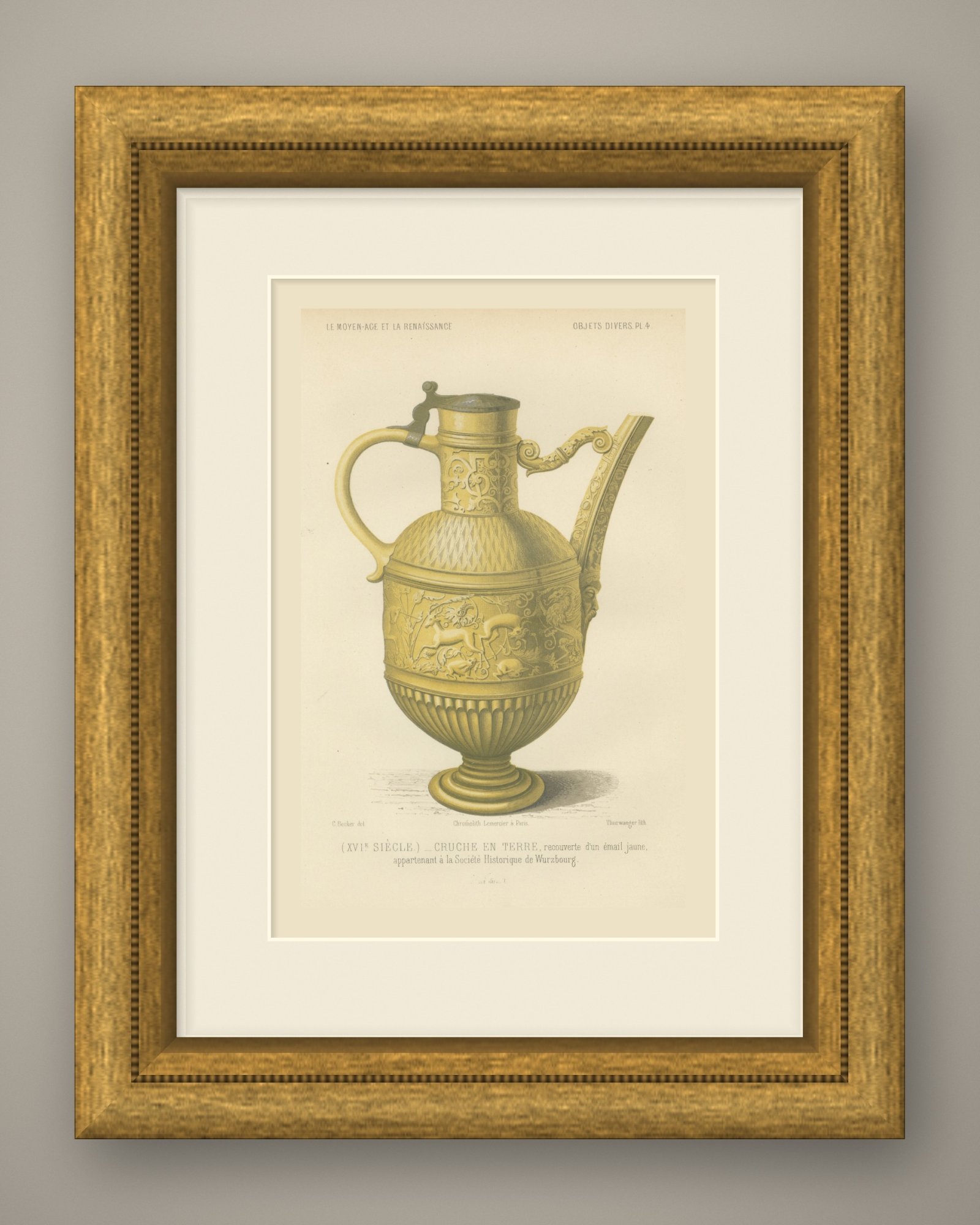
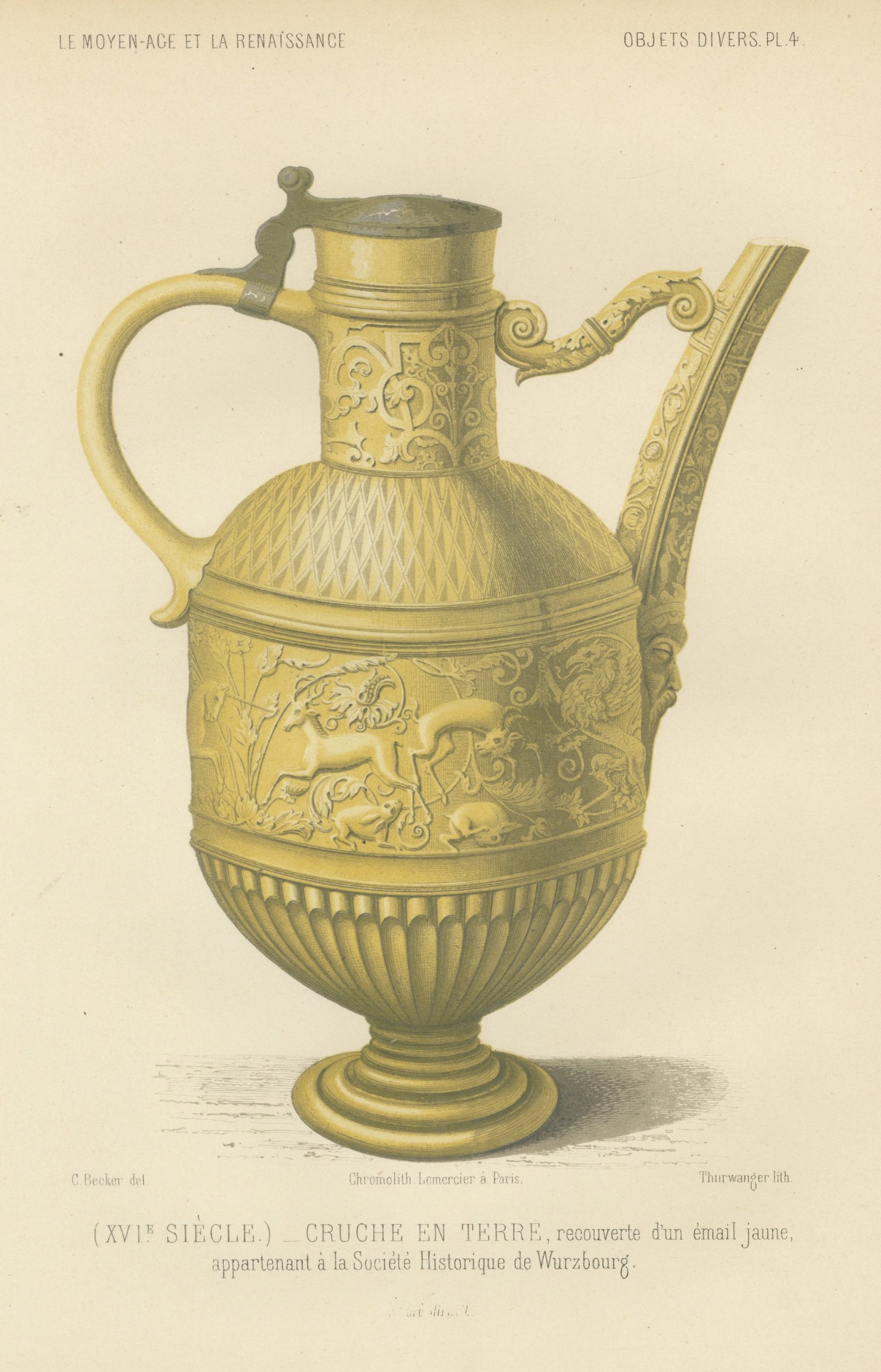
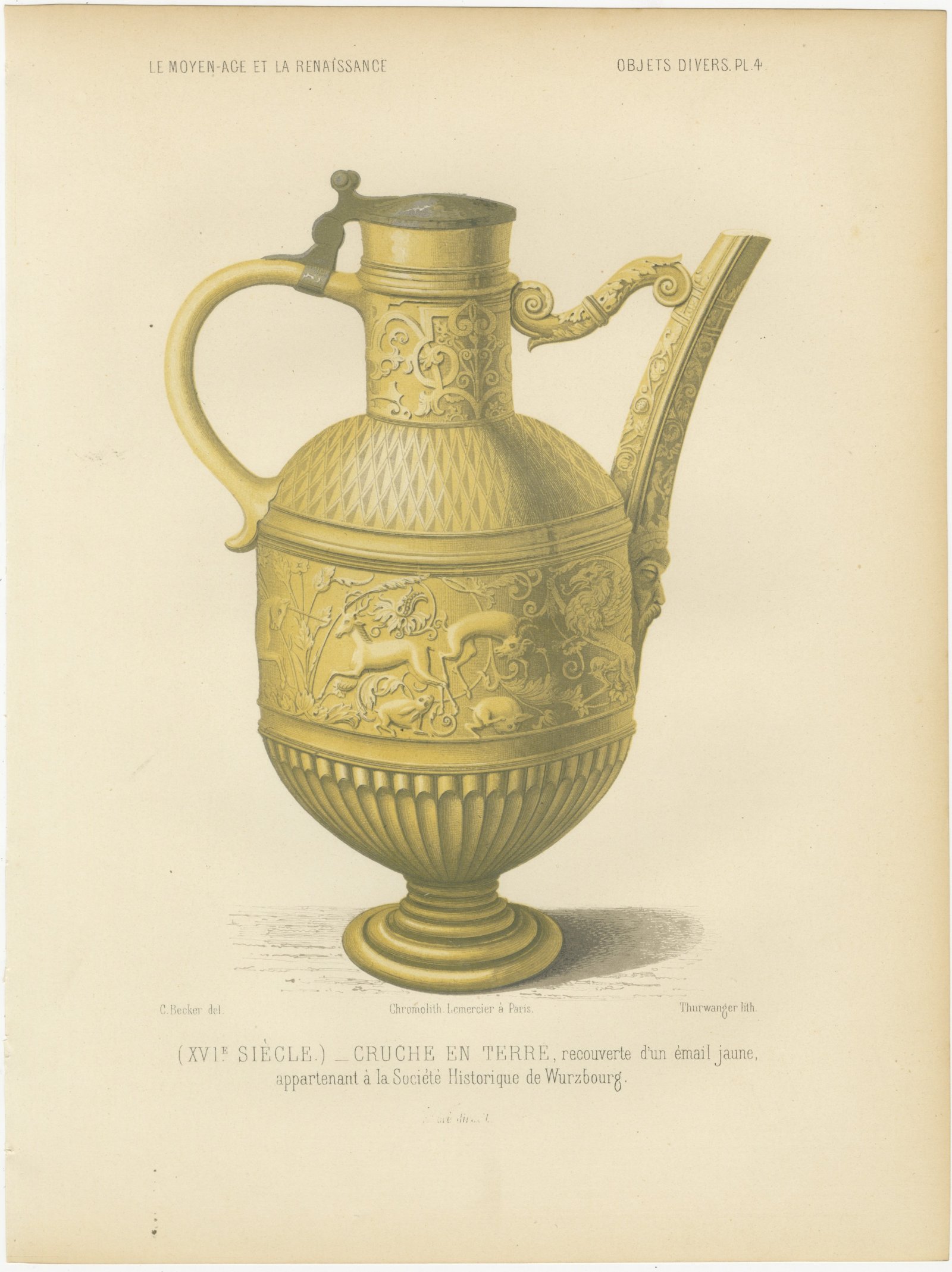
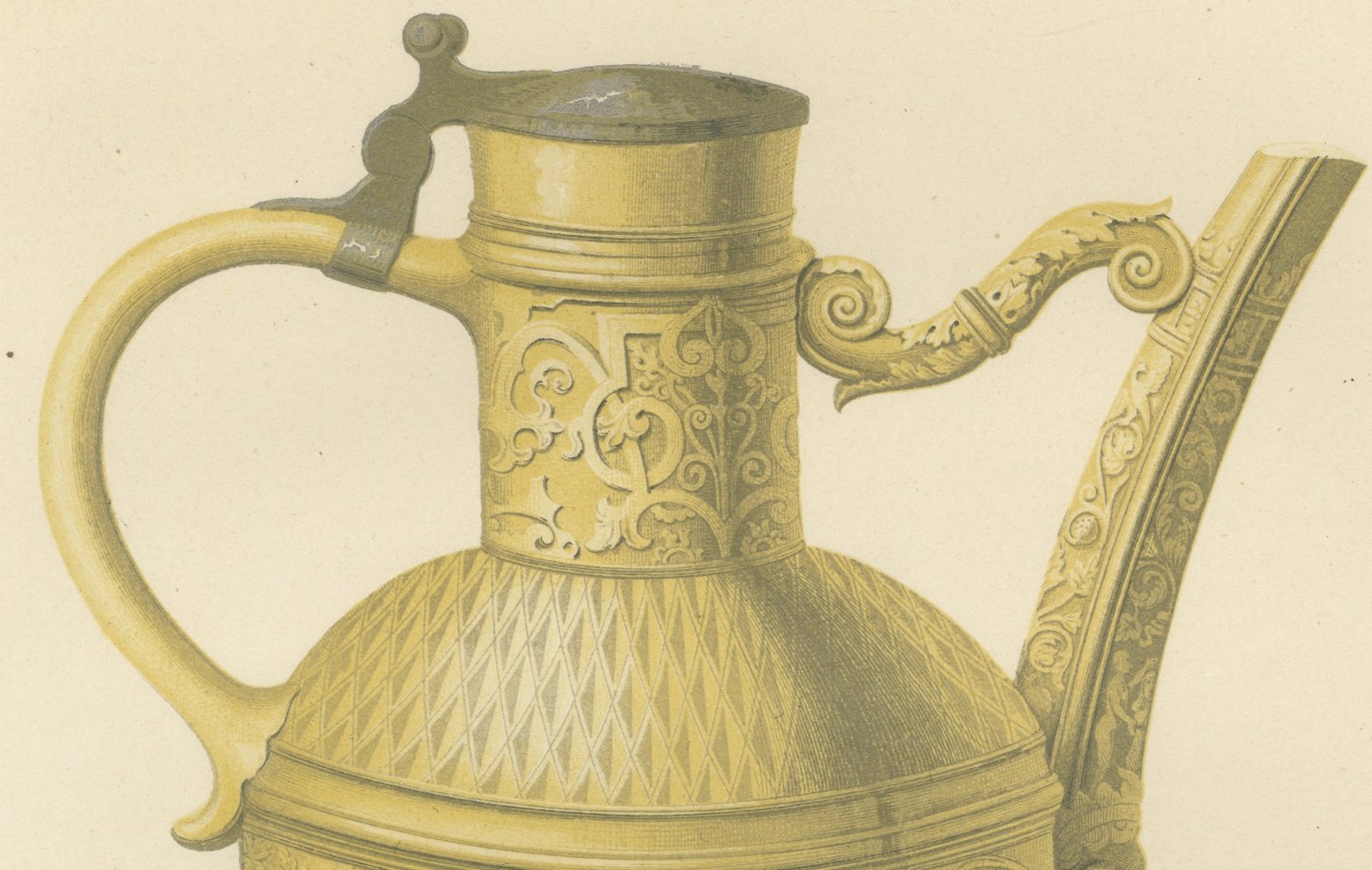
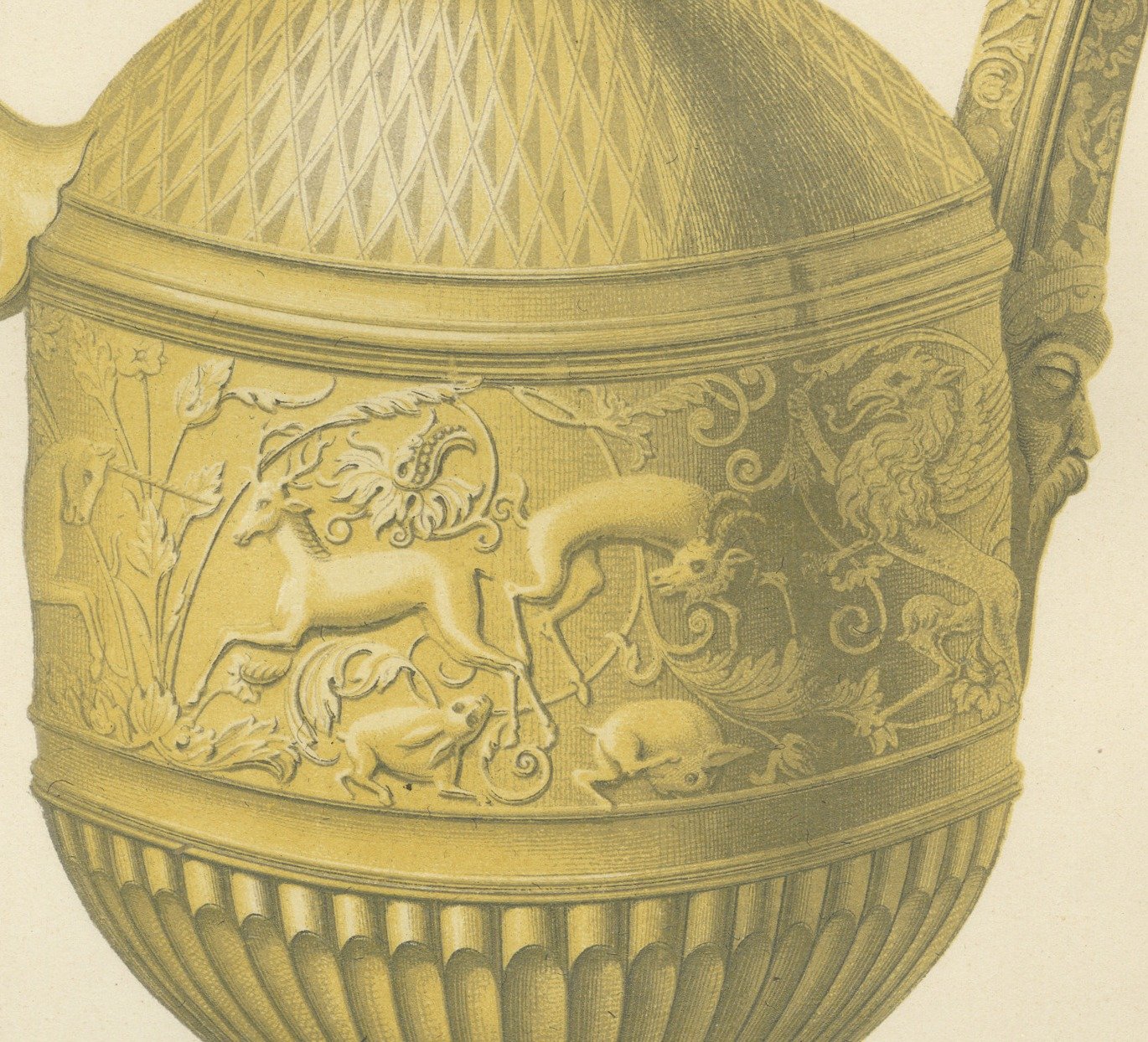
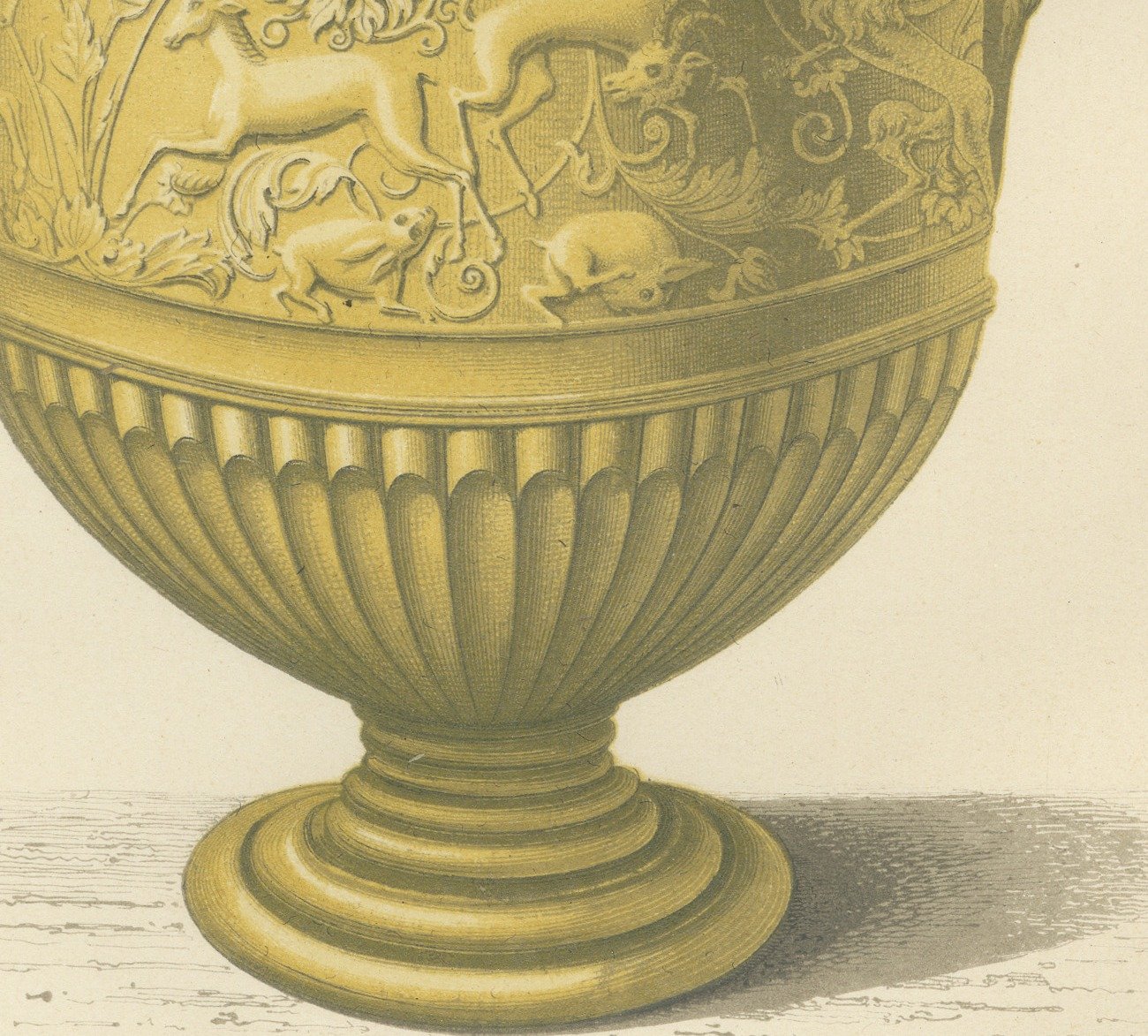
This is an original antique chromolithograph, printed in colors, from Le Moyen Âge et la Renaissance, lettered "(XVIe SIÈCLE.), CRUCHE EN TERRE, recouverte d'un émail jaune, appartenant à la Société Historique de Wurzbourg." It shows a single earthenware ewer on a stepped, molded foot, glazed in a warm yellow with olive shading. The neck is decorated in relief with scrolling foliage and closed by a hinged gray metal lid with a thumbpiece. A loop handle rises at the left, and at the right a long tapering spout, itself ornamented, springs from a mask on the body and is braced by a scrolled strut. The shoulder carries a diamond lattice, the broad central band a frieze of leaping deer, a griffin and small animals among plants, and the lower body is gadrooned.
The running heads read "LE MOYEN-AGE ET LA RENAÍSSANCE" at the upper left and "OBJETS DIVERS. PL. 4." at the upper right. Beneath the image are the credits "C. Becker del.", "Chromolith. Lemercier à Paris." and "Thurwanger lith.", and below the caption the faint line "F. Séré direxit". The caption translates as: Sixteenth century. Earthenware jug, covered with a yellow enamel, belonging to the Historical Society of Würzburg. The plate was therefore drawn by C. Becker, put on stone by Thurwanger and printed by Lemercier in Paris.
Le Moyen Âge et la Renaissance was published in Paris in five volumes between 1848 and 1851. Paul Lacroix, who also wrote as the Bibliophile Jacob, edited the text, and Ferdinand Séré directed the illustrations, which is what the line "F. Séré direxit" on the plates records. The work surveys the customs, trades, sciences, arts and literature of Europe from the Middle Ages to the Renaissance, and its plates reproduce furniture, metalwork, ceramics, manuscripts and other objects from public and private collections of the time. The plates are chromolithographs, printed in color from a series of stones rather than colored by hand. This plate comes from the fourth volume, issued in 1851.
The upright ewer reads well framed on its own, and it pairs naturally with the other ceramic plates of the same section.
This is an original antique print, not a modern reproduction. This item is sold unframed.