 The sheet, as you receive it
 In the room 1





Interior designers: BarTrade members buy at their trade price. How it works
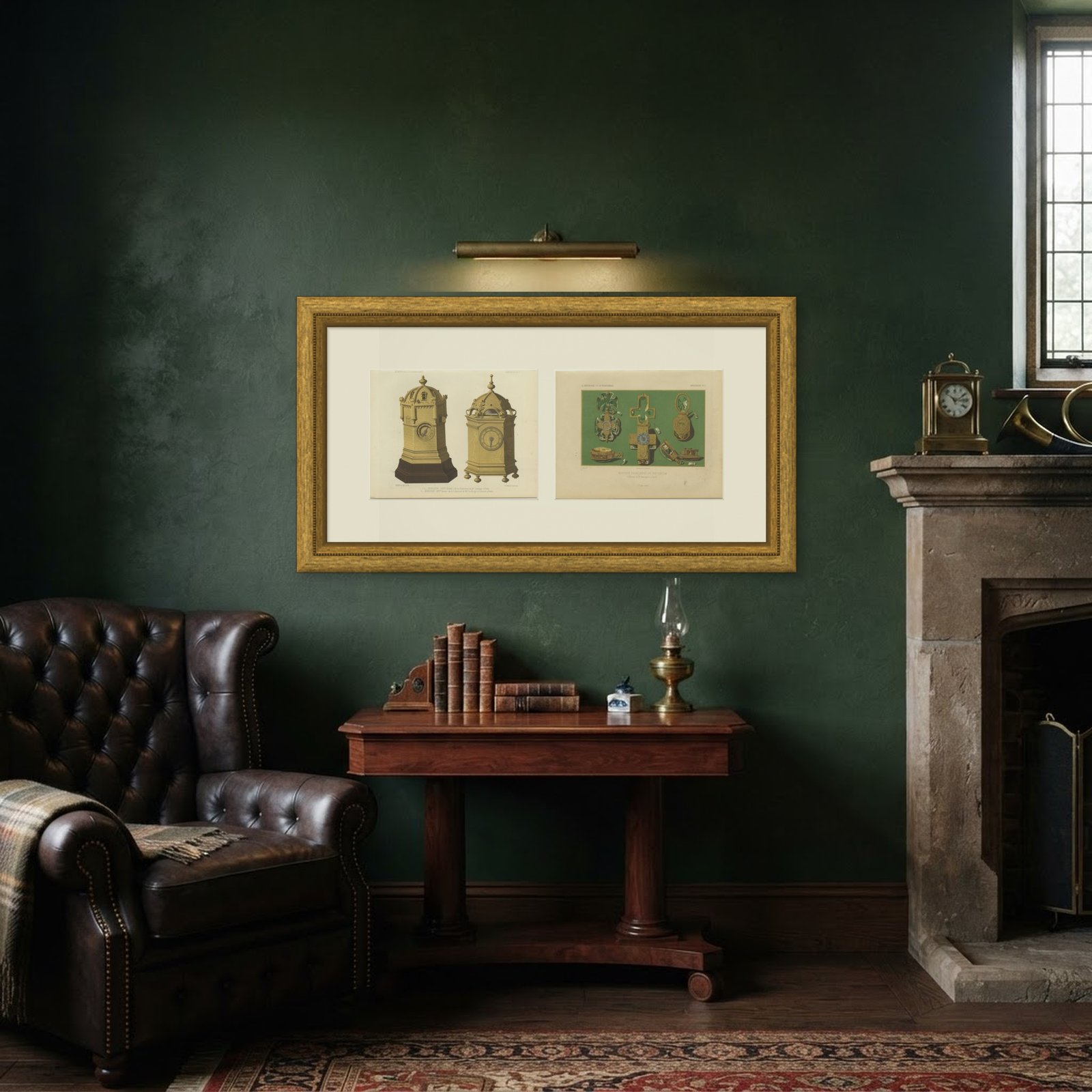
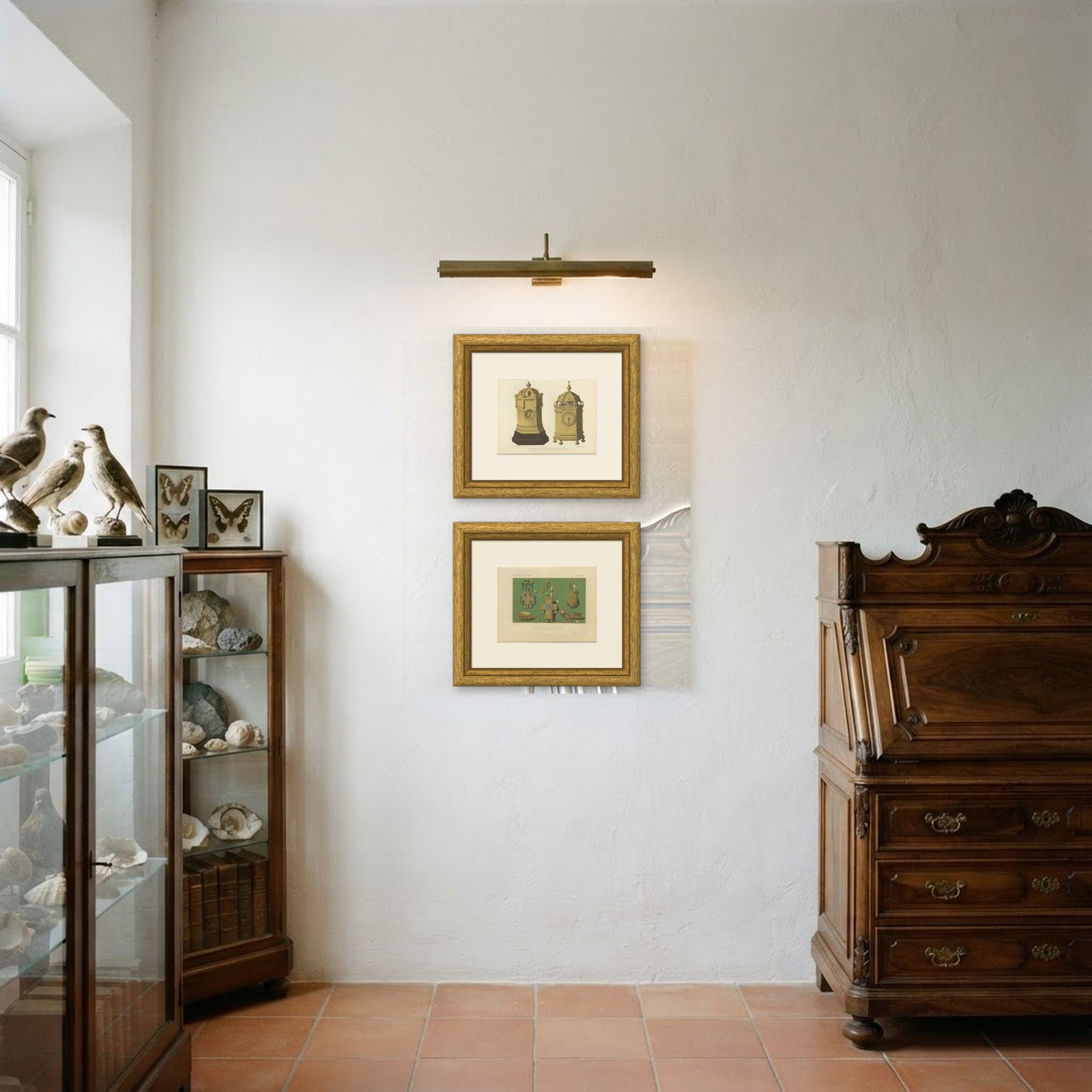
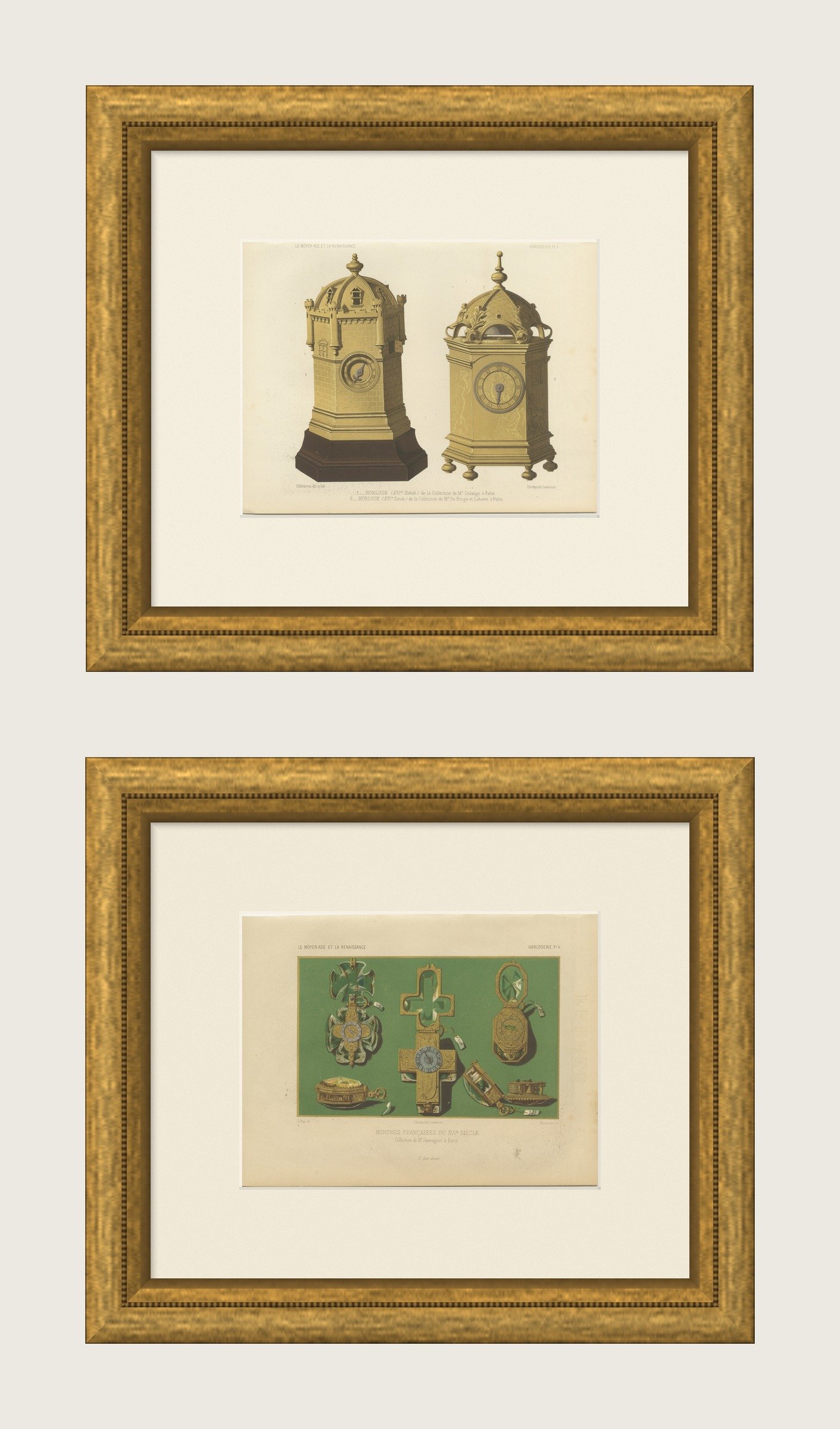
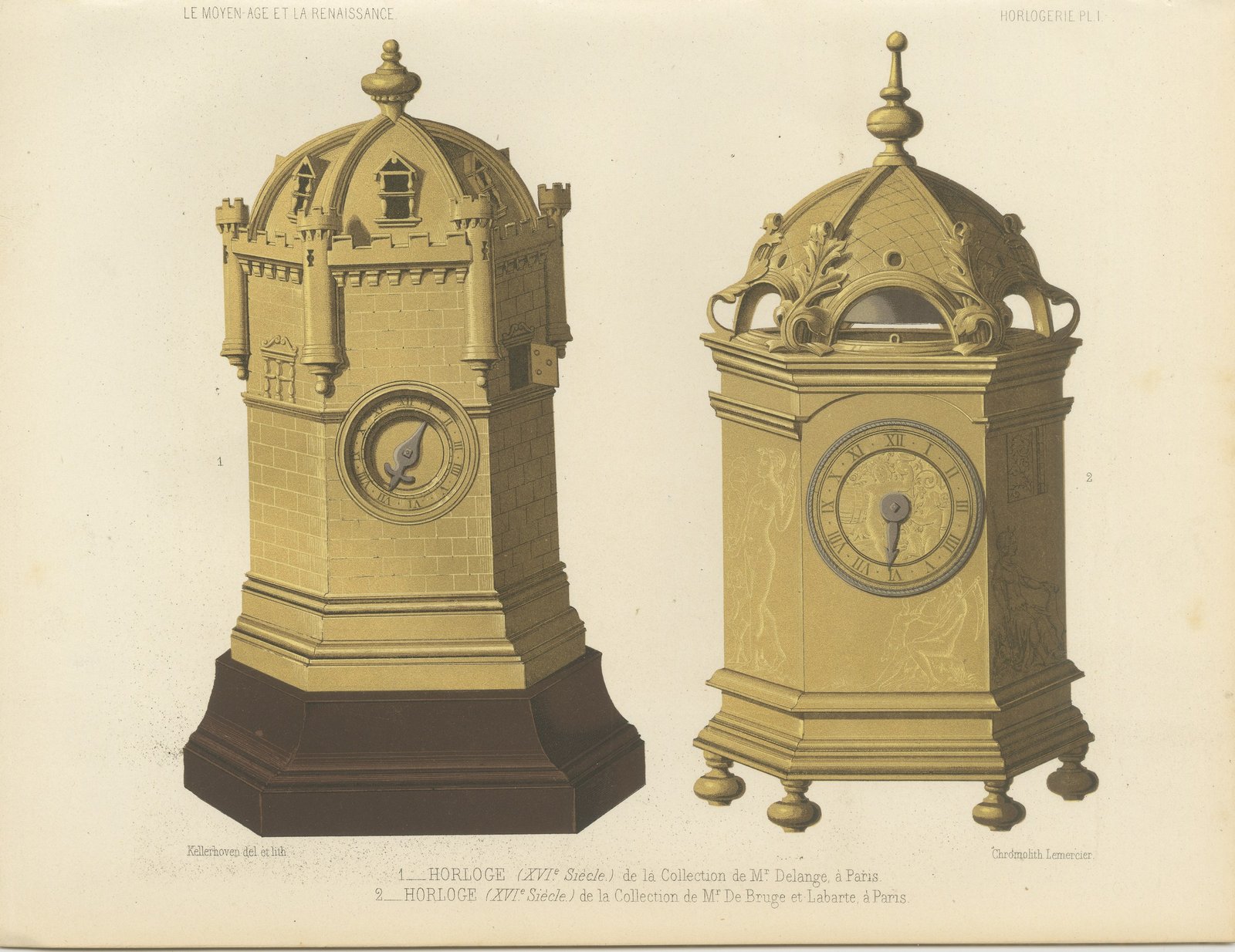
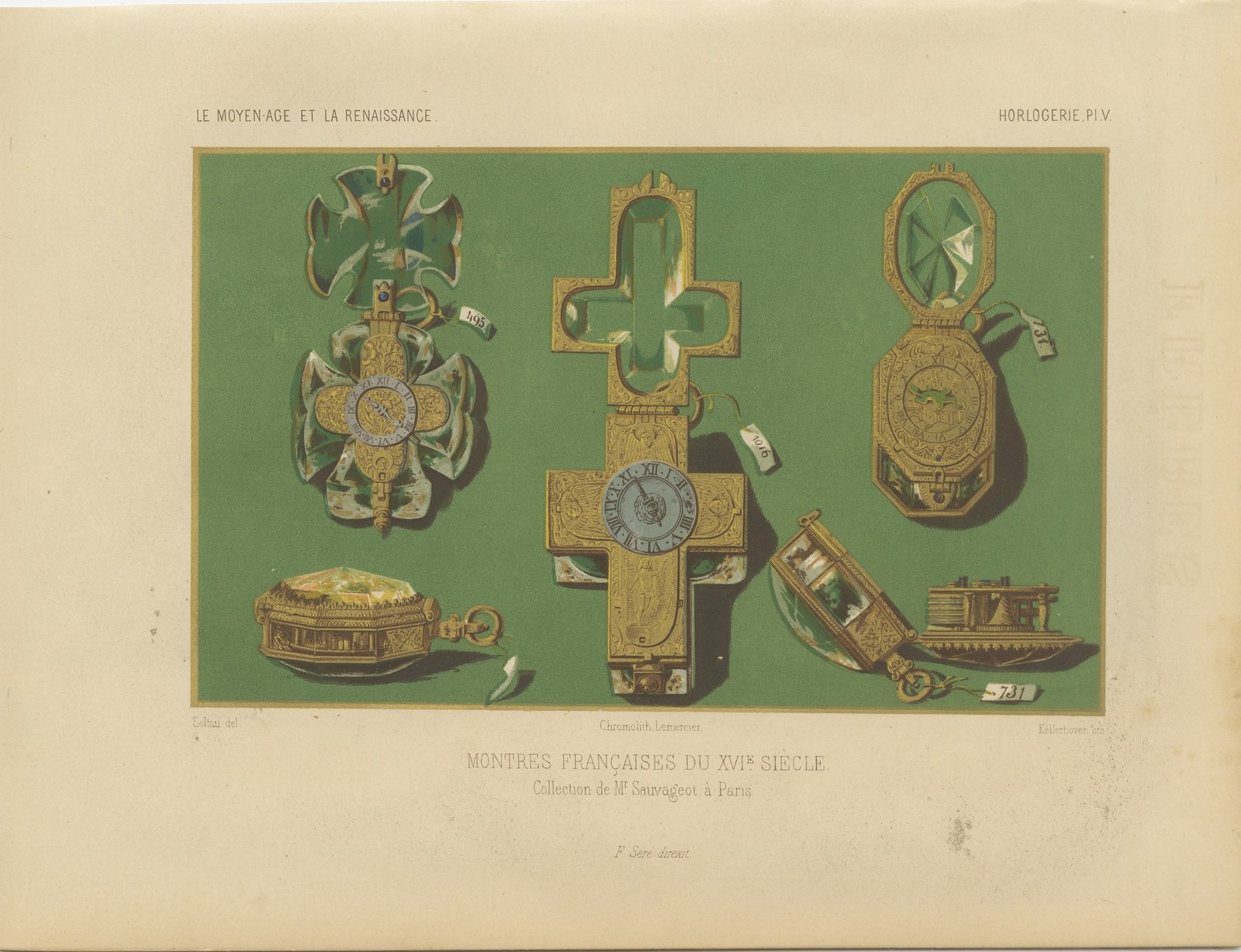
A pair of original antique chromolithographs of sixteenth century horology, sold together and not separately. Both are the wide plates of the Horlogerie section of Lacroix and Sere's Le Moyen Age et la Renaissance, Paris, 1849, and both are lettered with the Paris collections the objects came from. The two sheets divide the subject neatly between them: the first gives clocks, the second gives watches, and together they cover the whole of what a sixteenth century craftsman could make that told the time. They are two original sheets sold together as one lot, and the set is never split.
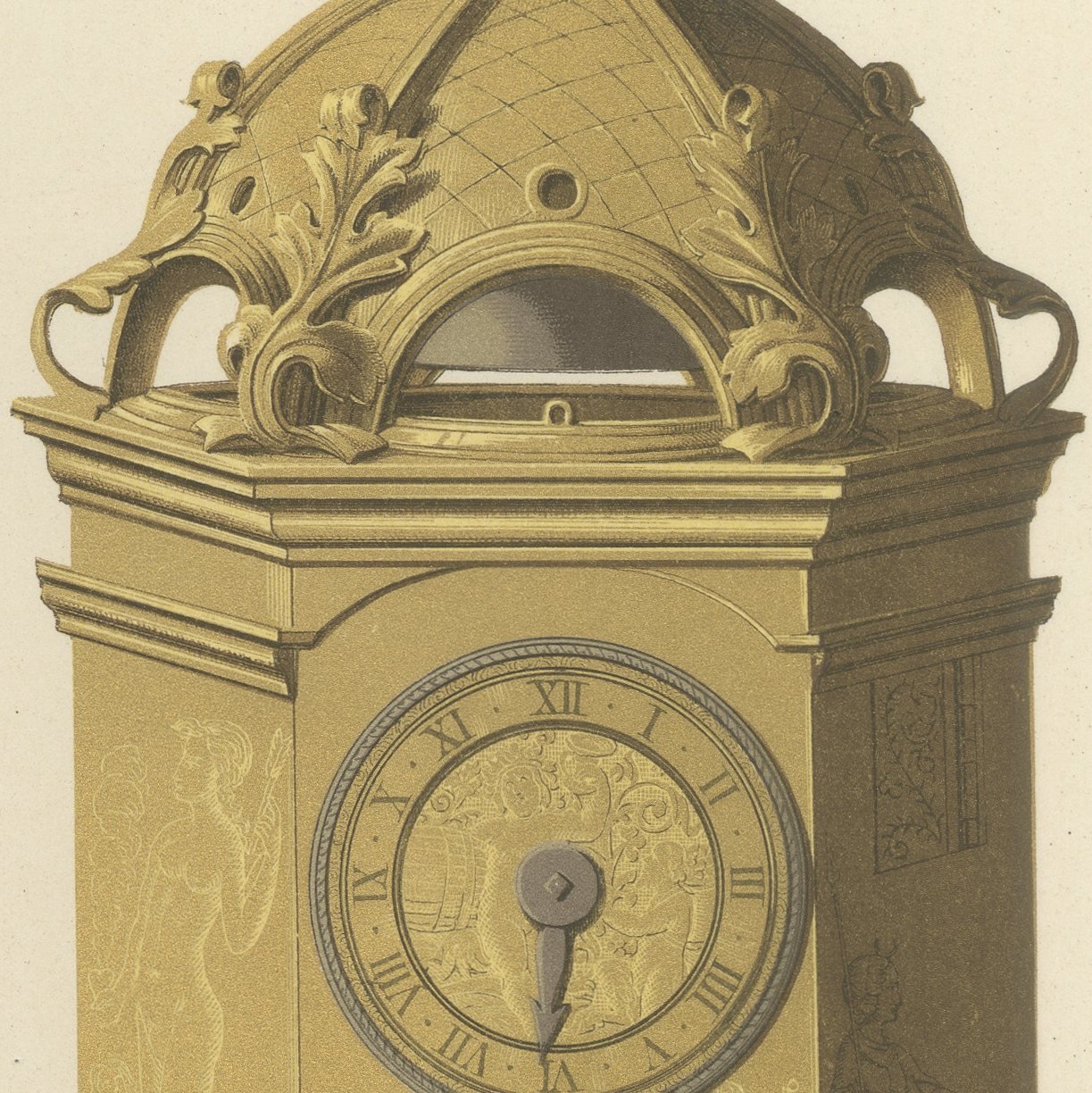
The first shows two sixteenth century table clocks side by side, one in a dark architectural case with a domed and crocketed top, the other in gilt bronze on four bun feet, lettered as from the collections of Monsieur Delange and of Messieurs De Bruge and Labarte in Paris. The second shows seven French watches of the sixteenth century laid out against a flat green ground, among them a cruciform watch, an oval case enamelled in blue, a book shaped watch and a tiny watch set in a finger ring, all from the Sauvageot collection.
The sheet comes from Le Moyen Age et la Renaissance, the great illustrated survey of medieval and Renaissance life edited by Paul Lacroix and Ferdinand Sere and published in Paris from the Administration at 5 rue du Pont-de-Lodi. This is Tome Second, dated 1849 on its own title page. The colored drawings were made by A. Rivaud and his colleagues and printed in chromolithography by the Paris house of Lemercier, then the finest color printer in Europe. The green ground of the watch sheet and the open cream of the clock sheet make an unexpectedly good contrast, and both are landscape plates of the same size, which is uncommon in this volume and useful to anybody hanging over a mantel or a chest. Early watches in particular have risen steadily with collectors, and a pair of colored plates of them is a far more interesting thing to hang than a single sheet.
Light uneven toning, browner towards the edges. Marked handling soiling along the edges of both sheets. Light foxing in the margins of both sheets. All corners complete on every sheet. Shallow nicks along an edge of one of the two sheets.
These are original antique prints, not modern reproductions. This item is sold unframed.