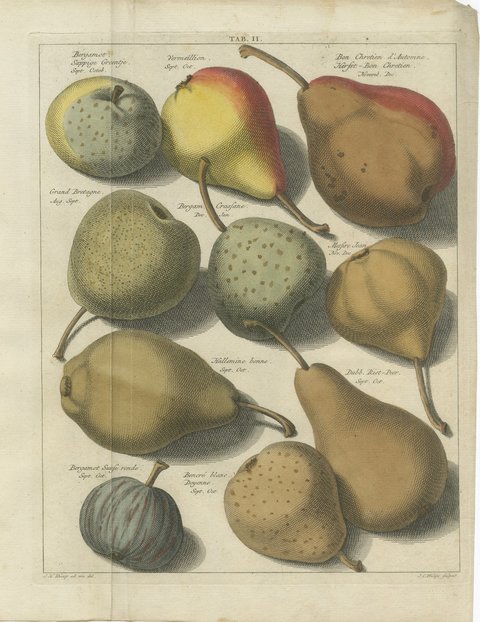
 The sheet, as you receive it
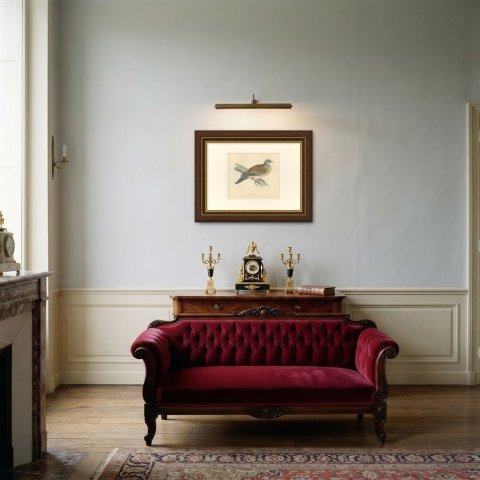
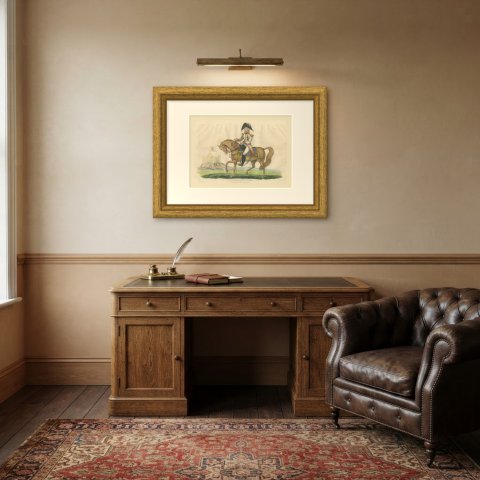
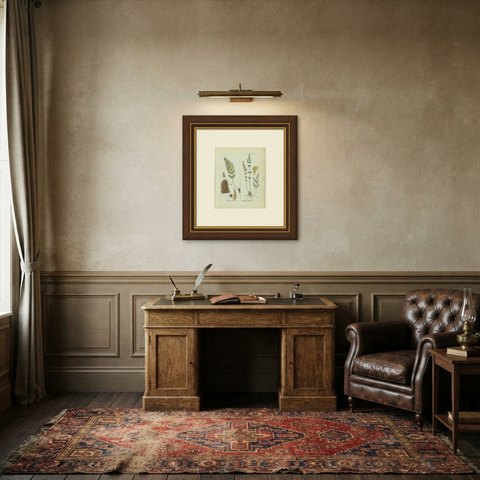
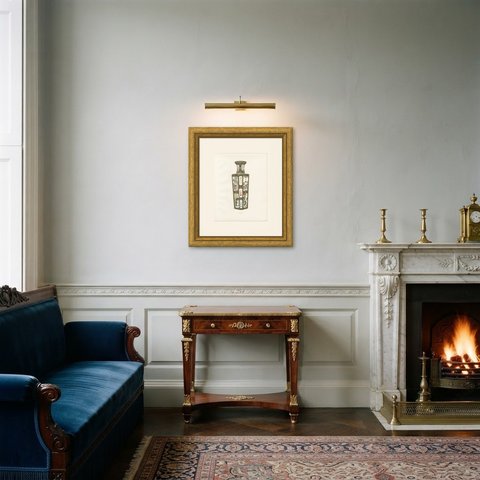
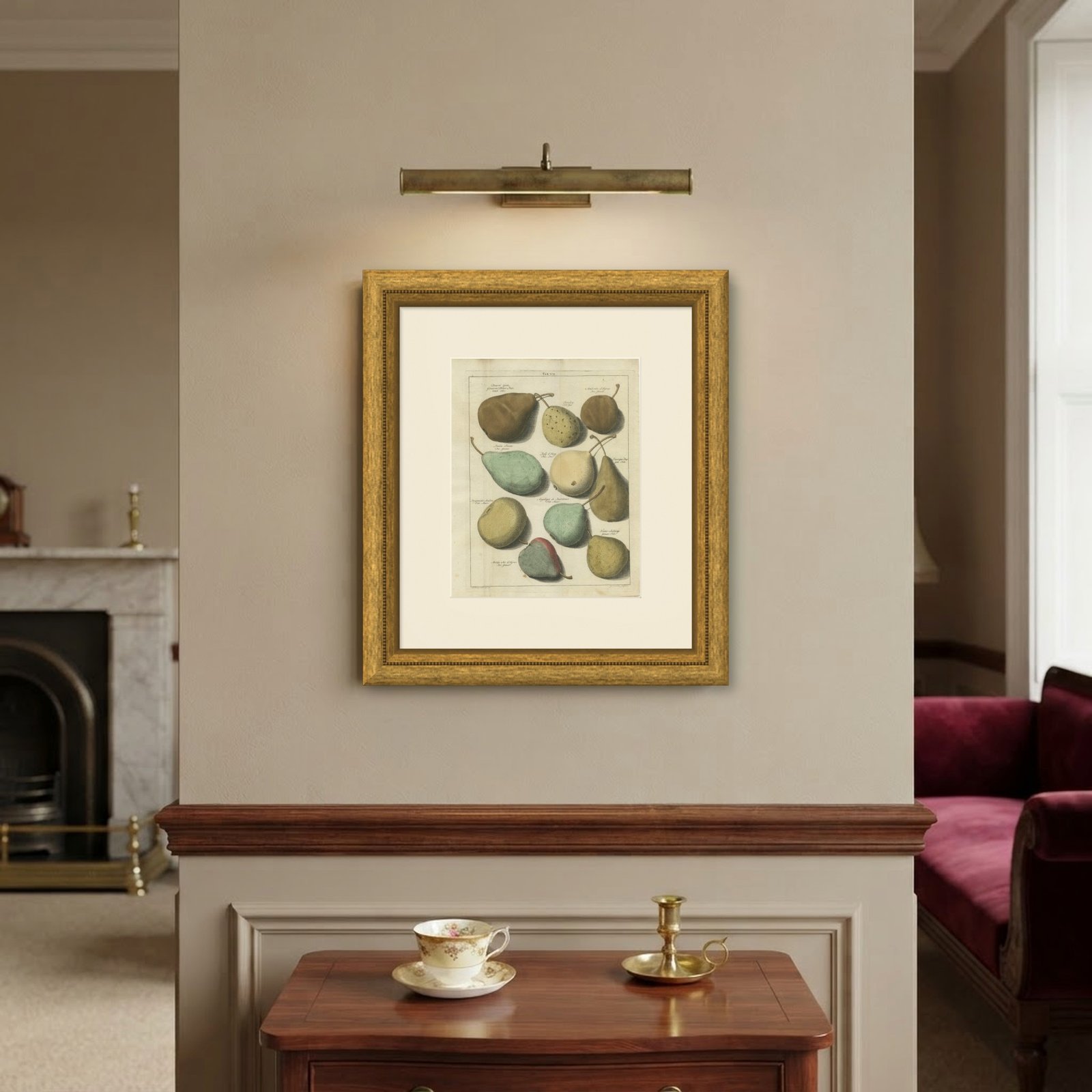
 In the room


Interior designers: BarTrade members buy at their trade price. How it works
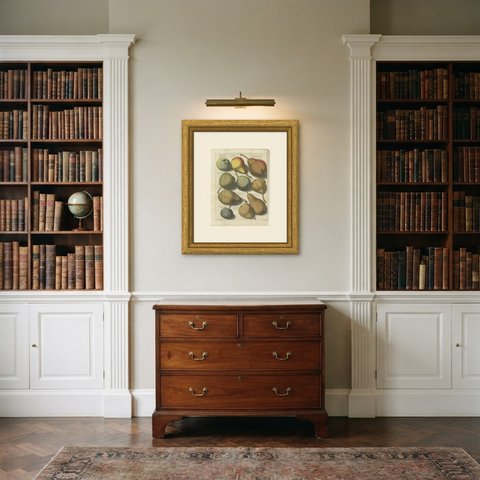
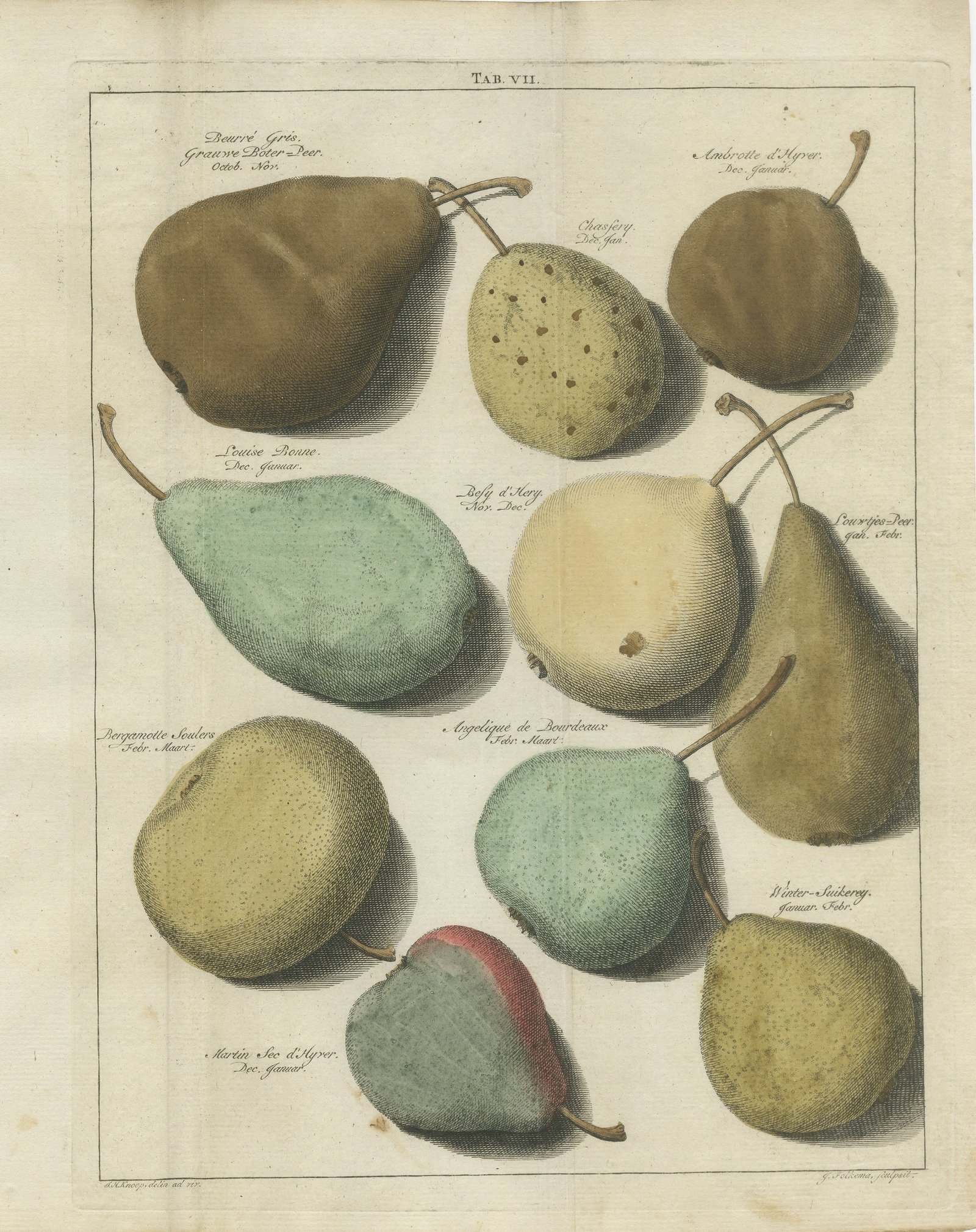
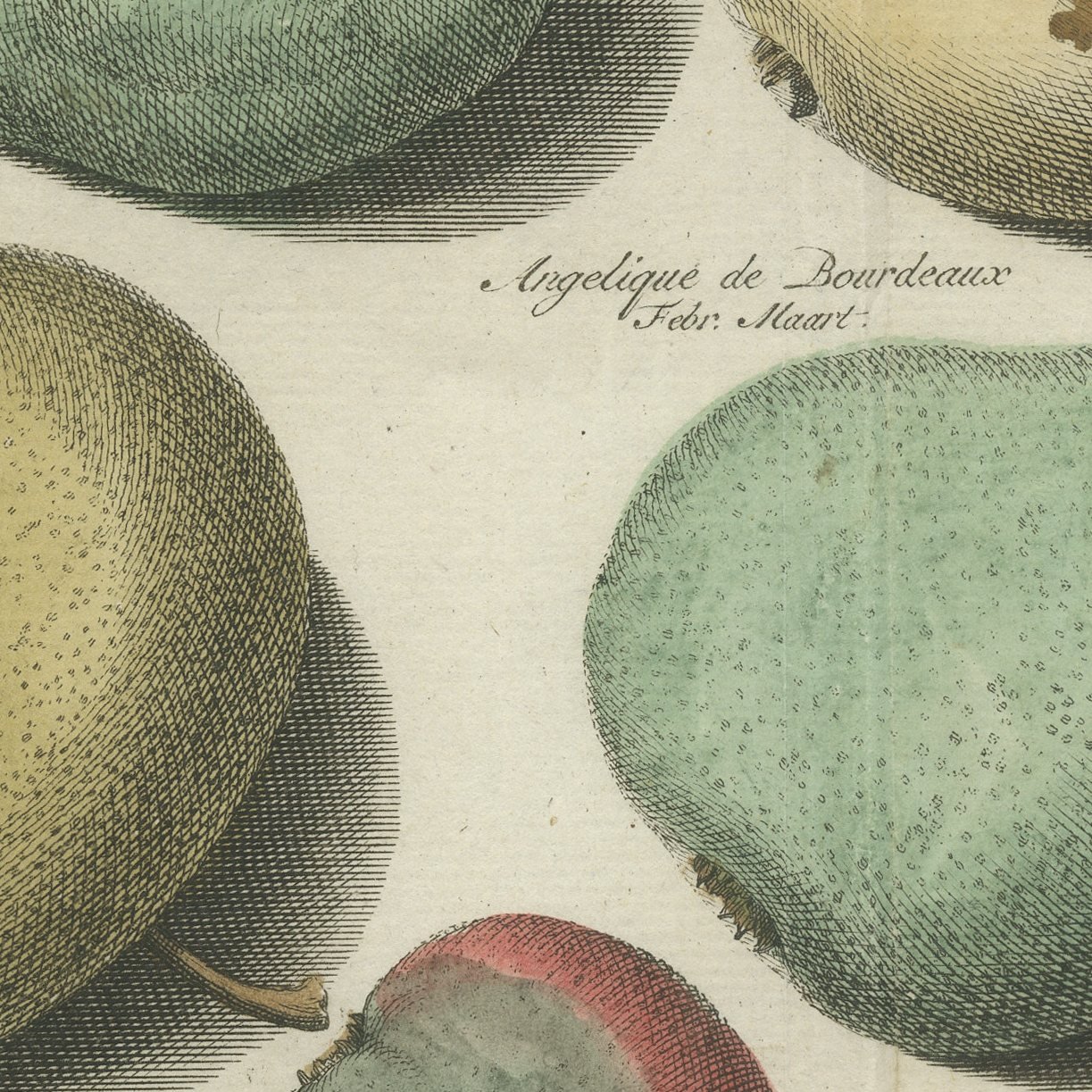
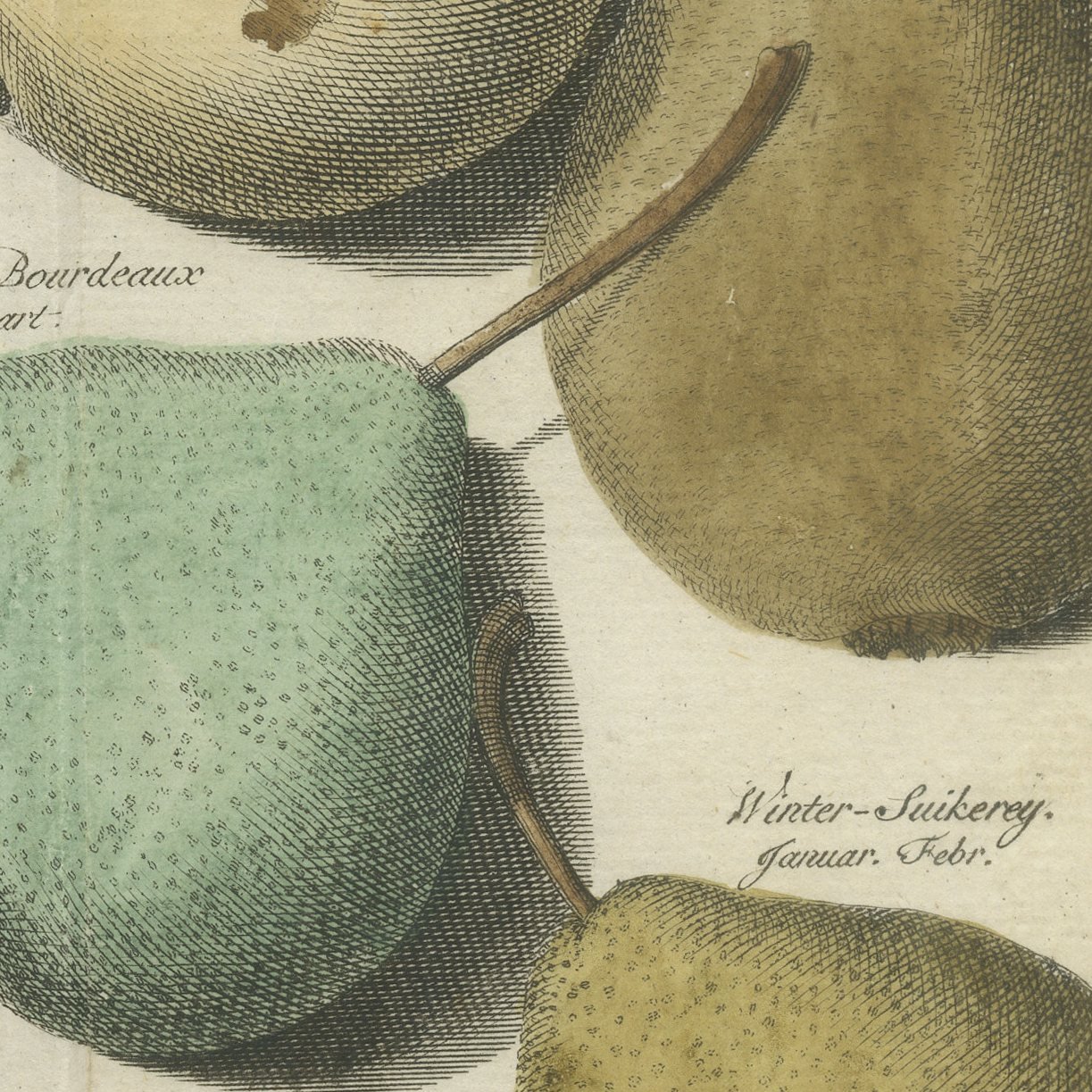
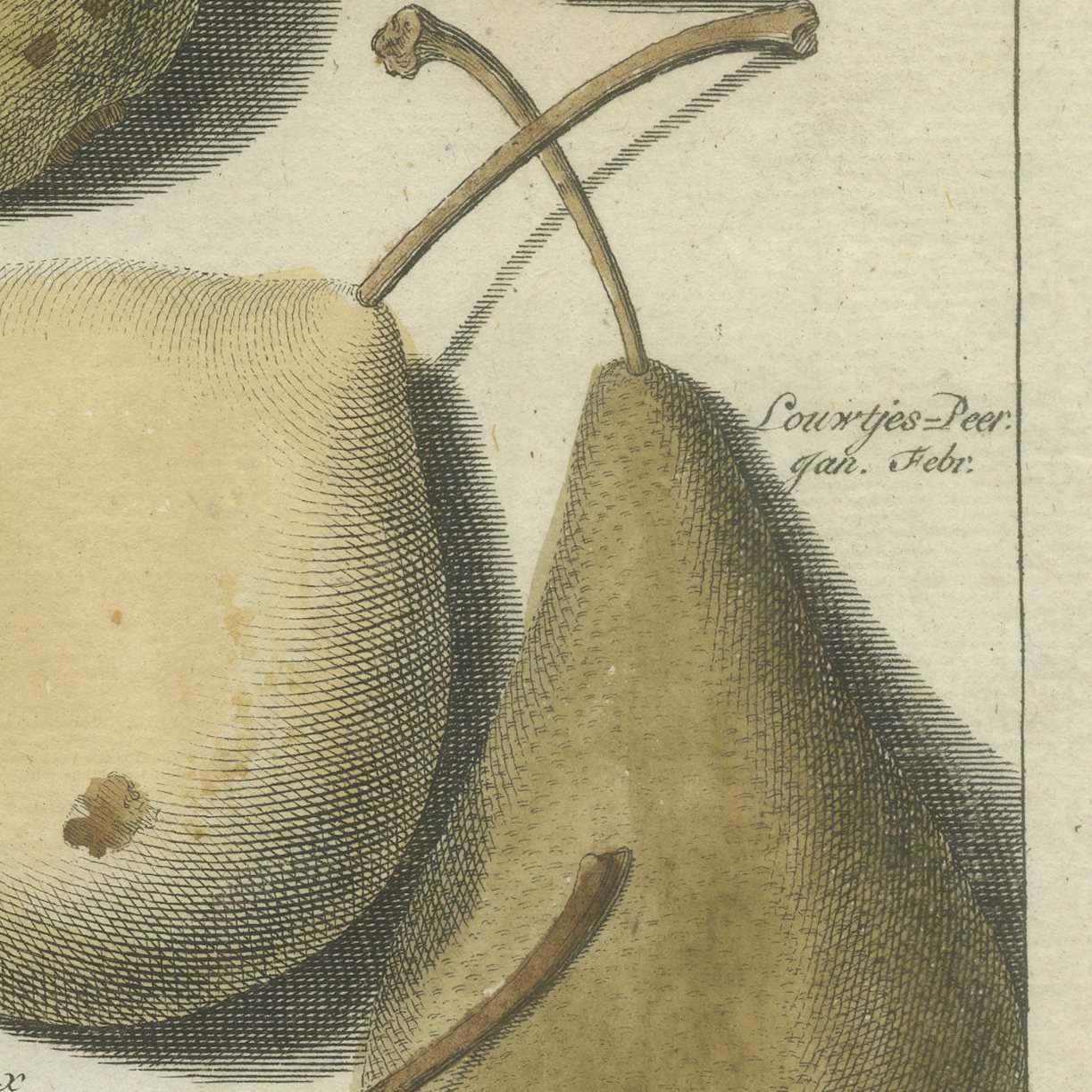
A hand-colored copper engraving of ten named pear varieties, the winter keepers of the pear series, each lettered with its name and its ripening months. On the sheet are Beurré Gris or Grauwe Boter-Peer, Chassery, Ambrotte d'Hyver, Louise Bonne, Besy d'Hery, Lourtjes-Peer, Bergamotte Soulers, Angeliqué de Bourdeaux, Martin Sec d'Hyver and Winter-Suikerey. Not one of them comes in before late October, and several were not eaten until February or March. Knoop drew each from the living fruit, and the engraved hatching conveys the rough gray russet of the Beurré Gris and the dry brown skin of the Martin Sec with real accuracy. The original watercolor is laid over that hatching unevenly, russet and olive deepening on one side of each pear and fading toward the stalk.
The plate comes from Johann Hermann Knoop's Beschrijving en Afbeeldingen van de beste soorten van Appelen en Peeren, published at Amsterdam and Dordrecht by Allart, Holtrop, de Leeuw and Krap in 1790, with a preface by the Zutphen minister and naturalist Johannes Florentius Martinet. Knoop was gardener to the widow of the Frisian stadtholder at Leeuwarden and the first systematic Dutch pomologist. He drew every fruit from the living specimen, and the plates are lettered ad vivum to say so. The engraving is on copper and the color is original hand color in watercolor, laid over the engraved hatching.
Winter pears were the luxury of the cold months, ripened slowly in a fruit store and brought out for the table, and this plate is their roll call. Louise Bonne is still grown, and Beurré Gris and Martin Sec survive in French heritage collections, so the sheet connects directly to orchards that exist today. Knoop's method, drawing from the living specimen and recording the eating month, is what makes these varieties recognizable two and a half centuries later. The quiet russet and olive palette is among the most restrained in the book, which makes the plate an easy and sophisticated choice for a library, a study or a paneled hall.
Light uneven toning, browner towards the edges. Handling soiling along the bottom and top edges. Scattered light foxing in the margin. All four corners complete. Minor edge wear, shallow nicks along the right.
This is an original antique plate, not a modern reproduction. This item is sold unframed.