 The sheet, as you receive it
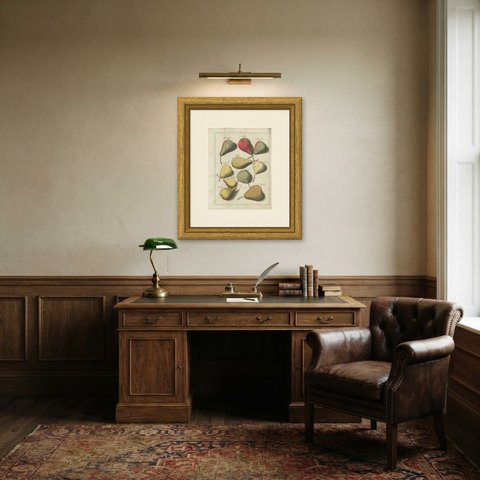
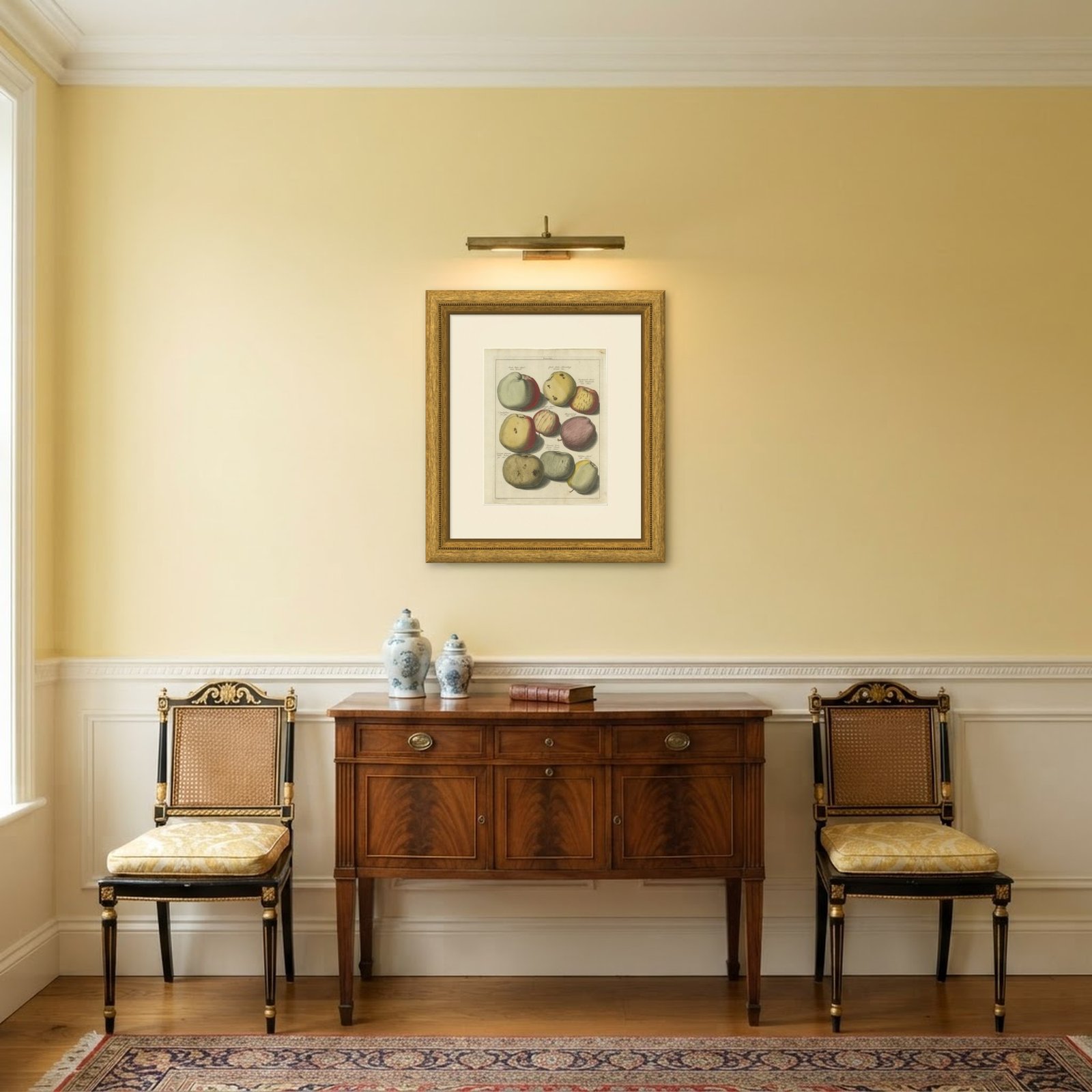 In the room


Interior designers: BarTrade members buy at their trade price. How it works
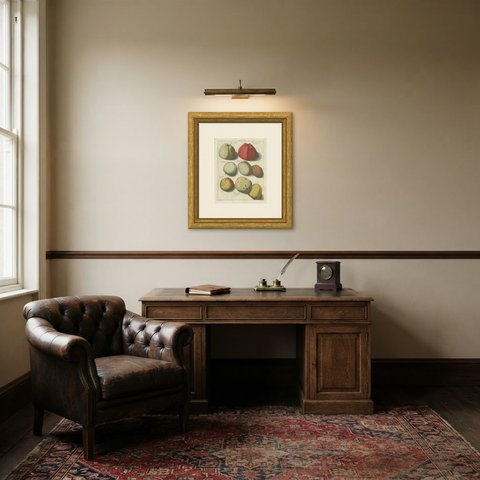
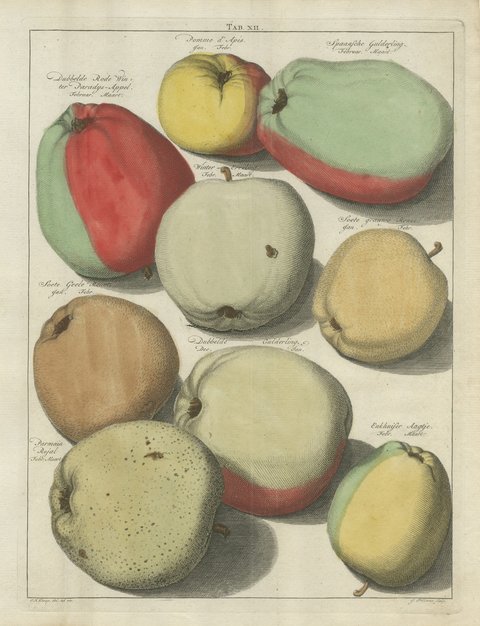
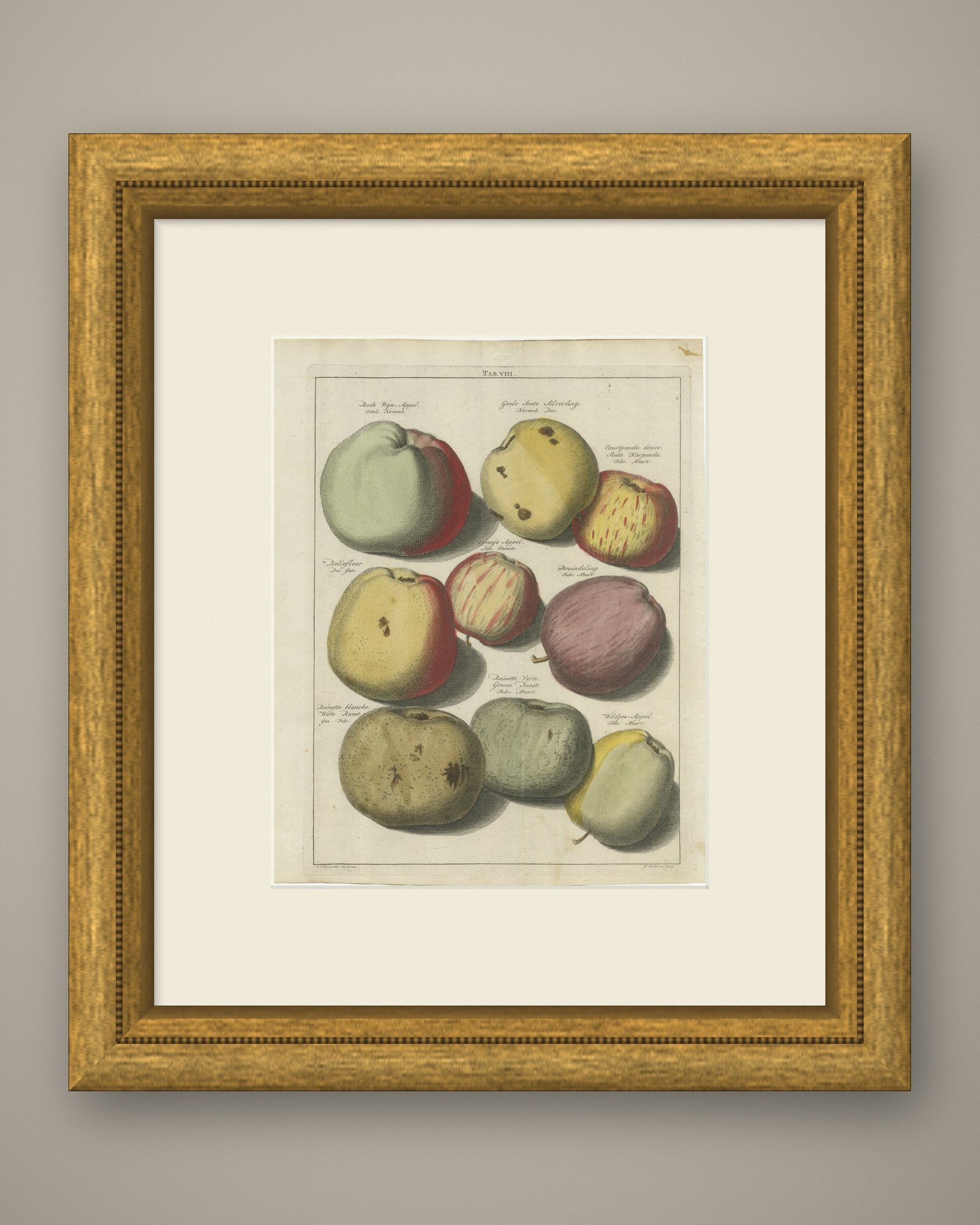
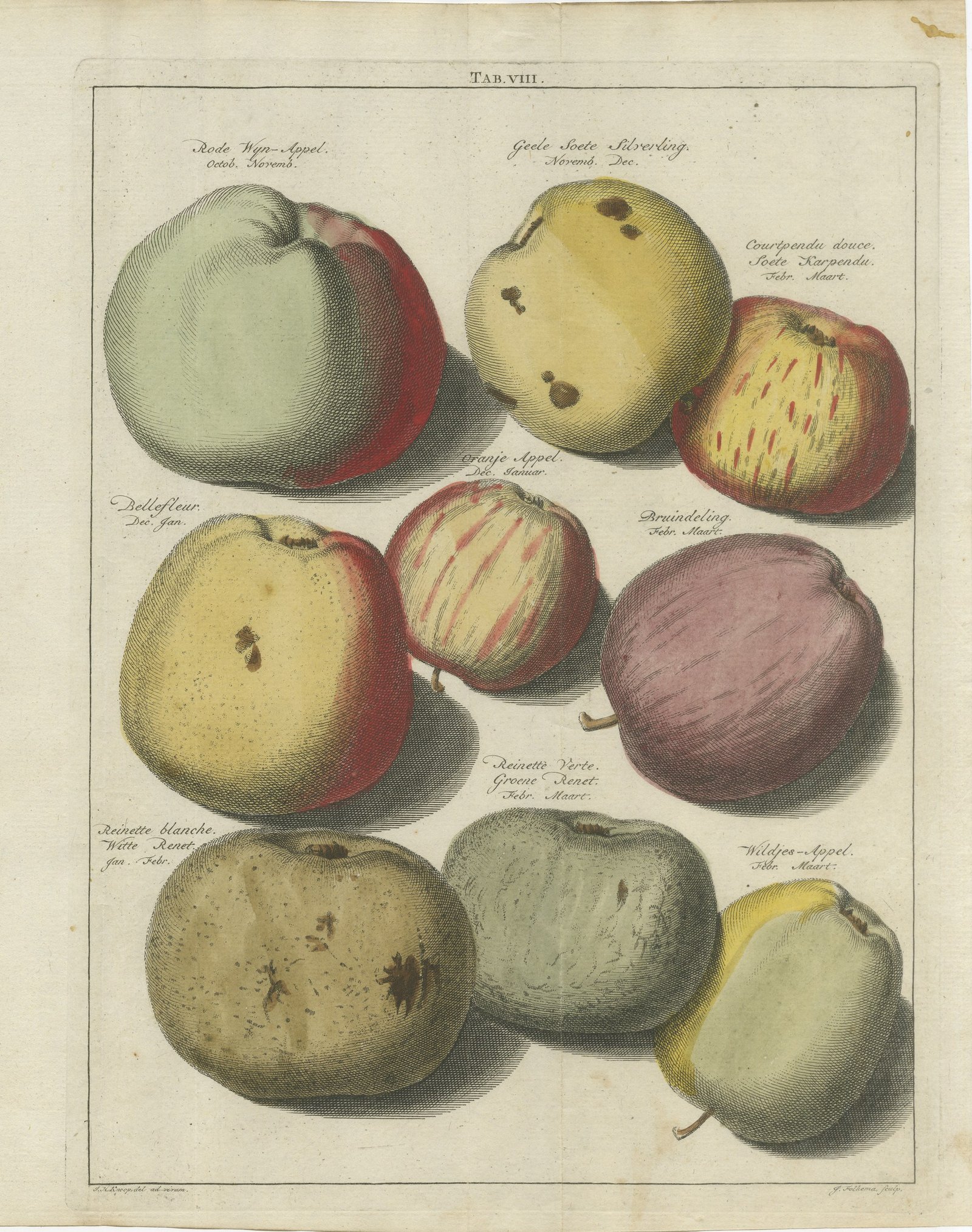
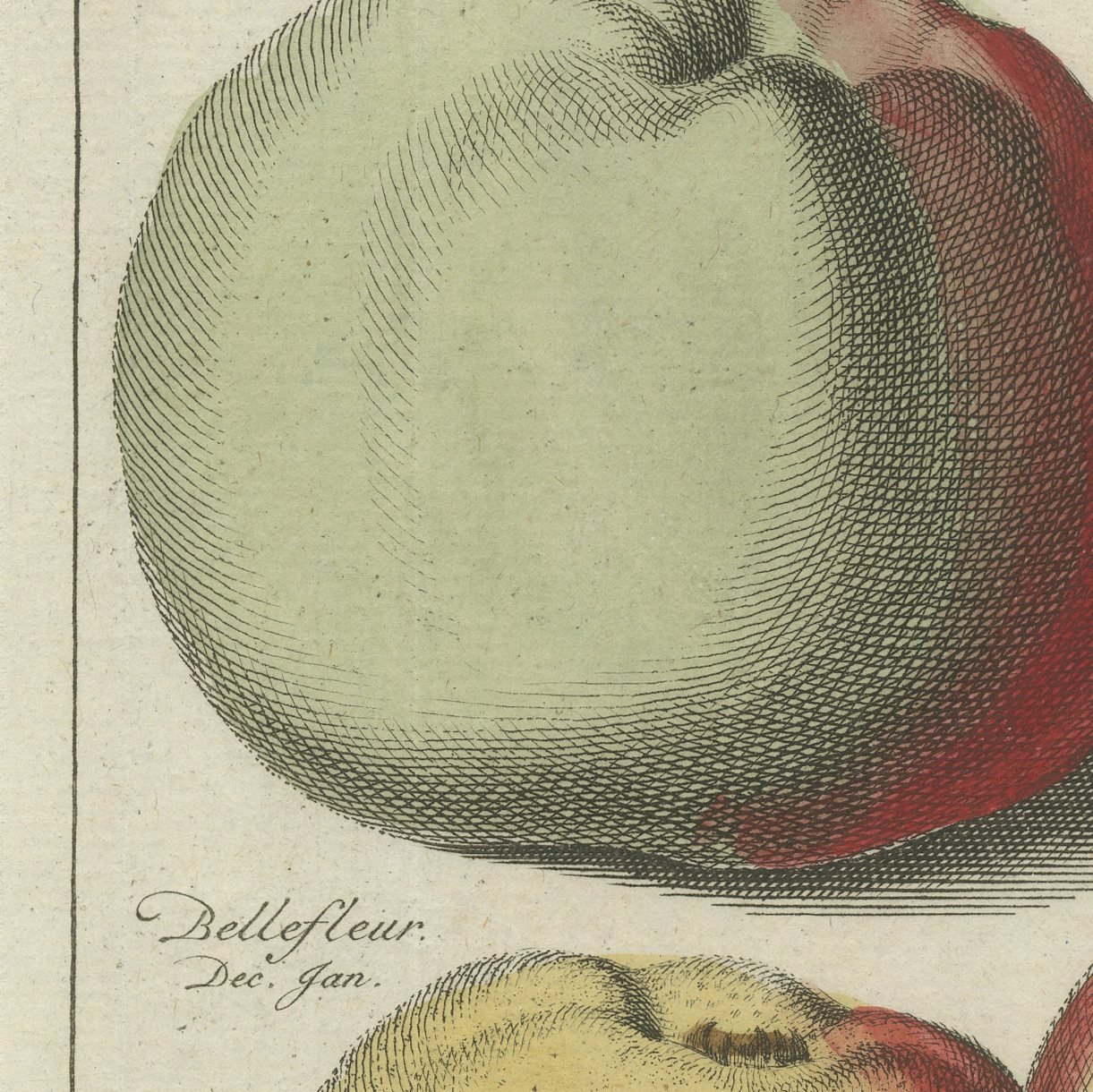
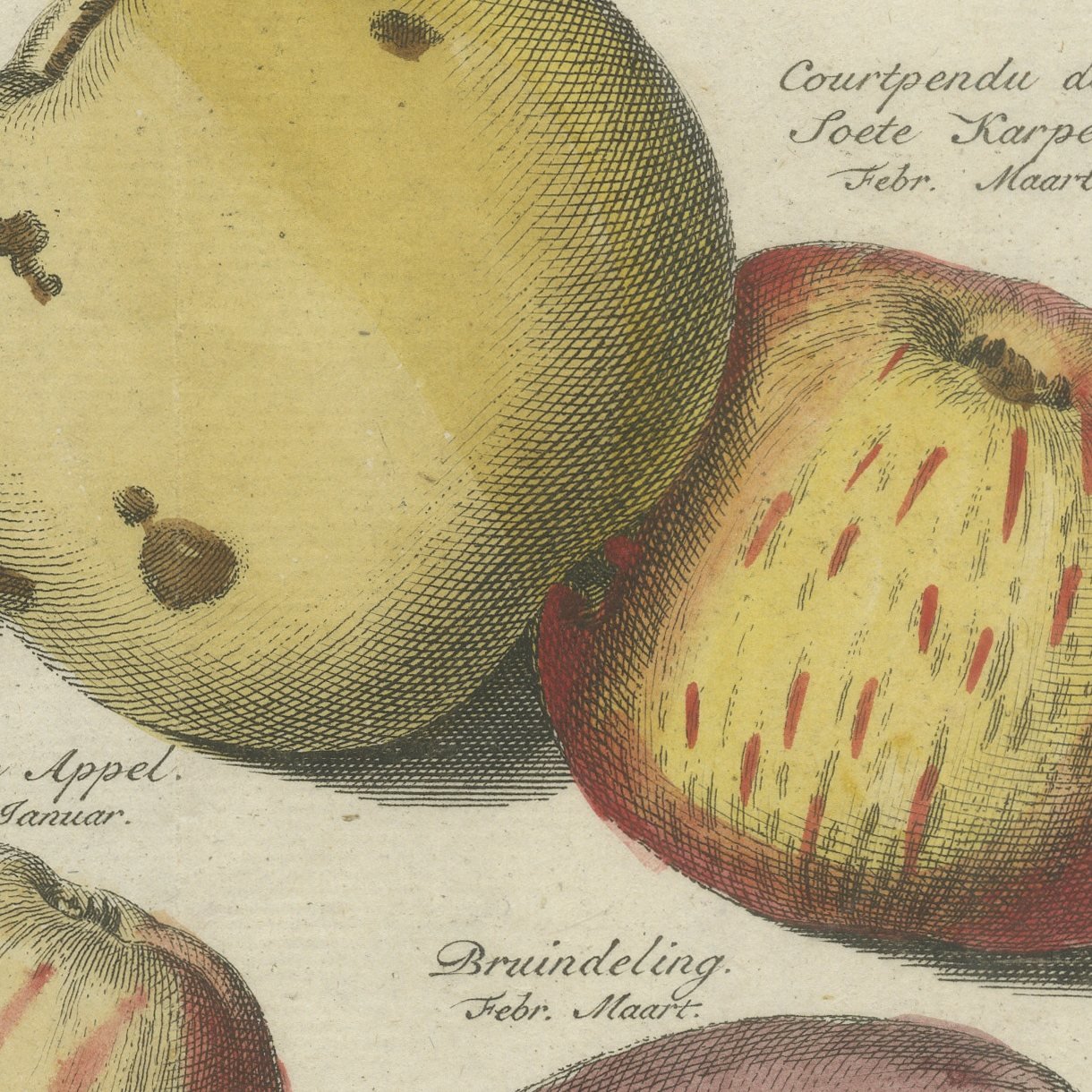
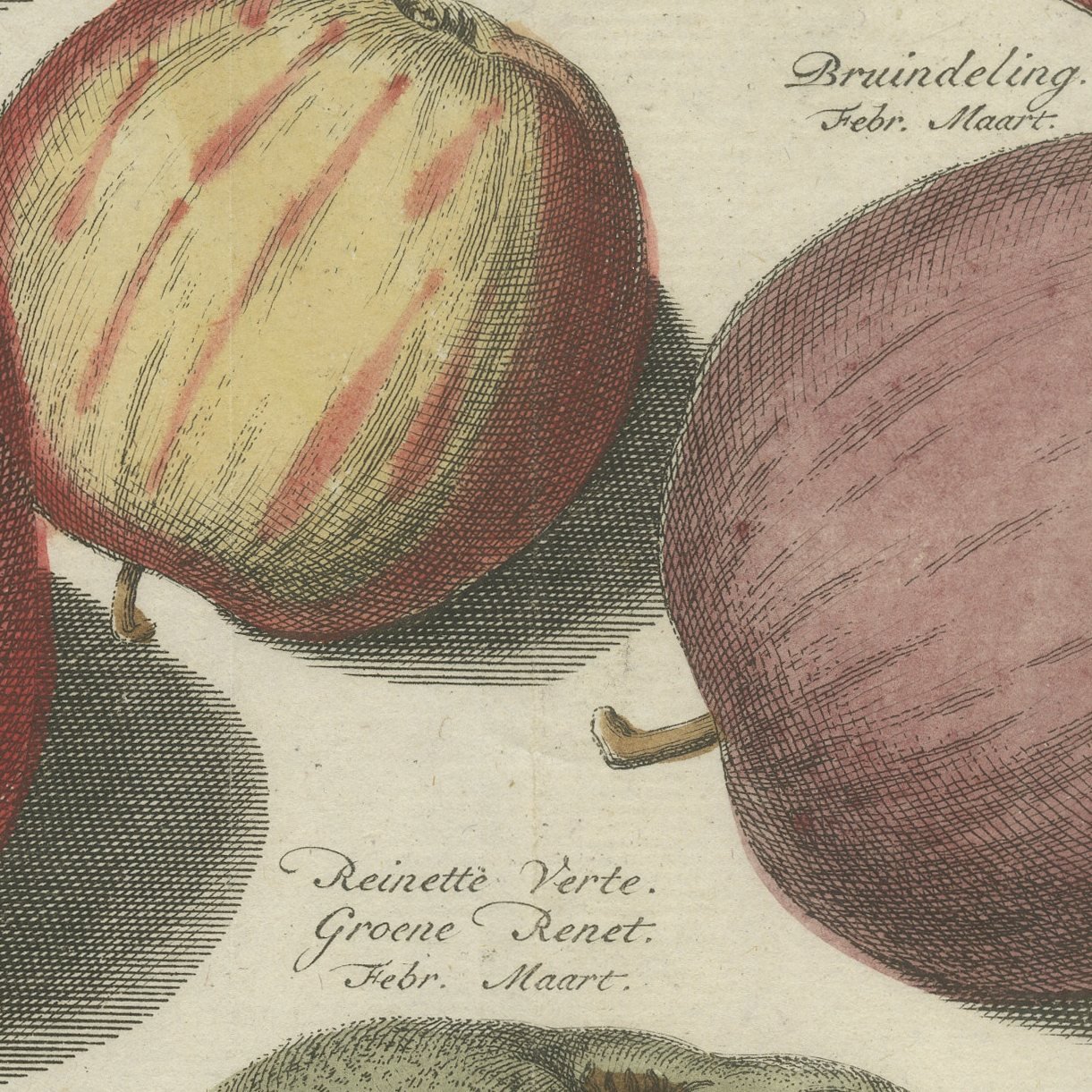
A hand-colored copper engraving of nine named apple varieties, each lettered with its name and its ripening months. The plate brings together some of the best known names in old European pomology: Bellefleur, Reinette Verte or Groene Renet, Reinette blanche or Witte Renet, Courtpendu douce or Soete Karpendu, Rode Wyn-Appel, Geele Soete Silverling, Oranje Appel, Bruindeling and Wildjes-Appel. Several are given in both Dutch and French, as the nurseries of the day listed them. The fruits are drawn full size and turned to show the flattened profile of the Courtpendu, the tall conical shoulder of the Bellefleur and the fine russet netting on the reinettes. Original watercolor over the engraved hatching gives the greens and the clear yellows their depth, lapping past the outline in places.
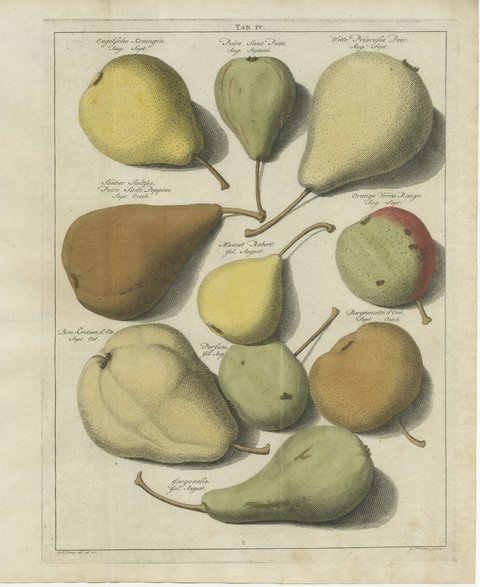
This sheet was published at Amsterdam and Dordrecht in 1790 by Allart, Holtrop, de Leeuw and Krap, in Johann Hermann Knoop's description and figures of the best sorts of apples and pears, introduced by Johannes Florentius Martinet. Knoop had charge of the Mariënburg garden at Leeuwarden and knew his fruit as a working gardener rather than a compiler, which is why his plates are still consulted on old Dutch varieties. Each is a copper engraving finished by hand in watercolor, the washes sitting over the engraved line and varying in strength from fruit to fruit as only hand color does.
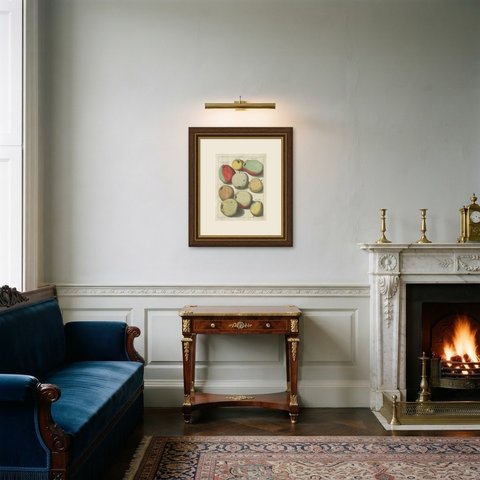
Bellefleur and the reinettes are among the few varieties on these plates that a buyer may still meet in a heritage orchard today, which makes this one of the most recognizable sheets in the volume. Knoop's achievement was to draw them from life and to pin each to its eating season, the months under the names turning a picture into a usable reference. Pomological plates of this quality are collected both by fruit historians and by decorators who want botanical material with more character than flowers. The cool greens and yellows here are easy to place: try the plate in a kitchen, a garden room or a hallway where it can be seen close up.
Light uneven toning, browner towards the edges. Marked handling soiling along the bottom and top edges. Scattered light foxing in the margin. All four corners complete.
This is an original antique plate, not a modern reproduction. This item is sold unframed.