 The sheet, as you receive it
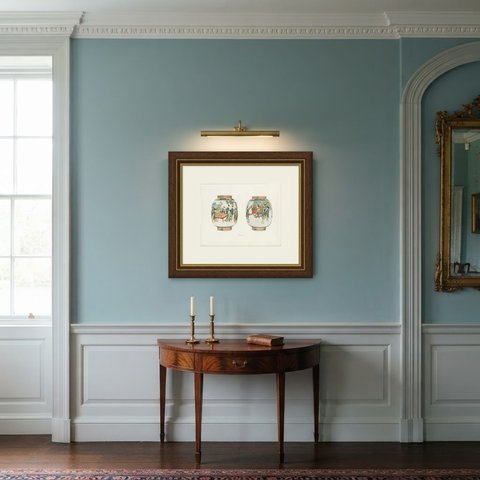
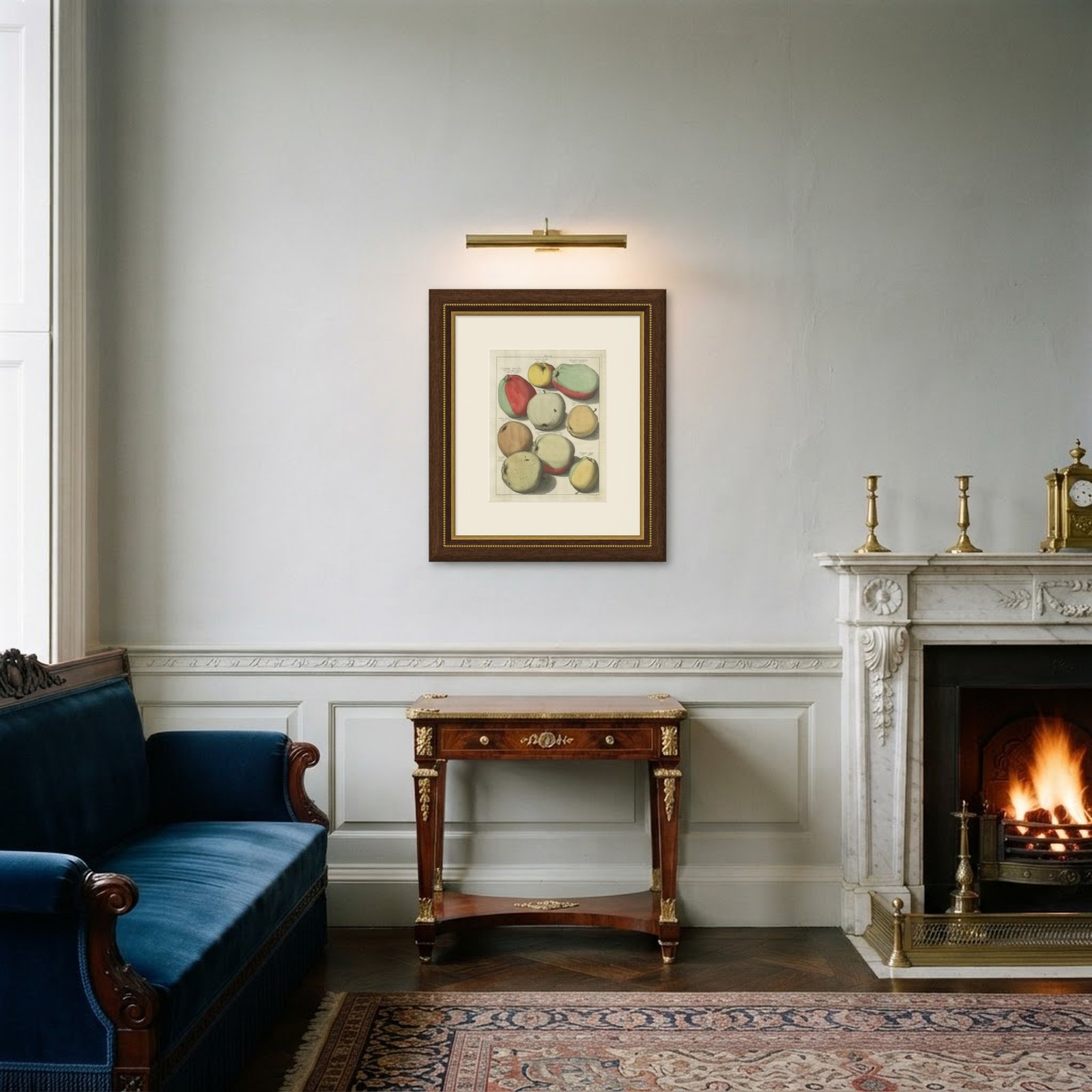 In the room
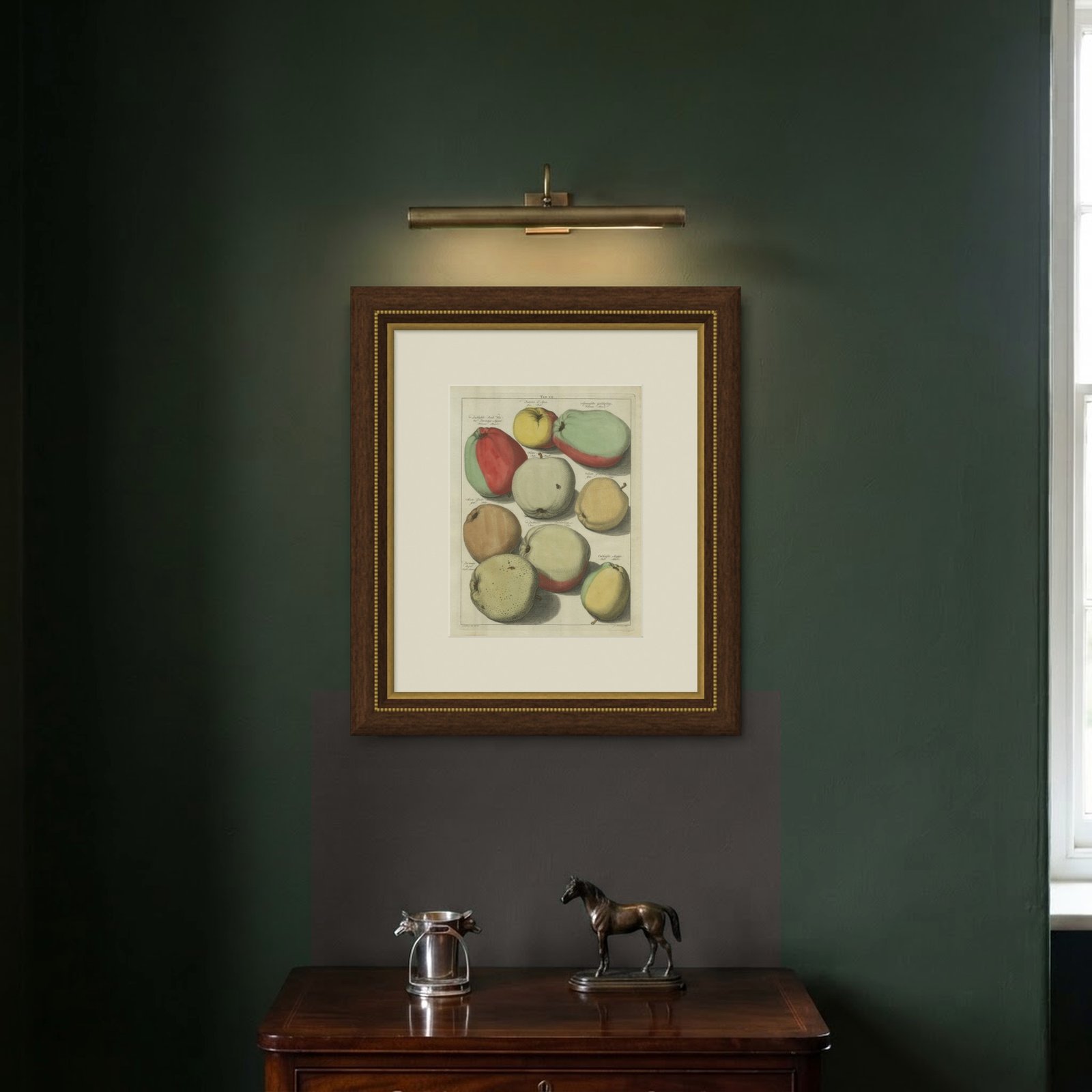

Interior designers: BarTrade members buy at their trade price. How it works
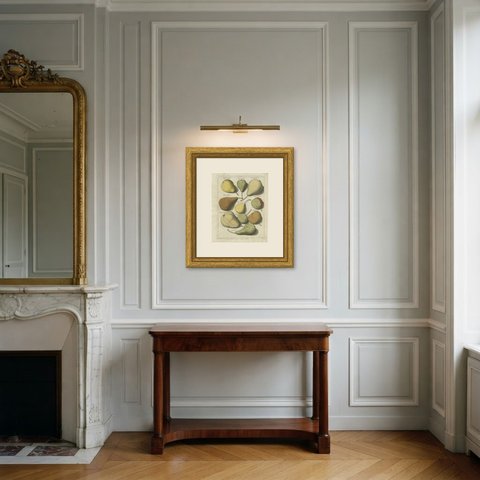
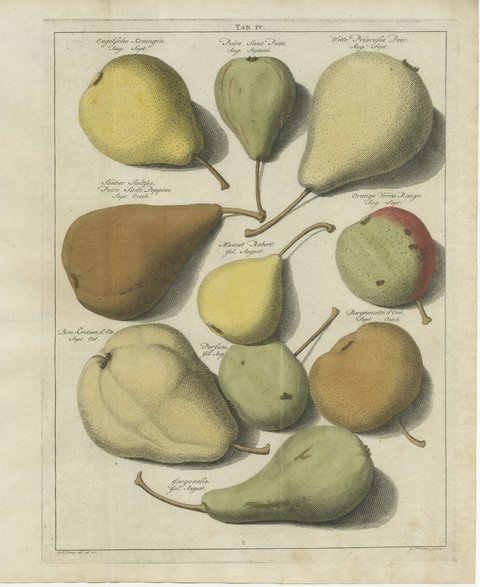
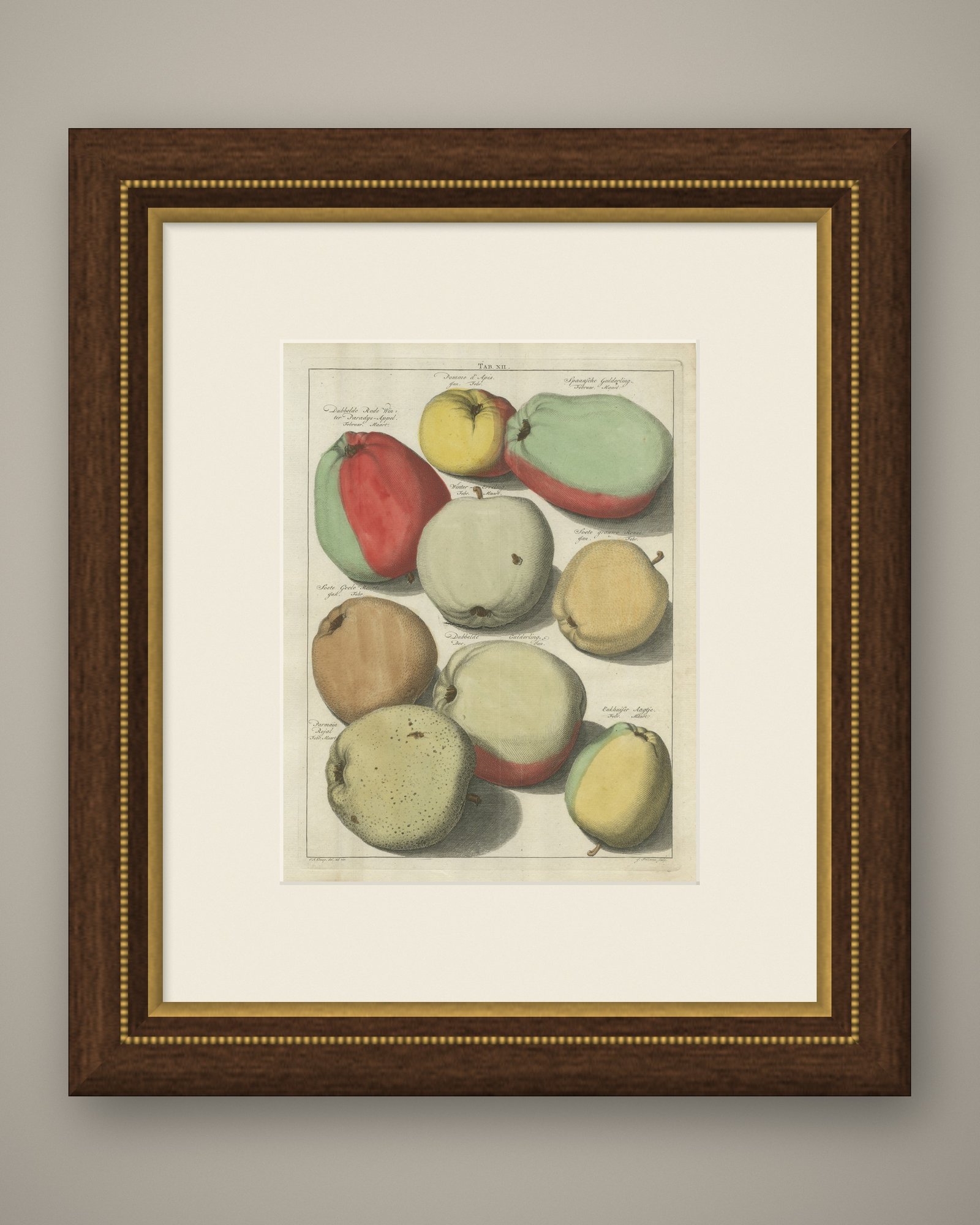
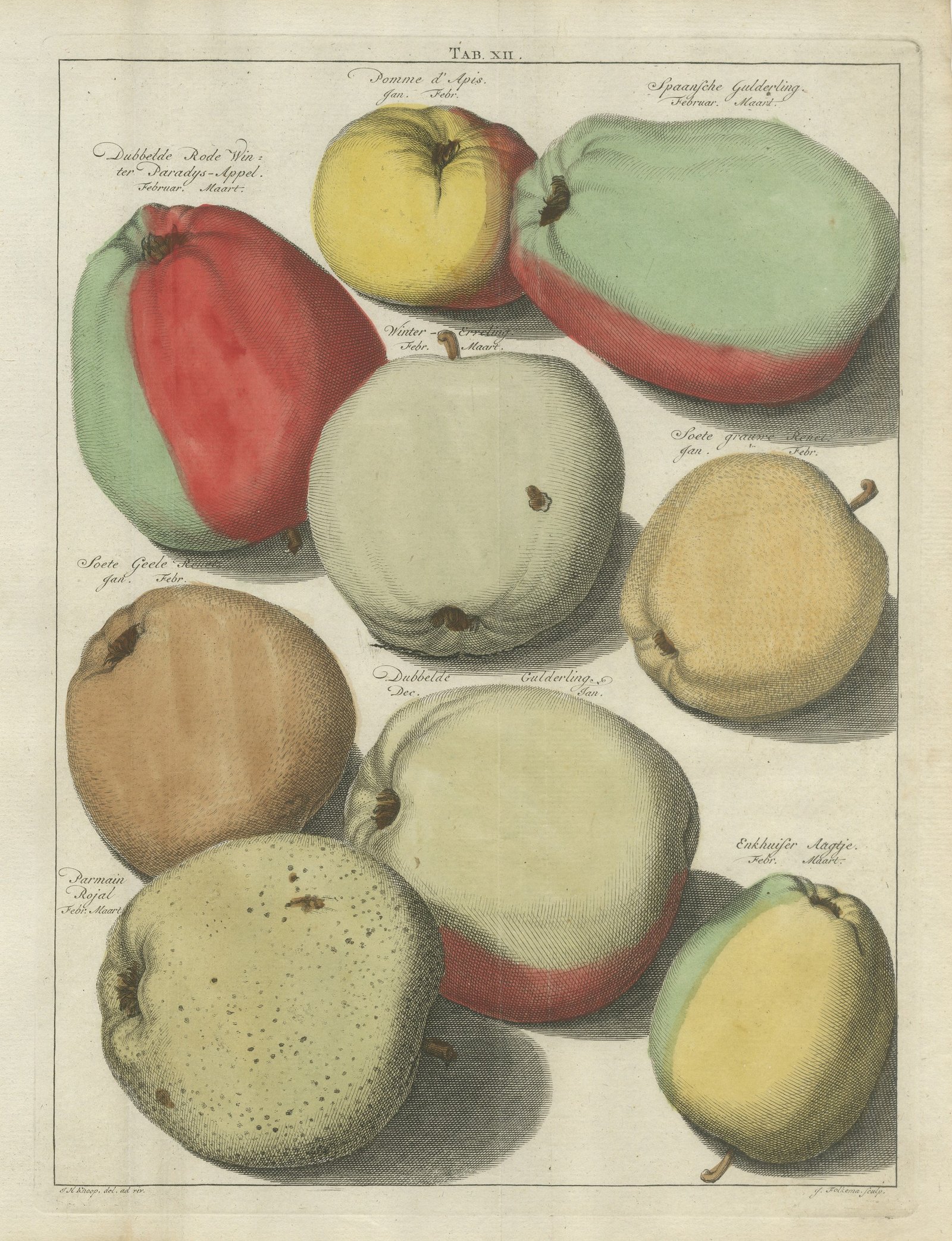
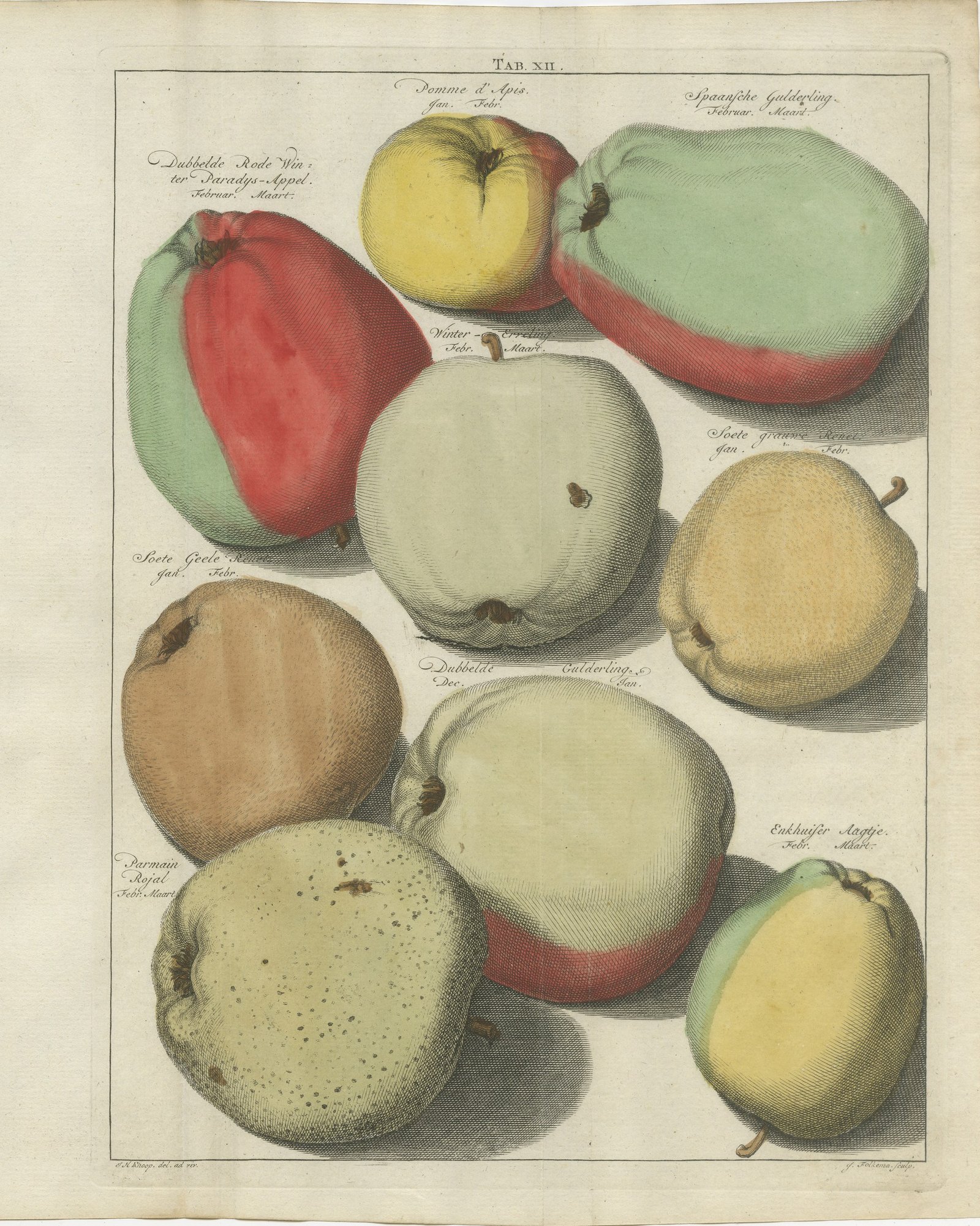
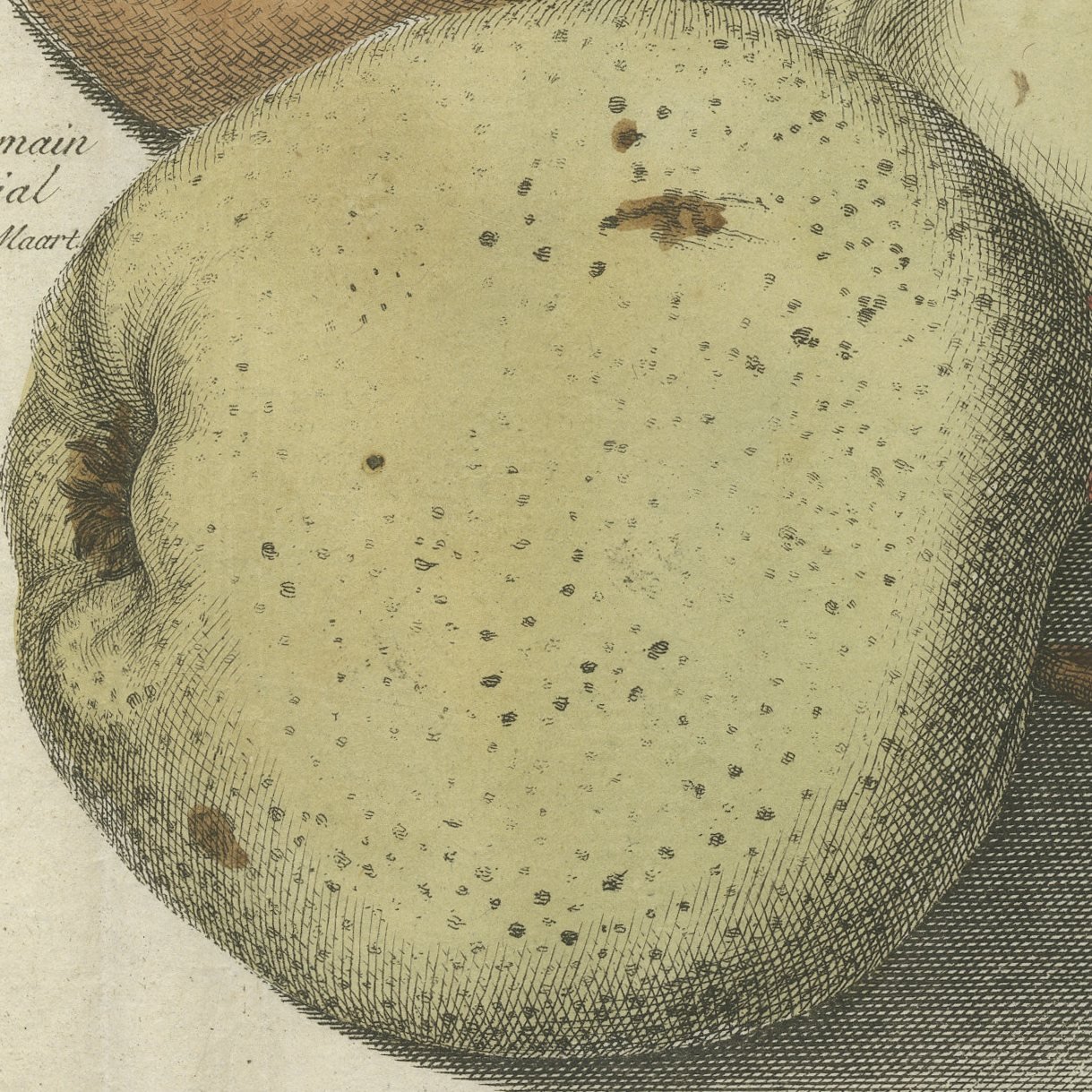
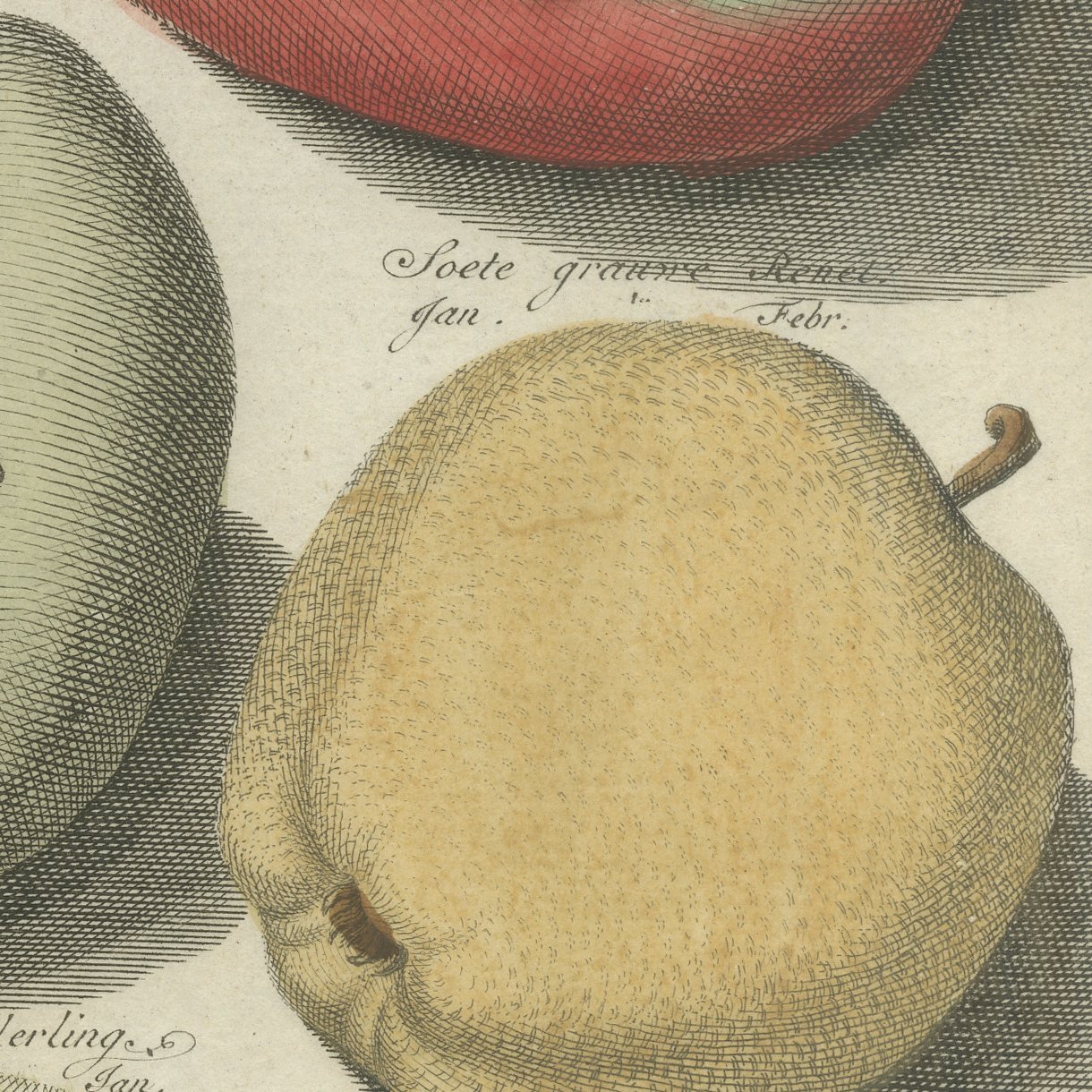
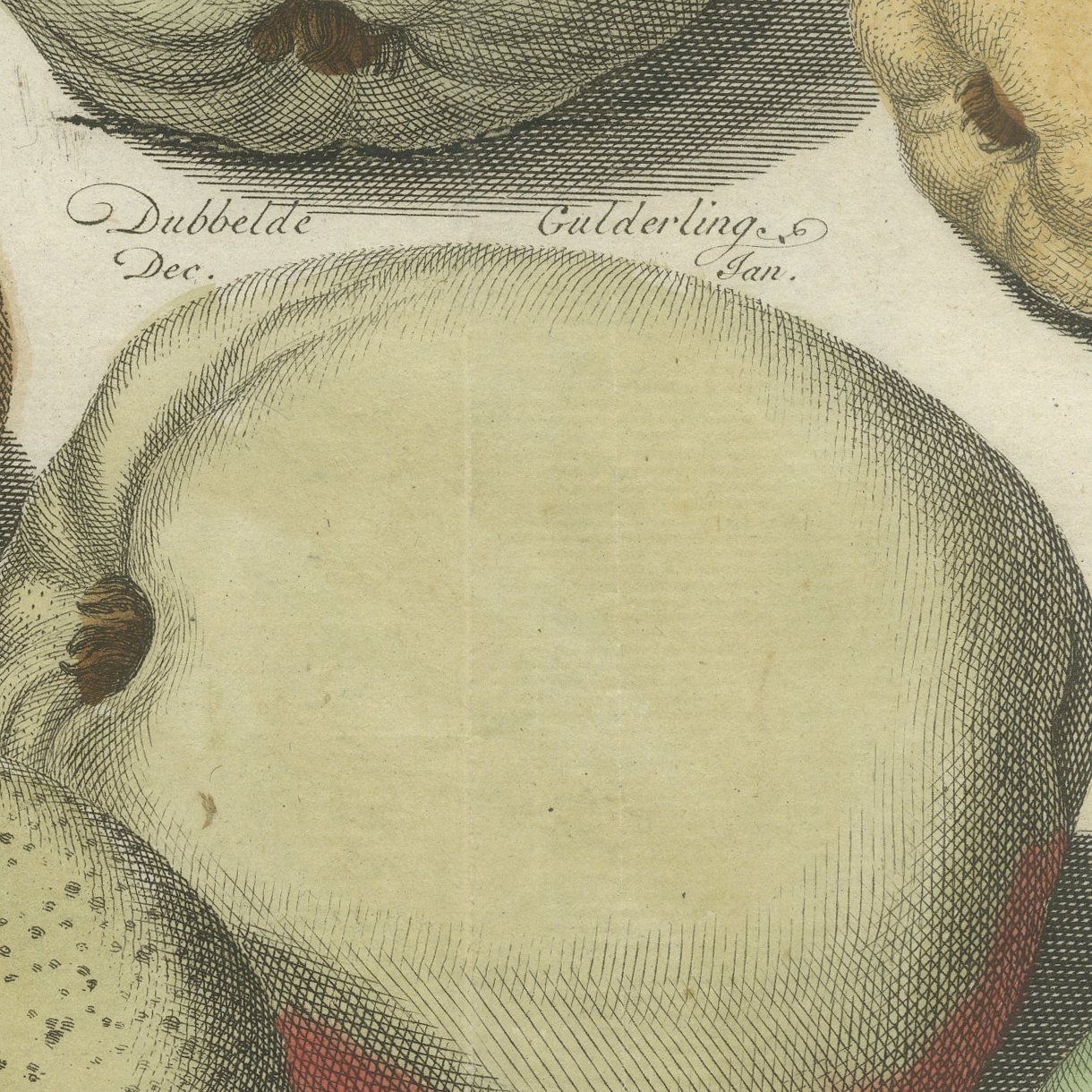
An original hand-colored copper engraving of nine named apple varieties, the long keepers that close Knoop's apple series, each lettered with its name and ripening months. On the sheet are Pomme d'Apis, Spaansche Gulderling, Dubbelde Rode Winter Paradys-Appel, Winter-Erveling, Soete grauwe Renet, Soete Geele Renet, Dubbelde Gulderling, Enkhuiser Aagtje and Parmain Rojal. Every one of them comes in during December, January, February or March. The Enkhuiser Aagtje, still grown in the Netherlands today, is drawn broad and flat-crowned beside the small, brightly flushed Pomme d'Apis, one of the oldest named apples in Europe. Hand-applied watercolor over the engraved lines builds the red of the Paradys-Appel in overlapping passes and leaves the gray russet of the Soete grauwe Renet almost dry.
Knoop's pomology appeared at Amsterdam and Dordrecht in 1790 from the presses of Allart, Holtrop, de Leeuw and Krap, carrying a preface by Johannes Florentius Martinet. The plates had first been cut for the Leeuwarden editions of 1758 and 1763 and were printed again here from the same coppers. Johann Hermann Knoop drew the fruit from life in the stadtholder's garden at Leeuwarden. The technique is copper engraving with original hand coloring, and the brushwork crosses the engraved outline in places, which is the plain evidence that the color was laid on by hand and not printed.
This is the strongest sheet in the apple series for a collector of heirloom fruit, because two of its varieties can still be met in the living world: the Enkhuiser Aagtje survives in Dutch heritage orchards and the tiny Pomme d'Apis, known since the Renaissance, is still grown by enthusiasts. Knoop drew both from the fruit and recorded the months at which they were fit to eat, which is precisely the information a grower wanted. The plate therefore reads as a bridge between an eighteenth-century Frisian garden and the orchards of today. It makes a handsome and conversational piece above a kitchen table or in a hallway where guests pass close by.
Light uneven toning, browner towards the edges. Marked handling soiling along the bottom and top edges. Scattered light foxing in the margin. All four corners complete.
This is an original antique plate, not a modern reproduction. This item is sold unframed.