 The sheet, as you receive it
 In the room



Interior designers: BarTrade members buy at their trade price. How it works
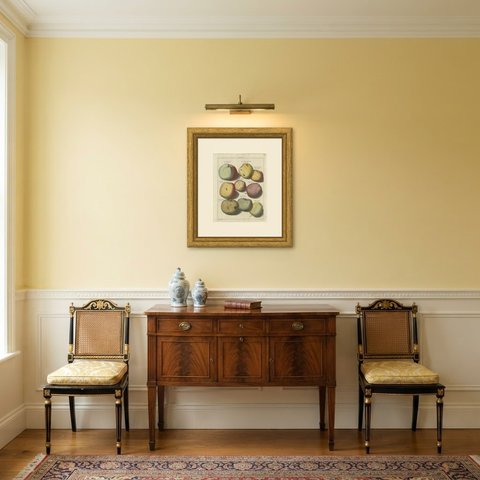
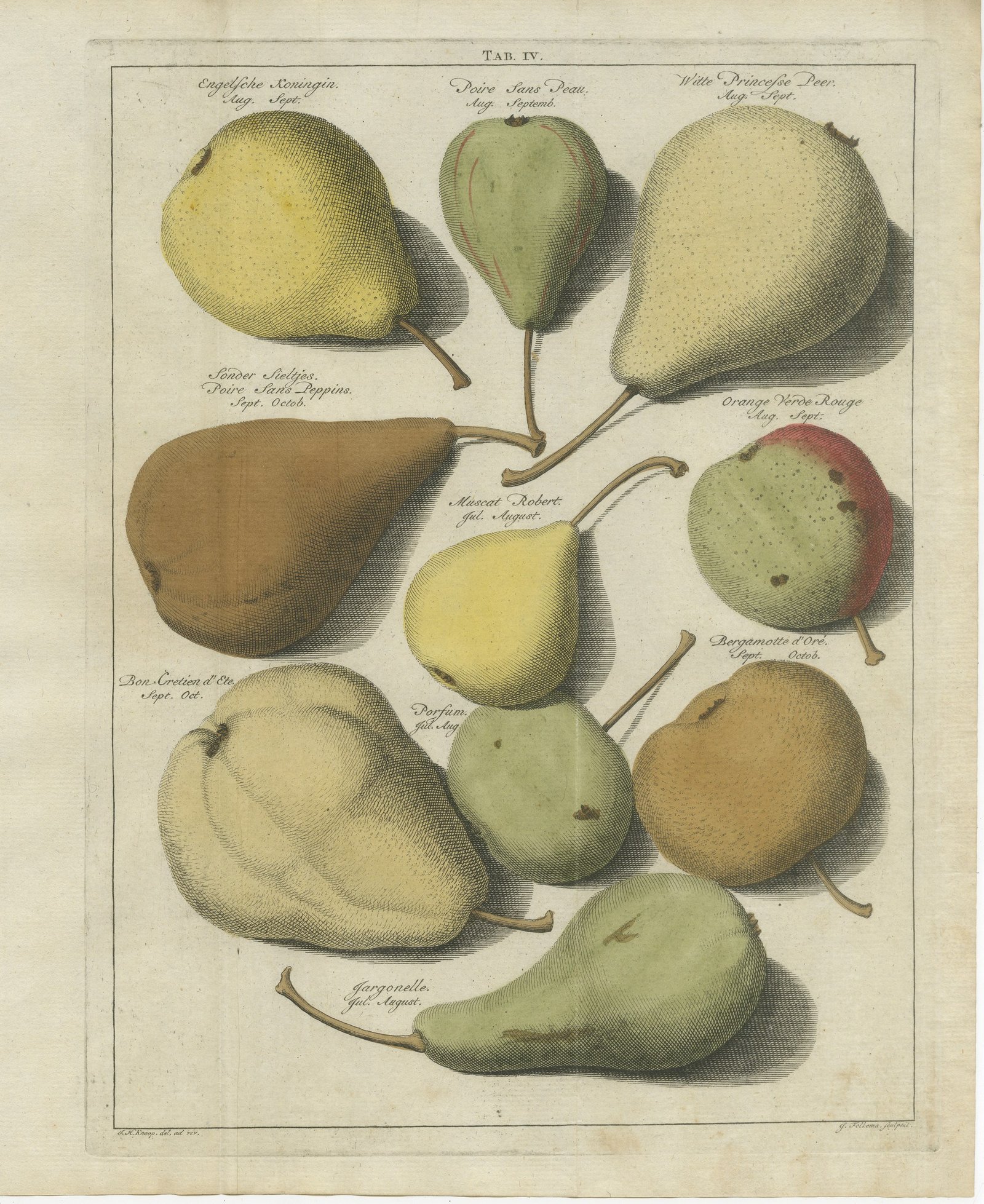
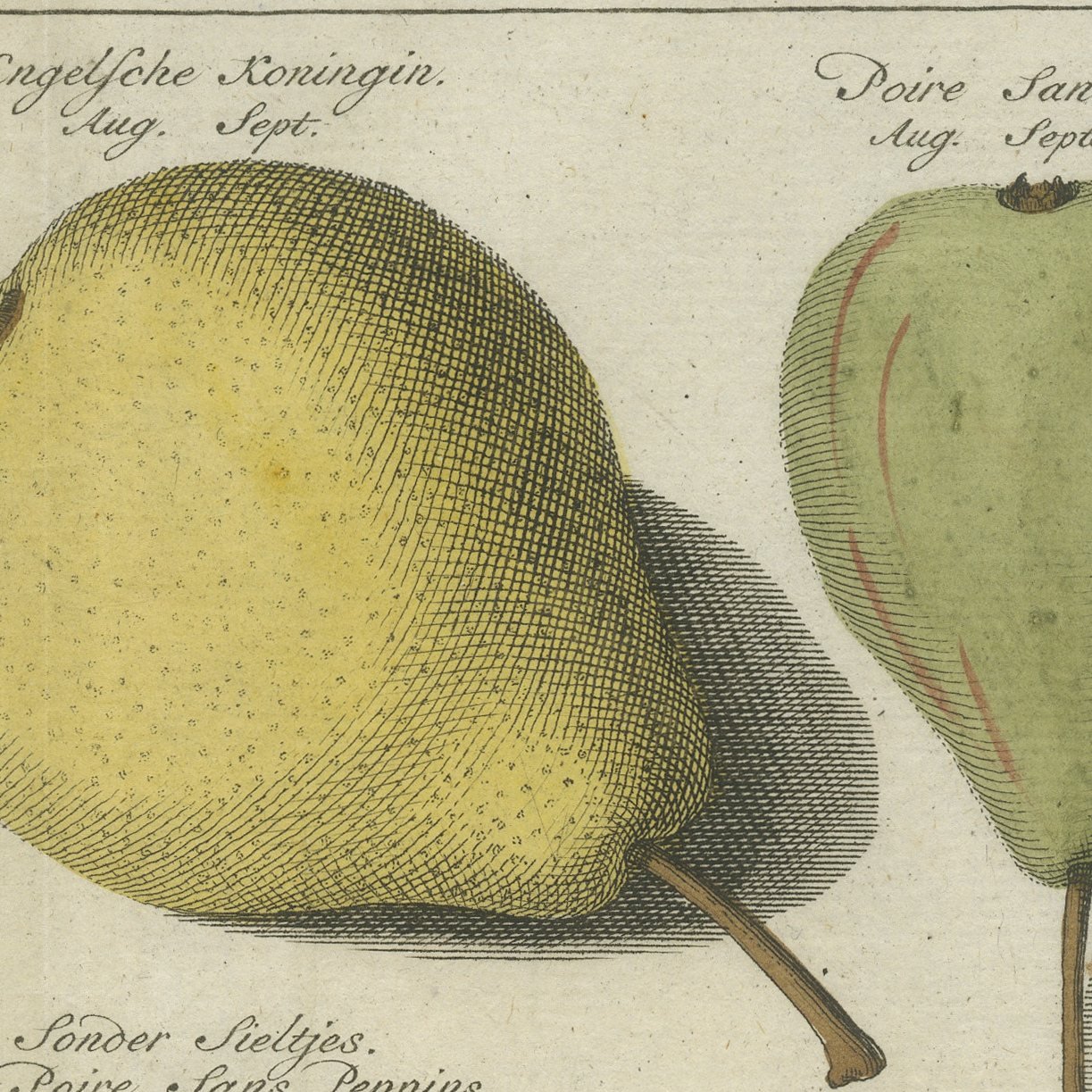
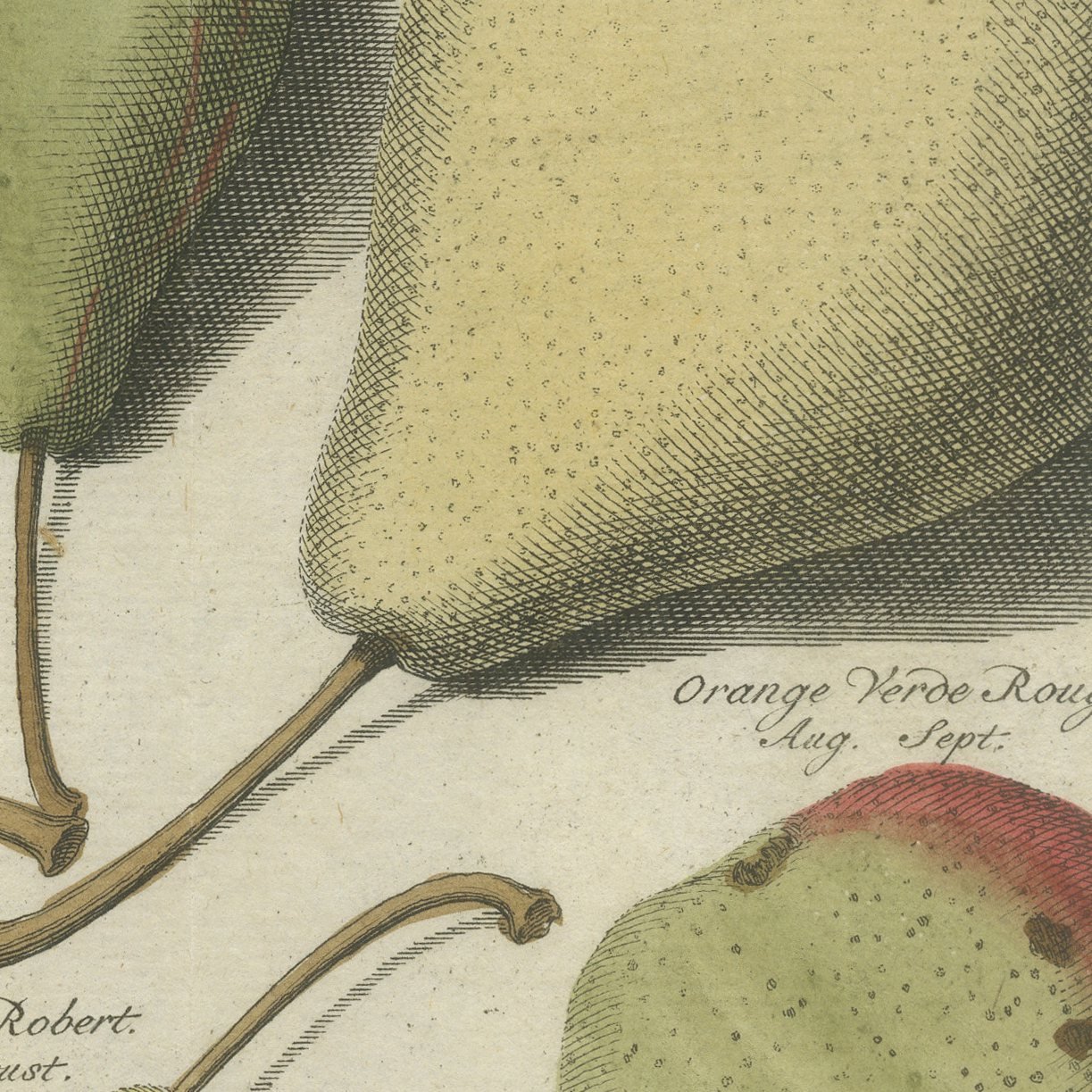
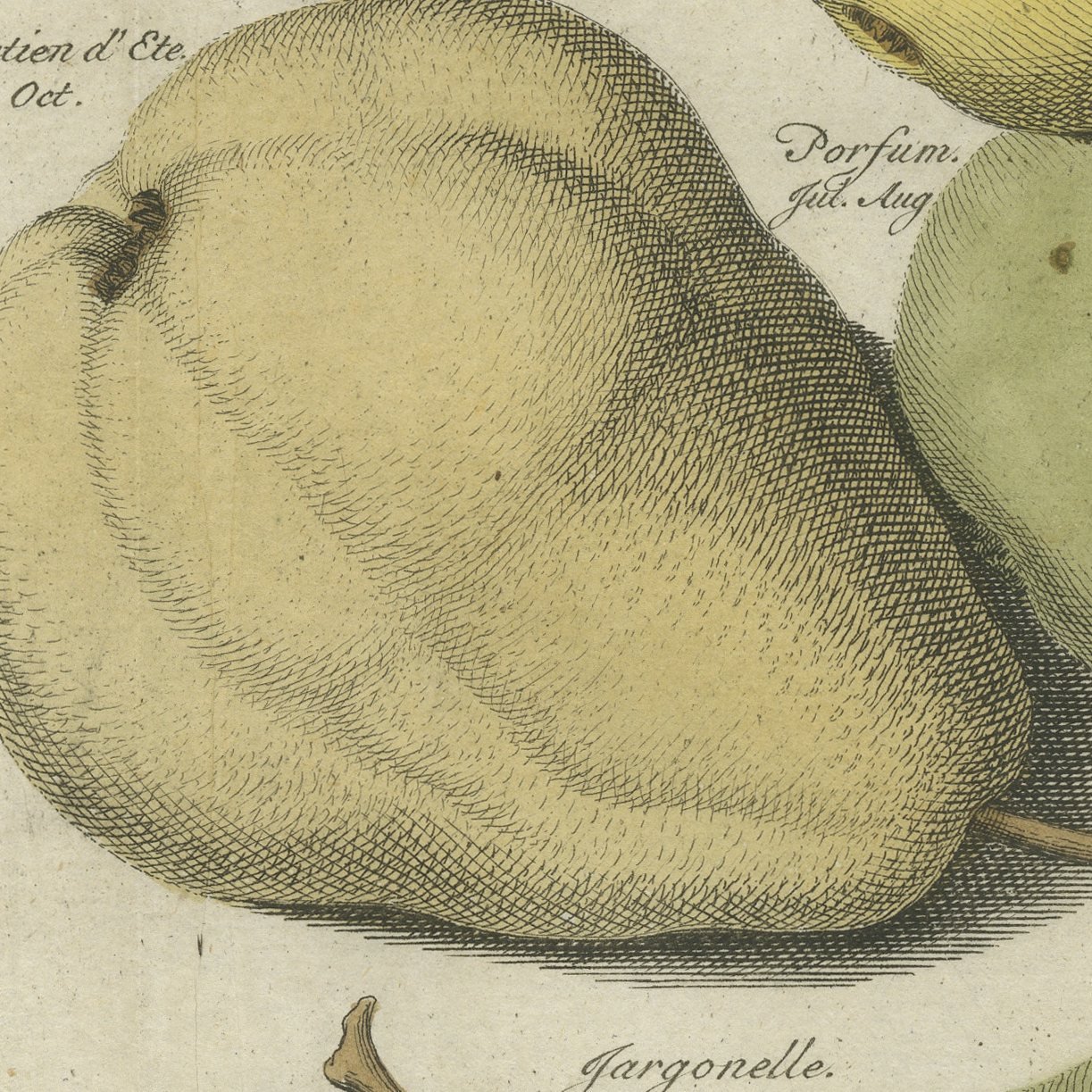
A hand-colored copper engraving of ten named pear varieties, each lettered with its name and its ripening months, including the curious Sonder Sieltjes or Poire Sans Peppins, the seedless pear. Beside it are Engelsche Koningin, Poire Sans Peau, Witte Princesse Peer, Orange Verde Rouge, Muscat Robert, Bergamotte d'Oré, Bon-Cretien d'Ete and Jargonelle; one further name on the sheet is not fully legible and is therefore left unnamed here. Most of the fruit ripens in July, August and September. Knoop drew each pear from the living specimen, and the engraved hatching follows the thin skin of the Poire Sans Peau and the long tapering neck of the Jargonelle closely. Original watercolor over the engraving varies in density within every fruit and laps past the outline in places.
The plate comes from Johann Hermann Knoop's Beschrijving en Afbeeldingen van de beste soorten van Appelen en Peeren, published at Amsterdam and Dordrecht by Allart, Holtrop, de Leeuw and Krap in 1790, with a preface by the Zutphen minister and naturalist Johannes Florentius Martinet. Knoop was gardener to the widow of the Frisian stadtholder at Leeuwarden and the first systematic Dutch pomologist. He drew every fruit from the living specimen, and the plates are lettered ad vivum to say so. The engraving is on copper and the color is original hand color in watercolor, laid over the engraved hatching.
Two of the names on this plate describe what the fruit lacks: Poire Sans Peau, the pear without a skin, and Sonder Sieltjes, the pear without pips. Growers of the period prized such oddities, and Knoop, who drew from the tree rather than from books, was the right man to record them accurately together with the month each came into eating. Jargonelle, meanwhile, is still planted today, which gives the sheet a living link to modern heritage orchards. The pale greens and warm yellows here are gentle enough for a bedroom or a quiet hallway, while for a collector the plate belongs with the rest of the pear series as a record of what the Dutch were actually growing.
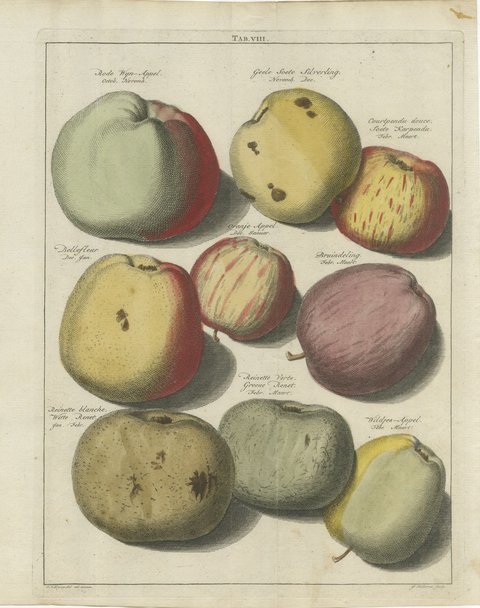
Light uneven toning, browner towards the edges. Handling soiling along the bottom and top edges. A few small foxing spots in the margin. All four corners complete.
This is an original antique plate, not a modern reproduction. This item is sold unframed.