 The sheet, as you receive it
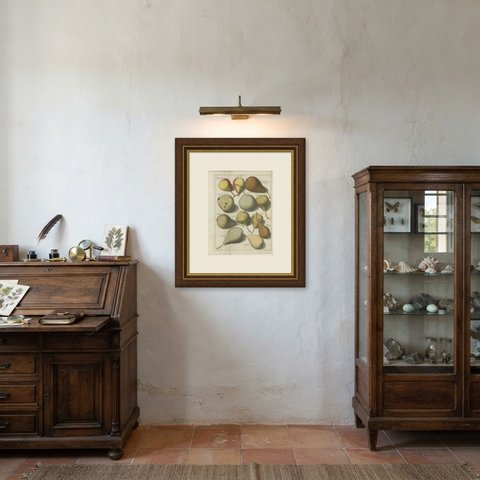
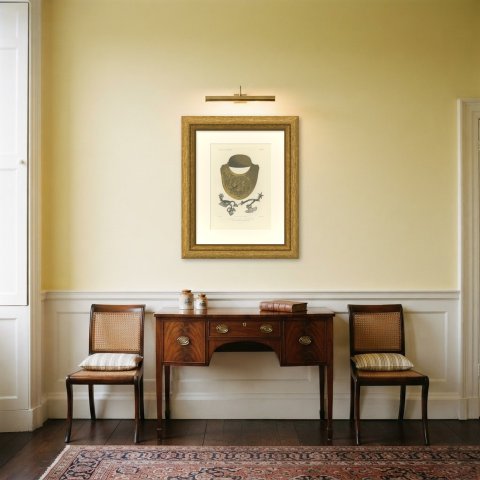
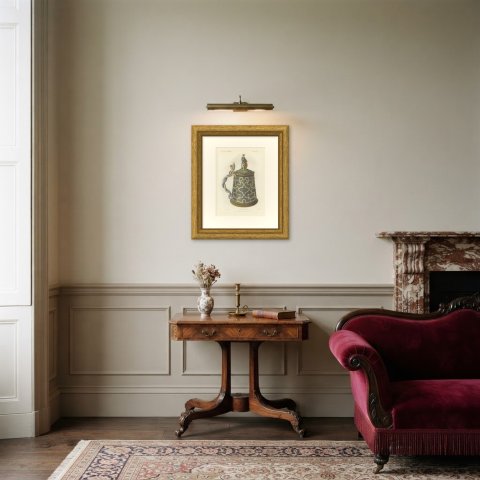
 In the room


Interior designers: BarTrade members buy at their trade price. How it works
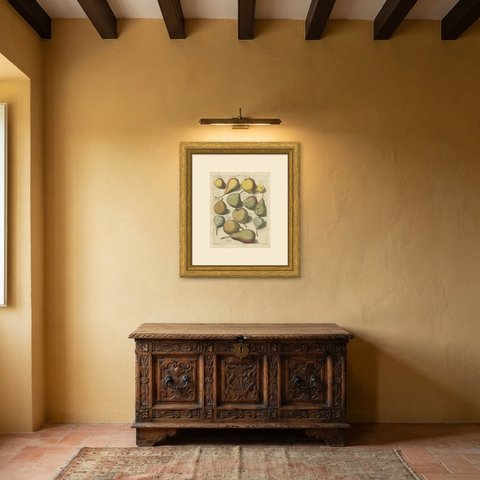
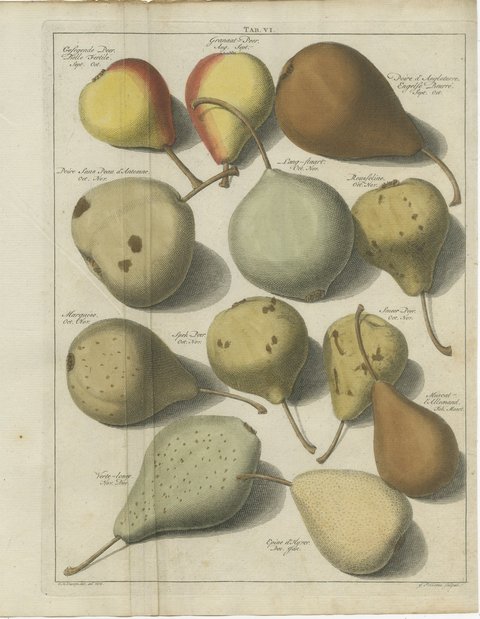
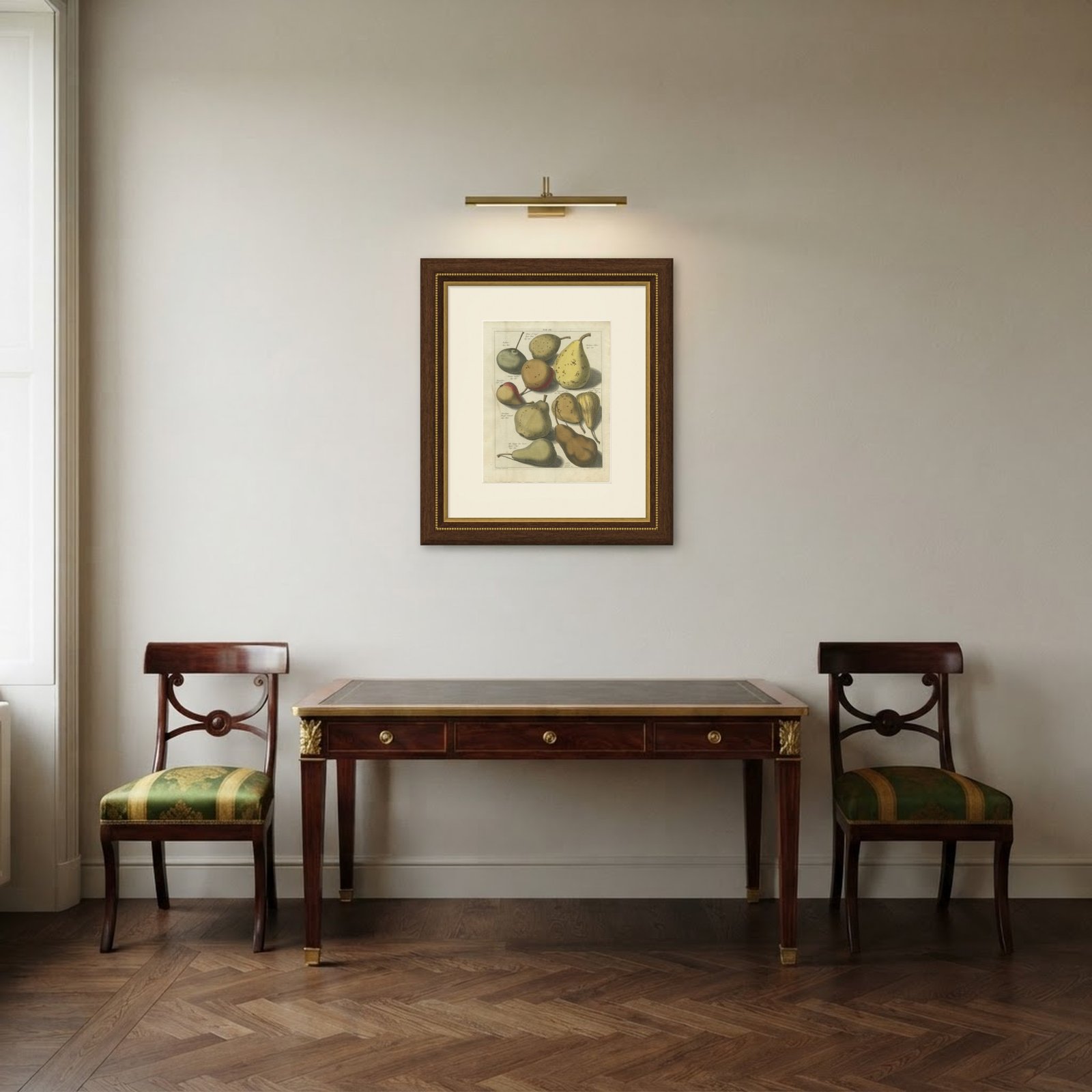
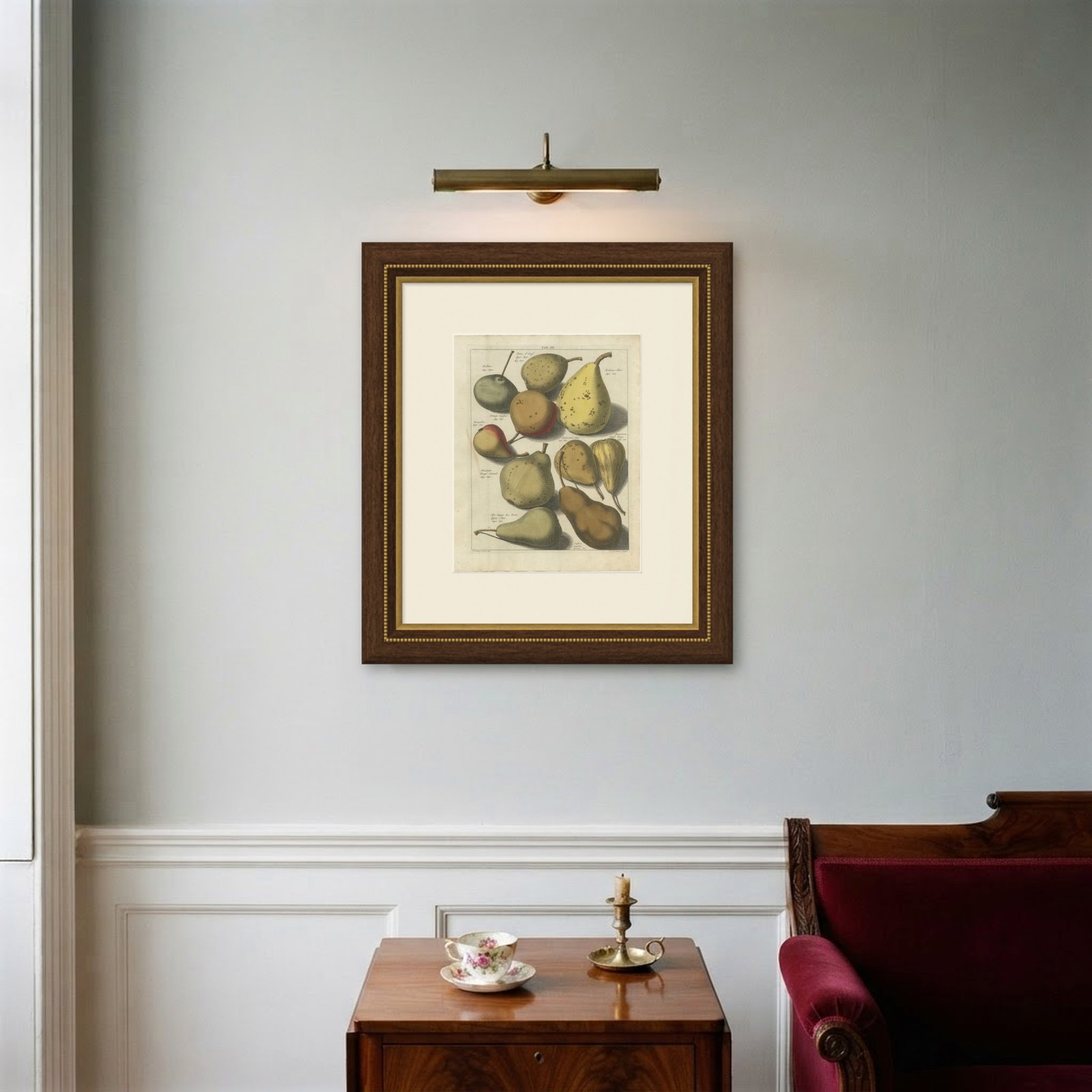
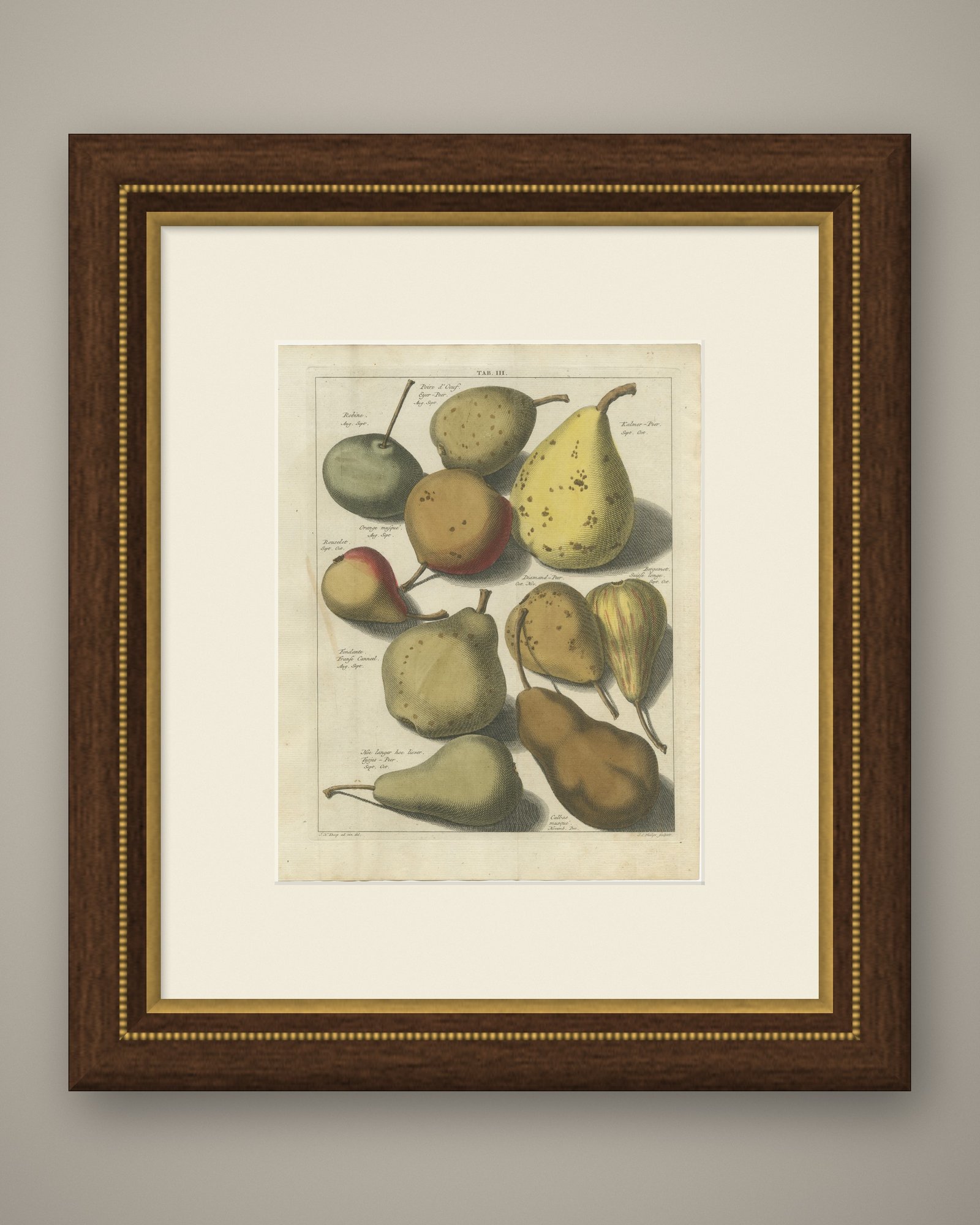
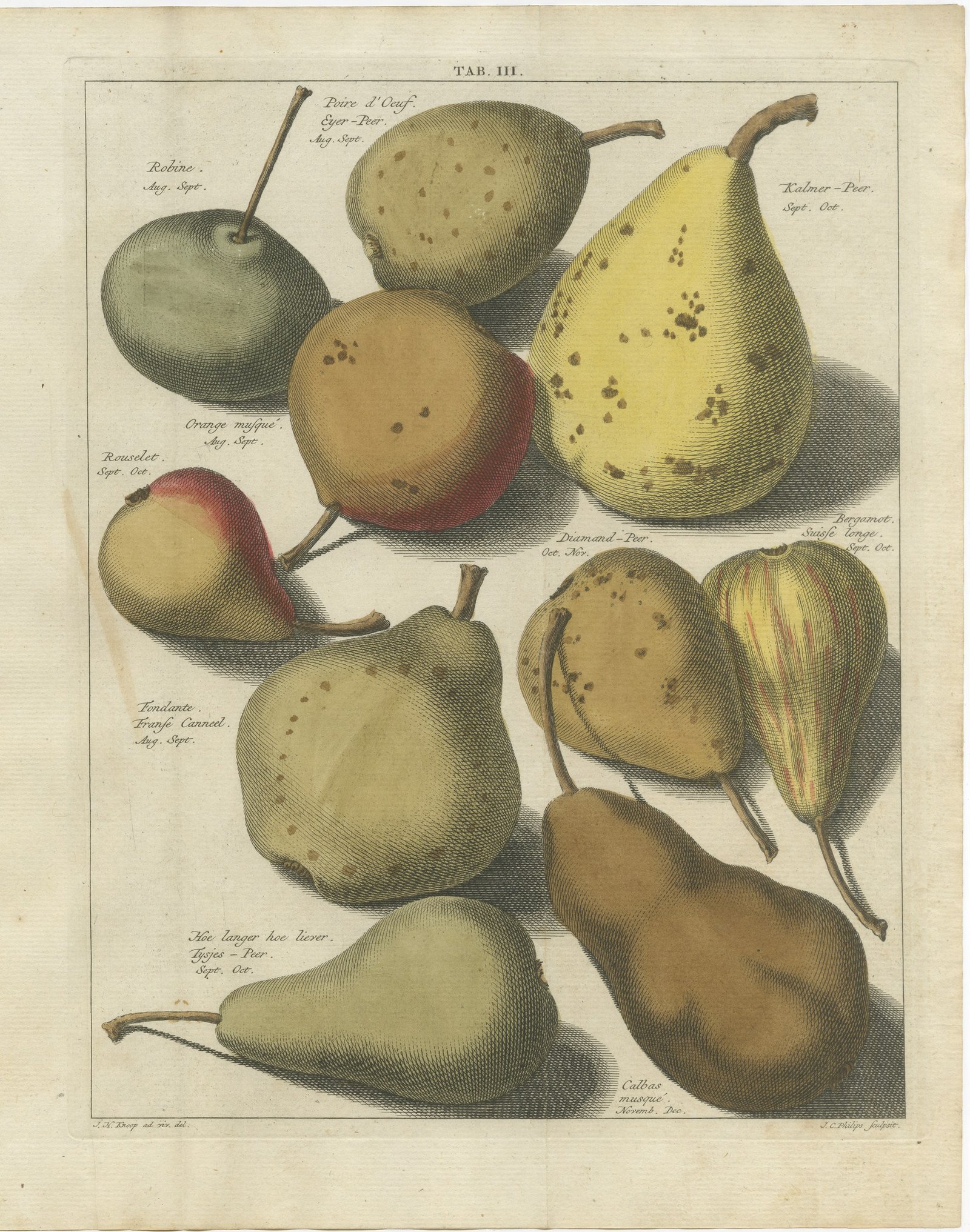
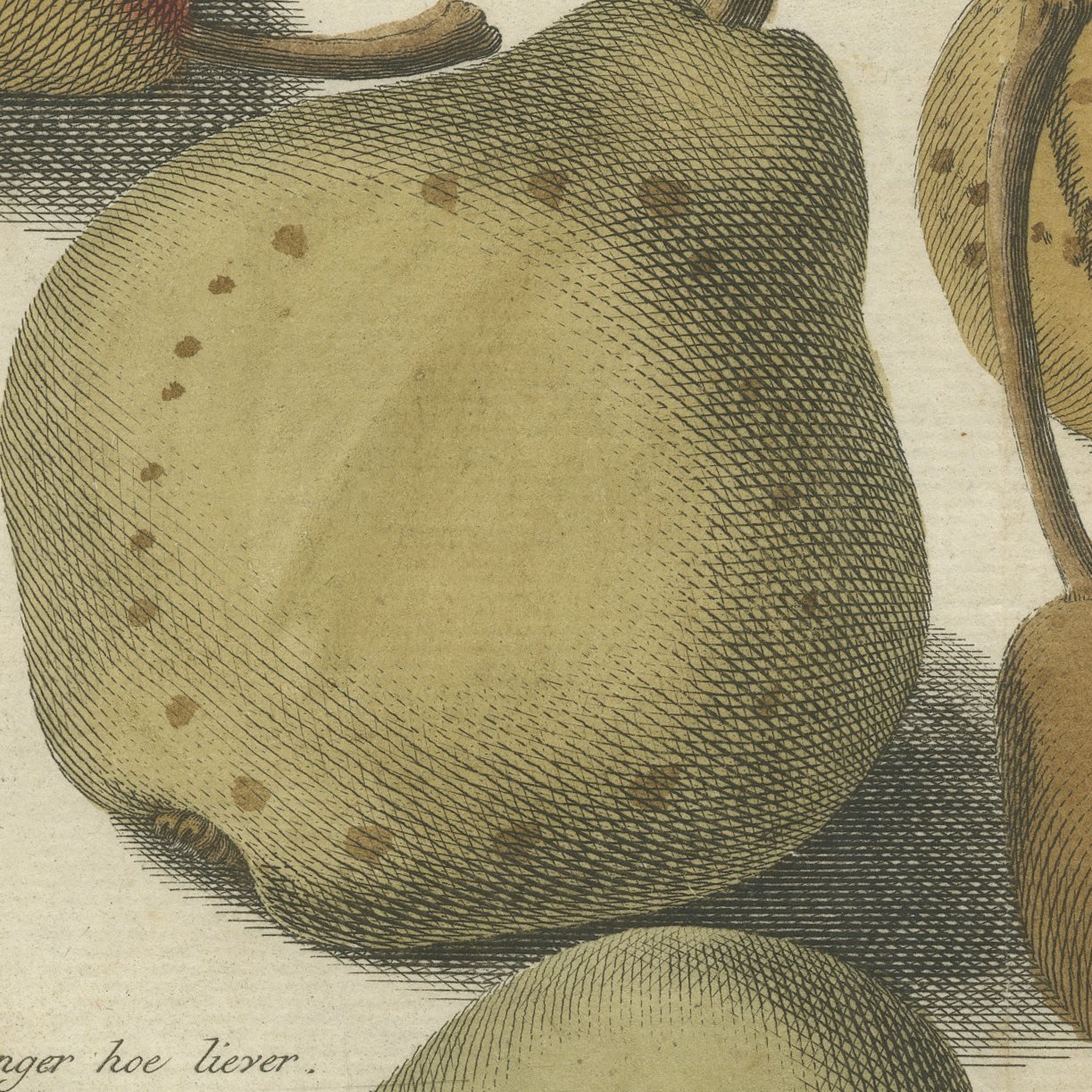
An original hand-colored copper engraving showing ten named pear varieties with their names and ripening months lettered beneath them, among them the wonderfully titled Hoe langer hoe liever or Tysjes-Peer, the longer the dearer. With it on the sheet are Robine, Poire d'Oeuf or Eyer-Peer, Kalmer-Peer, Orange musqué, Rouselet, Diamand-Peer, Bergamot Suisse longe, Fondante or Franse Canneel, and Calbas musqué. The forms run from the almost spherical Eyer-Peer to the long gourd-shaped Calbas, and Knoop drew each from the living fruit at full size, giving the stalk and the eye as carefully as the body. Hand-applied watercolor over the engraved hatching carries greens, straw yellows and a dusty red blush, varying in strength within a single pear.
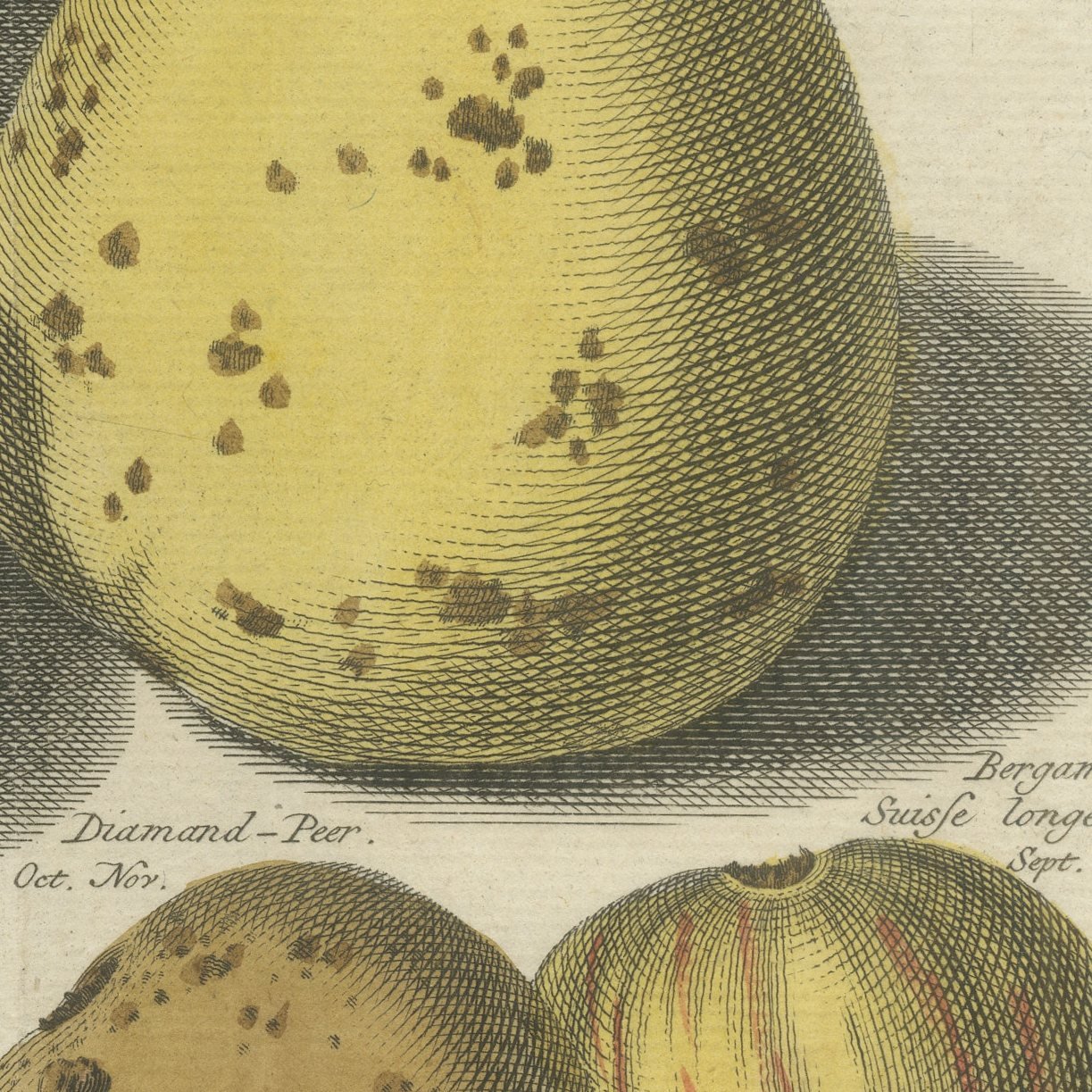
Knoop's pomology appeared at Amsterdam and Dordrecht in 1790 from the presses of Allart, Holtrop, de Leeuw and Krap, carrying a preface by Johannes Florentius Martinet. The plates had first been cut for the Leeuwarden editions of 1758 and 1763 and were printed again here from the same coppers. Johann Hermann Knoop drew the fruit from life in the stadtholder's garden at Leeuwarden. The technique is copper engraving with original hand coloring, and the brushwork crosses the engraved outline in places, which is the plain evidence that the color was laid on by hand and not printed.
Old fruit names are half the pleasure of these plates, and few are better than Hoe langer hoe liever, a pear so good that the longer you ate it the fonder you grew of it. Knoop recorded such local Dutch names beside their French equivalents and fixed each to a season, which is why pomologists still read him. The variety of silhouette on this sheet, round, oval and gourd-necked, makes it one of the most graphic plates in the book. Hung in a kitchen or a breakfast room, ideally where morning light falls across it, the soft original coloring looks entirely at home, and collectors of fruit prints know how rarely such a named group turns up as a single sheet.
Light uneven toning, browner towards the edges. Handling soiling along the bottom and top edges. A few small foxing spots in the margin. Slight wear at the bottom right corner. A small light fleck in the printed area.
This is an original antique plate, not a modern reproduction. This item is sold unframed.