 The sheet, as you receive it
 In the room



Interior designers: BarTrade members buy at their trade price. How it works
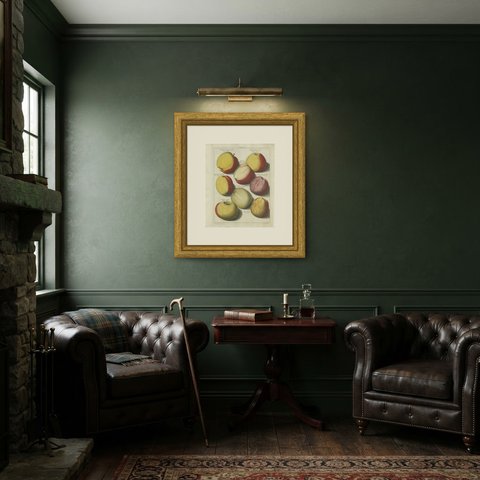
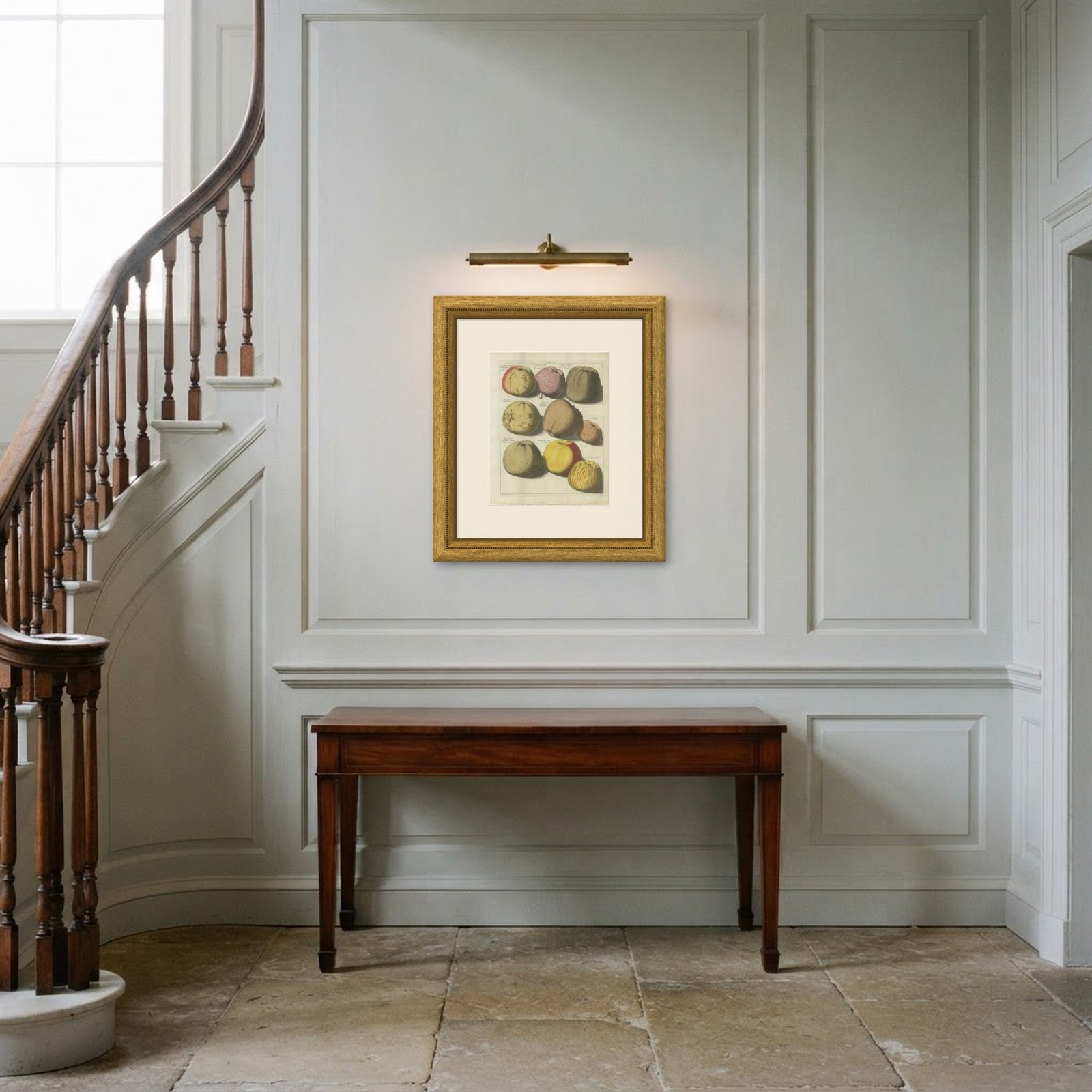
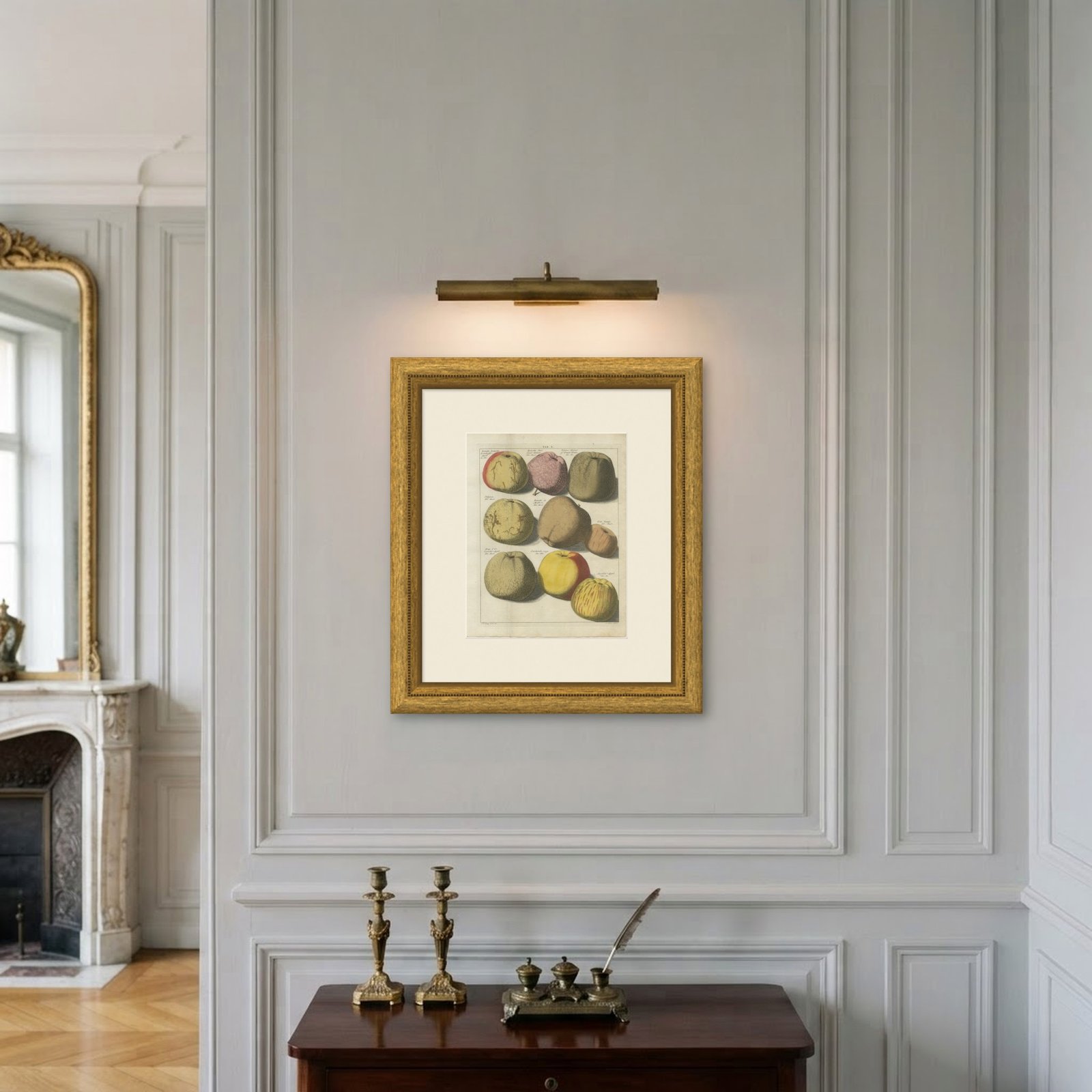
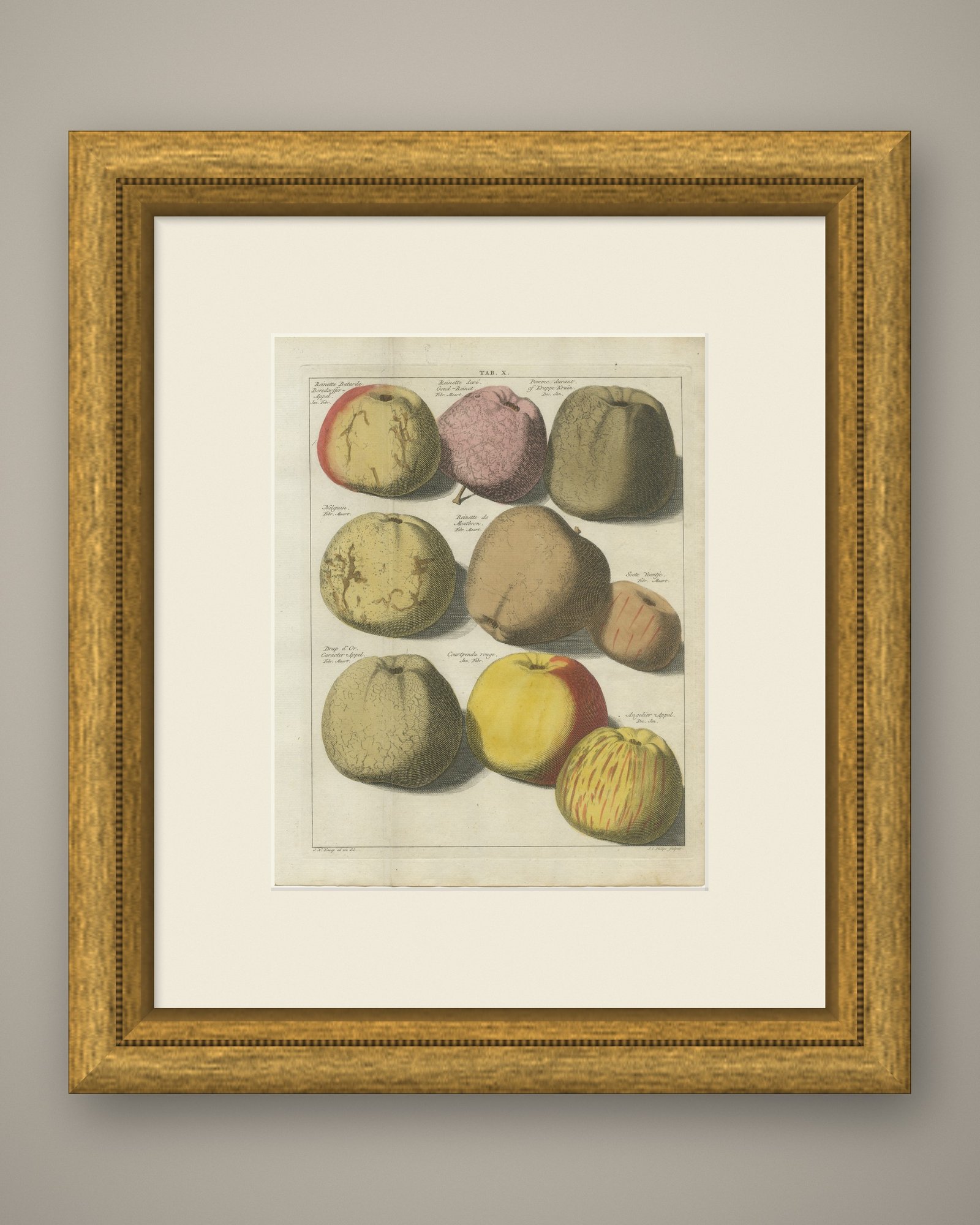
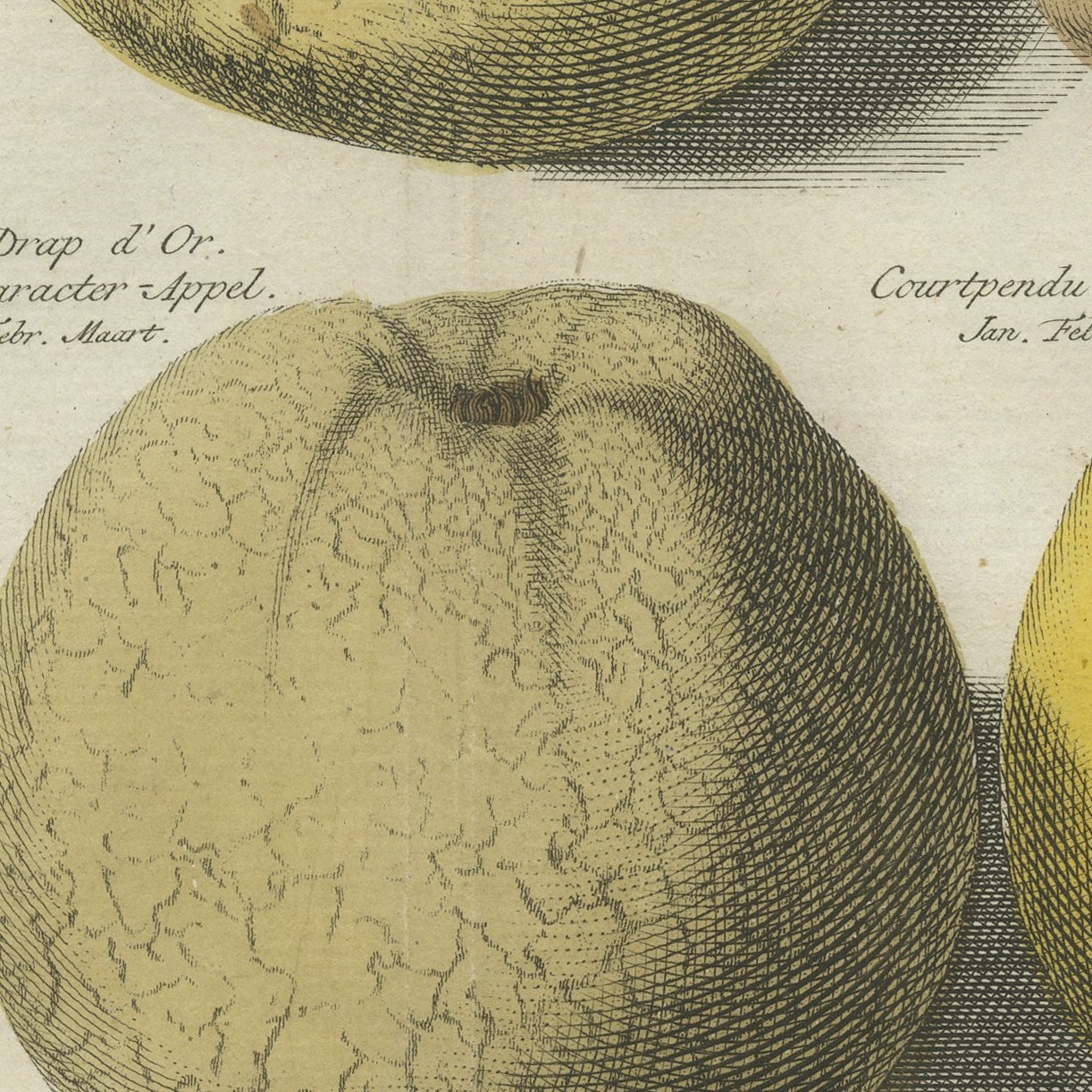
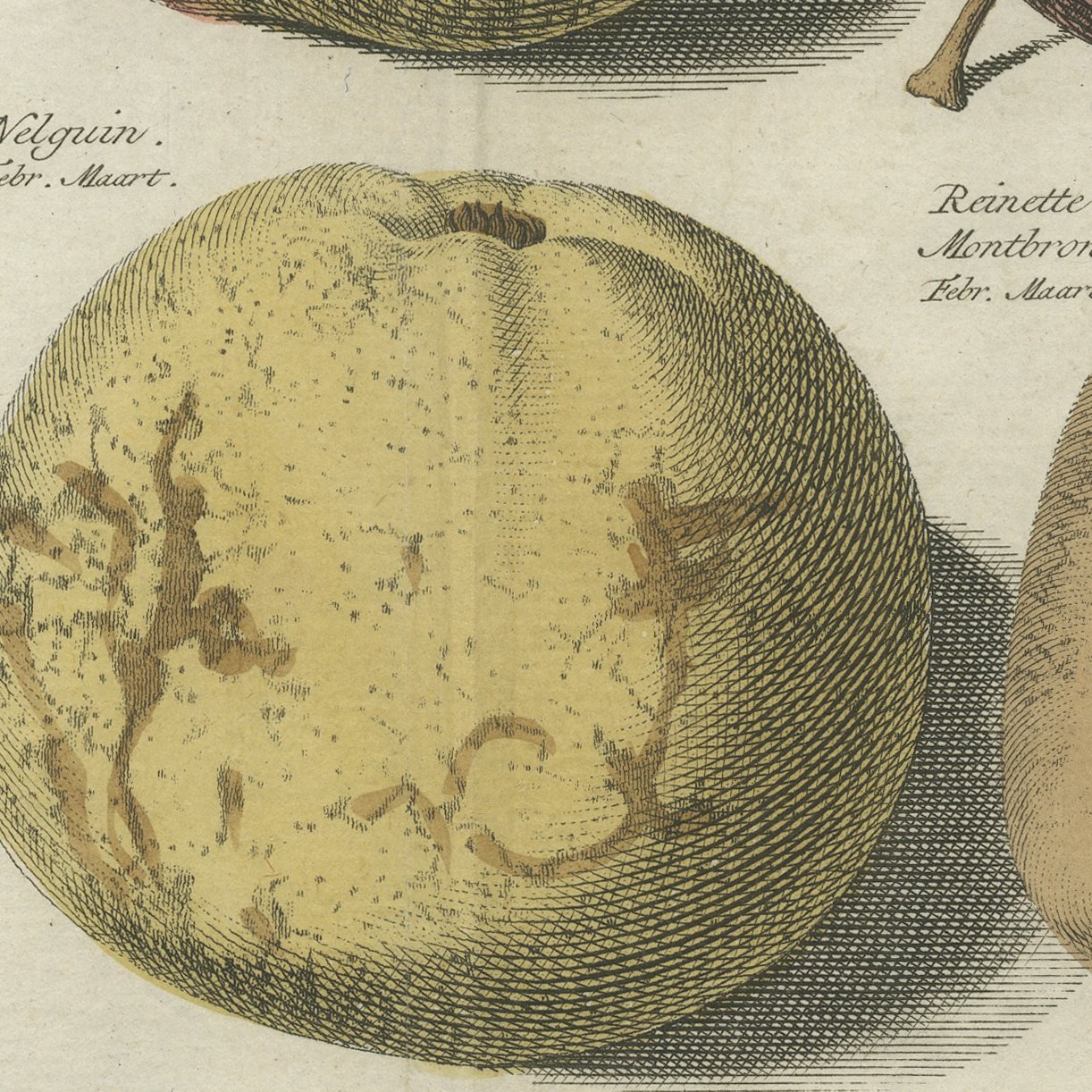
This antique hand-colored copper engraving sets out nine named apple varieties with their names and ripening months lettered beneath each fruit: Reinette Batarde or Borsdorffer-Appel, Reinette doré or Goud-Reinet, Pomme durant of Krappe-Kruin, Nelguin, Reinette de Montbron, Soete Veentje, Drap d'Or or Caracter-Appel, Courtpendu rouge and Angelier-Appel. It is a cosmopolitan sheet, pulling in a Saxon apple, two French reinettes and the gold-skinned Drap d'Or, whose name means cloth of gold. Knoop drew each from the living fruit, tilting the apples so that profile and crown are both readable, and the engraver carried the fine russeting and the ribbed shoulders into line. The original watercolor is laid on by hand, strongest on the red cheeks and thinned almost to nothing over the palest fruit.
The plate comes from Johann Hermann Knoop's Beschrijving en Afbeeldingen van de beste soorten van Appelen en Peeren, published at Amsterdam and Dordrecht by Allart, Holtrop, de Leeuw and Krap in 1790, with a preface by the Zutphen minister and naturalist Johannes Florentius Martinet. Knoop was gardener to the widow of the Frisian stadtholder at Leeuwarden and the first systematic Dutch pomologist. He drew every fruit from the living specimen, and the plates are lettered ad vivum to say so. The engraving is on copper and the color is original hand color in watercolor, laid over the engraved hatching.
What this plate records is an international fruit trade. The Borsdorffer came out of Saxony, Montbron and Drap d'Or from French nurseries, and all were being grown and compared in Dutch gardens by the time Knoop drew them. Setting the foreign names against their Dutch equivalents was one of the most useful things his work did, and heritage orchardists still turn to these pages when they need to know what a name meant before the nineteenth century. For an interior, the warm gold and red of this sheet sits beautifully in a dining room or a kitchen, and it makes an excellent anchor for a small group of antique fruit prints.
Light uneven toning, browner towards the edges. Handling soiling along the bottom and top edges. Scattered foxing in the margin. All four corners complete.
This is an original antique plate, not a modern reproduction. This item is sold unframed.