 The sheet, as you receive it
 In the room


Interior designers: BarTrade members buy at their trade price. How it works
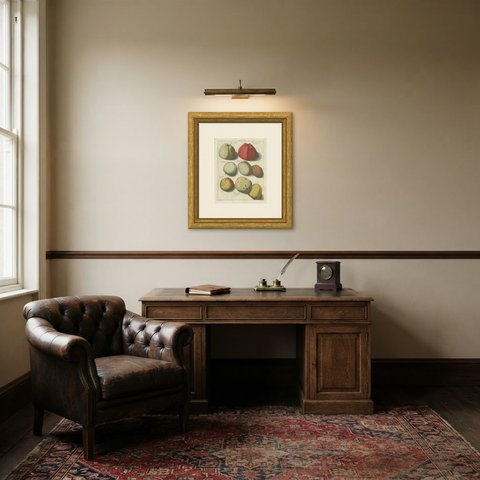
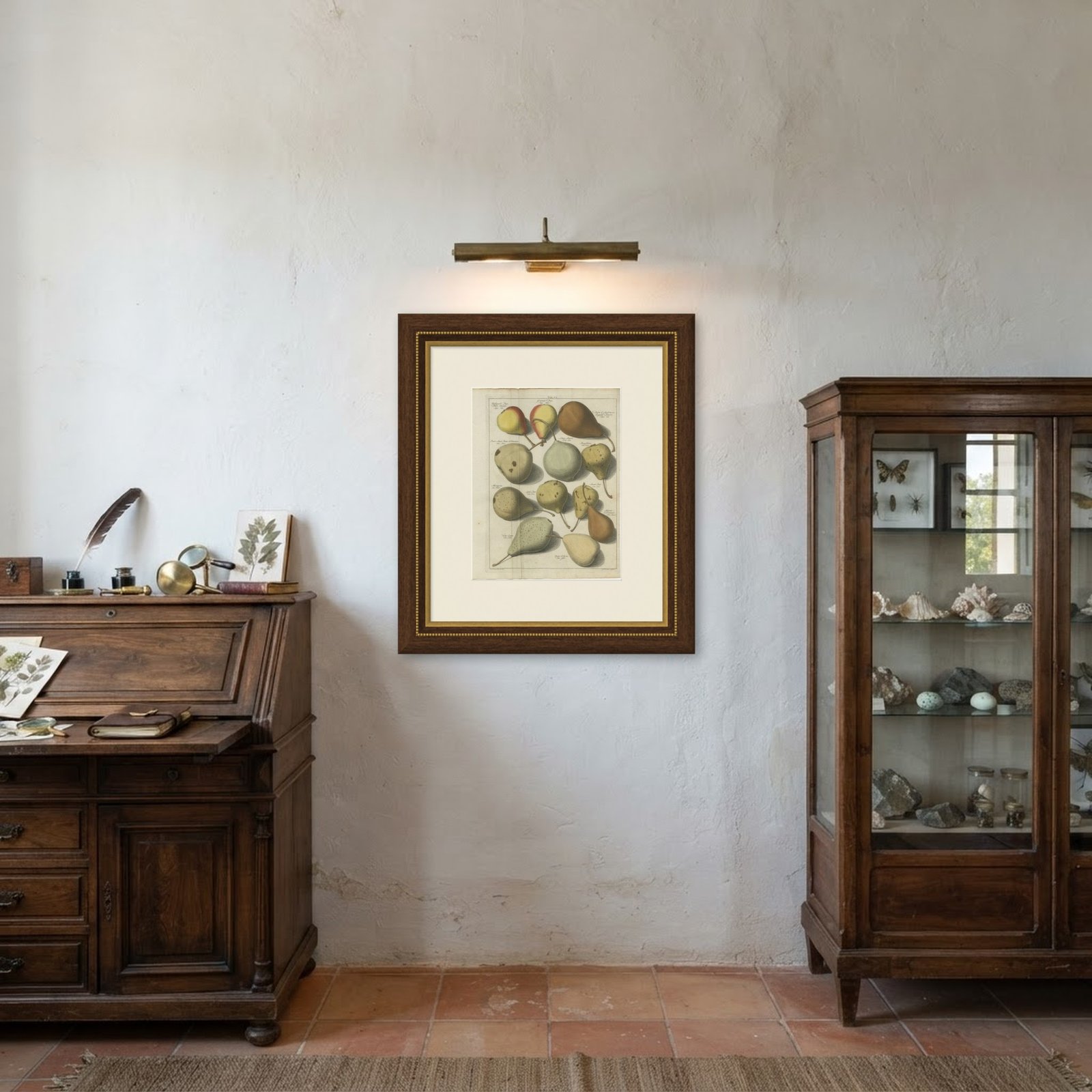
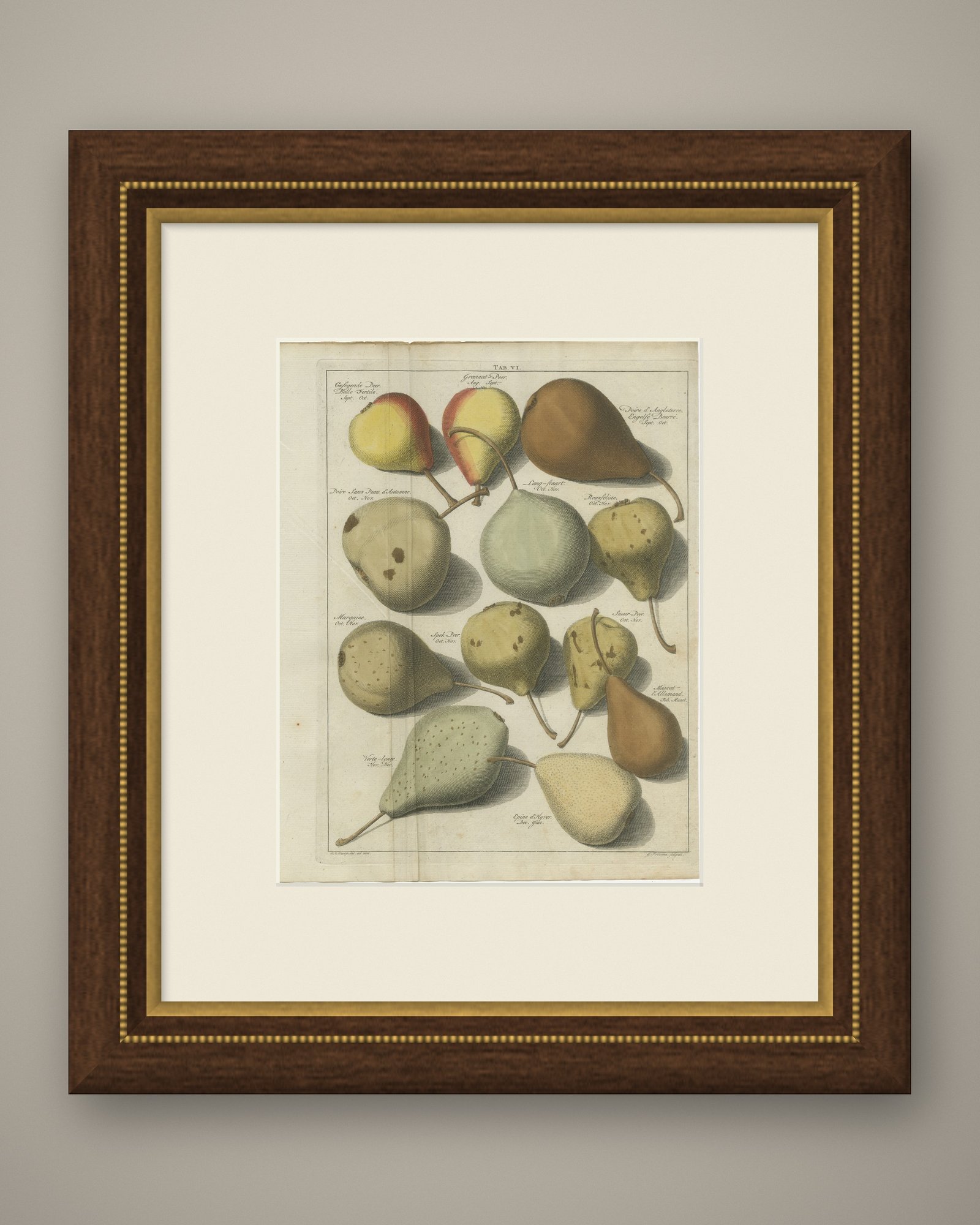
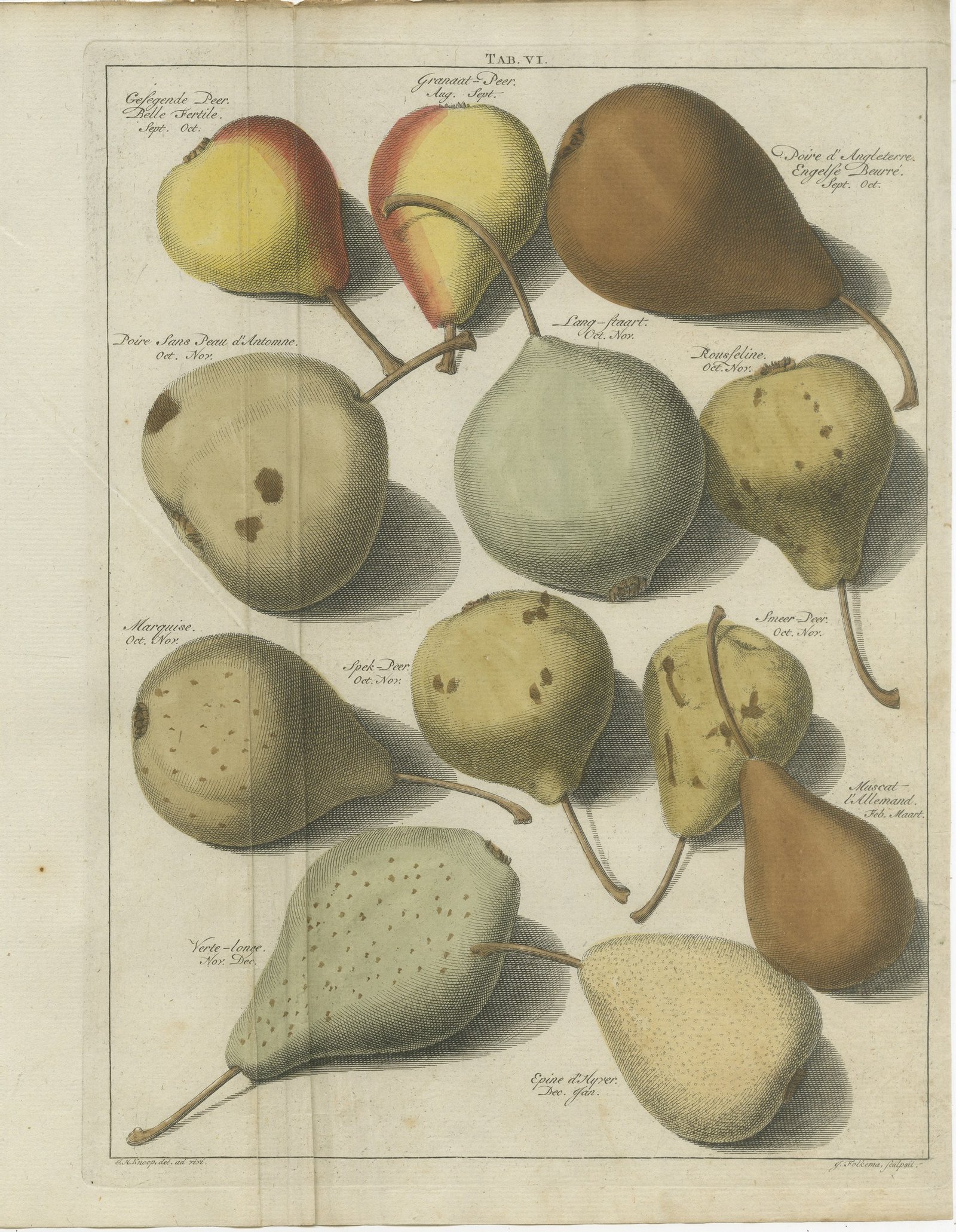
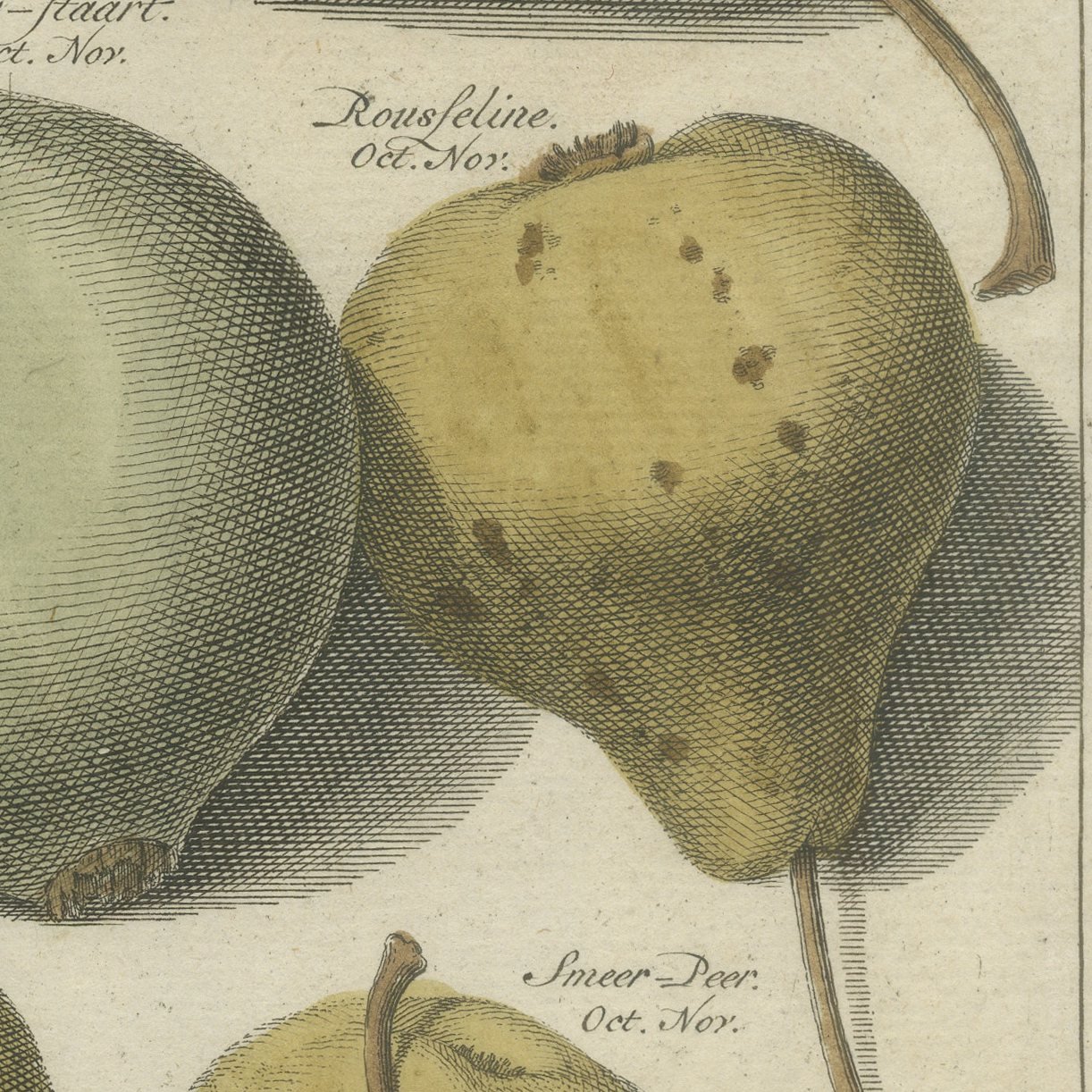
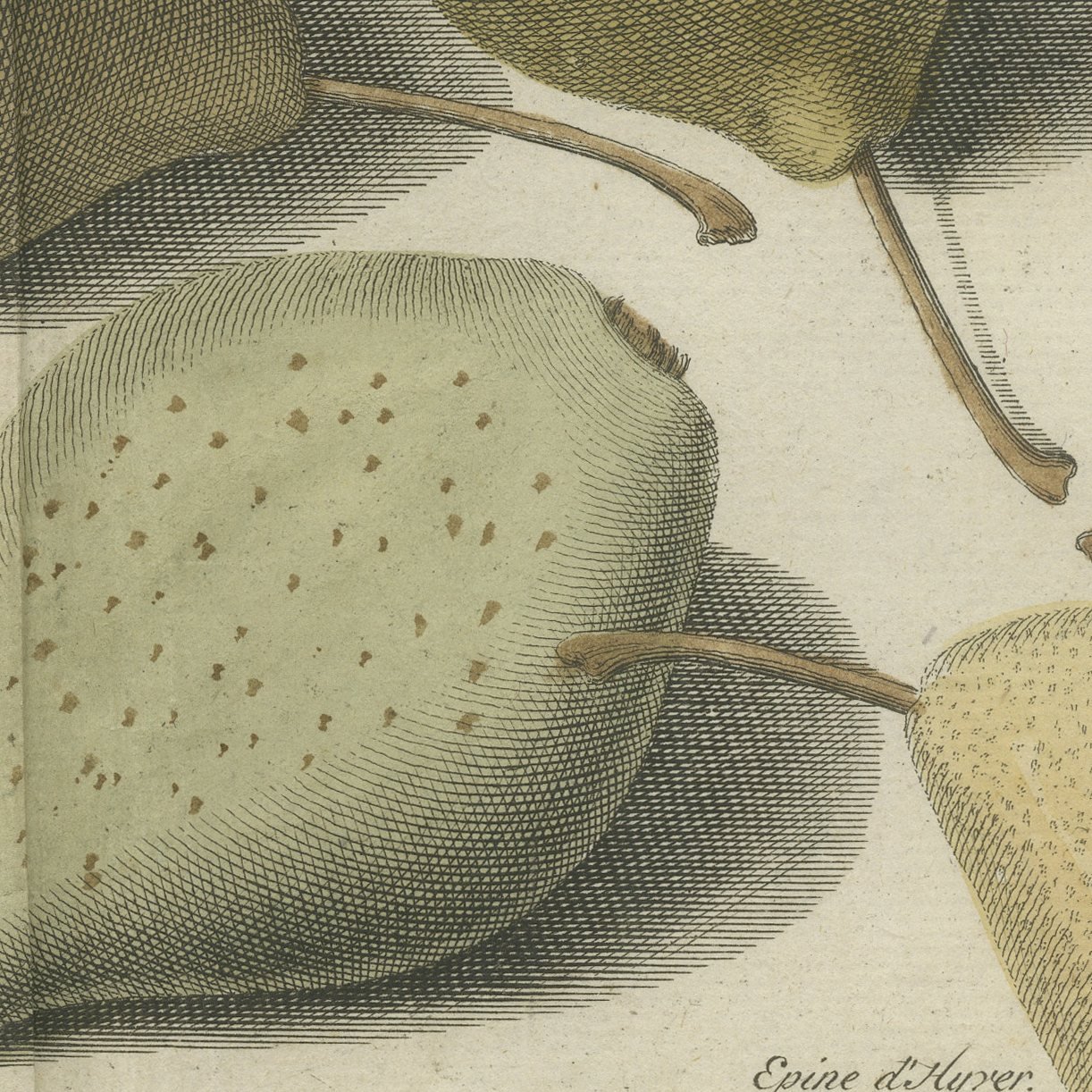
An original hand-colored copper engraving of twelve named pear varieties, one of the fullest sheets in the volume, each fruit lettered with its name and its ripening months. The plate carries Gesegende Peer or Belle Fertile, Granaat-Peer, Poire d'Angleterre or Engelse Beurré, Poire Sans Peau d'Antomne, Lang-staart, Rousseline, Marquise, Spek-Peer, Smeer-Peer, Muscat-l'Allemand, Verte-longe and Epine d'Hyver. The season runs from September through to the following February, so autumn eaters and winter keepers appear together. Knoop drew every pear from the living fruit, and the names often describe exactly what is shown: Lang-staart, long tail, for its extended stalk, Spek-Peer and Smeer-Peer for flesh as soft as bacon fat and butter. The hand coloring varies in strength across each fruit and crosses the engraved line here and there.
Knoop's pomology appeared at Amsterdam and Dordrecht in 1790 from the presses of Allart, Holtrop, de Leeuw and Krap, carrying a preface by Johannes Florentius Martinet. The plates had first been cut for the Leeuwarden editions of 1758 and 1763 and were printed again here from the same coppers. Johann Hermann Knoop drew the fruit from life in the stadtholder's garden at Leeuwarden. The technique is copper engraving with original hand coloring, and the brushwork crosses the engraved outline in places, which is the plain evidence that the color was laid on by hand and not printed.
Twelve varieties on a single sheet make this one of the two or three most desirable pear plates in the series. The Dutch names are a vocabulary of the kitchen, naming pears for their texture and their keeping rather than for a patron or a nursery, and the ripening months under each turn the plate into a planting plan for a household that wanted fruit on the table from autumn into late winter. Knoop's drawings from life make the record trustworthy. Densely composed and warm in color, the sheet suits a kitchen or a dining room and is strong enough to hang alone above a dresser or a serving table.
Light uneven toning, browner towards the edges. Marked handling soiling along the bottom and top edges. Scattered light foxing in the margin. Slight wear at the bottom right corner.
This is an original antique plate, not a modern reproduction. This item is sold unframed.