 The sheet, as you receive it
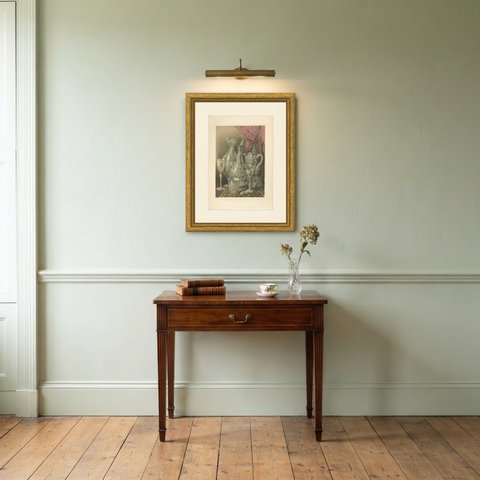
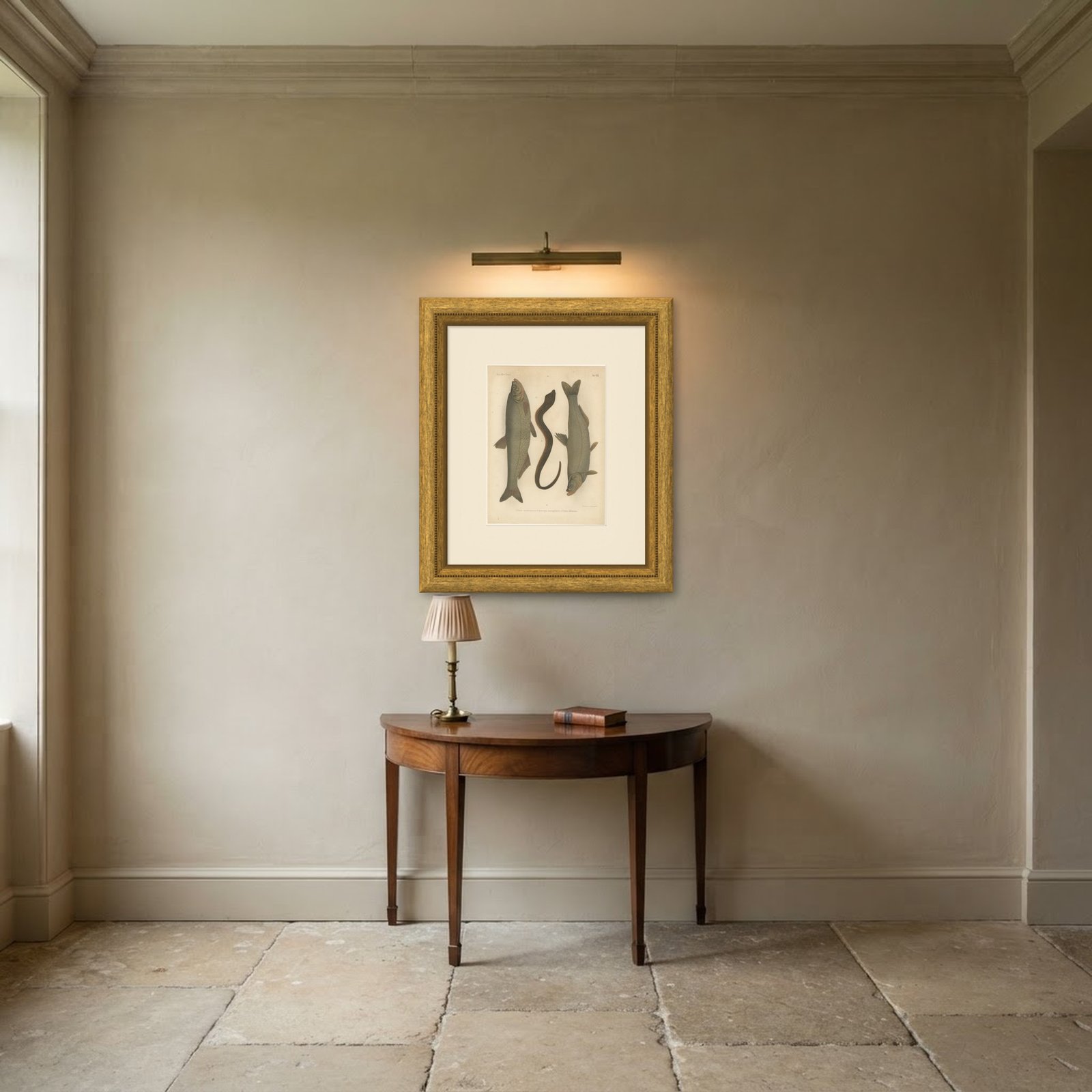 In the room
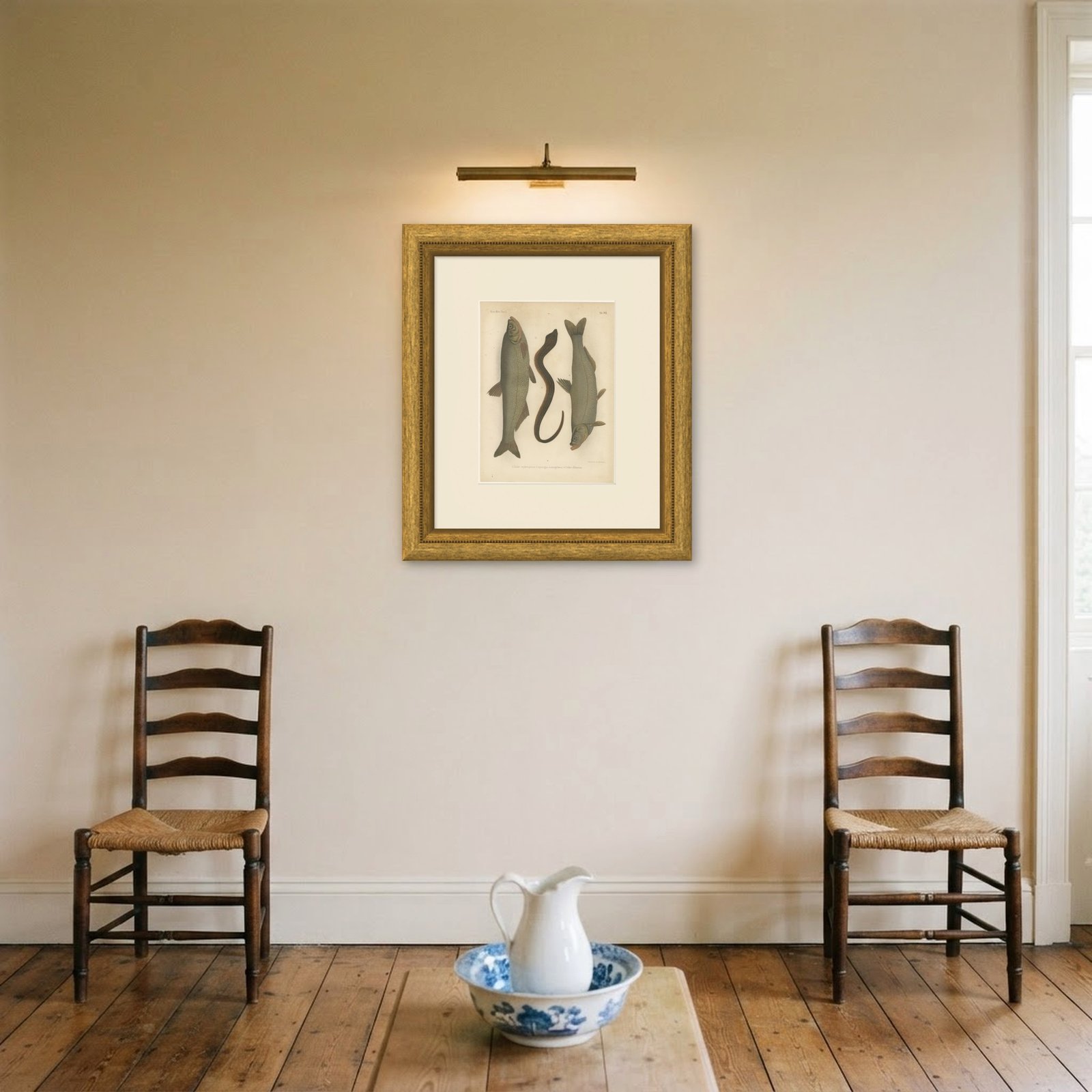
Interior designers: BarTrade members buy at their trade price. How it works
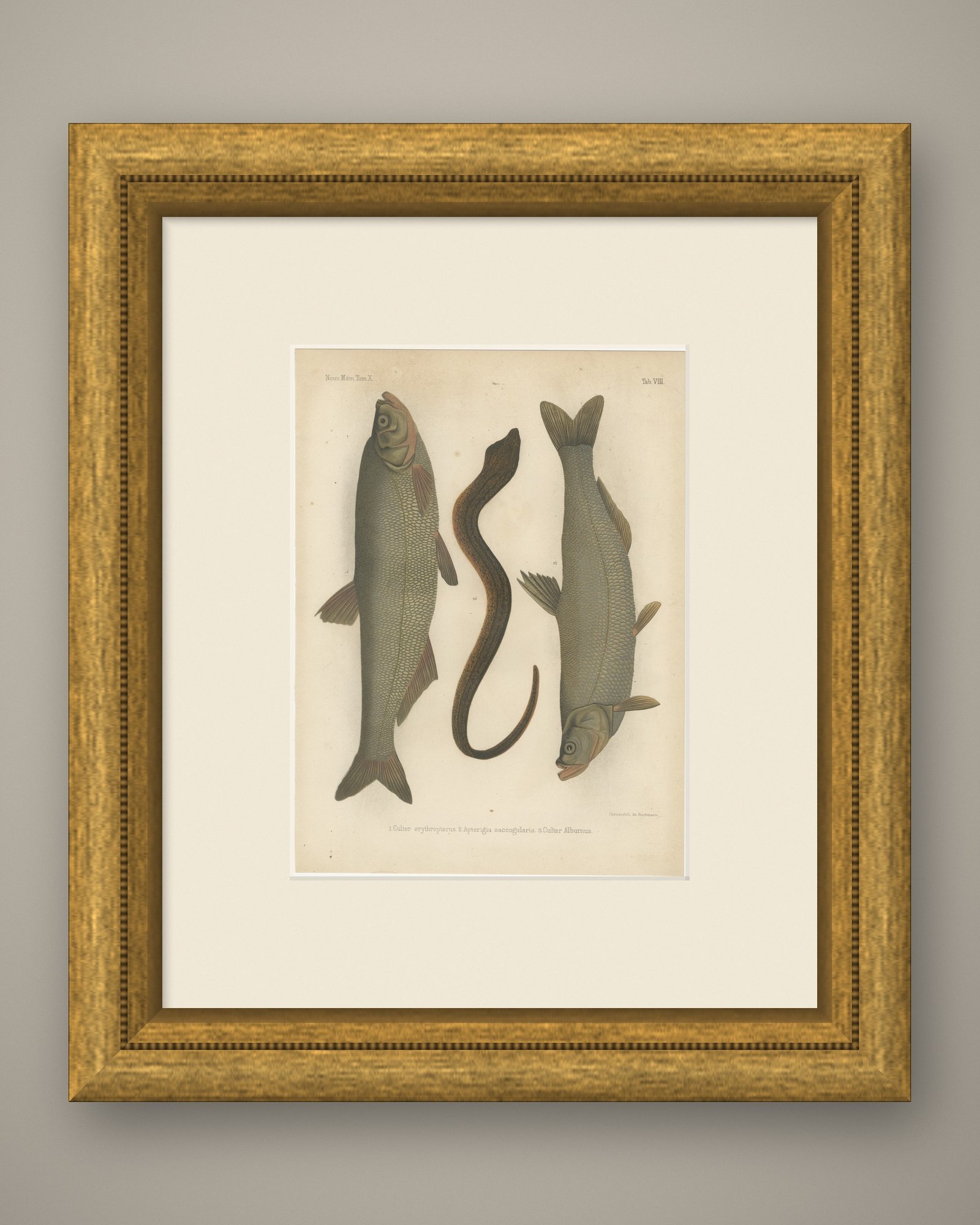
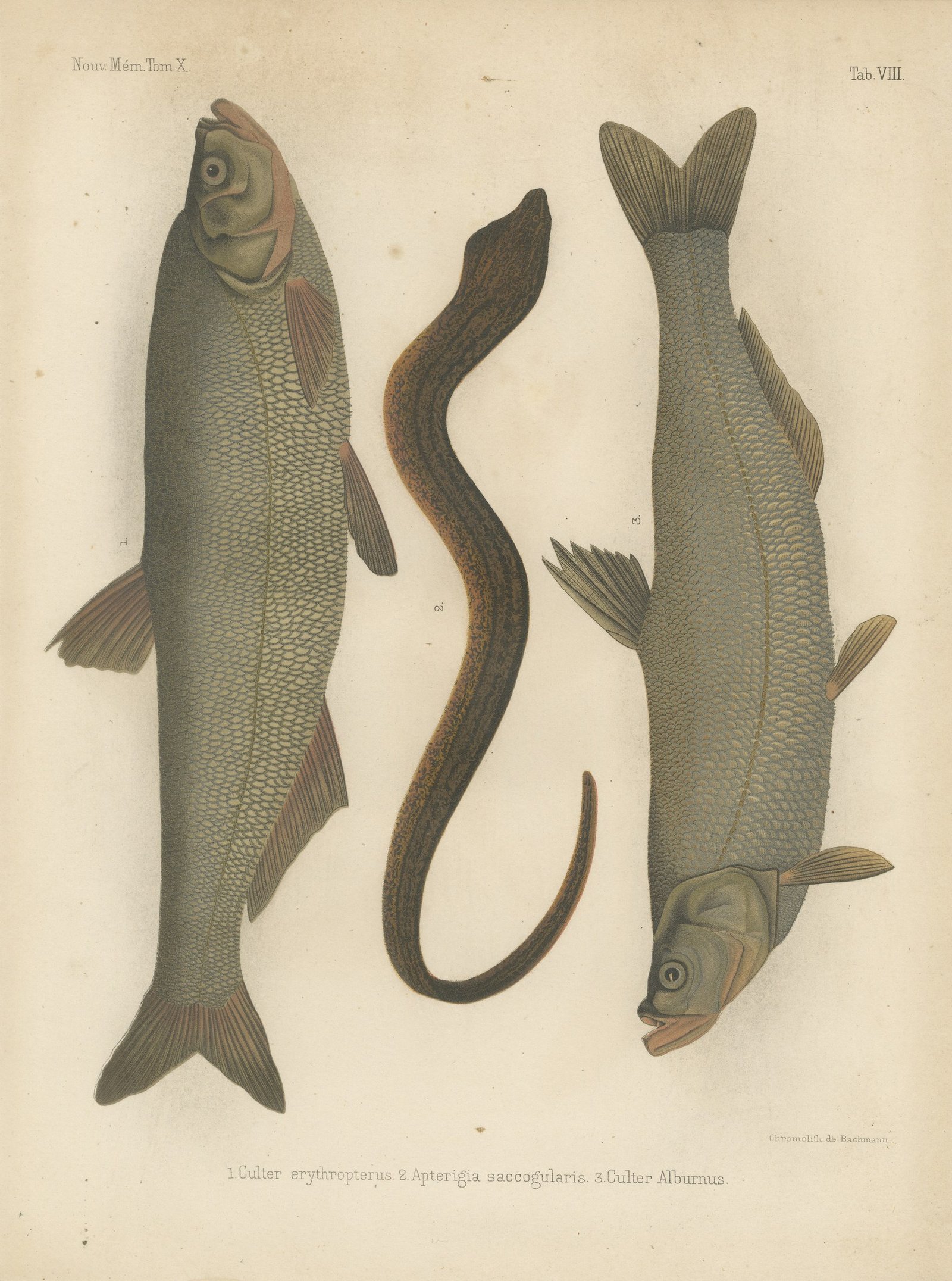
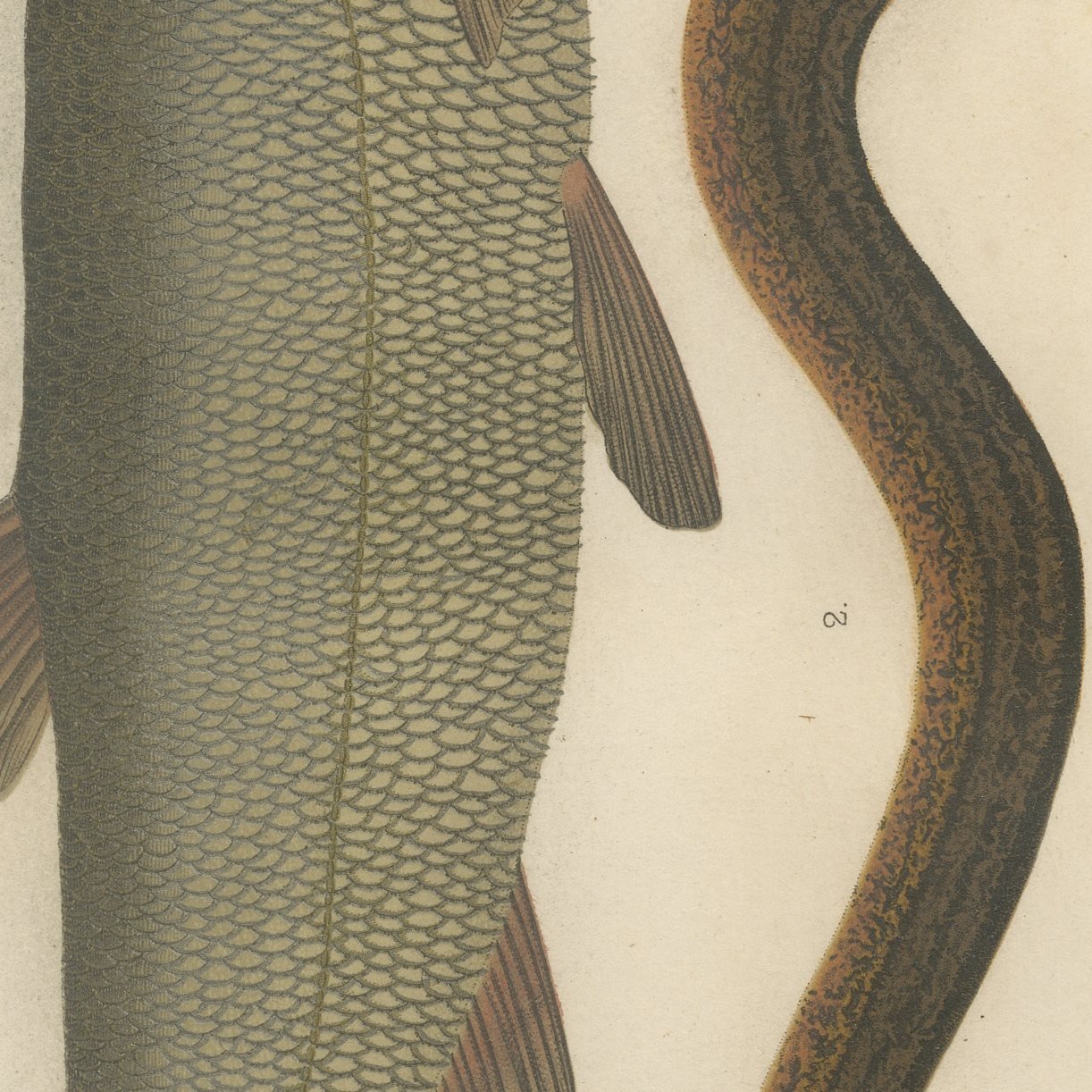
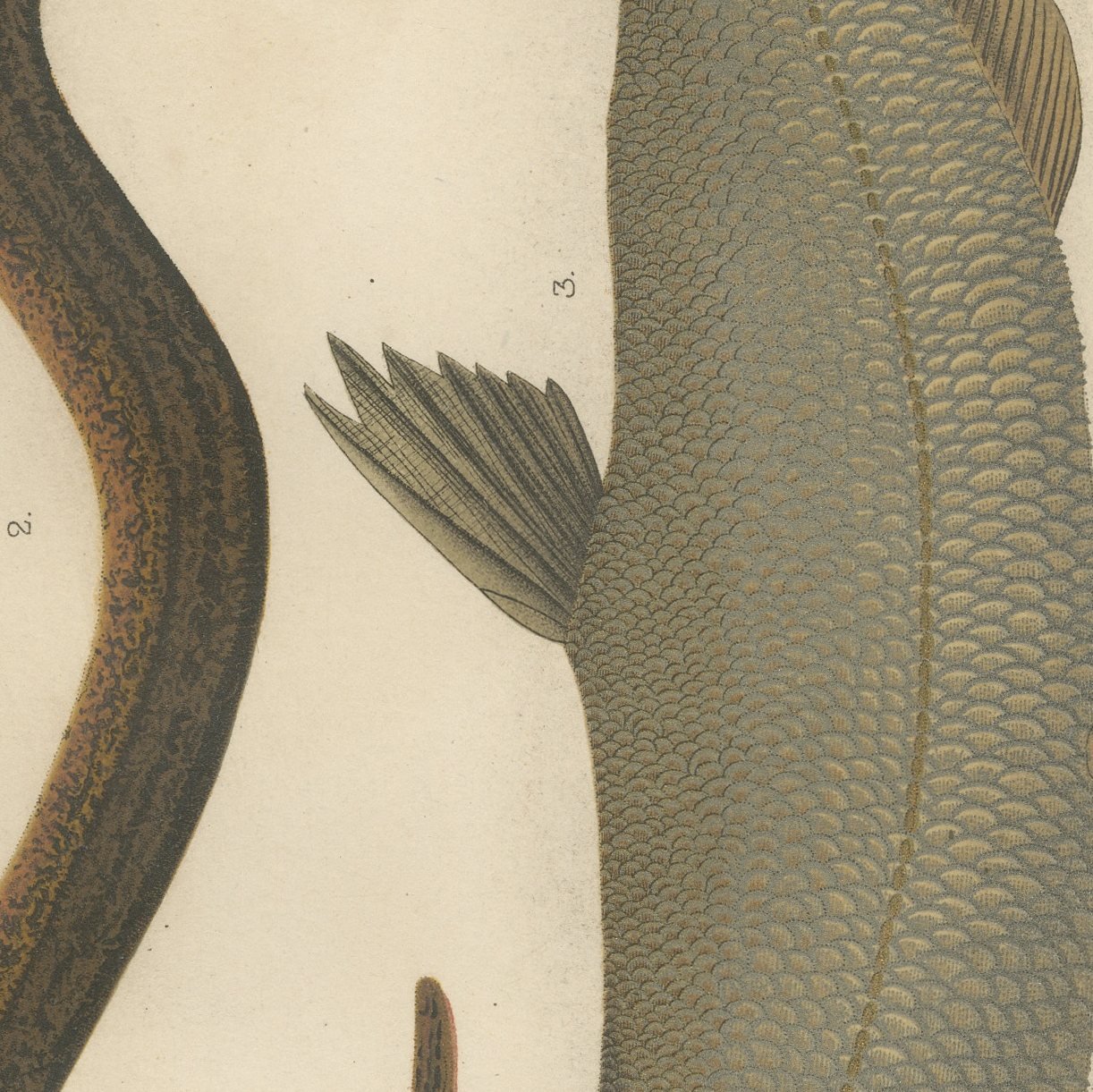
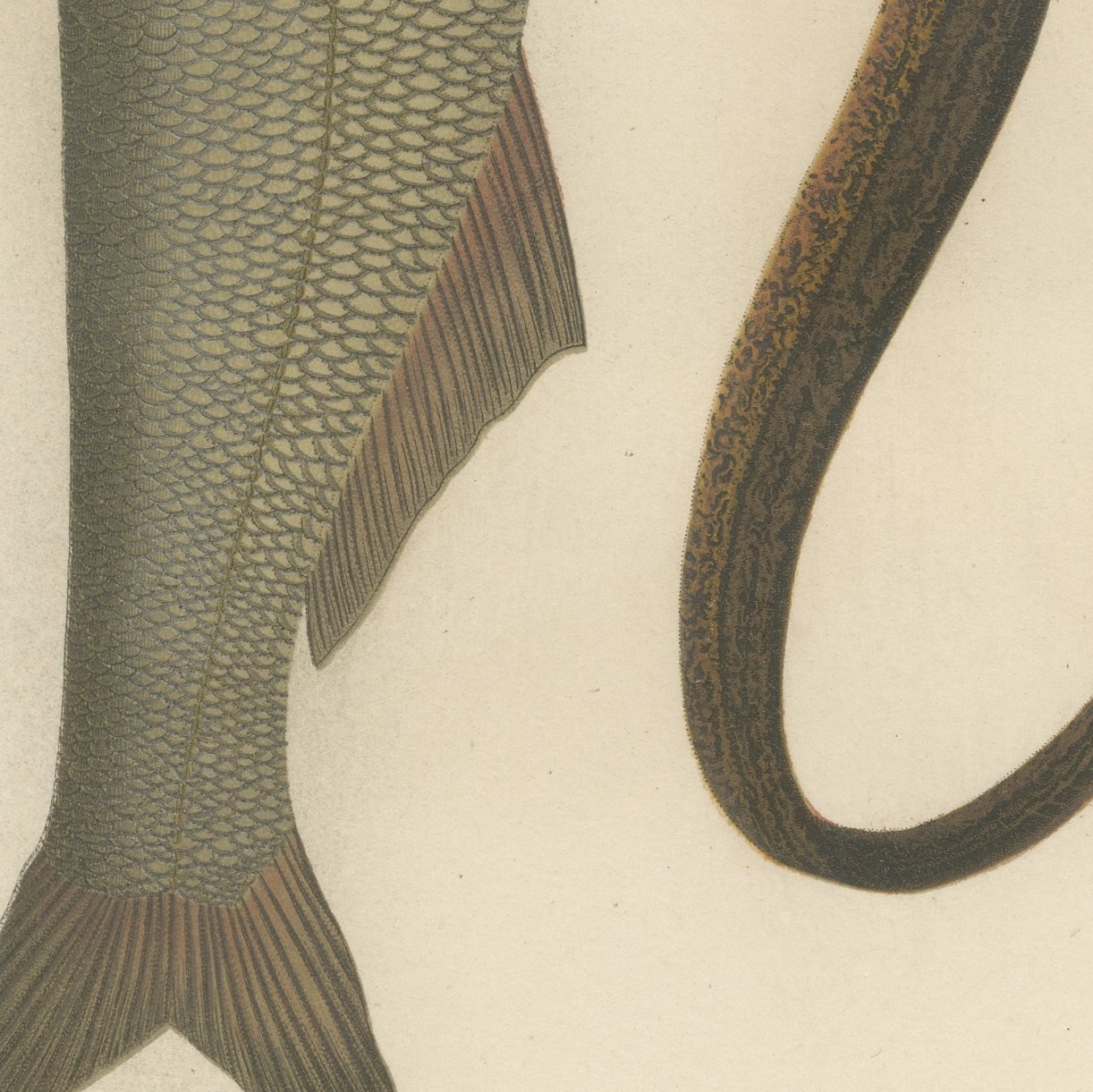
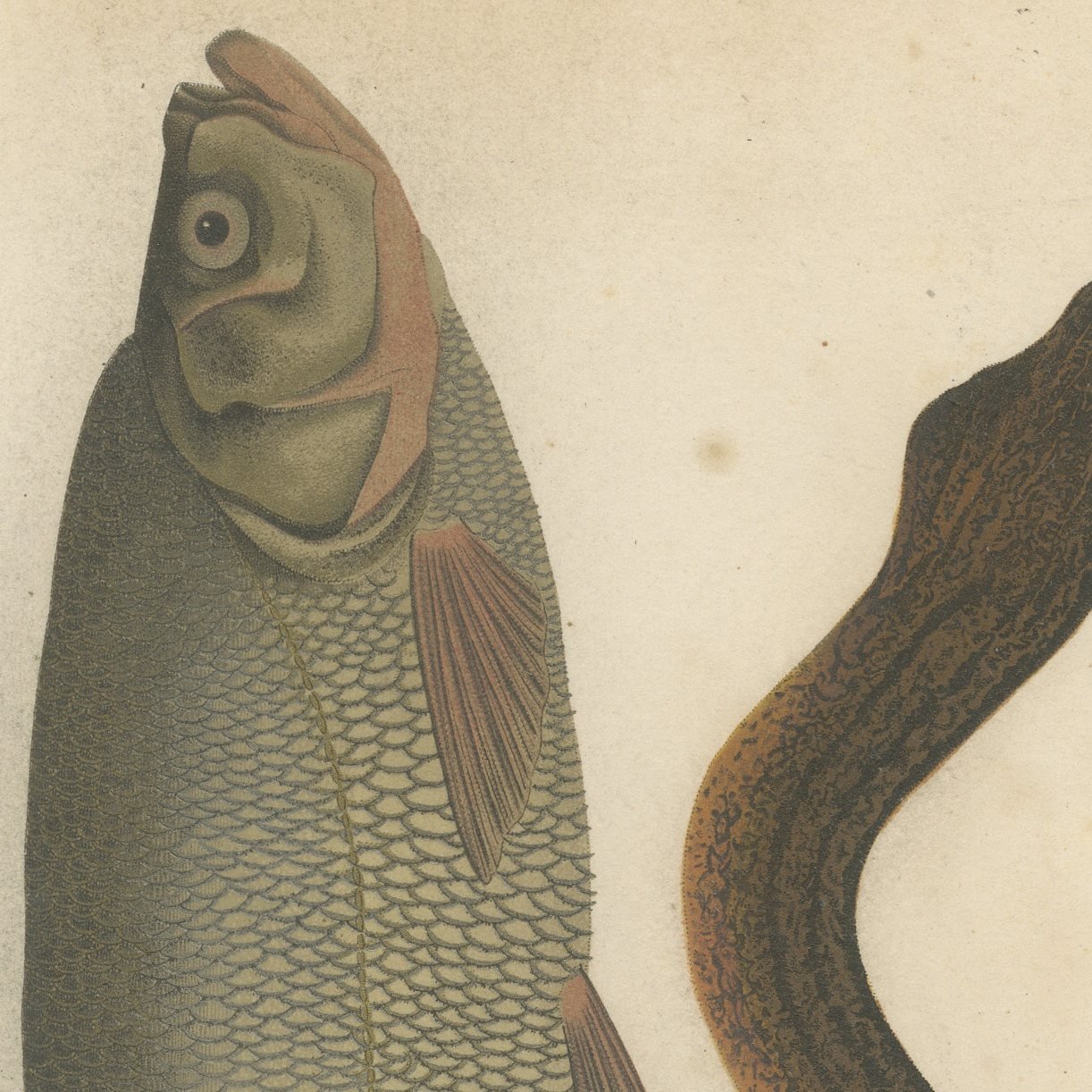
This is an original antique chromolithographed plate of Chinese fishes, the eighth of the nine plates of Basilewsky's Ichthyographia Chinae Borealis. Three fishes fill the sheet and are named along the foot: the red finned sharpbelly Culter erythropterus, the pouch throated Apterigia saccogularis and the slender Culter Alburnus. The plate is lettered Tabula the eighth and carries the Bachmann chromolithography line at the foot.
The sheet is one of the nine plates of Ichthyographia Chinae Borealis by Stepan Basilewsky, a physician of the Russian ecclesiastical mission at Peking, published in 1855 in the tenth volume of the Nouveaux Memoires of the Imperial Society of Naturalists of Moscow. The figures were painted from nature by a Chinese artist and printed in color by Bachmann of Moscow.
Culter erythropterus and its relatives are still named from this paper and are among the commonest predatory fishes of the Chinese rivers. The long tapering bodies make an unusually elegant plate, with a lot of movement across the sheet. Basilewsky had the figures painted from fresh specimens by a Chinese artist at Peking, and the Moscow printing house of Bachmann carried that work into color lithography with very little loss. The nine plates were issued inside a learned journal rather than as a separate book, so they are a good deal harder to find than the standard European fish plates of the same decade. A plate of this kind frames well in plain dark wood and sits happily in a kitchen, a study or a hallway, alone or in a run with its companions.
Light uneven toning, browner toward the edges. Handling soiling along the top edge. Slight wear at the bottom left corner.
This is an original antique print, not a modern reproduction. This item is sold unframed.