 The sheet, as you receive it
 In the room
Interior designers: BarTrade members buy at their trade price. How it works
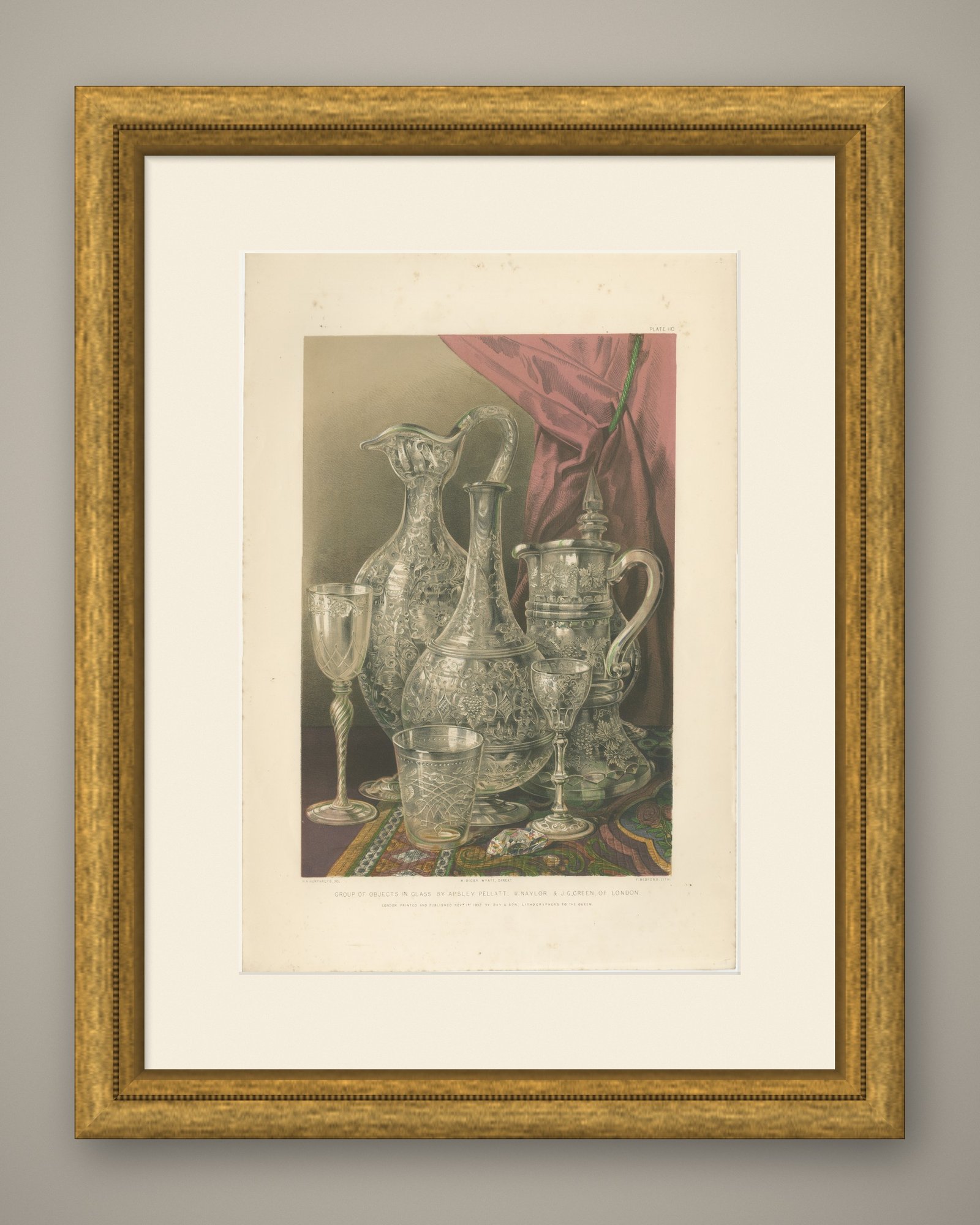
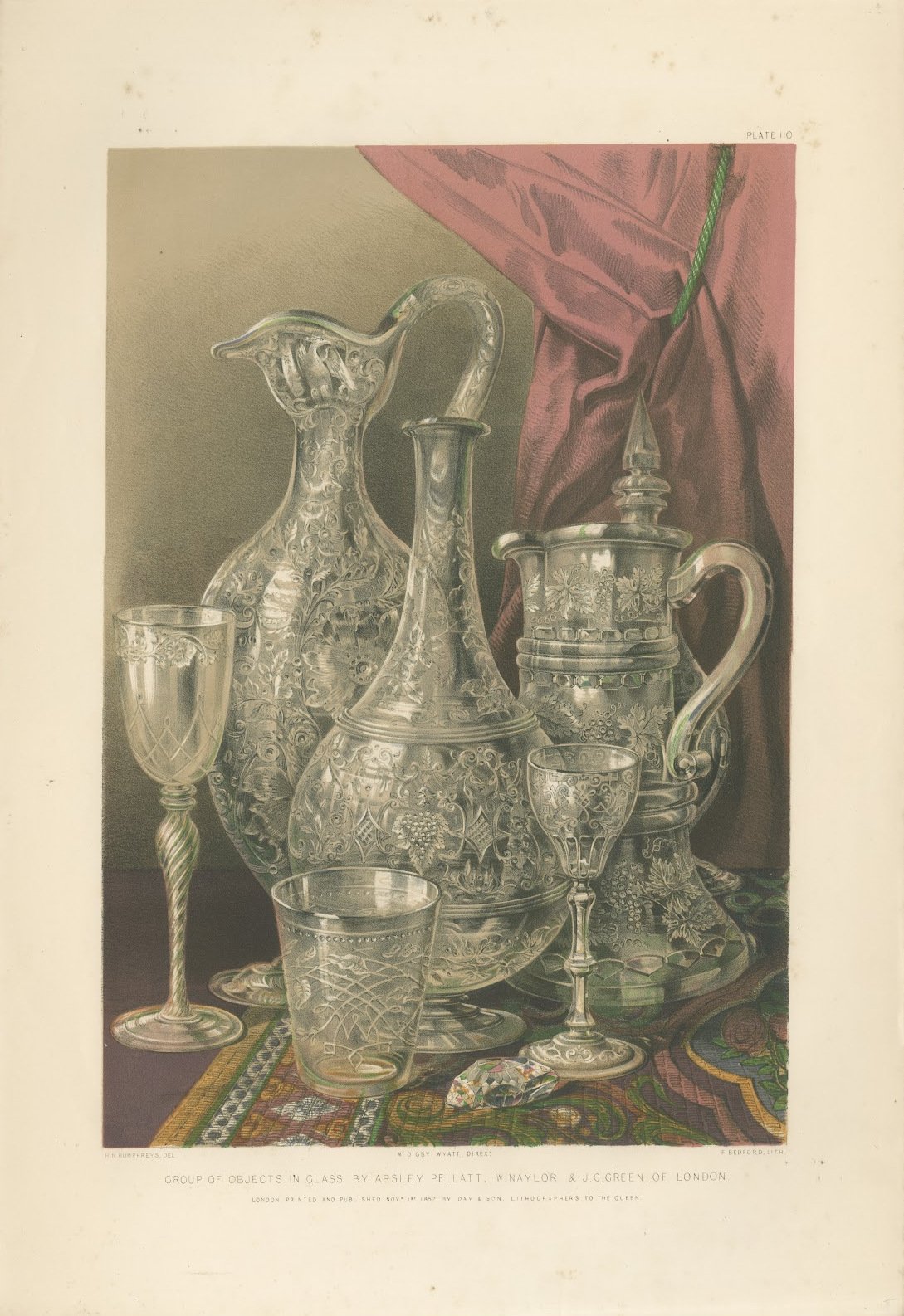
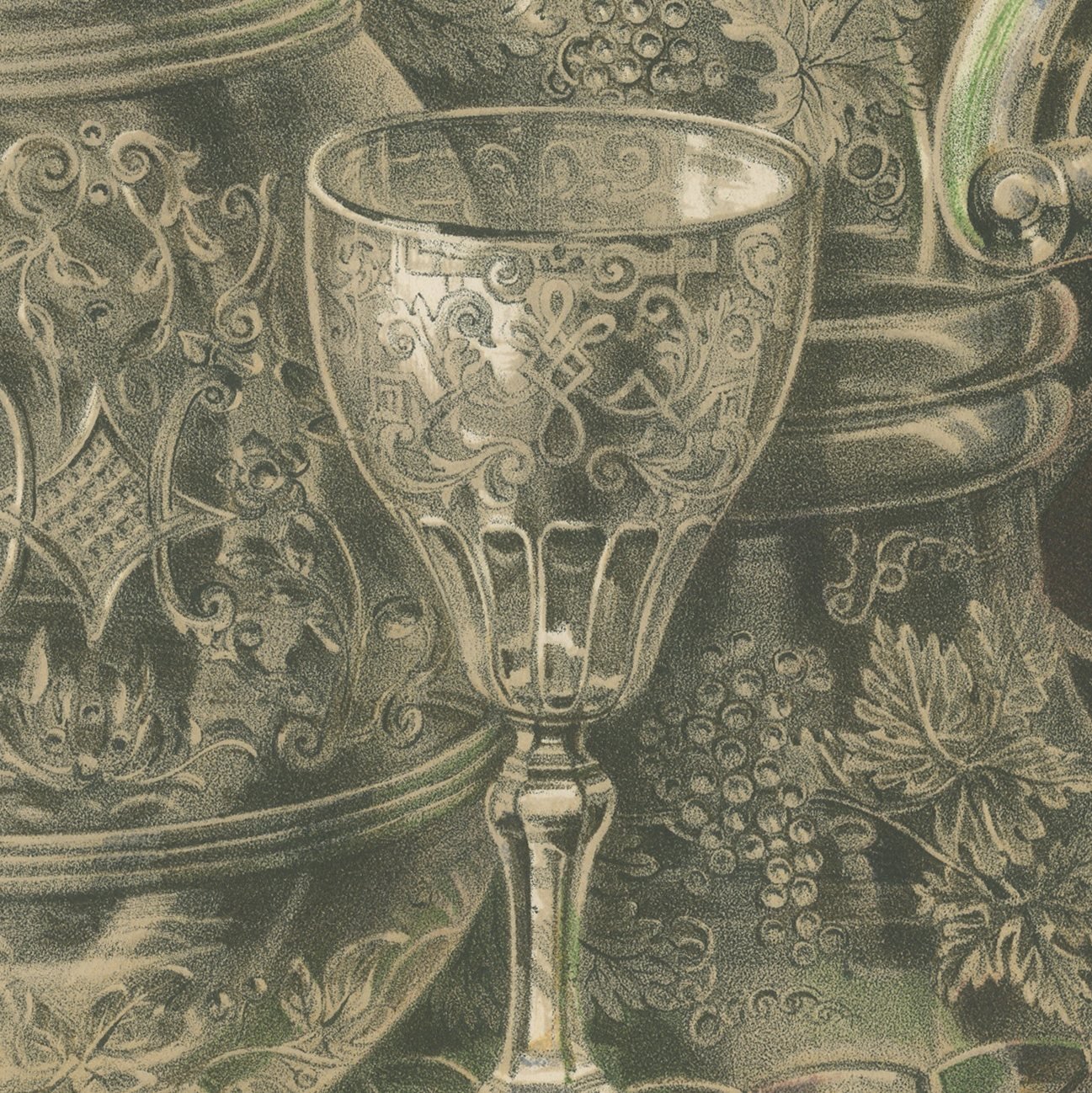
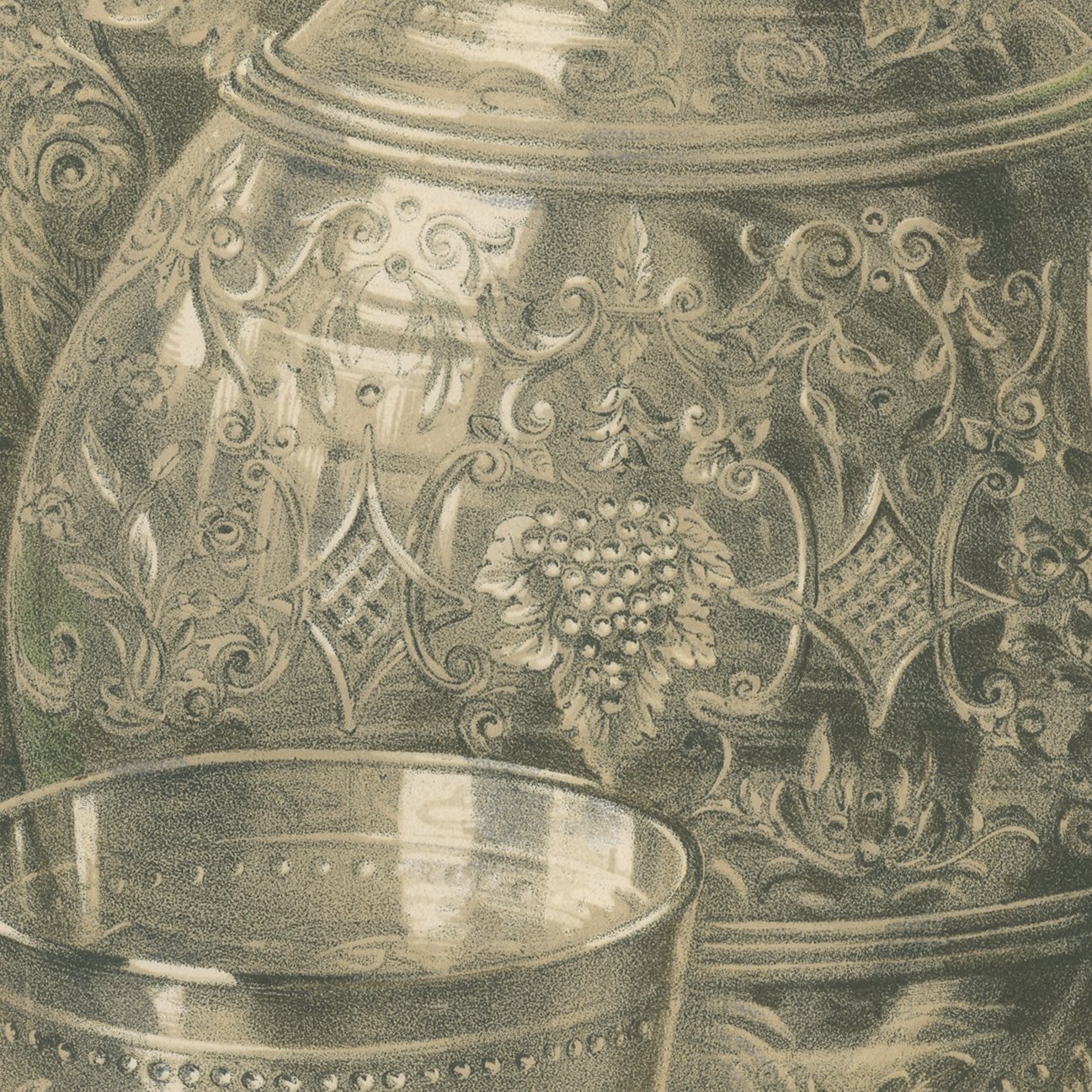
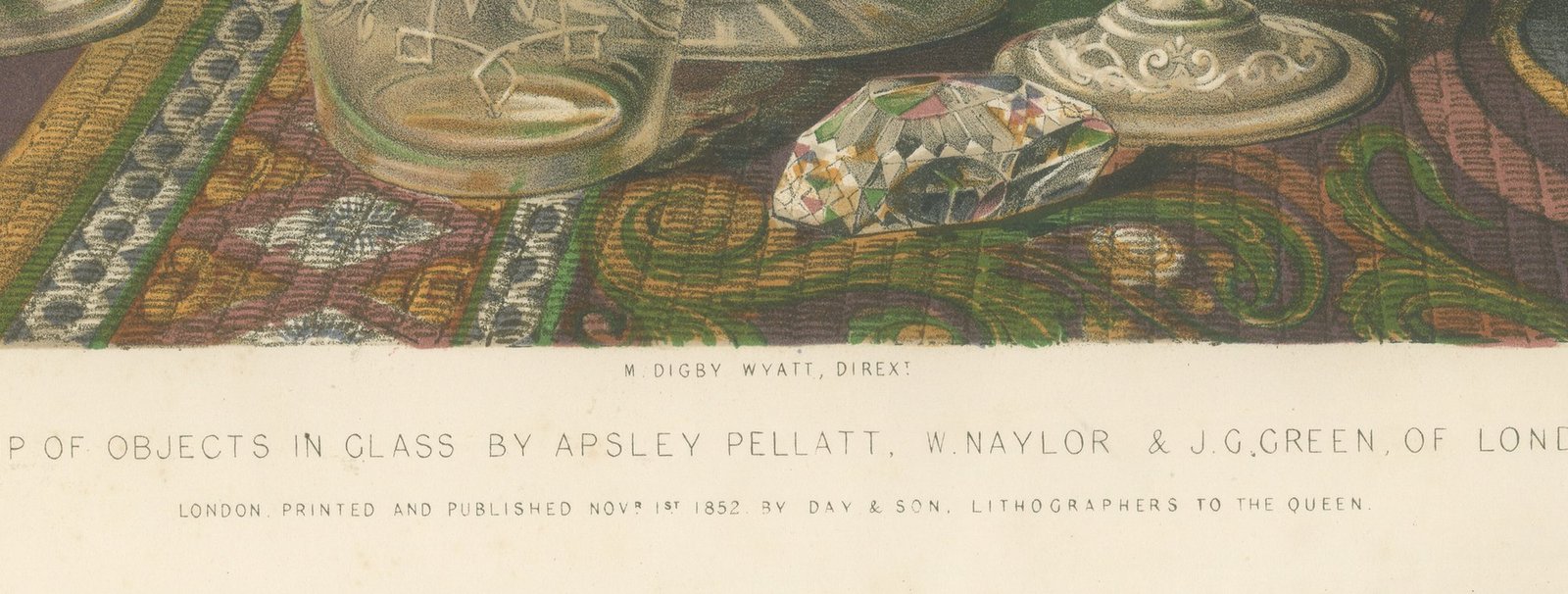
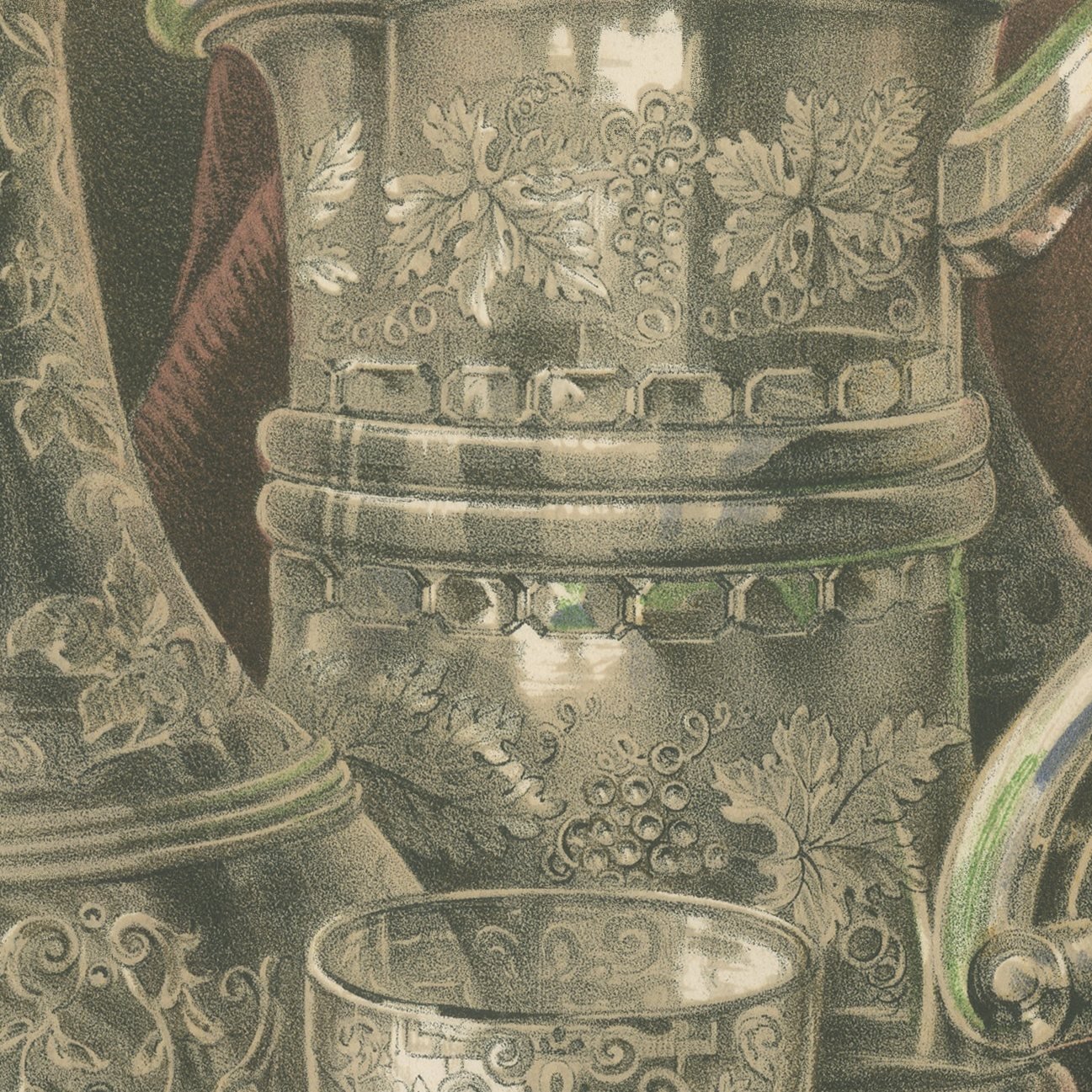
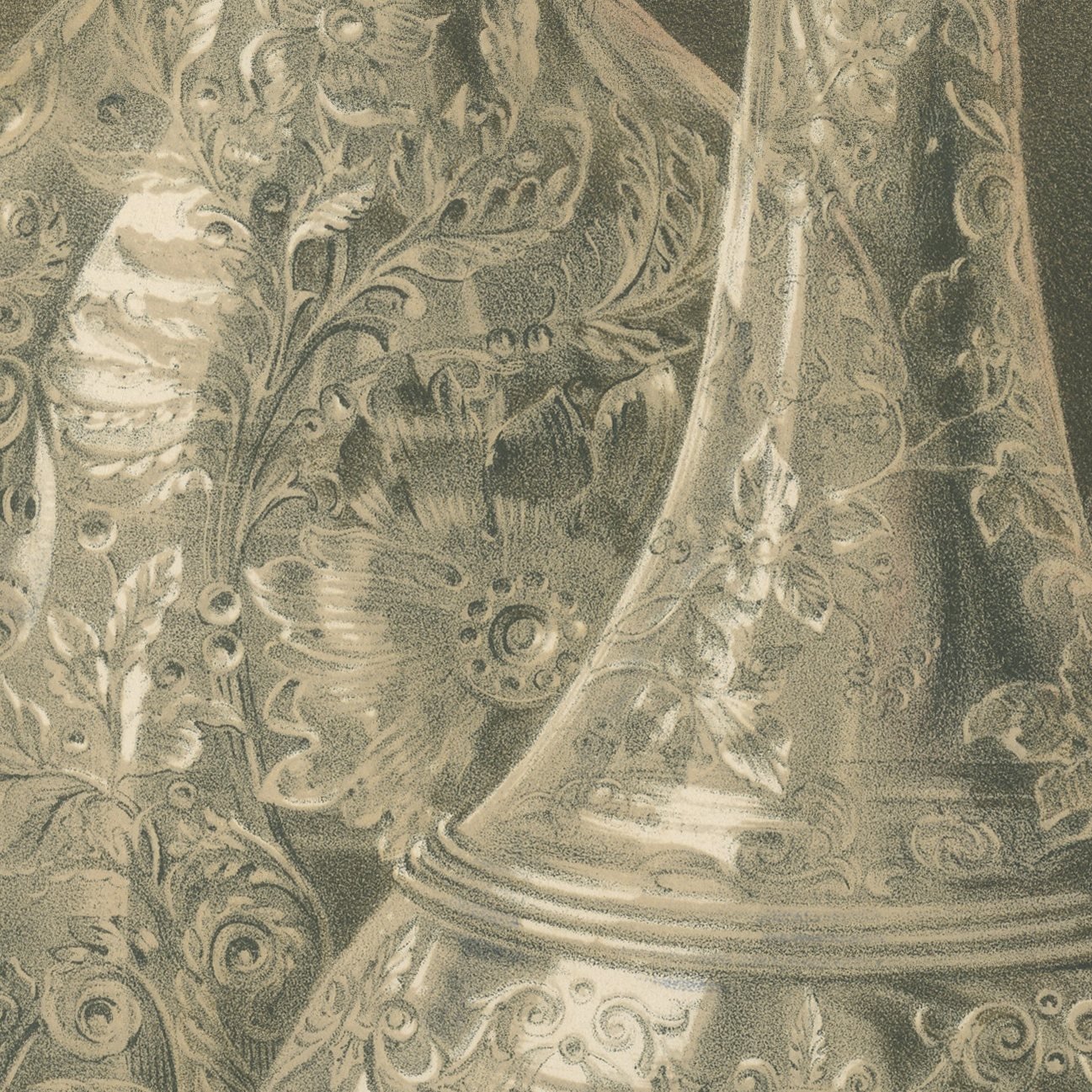
This is an original antique chromolithograph of glass by Apsley Pellatt and others, published in London by Day and Son on the first of November 1852. The pieces are grouped on an Indian carpet drawn in crimson, blue and gold, a cut glass bowl and a faceted glass ball among them, and the lithographer has used the patterned cloth beneath to show the glass by refracting the pattern through it, which is the cleverest effect in the plate.
The plate comes from The Industrial Arts of the Nineteenth Century, Matthew Digby Wyatt's record of the Great Exhibition of 1851, issued in parts by Day and Son, lithographers to the Queen, between 1851 and 1853 and dedicated by permission to Prince Albert. Wyatt had been secretary to the executive committee of the Exhibition, and the work presents, in the words of its title, the choicest specimens produced by every nation, drawn by a team of artists and reproduced in chromolithography, then a new and costly process. Every plate carries its own publication date in the imprint at the foot, with the names of M. Digby Wyatt as director and of the artists who drew or lithographed it.
Apsley Pellatt of the Falcon Glassworks in Southwark patented crystallo ceramie, the technique of enclosing ceramic cameos in glass.
Light overall age toning, with foxing through the margins, handling wear to the top left and bottom right corners and minor nicks along the left edge.
This is an original antique print, not a modern reproduction. This item is sold unframed.