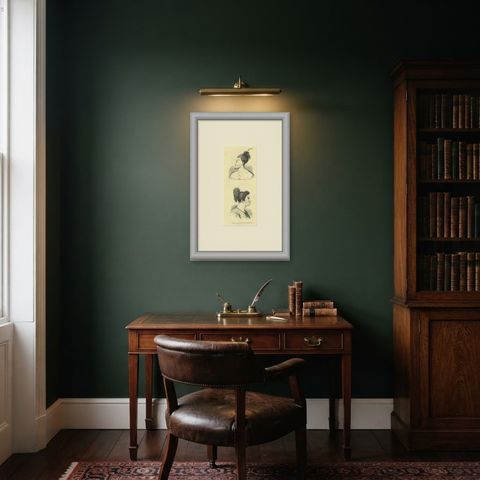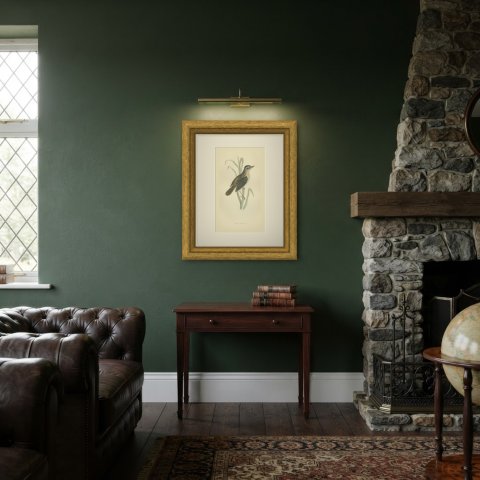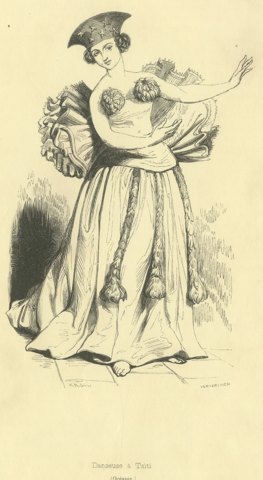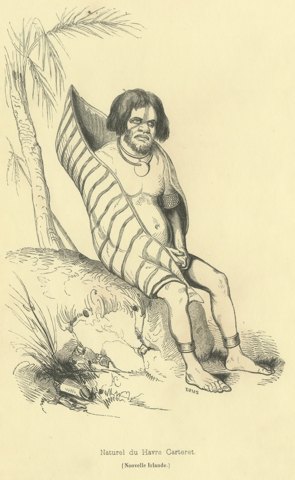
 The sheet, as you receive it
 In the room
Interior designers: BarTrade members buy at their trade price. How it works
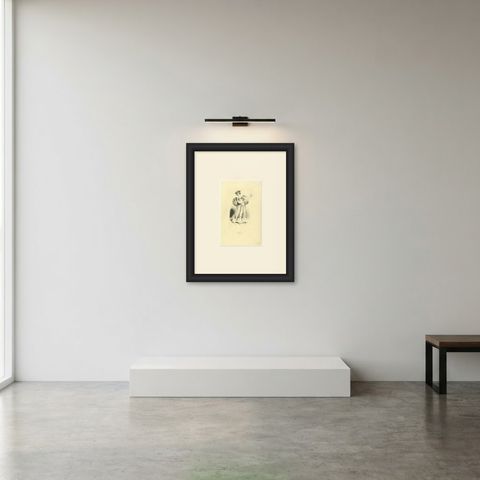
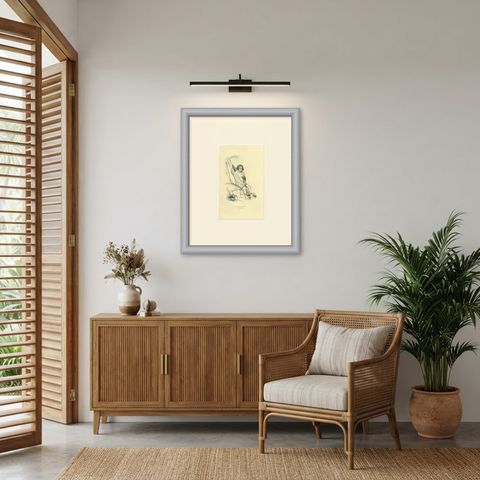
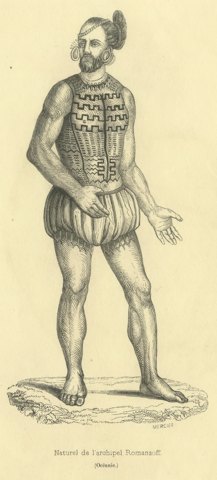
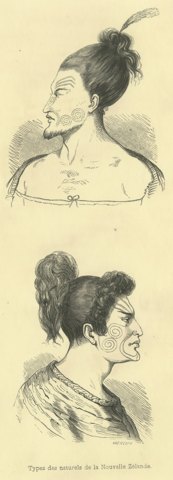
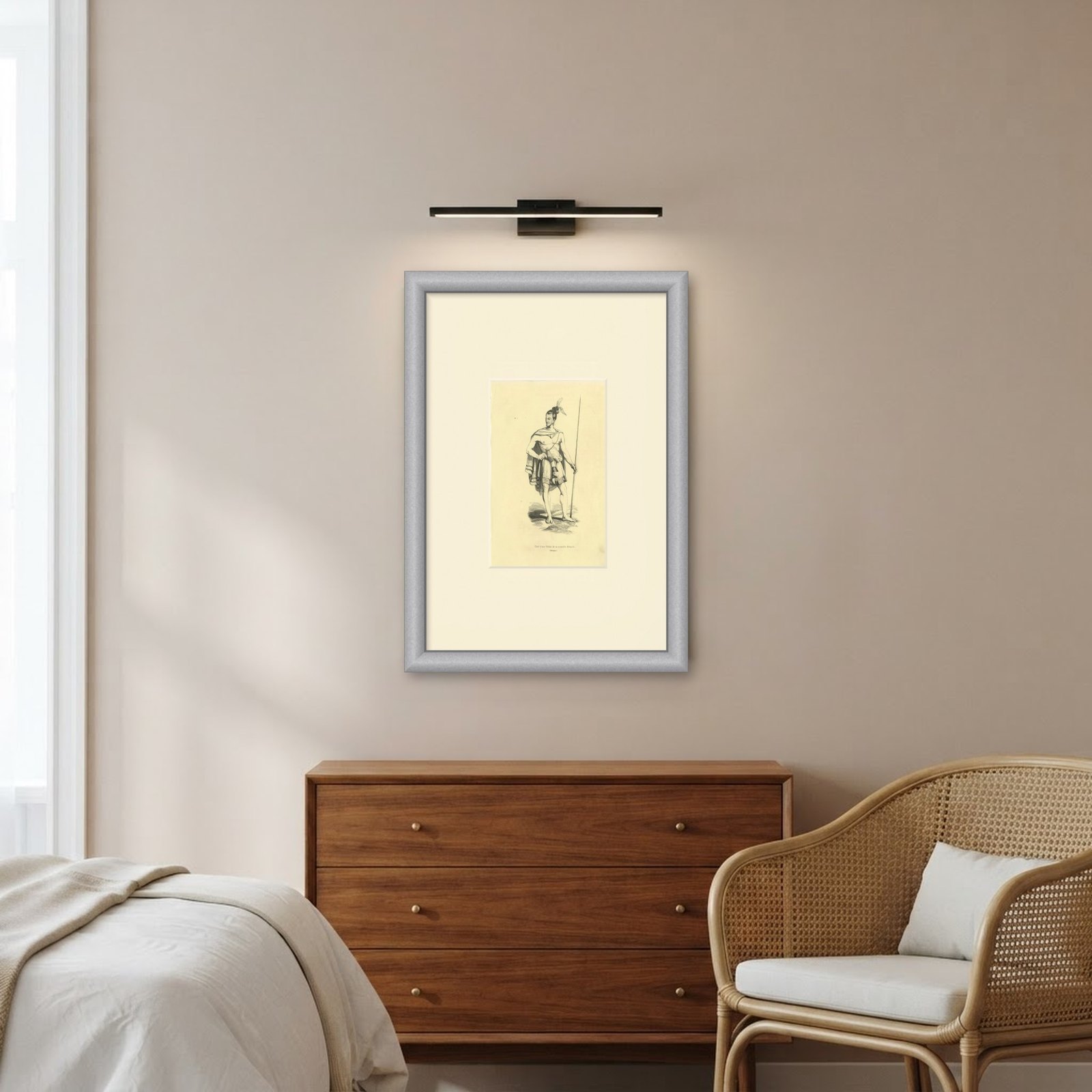
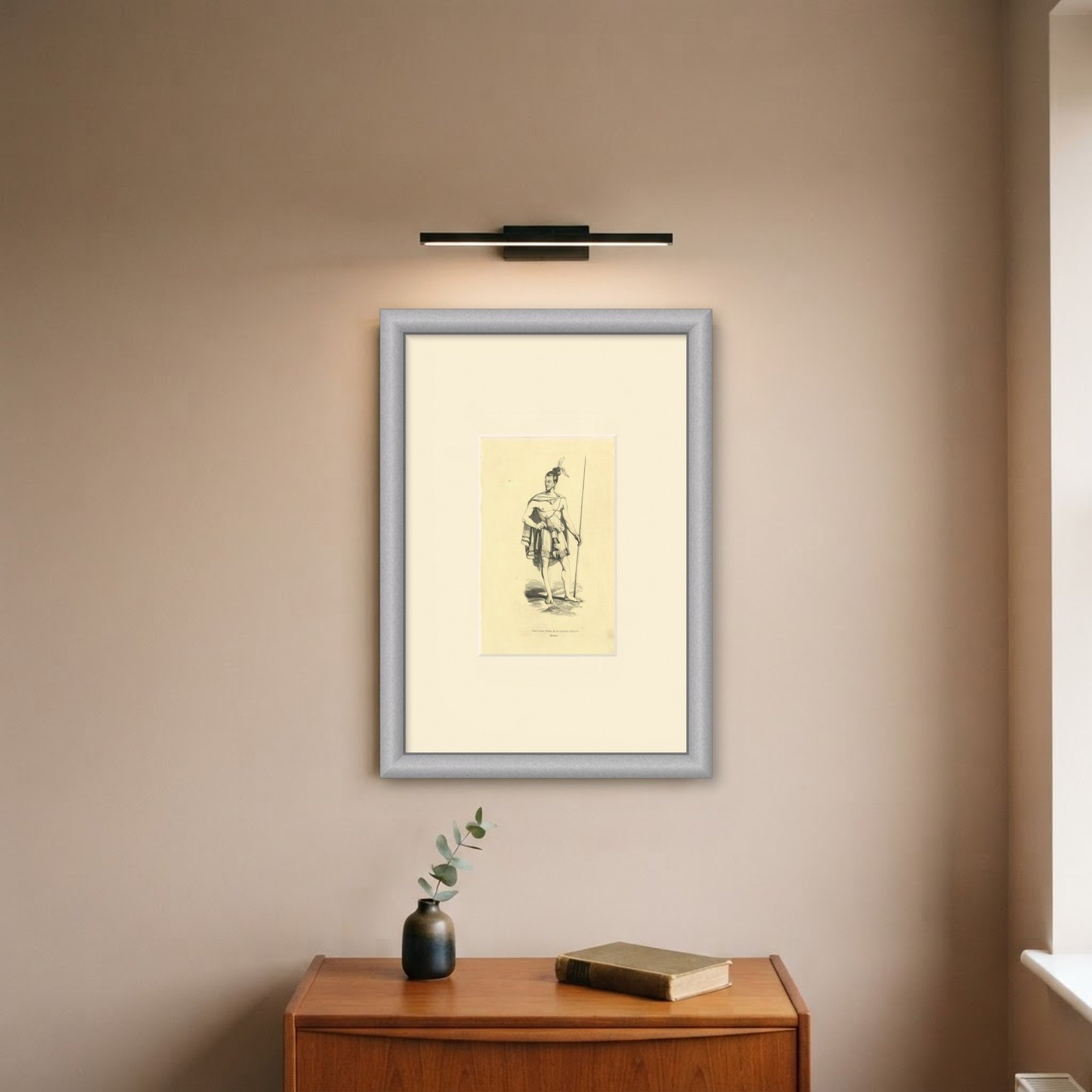
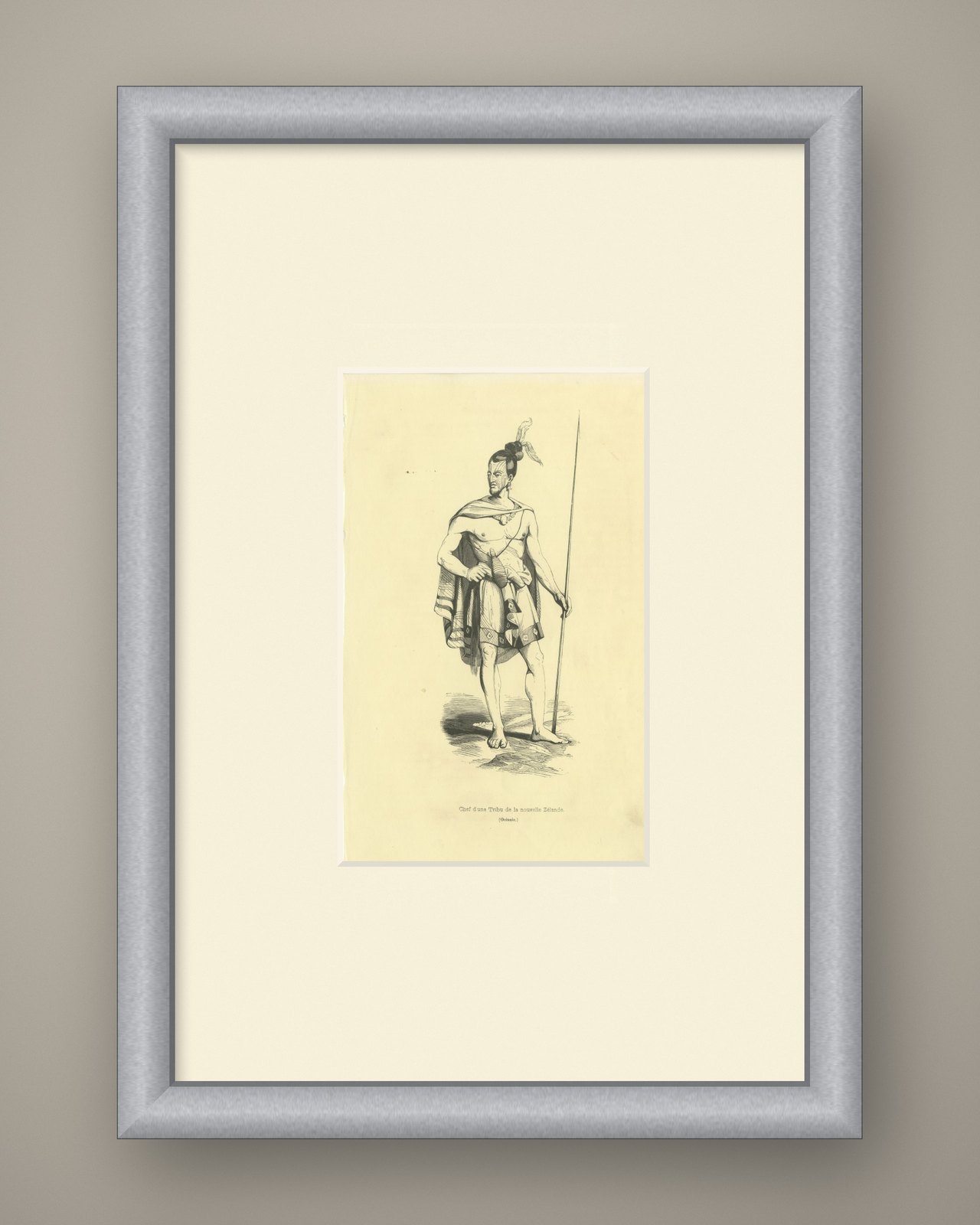
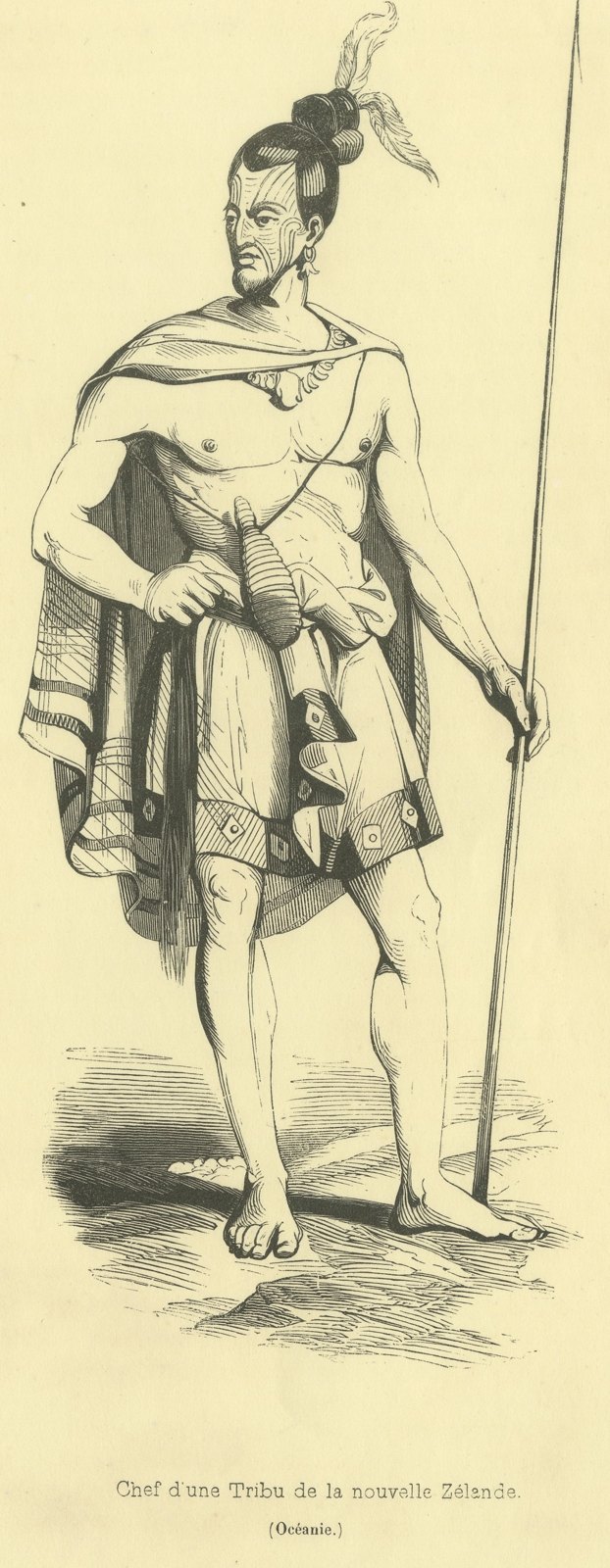
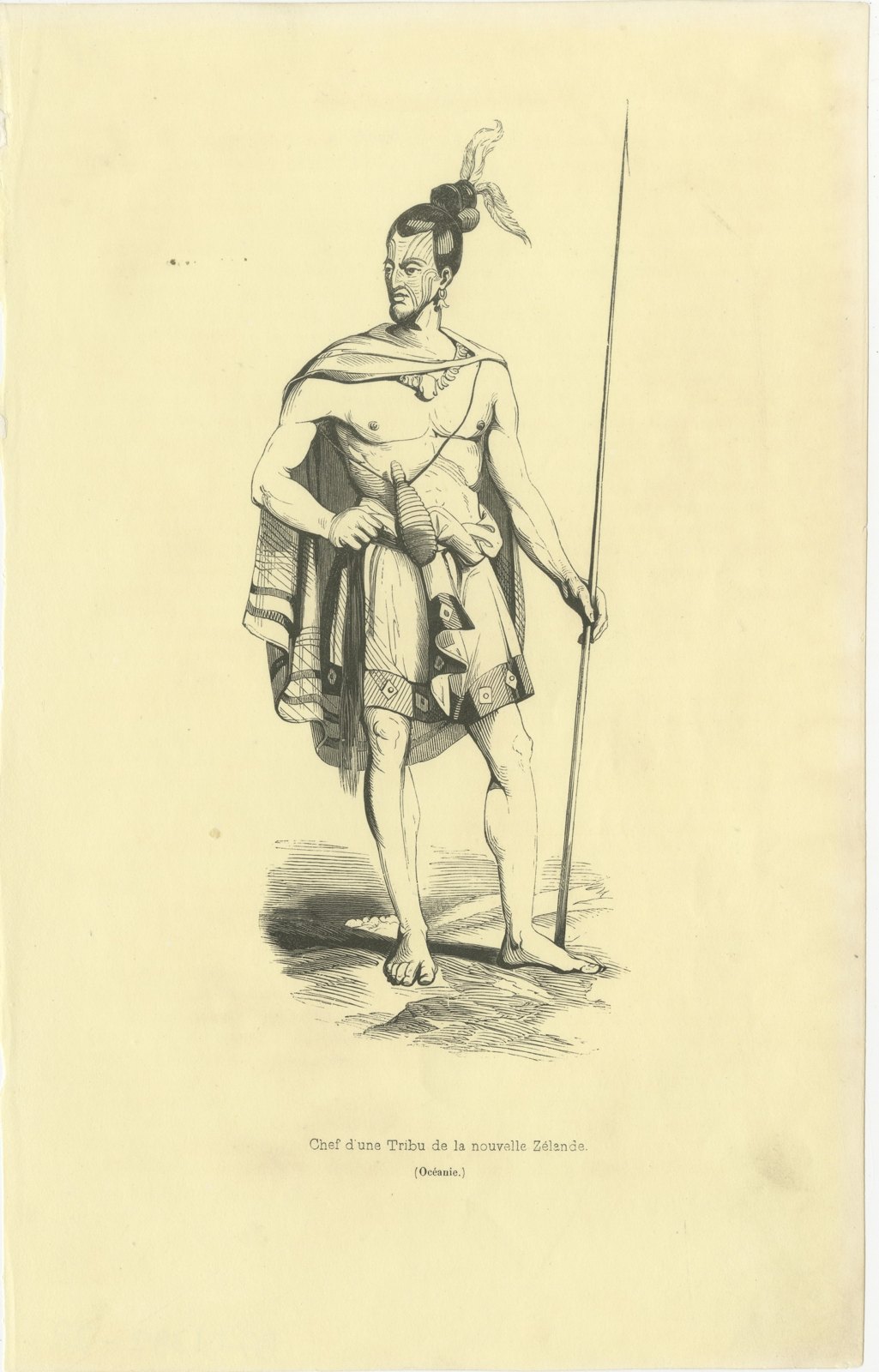
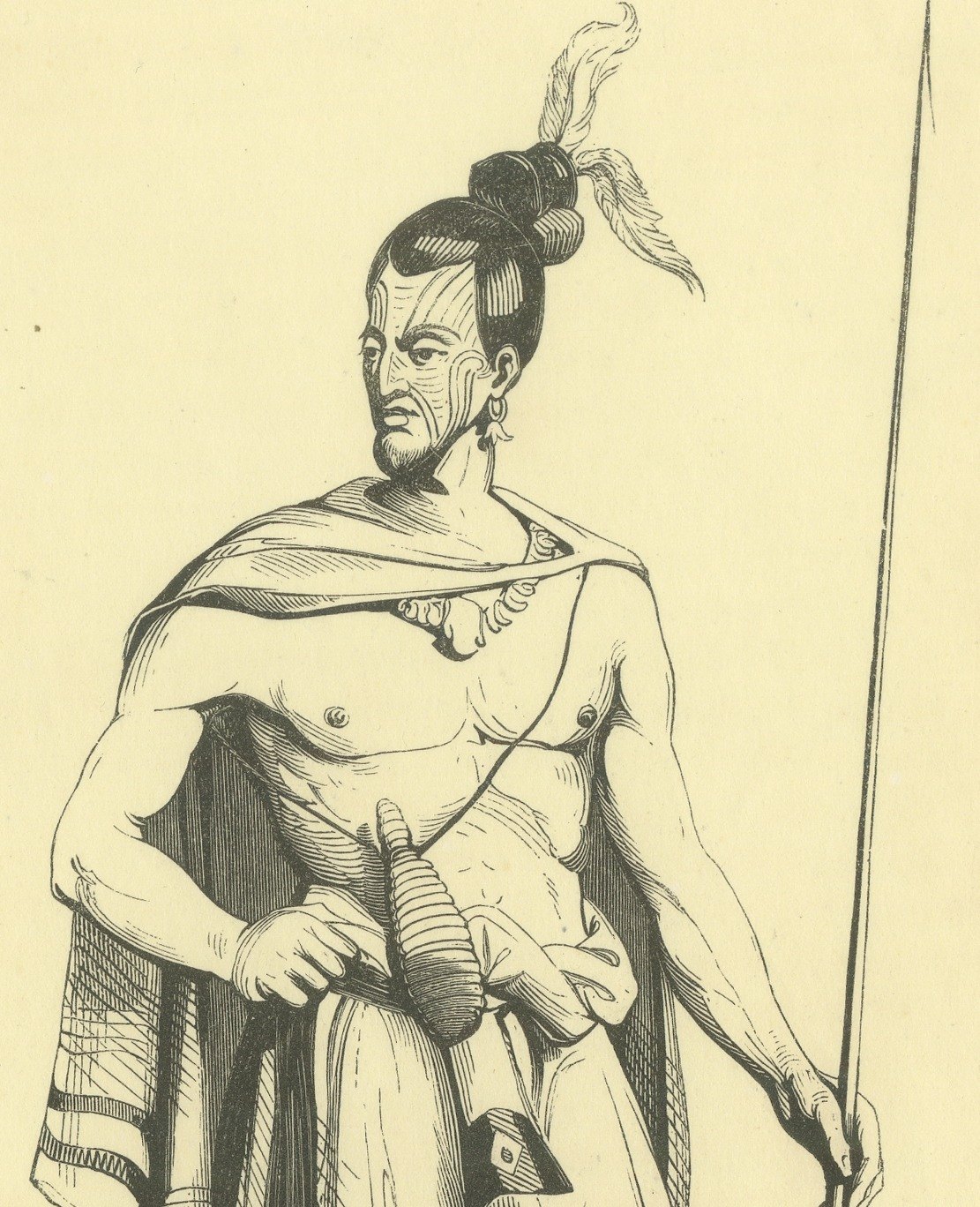
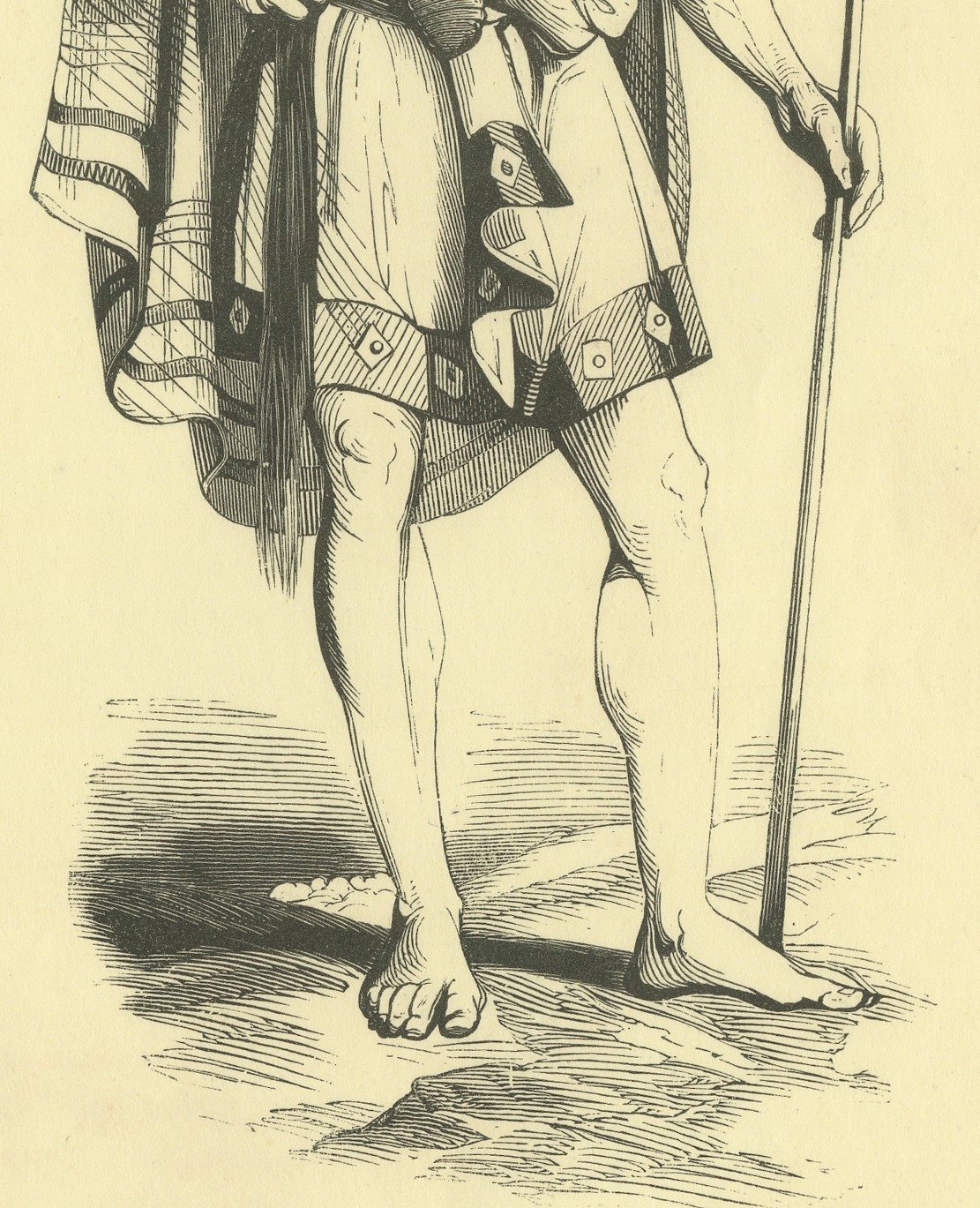
An original antique wood engraving of a Maori chief of New Zealand, an ethnographic costume print from Auguste Wahlen's Moeurs, usages et costumes de tous les peuples du monde, published in Brussels between 1843 and 1844. The plate is lettered "Chef d'une Tribu de la nouvelle Zélanda (Océanie.)", using the older French form of New Zealand, and the subject is a Maori chief, a rangatira in Maori usage. European writers of the period were preoccupied with rank in Maori society, and the chief was the figure through which they tried to explain it, so the type recurs across the travel literature and the costume books that drew on it. By the 1840s the imagery available to a Brussels compiler came largely from the French scientific voyages, Duperrey and Dumont d'Urville among them, and from the missionary accounts then appearing in quantity.
Moeurs, usages et costumes de tous les peuples du monde was published in Brussels by Auguste Wahlen at the Librairie Historique-Artistique between 1843 and 1844. The four volumes set out to describe the dress, customs, occupations and social divisions of the peoples of Europe, Asia, Africa, the Americas and Oceania, drawing on travel narratives, earlier costume books and other sources then treated as authoritative, and they carried approximately one hundred and ninety to two hundred plates, the count varying between copies and editions.
Wahlen was the publisher and compiler rather than the artist; where a name such as Duverger, Pannemaker, Mercier, Lisbet, Markaert or Vermorcken appears on a sheet it belongs to the illustrator or the engraver, and no artist is attributed here without one.
The plates are wood engravings on paper. The images should be read as a nineteenth century European interpretation of the cultures they show rather than as a documentary record, which is a large part of what makes the series interesting to historians of the period. The sheet is uncolored, as issued, and the wood engraving prints with the crisp line and even tone that suits a simple mount and a plain frame. Plates from this series group well, and a set of four or six drawn from the Oceania section hangs better together than a single sheet on its own.
The sheet is in good condition for its age, with light toning, a few small marginal spots and minor edge wear; the image itself is clean and strong.
This is an original antique print, not a modern reproduction. This item is sold unframed.