 The sheet, as you receive it
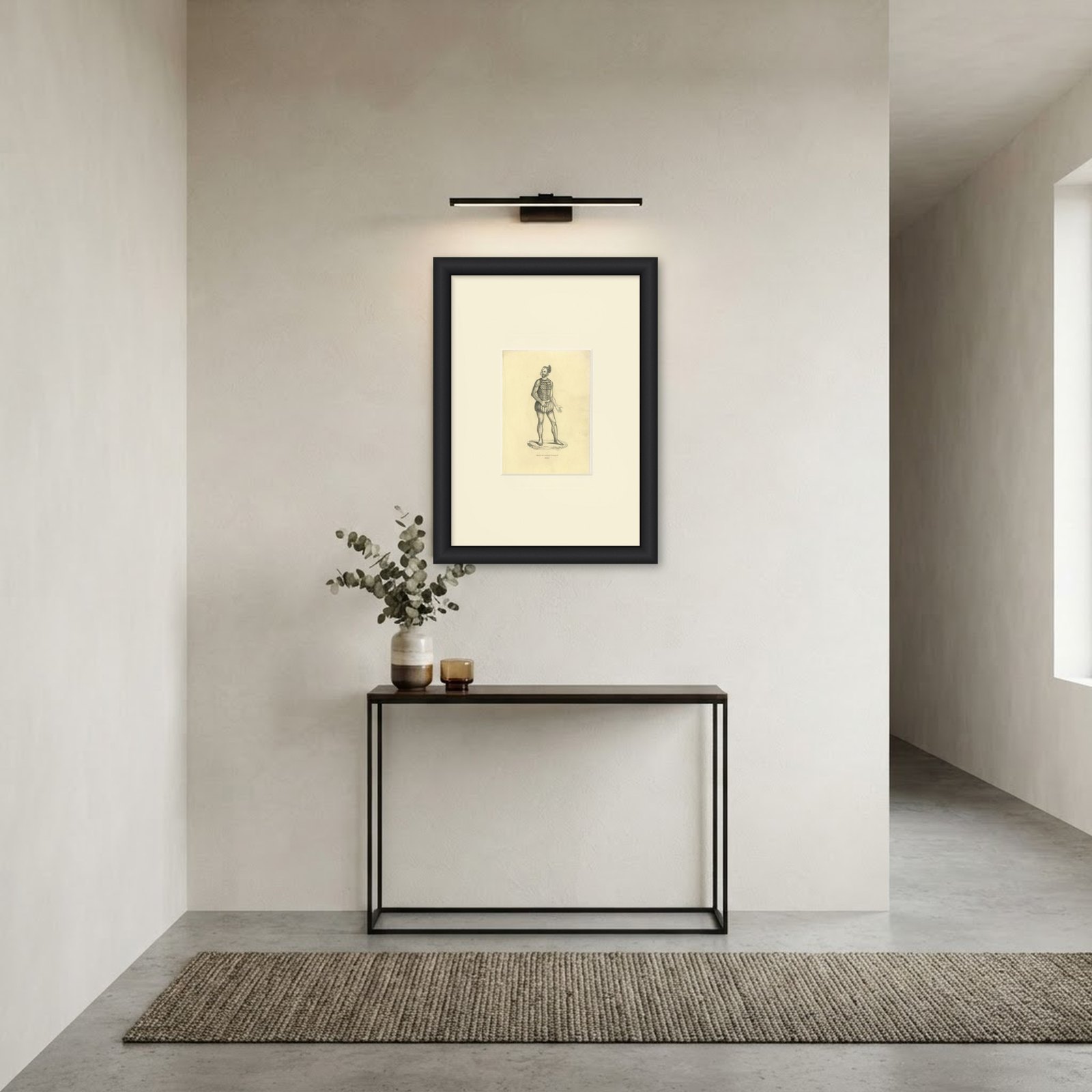 In the room
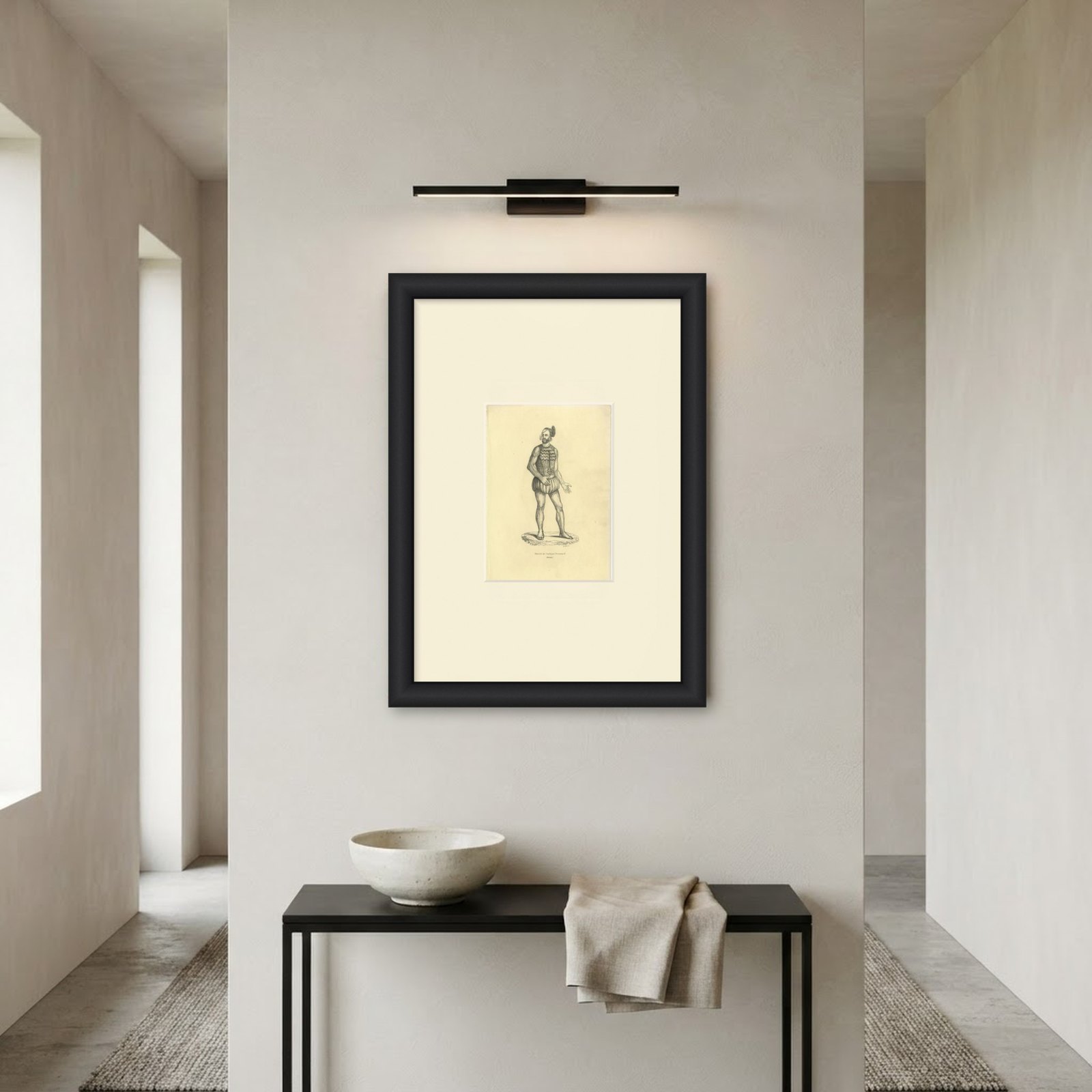
Interior designers: BarTrade members buy at their trade price. How it works
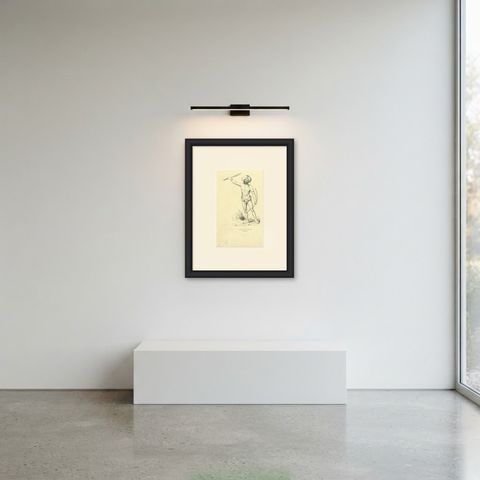
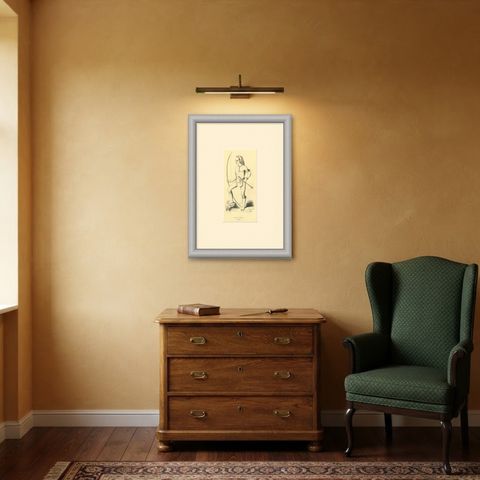
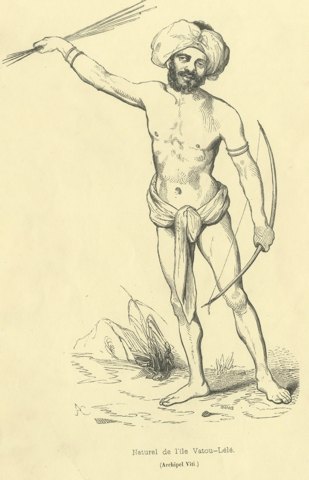
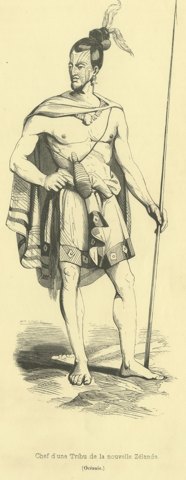
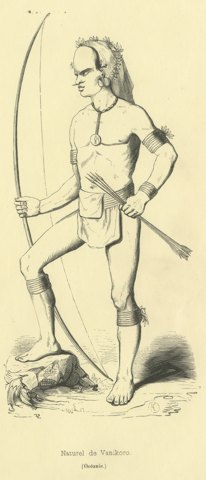
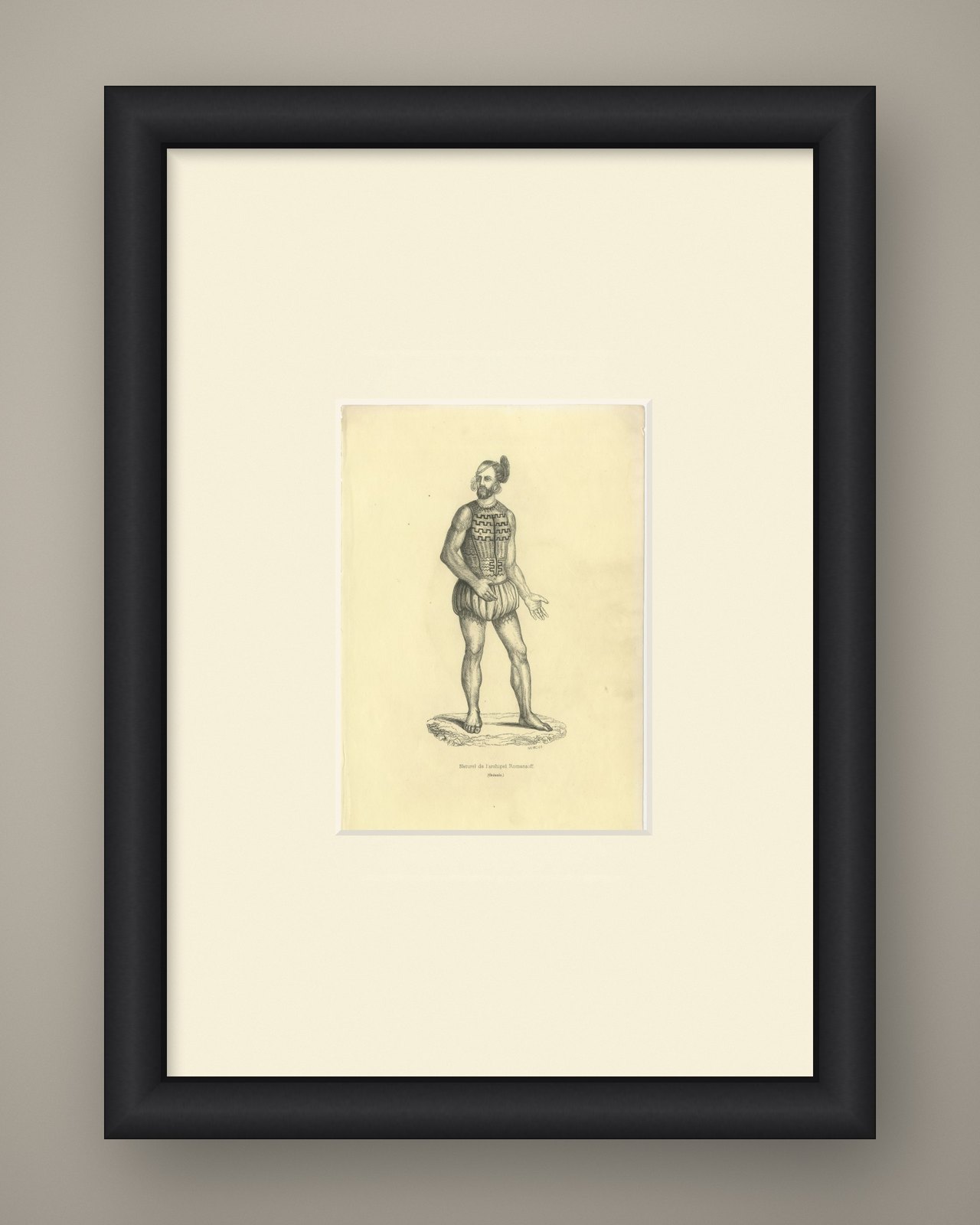
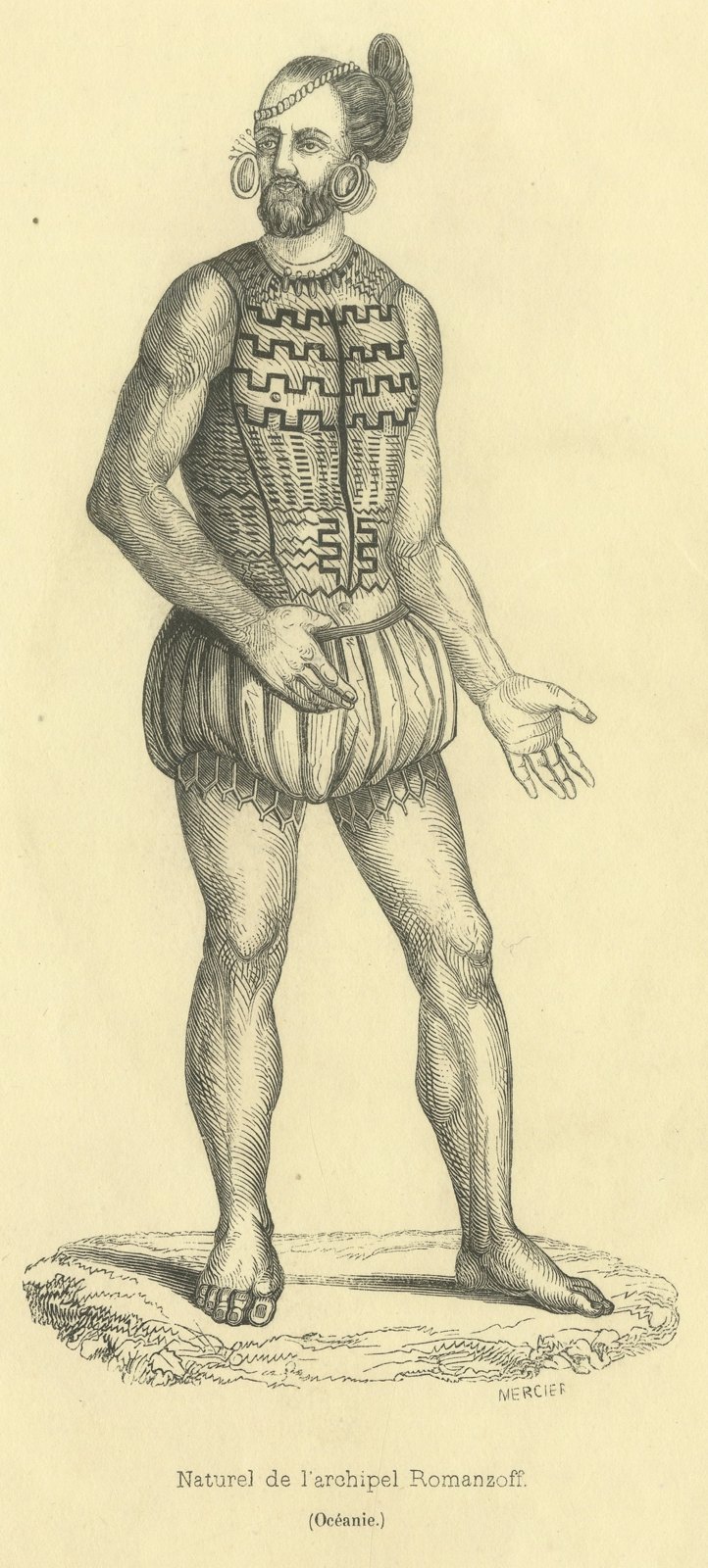
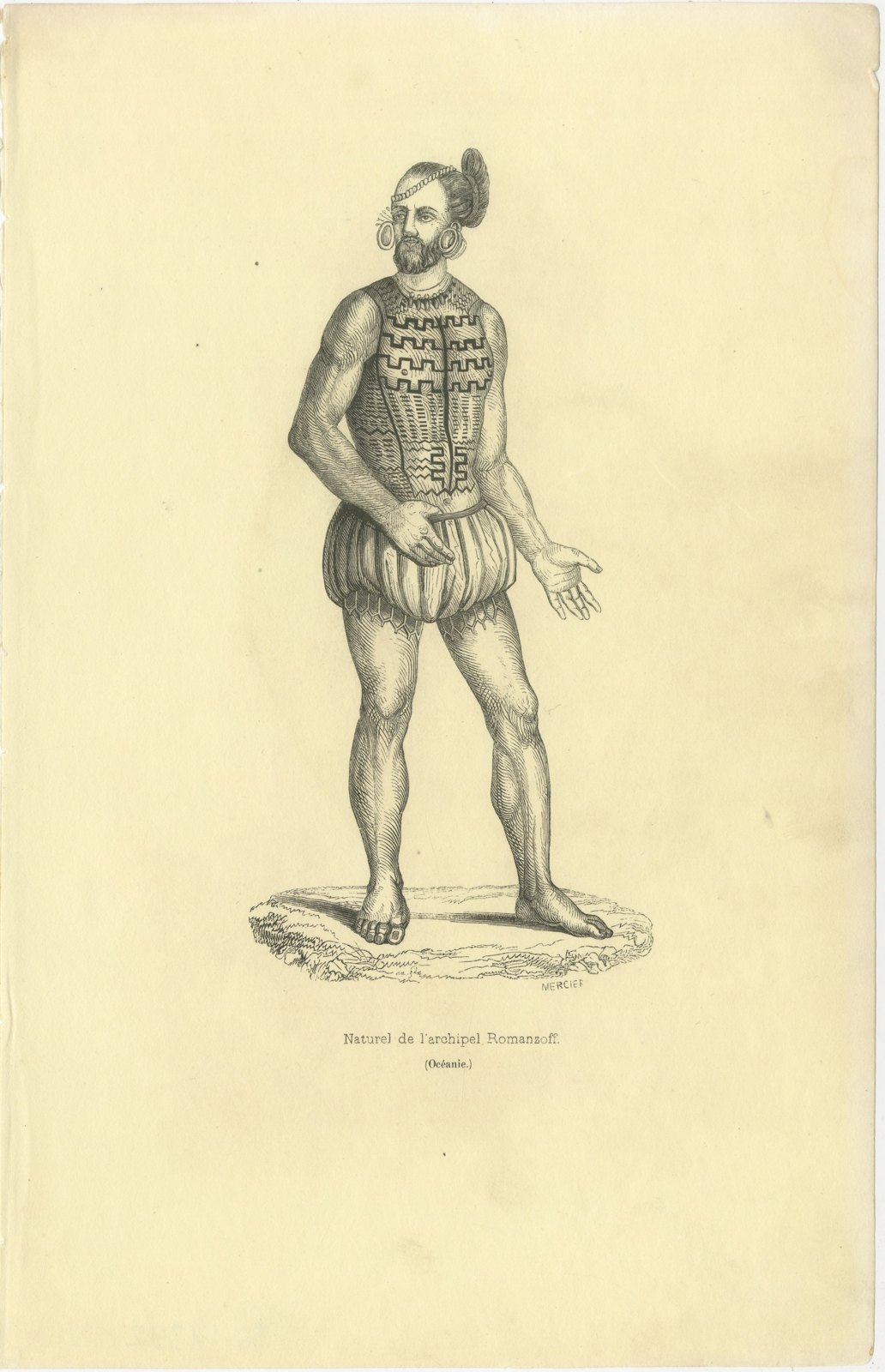
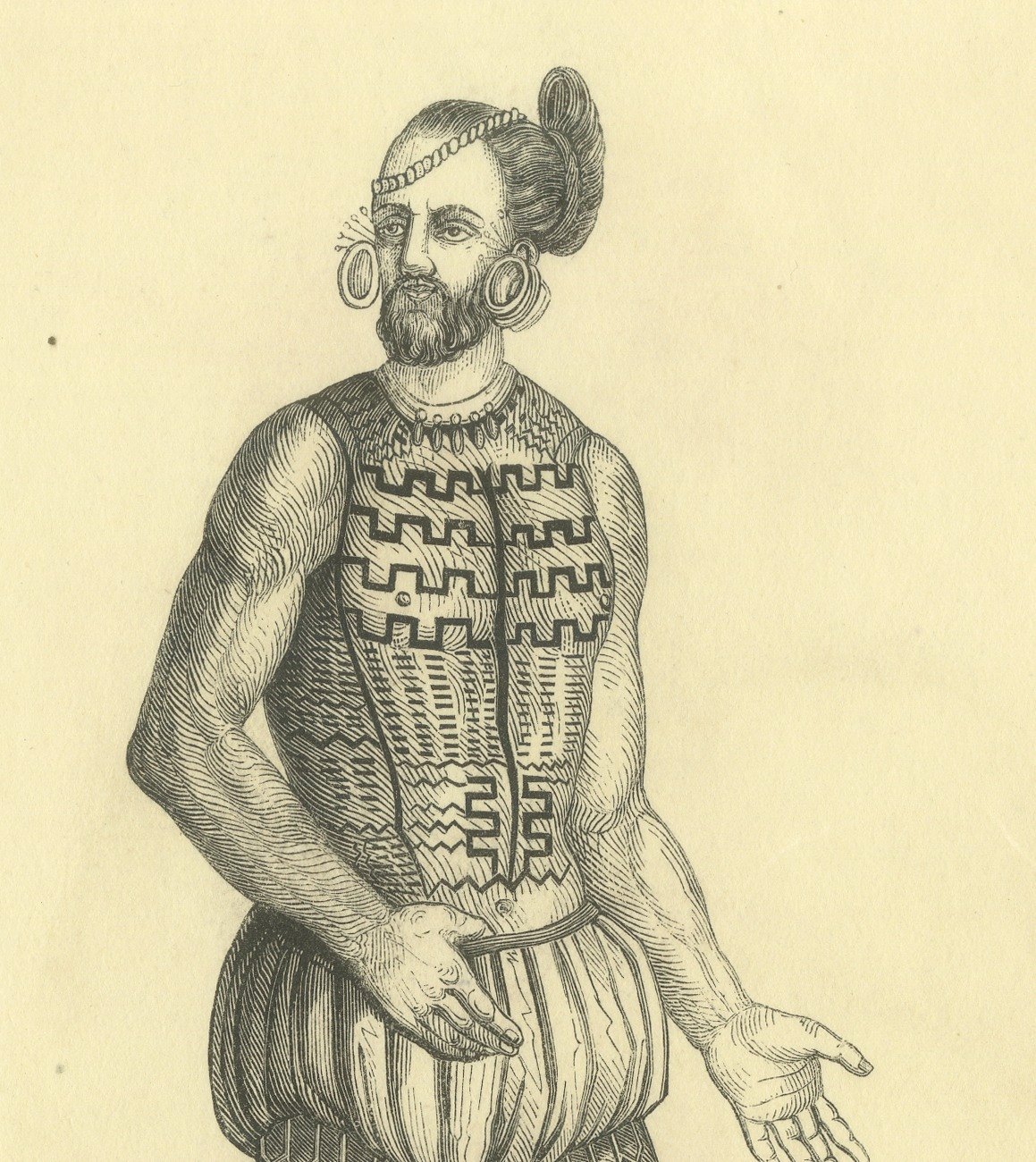
An original antique wood engraving of a native of the Romanzoff archipelago in Oceania, an ethnographic costume print from Auguste Wahlen's Moeurs, usages et costumes de tous les peuples du monde, published in Brussels between 1843 and 1844. The plate is lettered “Naturel de l'archipel Romanzoff (Océanie.)”. Romanzoff is the name Russian navigators gave to part of what is now the Marshall Islands in Micronesia, and it is the form under which those atolls appeared on European charts and in voyage narratives of the early nineteenth century. The identification of the group behind a Russian exonym of this kind is not always certain, and the sheet is therefore described by the name printed on the plate.
Moeurs, usages et costumes de tous les peuples du monde was published in Brussels by Auguste Wahlen at the Librairie Historique-Artistique between 1843 and 1844. The four volumes set out to describe the dress, customs, occupations and social divisions of the peoples of Europe, Asia, Africa, the Americas and Oceania, drawing on travel narratives, earlier costume books and other sources then treated as authoritative, and they carried approximately one hundred and ninety to two hundred plates, the count varying between copies and editions.
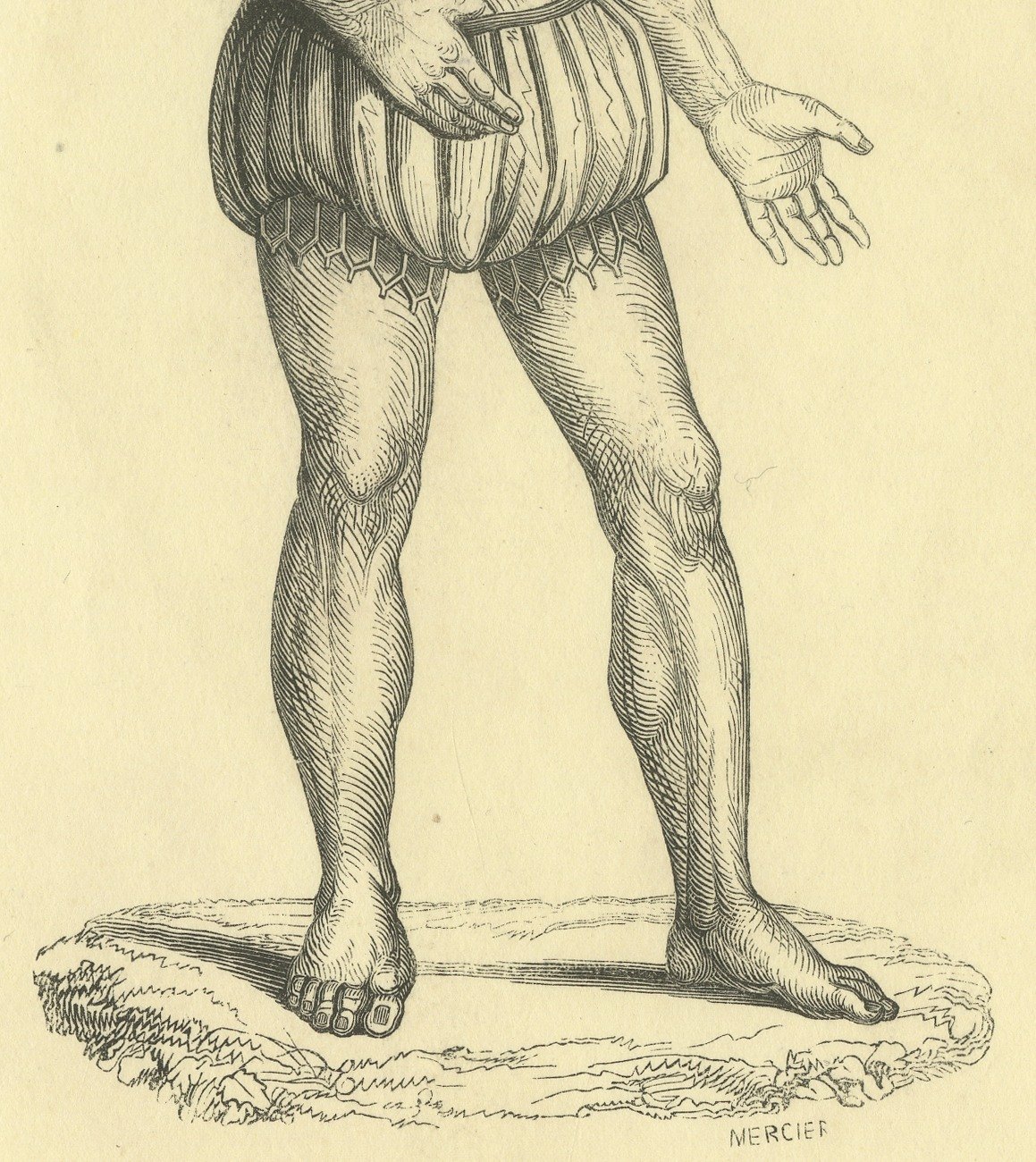
Wahlen was the publisher and compiler rather than the artist; where a name such as Duverger, Pannemaker, Mercier, Lisbet, Markaert or Vermorcken appears on a sheet it belongs to the illustrator or the engraver, and no artist is attributed here without one.
The plates are wood engravings on paper. The images should be read as a nineteenth century European interpretation of the cultures they show rather than as a documentary record, which is a large part of what makes the series interesting to historians of the period. This impression is uncolored. Micronesian subjects are much scarcer in nineteenth century costume series than Polynesian ones, and the survival of the Russian name on a Brussels plate of the eighteen forties is a small record of how knowledge of the Pacific reached western Europe. The sheet suits a study or a library, and this ethnographic print groups well with other Wahlen costume prints of Oceania, whether framed singly or hung as a set of four or six.
The sheet is in good condition for its age, with small chips and nicks at the edges and a soft corner; the image itself is clean and strong.
This is an original antique print, not a modern reproduction. This item is sold unframed.