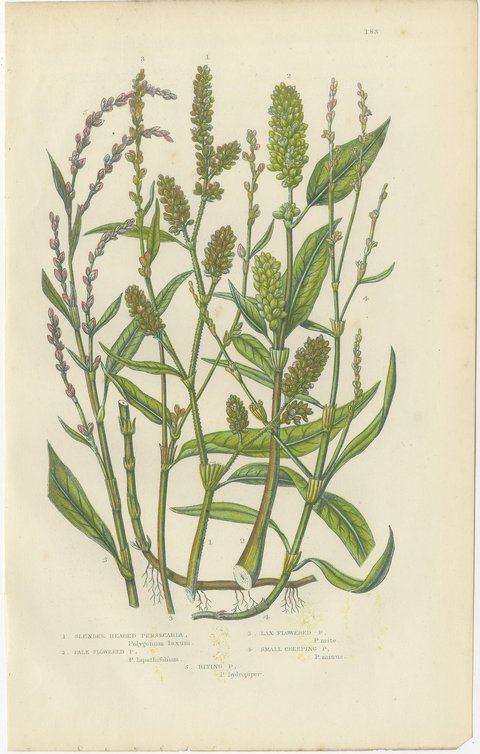
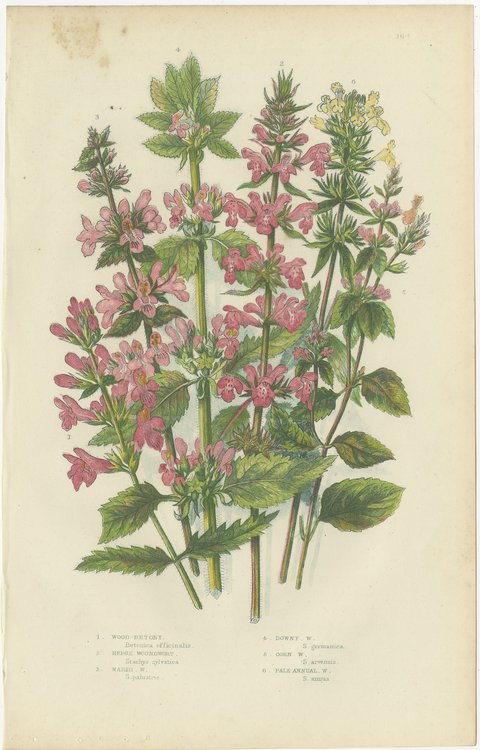
 The sheet, as you receive it
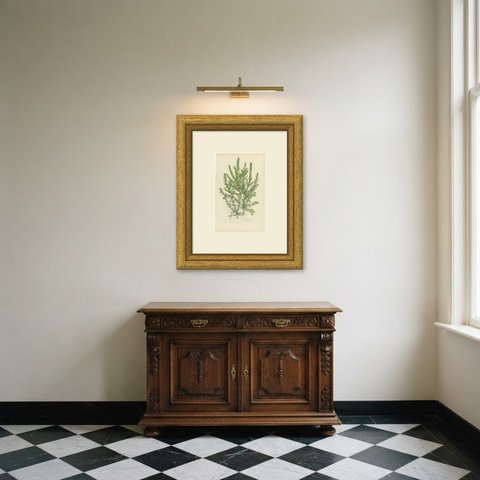
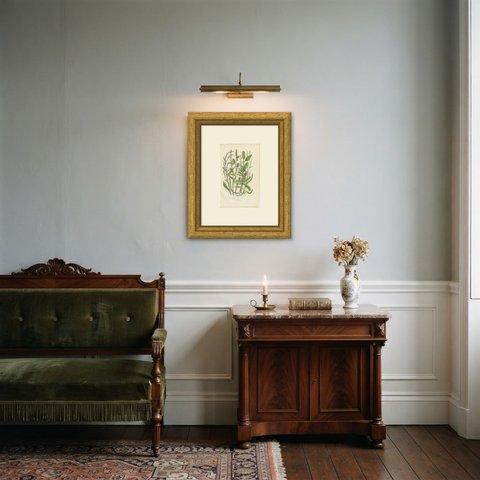
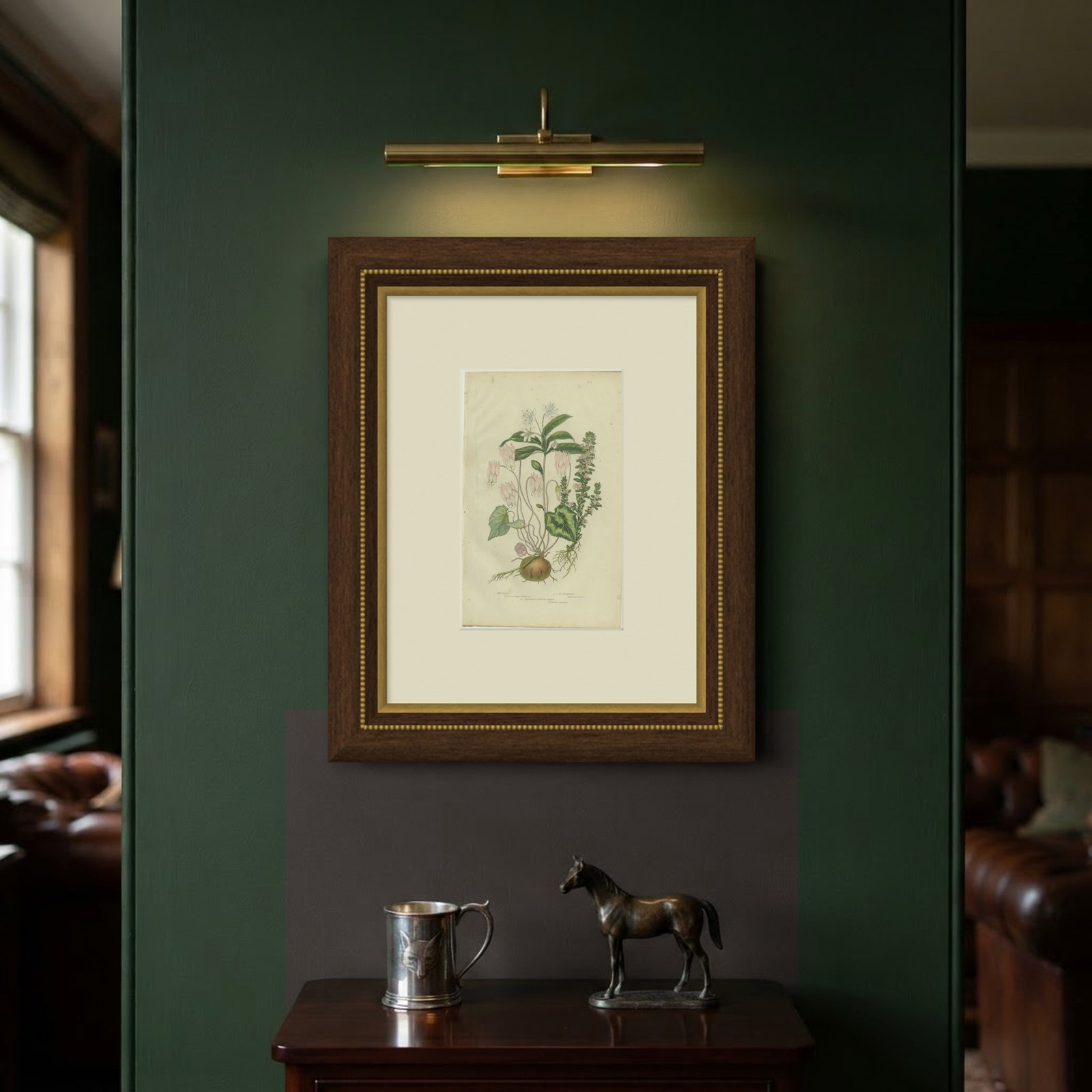
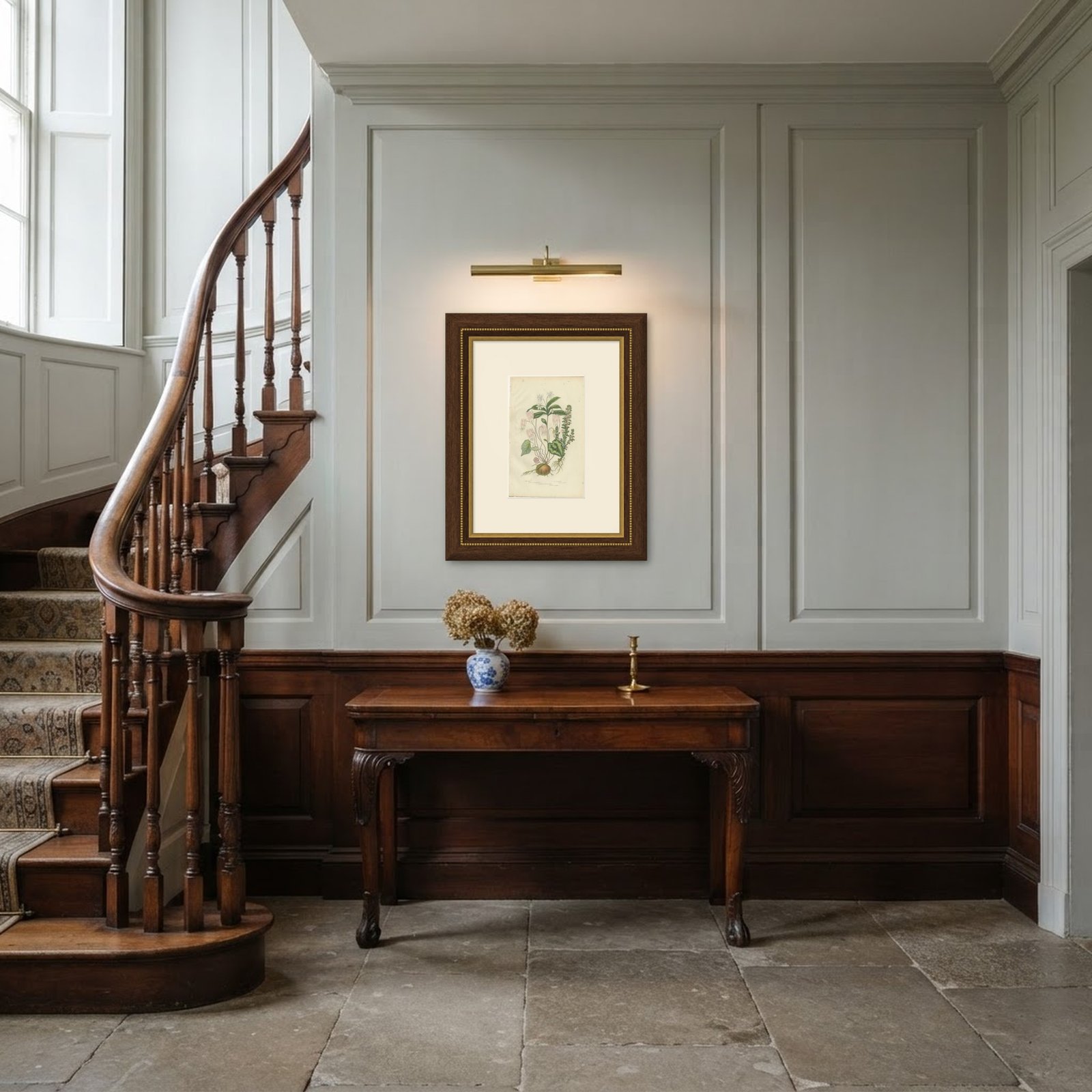 In the room
Interior designers: BarTrade members buy at their trade price. How it works
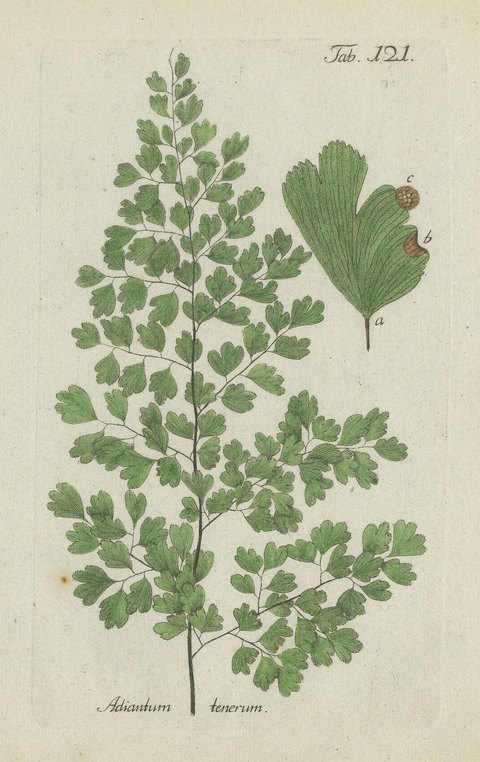
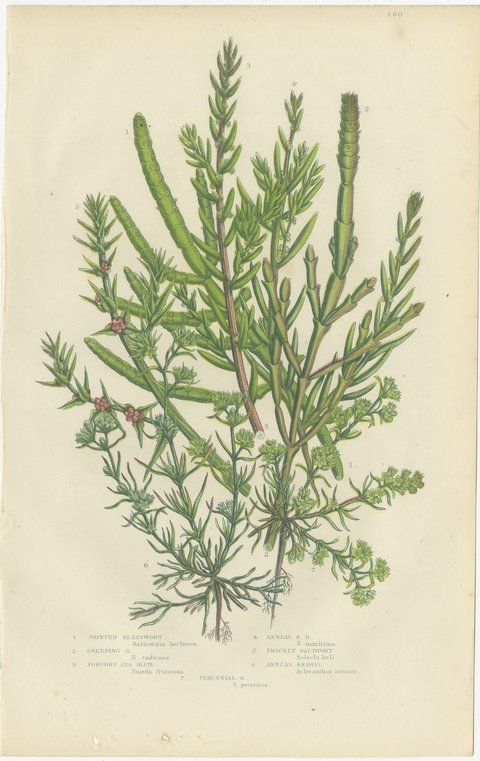
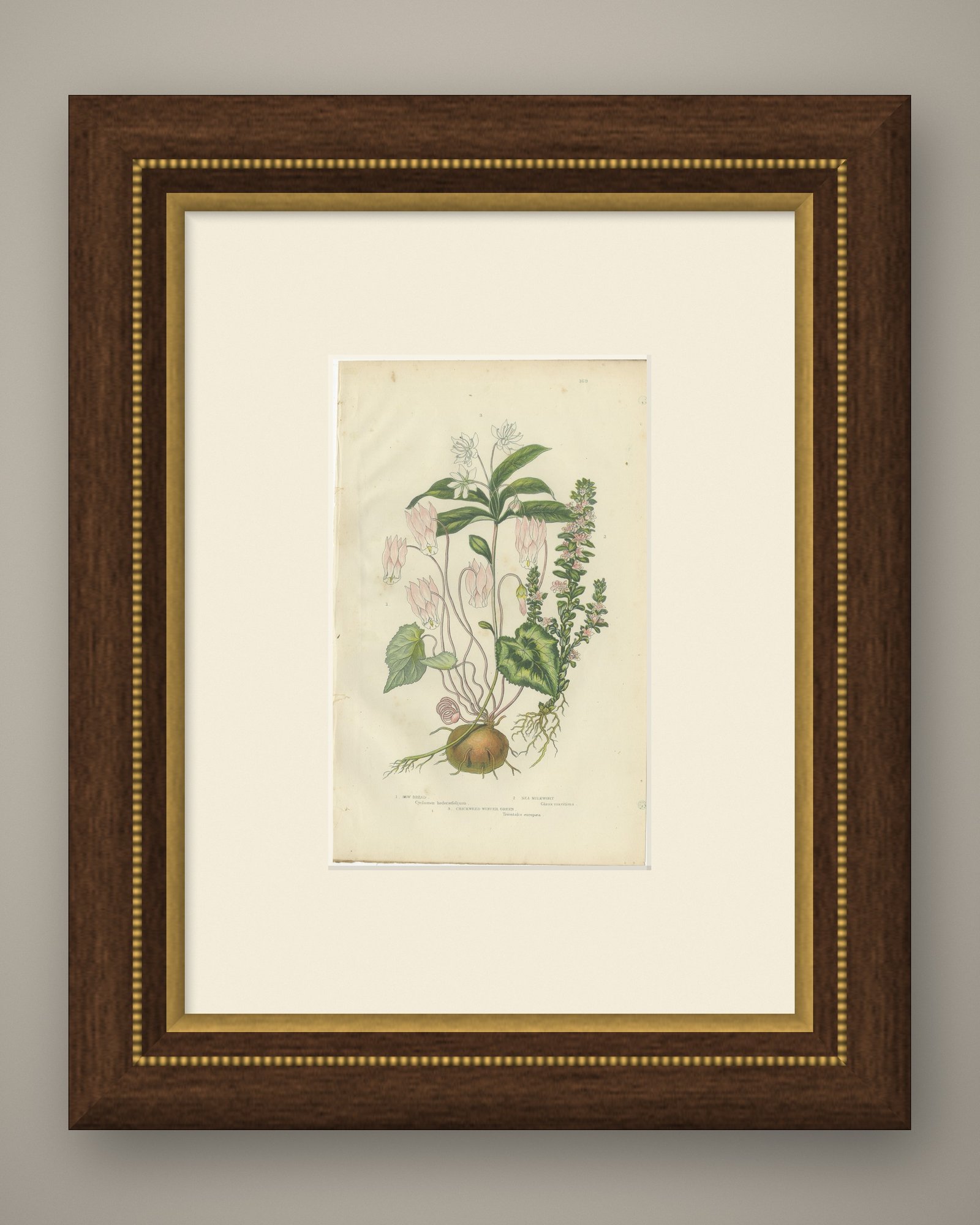
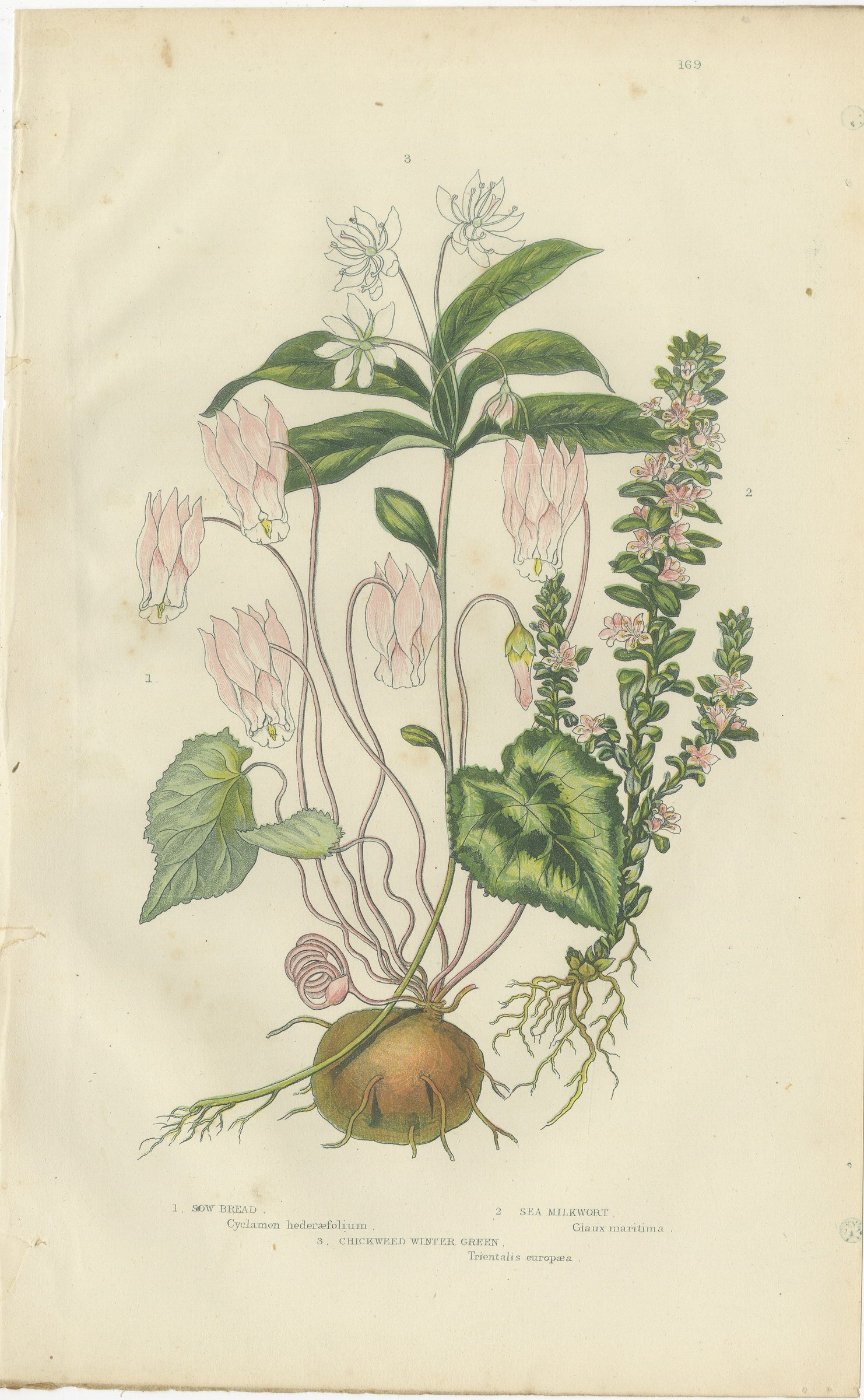
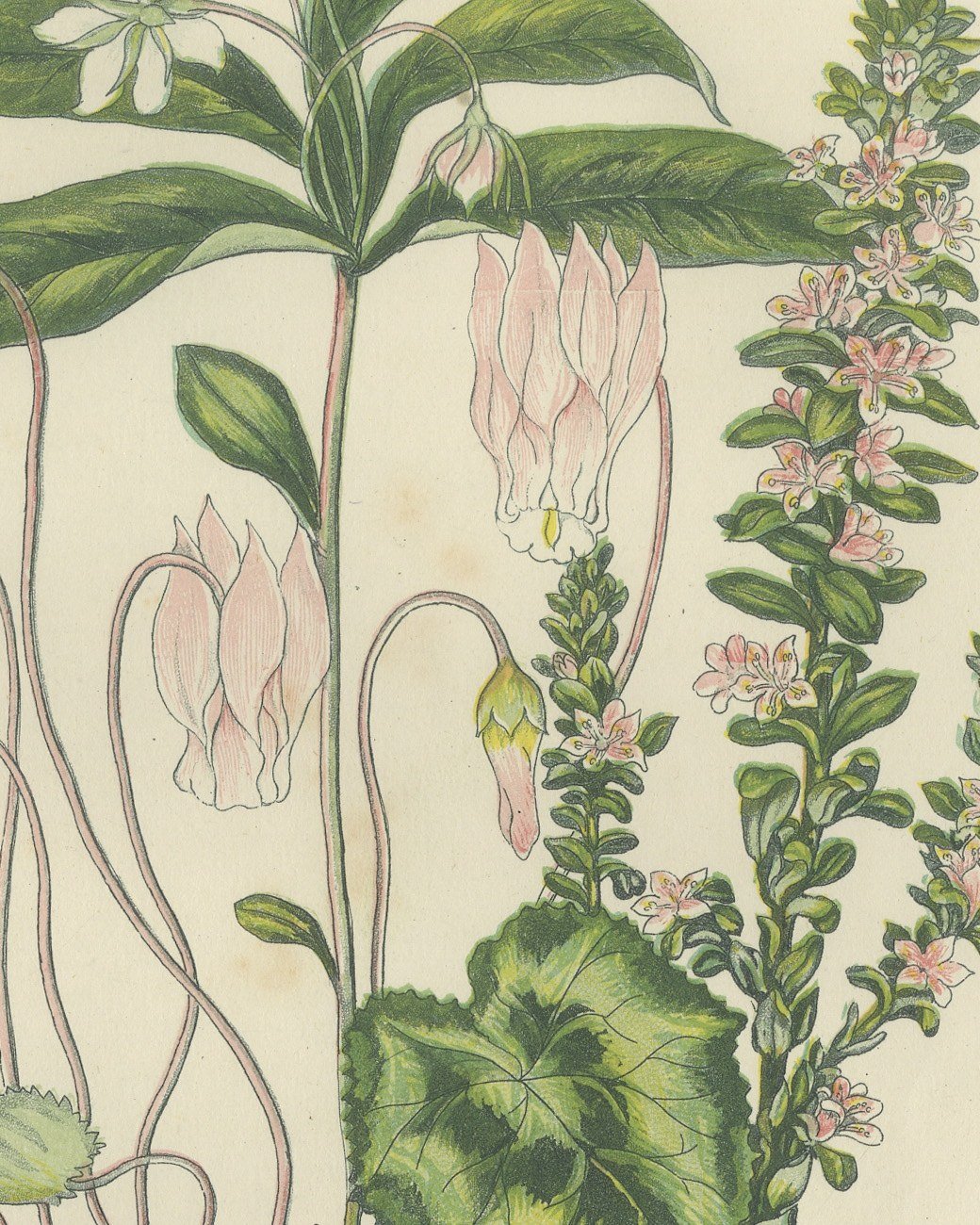
Printed in color in London for Frederick Warne and Co., this original antique plate from Anne Pratt's British flora shows the wild cyclamen, which Pratt calls sow bread, with the sea milkwort and the chickweed wintergreen. Pale pink cyclamen flowers nod on slender curving stalks at the left of the sheet, with the round brown corm and its coiling seed stalks drawn at the foot and the marbled ivy shaped leaf beside it. The white star of the chickweed wintergreen opens at the top on a bare stem above a whorl of leaves, and the fleshy pink spike of the sea milkwort runs up the right.
The plate comes from The Flowering Plants, Grasses, Sedges, and Ferns of Great Britain, and their allies the Club Mosses, Pepperworts and Horsetails, written and drawn by Anne Pratt and published in London by Frederick Warne and Co. of Bedford Street, Covent Garden. The work runs to six volumes and was issued under the direction of the Committee of General Literature and Education appointed by the Society for Promoting Christian Knowledge. This sheet belongs to Volume IV, whose title page records 249 species printed in color.
The work was one of the first thorough illustrated floras of Britain aimed at the ordinary reader rather than the specialist, and the price was only possible because the plates were printed in color instead of being colored by hand. That technical choice is part of what the sheet records, and it put a reliable colored figure of every British species within reach of a wide public for the first time.
Even age toning. Handling soiling along all four edges. A few small foxing spots in the margin. Slight wear at the bottom left and top left corners. Minor edge wear, shallow nicks along the left.
This is an original antique print, not a modern reproduction. This item is sold unframed.