 The sheet, as you receive it
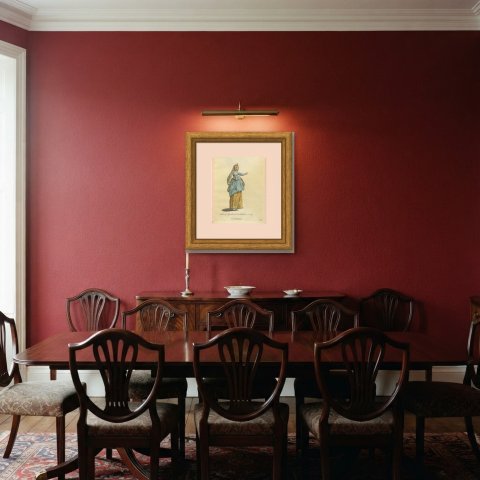
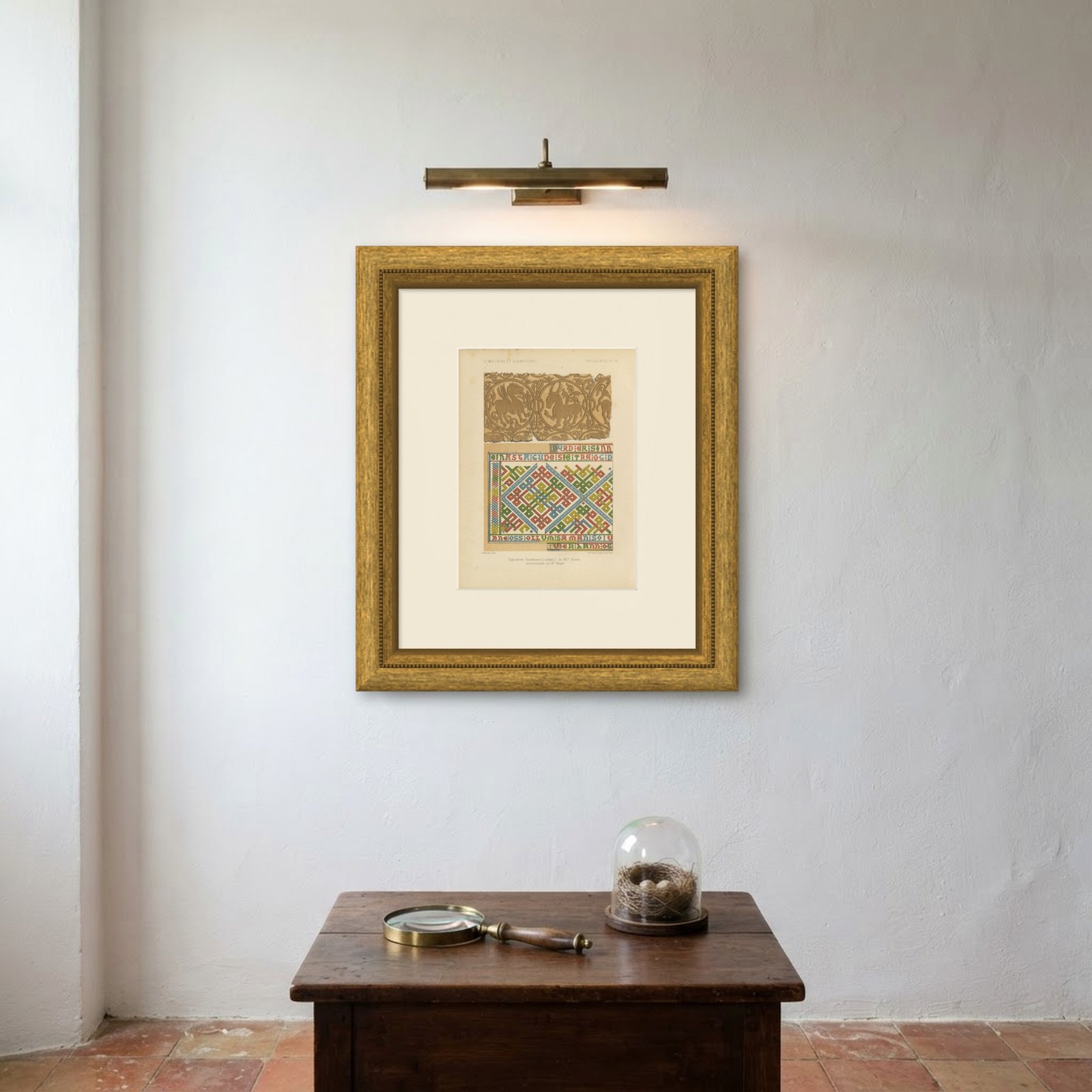
 In the room

Interior designers: BarTrade members buy at their trade price. How it works
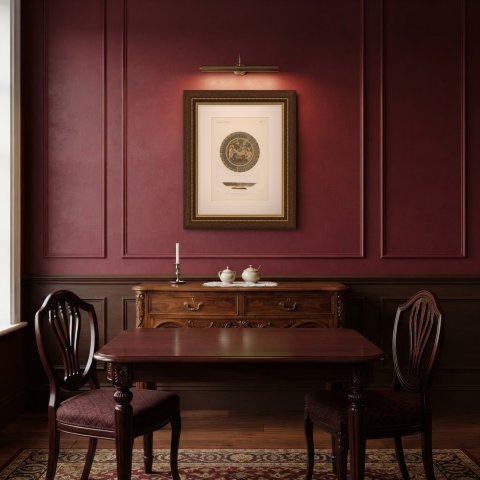
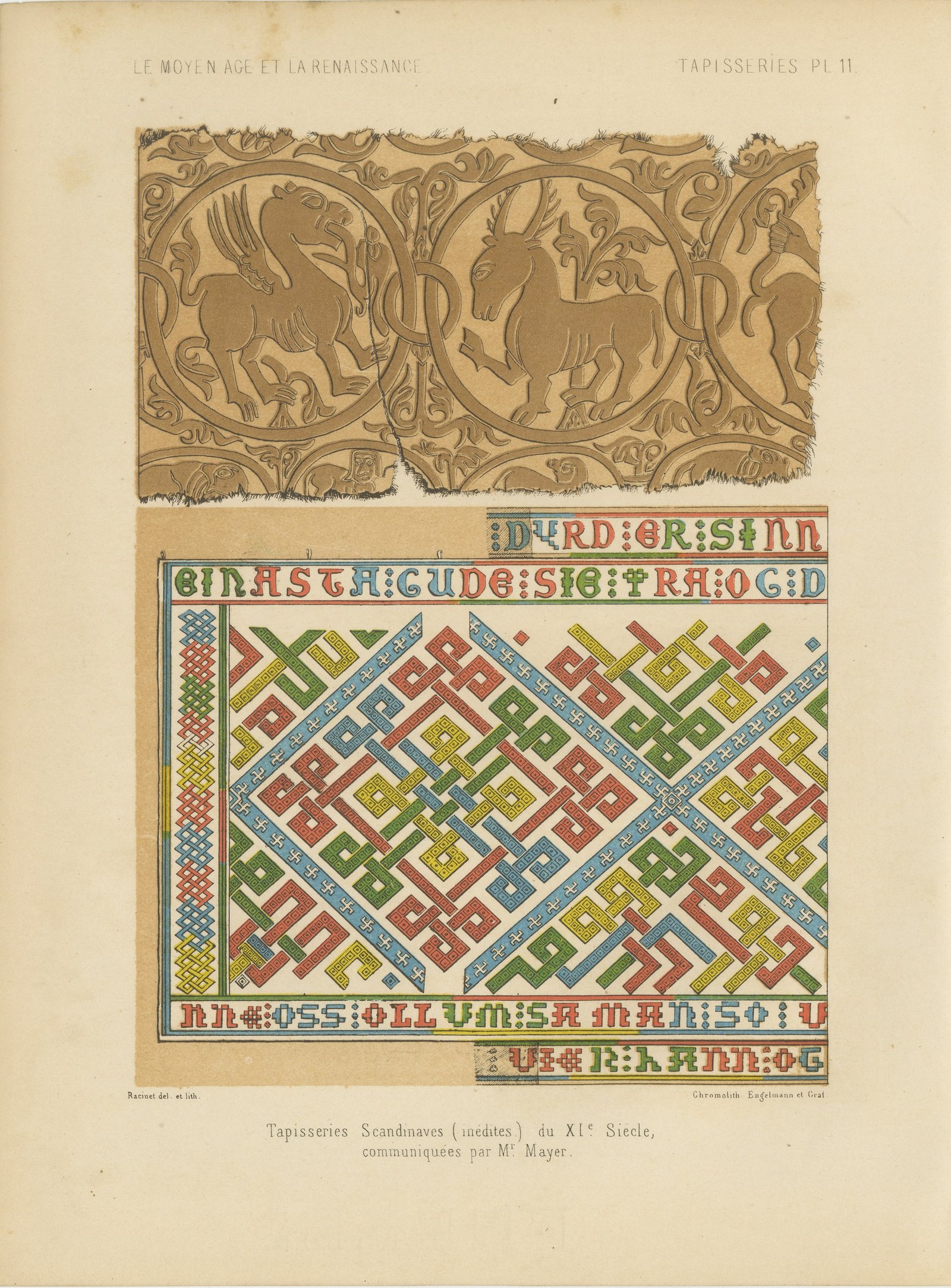
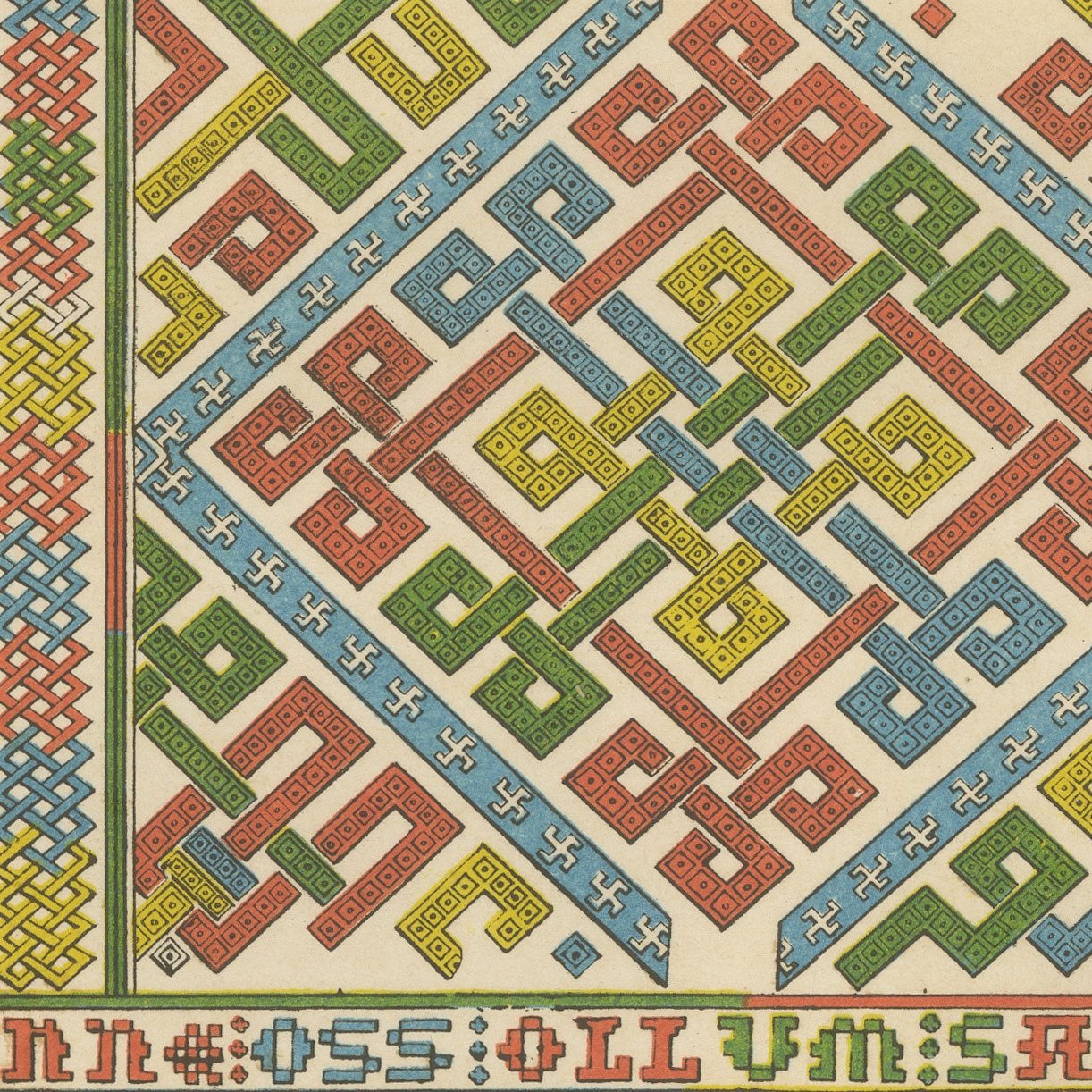
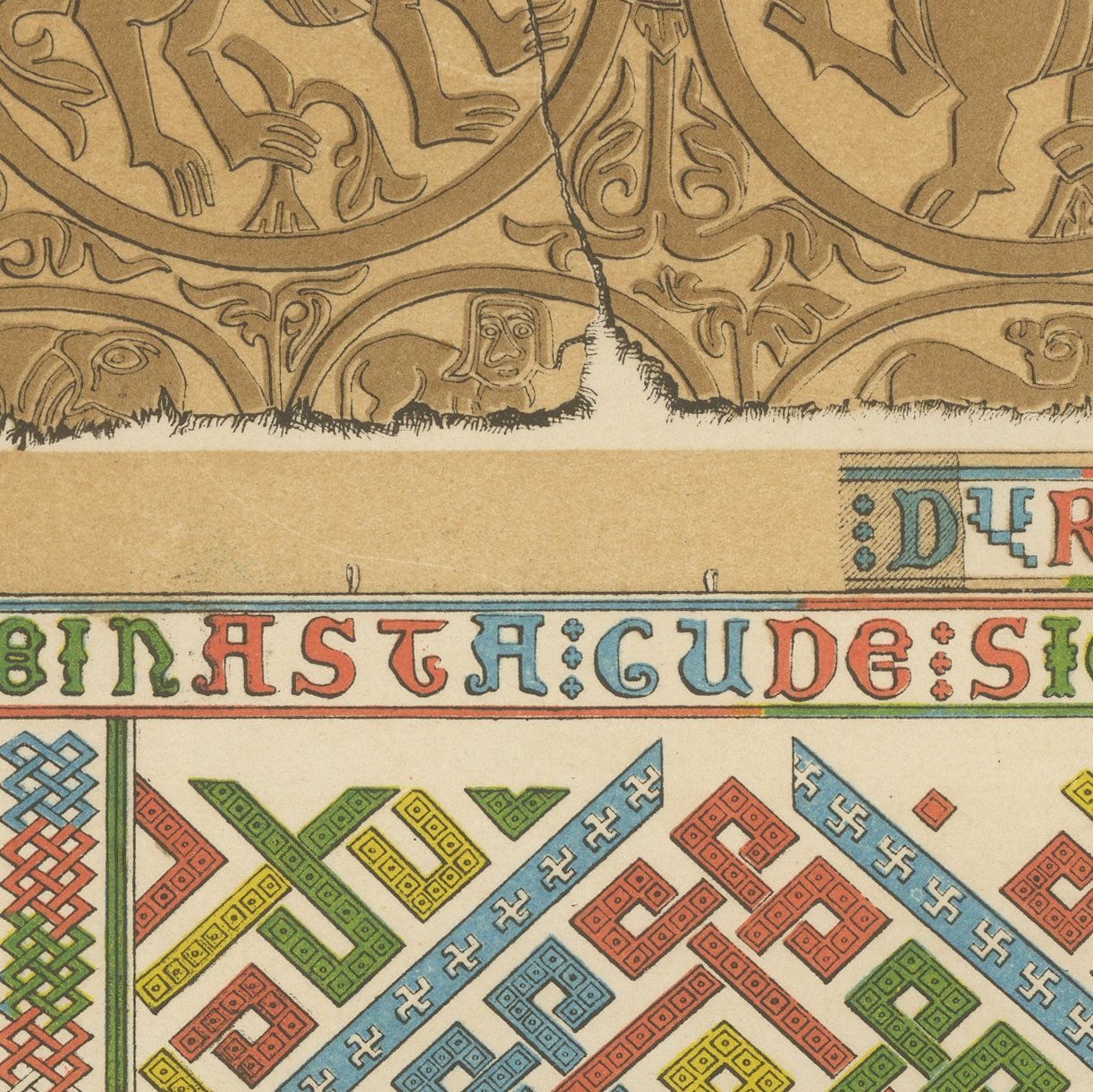
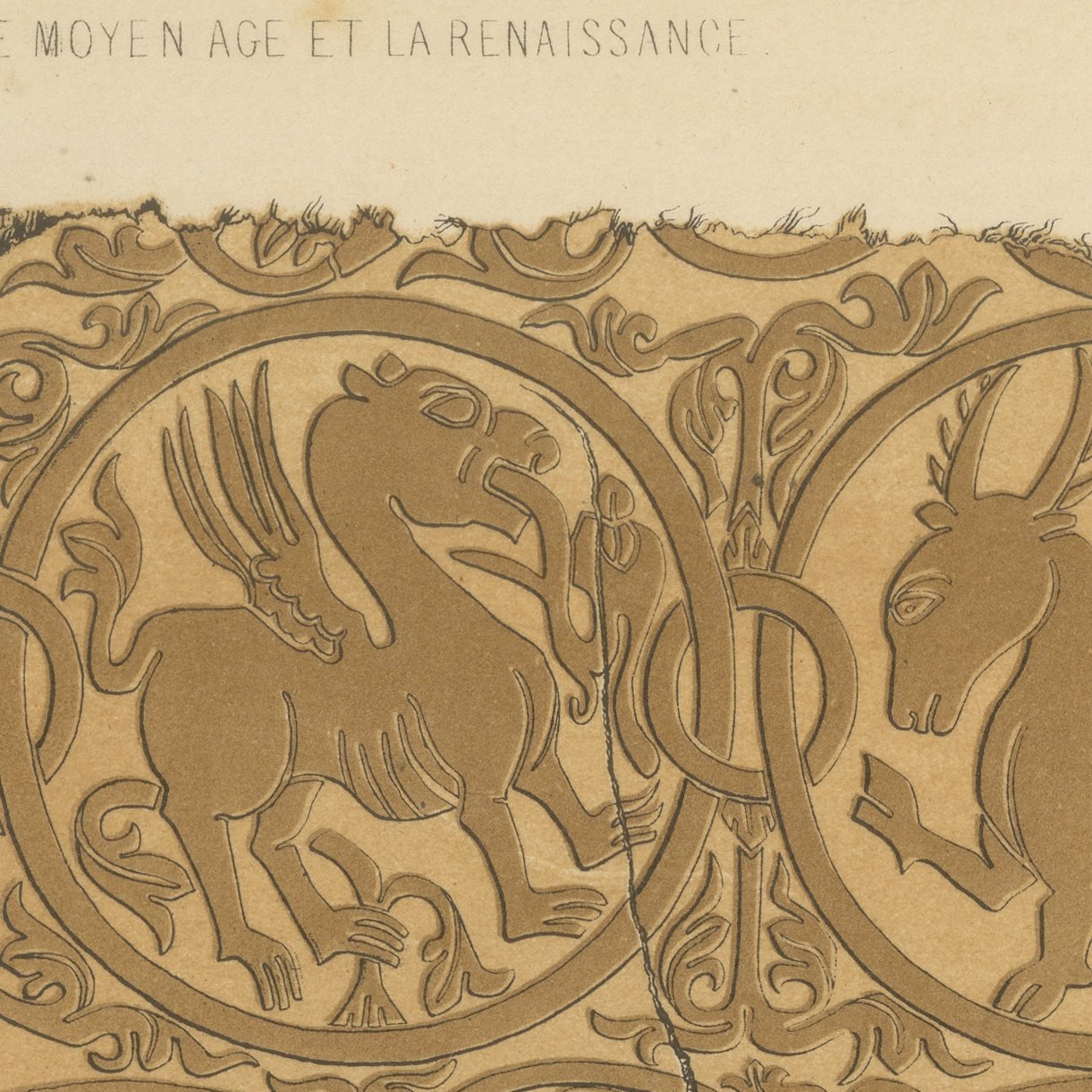
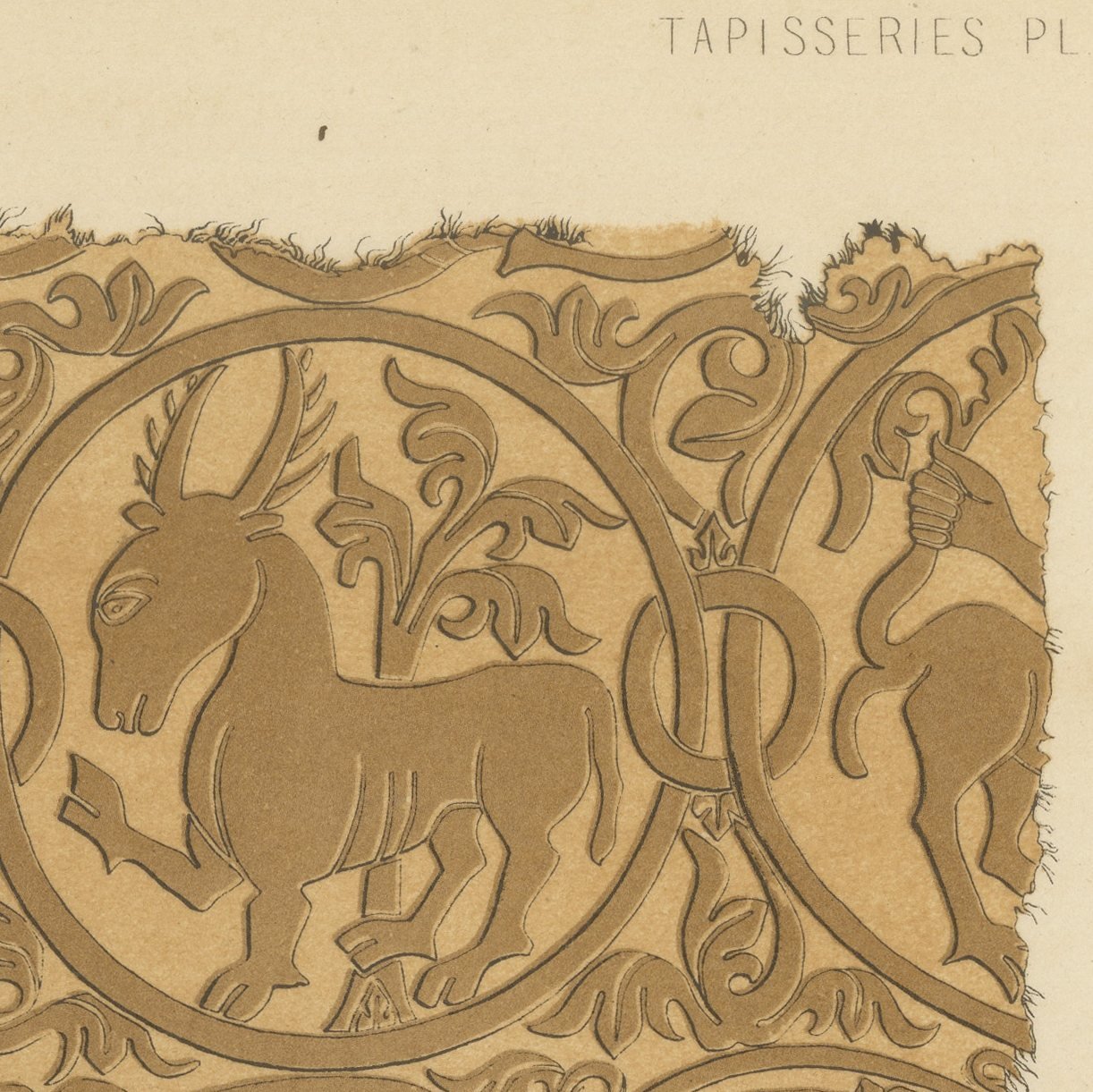
Two bands of woven ornament, the upper one a frieze of confronted beasts and riders in brown on a golden ground, the lower a dense geometric field of stepped lozenges in red, green, blue and yellow with a line of runic looking letters woven through it. The sheet is lettered as Scandinavian tapestries of the eleventh century, previously unpublished, communicated by Monsieur Mayer.
The plate belongs to the second volume of Lacroix and Sere's Le Moyen Age et la Renaissance, Paris, 1849, a work that set out to describe the manners, trades, sciences, letters and fine arts of Europe between the fall of Rome and the end of the sixteenth century. Each sheet was drawn from the original object or manuscript and printed in chromolithography, a process still new in 1849 and here used with unusual richness.
Eleventh century Scandinavian textiles barely survive at all, and a colored record of two of them made in 1849 is a genuinely uncommon document. The geometric lower band looks startlingly modern and will appeal to buyers of textile design and of Norse material who would never otherwise look at a French chromolithograph. It hangs well in a room with plain walls. The provenance is worth stating: the lettering records that the originals were communicated by Monsieur Mayer and were unpublished when the plate was made, so this chromolithograph is itself the first appearance of the two textiles in print. Racinet drew and lithographed it himself and Engelmann et Graf printed it, the same team responsible for the best of the palaeographic sheets in the volume.
Light uneven toning, browner towards the edges. Handling soiling along the bottom, left and top edges. Scattered light foxing in the margin. All four corners complete.
This is an original antique print, not a modern reproduction. This item is sold unframed.