 The sheet, as you receive it
 In the room

Interior designers: BarTrade members buy at their trade price. How it works
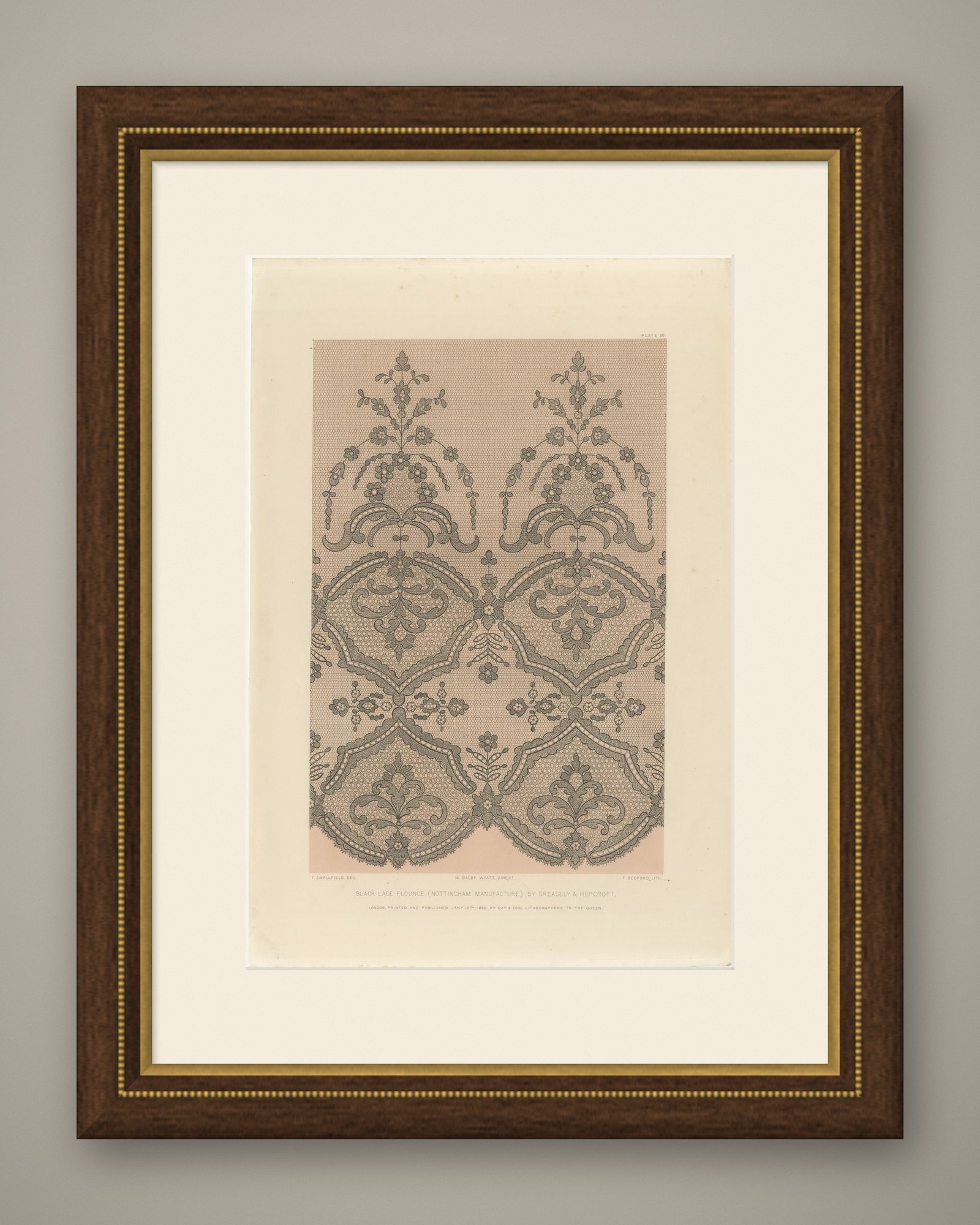
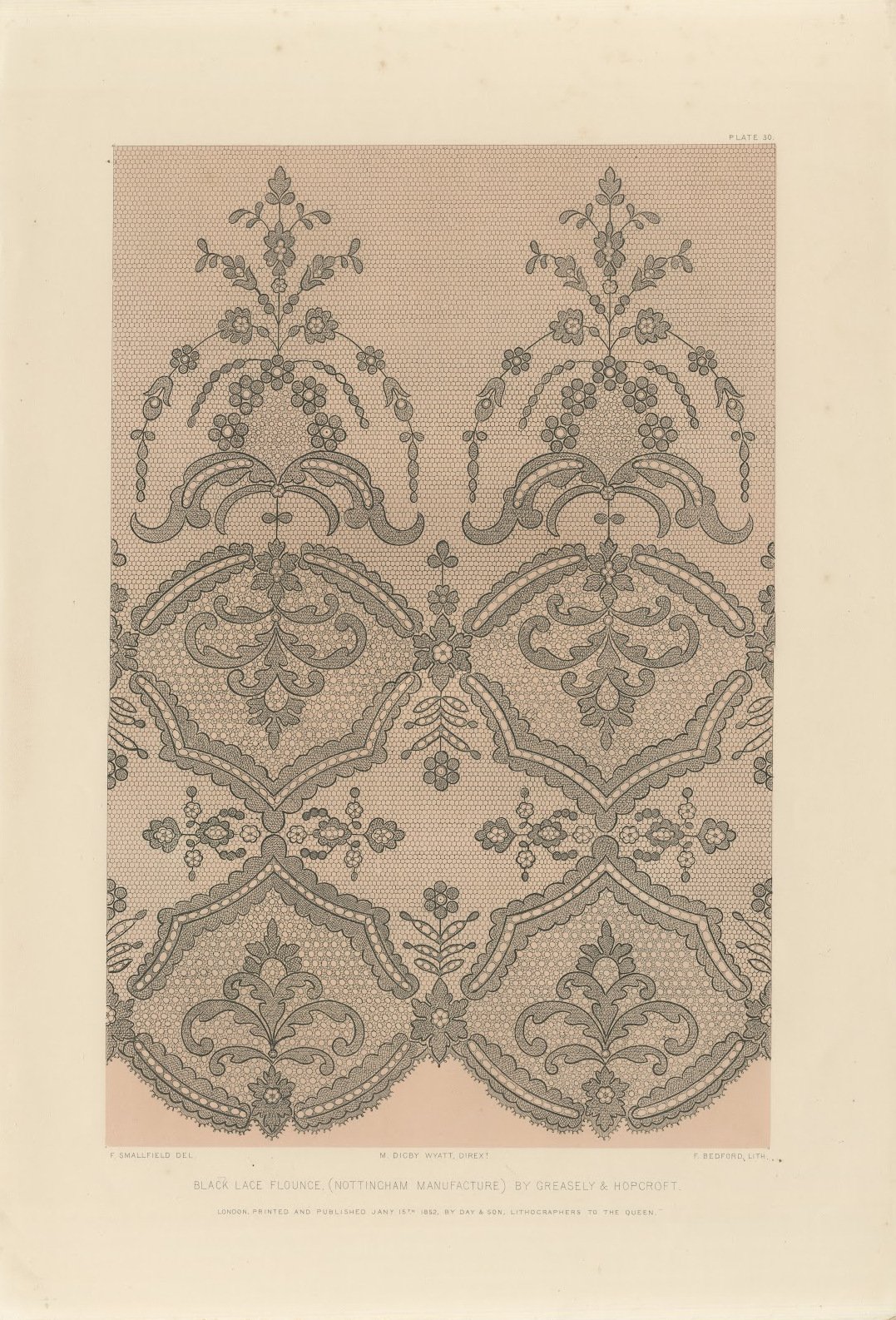
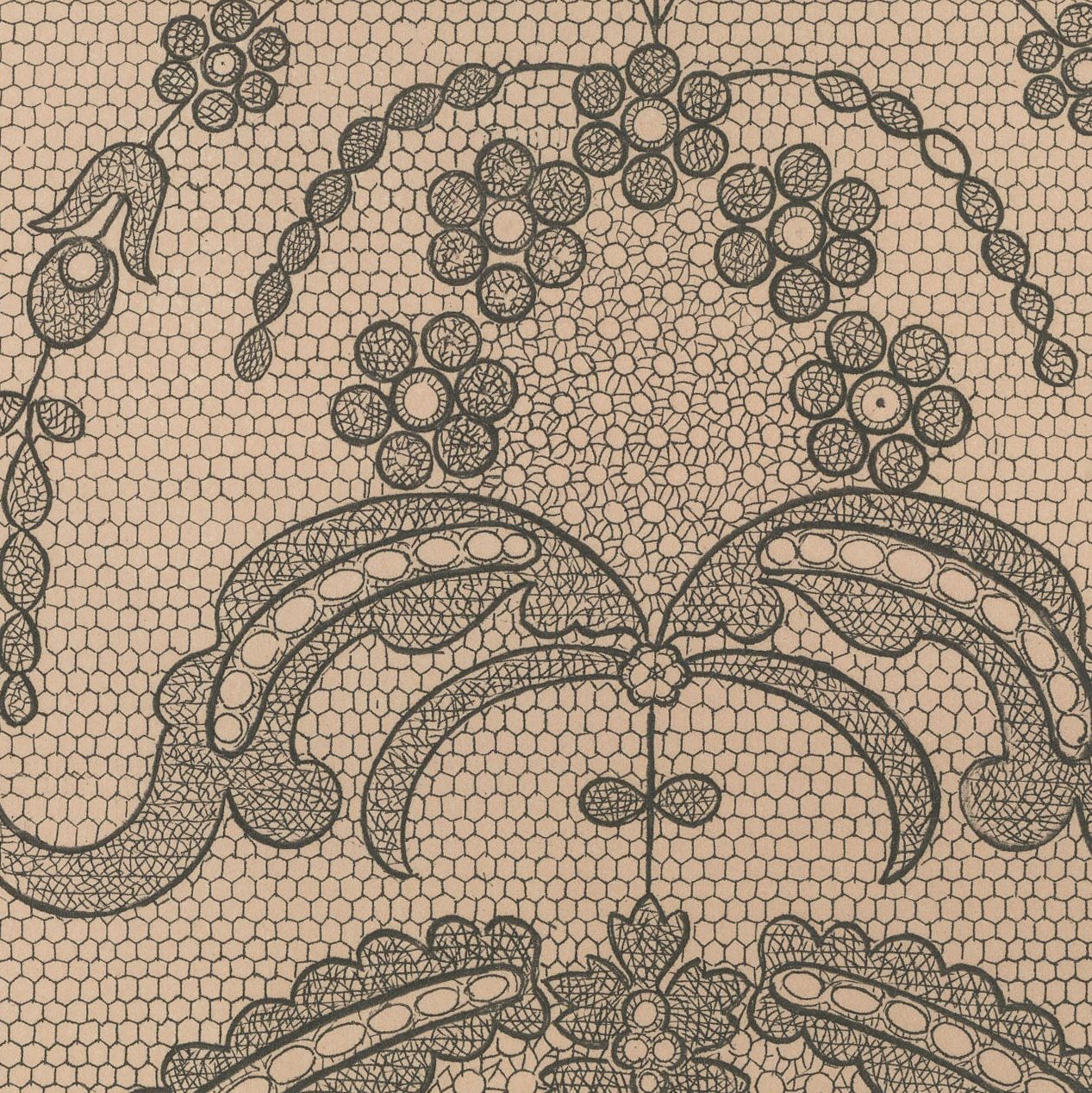
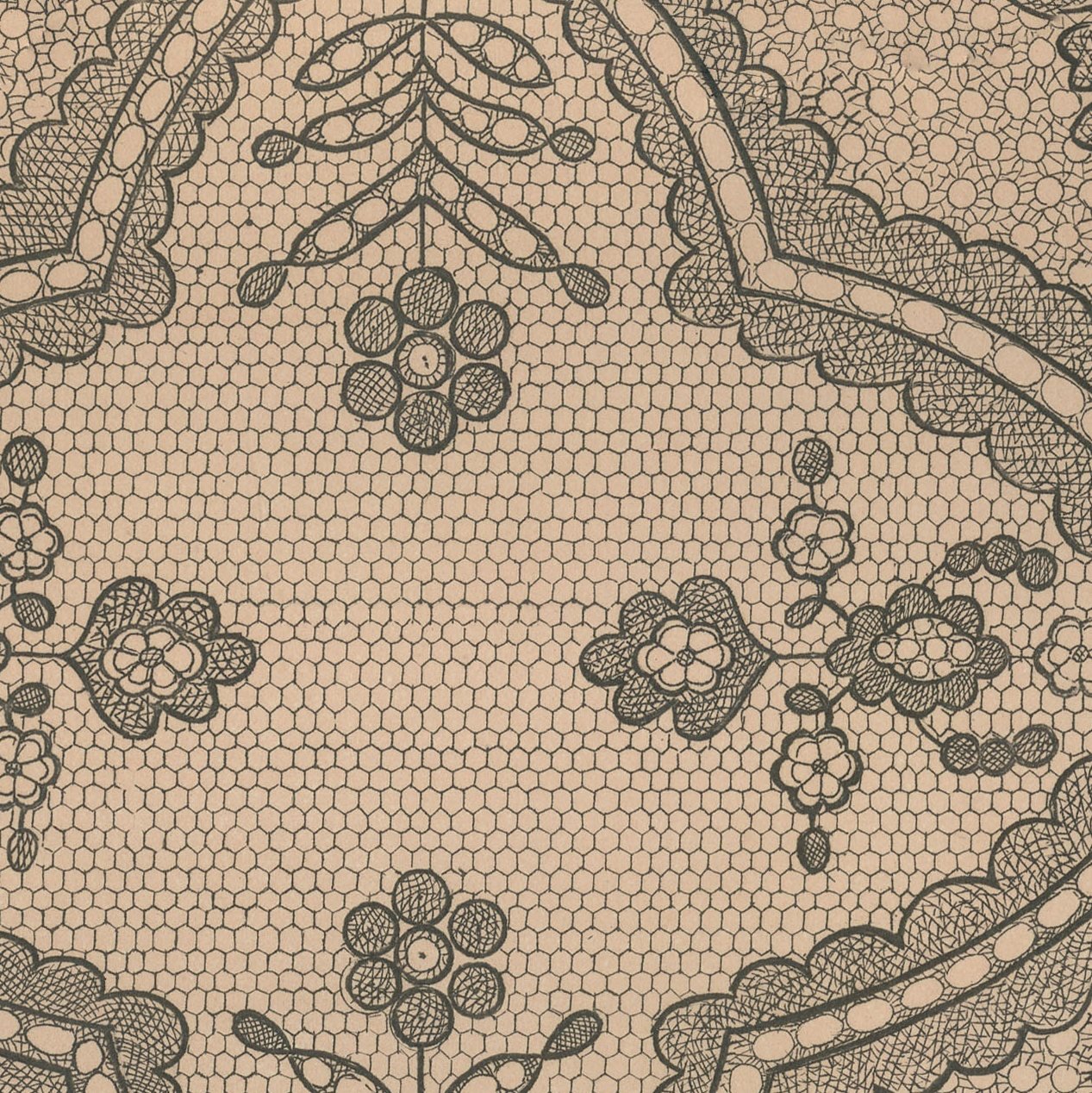
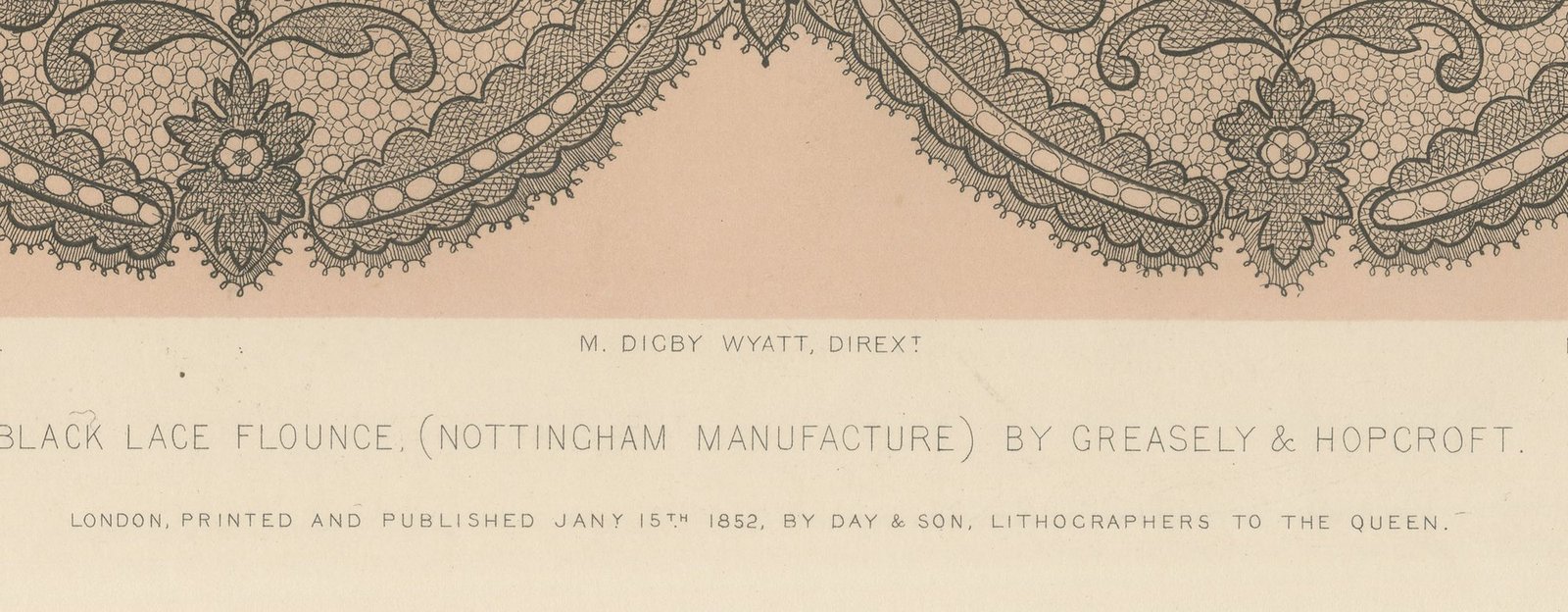
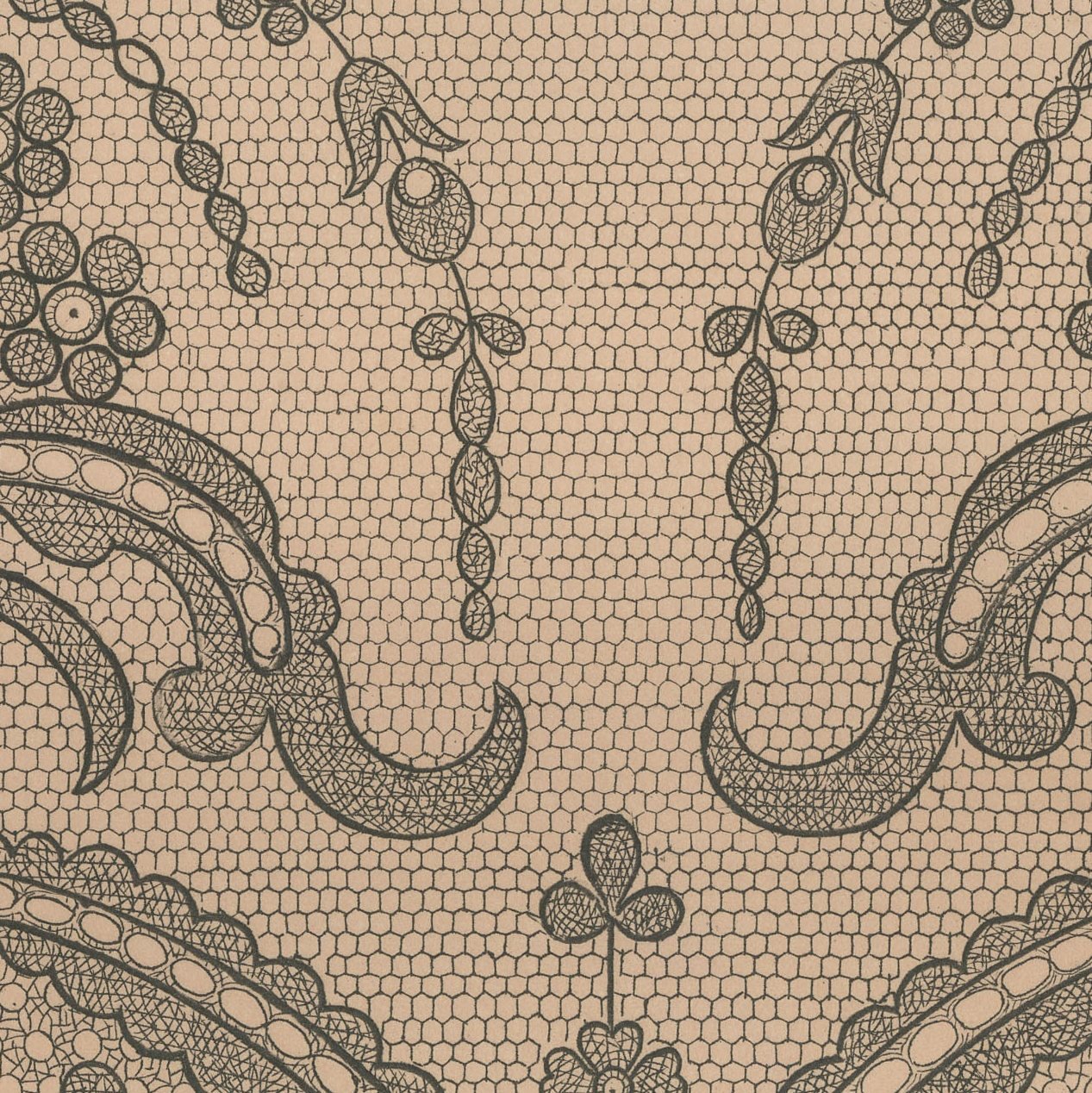
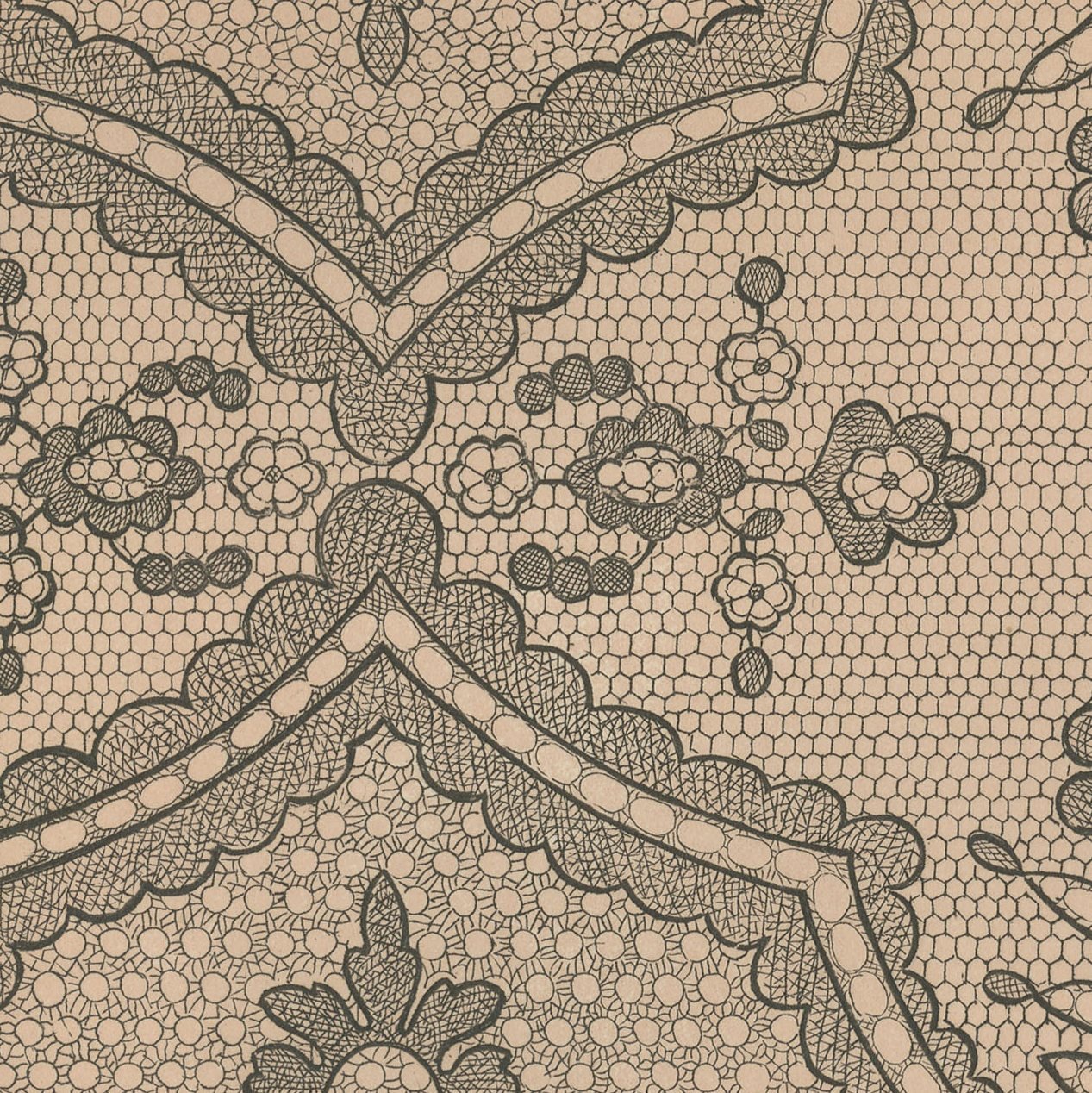
This is an original antique chromolithograph of a Nottingham black lace flounce, published in London by Day and Son about 1852. The lace is printed in blue black over a rose pink ground, a scalloped border of swags, flowers and pearl drops laid over a fine net, and the chromolithography reproduces the net mesh itself, thread by thread. The Nottingham firm is named in the lettering.
The plate comes from The Industrial Arts of the Nineteenth Century, Matthew Digby Wyatt's record of the Great Exhibition of 1851, issued in parts by Day and Son, lithographers to the Queen, between 1851 and 1853 and dedicated by permission to Prince Albert. Wyatt had been secretary to the executive committee of the Exhibition, and the work presents, in the words of its title, the choicest specimens produced by every nation, drawn by a team of artists and reproduced in chromolithography, then a new and costly process. Every plate carries its own publication date in the imprint at the foot, with the names of M. Digby Wyatt as director and of the artists who drew or lithographed it.
Nottingham was the center of English machine lace making, and the lace is printed in black against a pink ground.
Moderate overall age toning, with a few foxing spots in the margins and handling wear to the top left corner.
This is an original antique print, not a modern reproduction. This item is sold unframed.