 The sheet, as you receive it
 In the room


Interior designers: BarTrade members buy at their trade price. How it works
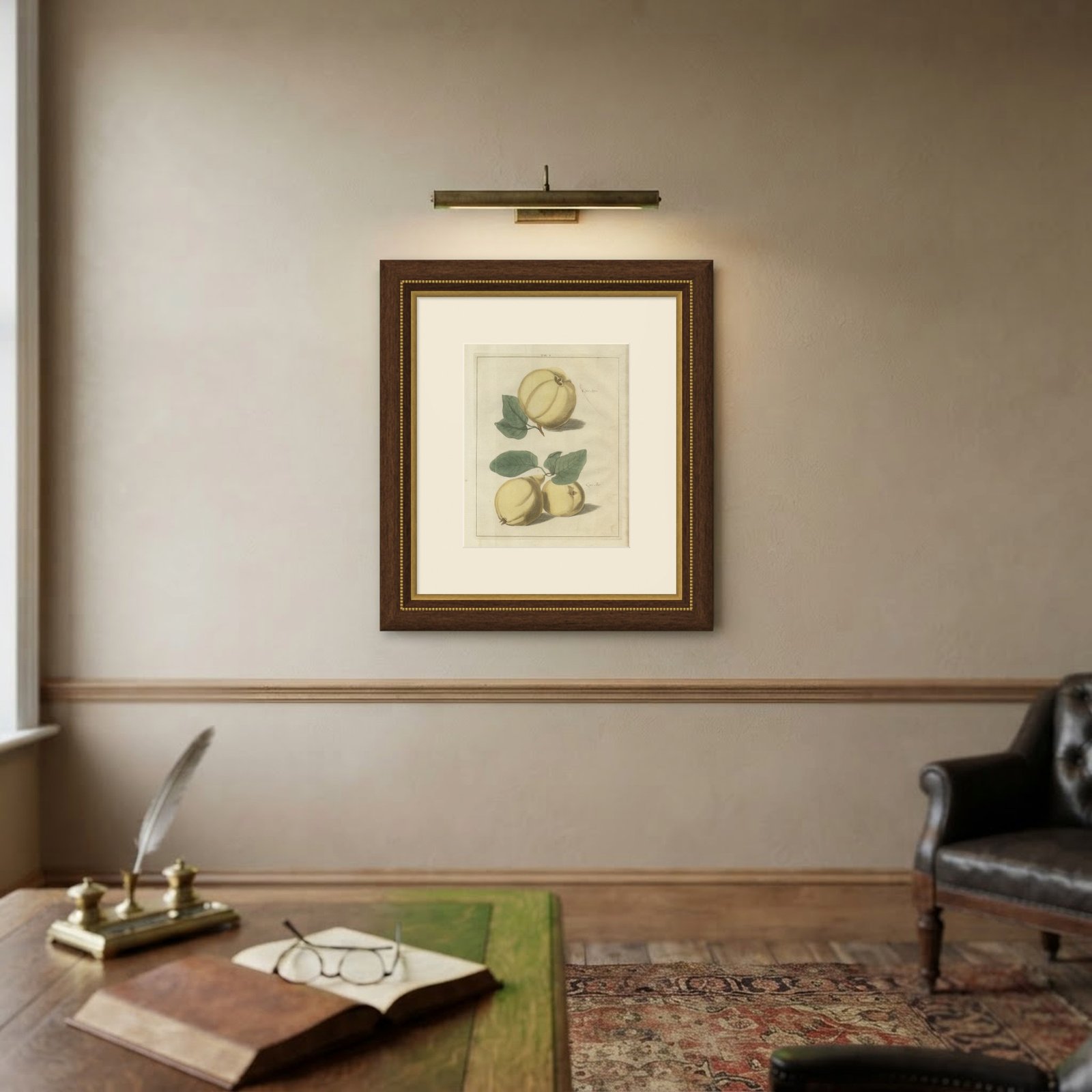
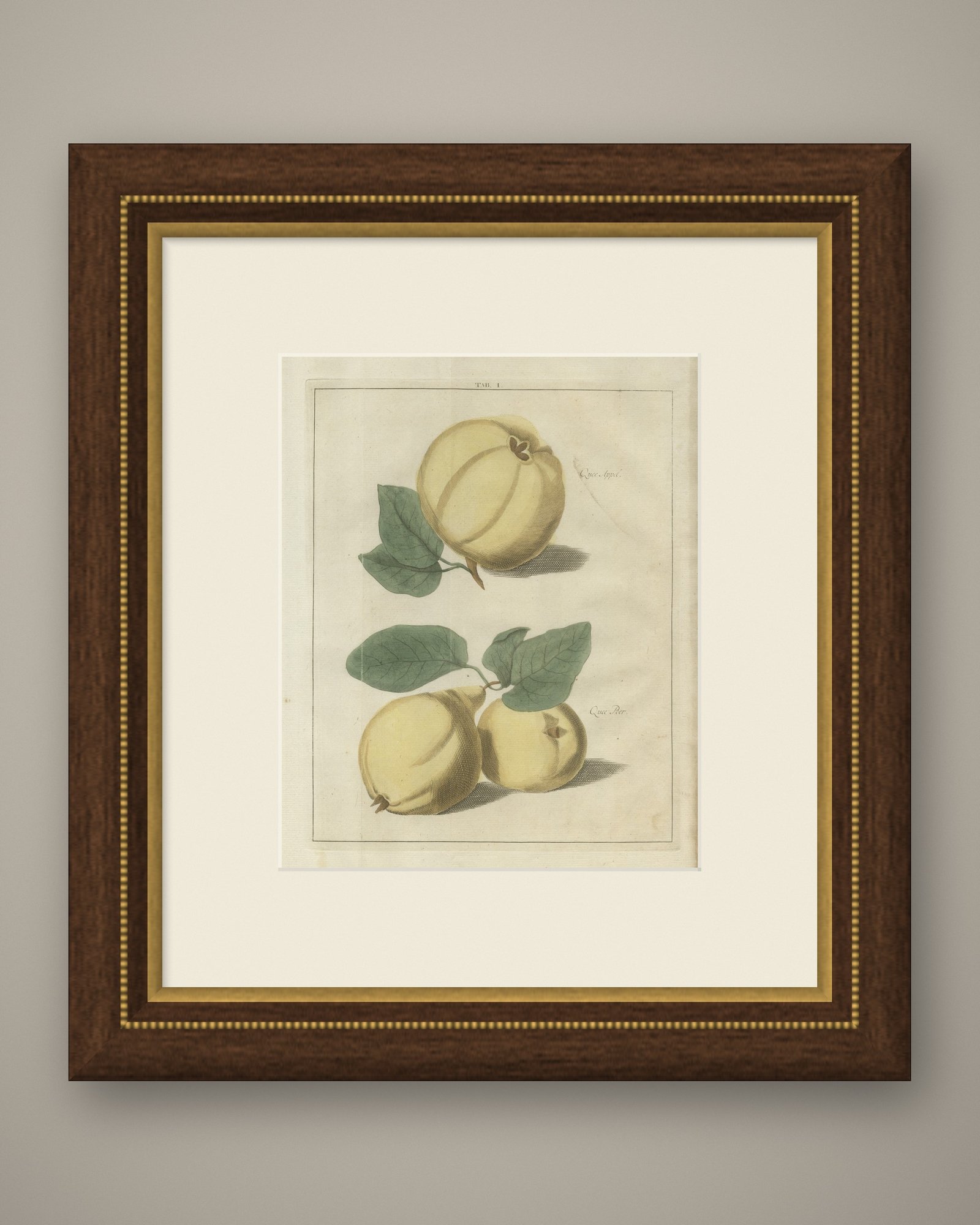
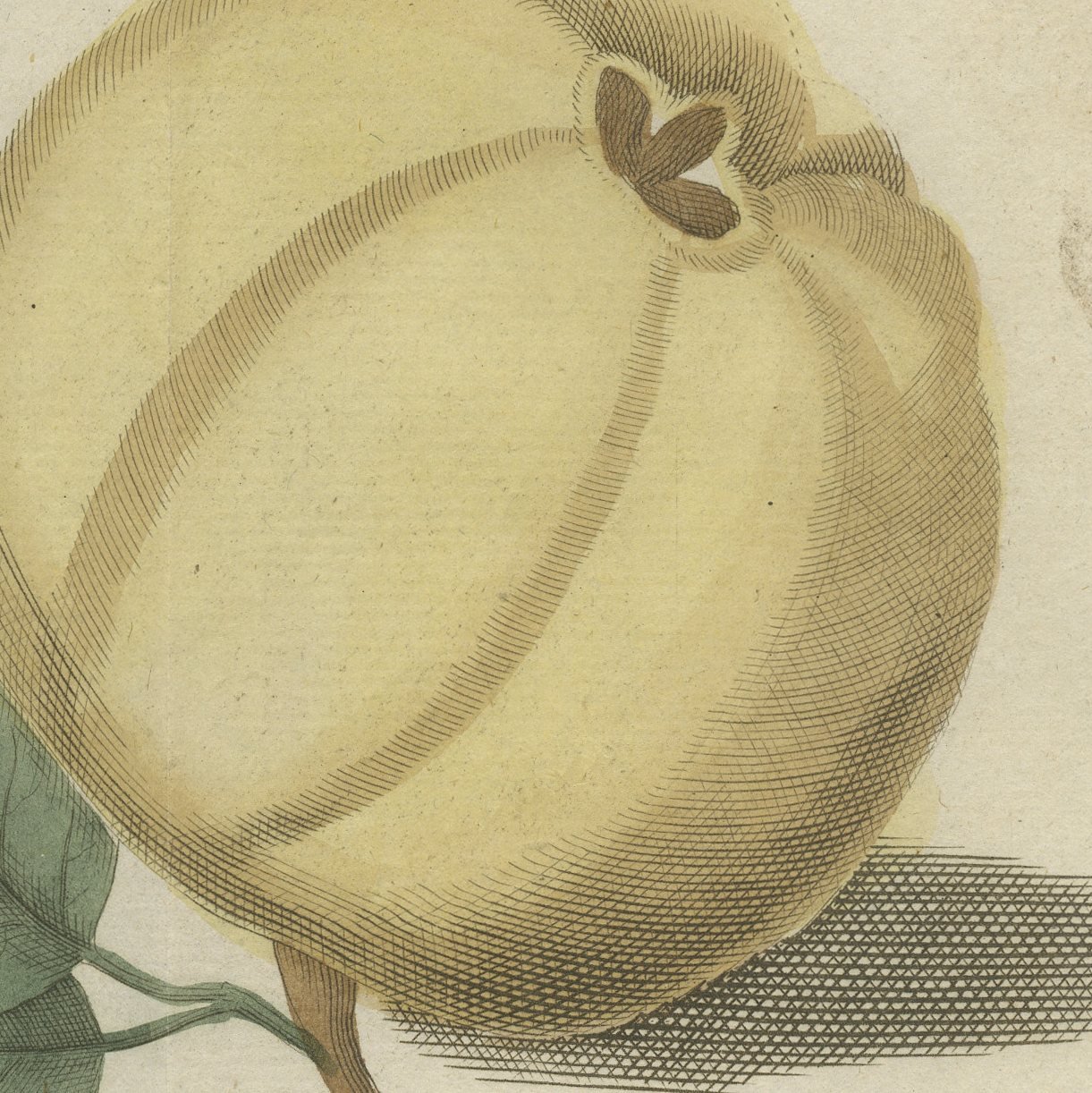
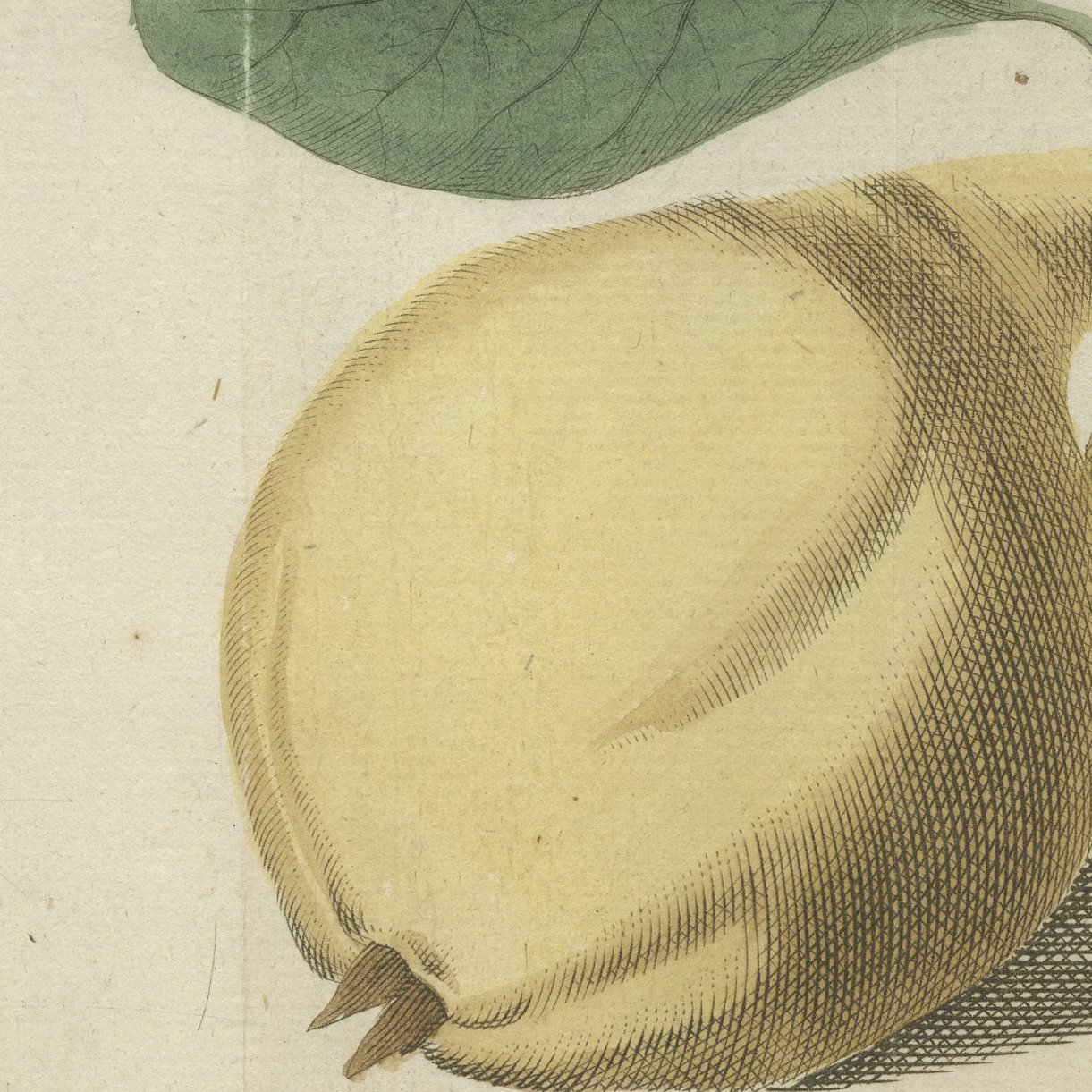
An original hand-colored copper engraving of quinces on a leafy bough, numbered "TAB. I" at the head of the sheet and lettered in engraved script with two Dutch names, "Quee Appel." and "Quee Peer." Three heavy fruits are shown, the squat apple-shaped quince and the longer pear-shaped sort, each washed in a deep yellow that warms toward bronze where the skin turns away from the light. The downy bloom of a ripening quince is carried by fine engraved stipple beneath the watercolor. Broad leaves spread behind the fruit, cool green above and pale beneath, and the cut stem is drawn with the blunt honesty of a branch brought straight in from the tree. The original washes shift in density within a single fruit and lap over the engraved outline in places, which is how color laid by hand declares itself.
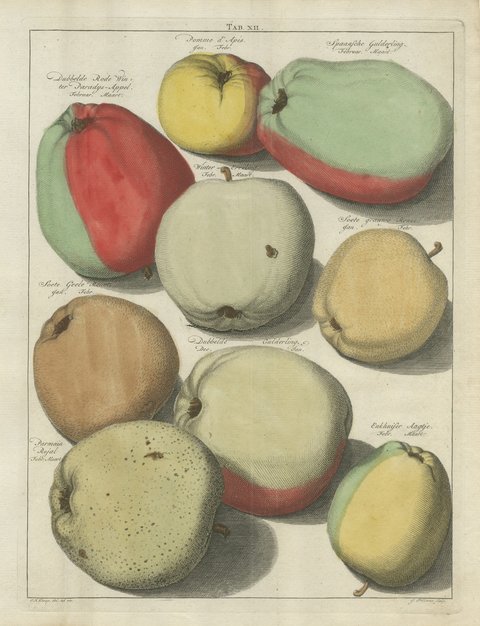
Knoop's pomology appeared at Amsterdam and Dordrecht in 1790 from the presses of Allart, Holtrop, de Leeuw and Krap, carrying a preface by Johannes Florentius Martinet. The plates had first been cut for the Leeuwarden editions of 1758 and 1763 and were printed again here from the same coppers. Johann Hermann Knoop drew the fruit from life in the stadtholder's garden at Leeuwarden. The technique is copper engraving with original hand coloring, and the brushwork crosses the engraved outline in places, which is the plain evidence that the color was laid on by hand and not printed.
Knoop drew every fruit in this volume from living specimens in the Frisian stadtholder's garden at Leeuwarden, and the quince sheet shows why his work still reads as botany and as decoration at the same time: nothing is idealized, and each fruit keeps the slight lopsidedness of the real thing. No engraver's credit is lettered on this plate, unlike the apple and pear sheets in the same volume, so the drawing stands on Knoop's name alone. The warm yellows suit a kitchen, a pantry wall or a dining room, and a single quince plate framed in plain oak sits very happily above a sideboard. Early pomology collectors value the single-species sheets for exactly this clarity.
Light uneven toning, browner towards the edges. Marked handling soiling along the bottom, right and top edges. Scattered foxing in the margin. All four corners complete.
This is an original antique plate, not a modern reproduction. This item is sold unframed.