 The sheet, as you receive it
 In the room 1

Interior designers: BarTrade members buy at their trade price. How it works
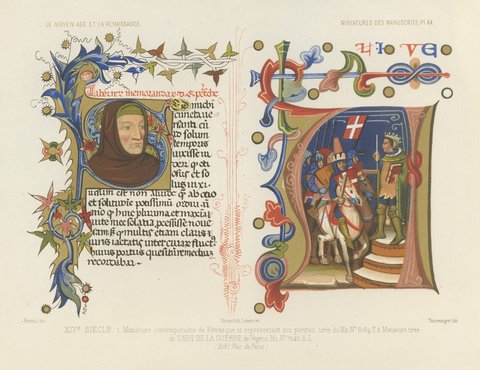
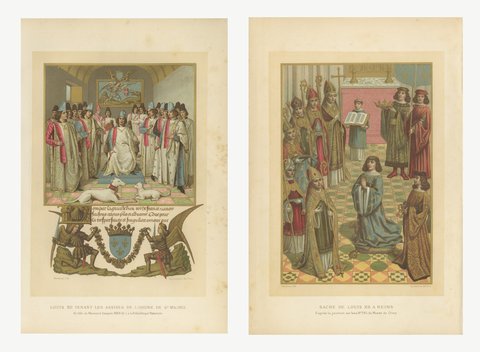
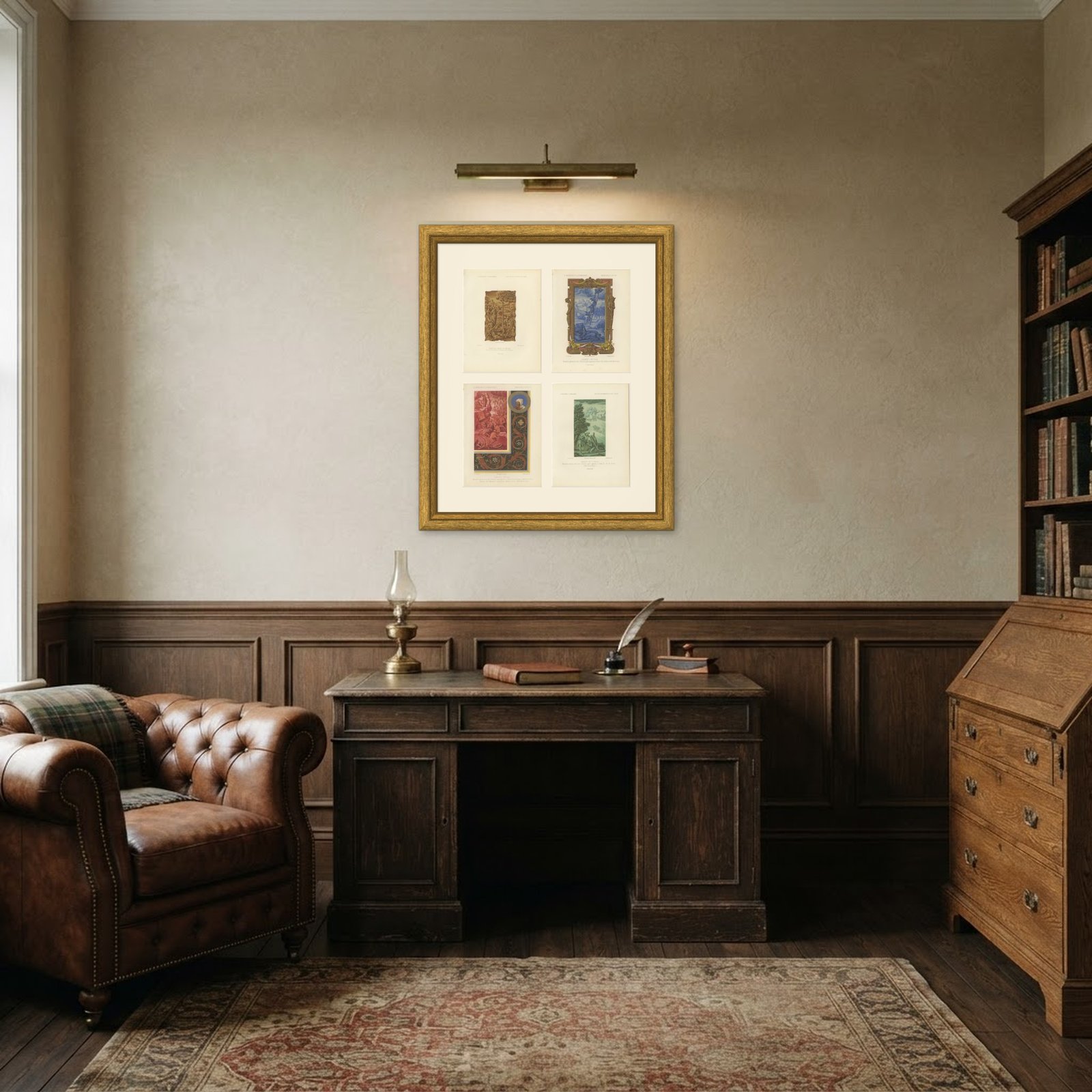
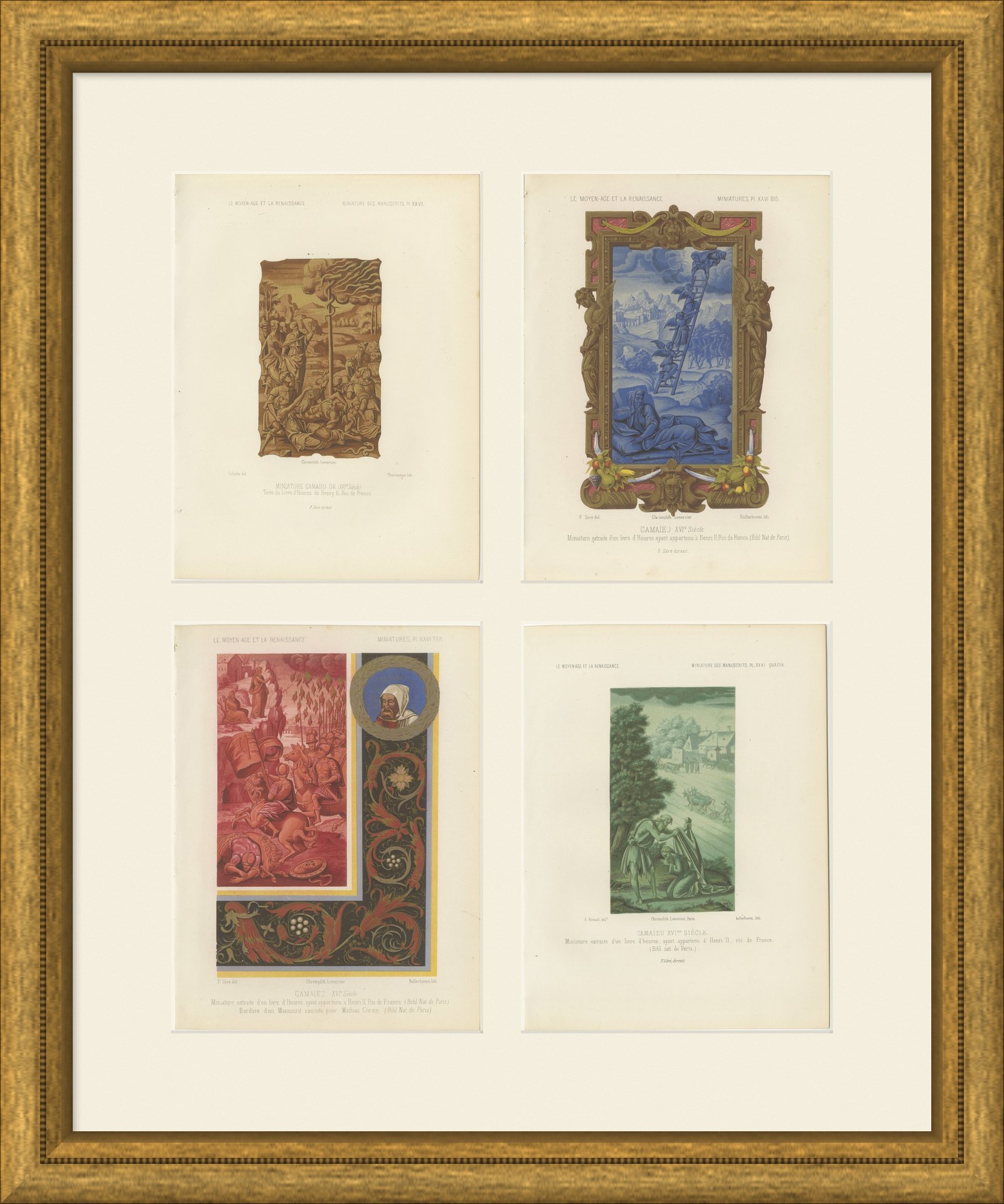
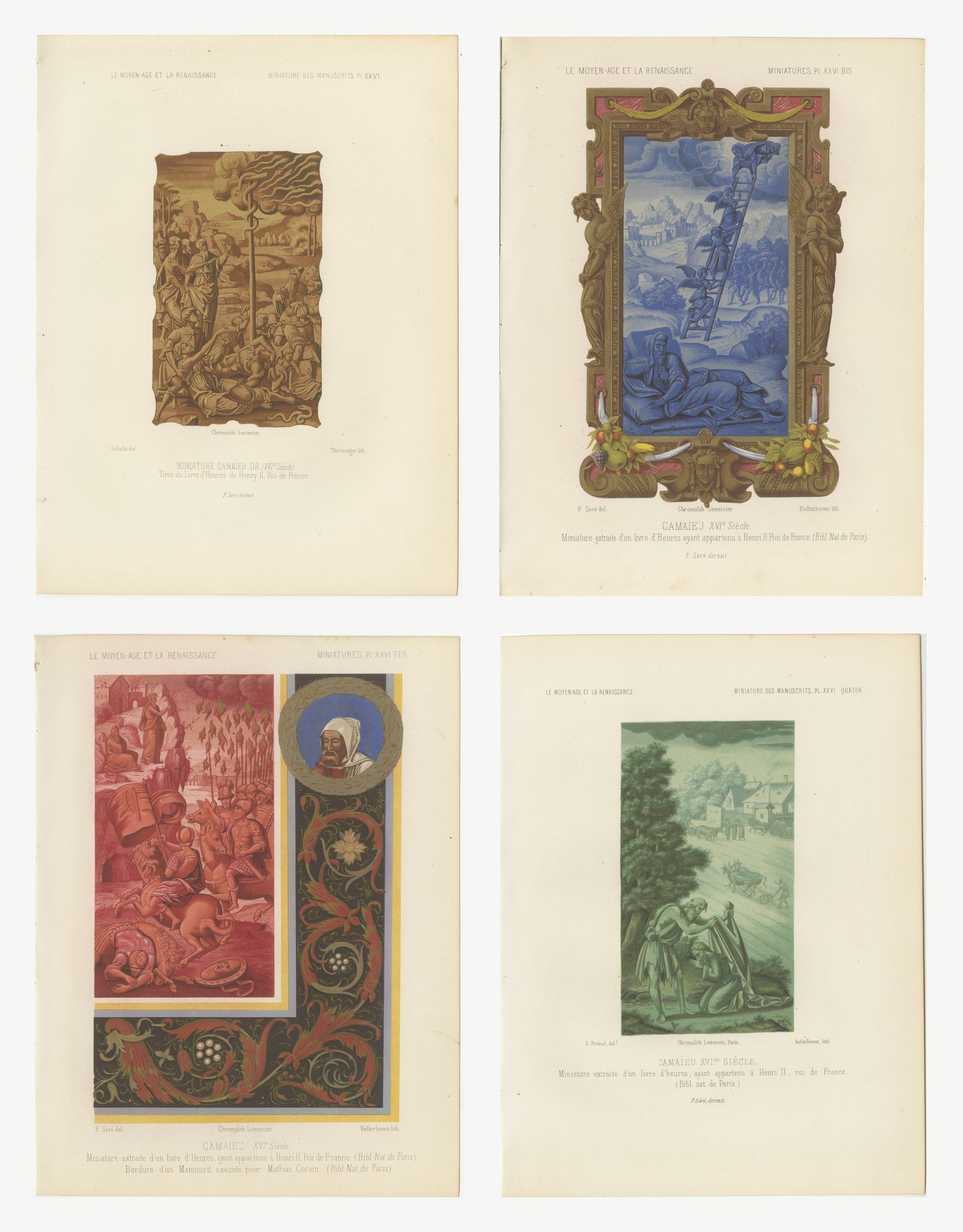
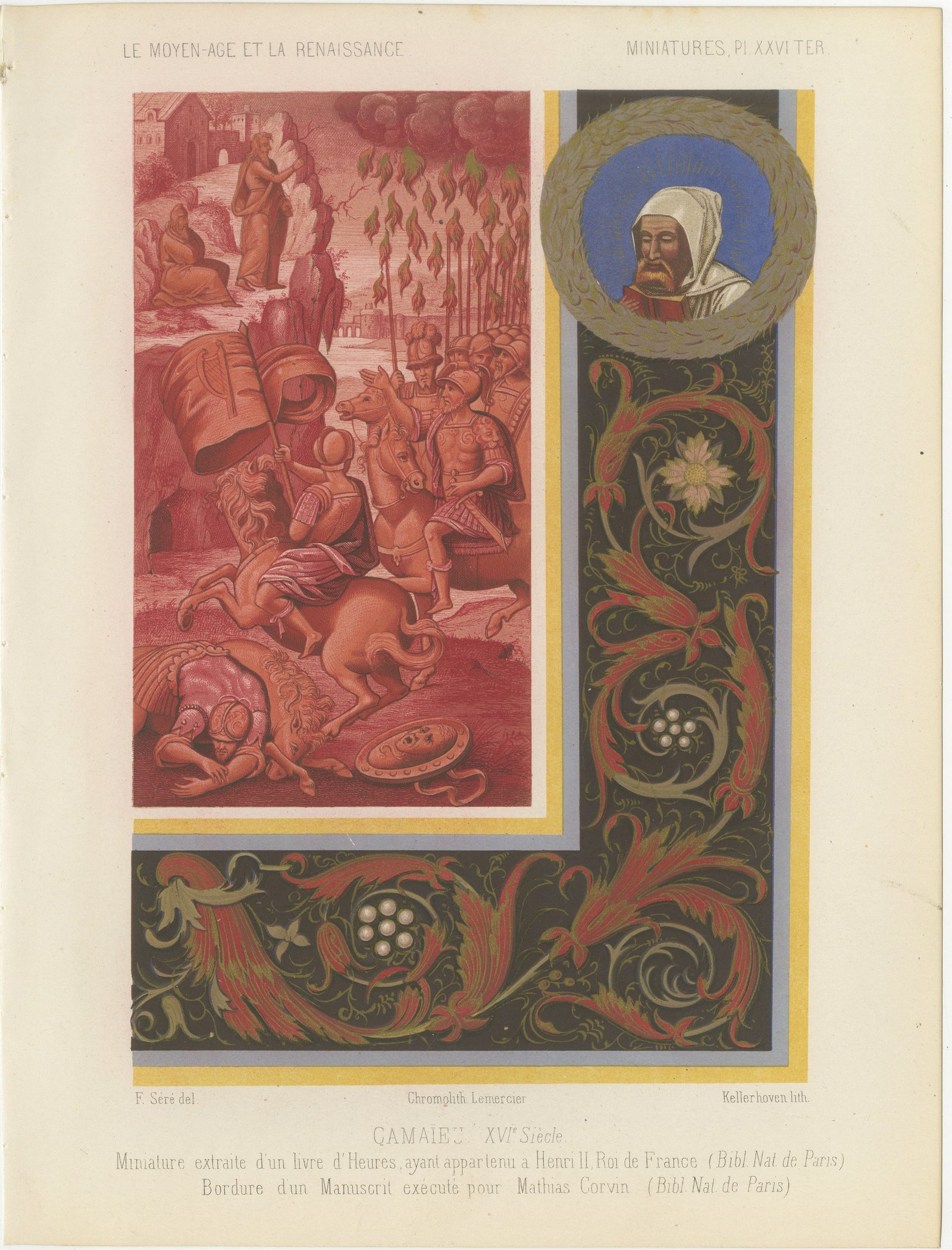
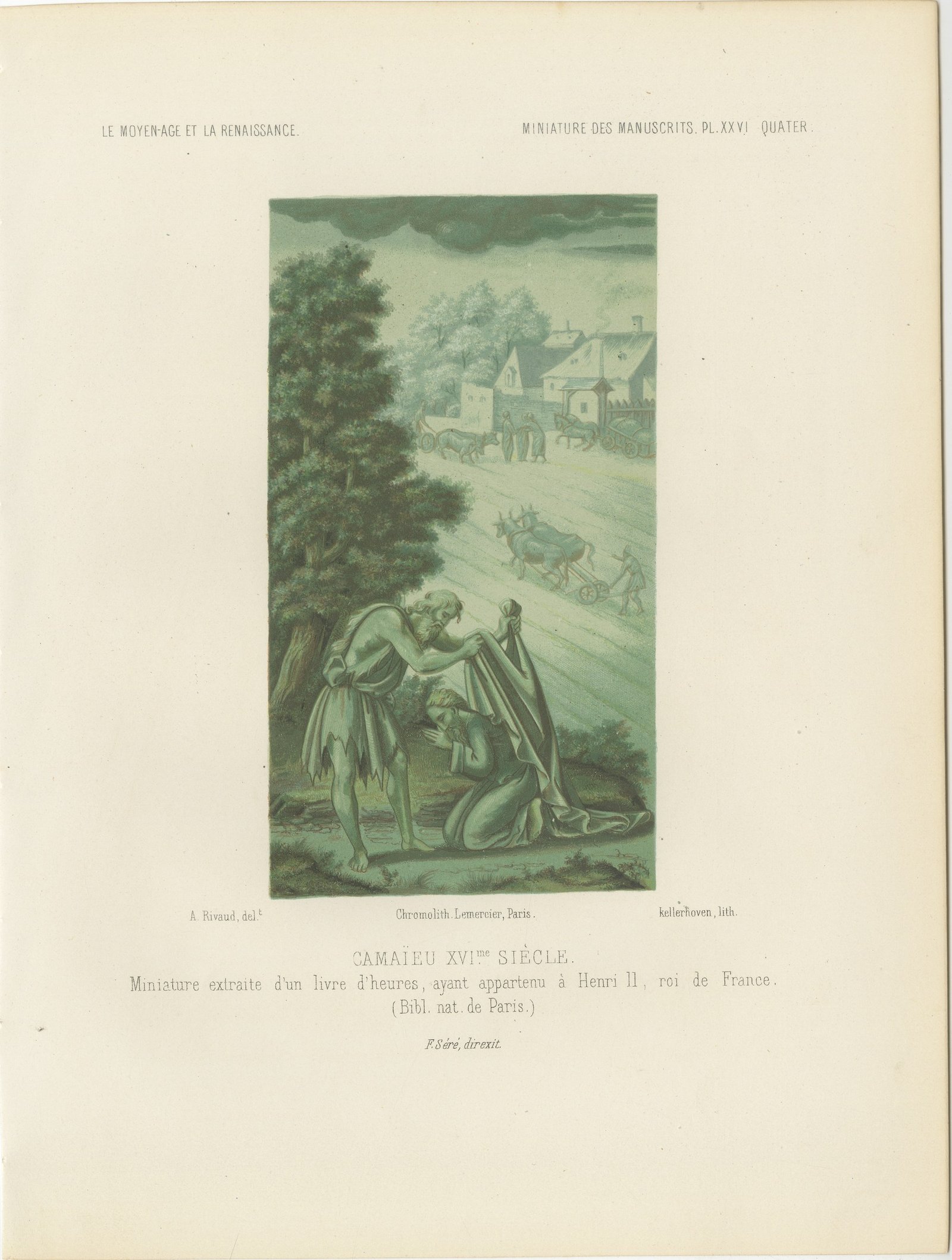
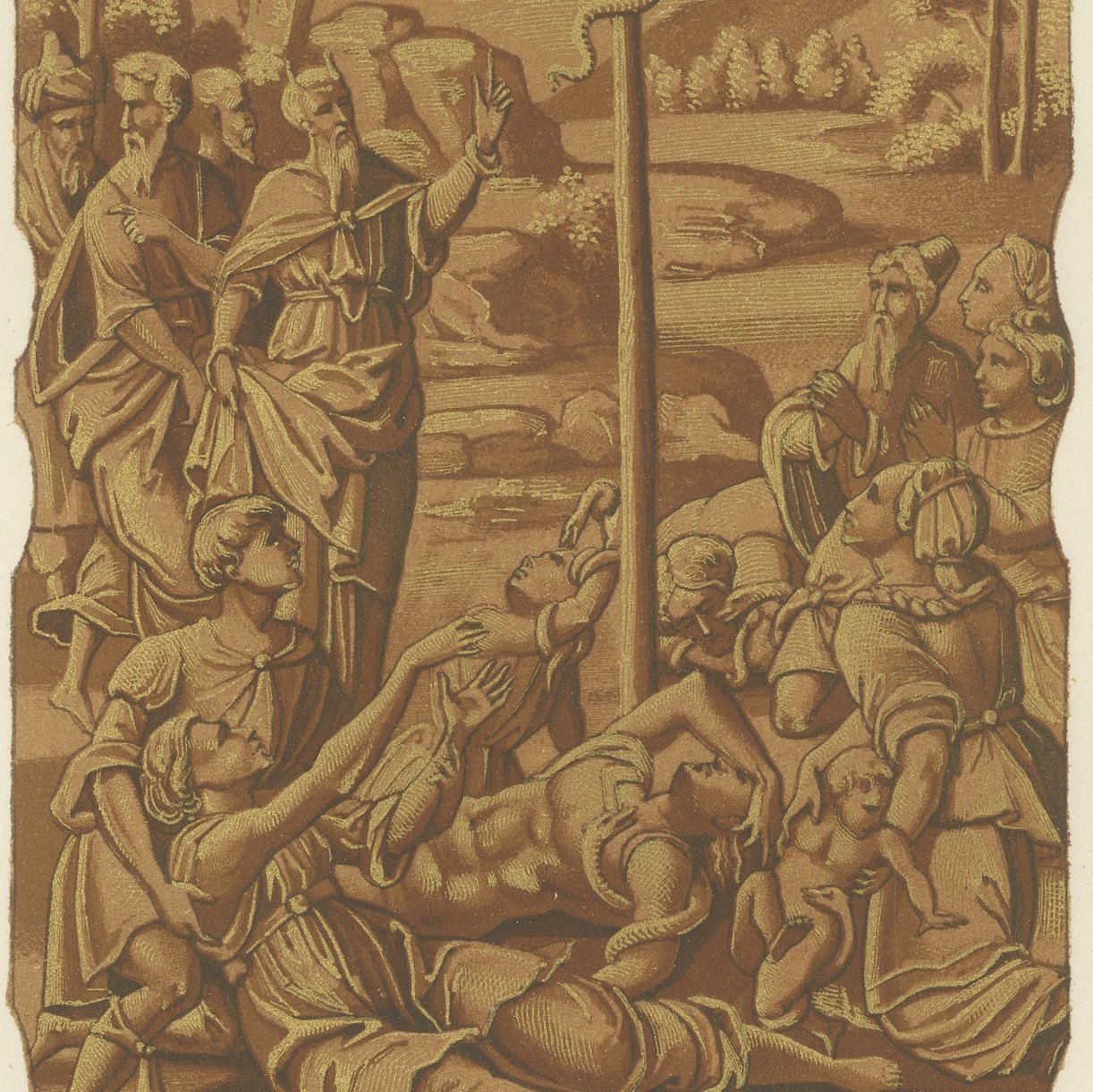
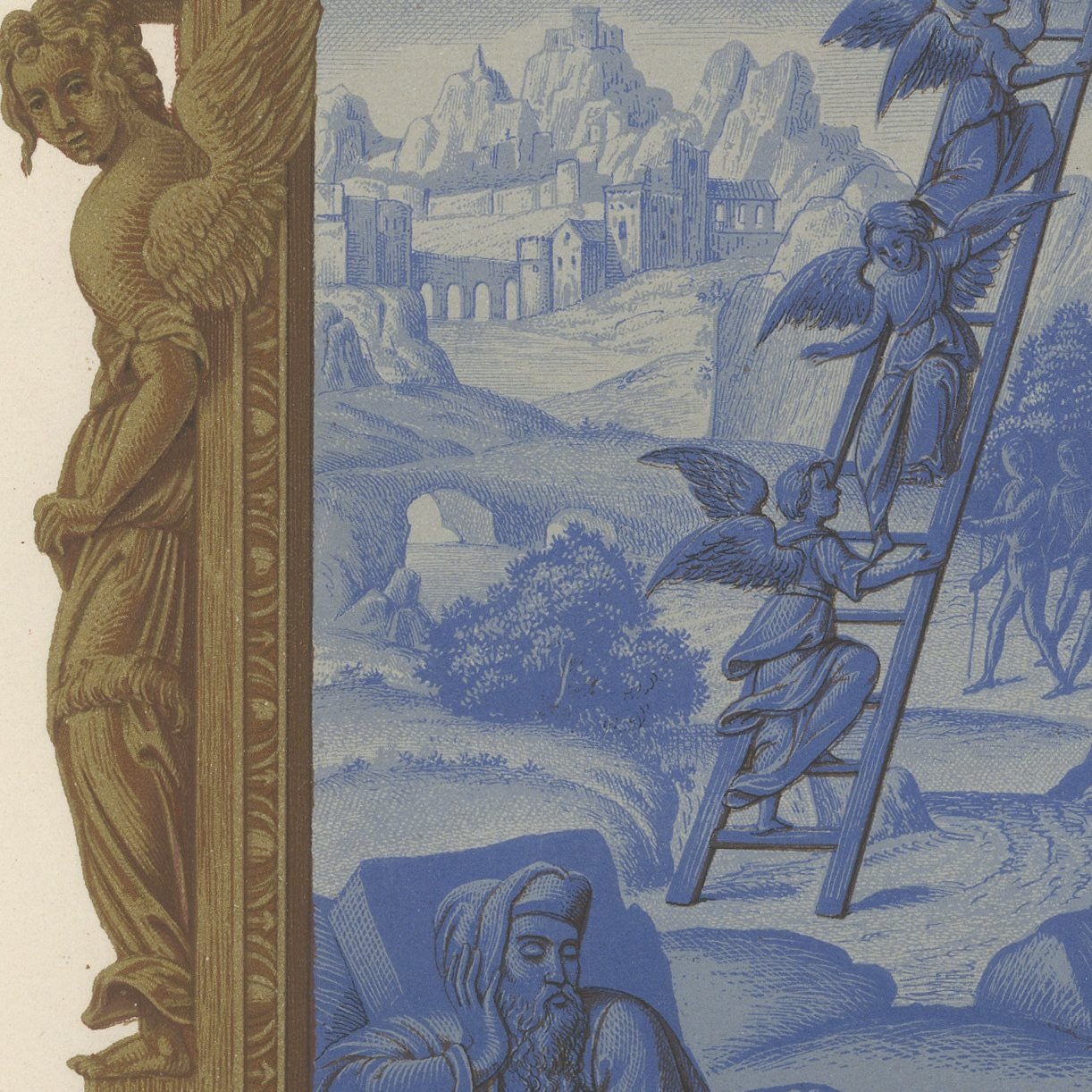
A set of four original antique chromolithographs reproducing camaieu miniatures from the Book of Hours of Henry the Second, King of France, sold together and not separately. A camaieu is a painting carried out in a single color, and the illuminator of this royal prayer book worked each of his miniatures in a different one, so that the four sheets give gold, blue, crimson and green in turn. The original manuscript is in the Bibliotheque nationale de Paris; one of the four plates carries beside its miniature the border of a manuscript made for Matthias Corvinus, King of Hungary. They are four original sheets sold together as one lot, and the set is never split.
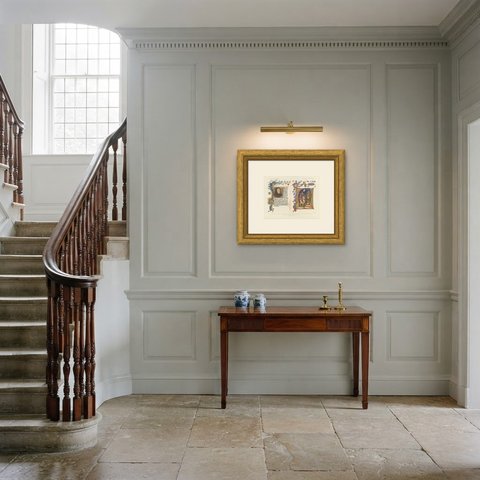
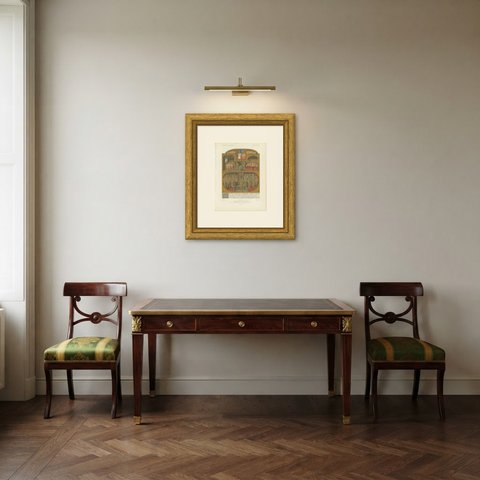
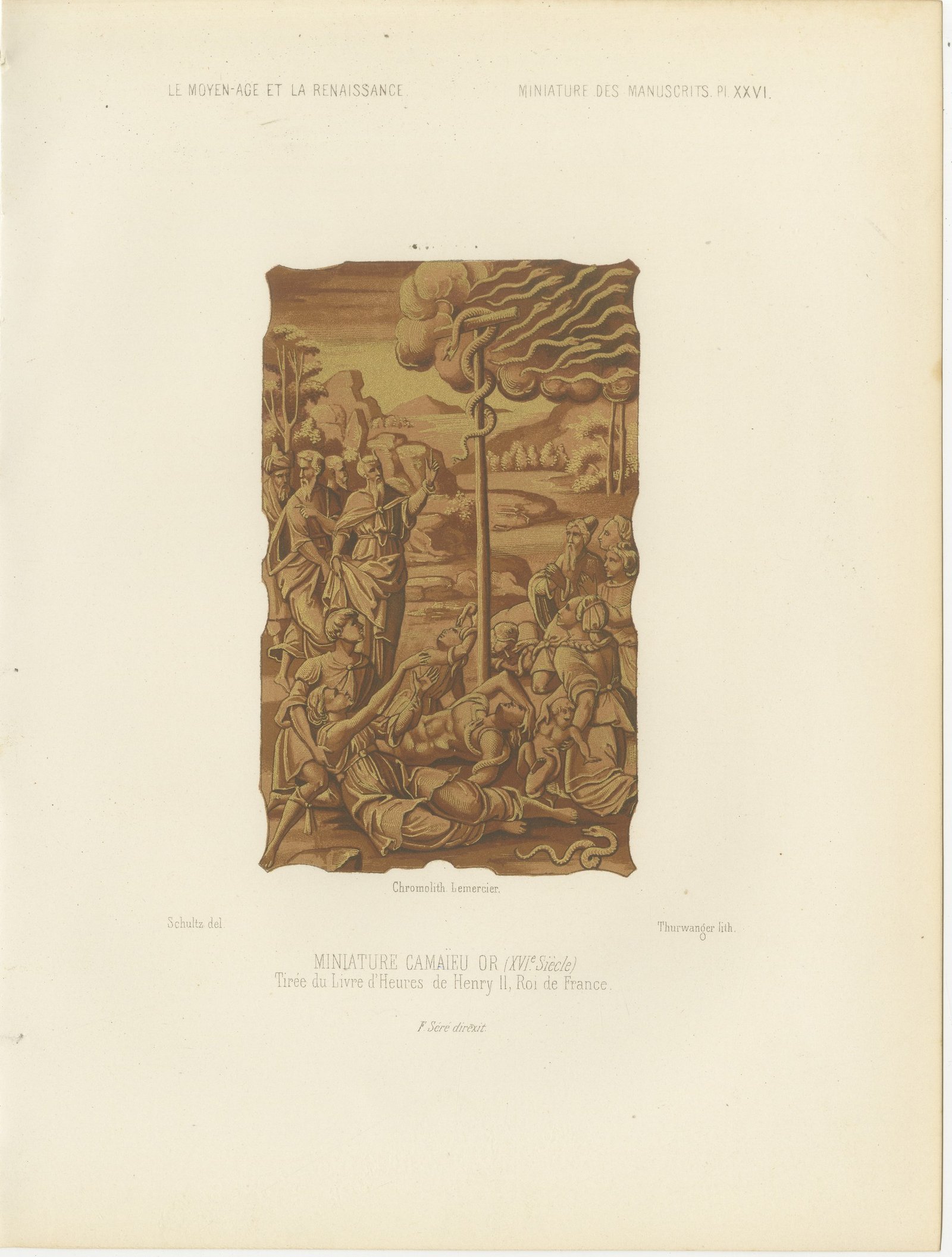
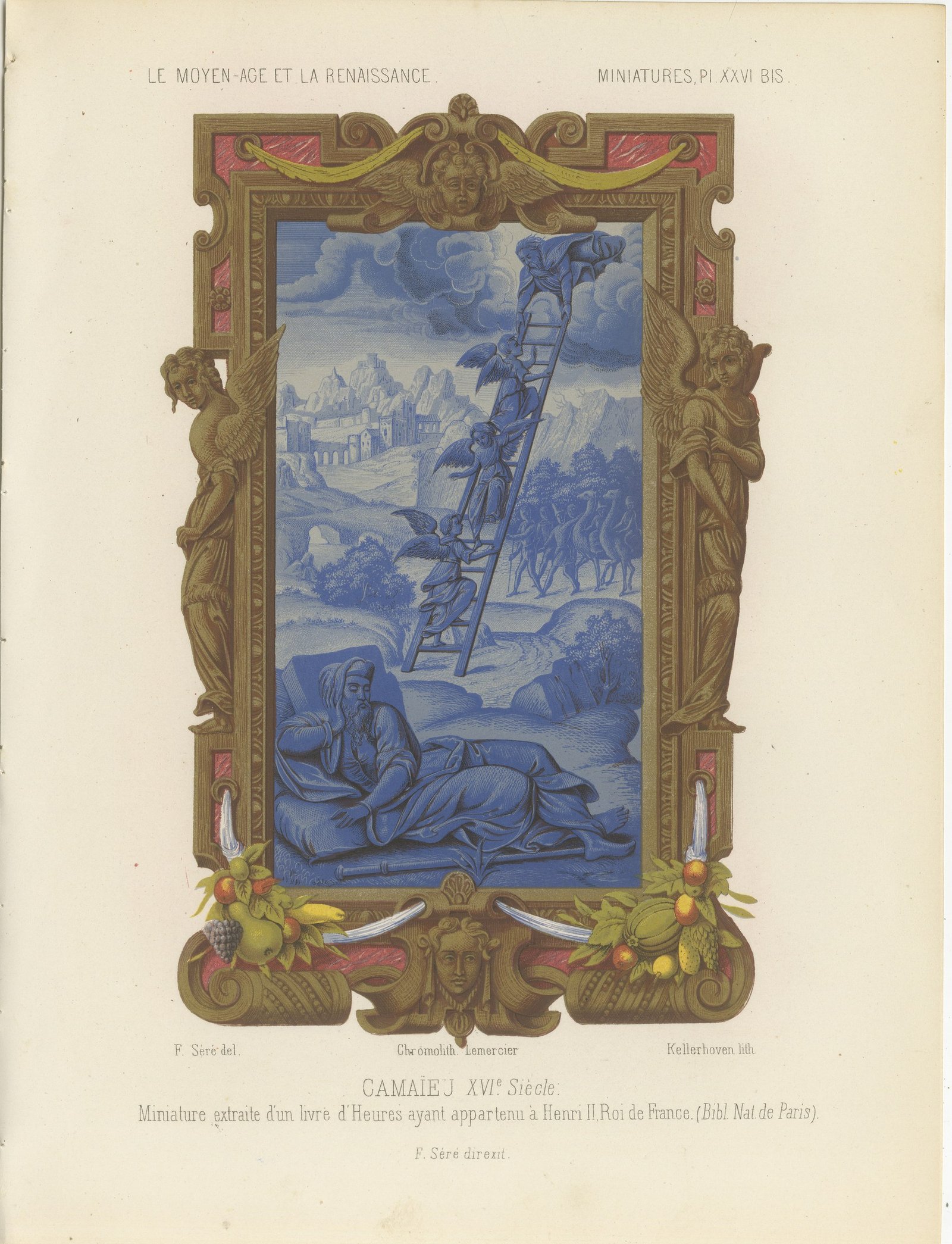
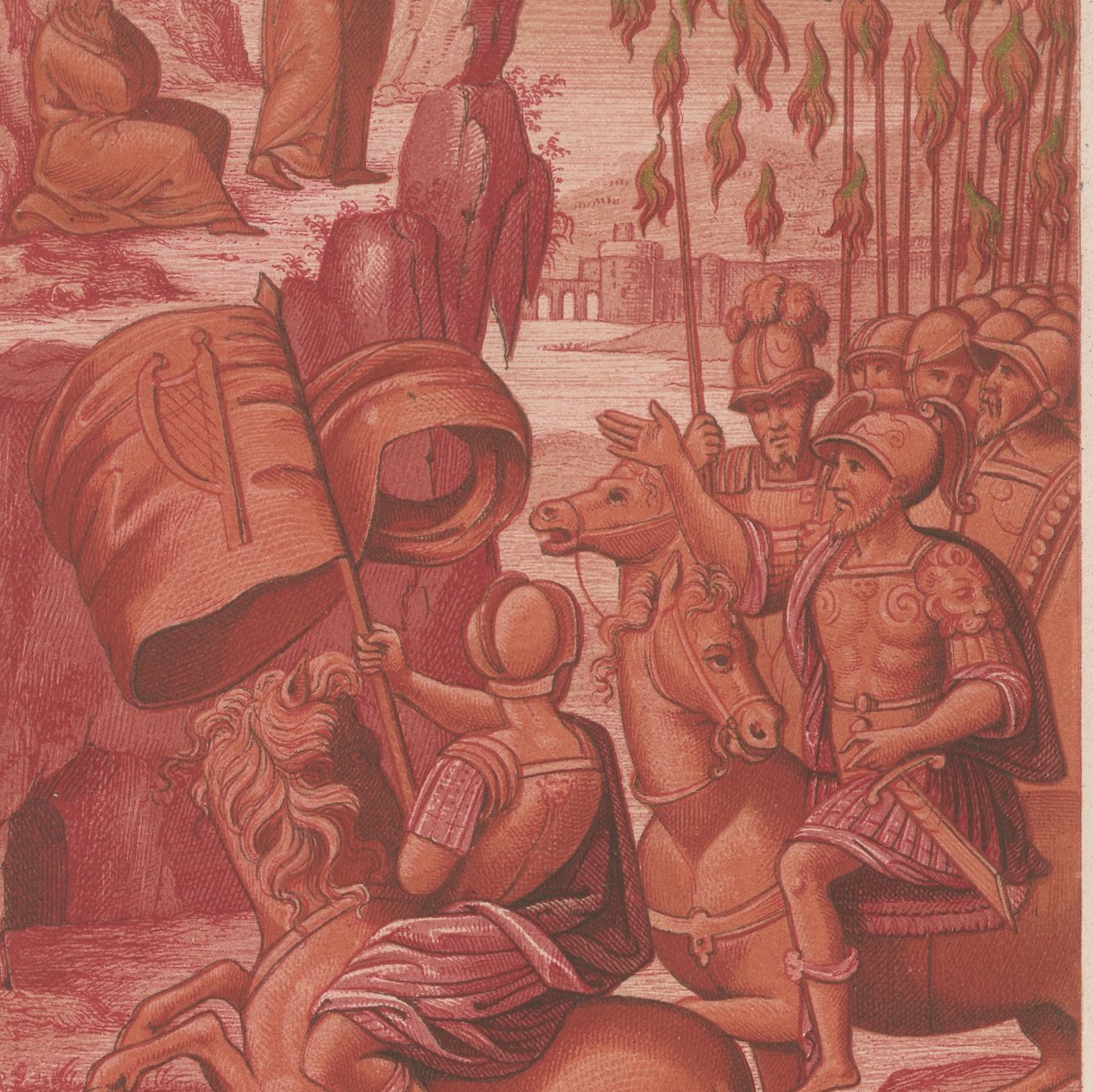
The first sheet is lettered MINIATURE CAMAIEU OR and is printed entirely in gold and brown: a crowded classical scene of reclining figures, putti and a serpent, drawn as though modeled in low relief in gilt bronze. The second is a blue camaieu: a figure sleeping at the foot of a ladder that climbs into a blue mountain landscape, with angels ascending it, set inside a Renaissance frame of pink, green and gold strapwork hung with fruit. The third is printed in crimson camaieu, a battle of horsemen and foot soldiers under a walled town, with a medallion portrait of a turbaned head at the upper right; the sheet carries beside it the border of a manuscript made for Matthias Corvinus, King of Hungary, in black, gold and scarlet acanthus. The fourth is a green camaieu, the quietest of the four: two figures in a wooded landscape, one kneeling, printed in olive and bottle green with the trees and the distant town dissolving into the ground.
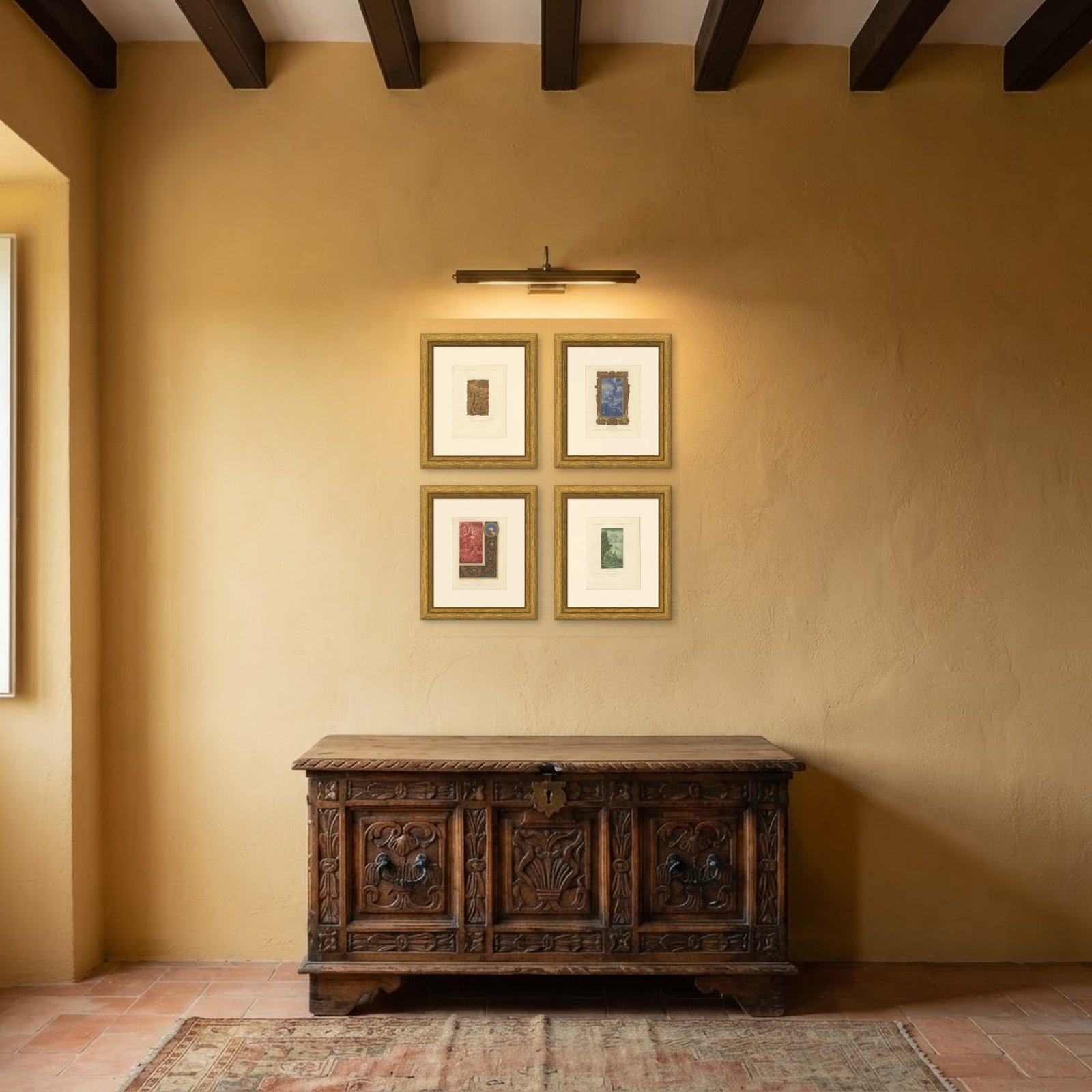
Le Moyen Age et la Renaissance was issued in Paris between 1848 and 1851 in five volumes under the literary direction of Paul Lacroix and the artistic direction of Ferdinand Sere. This plate belongs to the second volume, dated 1849. Its chromolithographs were drawn from the originals by artists sent into the libraries and collections of France, Belgium and Germany, and printed by Lemercier of Paris or by Engelmann et Graf. Four sheets in four colors from one royal book is as close to a ready made wall group as this period offers, and the sequence was planned that way by the publisher, who numbered the plates XXVI, XXVI bis, XXVI ter and XXVI quater. Hung in a block of two by two, the gold, blue, red and green balance each other and the Renaissance frames repeat across all four. They suit a hallway, a stair wall or the space above a long piece of furniture, and they should stay together.
Even age toning throughout. Marked handling soiling along the edges of all four sheets. Light foxing in the margins of all four sheets. Slight wear at the corners of one of the four sheets.
These are original antique prints, not modern reproductions. This item is sold unframed.