 The sheet, as you receive it
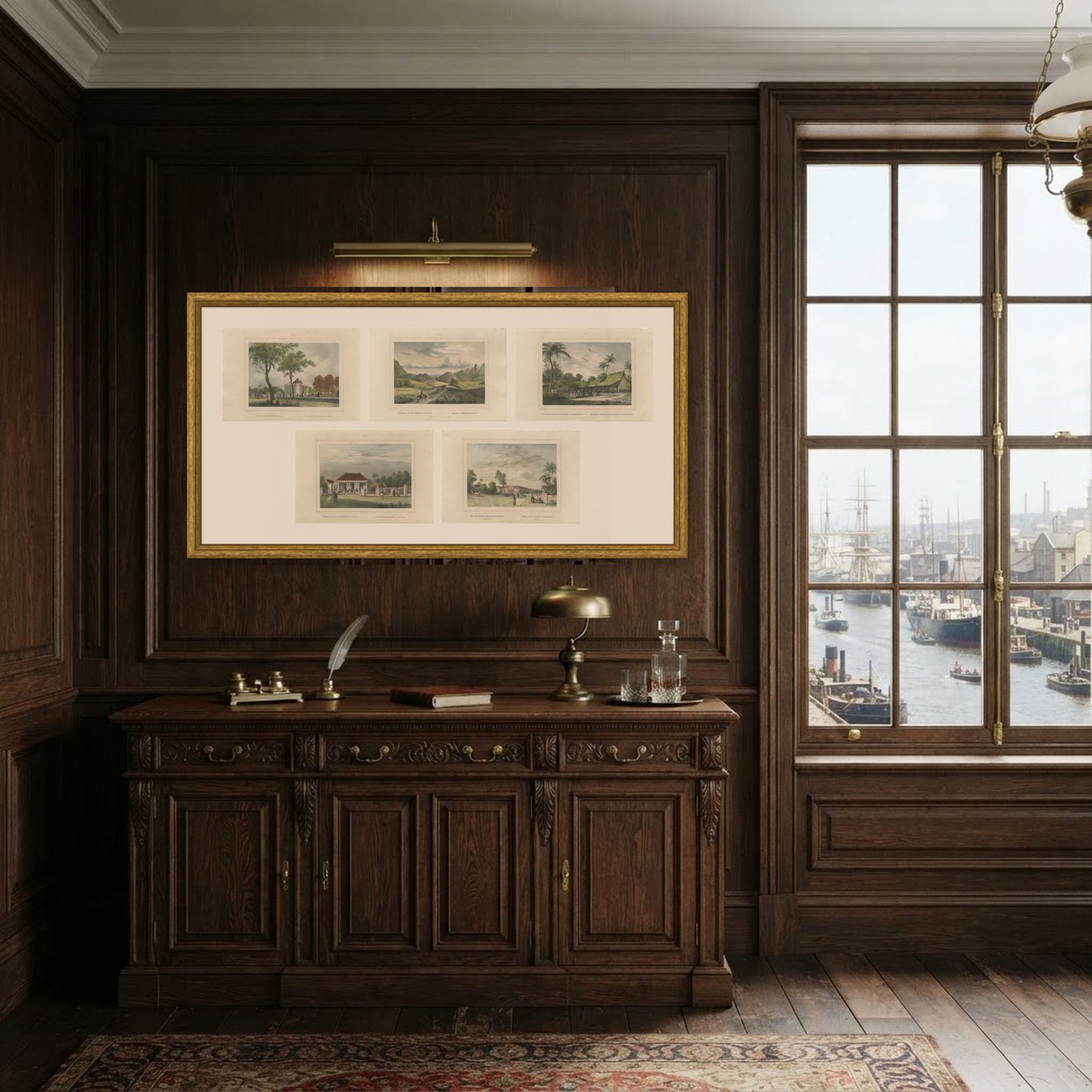 In the room 1




Interior designers: BarTrade members buy at their trade price. How it works
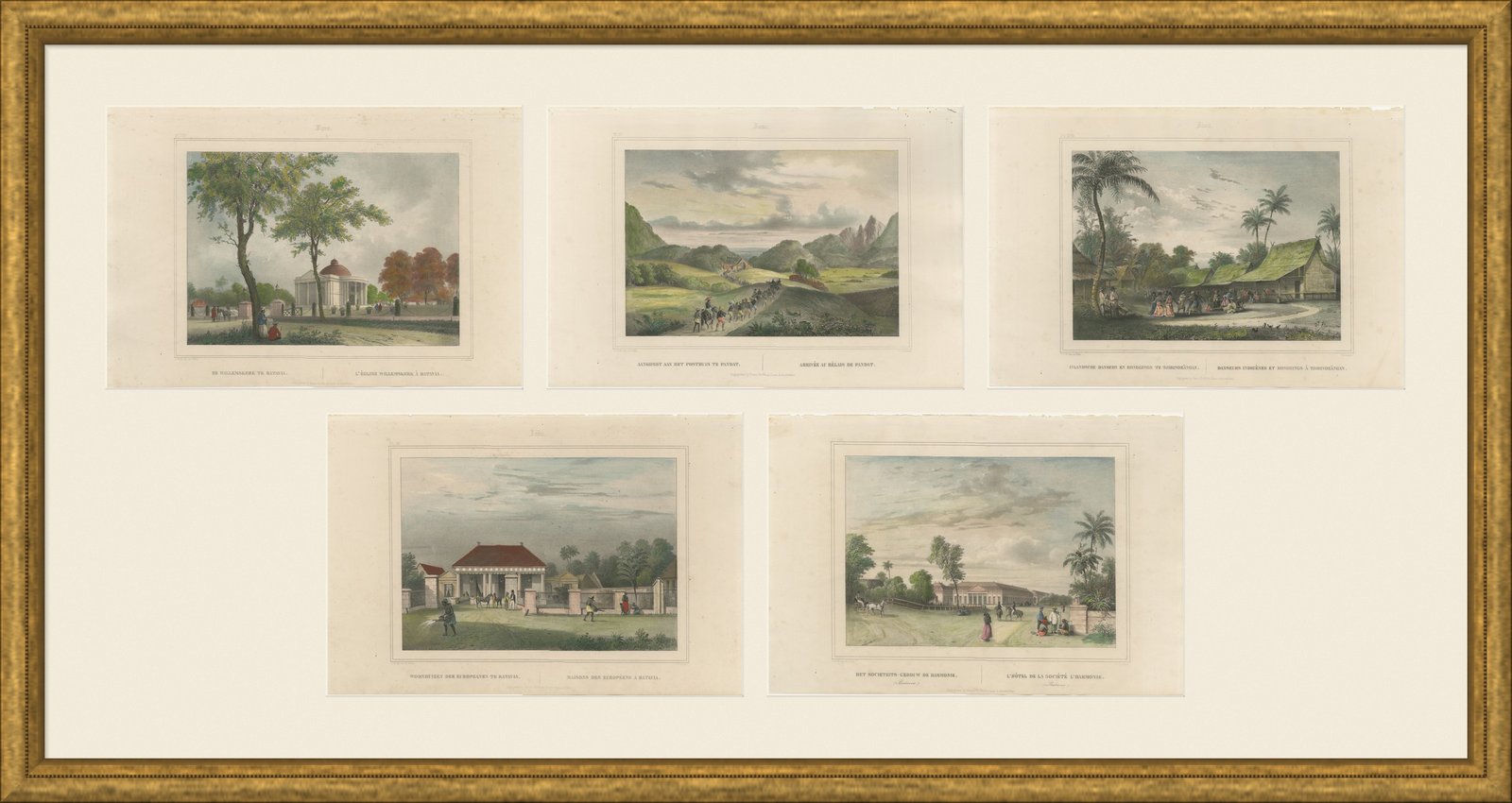
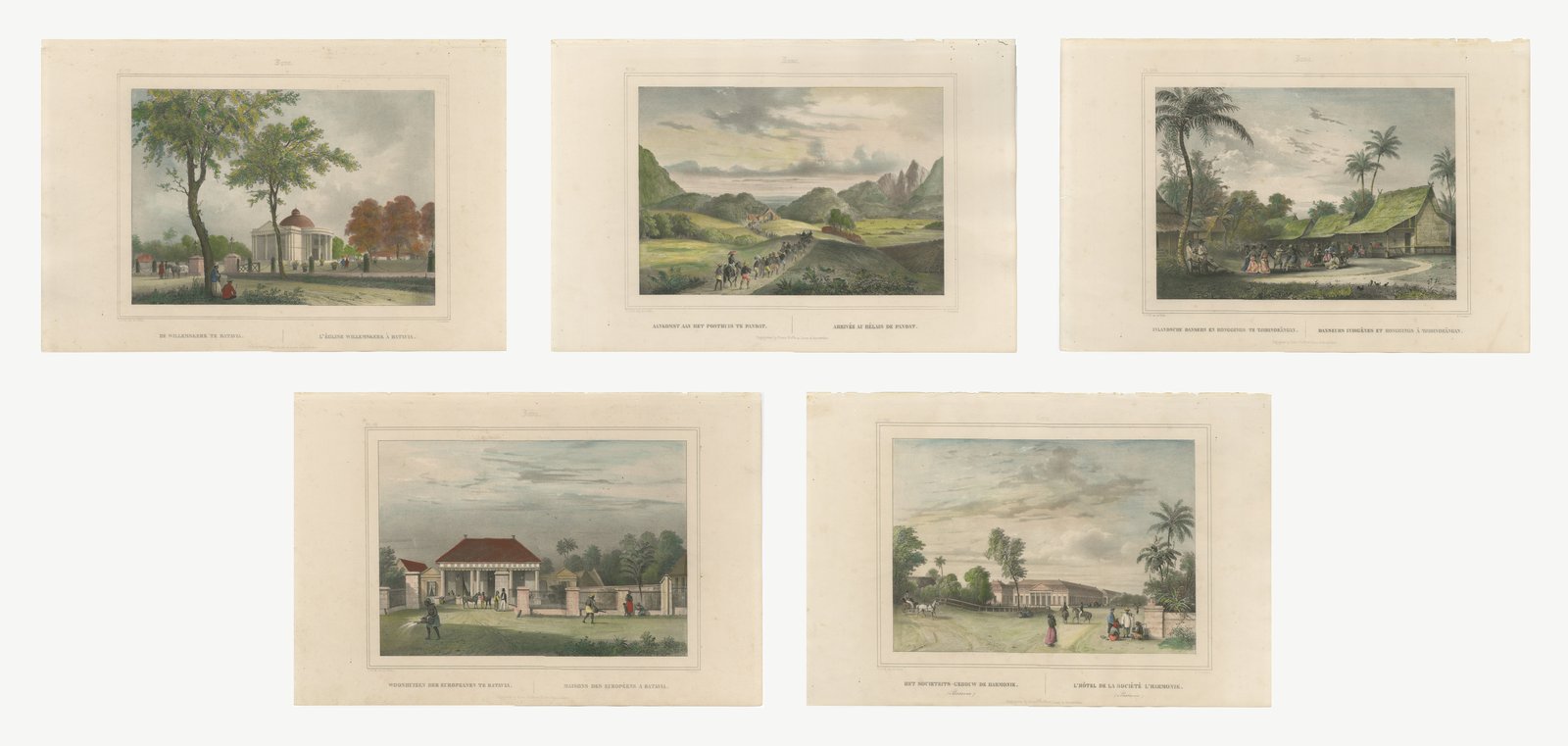
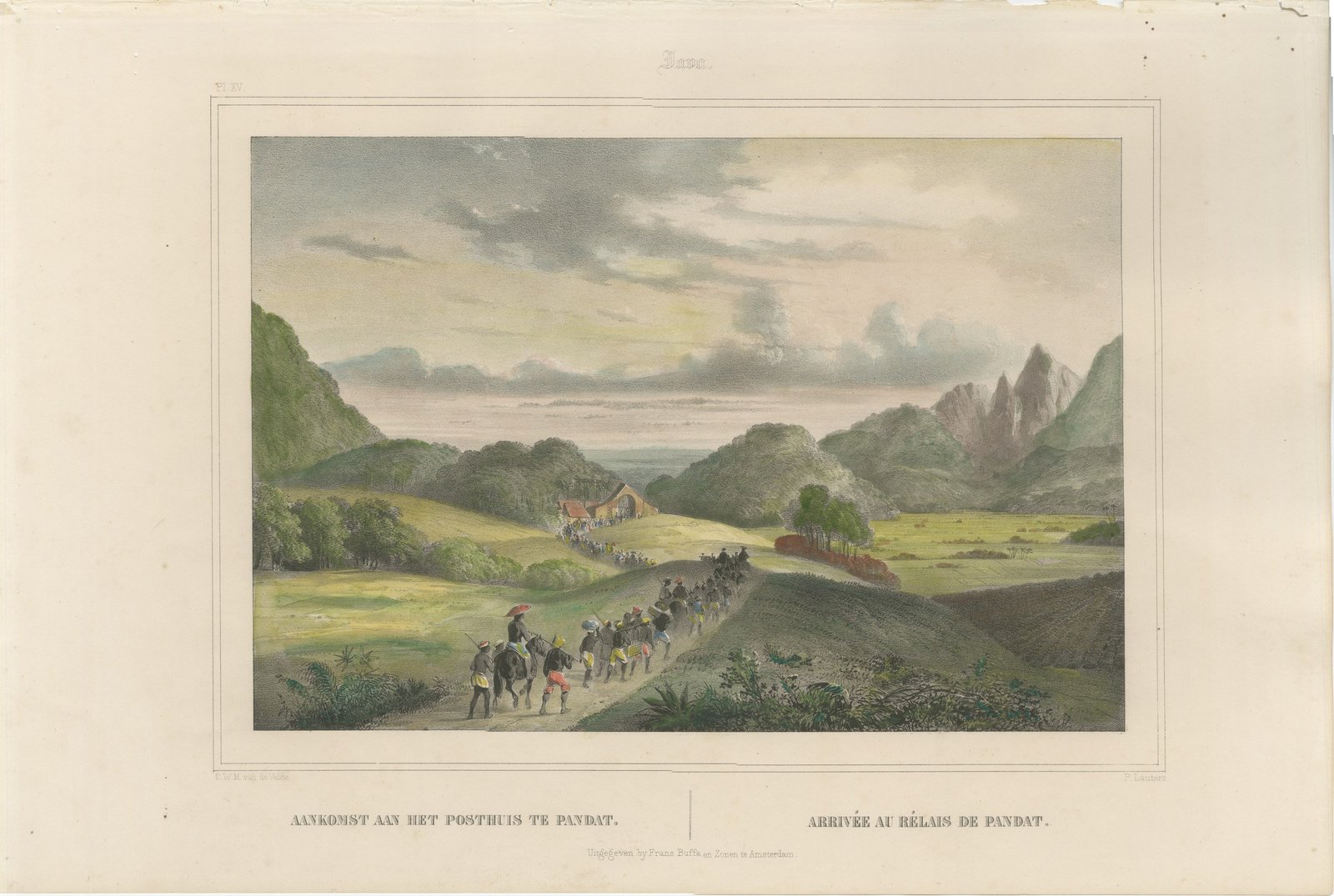
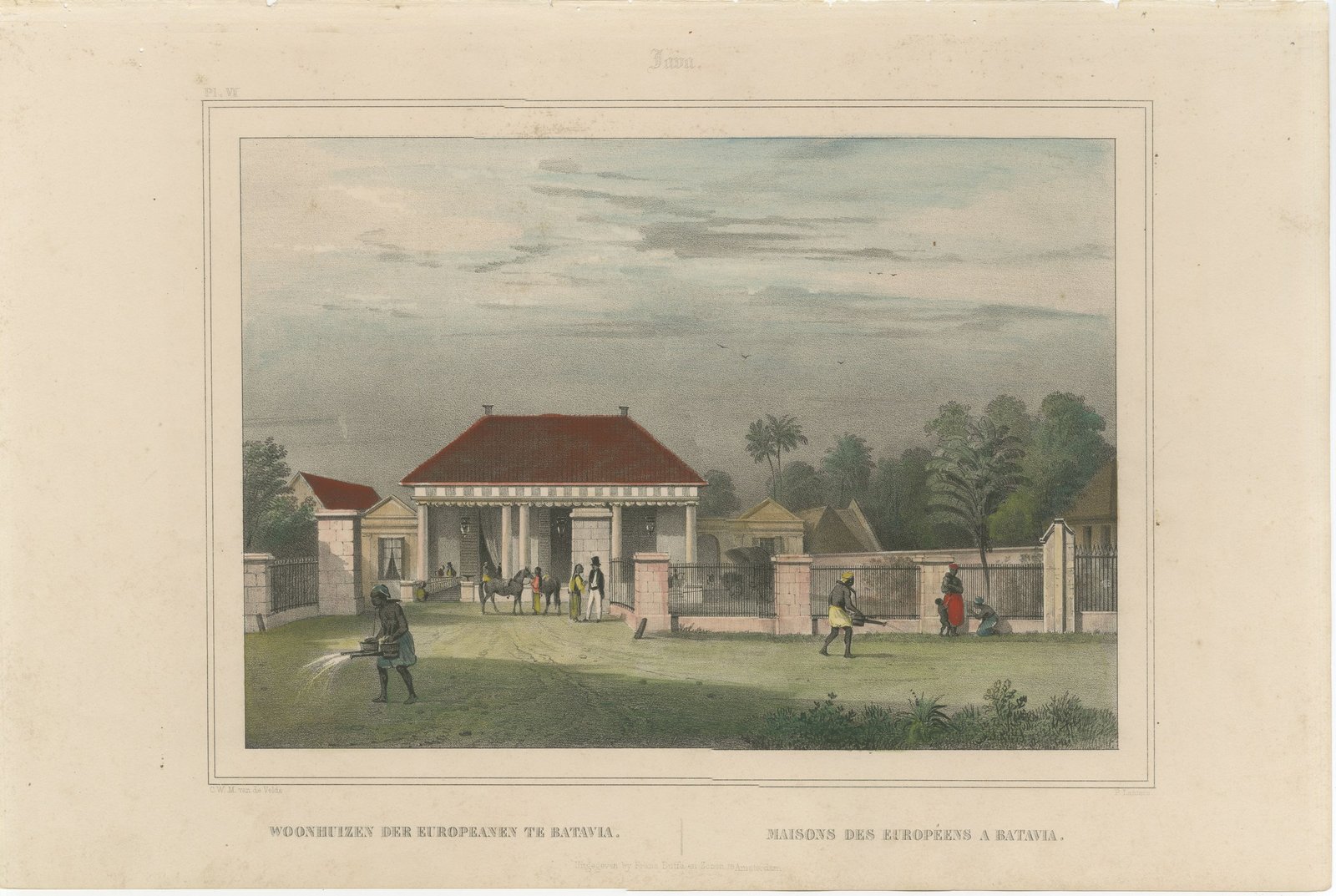
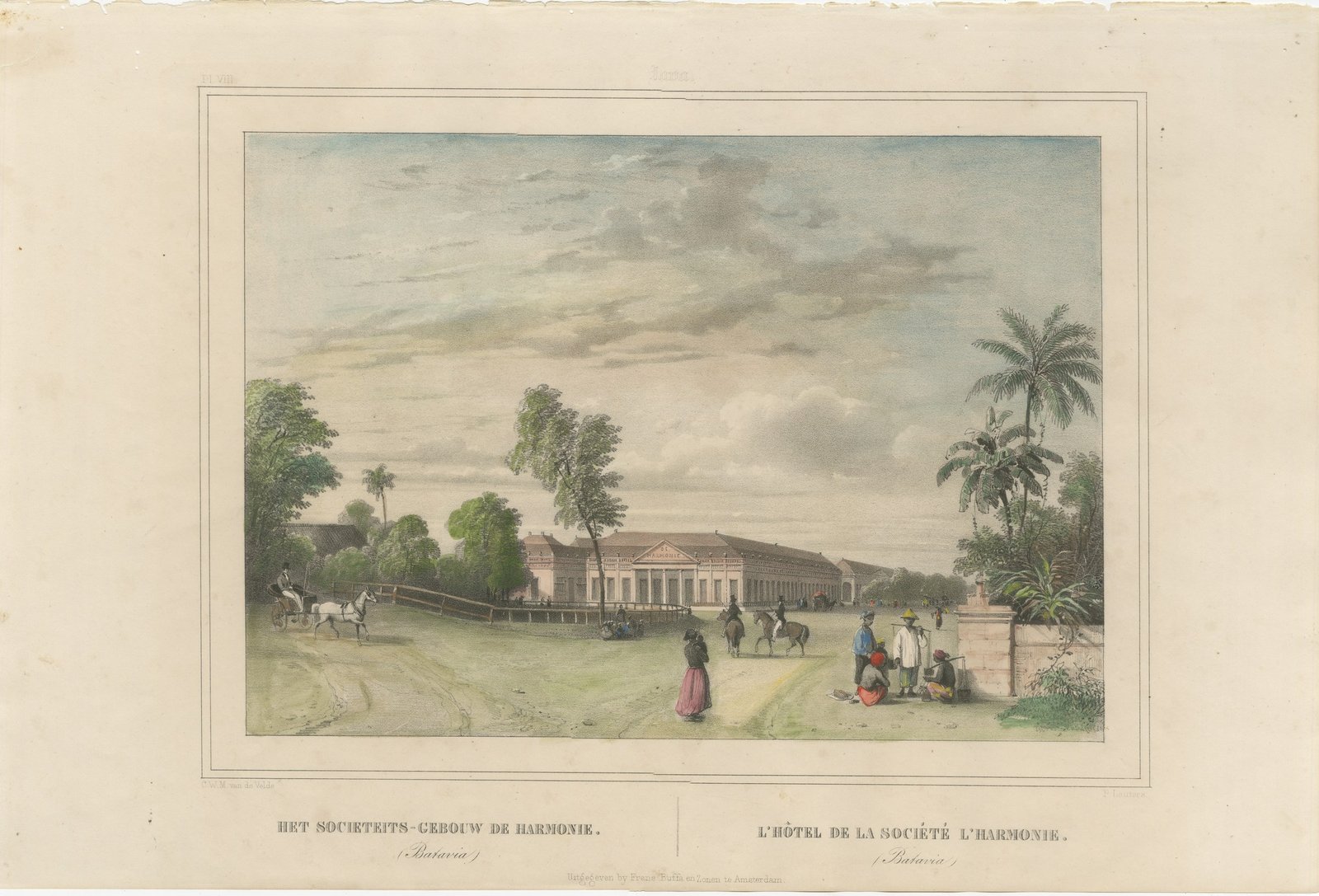
A set of five original hand-colored antique lithographs of Java and Batavia, now Jakarta, sold together as one group. Charles William Meredith van de Velde drew all five from nature while serving as a naval officer in the Indies, and Paulus Lauters of Brussels, the finest topographical lithographer of his generation, put every one of them on stone. Three subjects belong to the colonial capital: the domed Willemskerk, the colonnaded houses of the European quarter and the long clubhouse of the Harmonie society. Two take the buyer up-country, to the relay house on the hill road at Pandat and to a dance with ronggings at Tjibinoeangan. The five sheets match in size, in tone and in the quality of their original hand coloring, and together they give both the architecture of Batavia and the life of the island beyond it. They are five original sheets sold together as one lot, and the set is never split.
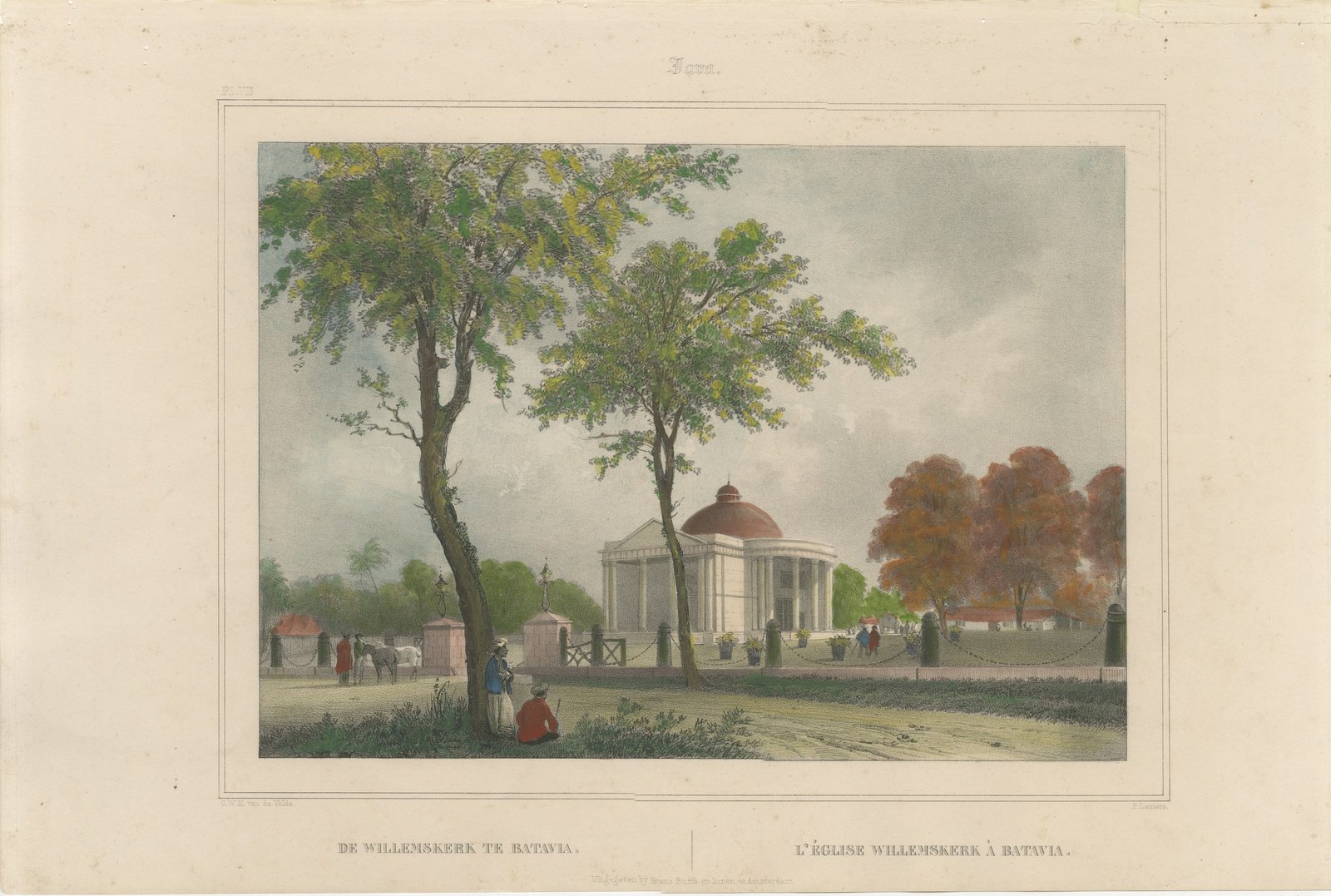
The domed Willemskerk at Batavia behind its iron railings, framed by great shade trees, with carriages at the gate and figures crossing the forecourt. Lauters lithographed it from van de Velde's drawing and the coloring holds the stucco almost white against deep green. Built between 1835 and 1839 and still in use in Jakarta as the Immanuel Church, it is the best known building in the series and the natural centerpiece of the group. A hill road on Java, with a column of porters and travelers arriving at the relay house at Pandat, horses brought up in its shade and blue ridges opening behind. Lauters lithographed van de Velde's drawing in cool, atmospheric color. Relay houses on the colonial post roads are almost never pictured, and this sheet carries the group inland, away from the capital and its architecture. A dance in the open air at Tjibinoeangan, with ronggings performing before a thatched building, musicians to one side and a crowd ringed around them under palms. Lauters lithographed it from van de Velde's drawing in the warmest coloring of the series. It is the only performance subject among the five, and it gives the group its people where the others give its buildings and its roads. The houses of the Europeans at Batavia: a red-roofed colonnaded front behind a white garden wall, a gateway, a horseman pulled up and figures talking in the shade of the veranda. Lauters lithographed van de Velde's drawing, terracotta and warm white against garden green. Almost none of this domestic architecture survives, which makes the sheet the group's record of how the colonial capital was actually lived in. The Harmonie society building at Batavia, a long colonnade under a low roof with palms at either end, a carriage and pair at the entrance and figures on the drive. Lauters lithographed van de Velde's drawing, pale stucco against deep green. Opened in 1815 and demolished in 1985, the clubhouse survives mainly in images like this one, and it completes the group's account of European Batavia.
All five sheets are lettered "C.W.M. van de Velde." and "P. Lauters." and carry the imprint "Uitgegeven by Frans Buffa en Zonen te Amsterdam.", with captions in both Dutch and French. They are original hand-colored lithographs from "Gezigten uit Neerlands Indie, naar de natuur geteekend en beschreven", also titled "Vues des Indes Neerlandaises", published by Frans Buffa en Zonen at Amsterdam in twelve installments between 1843 and 1845, fifty plates in all. Van de Velde, a Dutch naval officer who later mapped Palestine, drew the subjects from nature; Paulus Lauters of Brussels lithographed them. The series ran to fifty plates in twelve installments, and complete copies are now scarce, so a matched group of five from a single copy, in original hand color throughout, comes up rarely; putting these five together from separate sources would mean waiting on several dealers over several years. Taken as a group they are the best short account of Dutch Java that original prints can give, covering the capital and the interior in one purchase. Hung in a line of five along a corridor, or as a block with the Willemskerk at the center, they read as one coherent statement rather than five separate pictures, and they suit a study, a dining room or a hallway in a house furnished with colonial pieces.
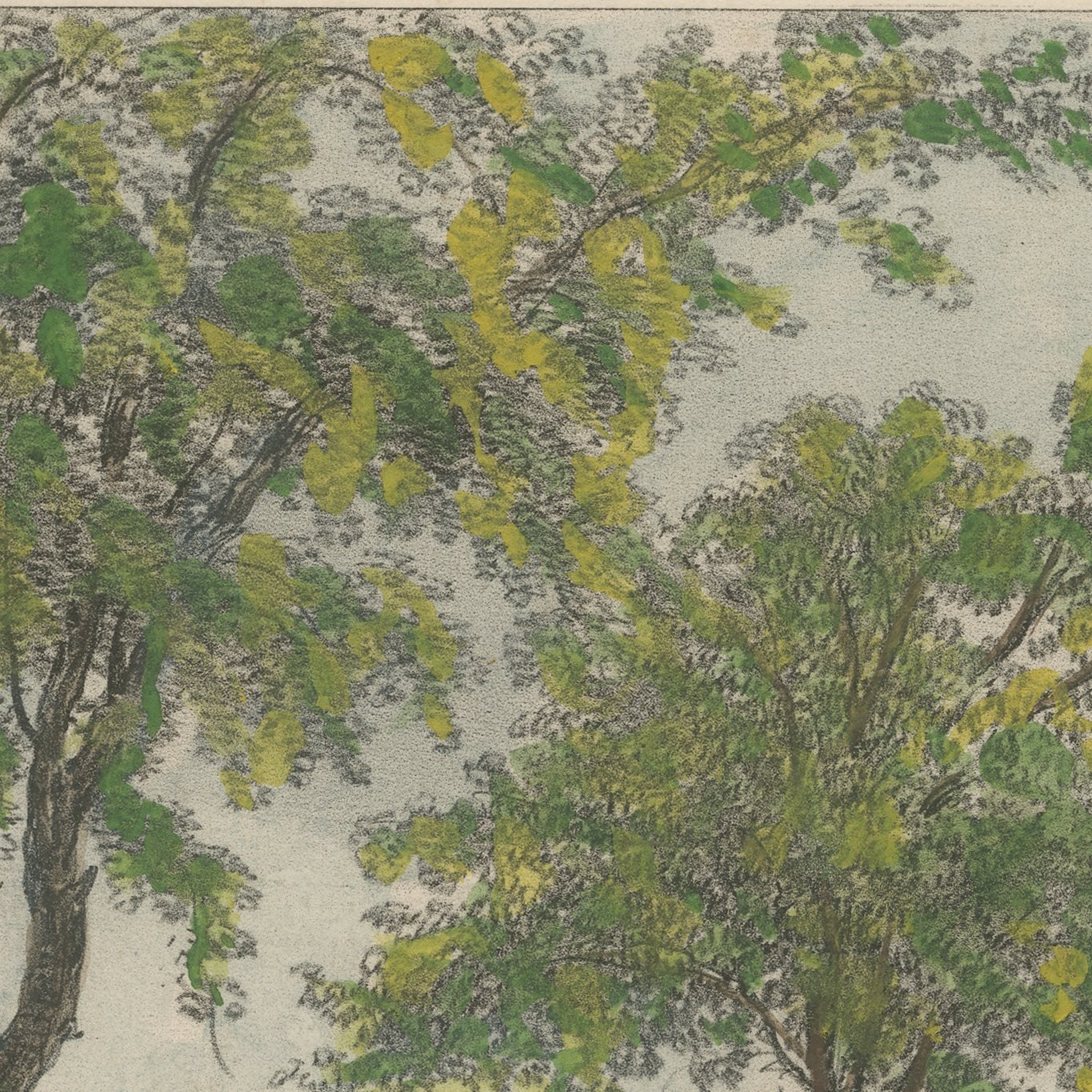
Light uneven toning, browner towards the edges. Handling soiling along the edges of four of the five sheets. Light foxing in the margins of all five sheets. All corners complete on every sheet.
These are original antique prints, not modern reproductions. This item is sold unframed.