 The sheet, as you receive it
 In the room
Interior designers: BarTrade members buy at their trade price. How it works
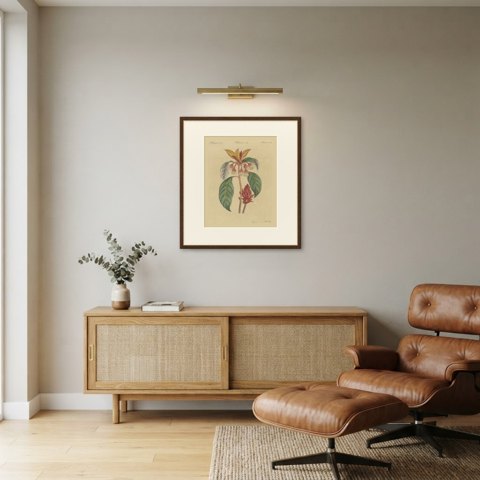
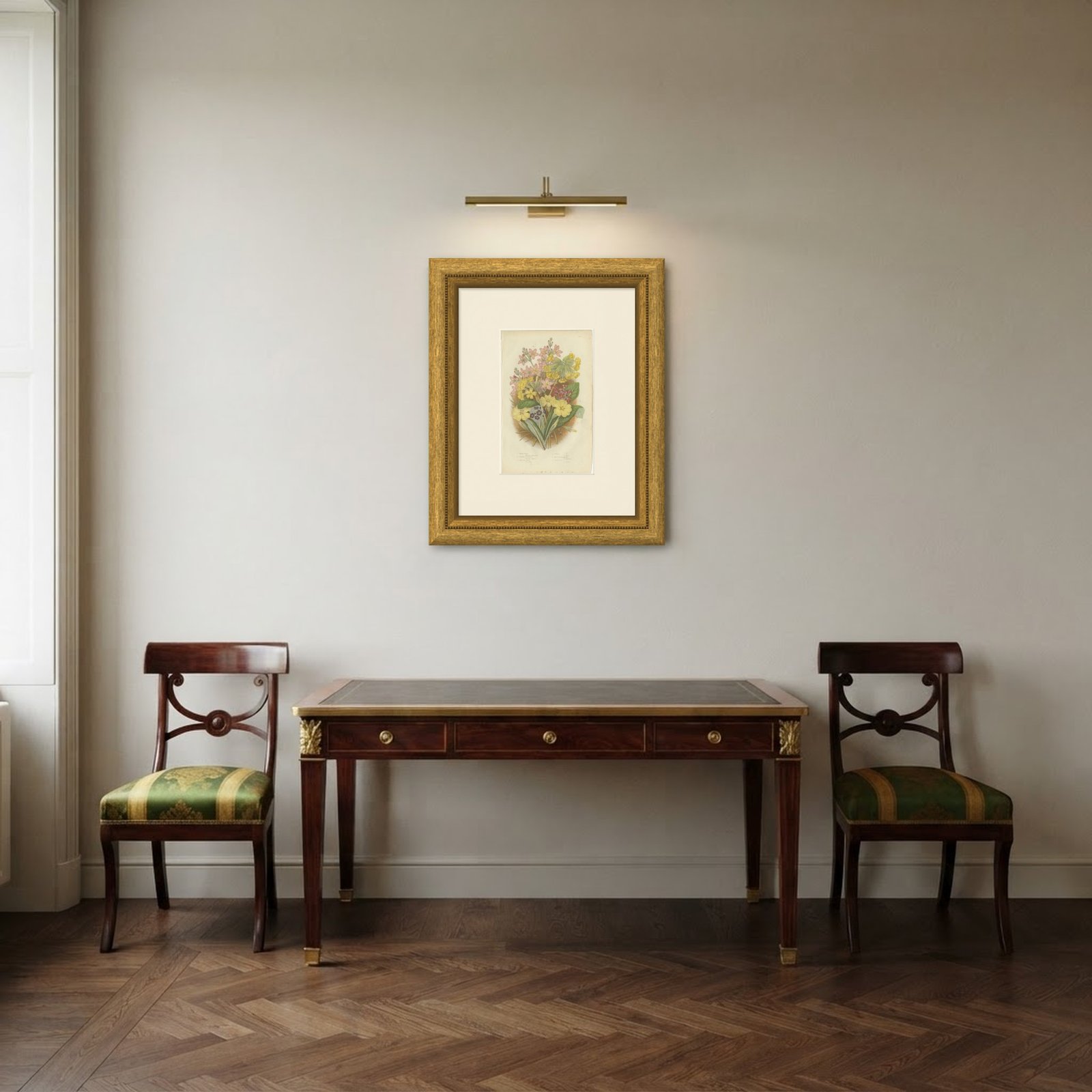
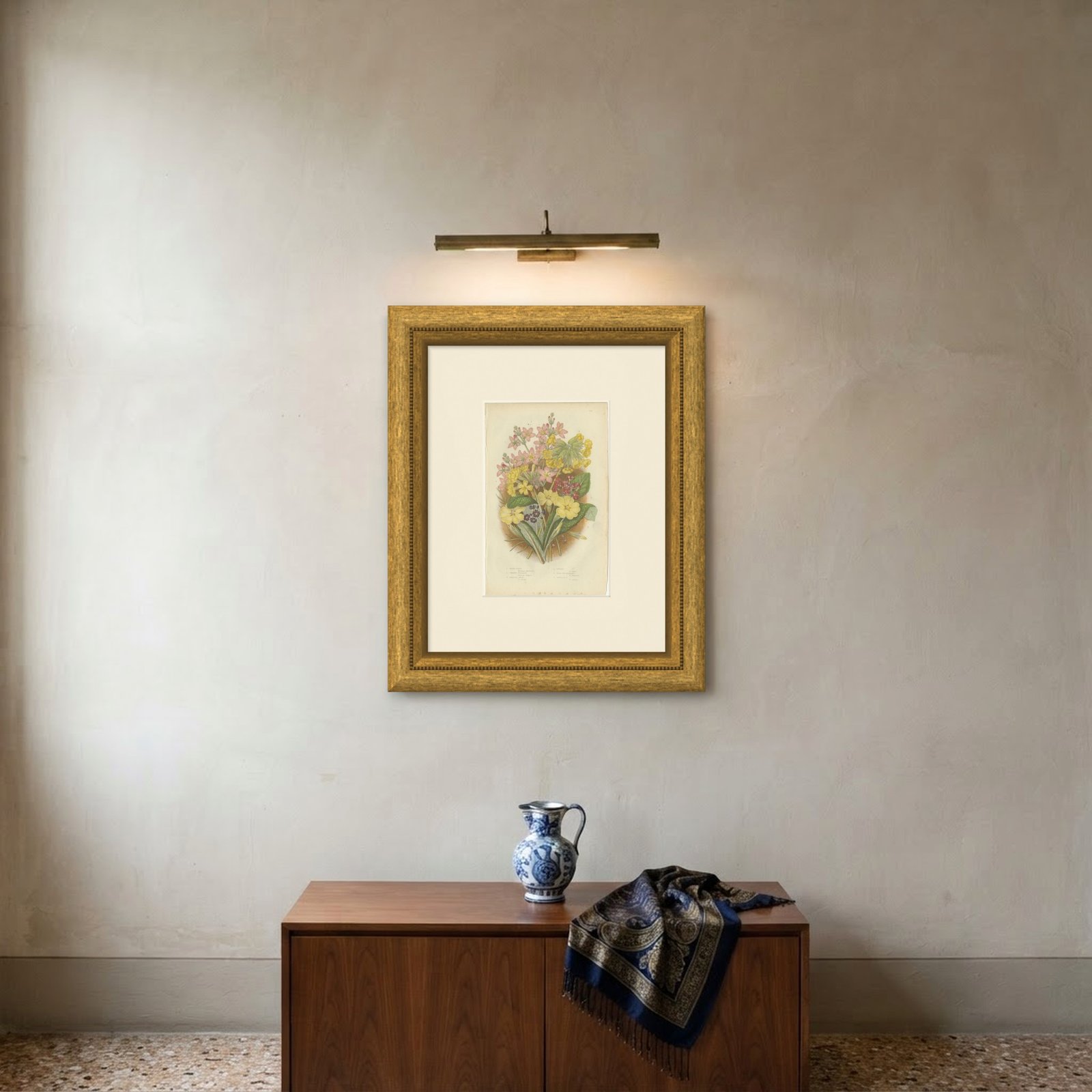
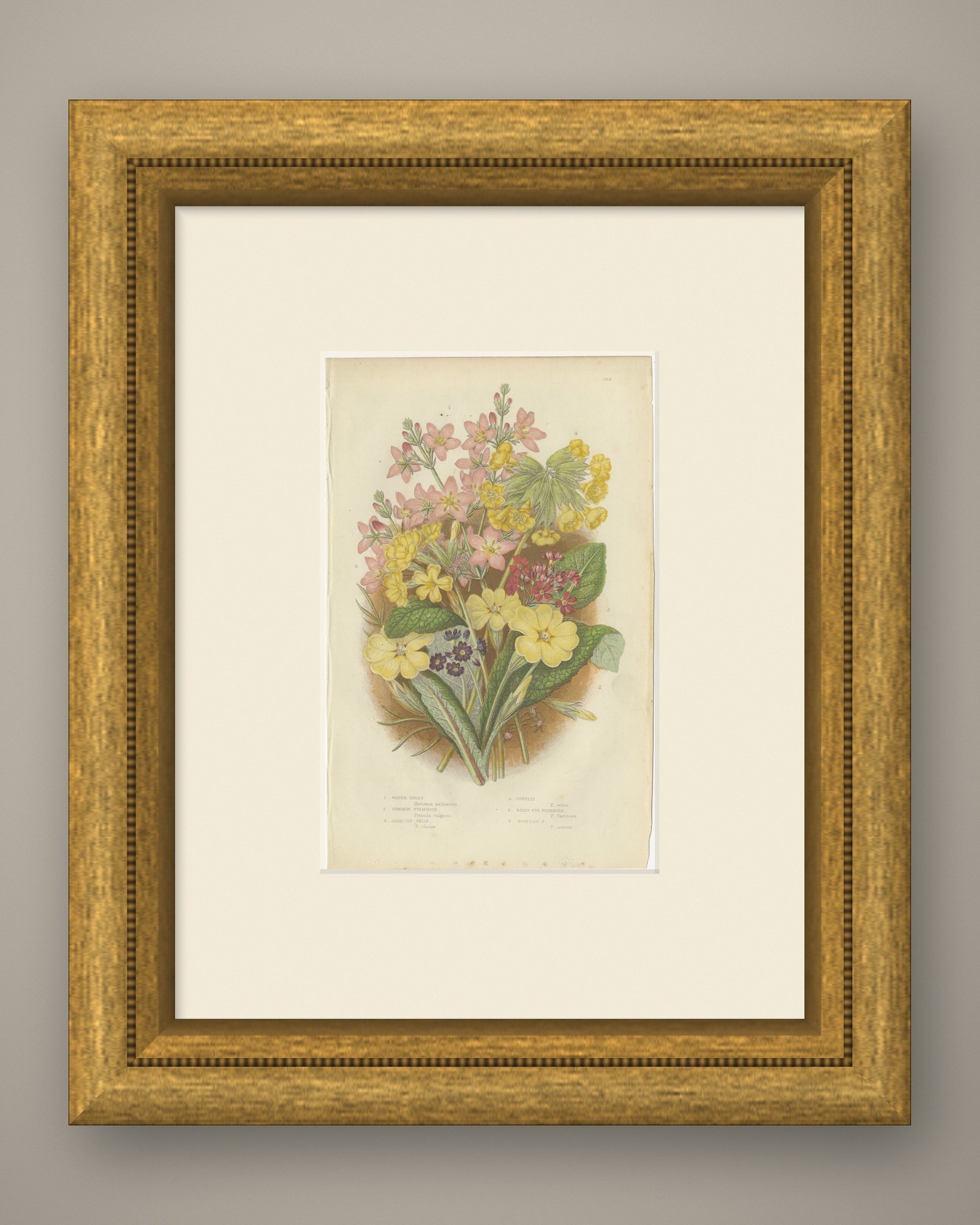
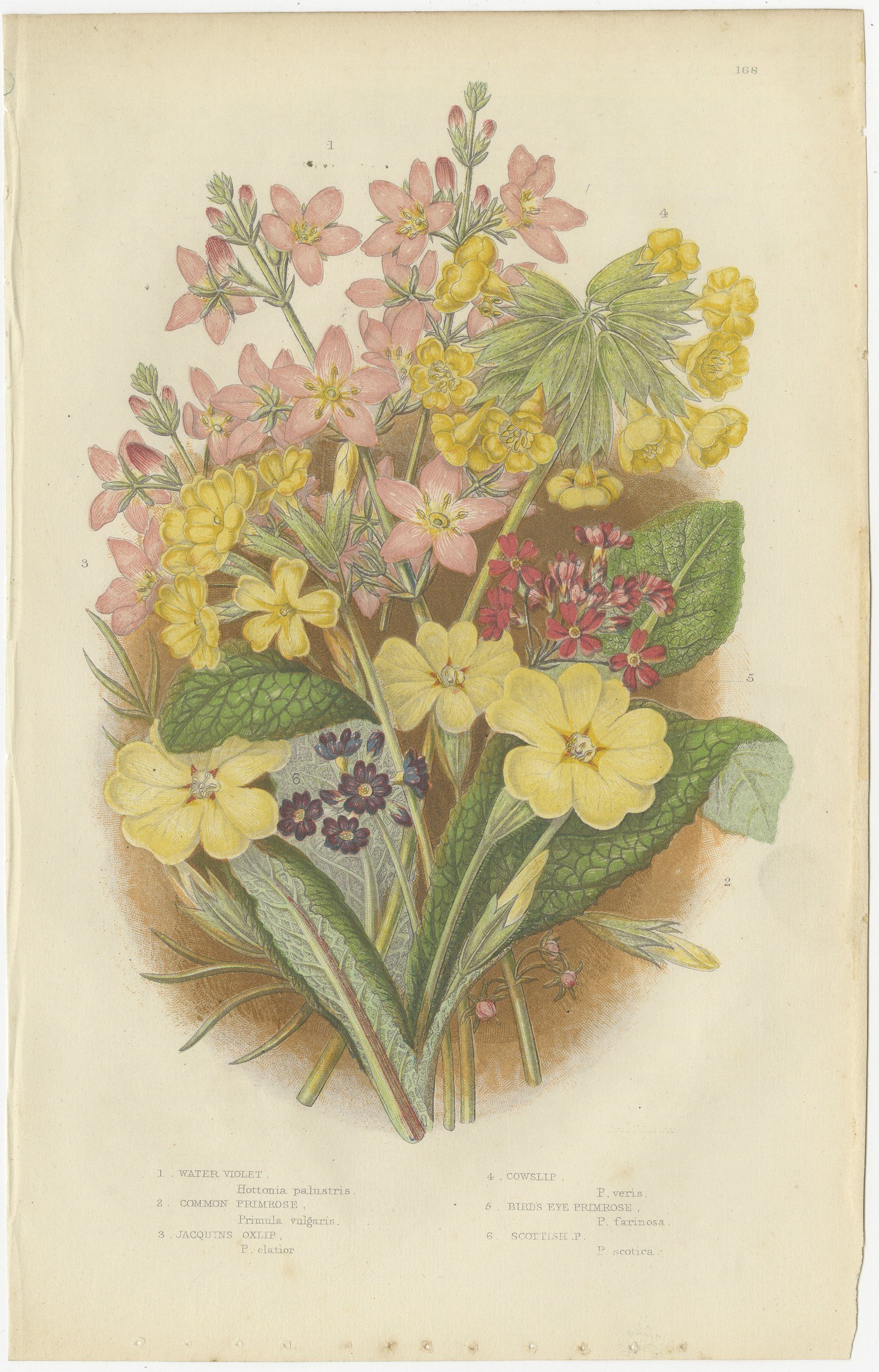
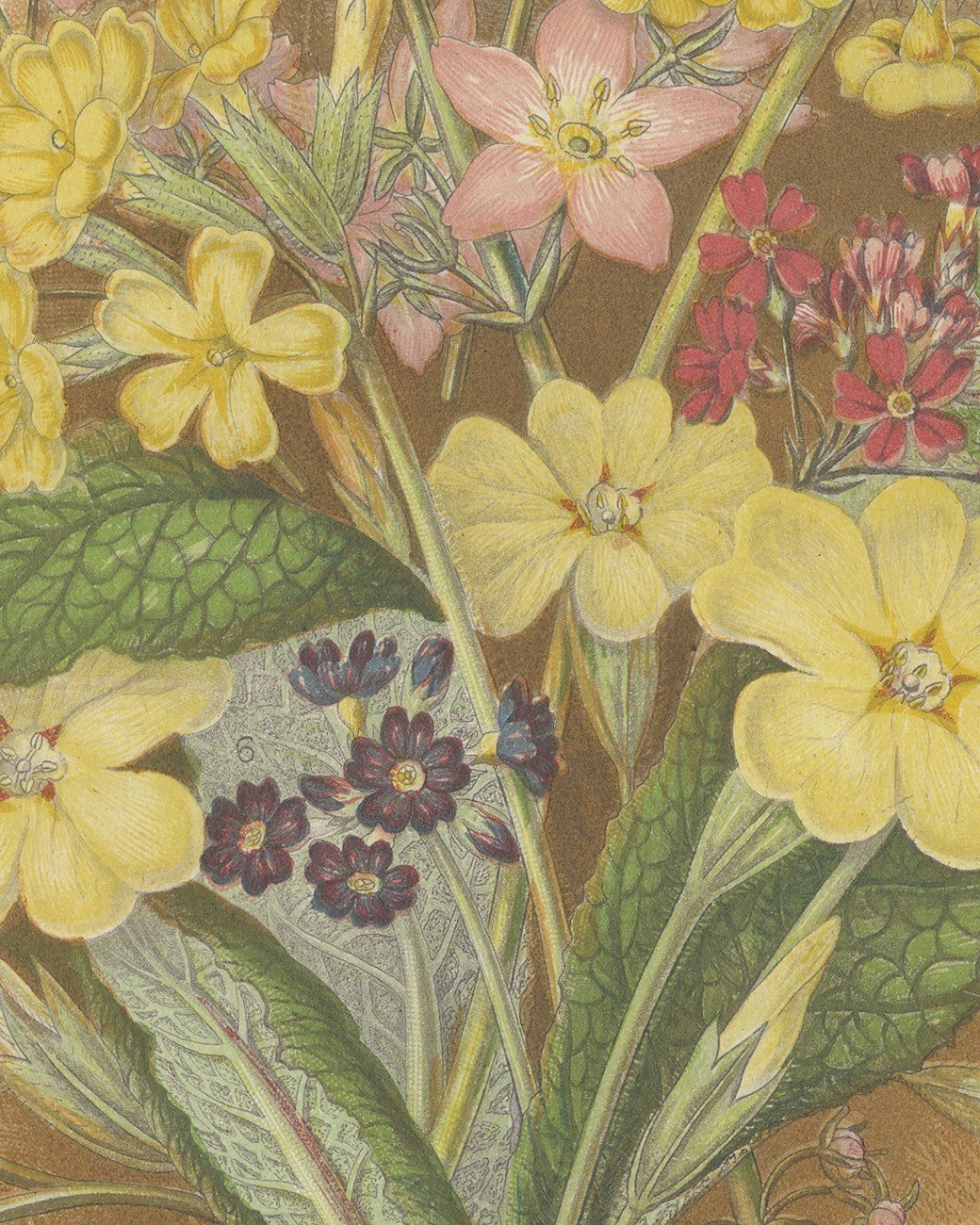
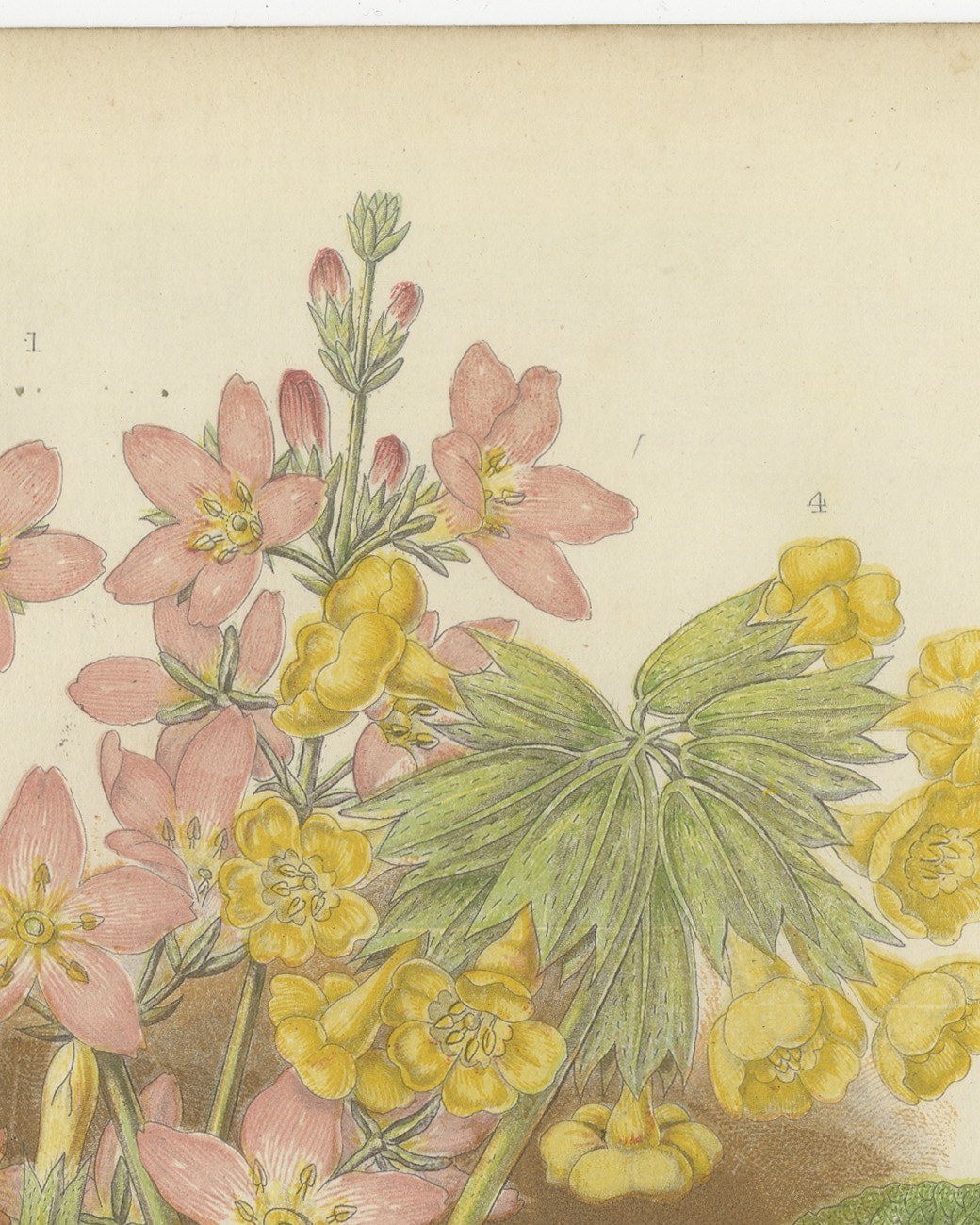
An original antique botanical plate of the British flora, printed in color in London for Frederick Warne and Co., this sheet is given over to the common primrose with the cowslip, the oxlip and the bird's eye primrose. Two broad pale yellow primroses open at the center of the sheet above their crinkled veined leaves, and the deeper yellow cowslips hang in a nodding head beside them. The pink starry flowers of the water violet rise through the top of the page, the crimson bird's eye primrose sits at the right, and the small purple Scottish primrose is drawn at the lower center against a soft brown ground.
Issued in London by Frederick Warne and Co. for the Society for Promoting Christian Knowledge, The Flowering Plants, Grasses, Sedges, and Ferns of Great Britain was Anne Pratt's largest work and the one that made her name. She drew the plants as well as describing them, and the six volumes were printed in color by William Dickes, whose press specialized in natural history plates. This sheet is from Volume IV.
What makes Pratt's plates worth hanging is her method. Each species is given whole, with root, stem, leaf, flower and often the ripe fruit on the same sheet, and several related species are grouped together so that the differences between them can be read at a glance. The result is a composition rather than a specimen sheet, and it reads as a picture at a distance and as botany close up.
Even age toning. Handling soiling along the bottom, right and top edges. A few small foxing spots in the margin. Slight wear at the bottom left, bottom right, top left and top right corners. Minor edge wear, shallow nicks along the right.
This is an original antique print, not a modern reproduction. This item is sold unframed.