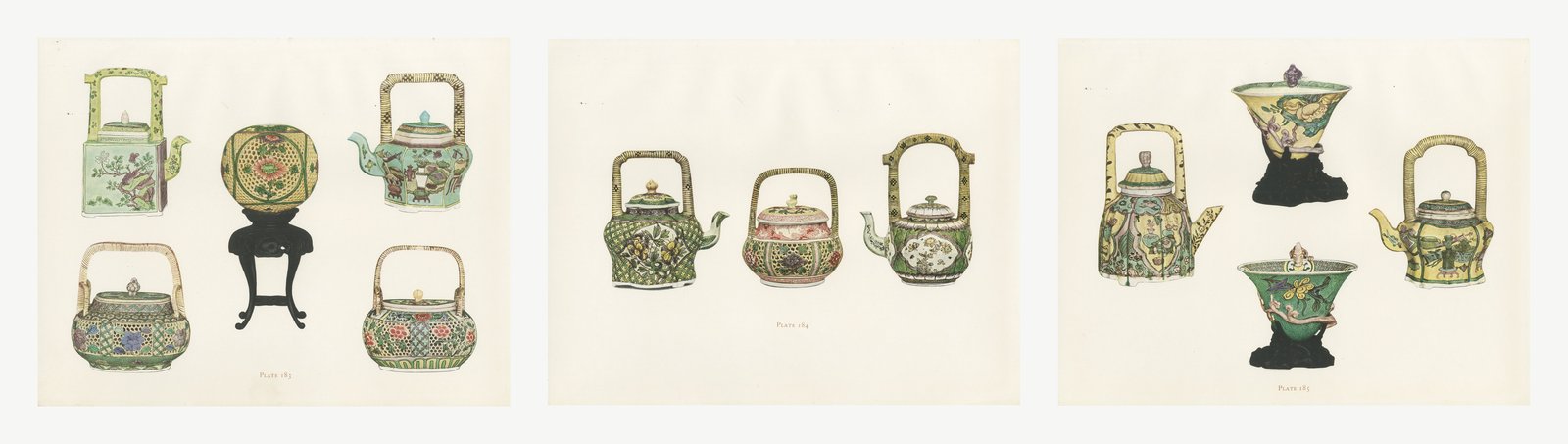
 The sheet, as you receive it
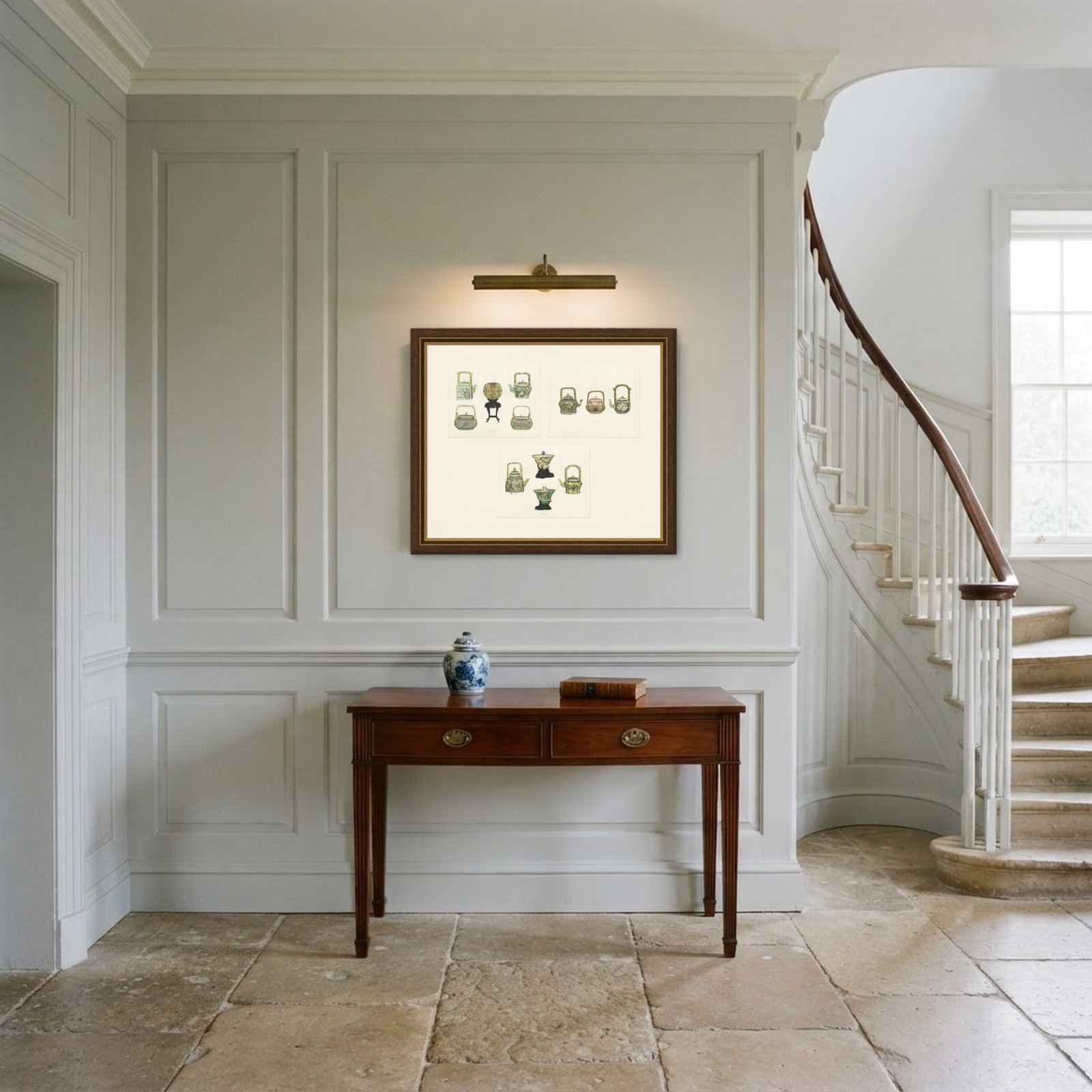 In the room 1
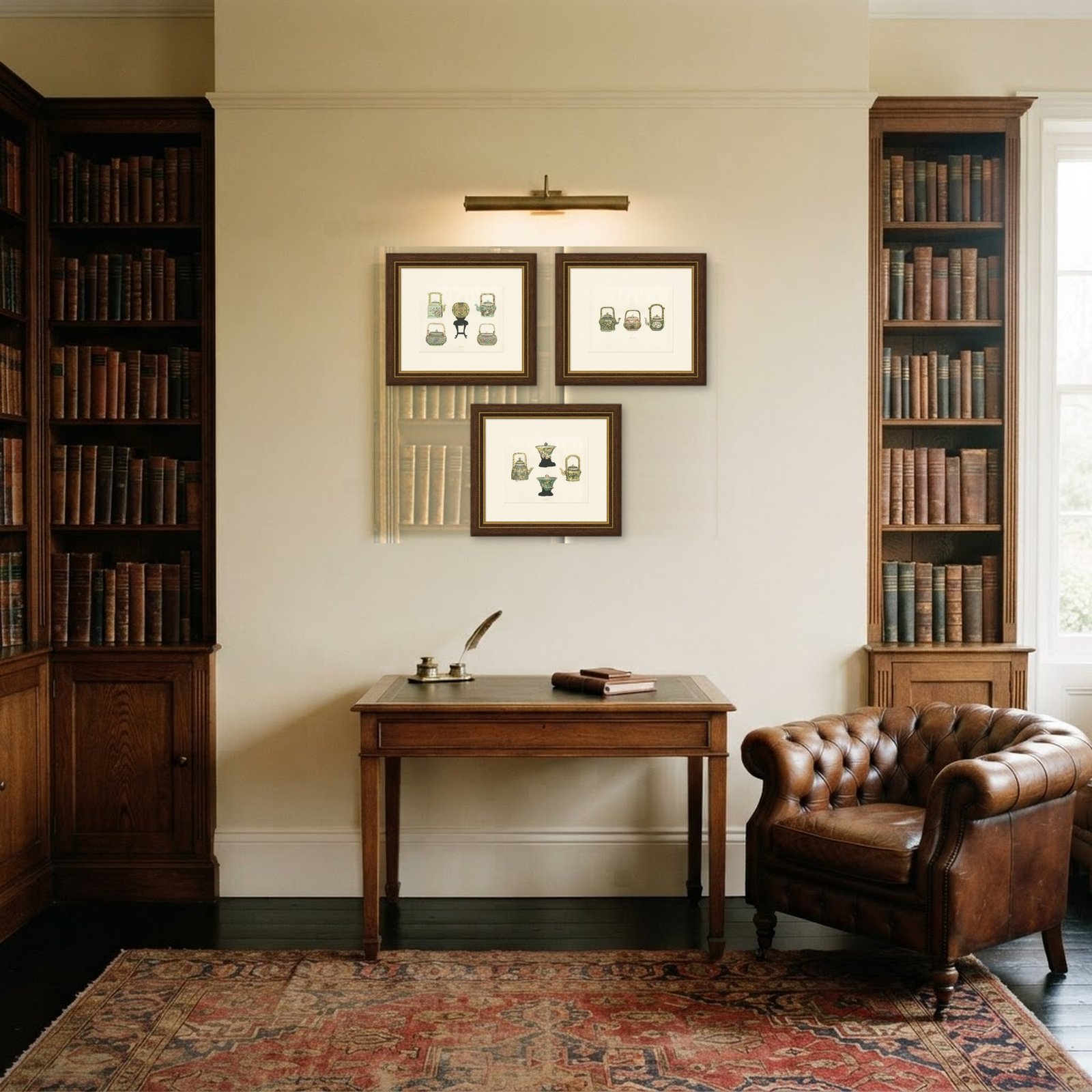
Interior designers: BarTrade members buy at their trade price. How it works
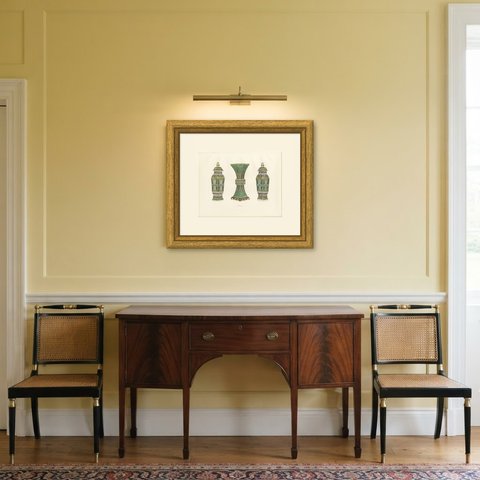
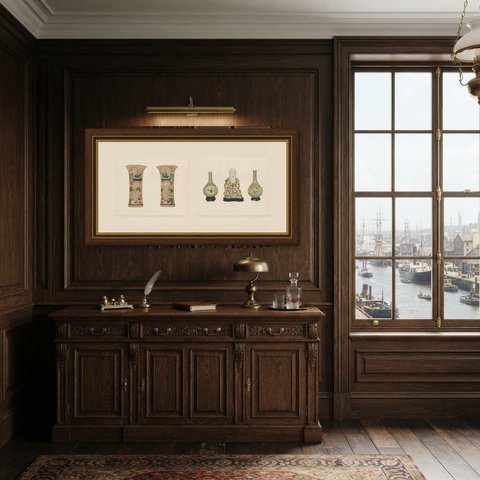
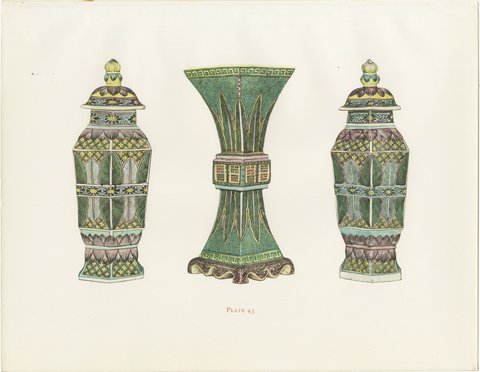
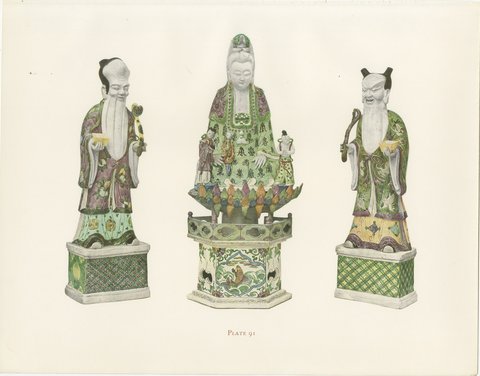
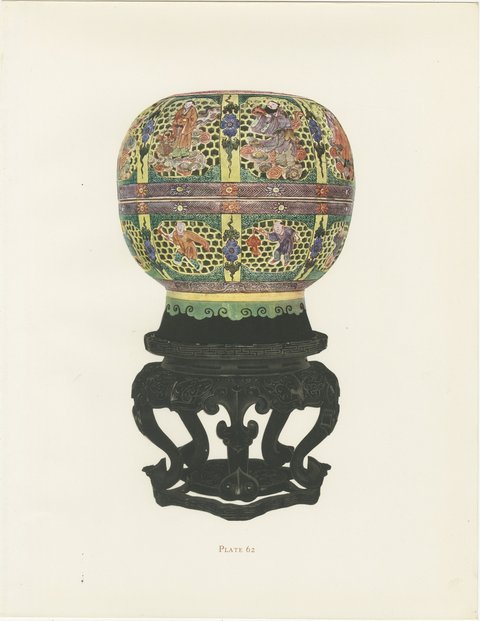
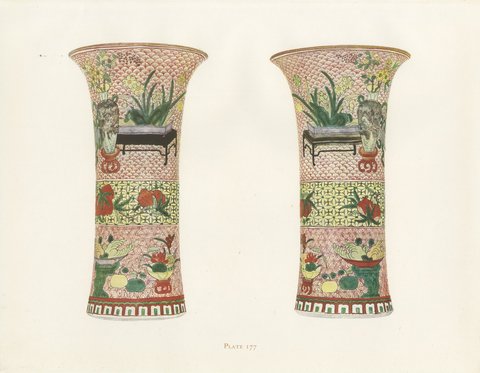
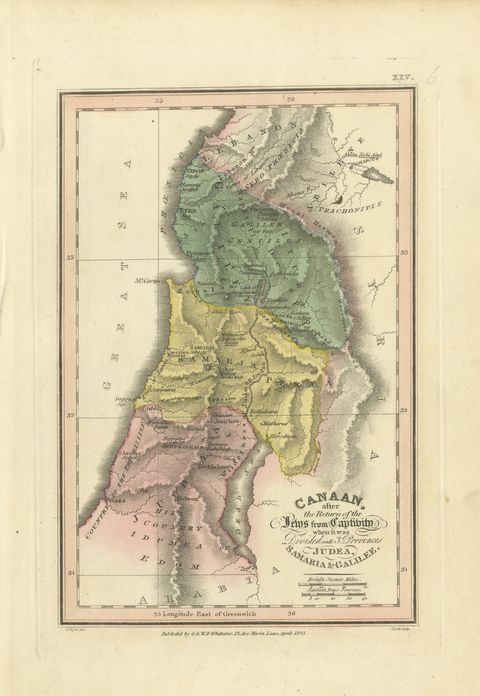
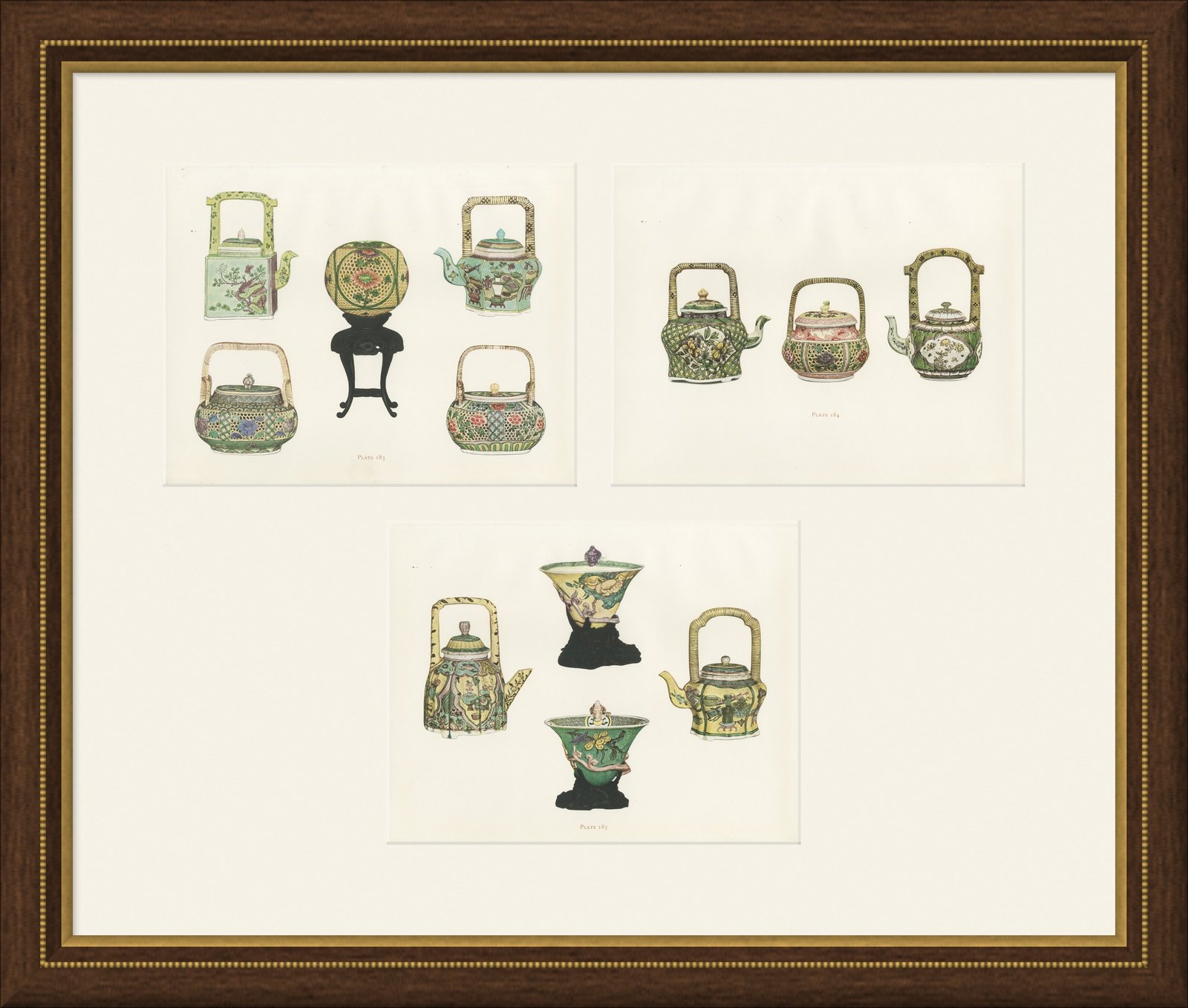
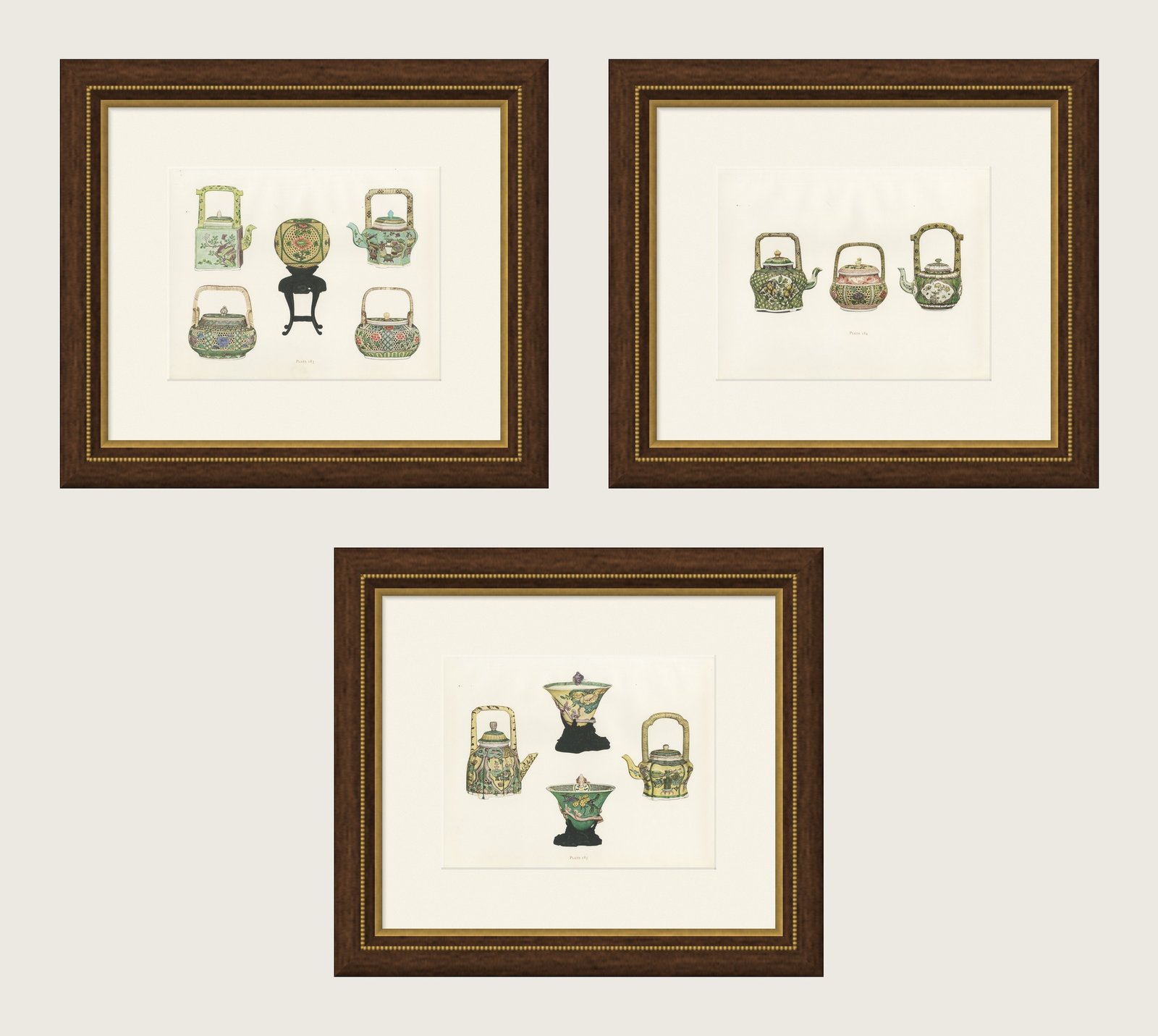
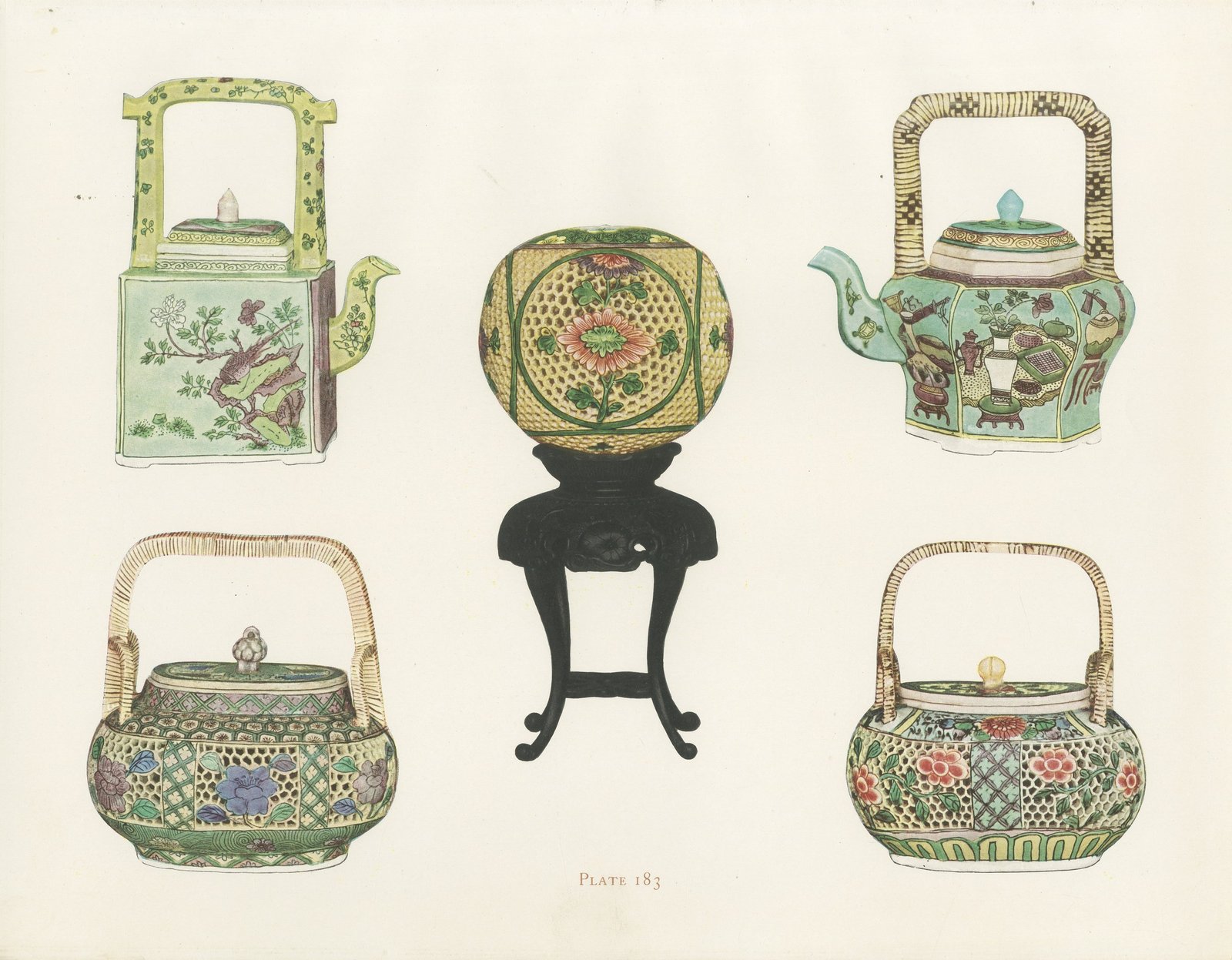
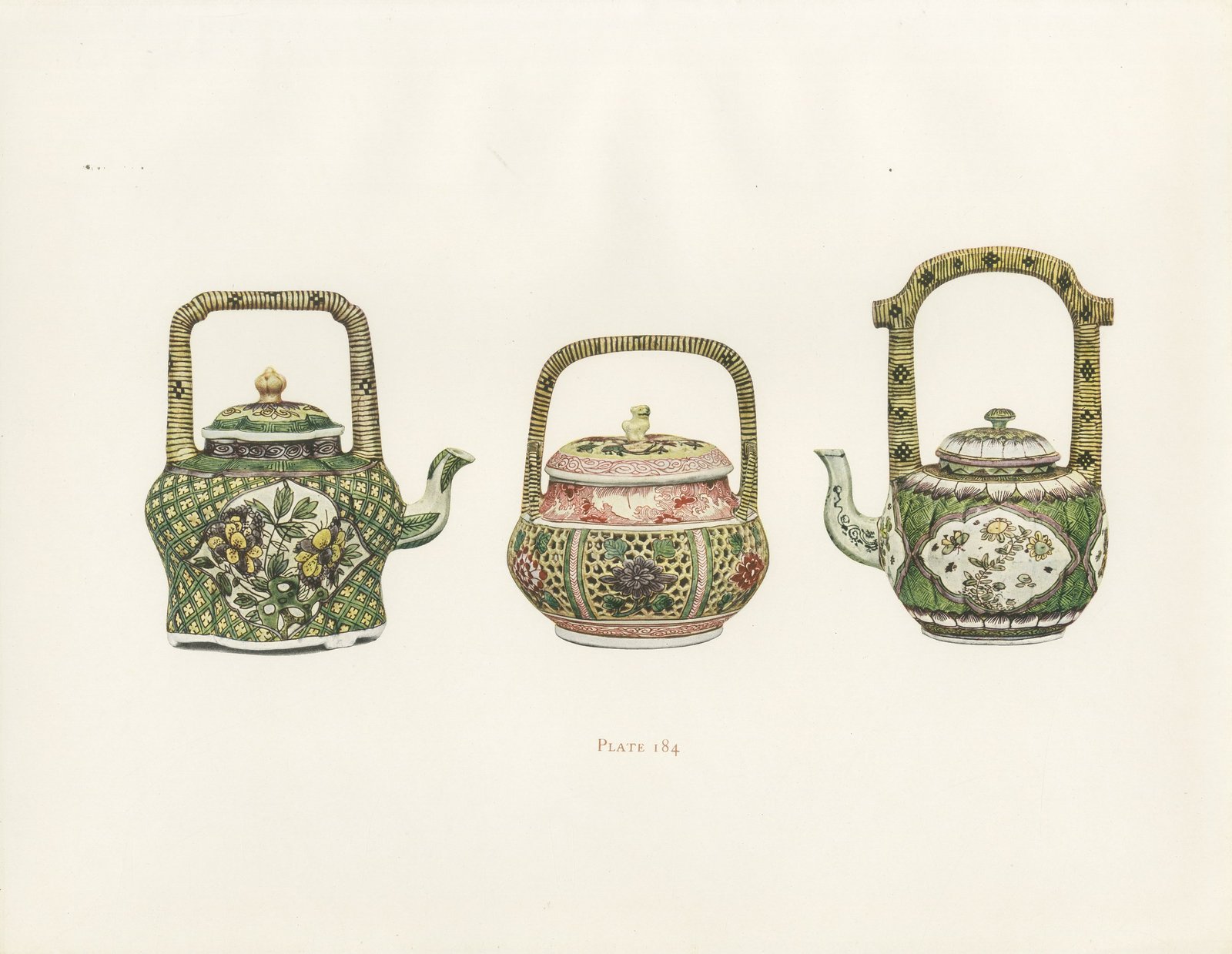
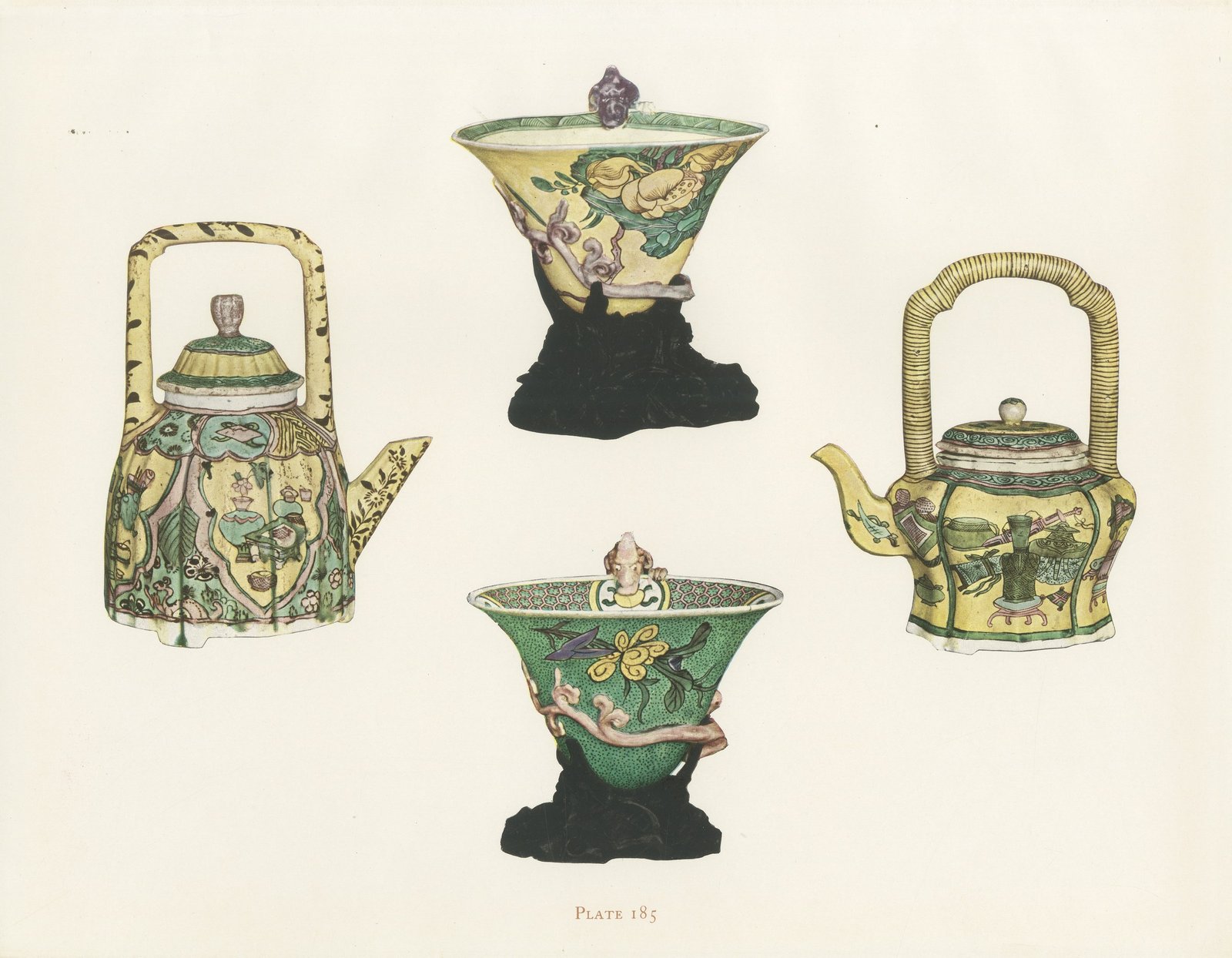
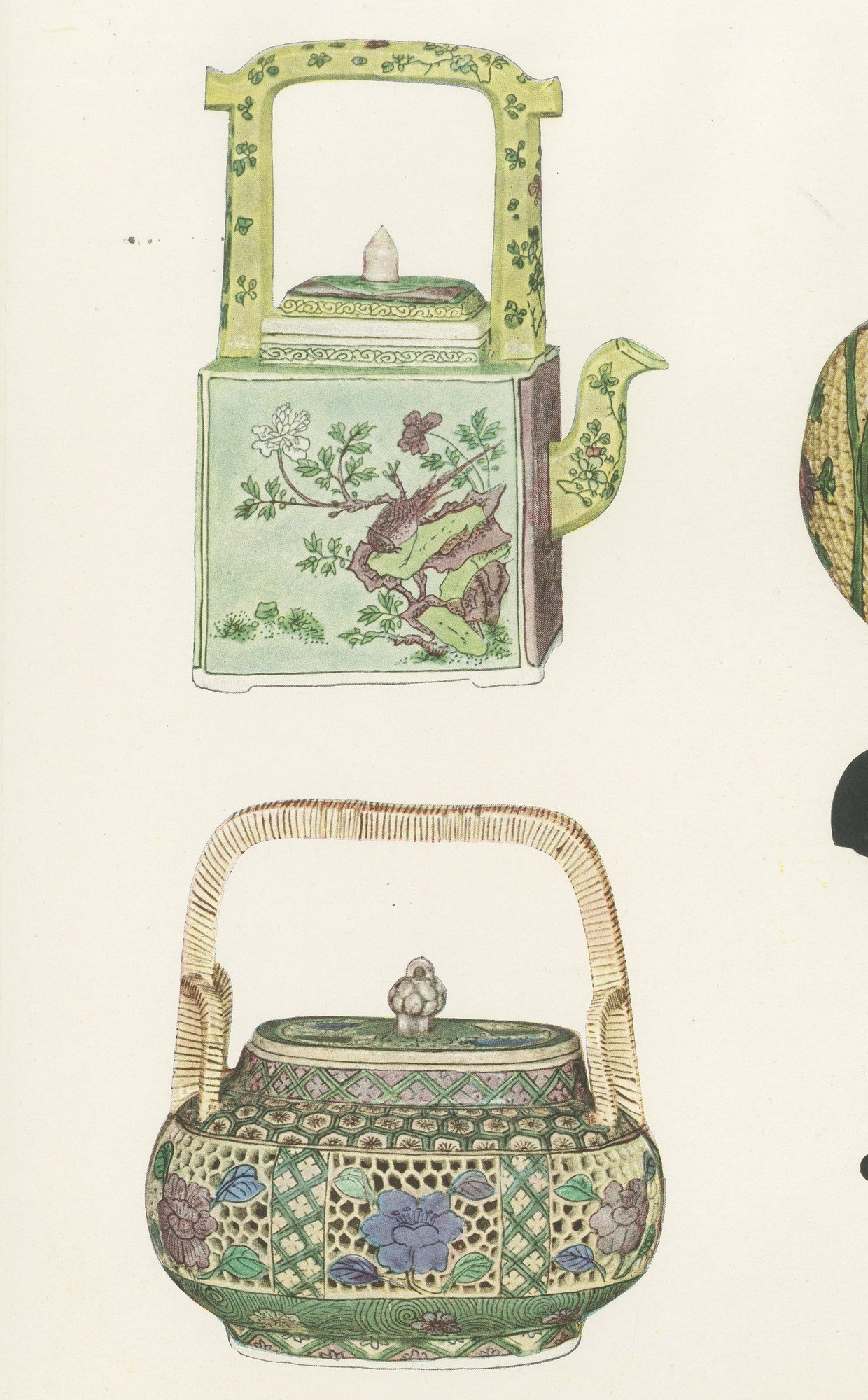
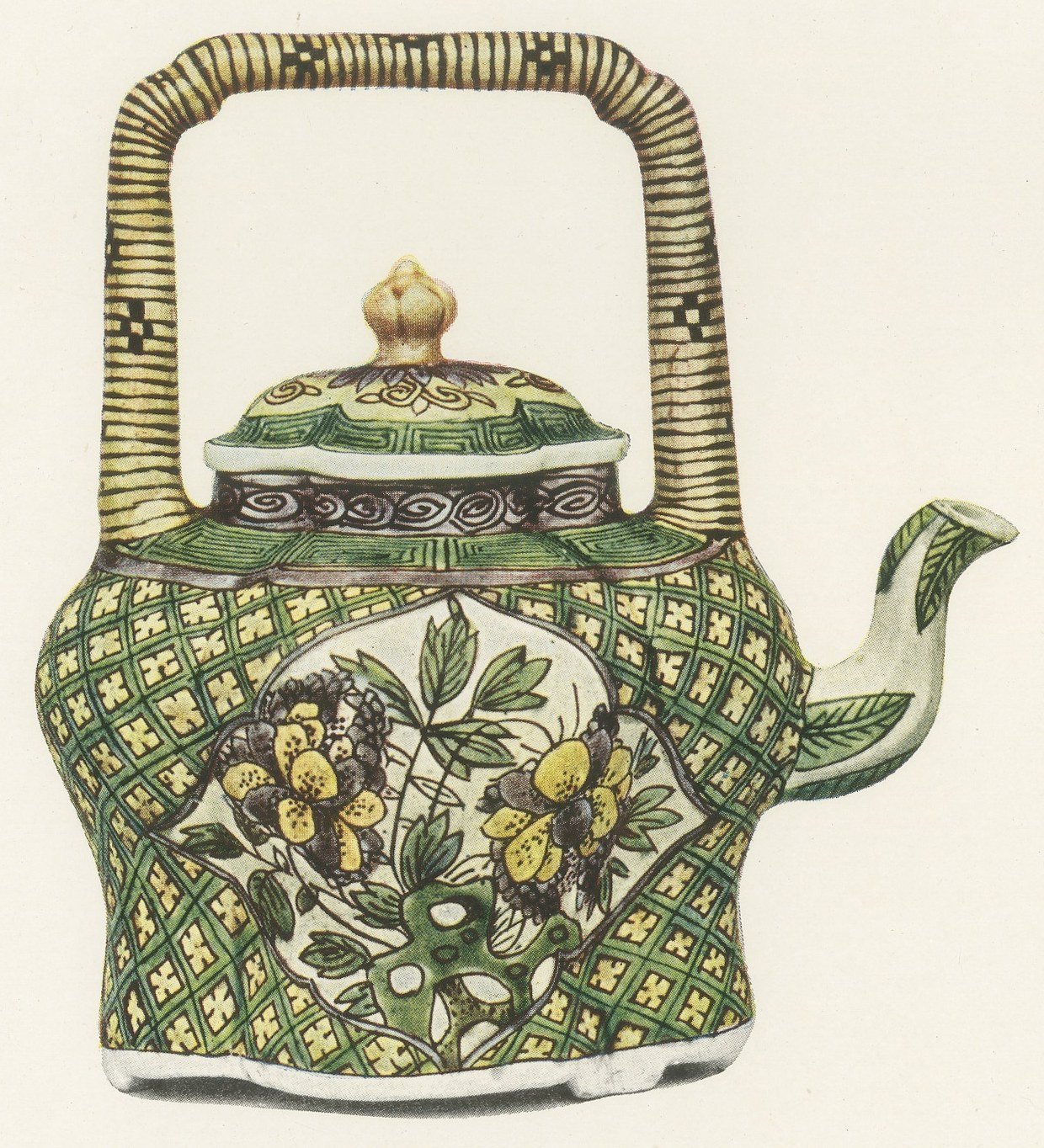
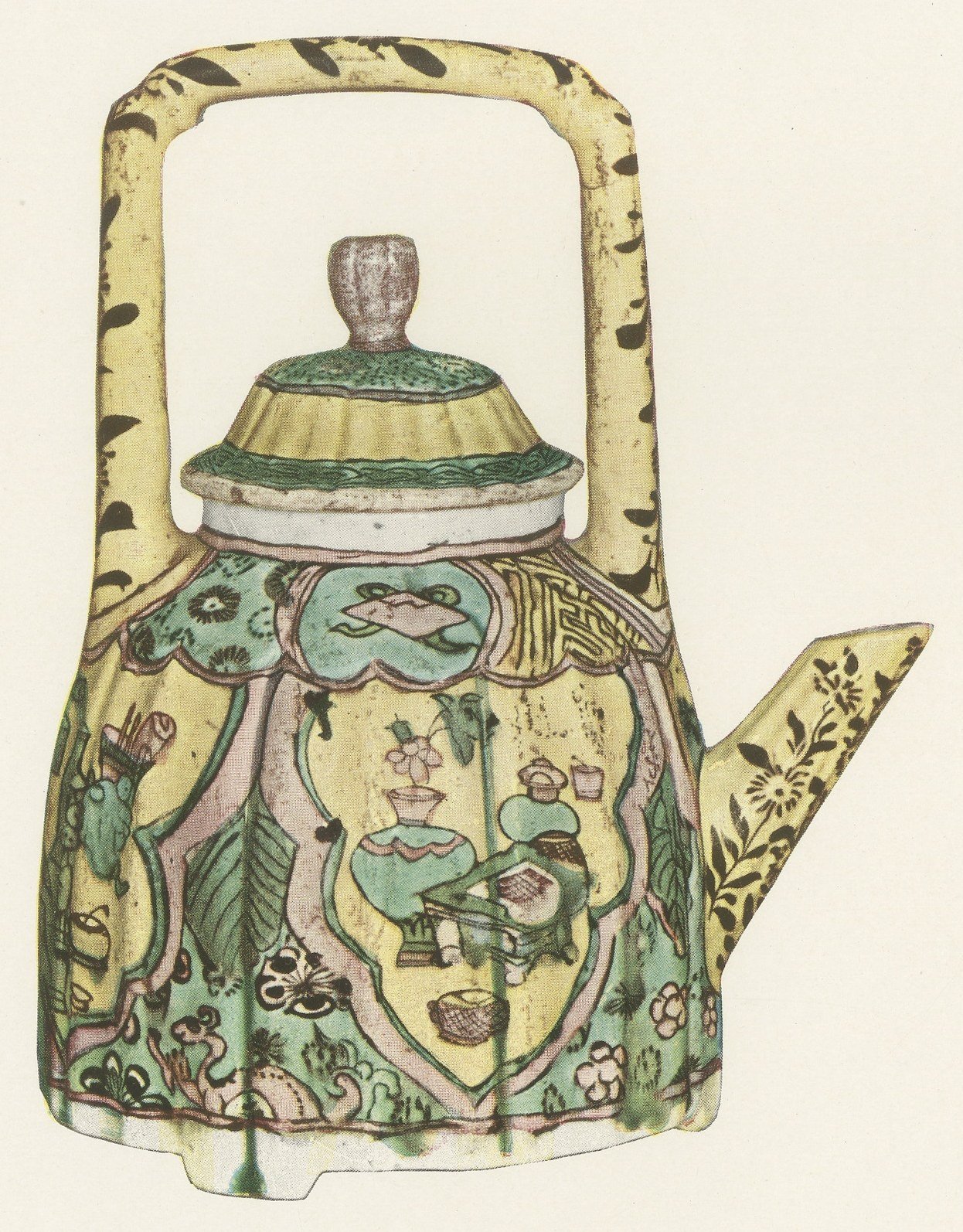
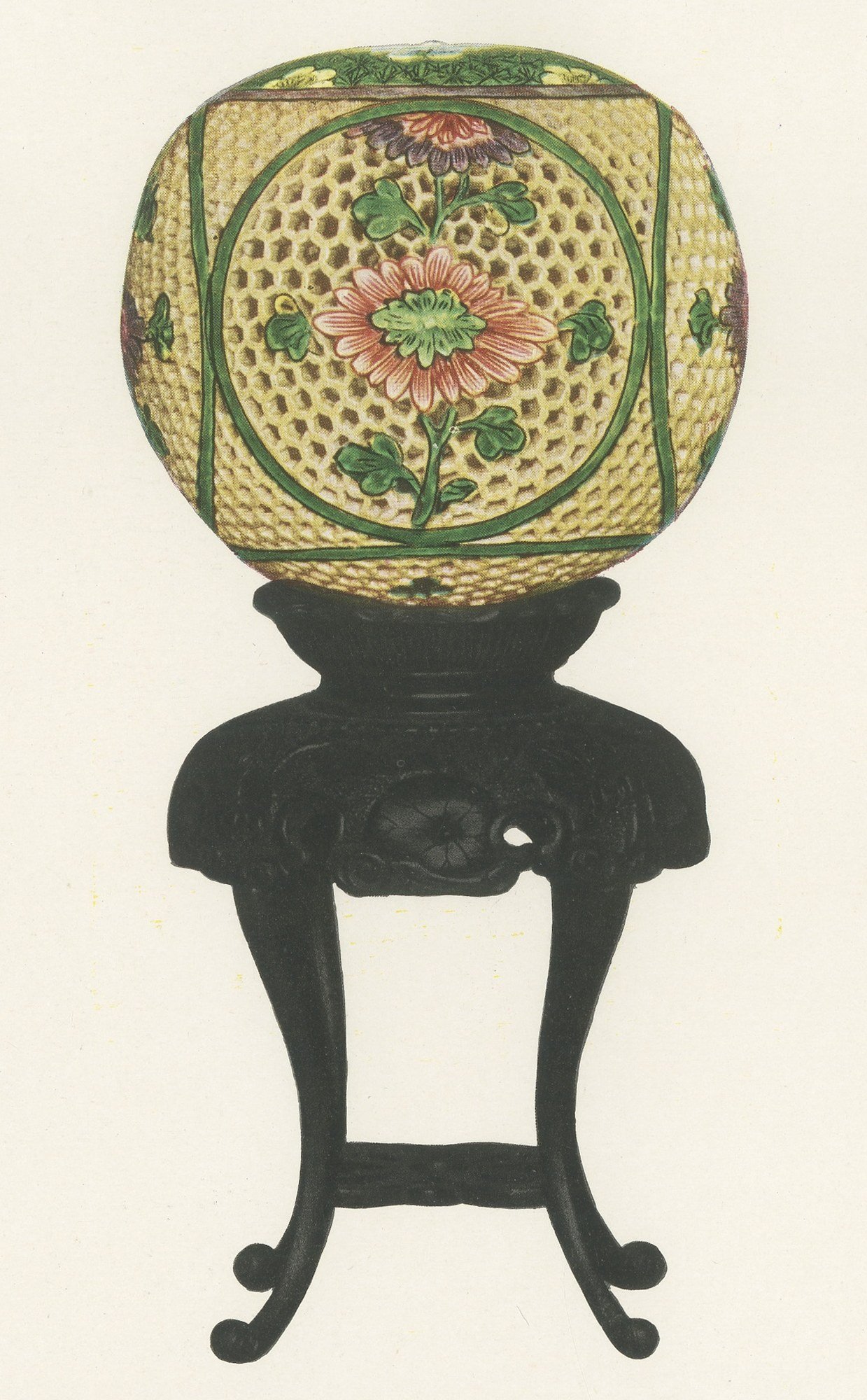
This is a set of three original 1911 color plates, Plates 183, 184 and 185 from Volume II of Gorer and Blacker's Chinese Porcelain and Hard Stones, sold together as one lot. What links them: wine pots, baskets and marriage cups. Plate 183: Group of five pieces: a spherical incense-burner or reticulated hanging globe for fragrant flowers, and perforated baskets. The hanging globe has a ground of pierced hexagons interrupted by six round panels framed with a green fillet containing chrysanthemums and foliage, above an aubergine fillet and a green star ground with semi-flowers; the prevailing color is yellow. One perforated basket has six yellow hexagonal panels containing flowers, separated by lozenge borders, below which is a green scroll border with scattered flowers surmounting colored zigzags ornamented with semi-flowers. The book gives it to the Early Kang-he period and records height 3 1/2 inches (8.8 cm); width 4 inches (10.2 cm), the book giving a size for each piece shown. From the collection formed by Richard Bennett, Esq., D.L. Plate 184: Group of two wine-pots and an openwork basket. The four-lobed wine-pot has a green and yellow lozenge ground enclosing on each side a ju-i head shaped panel in white containing flowers and foliage rising from a rock in aubergine, yellow and green; the shoulder has an aubergine fillet and a band of green key pattern, the yellow knob rises from an aubergine flower on a yellow ground and the spout is ornamented with green palmettes. The other wine-pot has a green key pattern ground enclosing four panels containing flowers and insects, bordered by lotus petals. The book gives it to the Ming period and records height 6 inches (15 cm); width 5 1/8 inches (13 cm), the book giving a size for each piece shown. Plate 185: Group of two wine-pots and two marriage-cups. One wine-pot, on three very small feet, has a stippled green ground ornamented with flowers, foliage and chih-lung in aubergine, green and black, enclosing yellow lambrequins as panels framed in green and aubergine; parts are decorated with floral ornament in black and the cover has similar decoration. The four-lobed wine-pot has a yellow ground decorated with sacred objects in panels following the shape of the pot, separated by green fillets, the handles imitating basket-work in bamboo. The book gives it to the Early Kang-he period and records height 6 1/2 inches (16.5 cm); width 5 1/4 inches (13 cm).
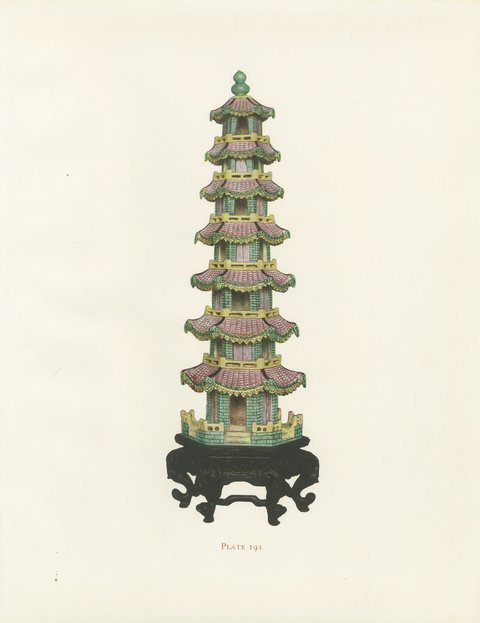
Chinese Porcelain and Hard Stones, by Edgar Gorer and J. F. Blacker, was published in London by Bernard Quaritch in 1911 in two volumes with two hundred and fifty four color plates, and these sheets are among them, from Volume II. The plates are color collotypes, a photographic process that reproduces continuous tone without a visible dot screen, which is why the glazes keep their depth on paper.
The book appeared at the height of the Edwardian passion for Chinese porcelain, when English and American collections were being formed at speed and a dealer's catalog could shape taste. R. L. Hobson of the British Museum attacked Gorer's attributions in print when the work appeared, and later scholarship has revised many attributions of this kind, which is part of what makes the volumes interesting to read now.
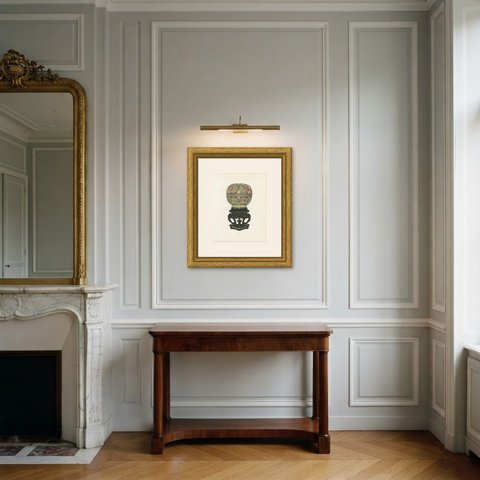
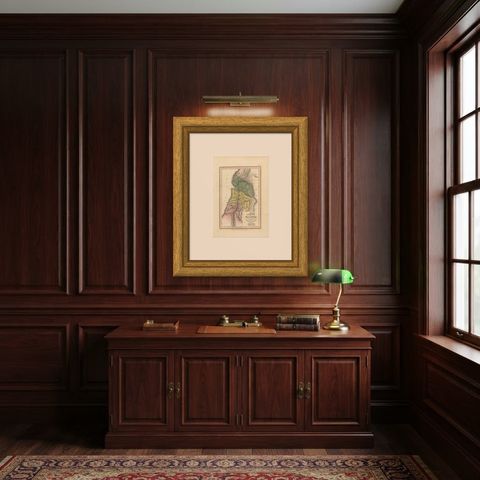
Framed simply in a dark wood molding with a generous cream mount, it holds a wall on its own and sits comfortably beside furniture of almost any period. The three sheets are the same size and were printed by the same hand, so they hang as one group.
These are original antique prints, not modern reproductions. They are three original sheets sold together as one lot, and the set is never split.
Even age toning throughout. Light foxing in the margins of all three sheets. Slight wear at the corners of all three sheets.