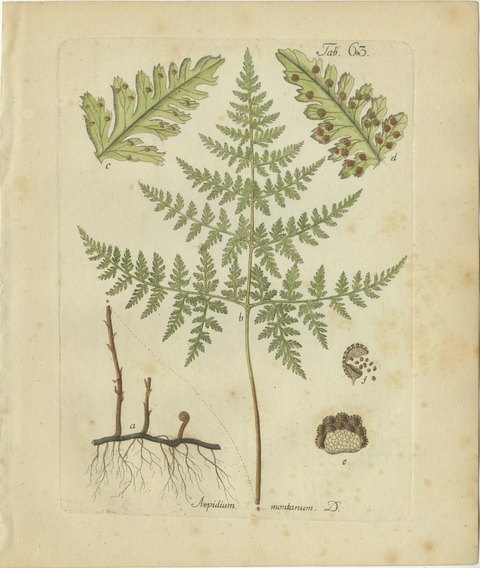
 The sheet, as you receive it
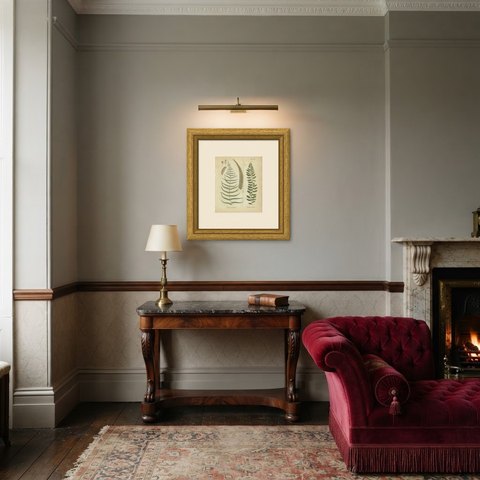
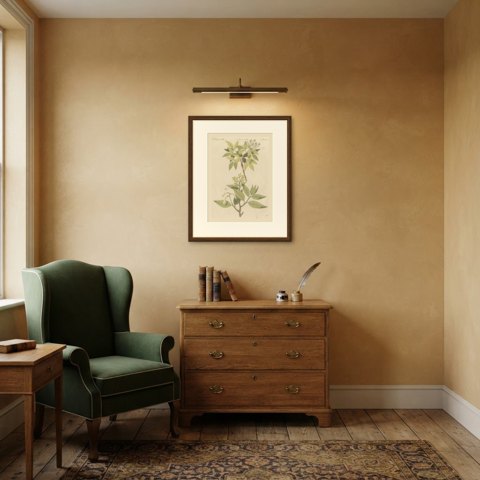
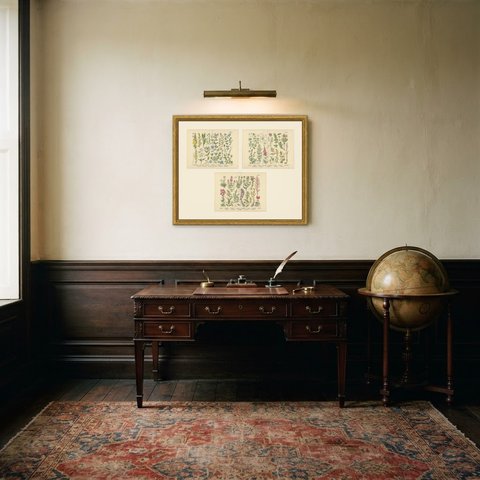
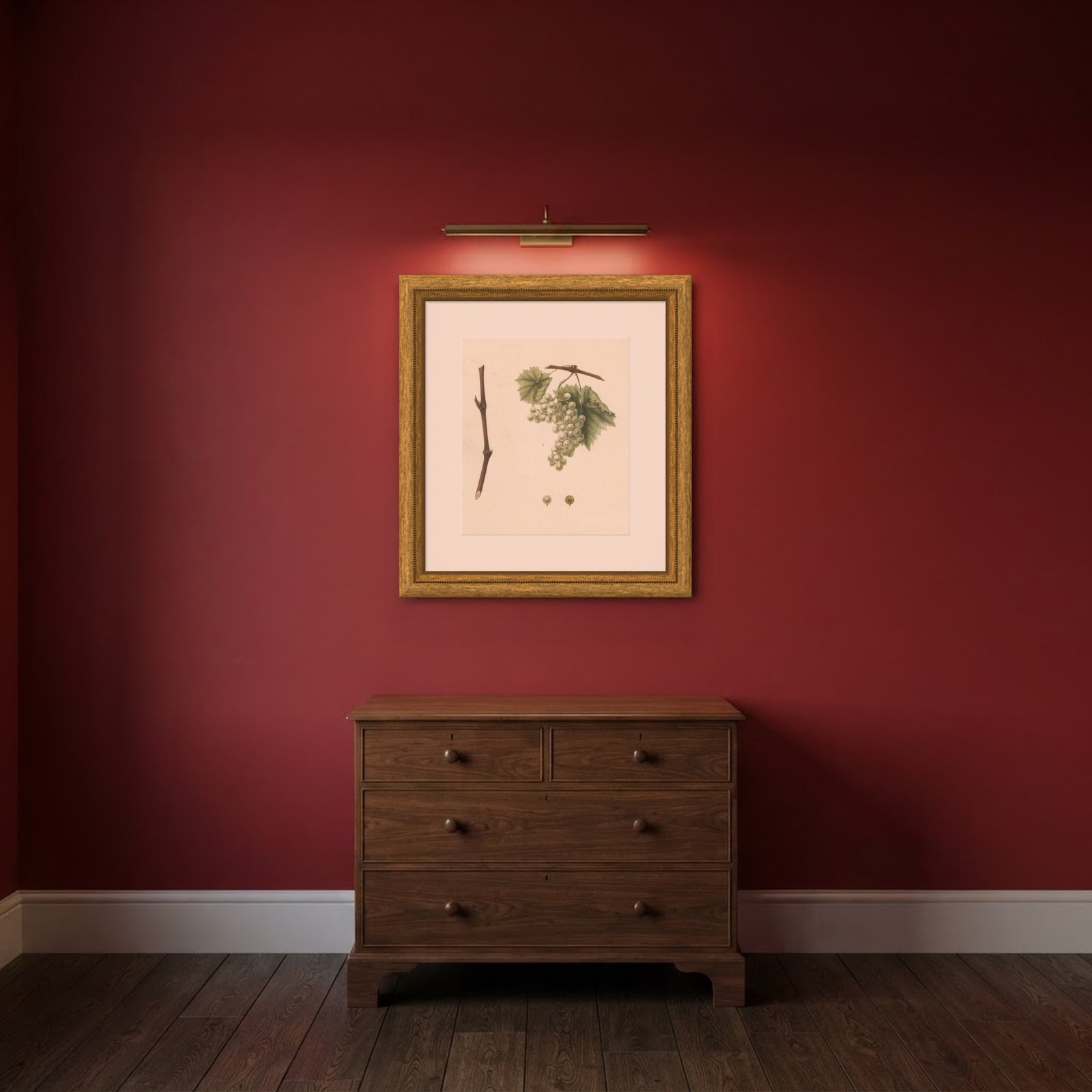 In the room
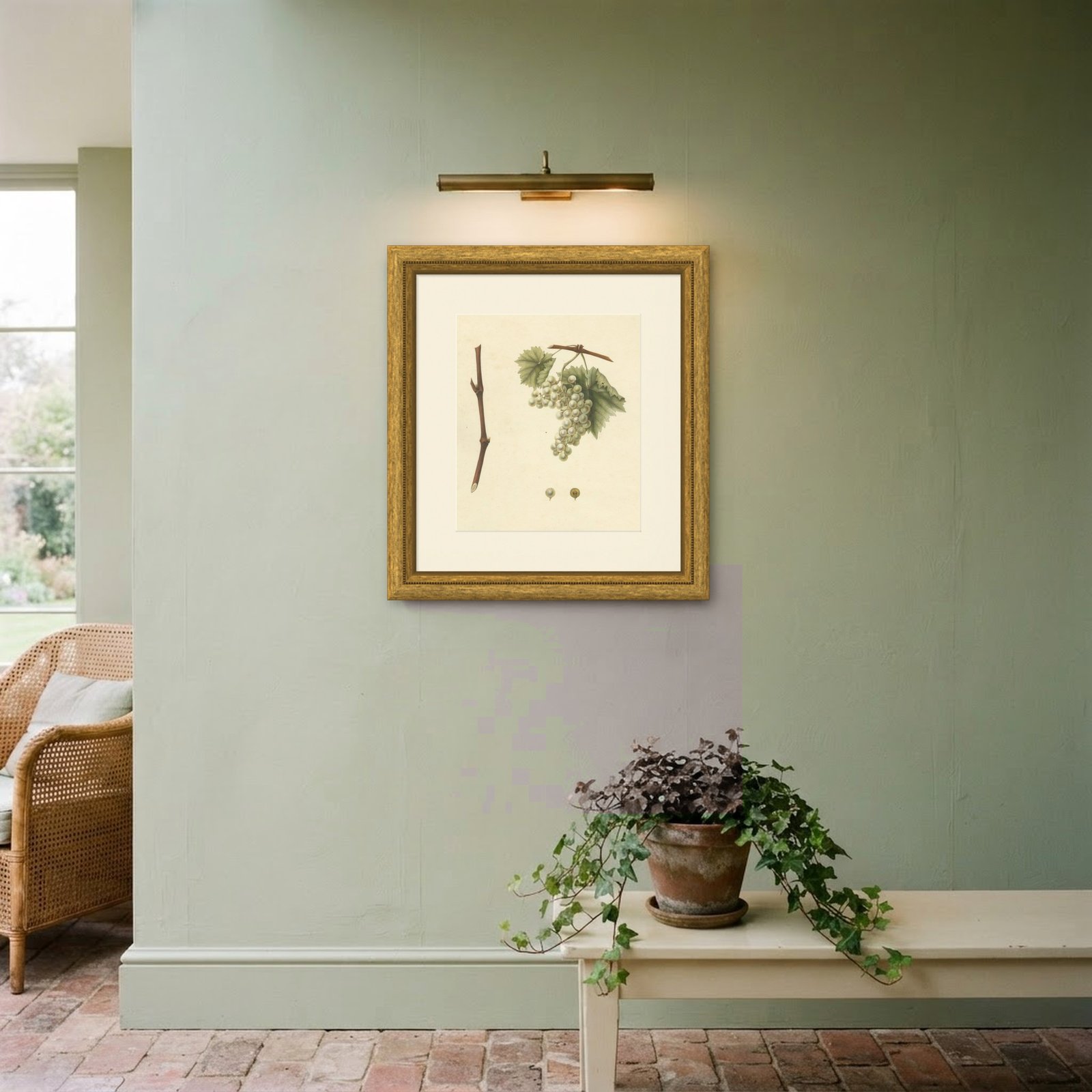
Interior designers: BarTrade members buy at their trade price. How it works
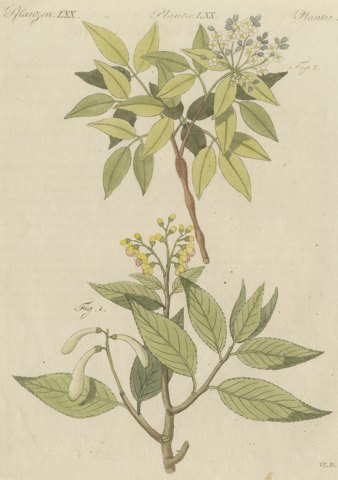
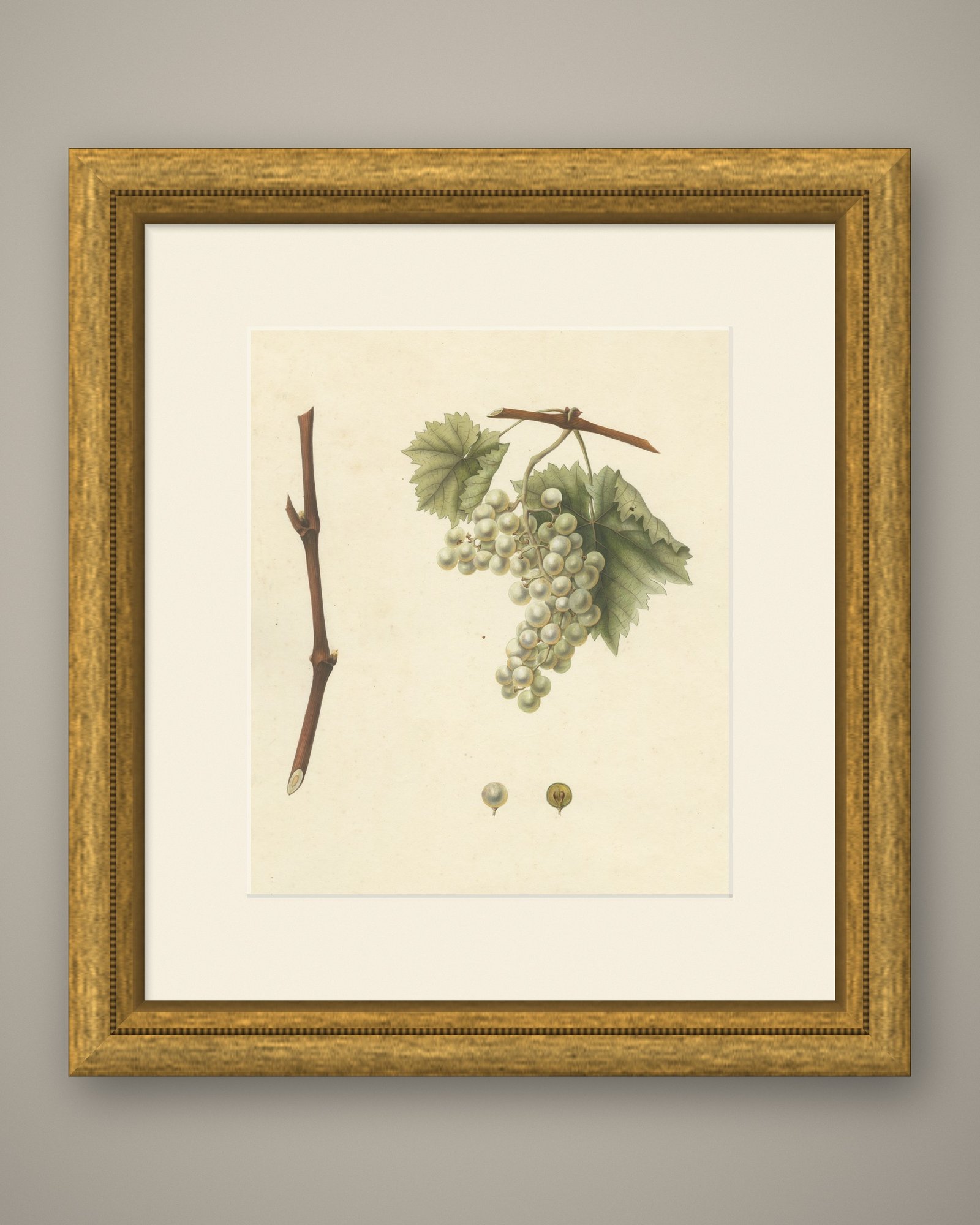
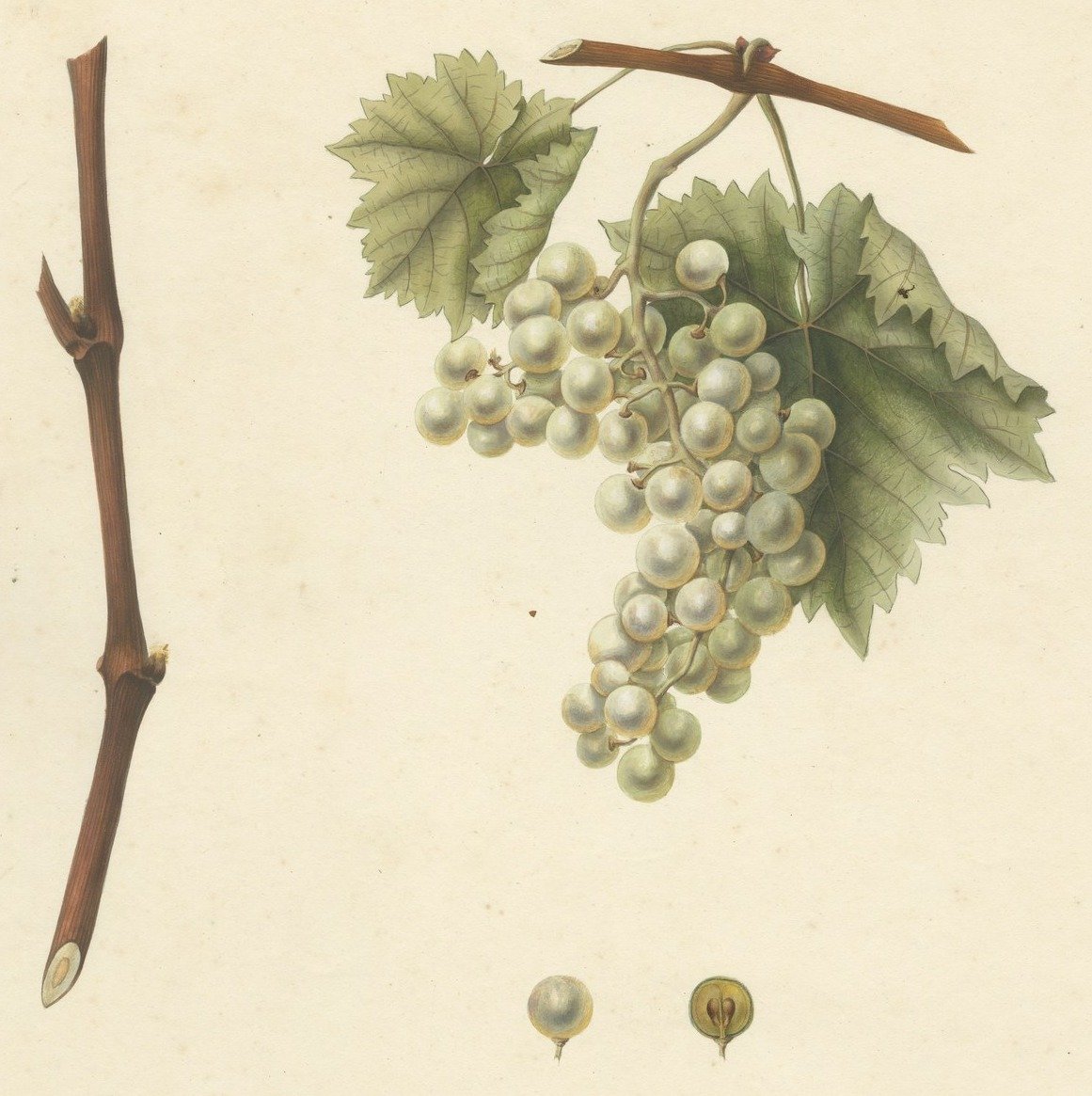
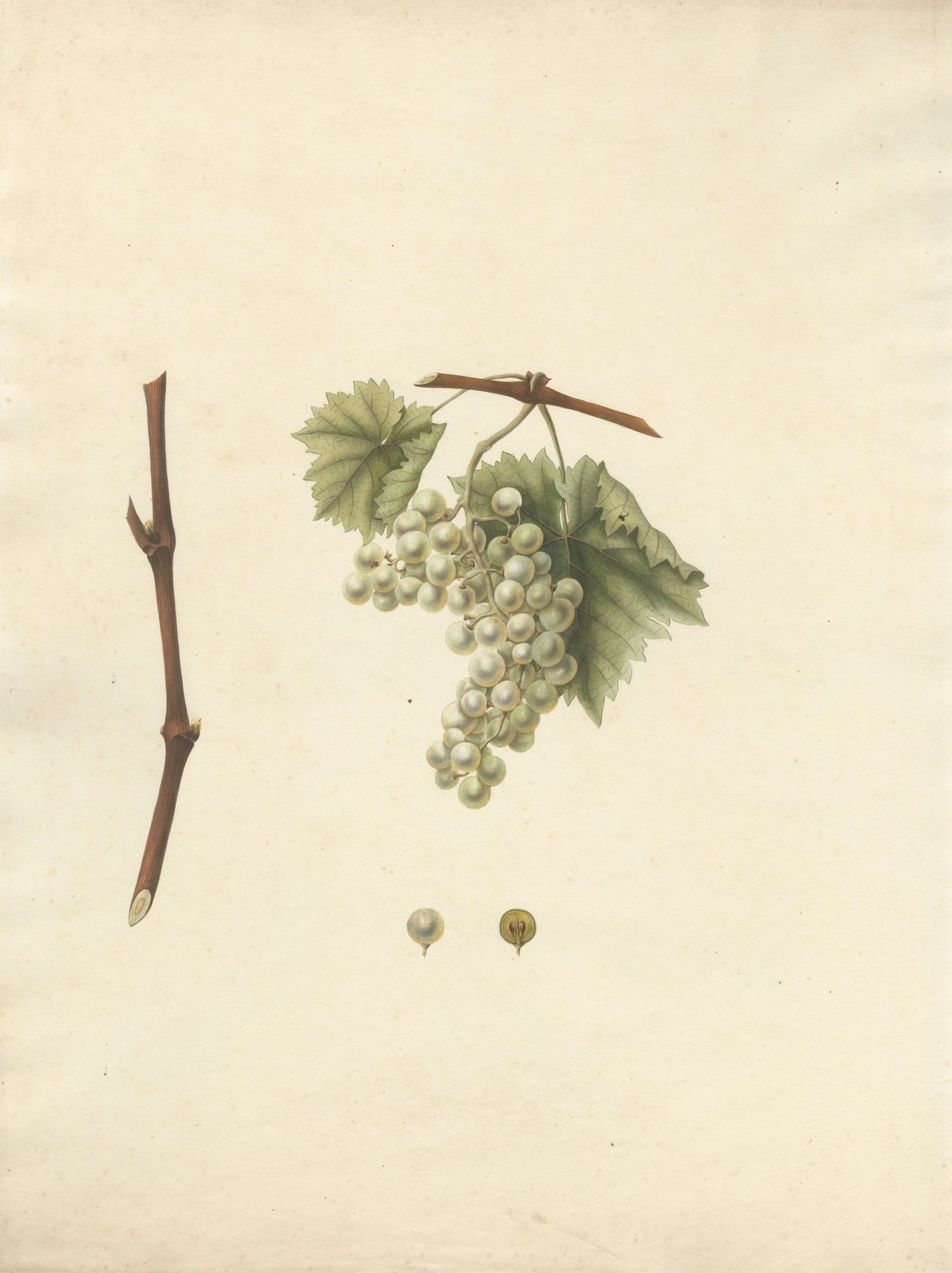
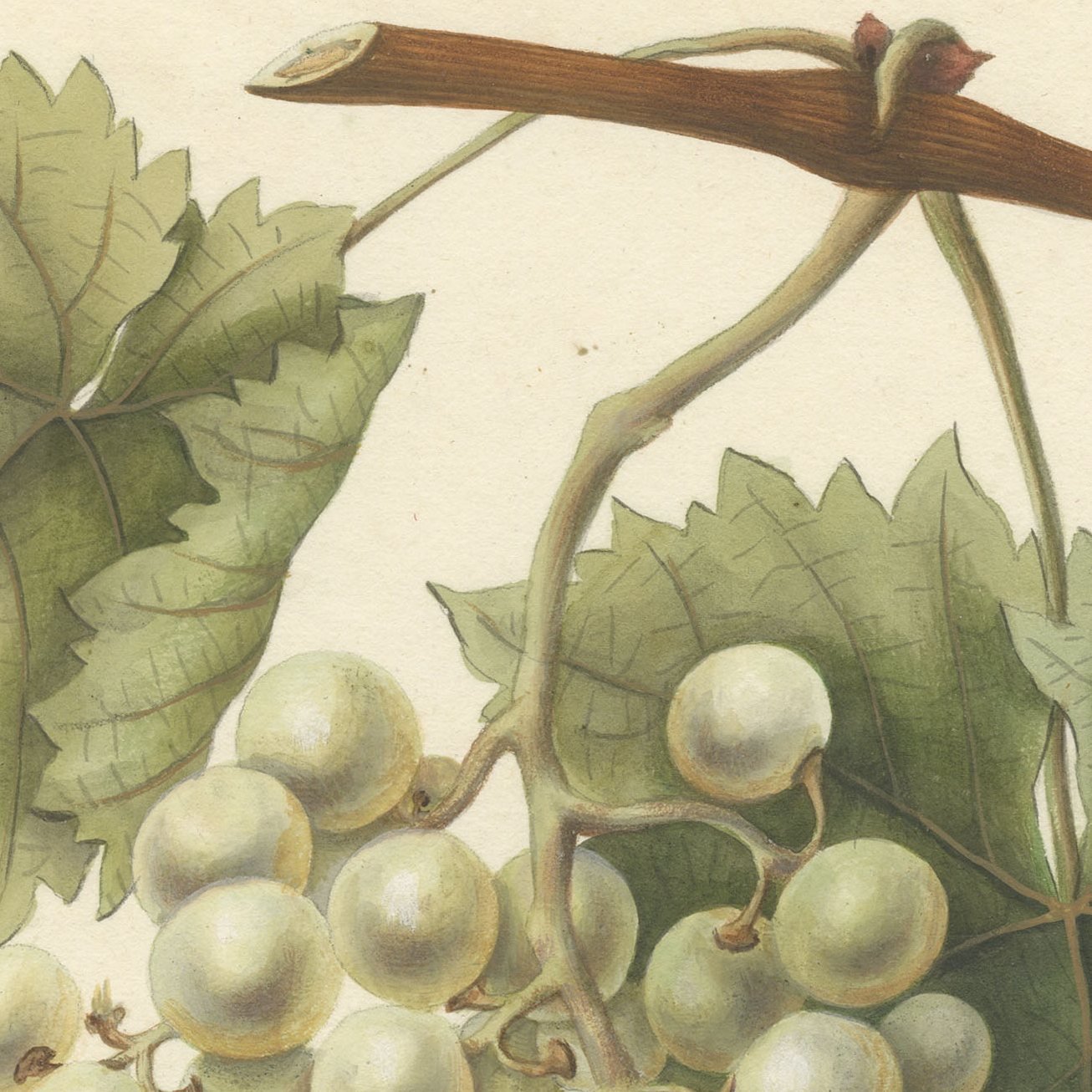
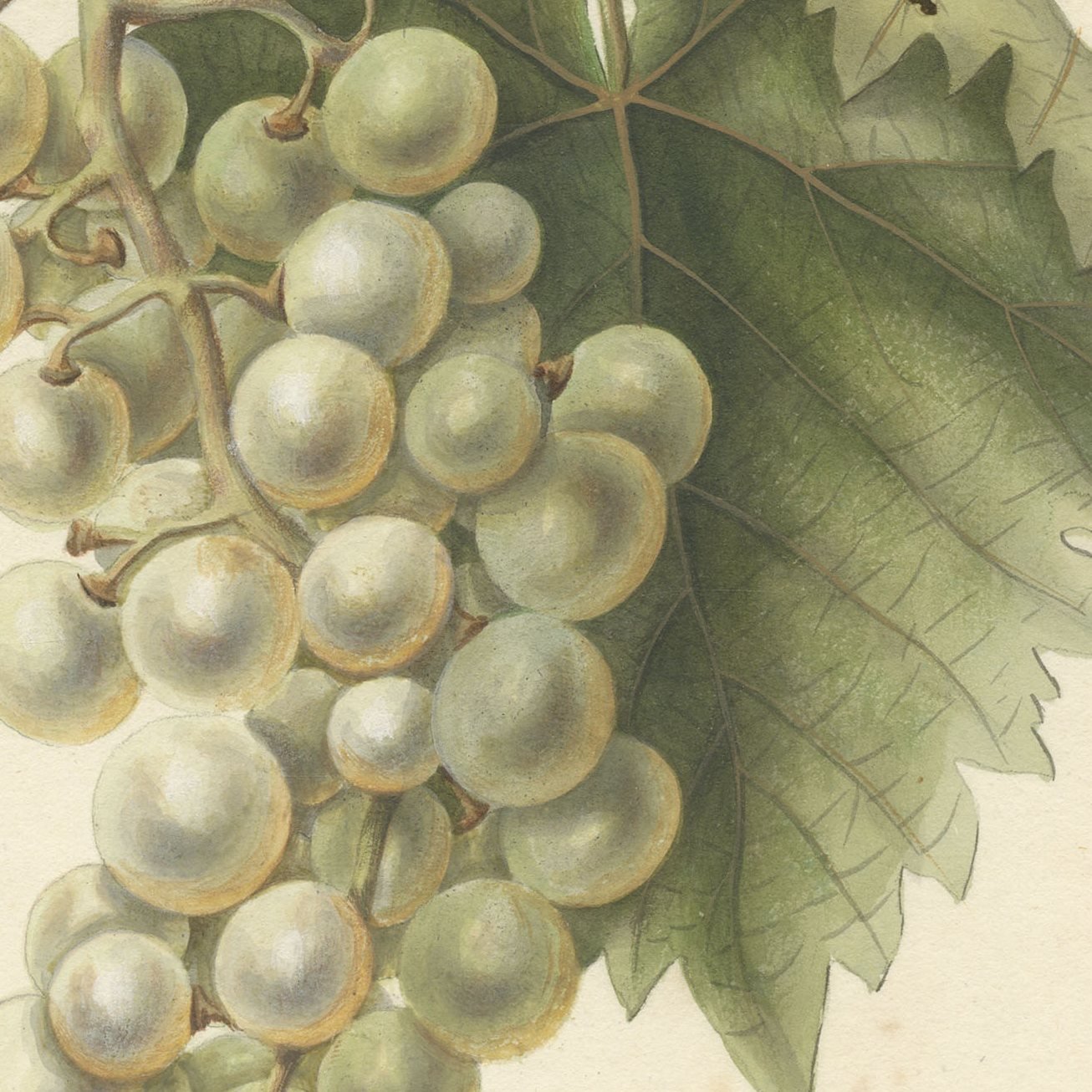
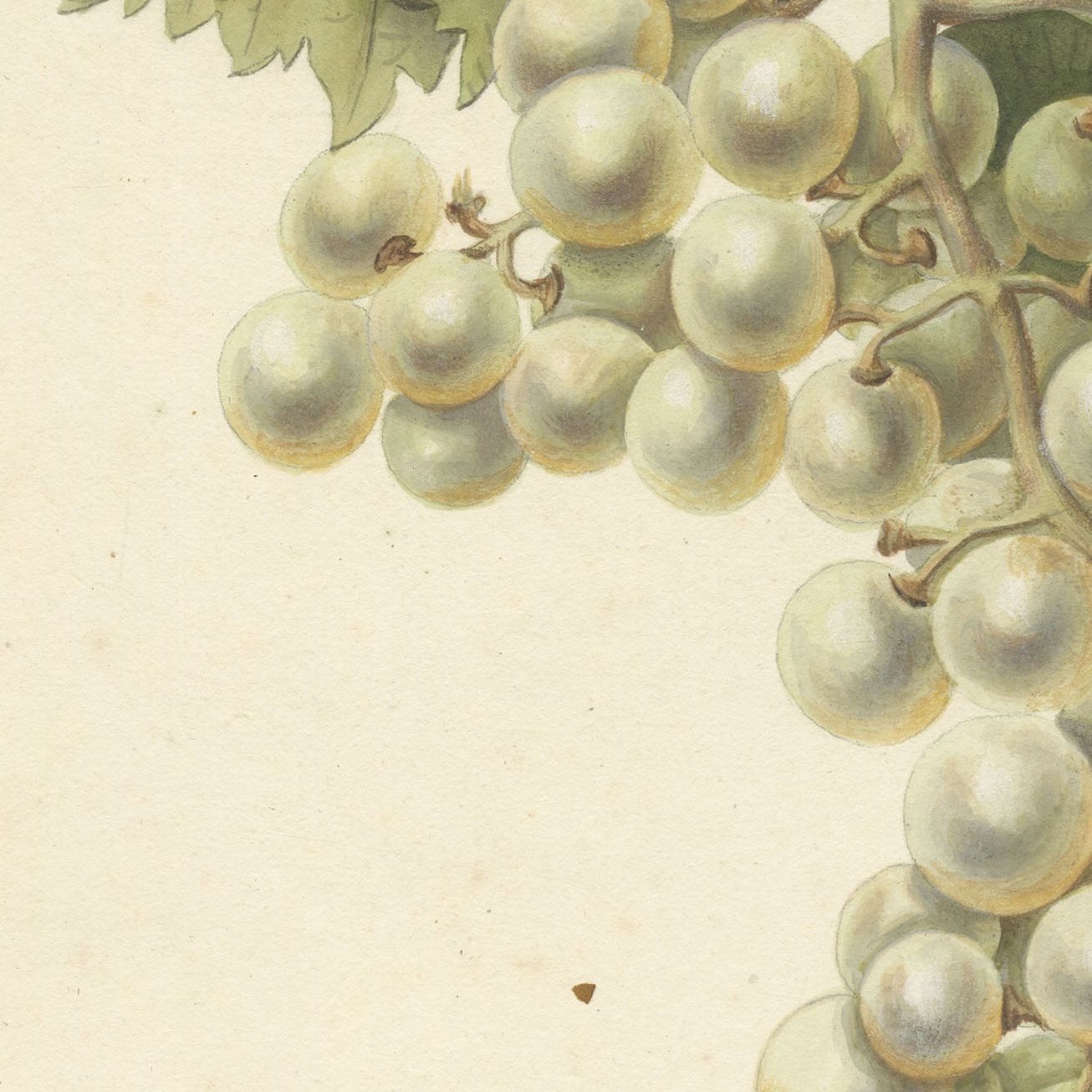
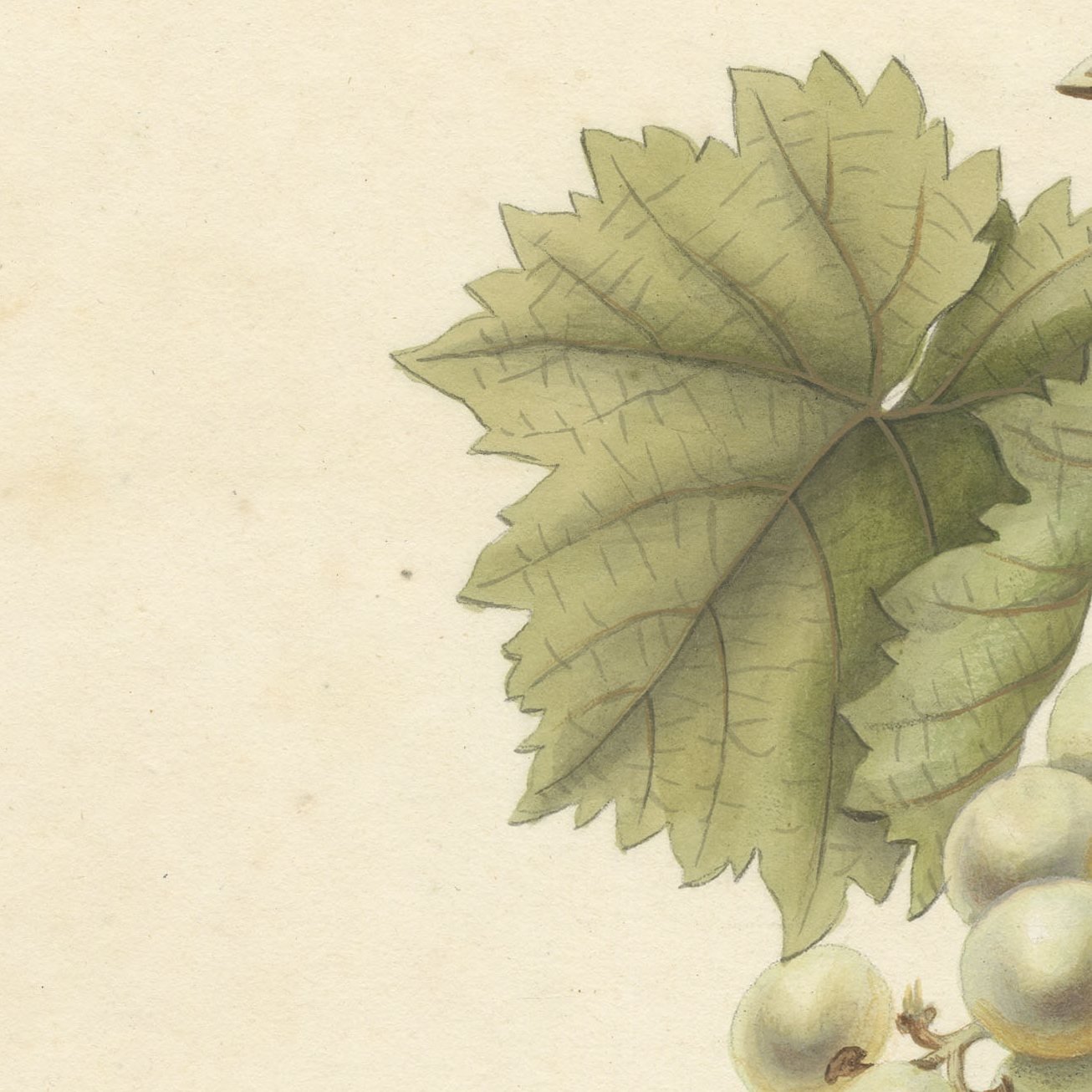
This antique stipple engraving, finished by hand in watercolor and body color, of a white grape vine comes from Le Raisin, ses especes et varietes, dessinees et colorees d'apres nature (The Grape: Its Species and Varieties, Drawn and Colored from Nature), the vine work of the German botanist and artist Johann Simon von Kerner (1755 to 1830), made at Stuttgart between about 1803 and 1815. The sheet shows a loose cluster of translucent pale green white grapes with a soft bloom on the ripening skins, hanging from a short shoot between sharply serrated leaves whose lobes and veins are drawn with care. To the left a separate woody cane shows the placement of its nodes and the texture of the wood, and at the base two single berries are painted apart, one whole and one cut in section to show the seed.
Le Raisin was conceived as a complete painted record of the vine varieties grown in Germany and beyond, and the sheets are both scientific documents and works of art. Kerner gives every variety the same elements, the cluster, the foliage, the cane and the dissected berry, because leaf shape, lobing, vein pattern and berry form were how growers identified a vine before modern ampelography existed. The sheets date from about 1811, and the work is believed to have been completed in only two copies.
The medium is a stipple engraving on wove paper watermarked C and I Honig, finished by hand in watercolor and heightened in places with body color: the pale skins of the grapes and the light falling across them are built up in wash, which is what gives the fruit its luminous, almost pearly look. With clean margins and a wide cream ground, the sheet makes a fine statement piece for a wine cellar, a dining room, a kitchen or a library, and it hangs well beside the darker grapes of the same series.
Even age toning. Handling soiling along the bottom and top edges. Scattered foxing in the margin. Slight wear at the bottom right and top left corners. Minor edge wear, shallow nicks along the bottom, left and right.
This is an original antique print, not a modern reproduction. This item is sold unframed.