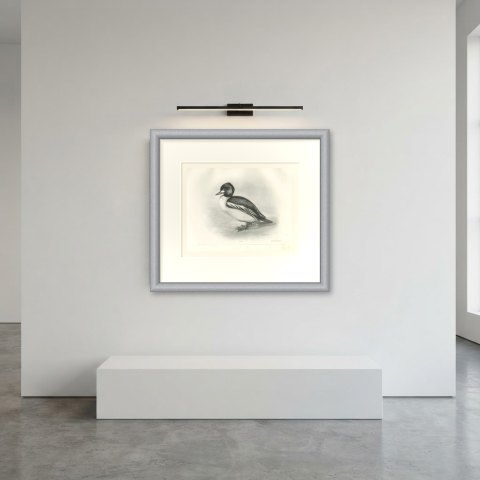
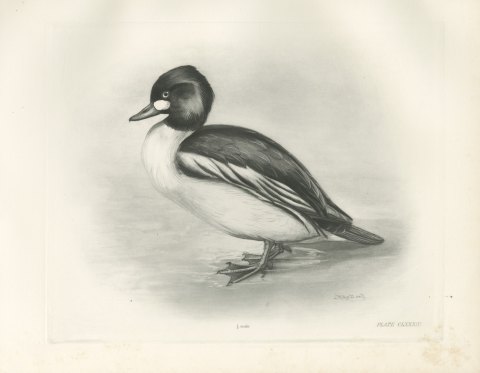
 The sheet, as you receive it
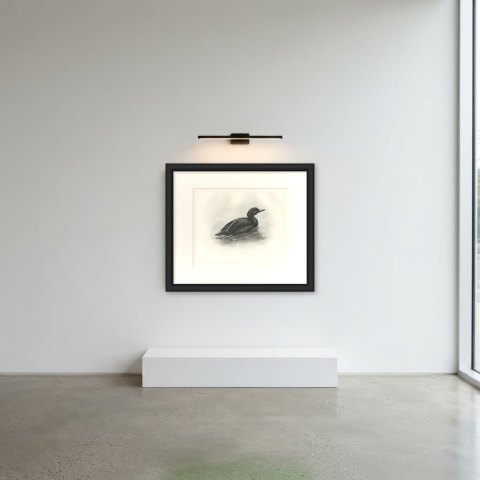
 In the room
Interior designers: BarTrade members buy at their trade price. How it works
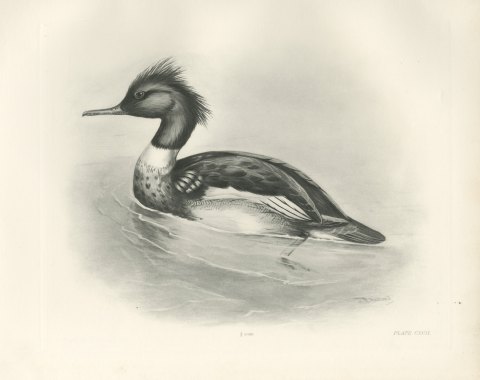
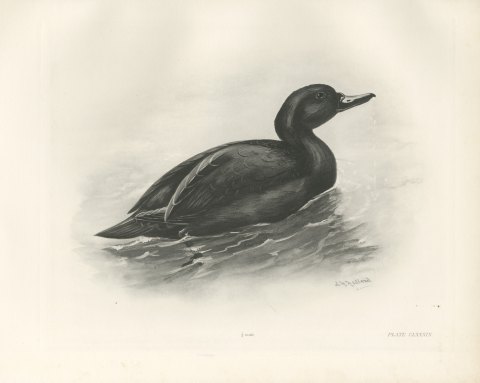
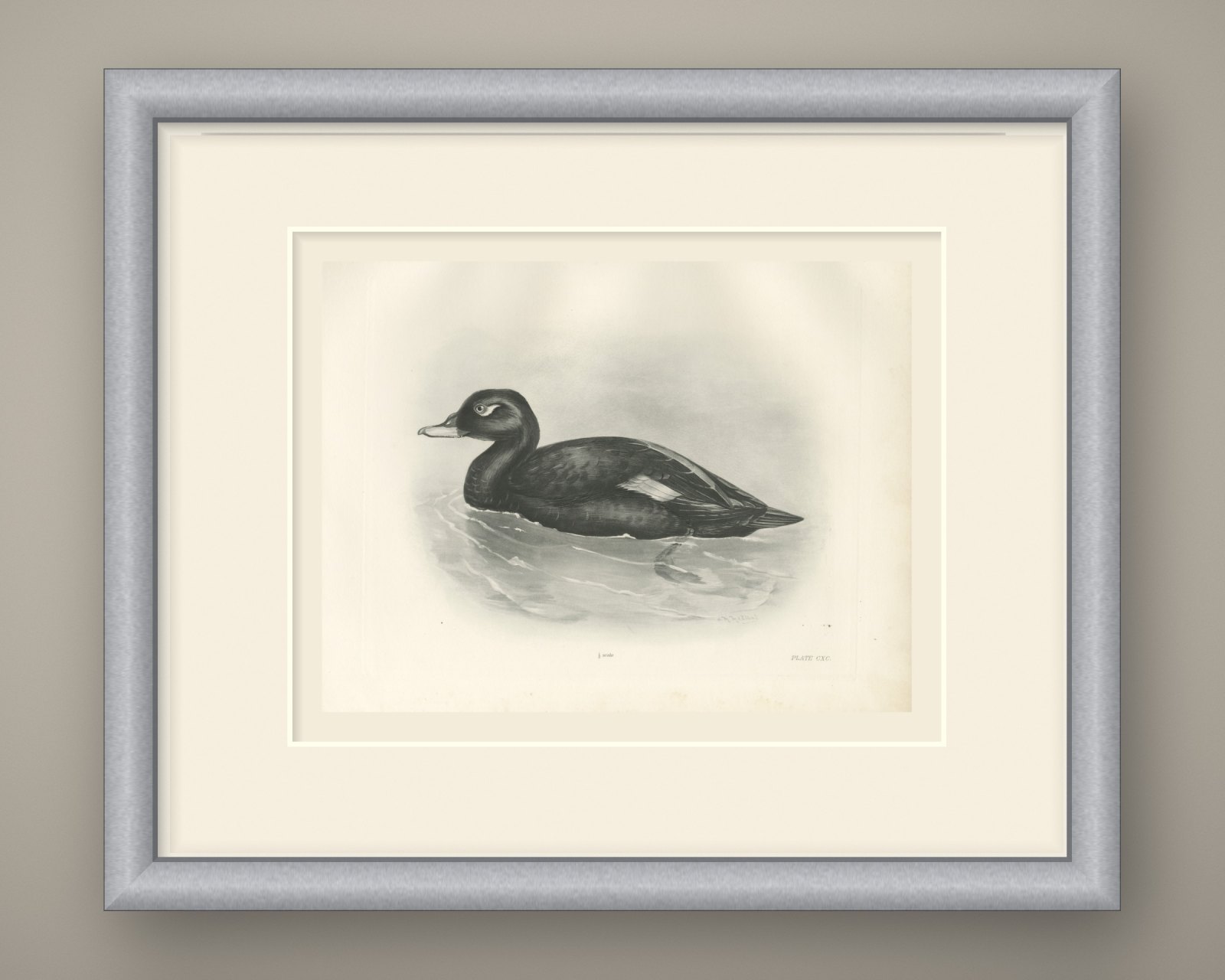
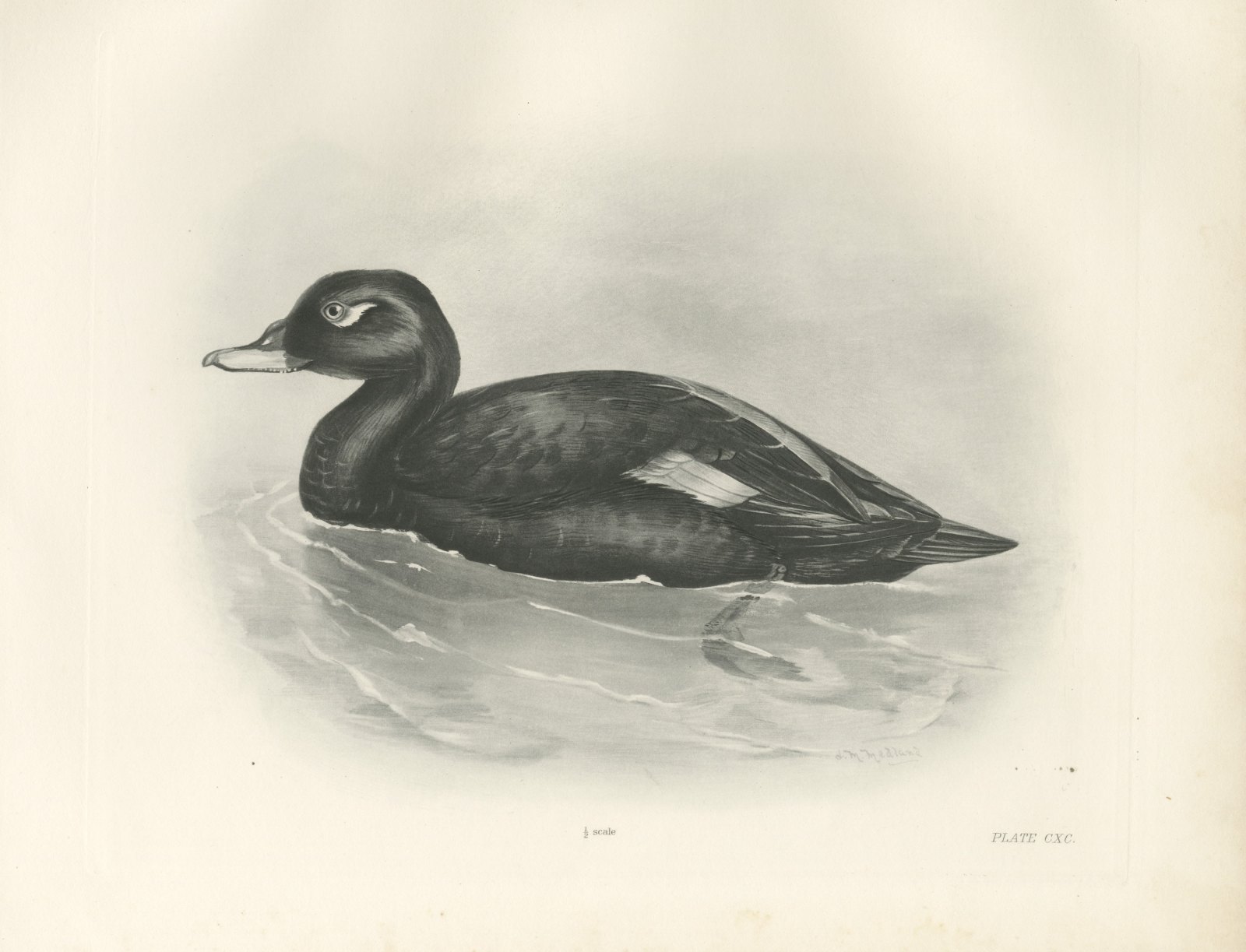
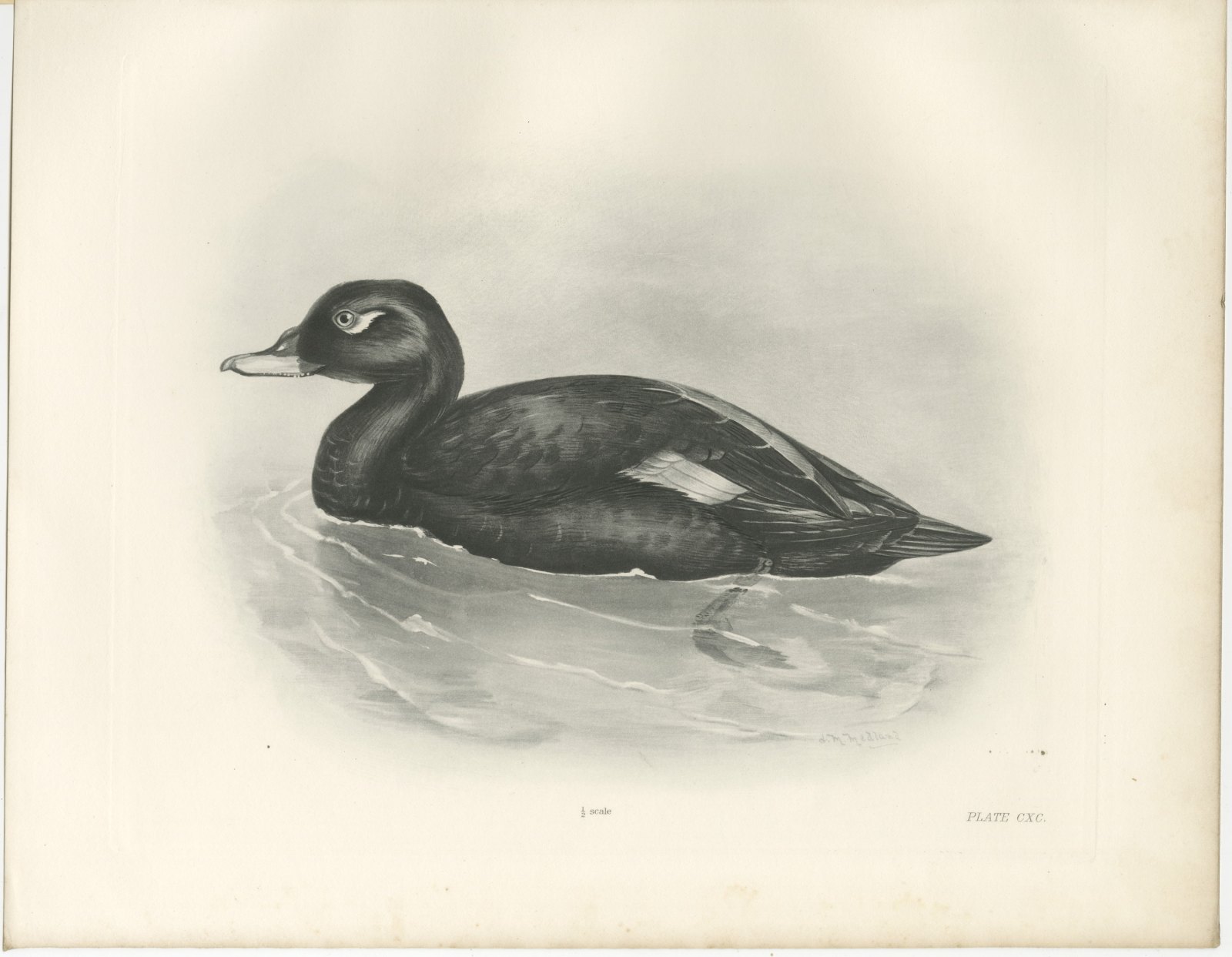
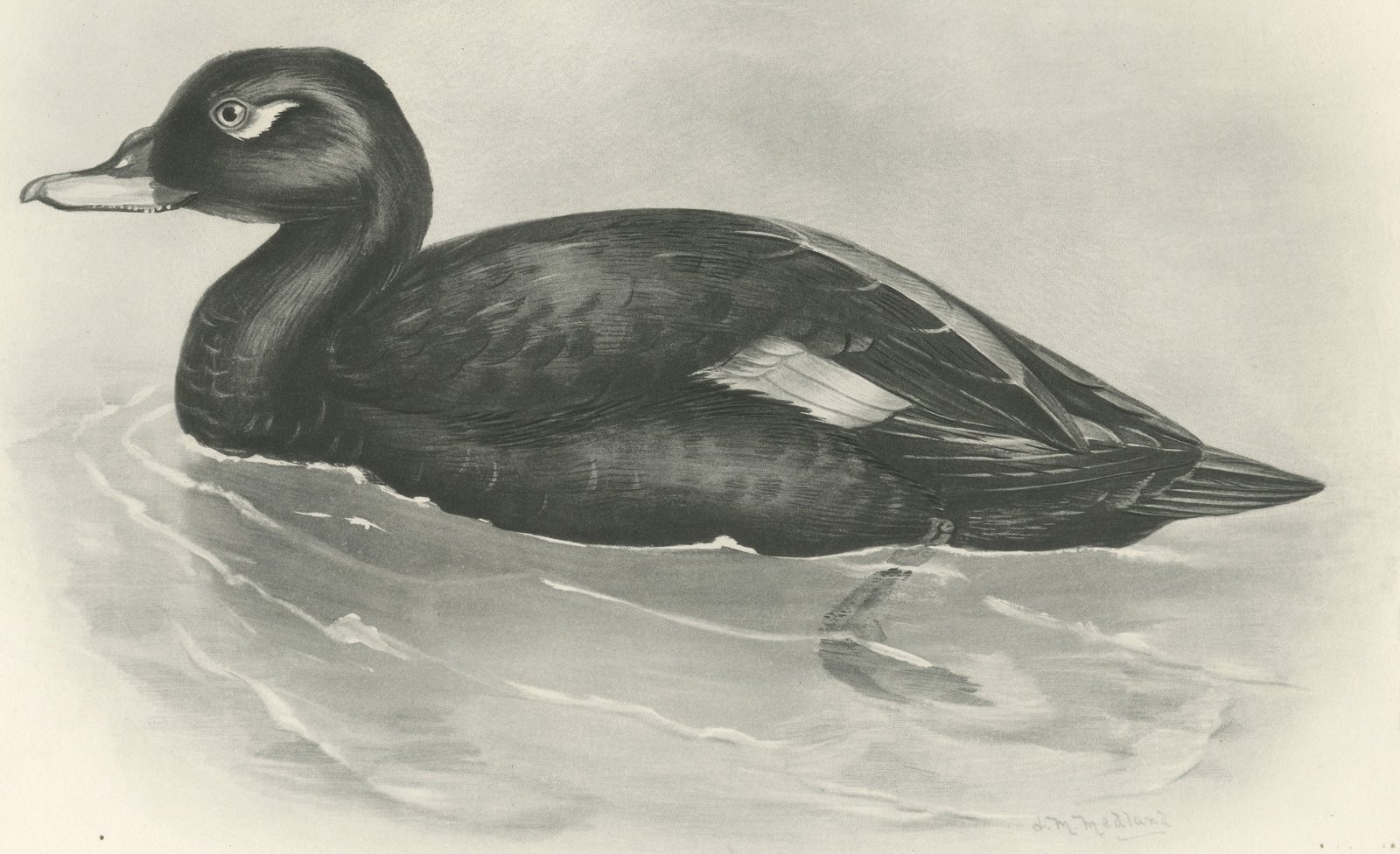
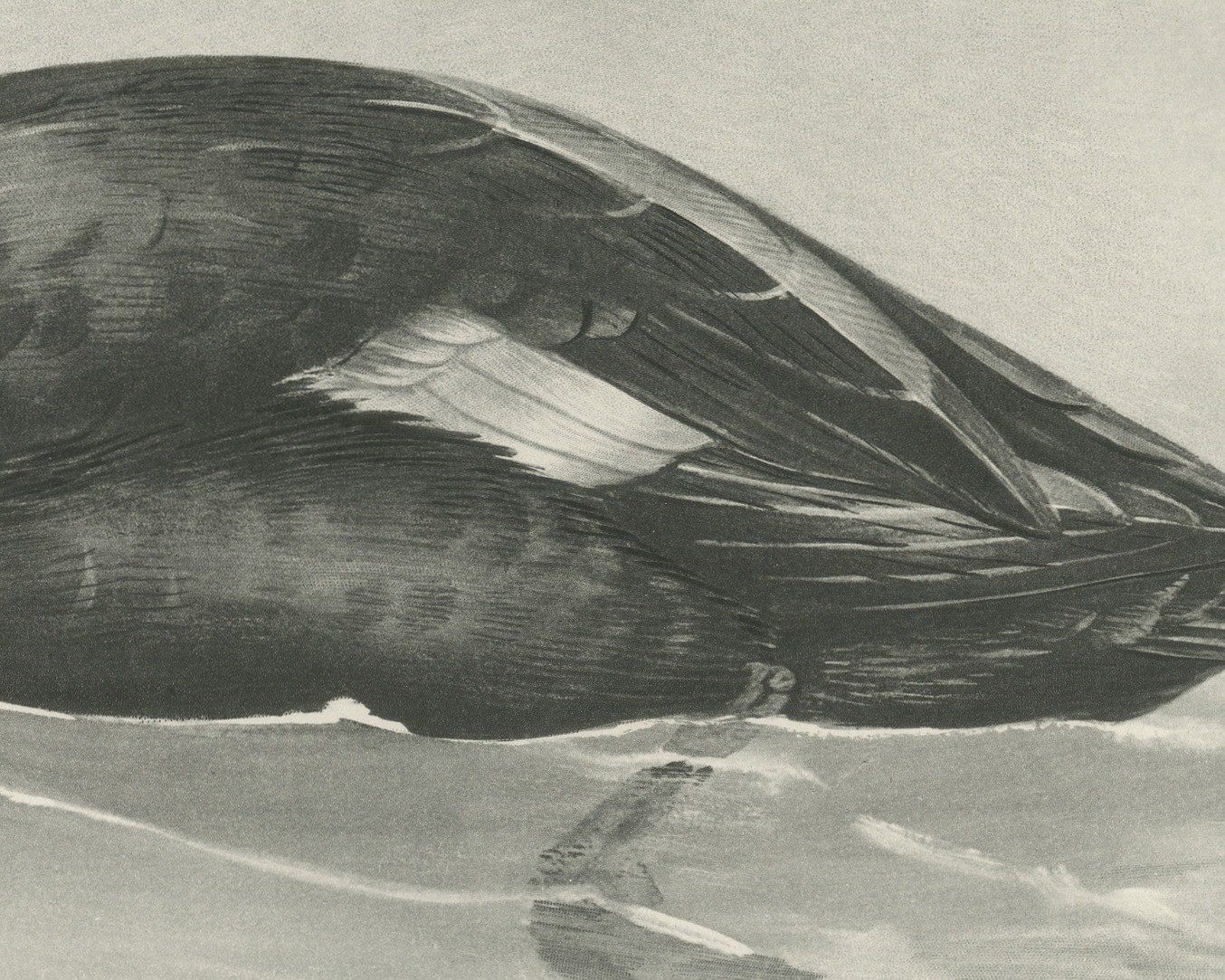
This is an original antique photogravure, printed in black and gray without added color, showing a drake Velvet Scoter swimming to the left on rippled water. The plumage is black, relieved by a small white crescent behind the pale eye and a clean white patch on the folded wing. The bill is pale, slightly swollen at its base, and its edge shows the fine ridges of the mandible. One foot is visible below the surface.
No name of the bird is printed on the plate. The lettering below the image reads "1/2 scale" at the center and "PLATE CXC." at the right, the fraction giving the size of the drawing against the living bird, and the faint signature "L. M. Medland" appears in the water at lower right. The white wing patch and the white mark at the eye on an otherwise black sea duck identify the drake Velvet Scoter.
Charles Stonham's The Birds of the British Islands was published in London by E. Grant Richards in five volumes between 1906 and 1911, and this plate belongs to the third volume, which carries the account through the cormorants, herons, geese, swans and ducks. All of the plates are after drawings by Lilian M. Medland, who later married the ornithologist Tom Iredale and moved to Australia. Her drawings were reproduced in photogravure, a photomechanical intaglio process that keeps the soft gradations of tone of the original drawing, and the printed surface sits within a plate mark.
Hung beside the Common Scoter plate, the two drakes show clearly how the white wing patch separates the species.
This is an original antique print, not a modern reproduction. This item is sold unframed.