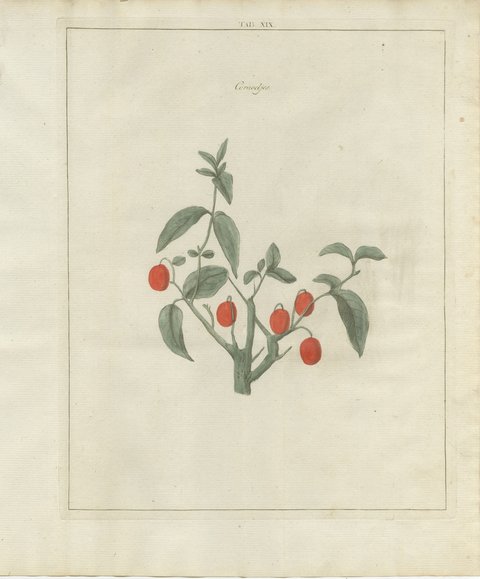
 The sheet, as you receive it
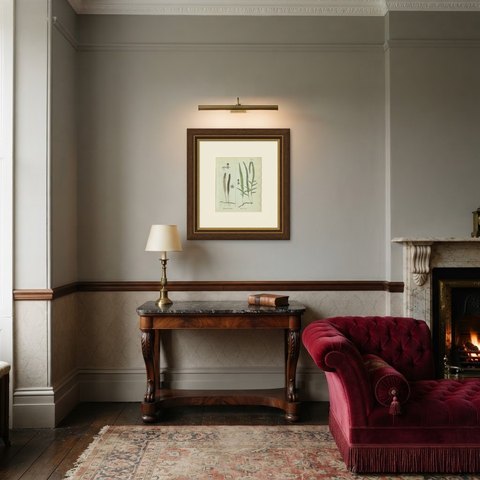
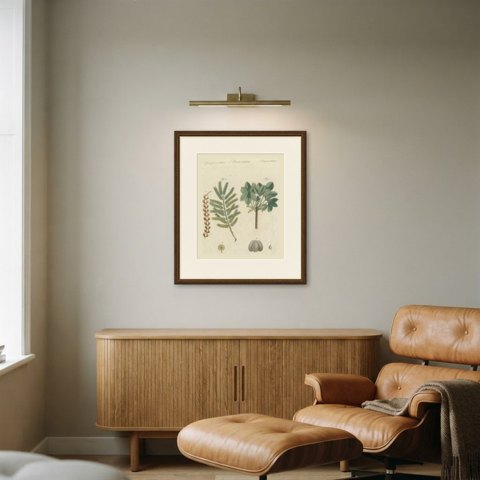
 In the room




Interior designers: BarTrade members buy at their trade price. How it works
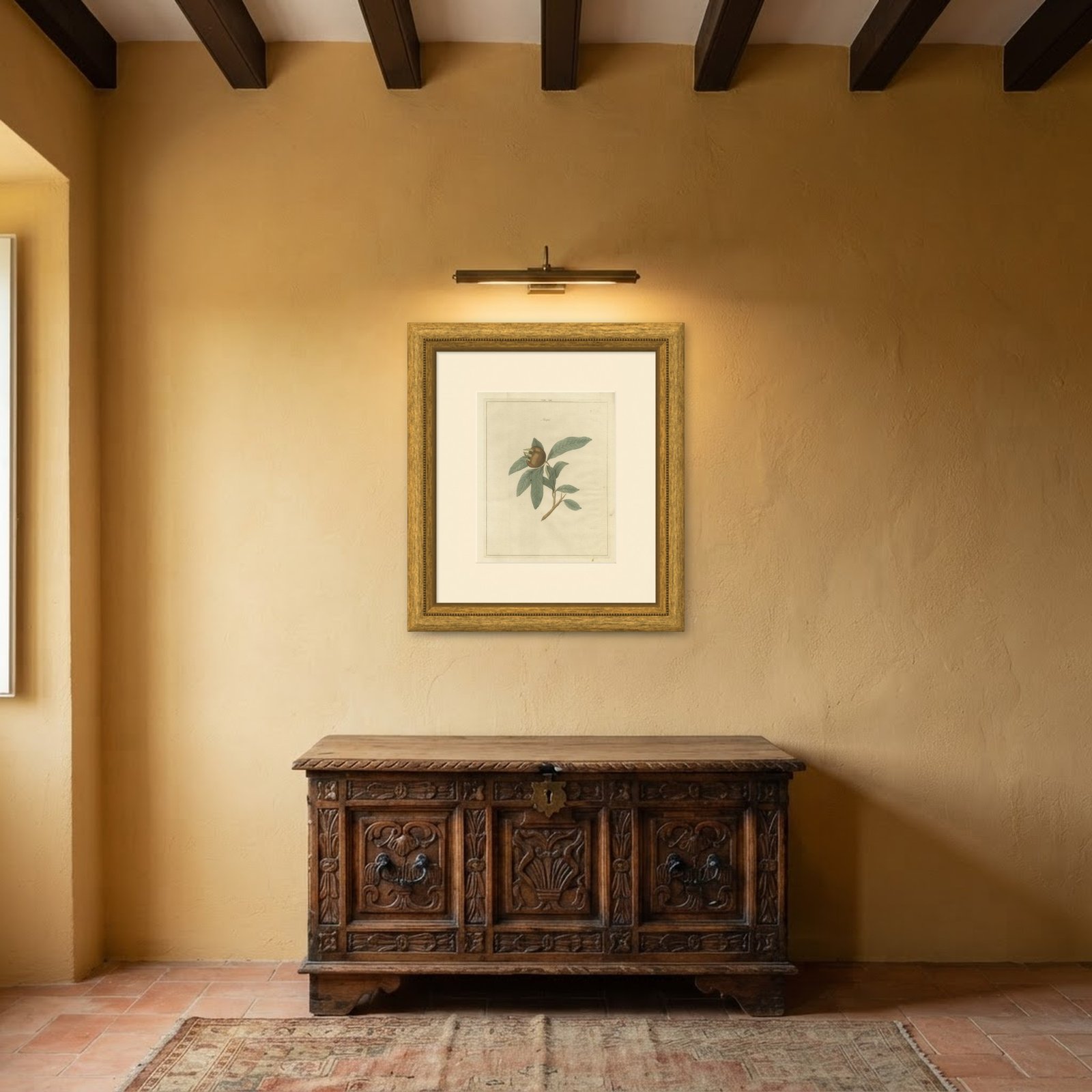
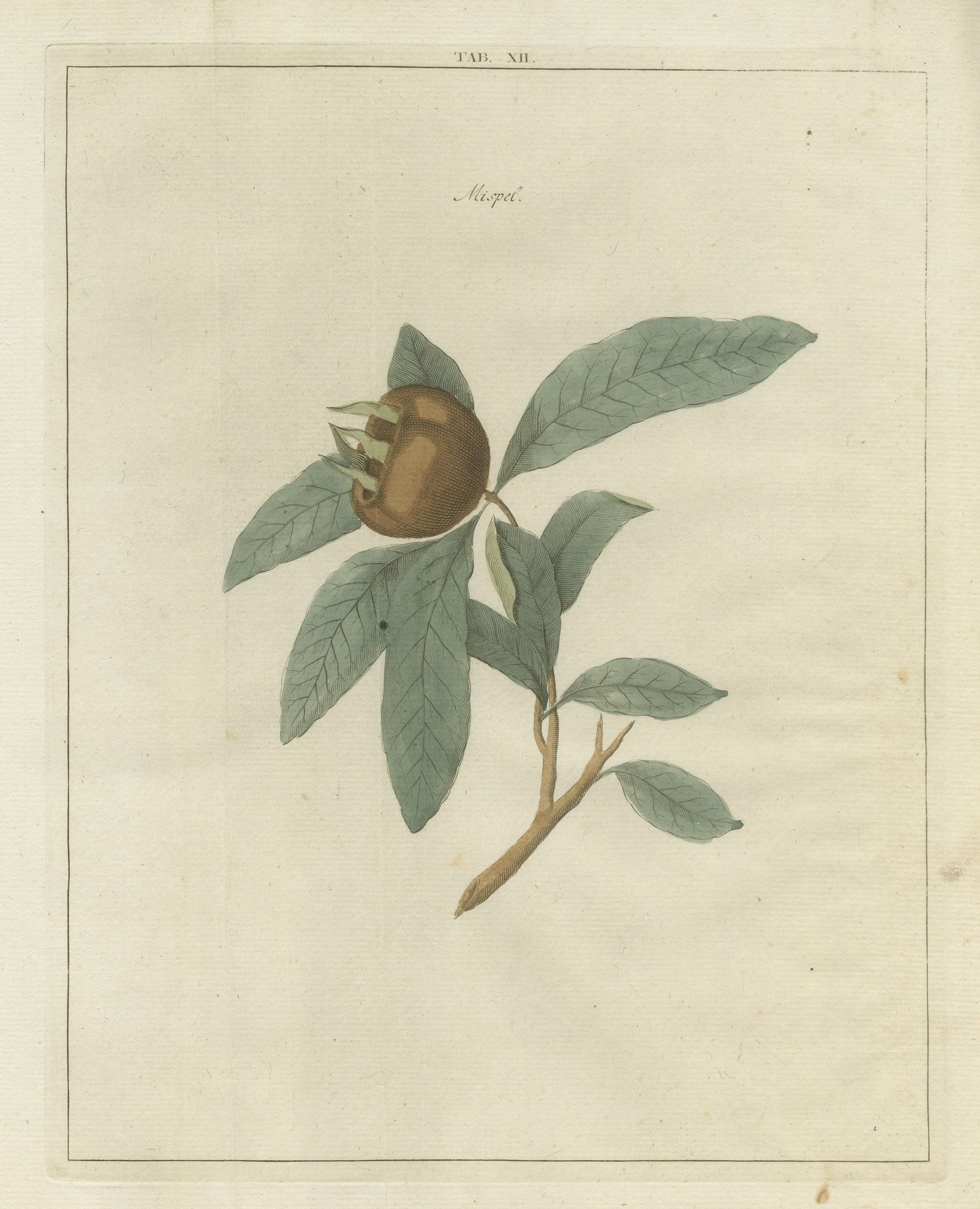
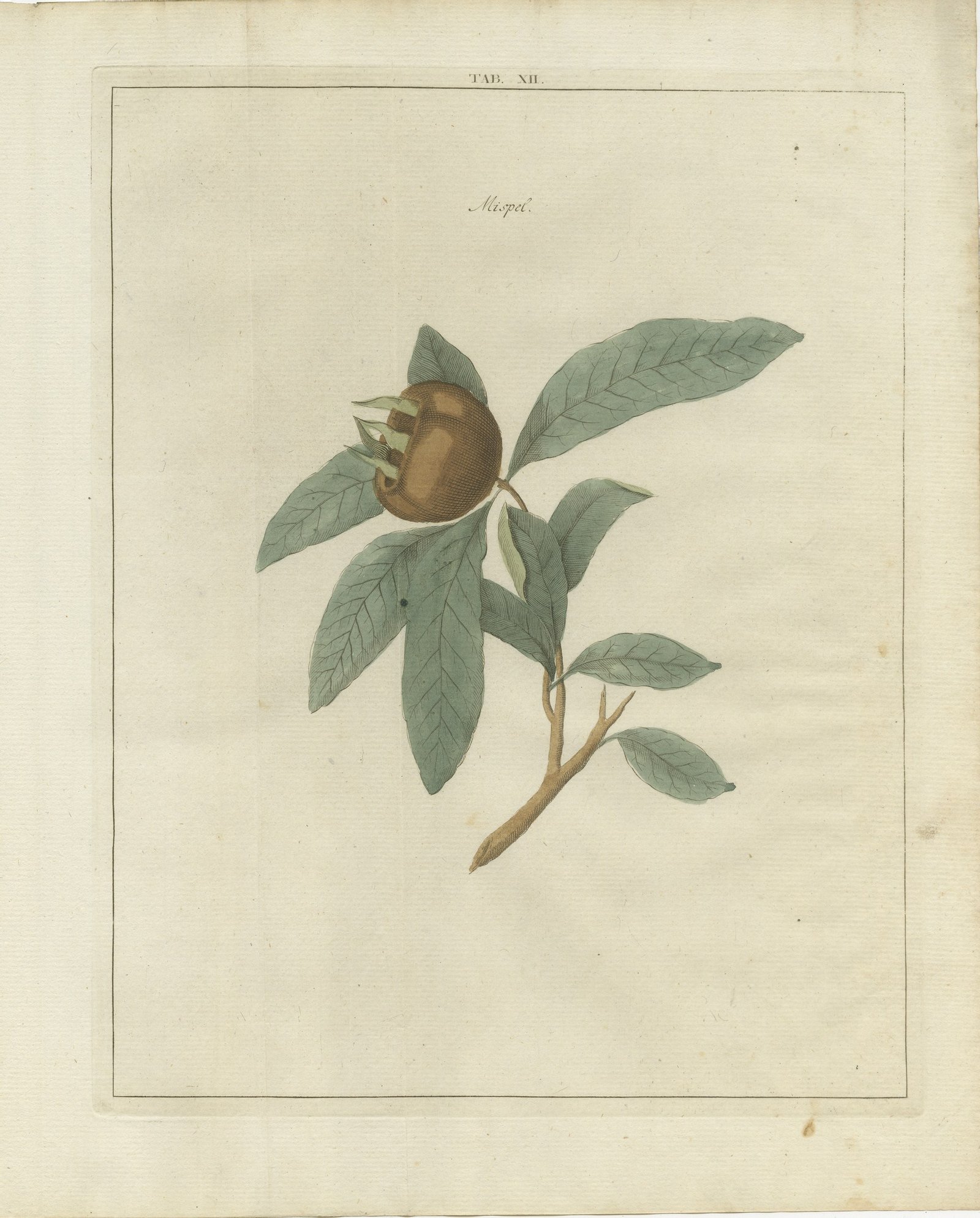
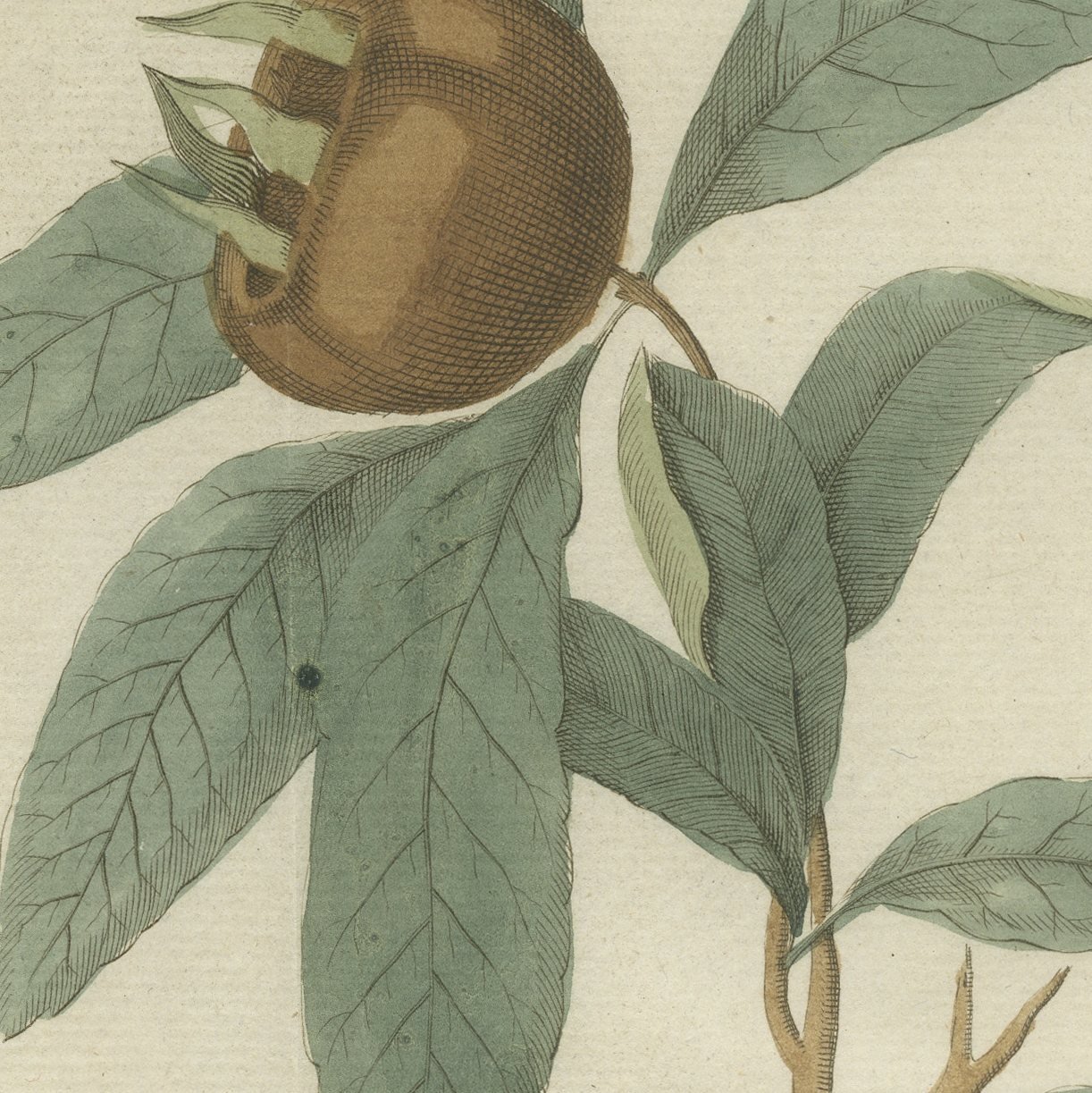
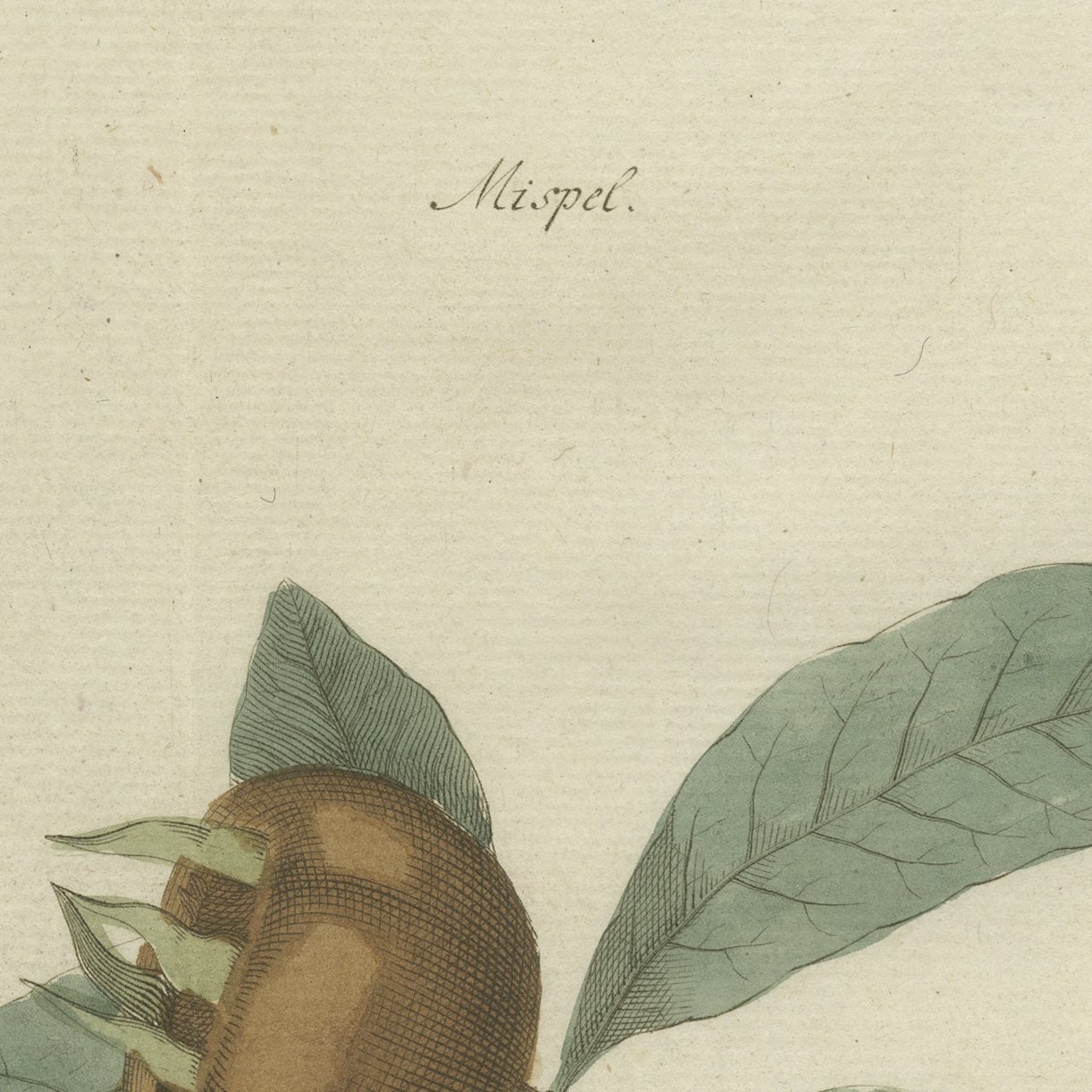
An original hand-colored copper engraving of a medlar, one fruit on a leafy twig, lettered in engraved script with the Dutch name "Mispel." and numbered "TAB. XII" at the head of the sheet. The medlar is an odd and memorable fruit, round and flattened with a wide open crown of dried sepals standing out from its end like a little ruff, and the engraver has drawn that crown with real attention. The original watercolor gives the fruit a russet brown over a yellow ground, flecked and uneven as medlar skin truly is, while the long narrow leaves behind it are a dull green turning bronze at the edges. The washes vary within the fruit and overlap the engraved outline in places, the signature of coloring applied by hand.
Knoop's pomology appeared at Amsterdam and Dordrecht in 1790 from the presses of Allart, Holtrop, de Leeuw and Krap, carrying a preface by Johannes Florentius Martinet. The plates had first been cut for the Leeuwarden editions of 1758 and 1763 and were printed again here from the same coppers. Johann Hermann Knoop drew the fruit from life in the stadtholder's garden at Leeuwarden. The technique is copper engraving with original hand coloring, and the brushwork crosses the engraved outline in places, which is the plain evidence that the color was laid on by hand and not printed.
The medlar is the fruit nobody eats fresh: it is picked hard in late autumn and then kept until frost and time soften it, a process called bletting, after which the flesh turns sweet, dark and spiced, and is eaten with a spoon or made into a jelly. That strangeness made the medlar a fixture of old European gardens and a favorite of anyone who likes a fruit with a story, and it has made this one of the more sought-after sheets in Knoop's third series. No engraver is lettered on the plate. Hung in a kitchen or a garden room beside other forgotten fruits, it reliably starts a conversation.
Light uneven toning, browner towards the edges. Marked handling soiling along the bottom, right and top edges. Scattered foxing in the margin. All four corners complete.
This is an original antique plate, not a modern reproduction. This item is sold unframed.