 The sheet, as you receive it
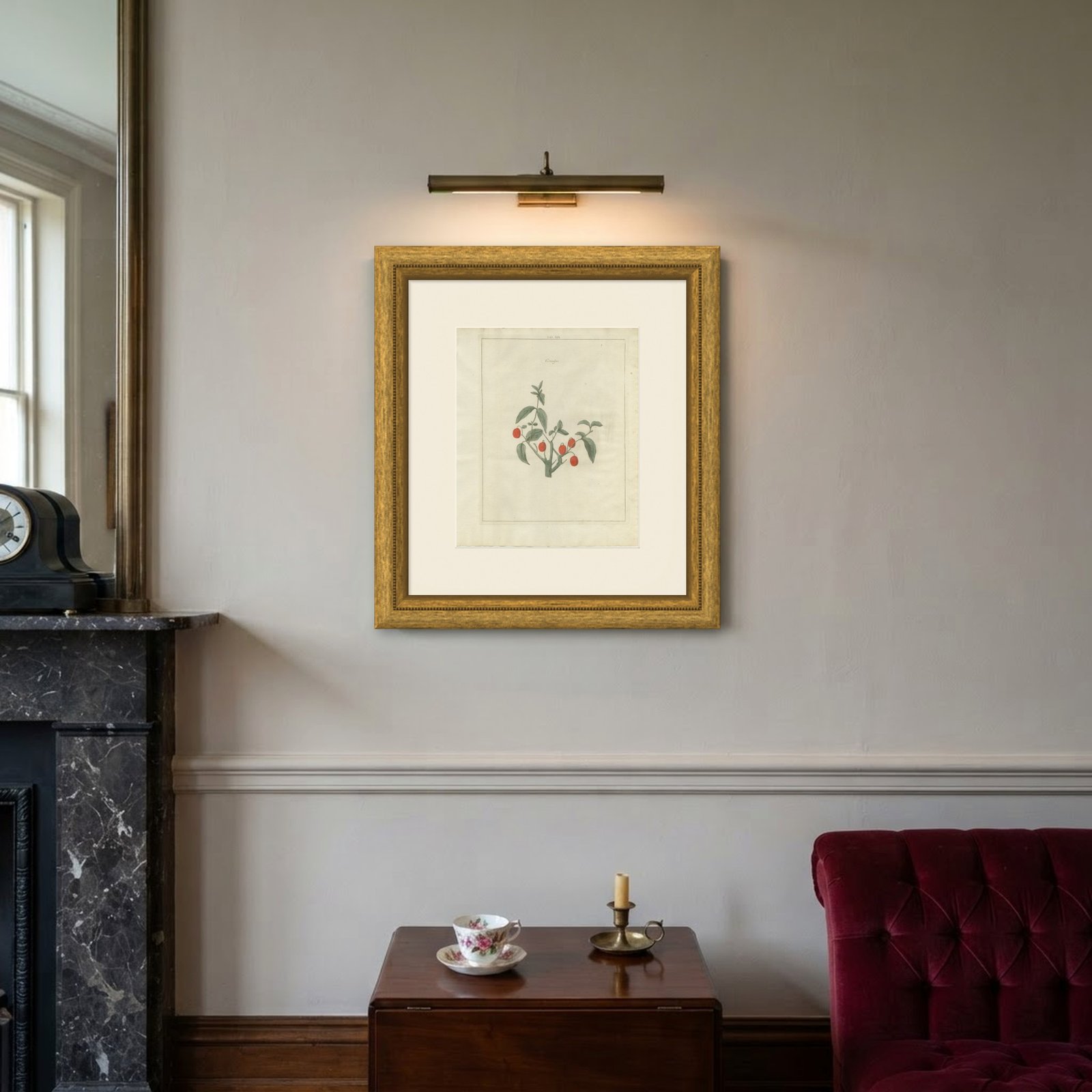
 In the room



Interior designers: BarTrade members buy at their trade price. How it works
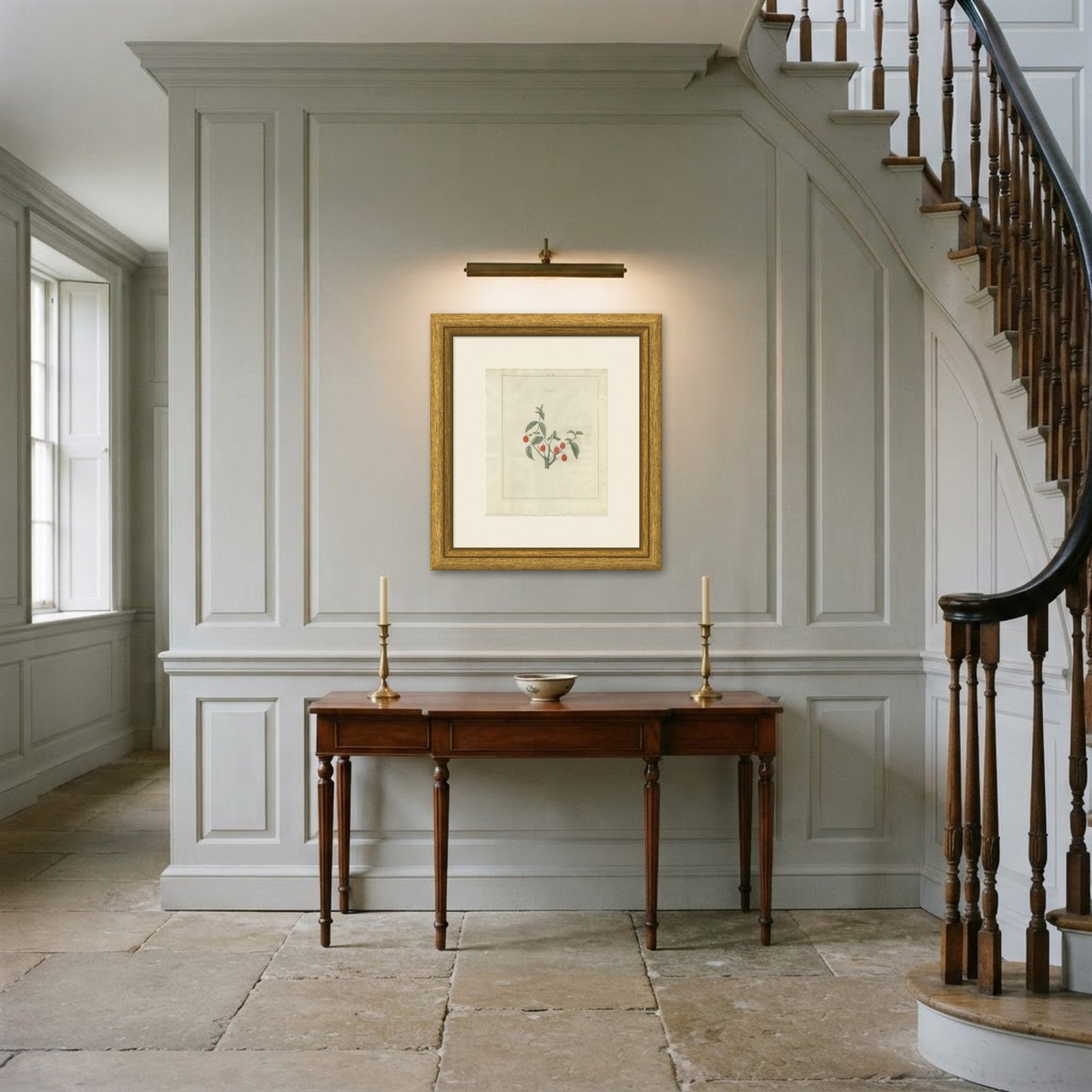
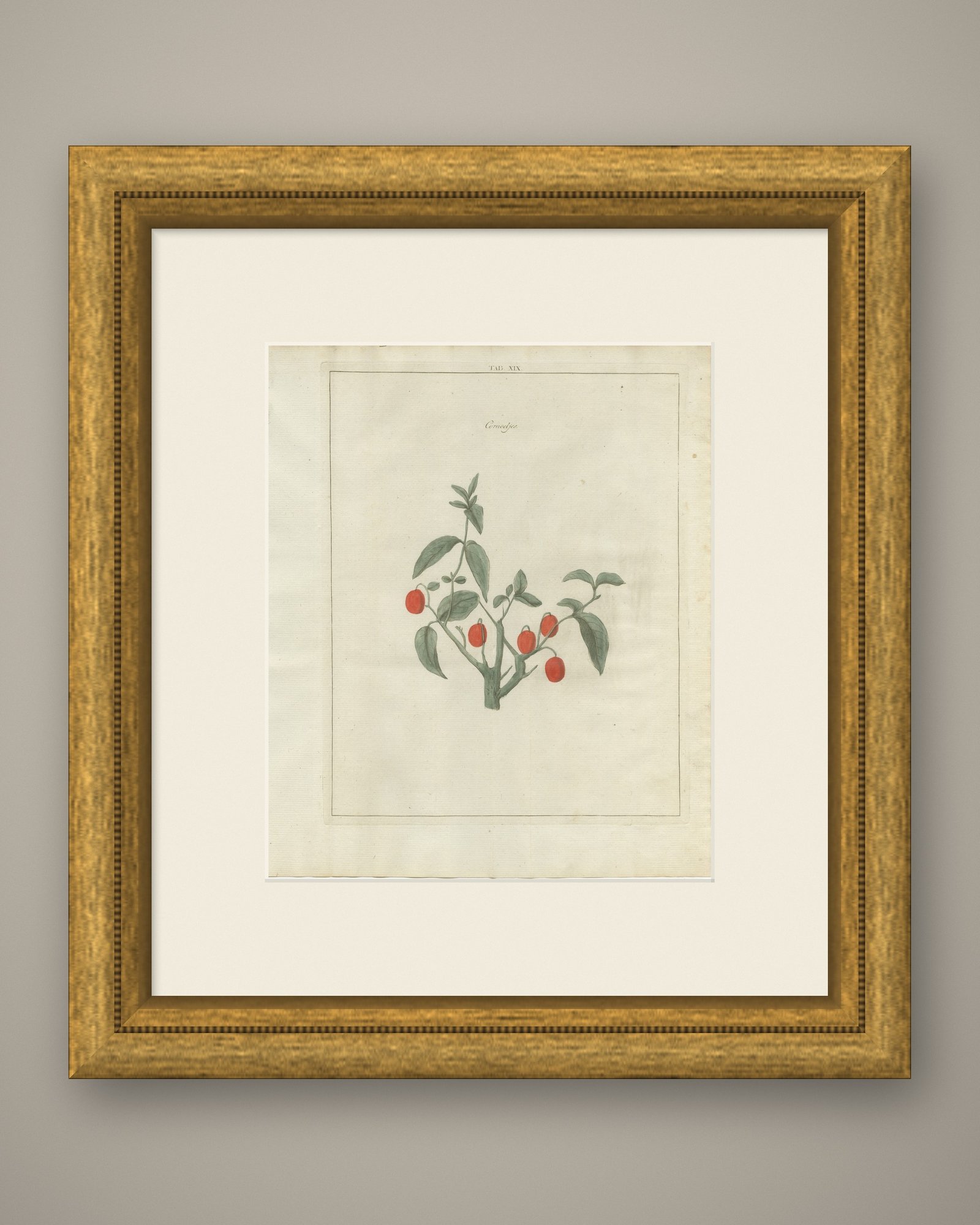
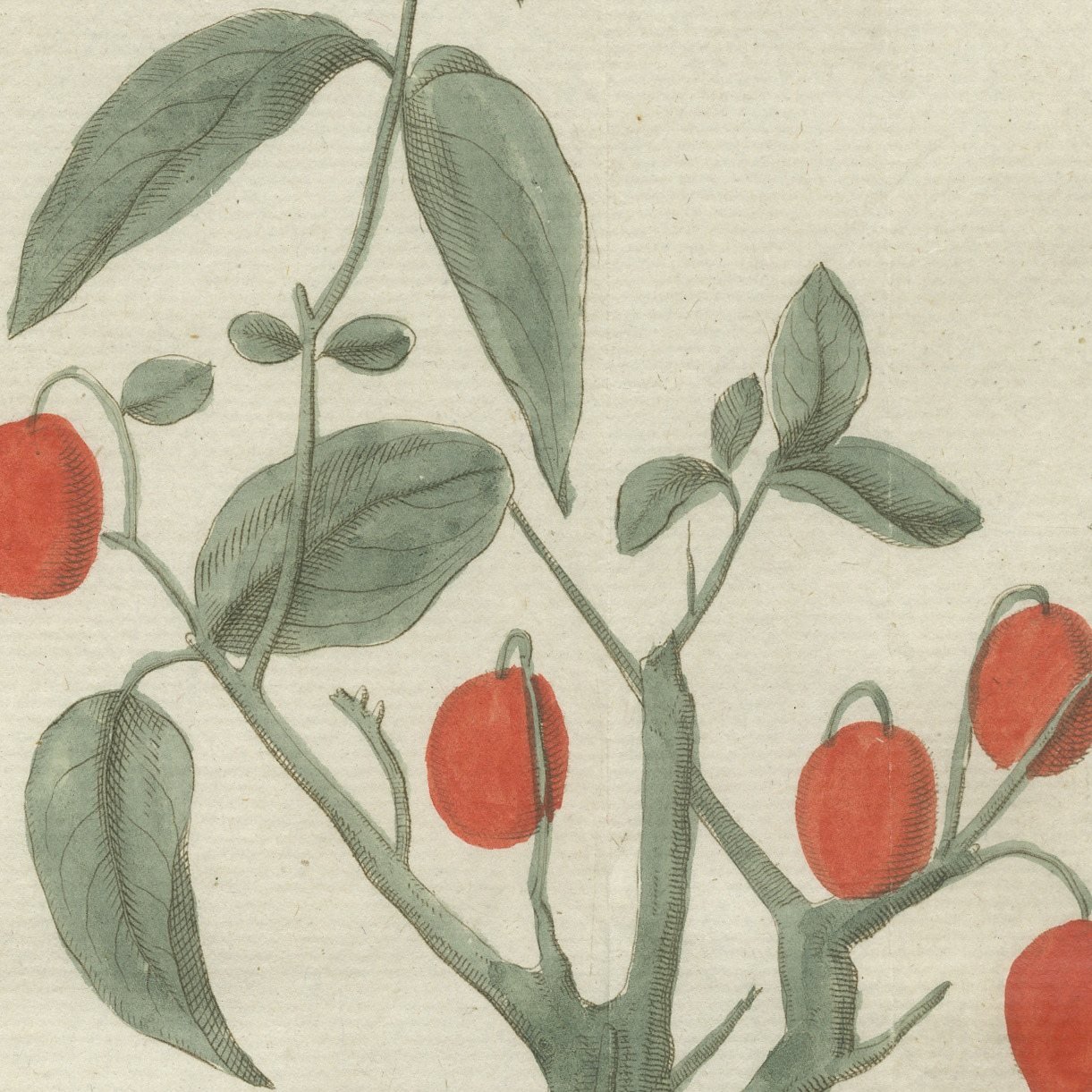
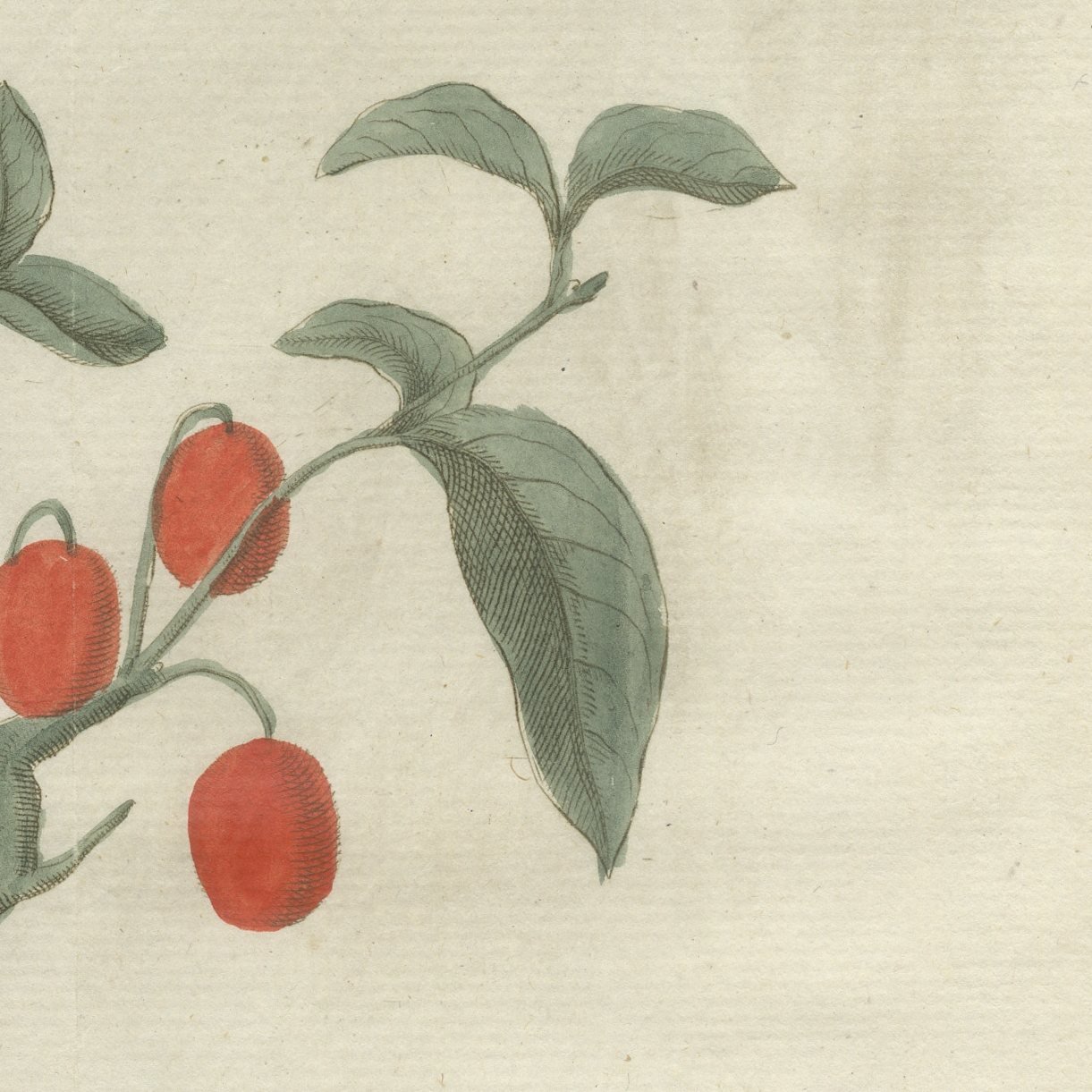
An original hand-colored copper engraving of cornelian cherries, five fruits on a forked leafy branch, lettered in engraved script with the Dutch name "Cornoeljes." and numbered "TAB. XIX" above the image, the last plate of Knoop's third series. The fruits are oblong rather than round, hanging on short stalks in pairs and singly, and the hand coloring gives them a deep glassy red that pales to orange at the stalk end and carries a single reserved highlight apiece. Oval, strongly veined leaves sit behind them in a green that turns bronze along the edges. The original washes differ in density from fruit to fruit and lap over the engraved outline here and there, as period hand coloring does.
Knoop's pomology appeared at Amsterdam and Dordrecht in 1790 from the presses of Allart, Holtrop, de Leeuw and Krap, carrying a preface by Johannes Florentius Martinet. The plates had first been cut for the Leeuwarden editions of 1758 and 1763 and were printed again here from the same coppers. Johann Hermann Knoop drew the fruit from life in the stadtholder's garden at Leeuwarden. The technique is copper engraving with original hand coloring, and the brushwork crosses the engraved outline in places, which is the plain evidence that the color was laid on by hand and not printed.
The cornelian cherry is the fruit of Cornus mas, a small tree of central and eastern Europe long planted in Dutch gardens, and it is not eaten raw with any pleasure: the fruit is too sharp, and it was taken instead as a preserve, a syrup or a sharp jelly, which is how it earned a place in a book about useful fruit. Closing the third series with it was a sensible piece of editing by Knoop, and no engraver is lettered on the sheet. The clear reds hang well in a kitchen or a hallway, and because the subject is unfamiliar the plate is a good choice for a collector who already owns the obvious cherries and plums.
Light uneven toning, browner towards the edges. Marked handling soiling along the bottom, right and top edges. Scattered light foxing in the margin. All four corners complete.
This is an original antique plate, not a modern reproduction. This item is sold unframed.