 The sheet, as you receive it
 In the room
Interior designers: BarTrade members buy at their trade price. How it works
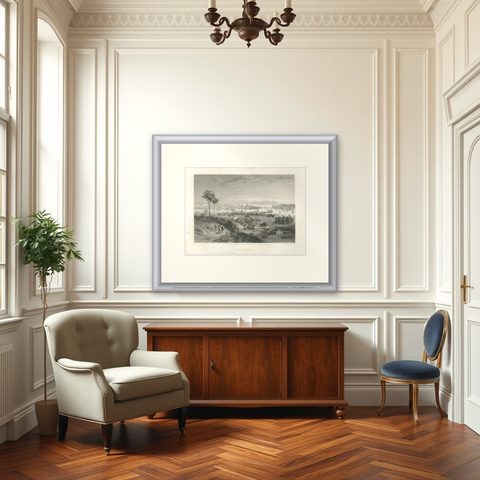
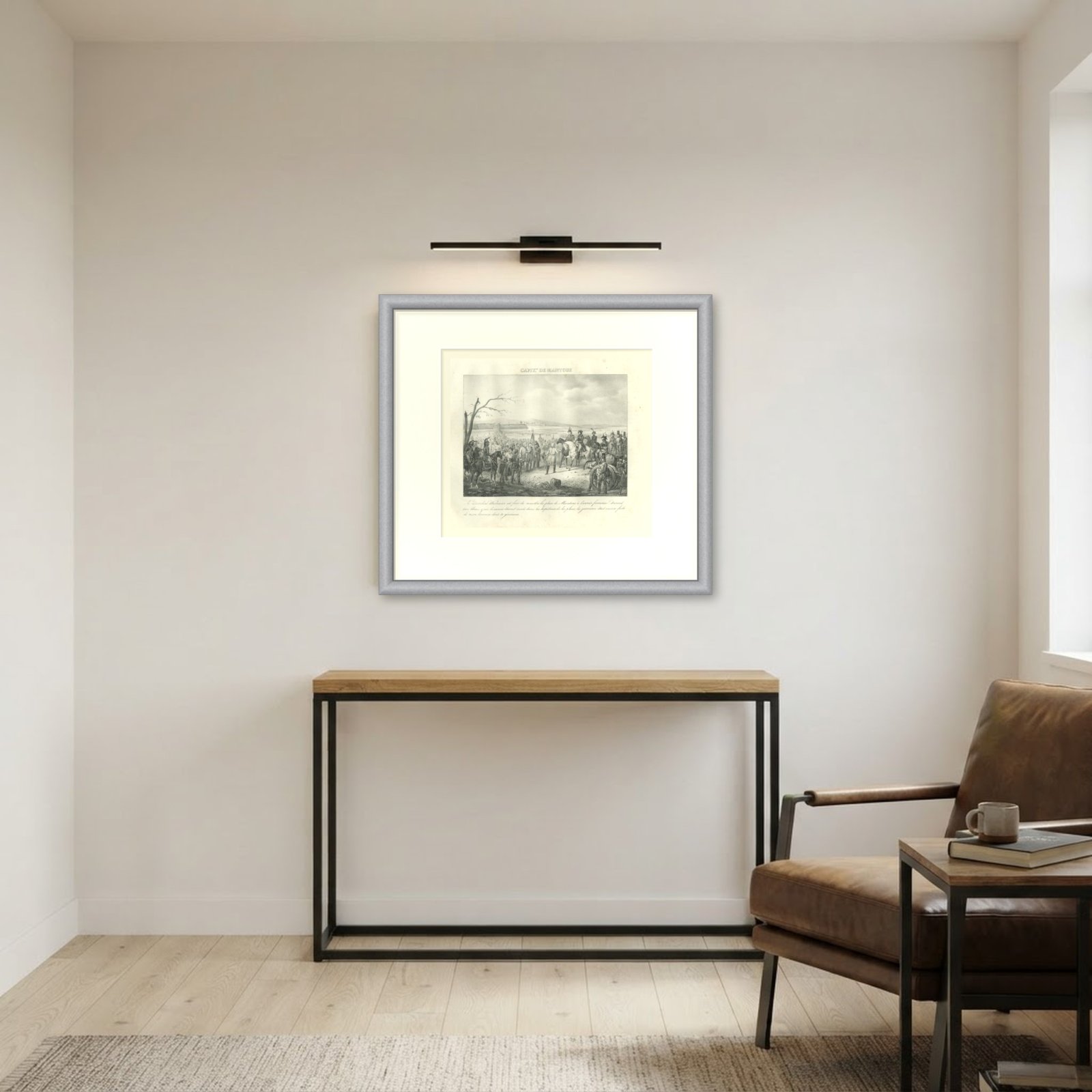
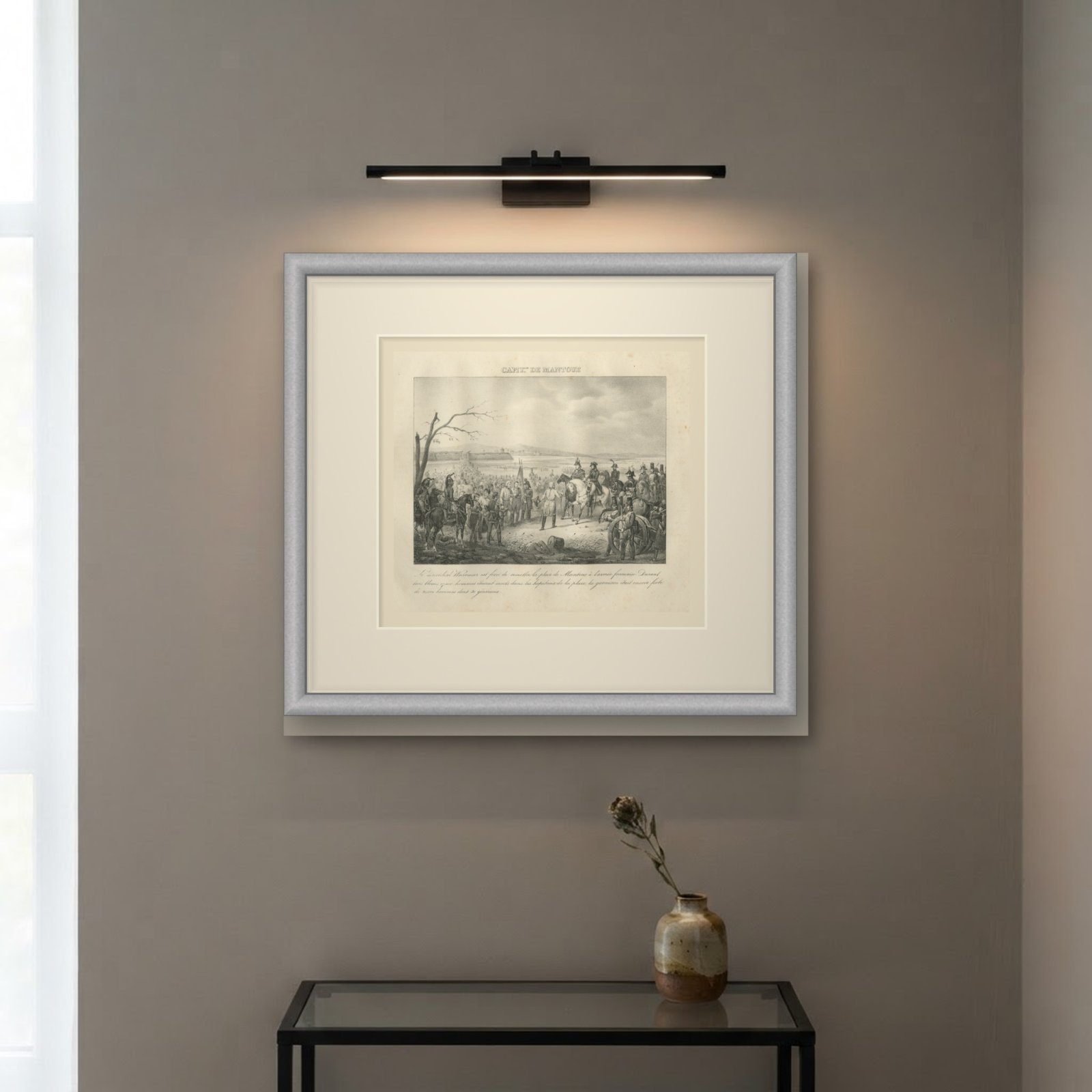
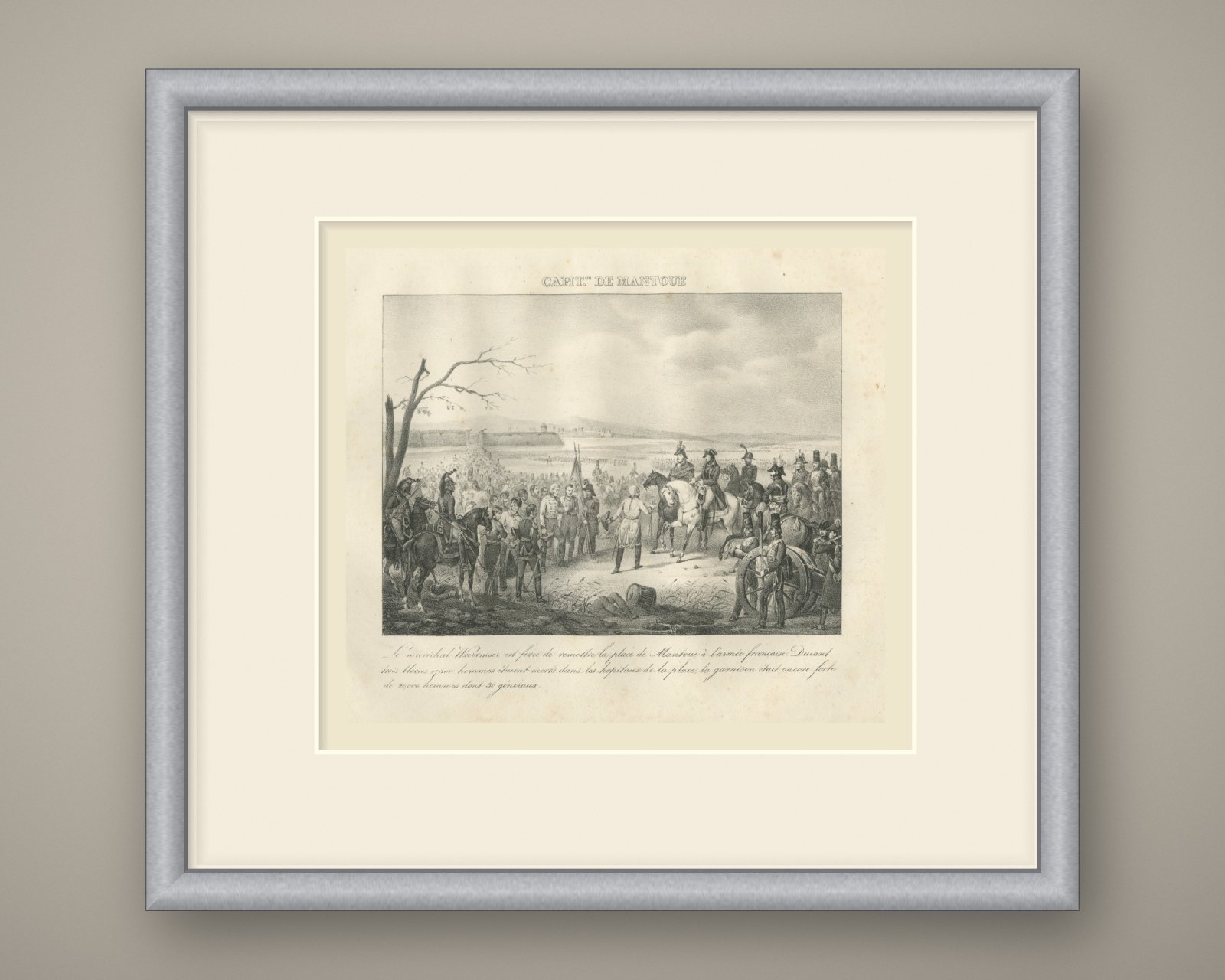
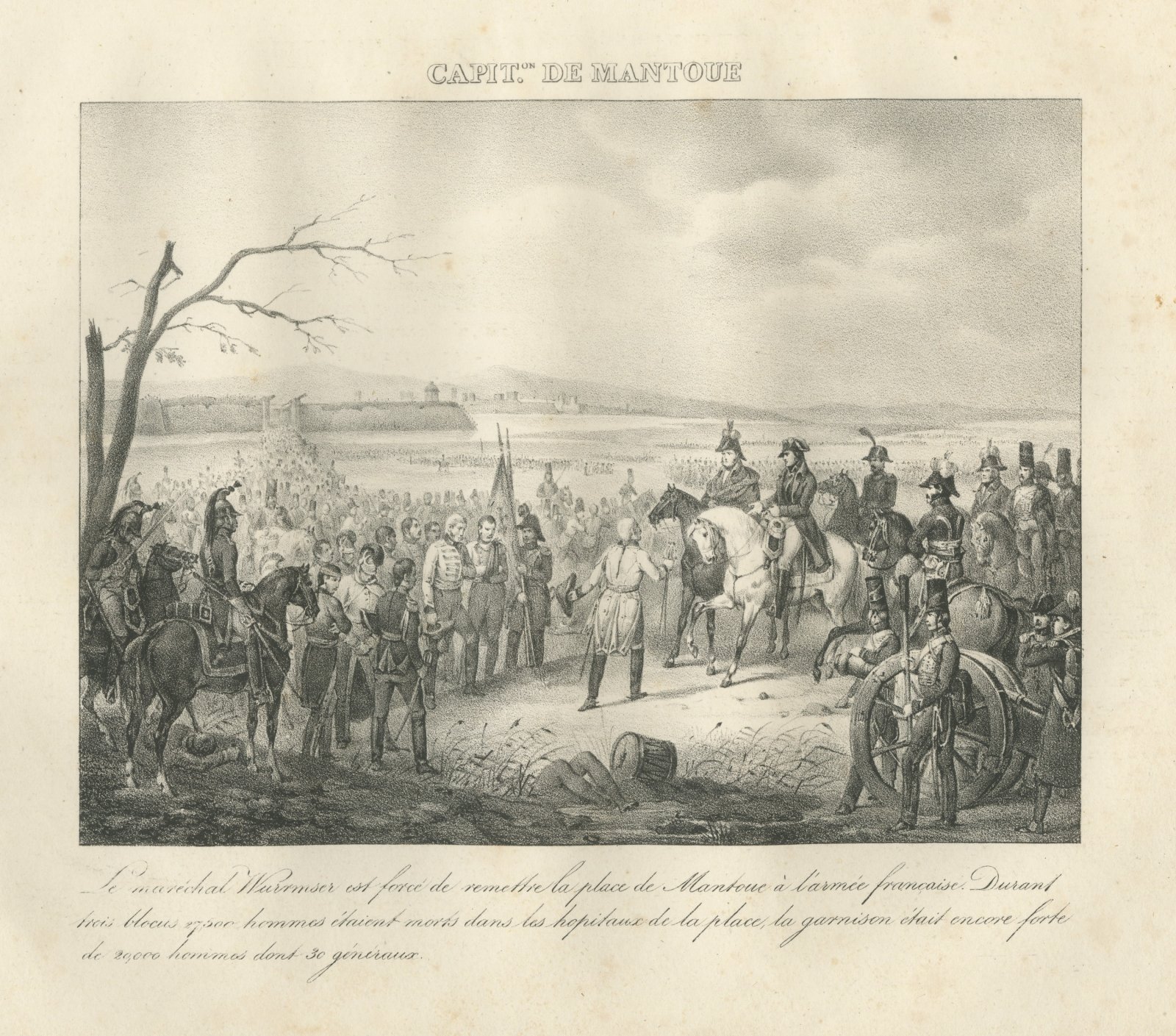
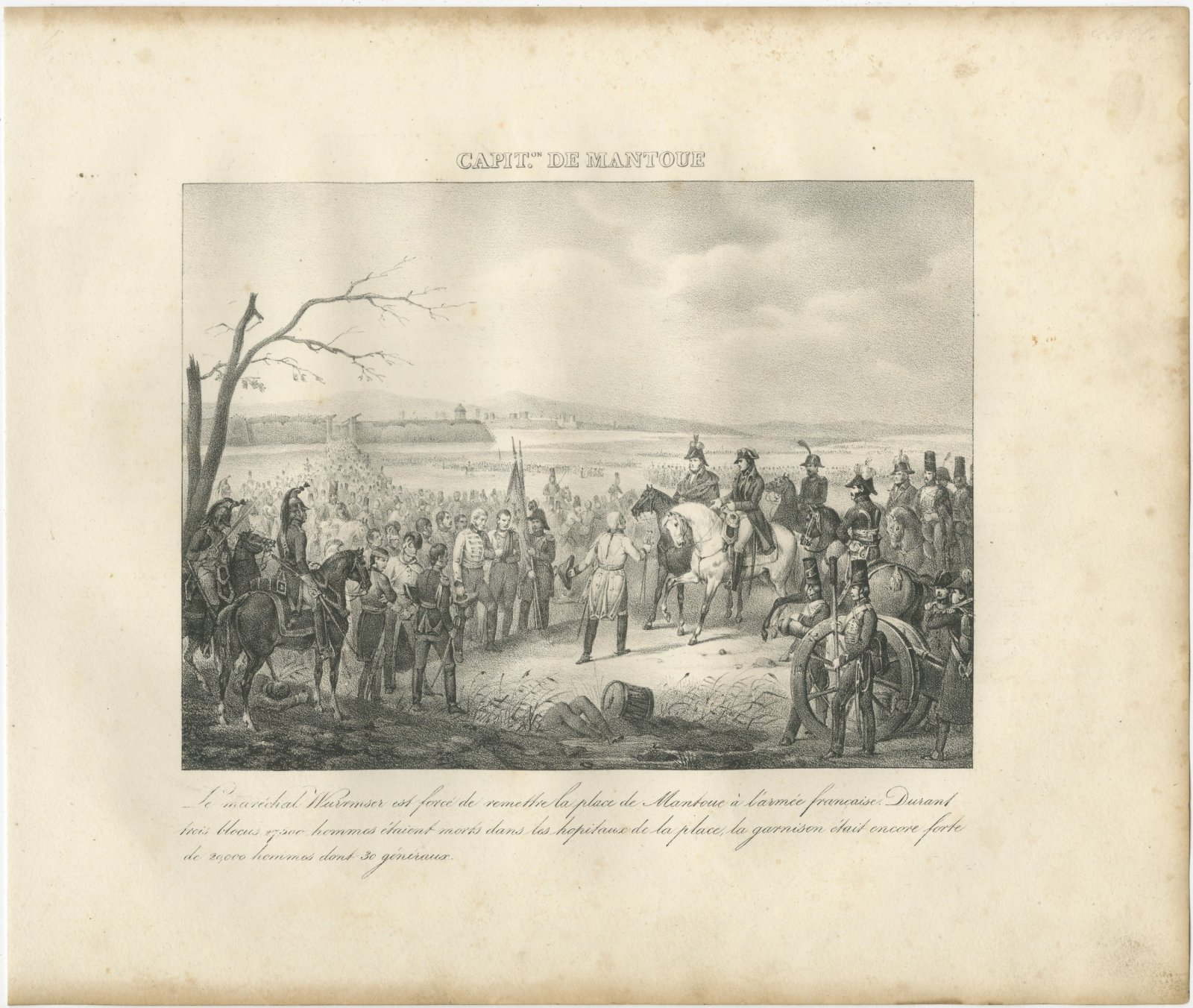
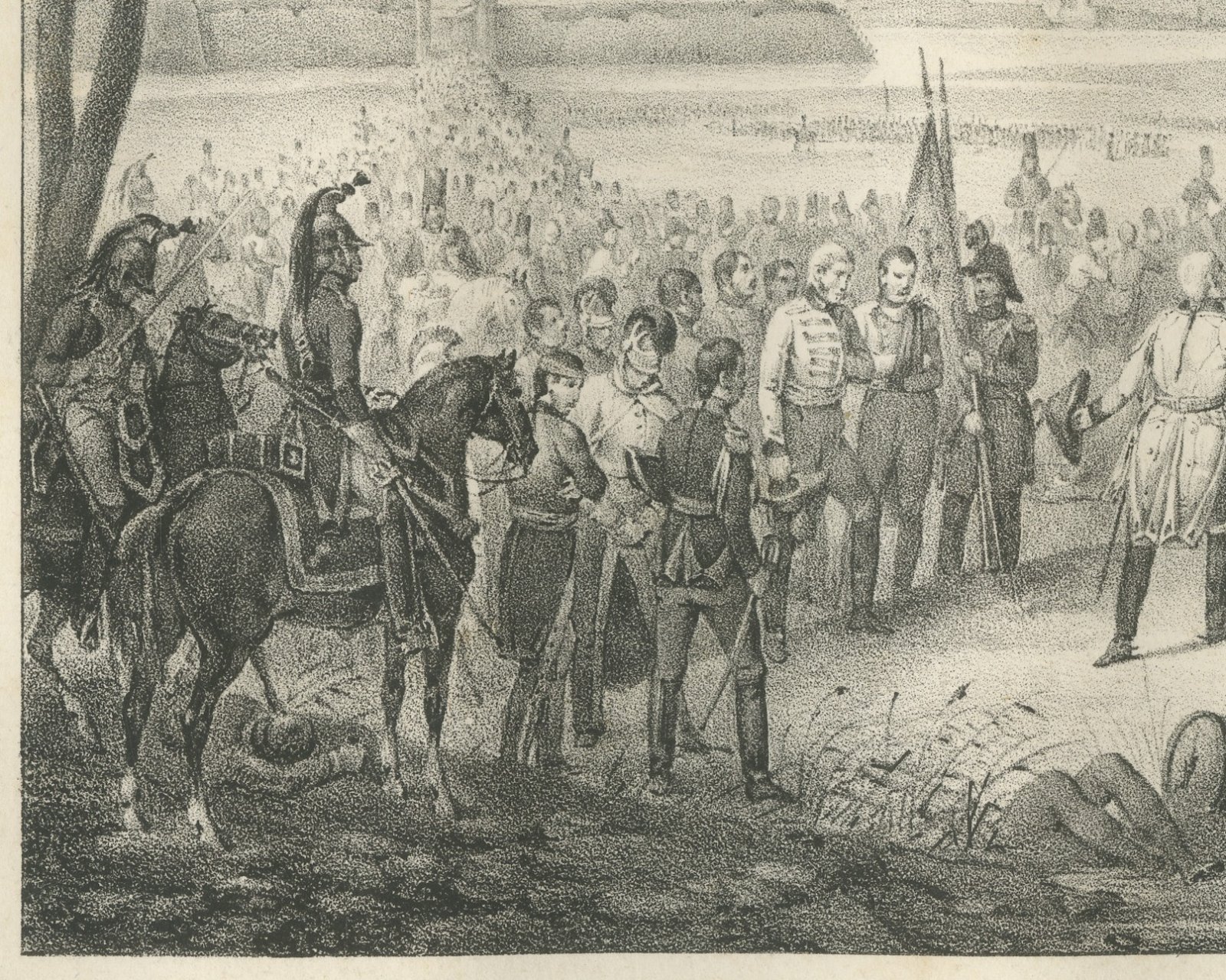
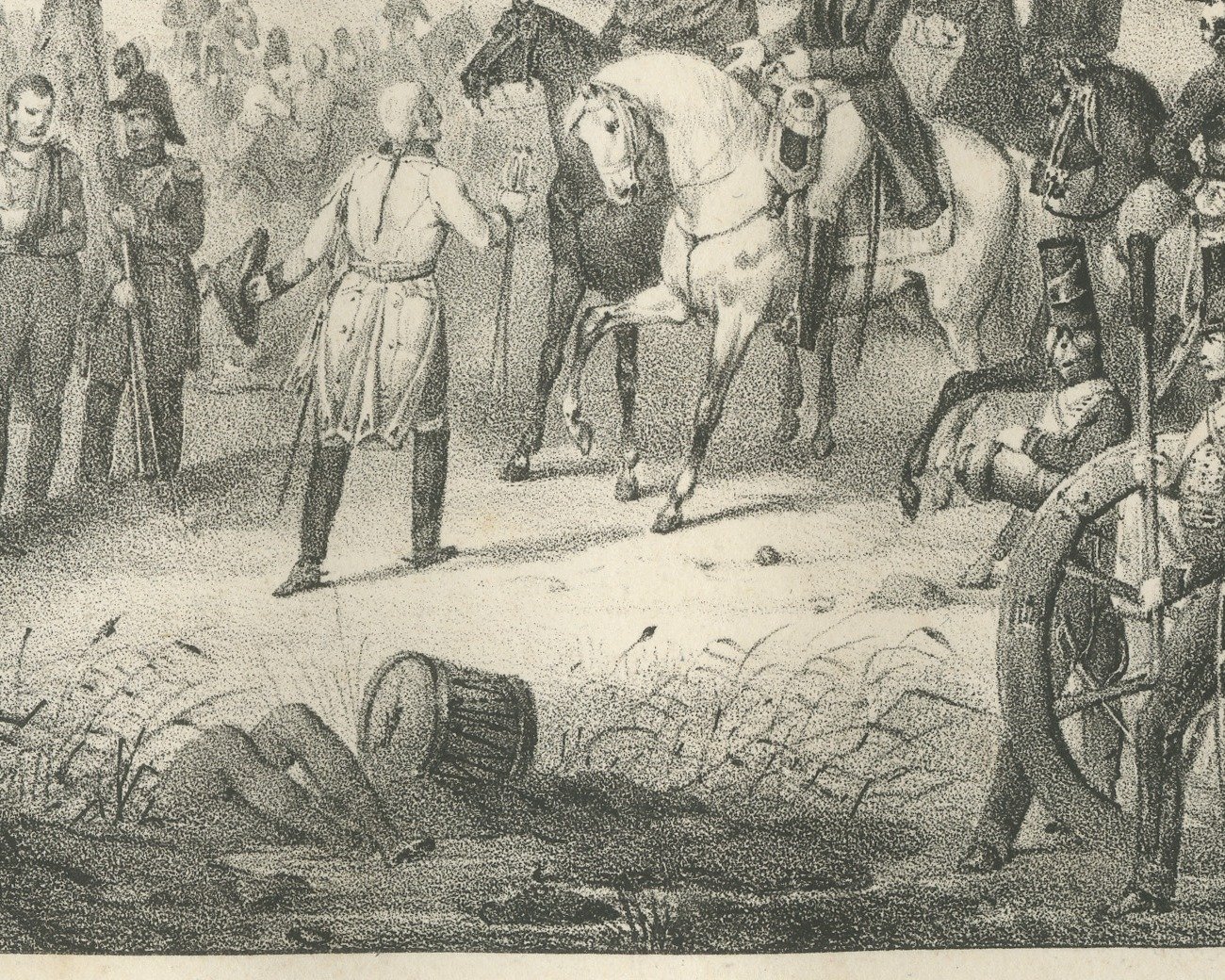
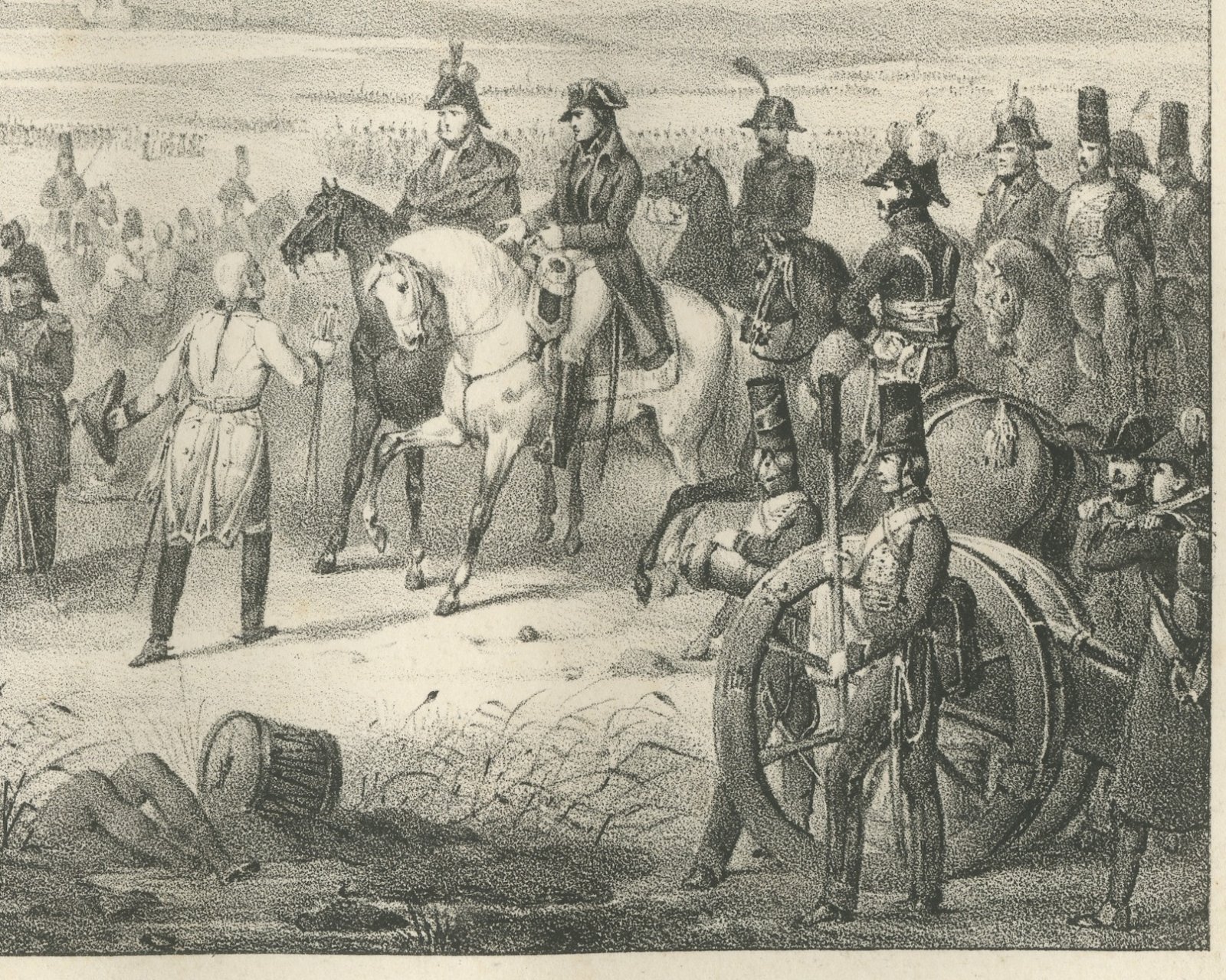
An original antique lithograph from Jean-Baptiste Madou's Vie de Napoléon, published at Brussels in 1827, lettered "CAPIT.on DE MANTOUE" in open capitals above the image. On open ground before the walls, domes and towers of Mantua, an officer in a white coat stands hat in hand before two mounted French officers, one of them on a white horse, with a line of mounted officers behind them at the right. A group of officers waits with their colors at the left beside mounted dragoons, a field gun and its crew stand at the right, and a drum lies beside a fallen soldier in the foreground, and a bare tree rises at the left.
The caption below the image, in lithographic script, reads: "Le maréchal Wurmser est forcé de remettre la place de Mantoue à l'armée française. Durant trois blocus 27,500 hommes étaient morts dans les hopitaux de la place, la garnison était encore forte de 20,000 hommes dont 30 généraux." In English: Marshal Wurmser is forced to hand over the fortress of Mantua to the French army. During three blockades 27,500 men had died in the hospitals of the town; the garrison was still 20,000 strong, including 30 generals.
The plate comes from the first volume of Vie de Napoléon, published at Brussels in 1827 by the Lithographie royale de Jobard, the press of Marcellin Jobard. Its title page describes a text written by a society of men of letters from the new documents dictated and corrected at Saint Helena by Napoleon himself, illustrated with lithographed plates by Jean-Baptiste Madou (1796 to 1877) after painters of the French school. Madou, a Belgian, later became known as a painter of genre scenes.
Mantua was besieged from the summer of 1796. Marshal Dagobert Sigmund von Wurmser was shut up in the town in September 1796, and the relief armies sent to free him were beaten in turn. He capitulated on 2 February 1797, and the garrison marched out with the honors of war. The surrender was received by General Sérurier; Bonaparte himself had already left to march against the Papal States.
This is an original antique print, not a modern reproduction. This item is sold unframed.