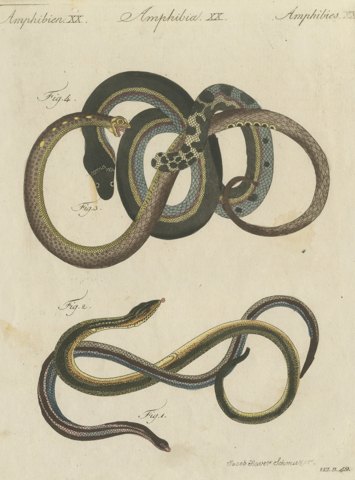
 The sheet, as you receive it
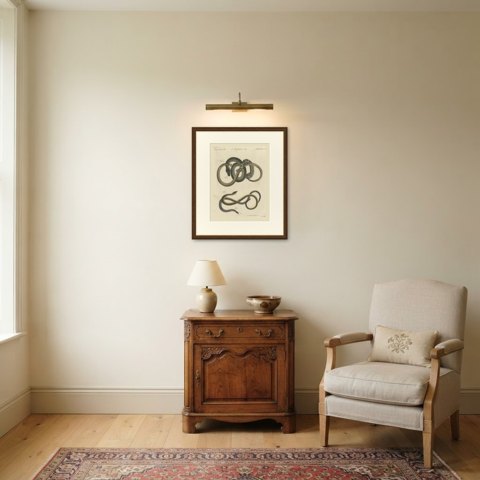
 In the room
Interior designers: BarTrade members buy at their trade price. How it works
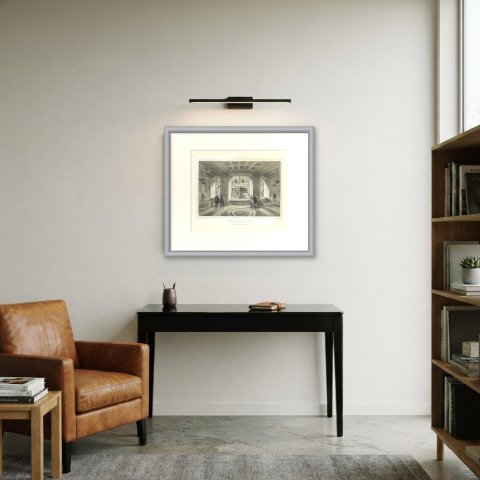
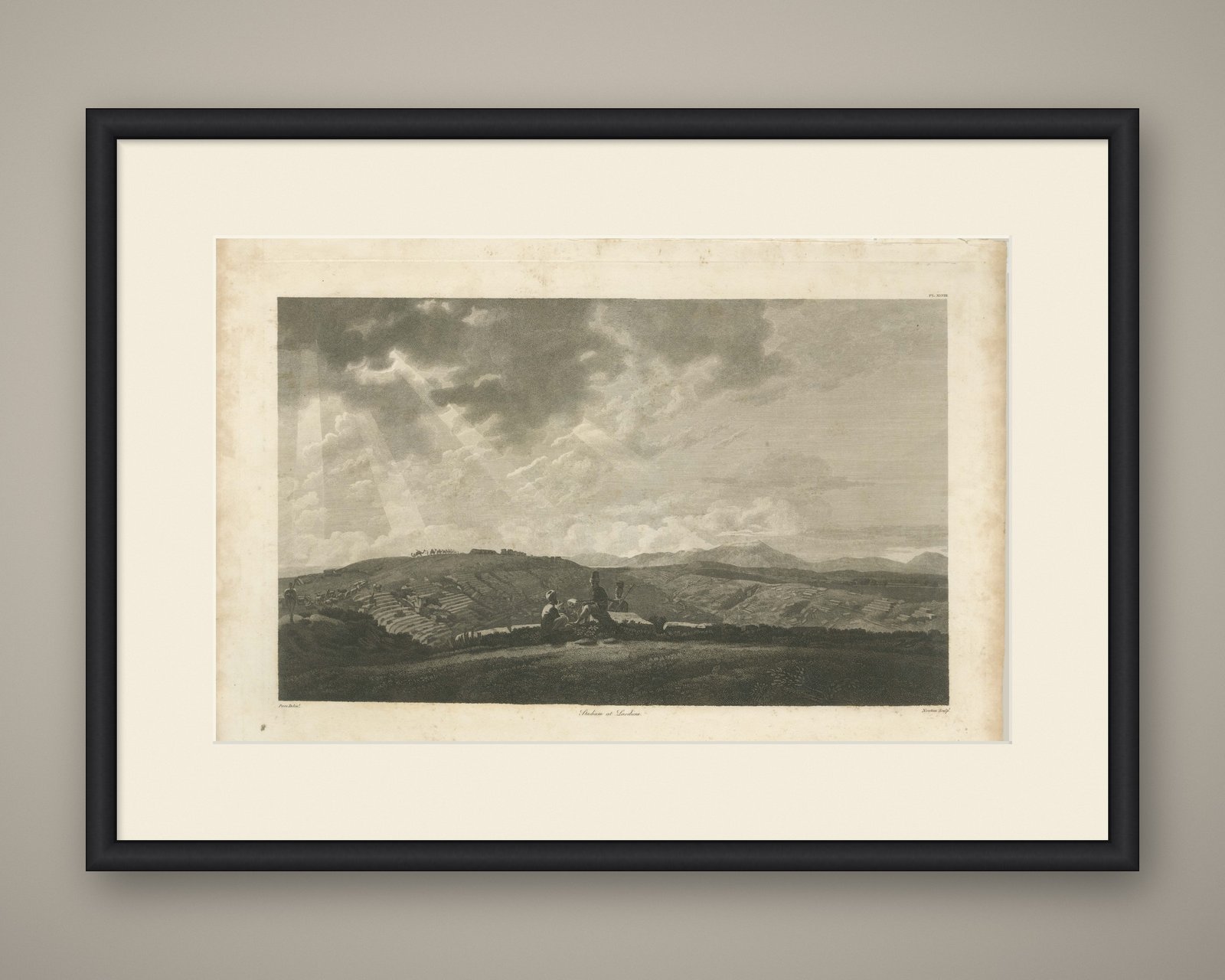
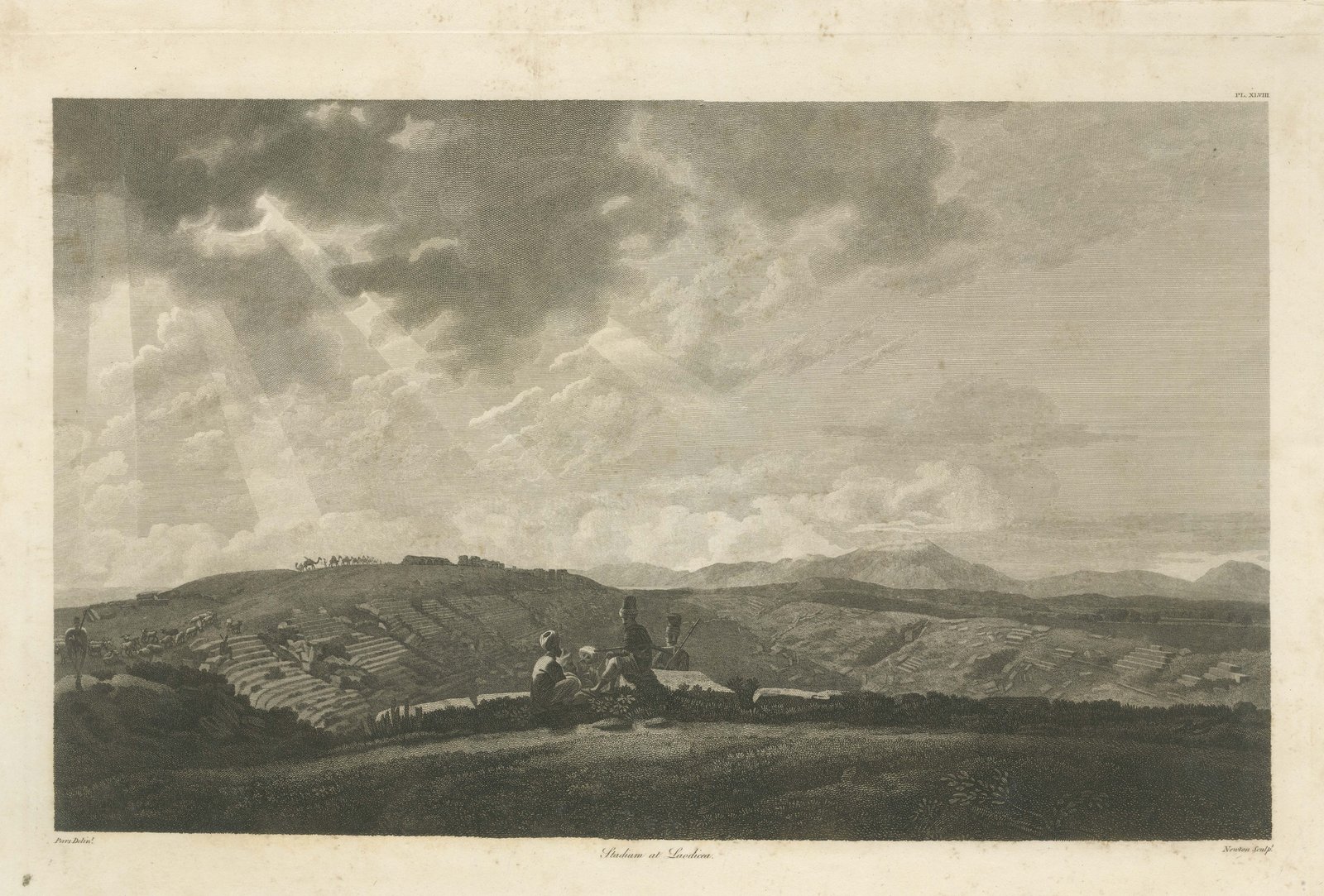
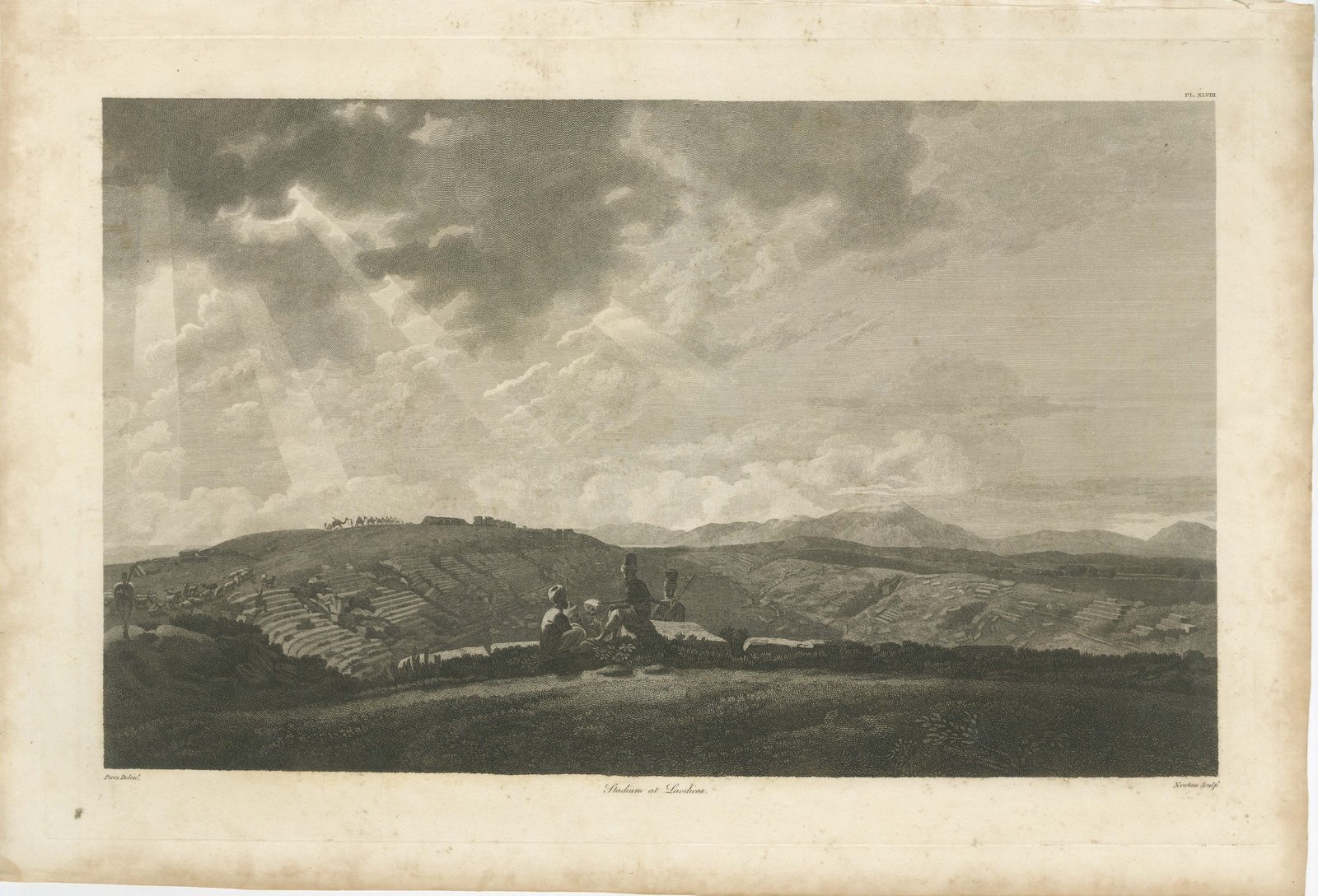
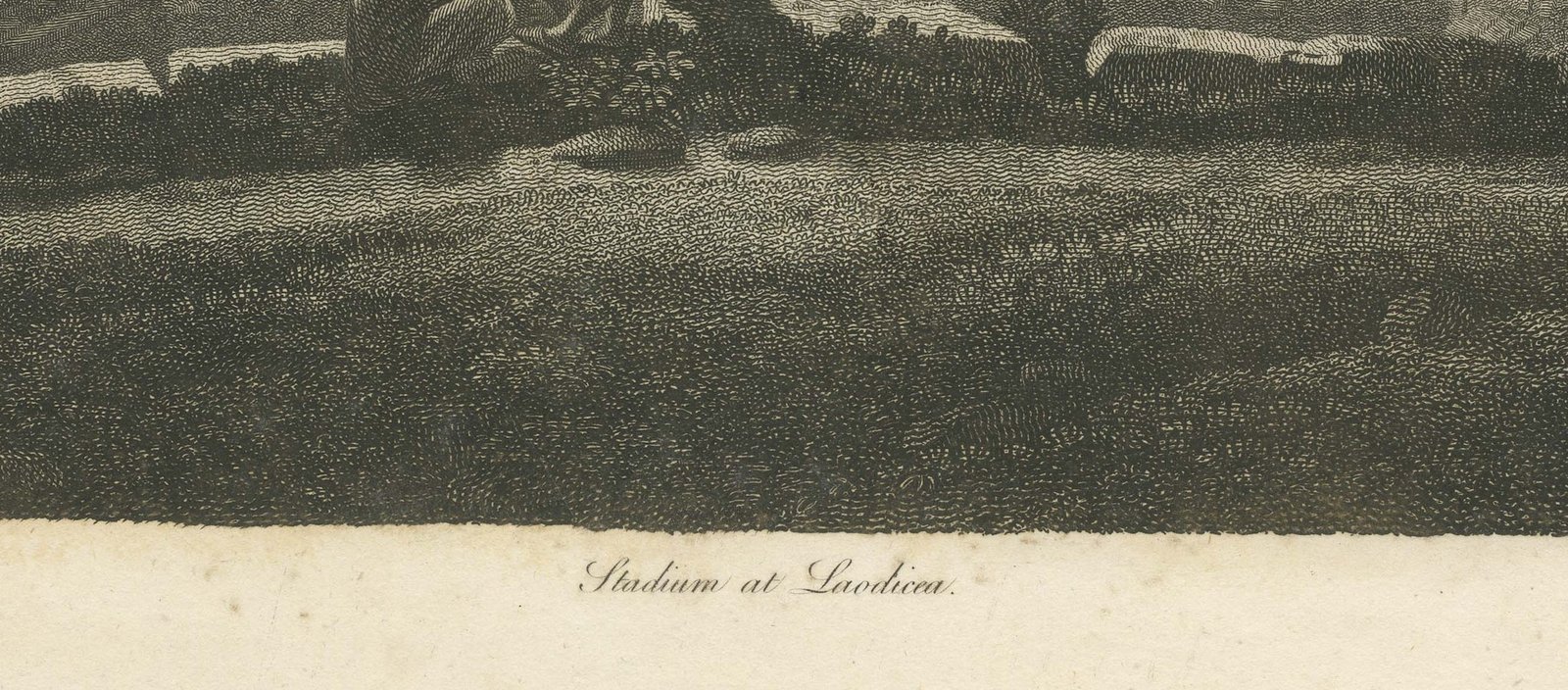
An original antique copper engraving, uncolored, published in 1797. The caption engraved below the image reads "Stadium at Laodicea."
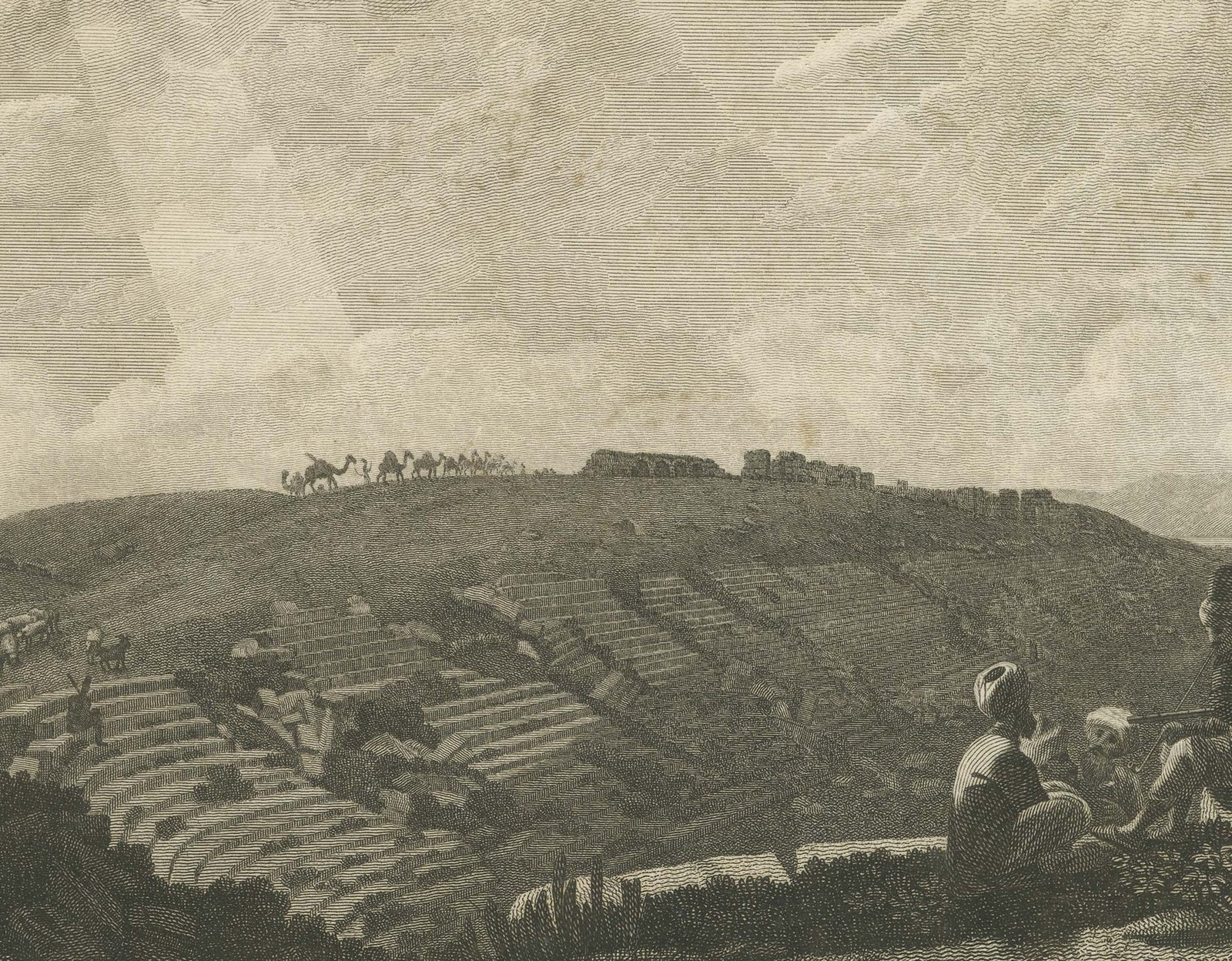
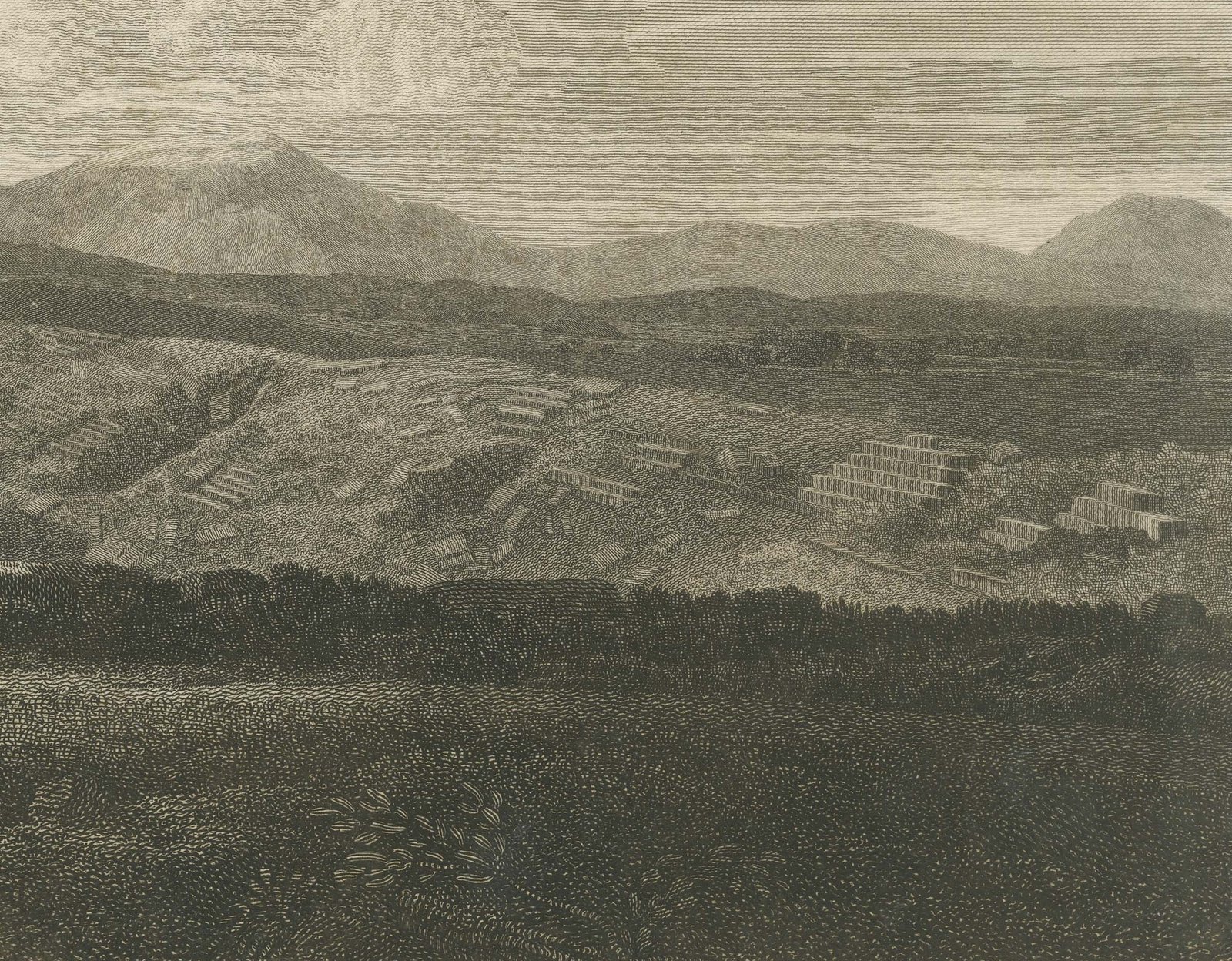
The view looks across the site from a grassy rise. On the slopes to the left and right, long tiers of stone seating step down the hillside, the remains of the stadium. Along the ridge at the upper left a caravan of camels passes beside low ruined walls, and a herdsman drives a flock across the slope at the far left. In the center foreground a small group of men in turbans and tall caps sits on a low wall, one of them holding a long gun. Beyond, the land falls away to a wide plain and a range of mountains on the right. Shafts of light break through heavy clouds at the upper left of the sky.
The lower left is lettered "Pars Delint." and the lower right "Newton Sculpt.": the drawing is by William Pars and the plate is engraved by Newton, not by Byrne. The plate number "PL. XLVIII" is engraved at the upper right.
This plate was issued in Antiquities of Ionia, Part the Second, published by the Society of Dilettanti in London in 1797. William Pars (1742 to 1782) was the English painter of the Society's expedition to Ionia. Laodicea on the Lycus, in southwestern Turkey near Denizli, is one of the Seven Churches of Asia named in the Book of Revelation.
The bottom edge is uneven in one place. Light uneven toning, browner towards the edges. Marked handling soiling along the bottom, left and right edges. Foxing over much of the margin.
This is an original antique print, not a modern reproduction. This item is sold unframed.