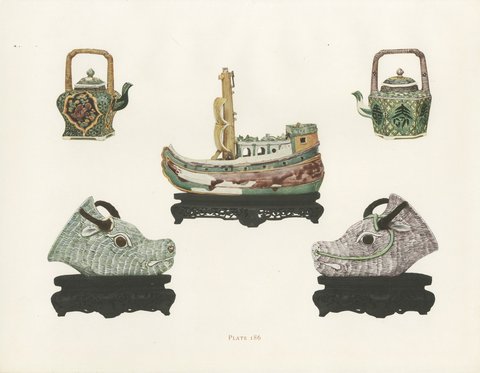
 The sheet, as you receive it
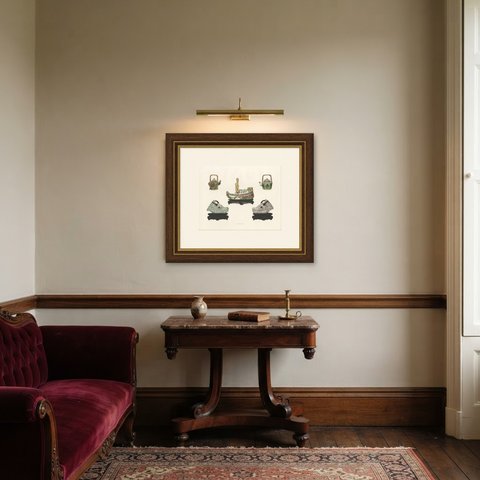
 In the room
Interior designers: BarTrade members buy at their trade price. How it works
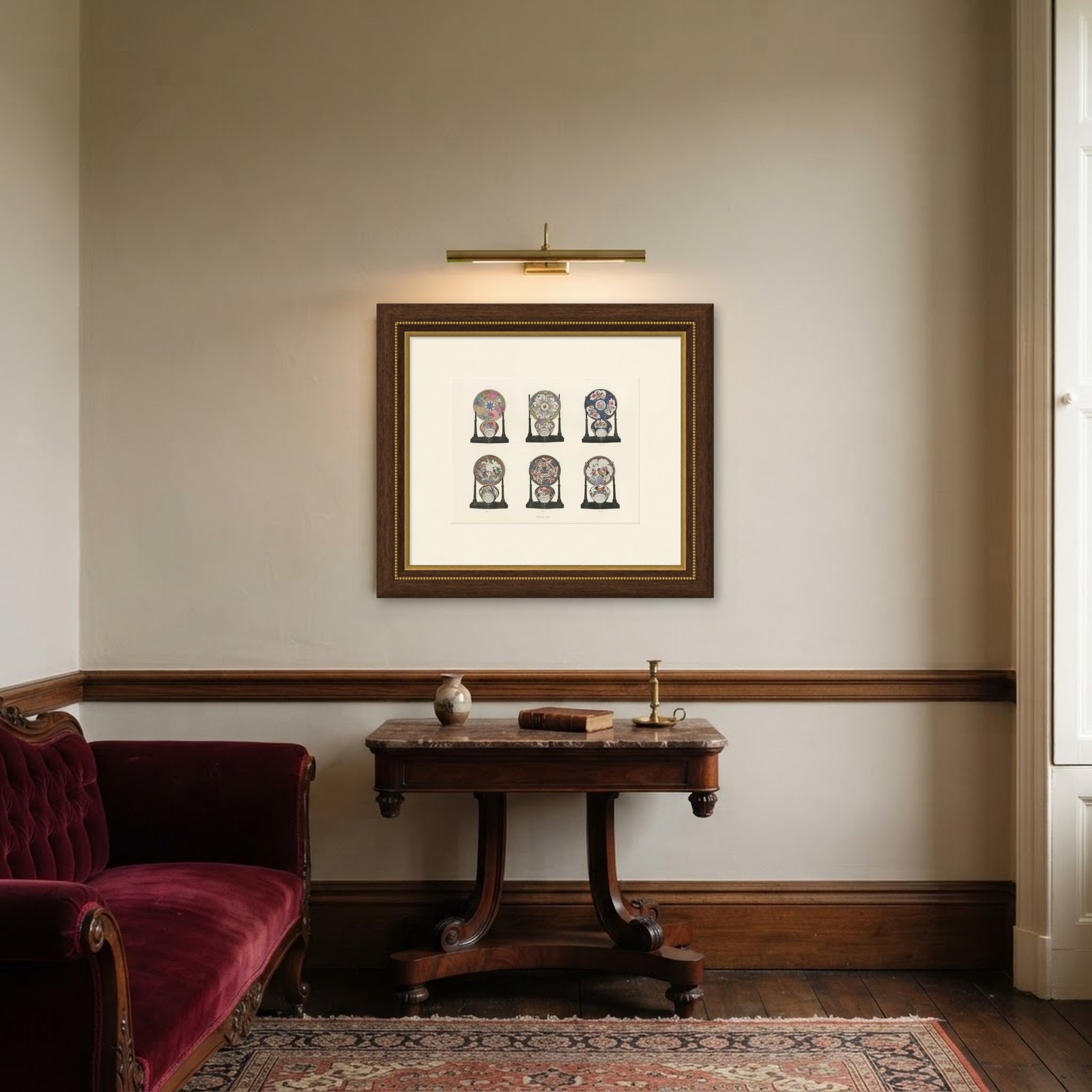
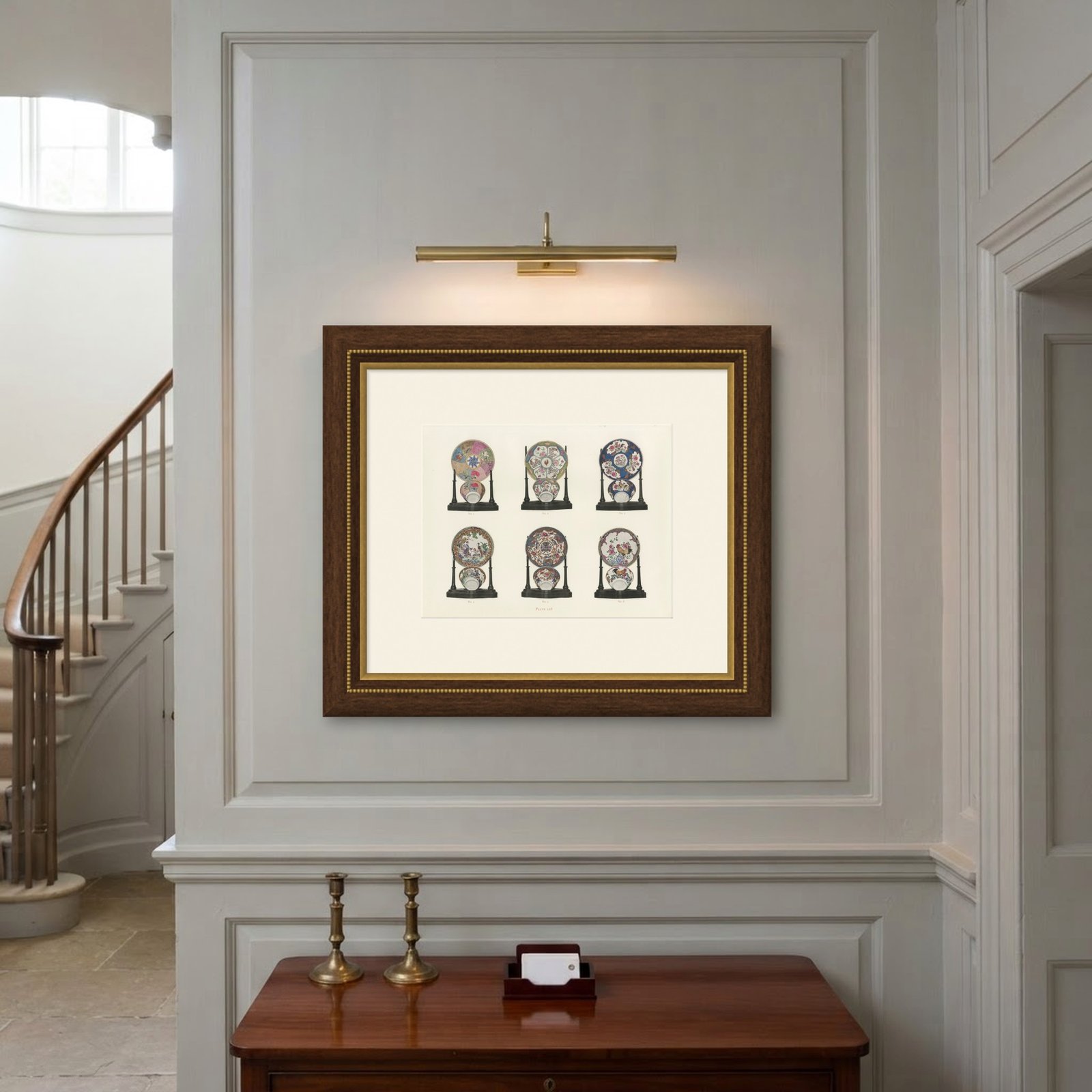
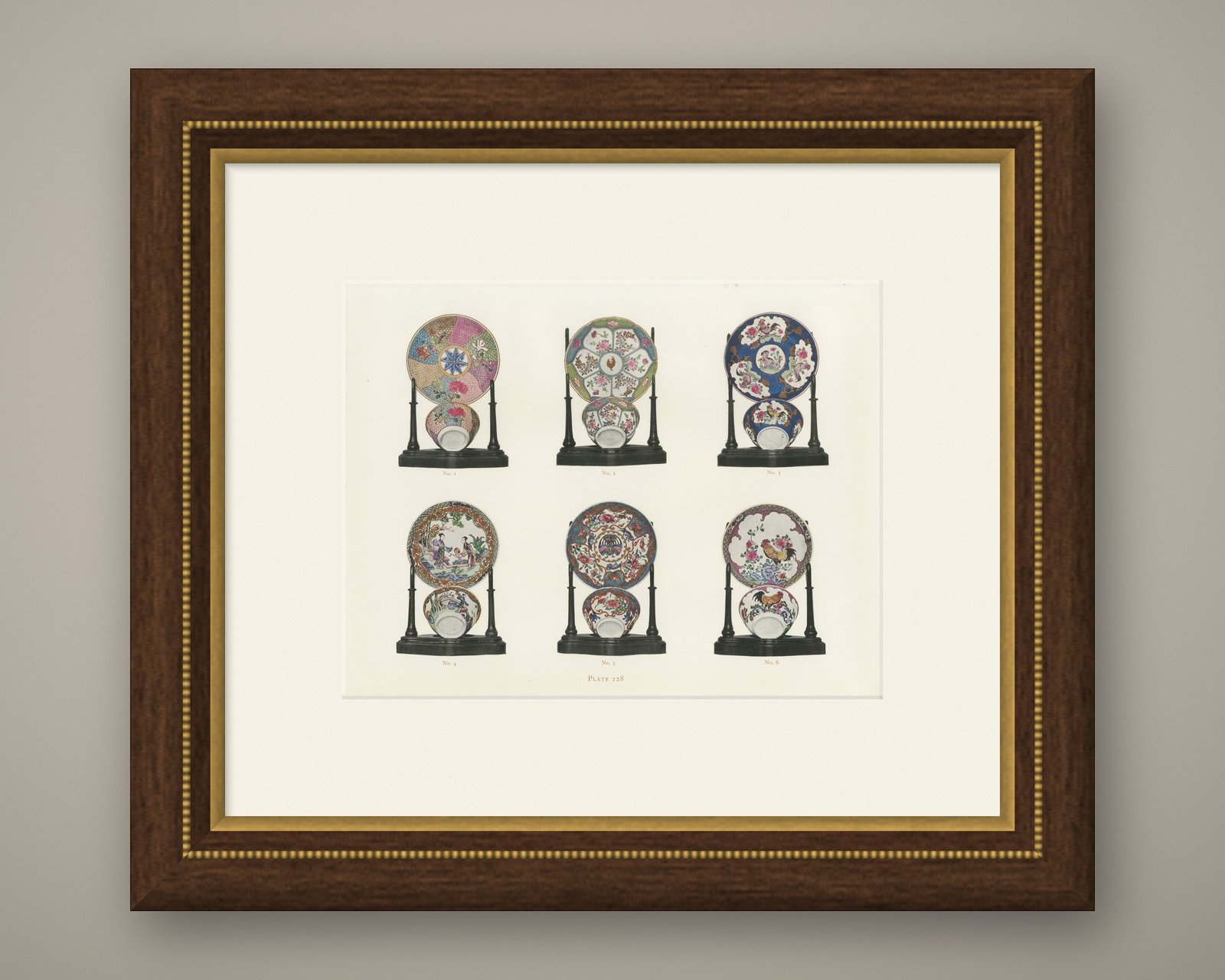
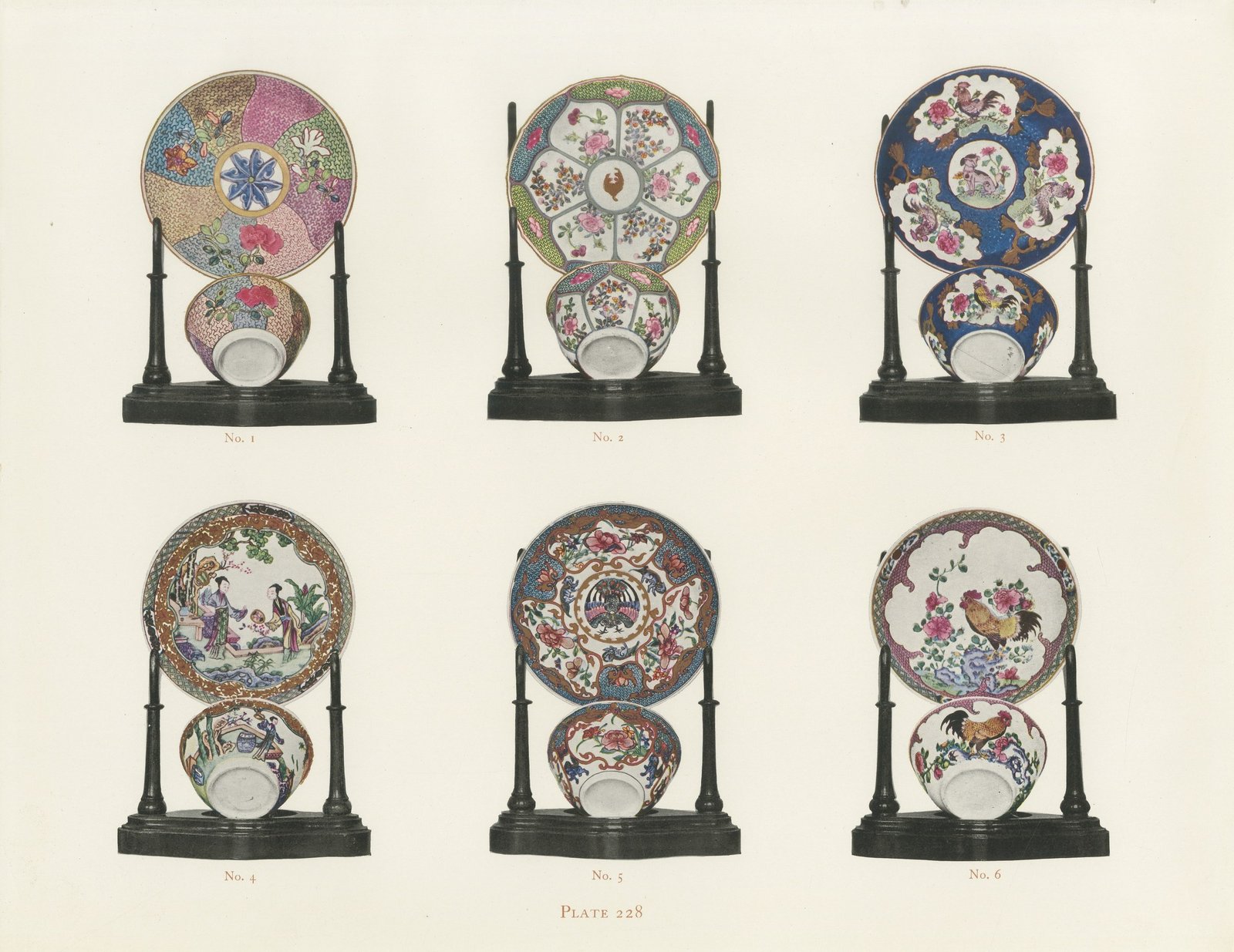
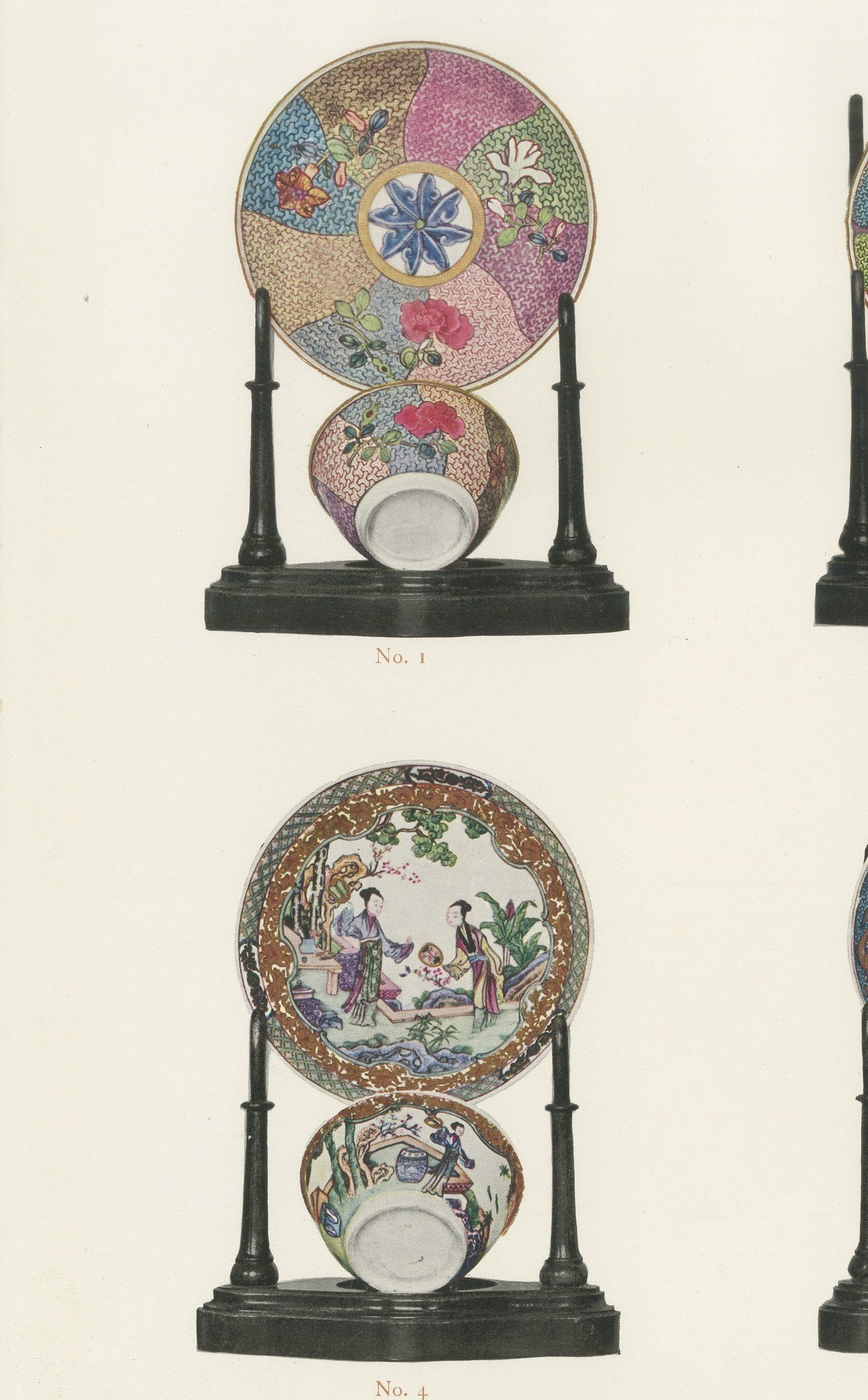
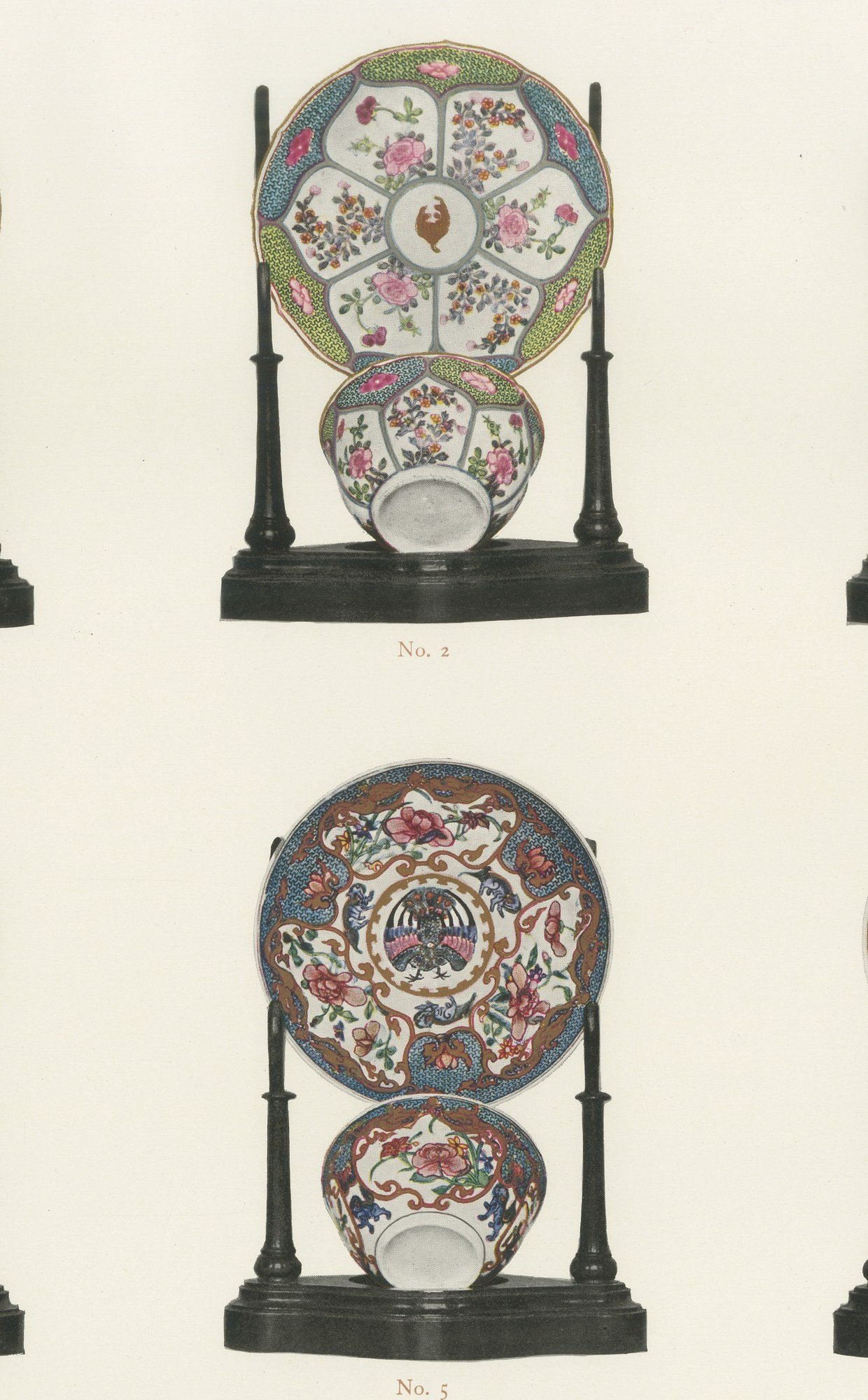
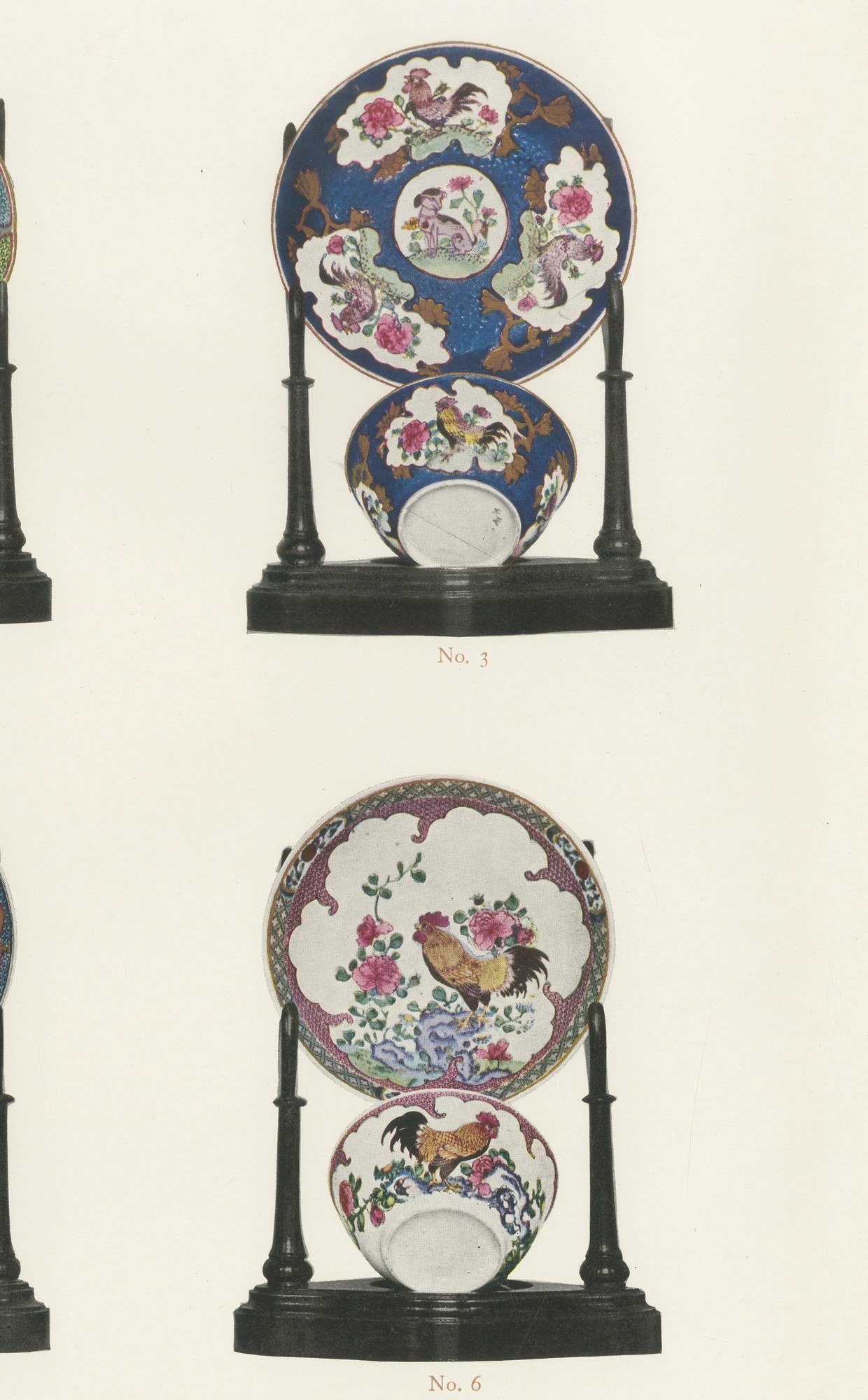
Plate 228 from Volume II of Gorer and Blacker's Chinese Porcelain and Hard Stones, an original 1911 color plate of six cups and saucers in thin egg-shell porcelain, the saucers with trellis panels, lions, a peacock and a cock among peonies. Six cups and saucers, from a collection which is unique. Every one of these specimens is of very fine thin egg-shell porcelain with brilliant decoration; the saucers only are described, from left to right in two rows, the descriptions running from the outer border. One has eight panels in Y-trellis containing peonies and three small ones with lions, the center showing a peacock in full display. No. 6 has a green lozenge trellis border with three panels containing floral ornament around a Y-trellis in rose color, enclosing a leaf-shaped panel painted with a cock on the rocks amidst peonies. The book gives it to the Yung-ching period. In the collection of A. E. Cumberbatch, Esq.
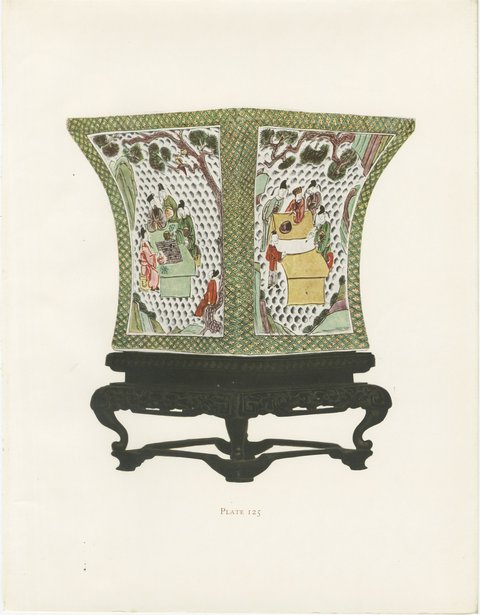
The sheet comes from Chinese Porcelain and Hard Stones, the two volume work by the London dealer Edgar Gorer and the writer J. F. Blacker, published by Bernard Quaritch of 11 Grafton Street, New Bond Street, in 1911 in an edition of one thousand numbered copies. The plates are color collotypes, a photographic process that reproduces continuous tone without a visible dot screen, which is why the glazes keep their depth on paper.
The book appeared at the height of the Edwardian passion for Chinese porcelain, when English and American collections were being formed at speed and a dealer's catalog could shape taste. R. L. Hobson of the British Museum attacked Gorer's attributions in print when the work appeared, and later scholarship has revised many attributions of this kind, which is part of what makes the volumes interesting to read now.
A sheet of this size frames well at about forty by fifty centimeters and suits a study, a hallway or a dining room where its color can be seen close to.
This is an original antique print, not a modern reproduction.
Even age toning. All four corners complete.