 The sheet, as you receive it
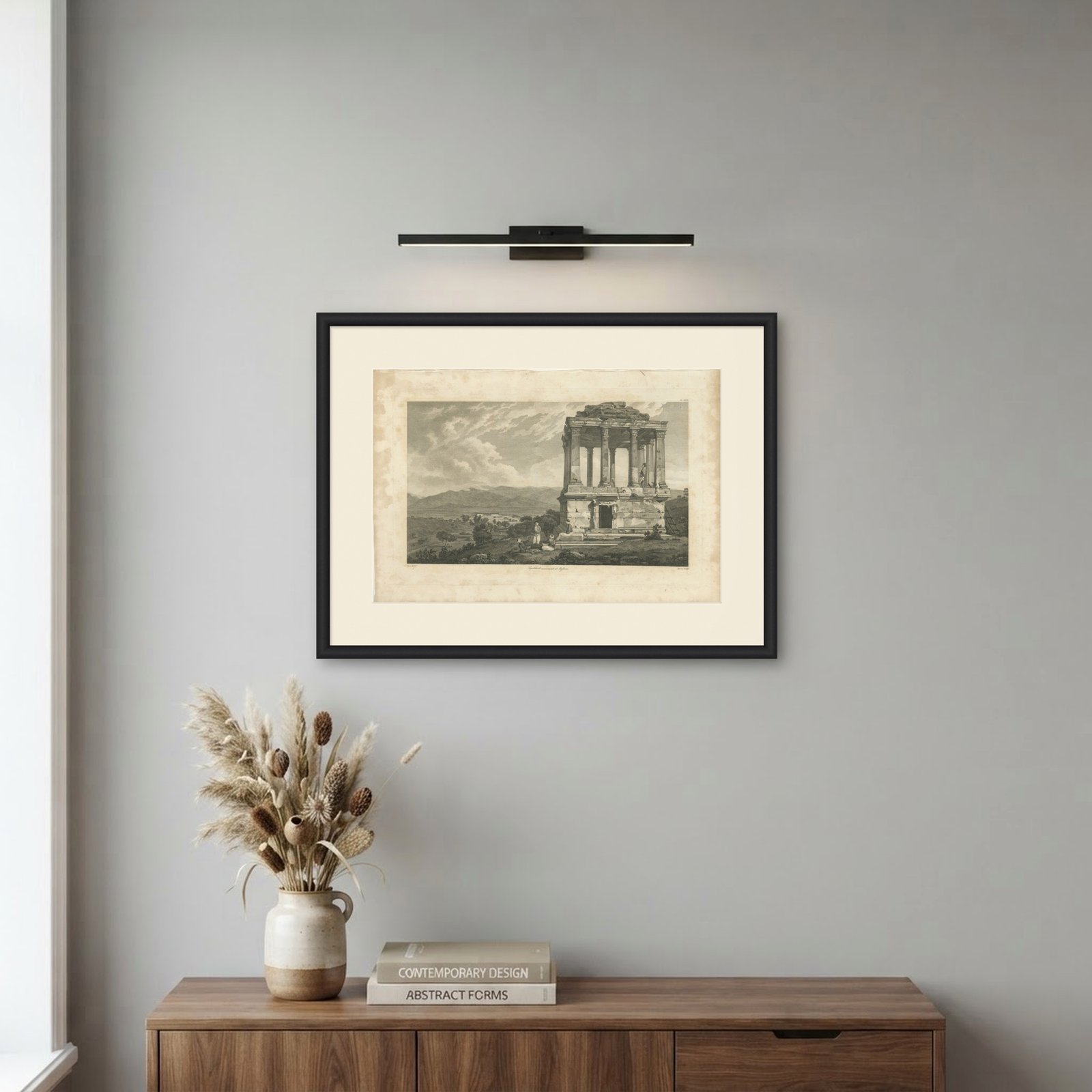
 In the room
Interior designers: BarTrade members buy at their trade price. How it works
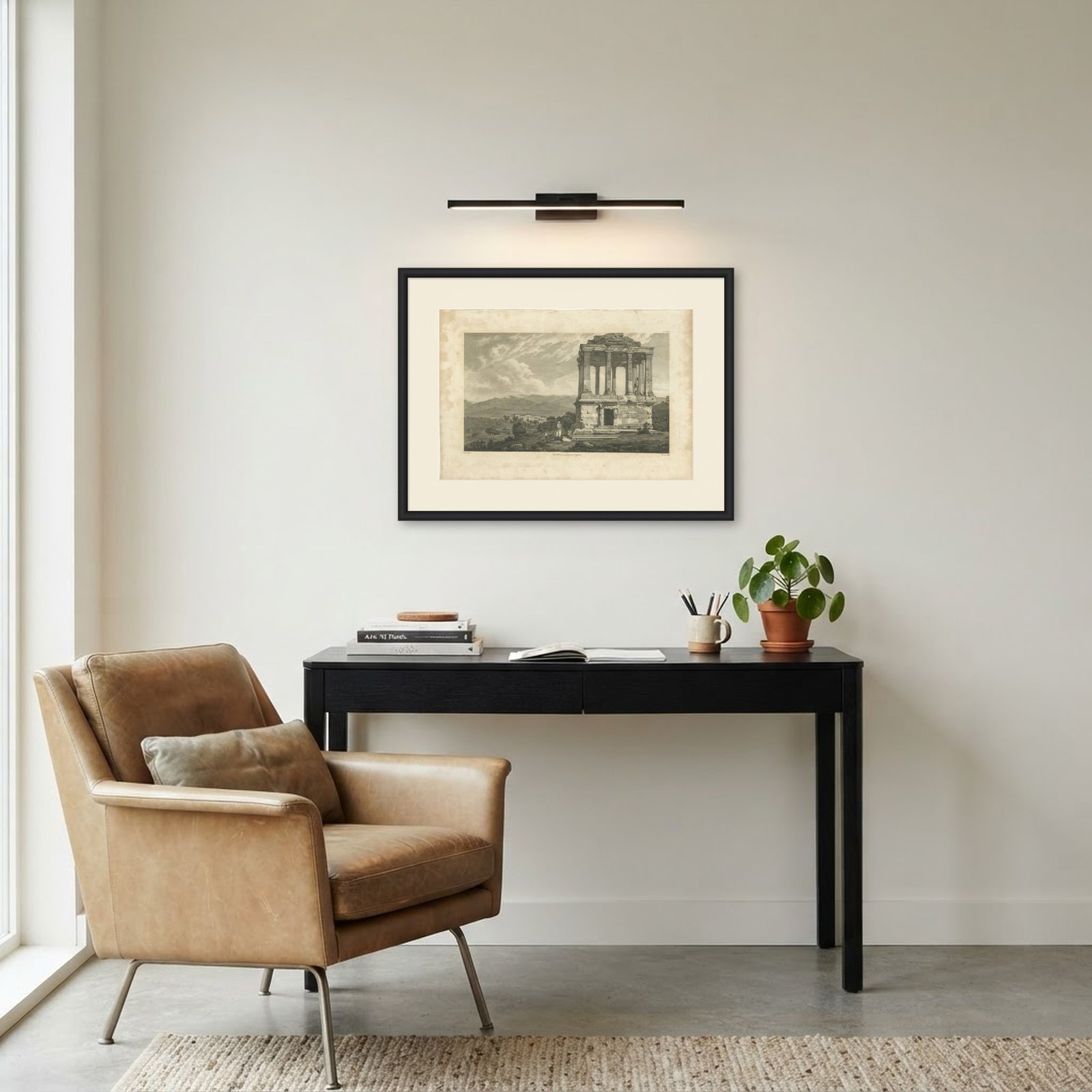
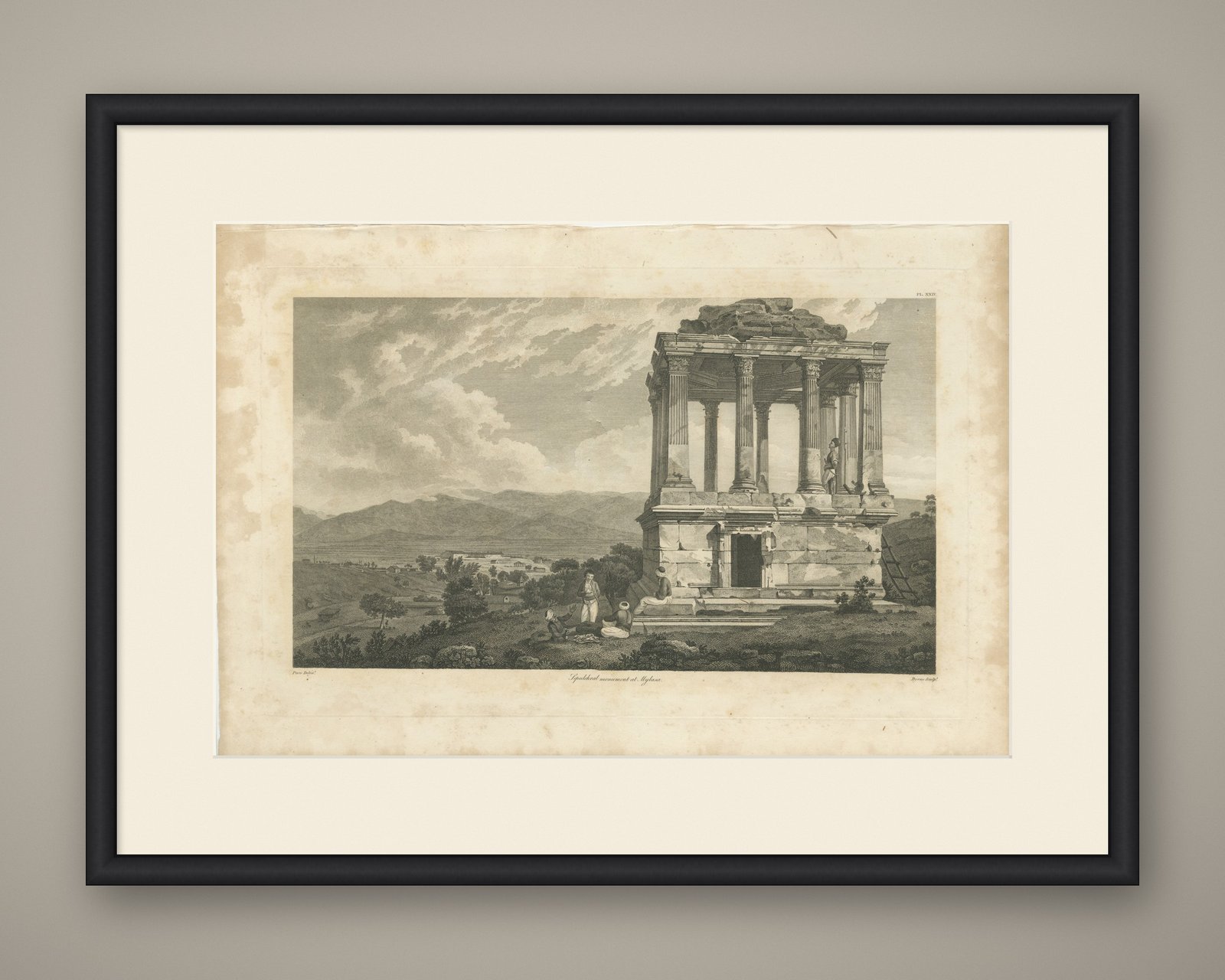
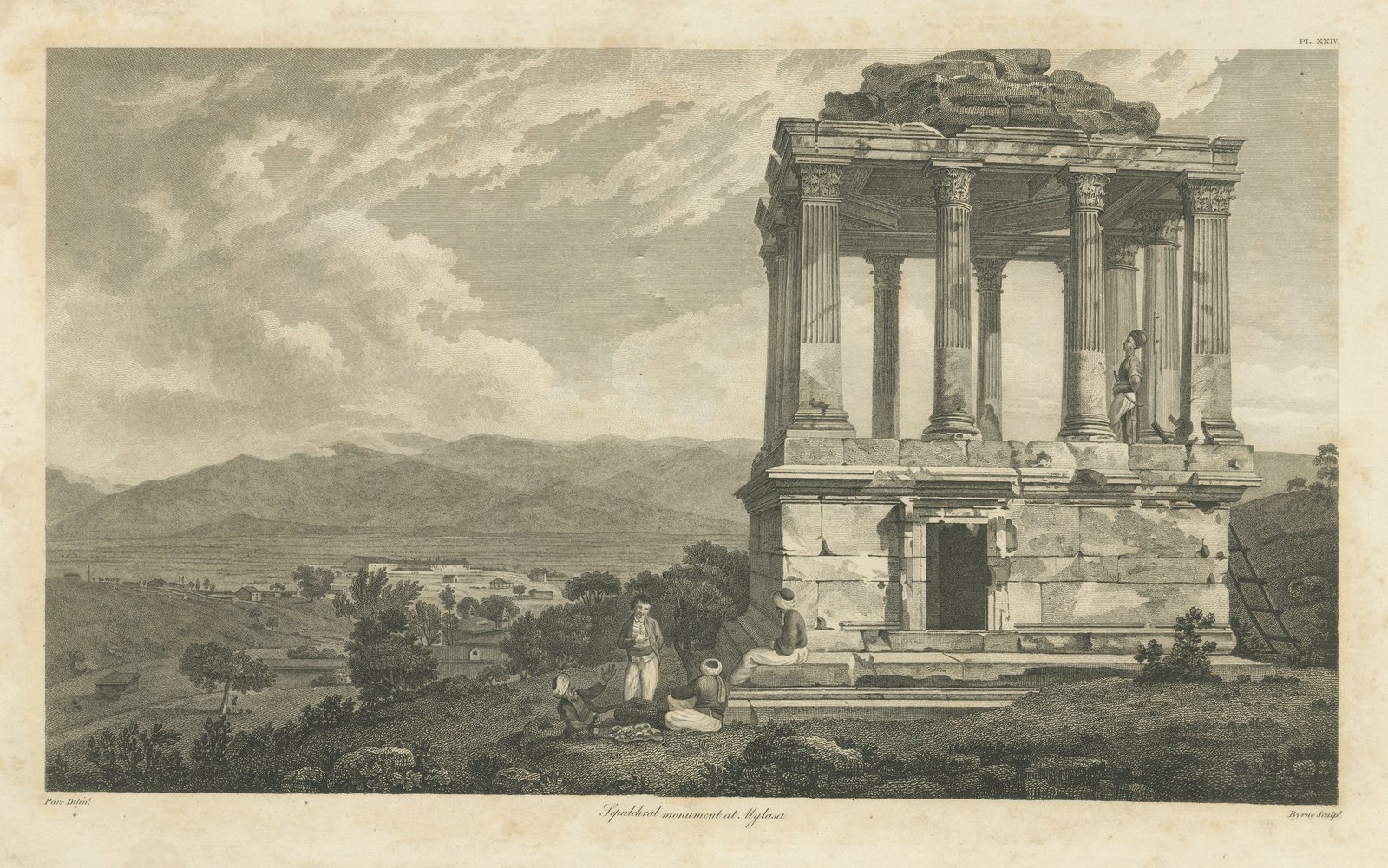
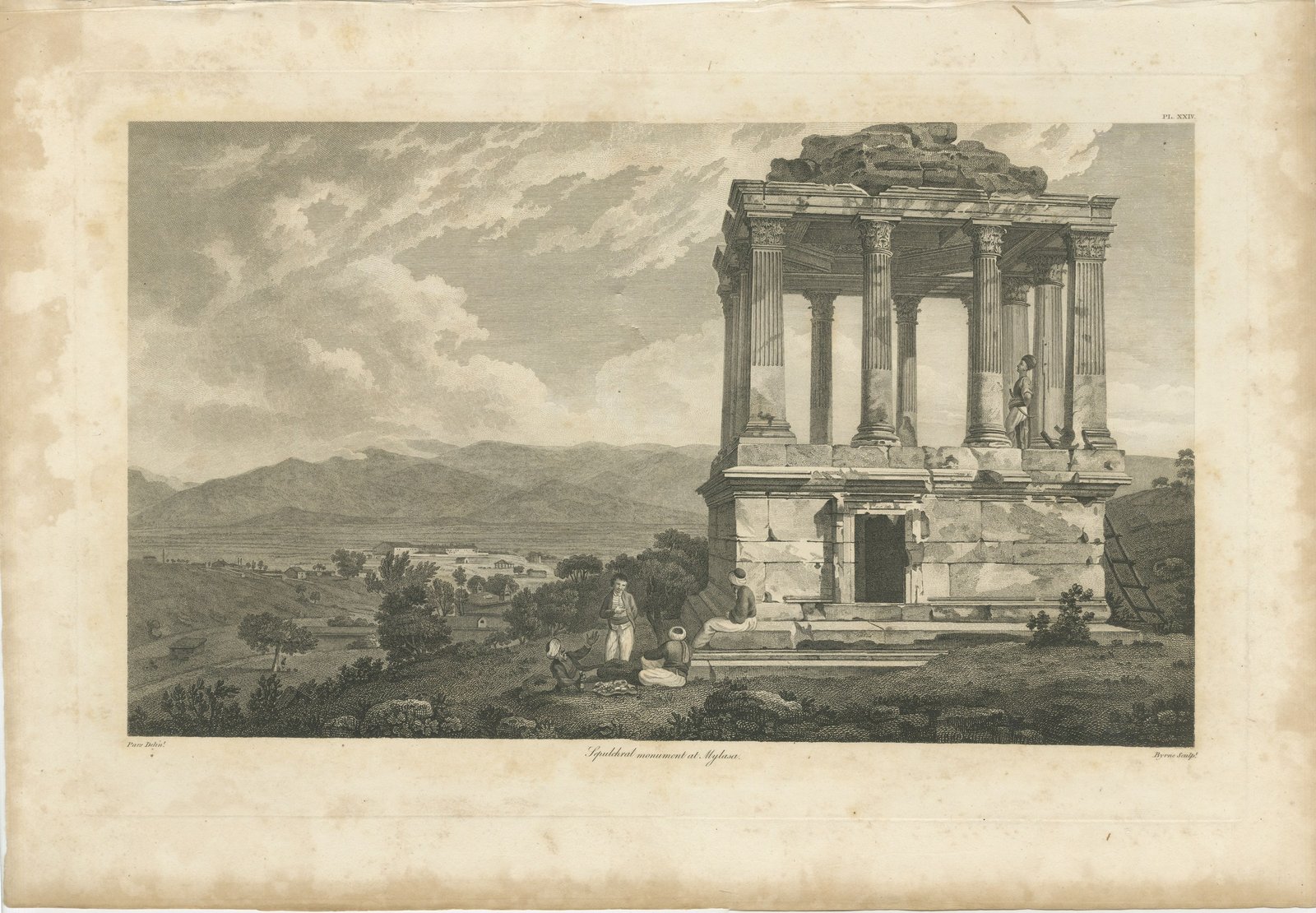
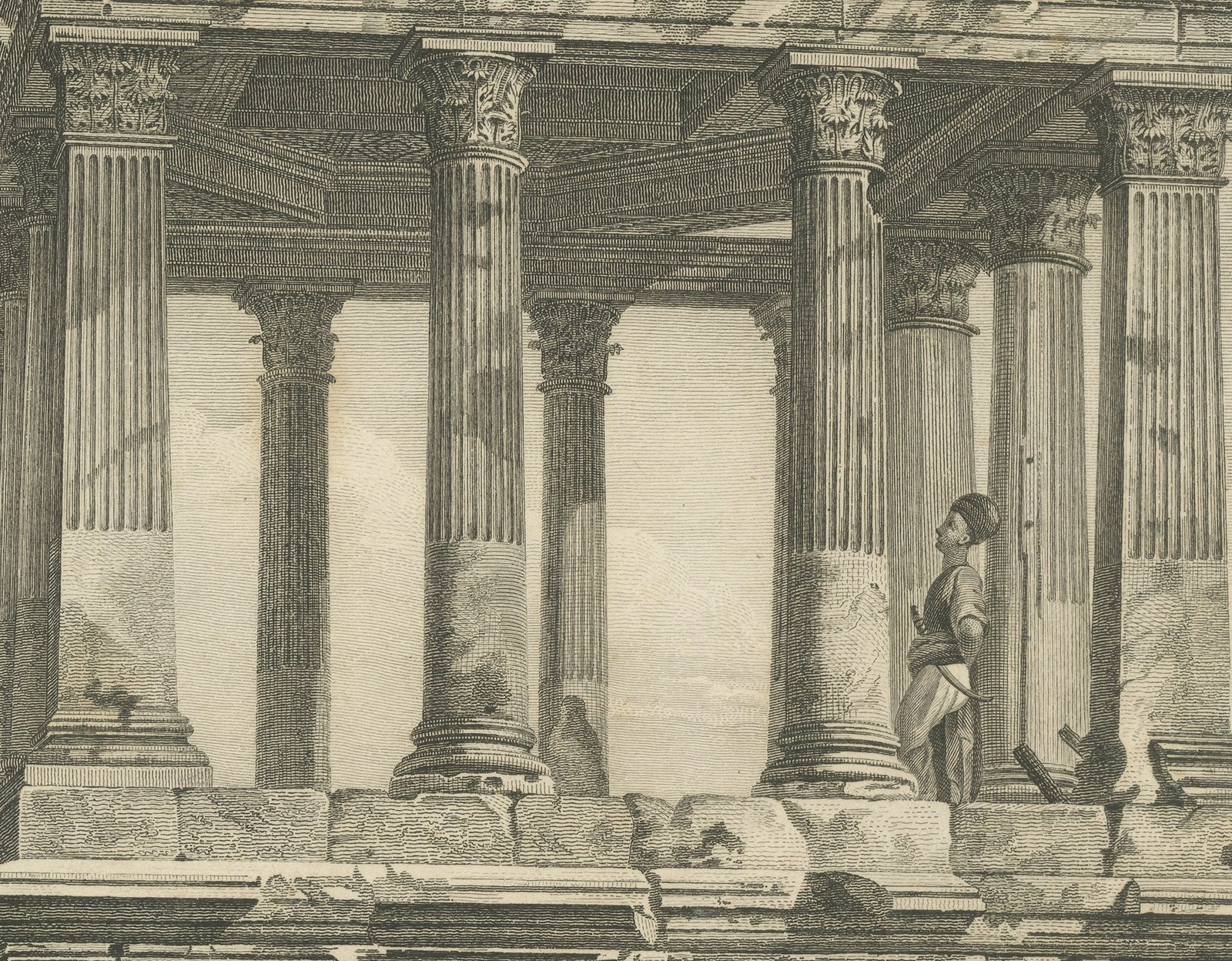
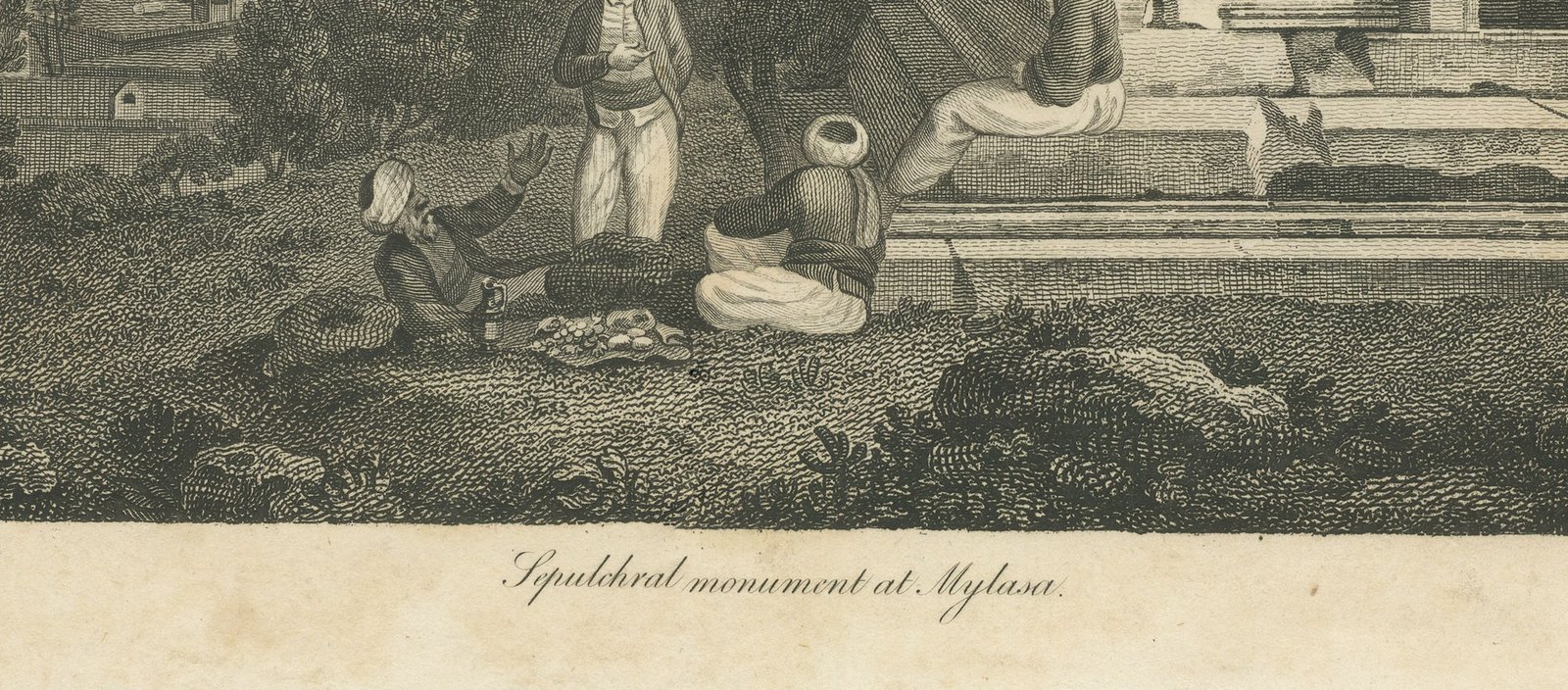
An original antique copper engraving, uncolored, published in 1797. The caption engraved below the image reads "Sepulchral monument at Mylasa."
The tomb stands on a hillside at the right. A high podium of large squared blocks, entered by a dark doorway, carries an open colonnade of fluted Corinthian columns that supports an entablature and the broken remains of a roof. A man stands among the columns, and a ladder leans against the podium at the right. In the foreground to the left of the tomb a group gathers on the grass, a bareheaded young man standing and two men in turbans seated around food laid on the ground, while another man in a turban sits on the podium steps. To the left the land falls away to a plain with a town of low buildings, and a long range of mountains closes the horizon under a cloudy sky.
The lower left is lettered "Pars Delint." and the lower right "Byrne Sculpt.", naming the painter William Pars and the engraver William Byrne. The plate number "PL. XXIV." is engraved at the upper right.
This plate was issued in Antiquities of Ionia, Part the Second, published by the Society of Dilettanti in London in 1797. William Pars (1742 to 1782) was the English painter of the Society's expedition to Ionia. Mylasa, the modern town of Milas in southwestern Turkey, was one of the chief cities of ancient Caria, and this tomb still stands there.
Light uneven toning, browner towards the edges. Marked handling soiling along all four edges. Foxing over much of the margin. Slight wear at the bottom left corner. Minor edge wear, shallow nicks along the left and top.
This is an original antique print, not a modern reproduction. This item is sold unframed.