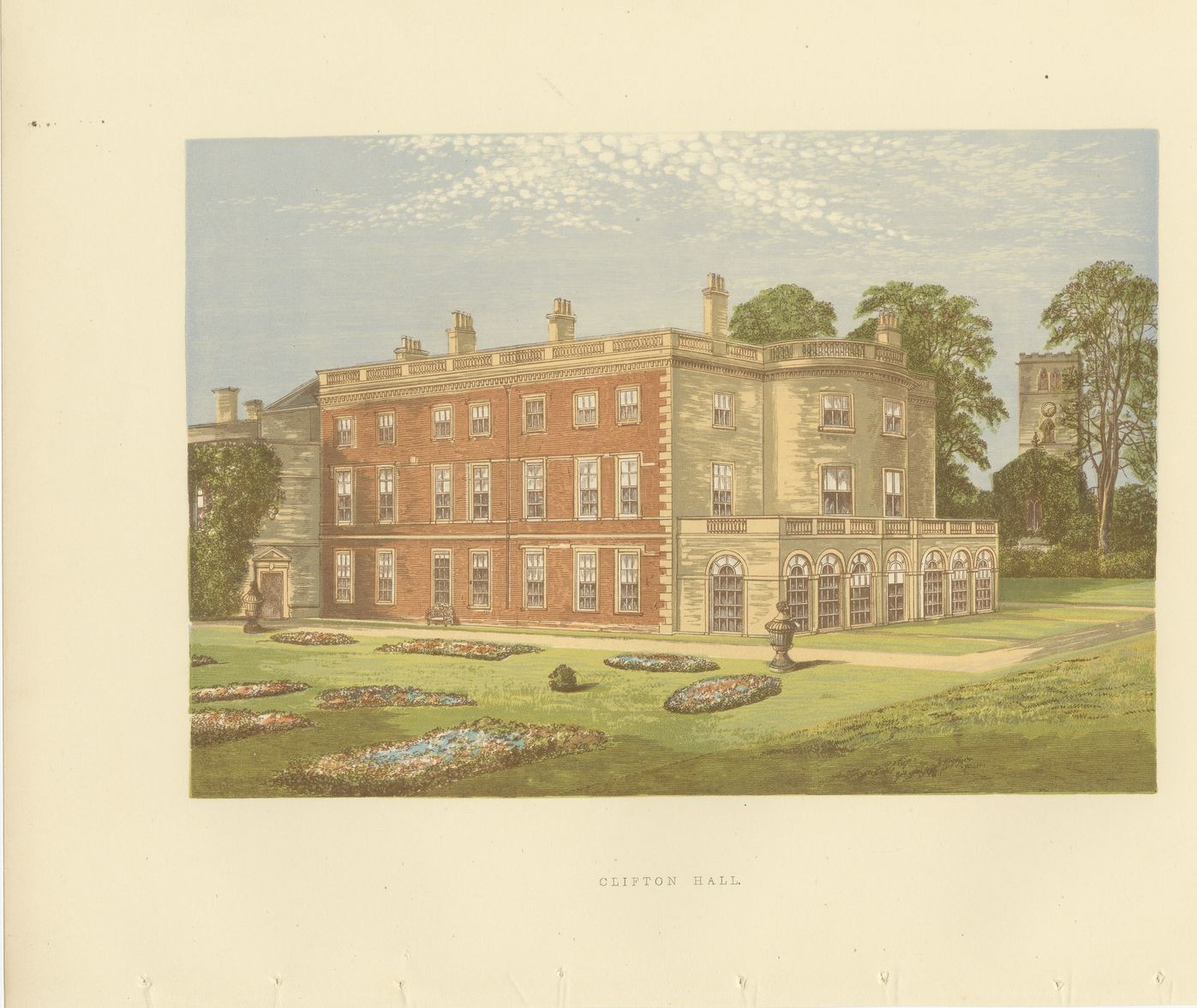
 The sheet, as you receive it
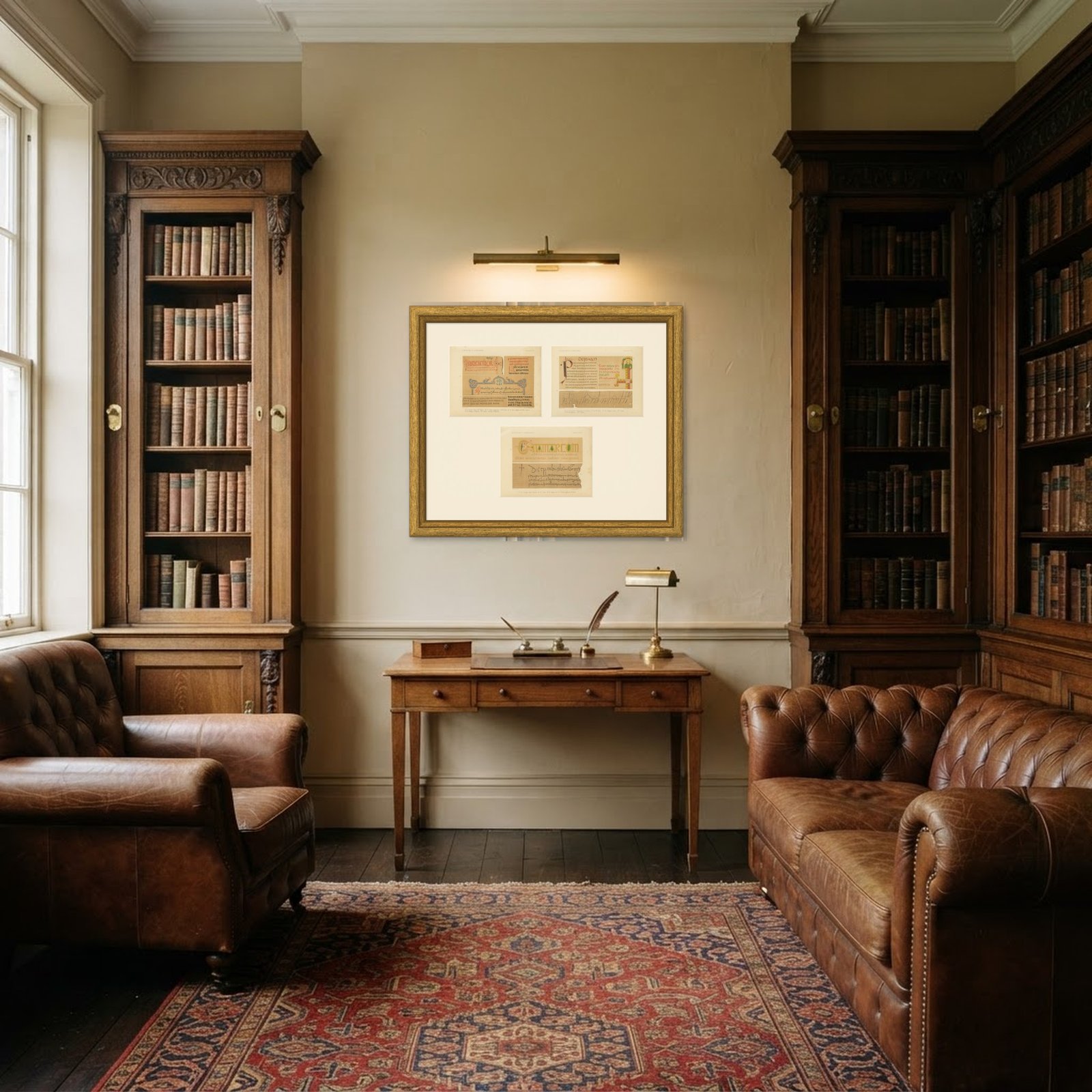 In the room 1
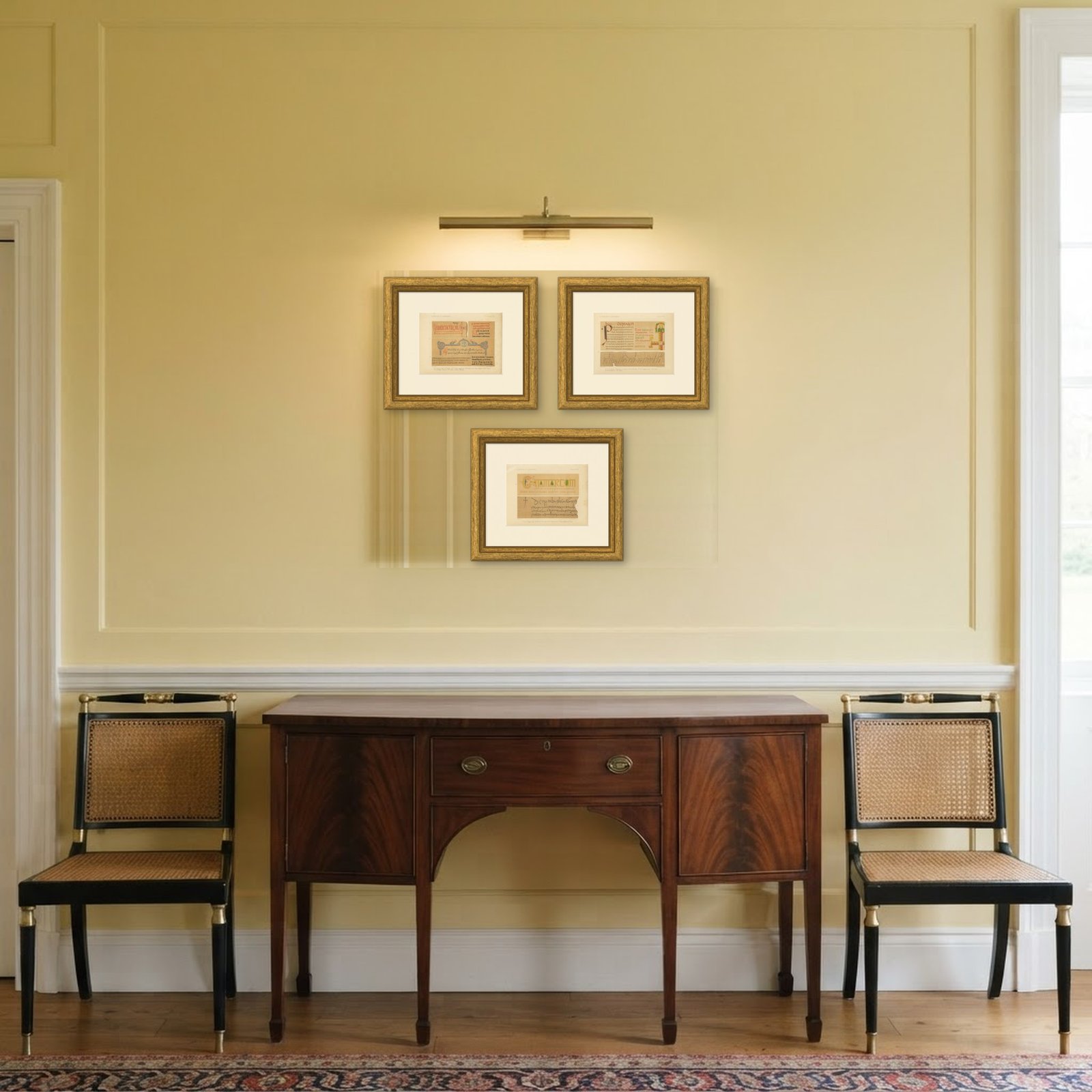




Interior designers: BarTrade members buy at their trade price. How it works
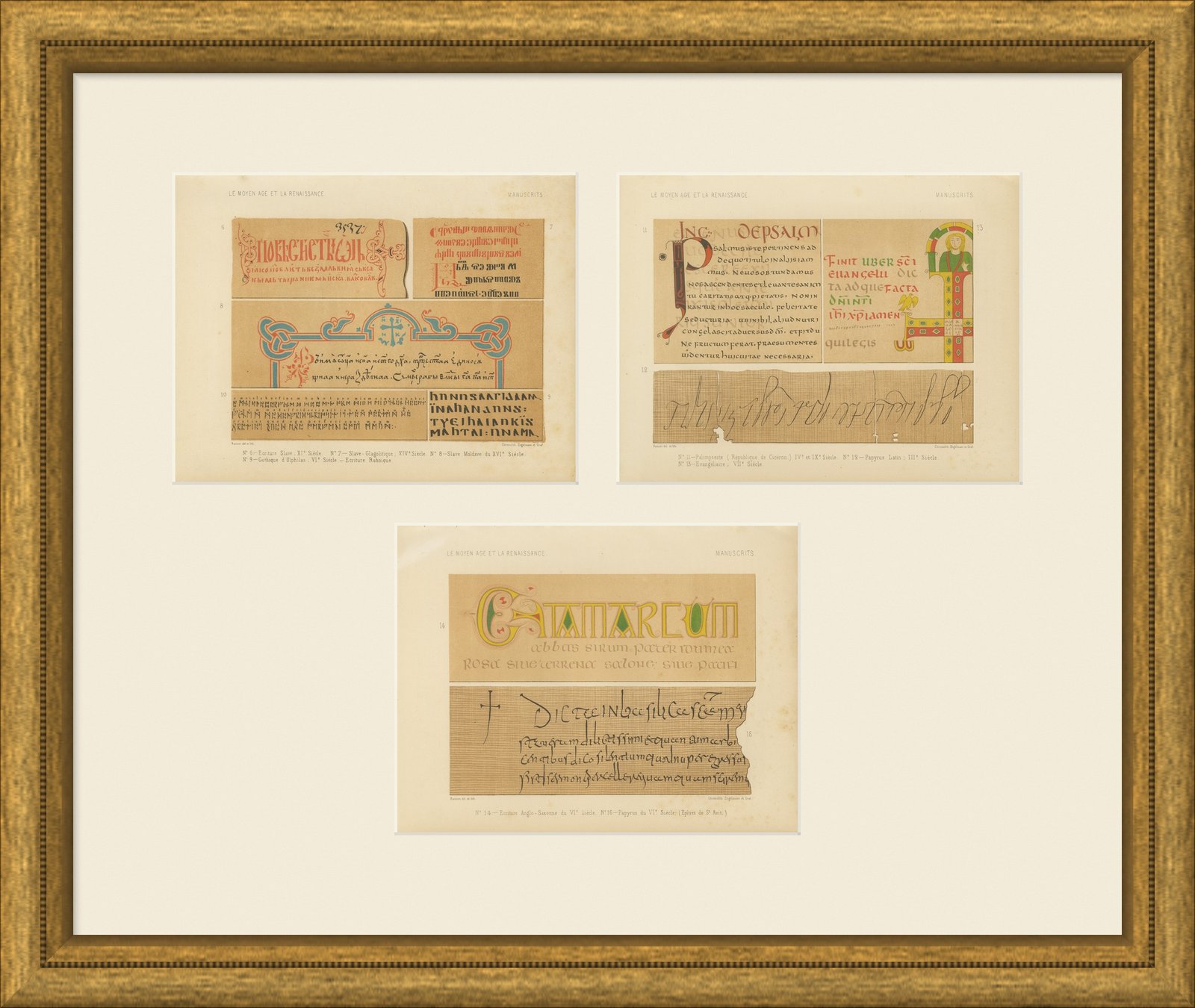
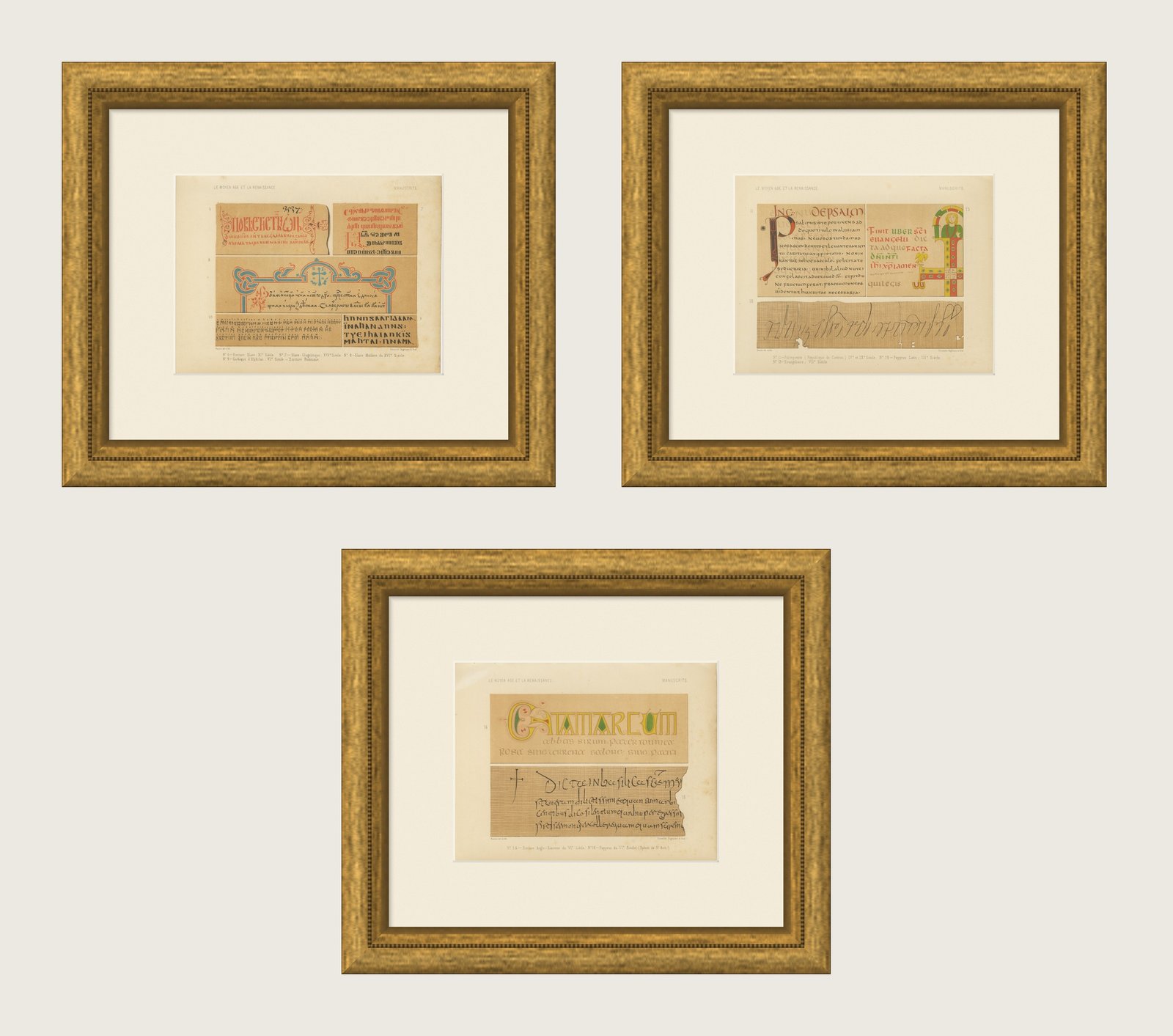
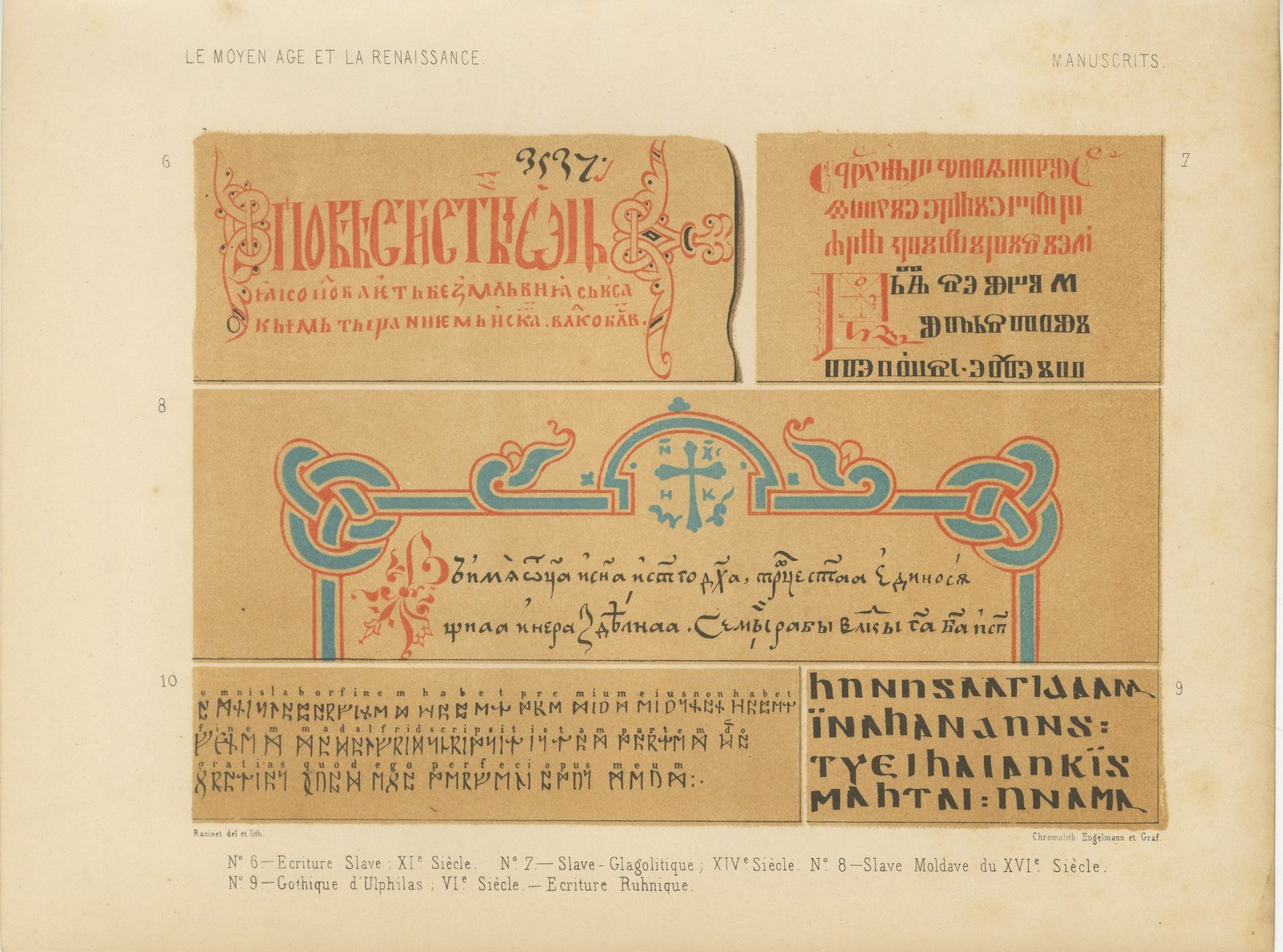
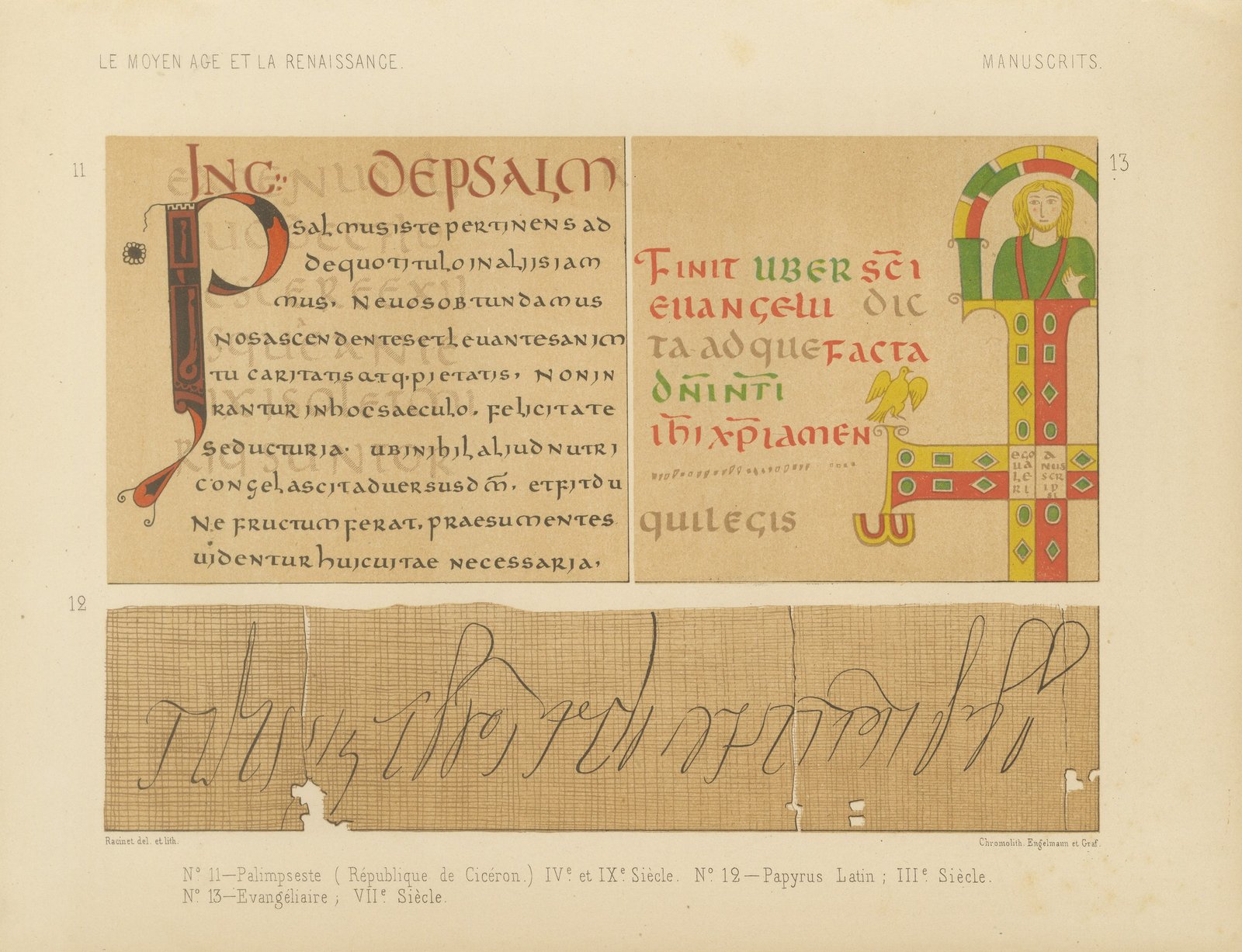
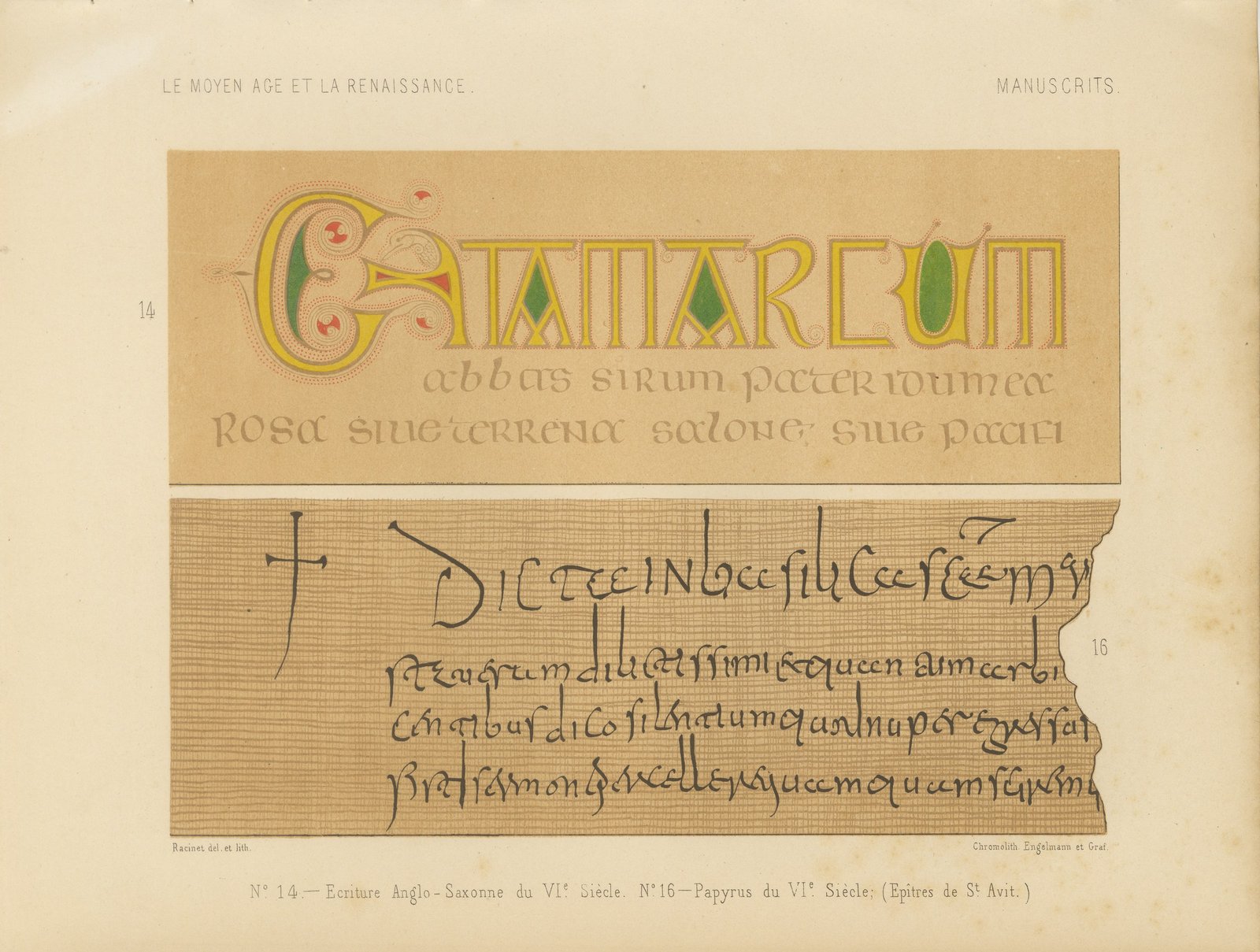
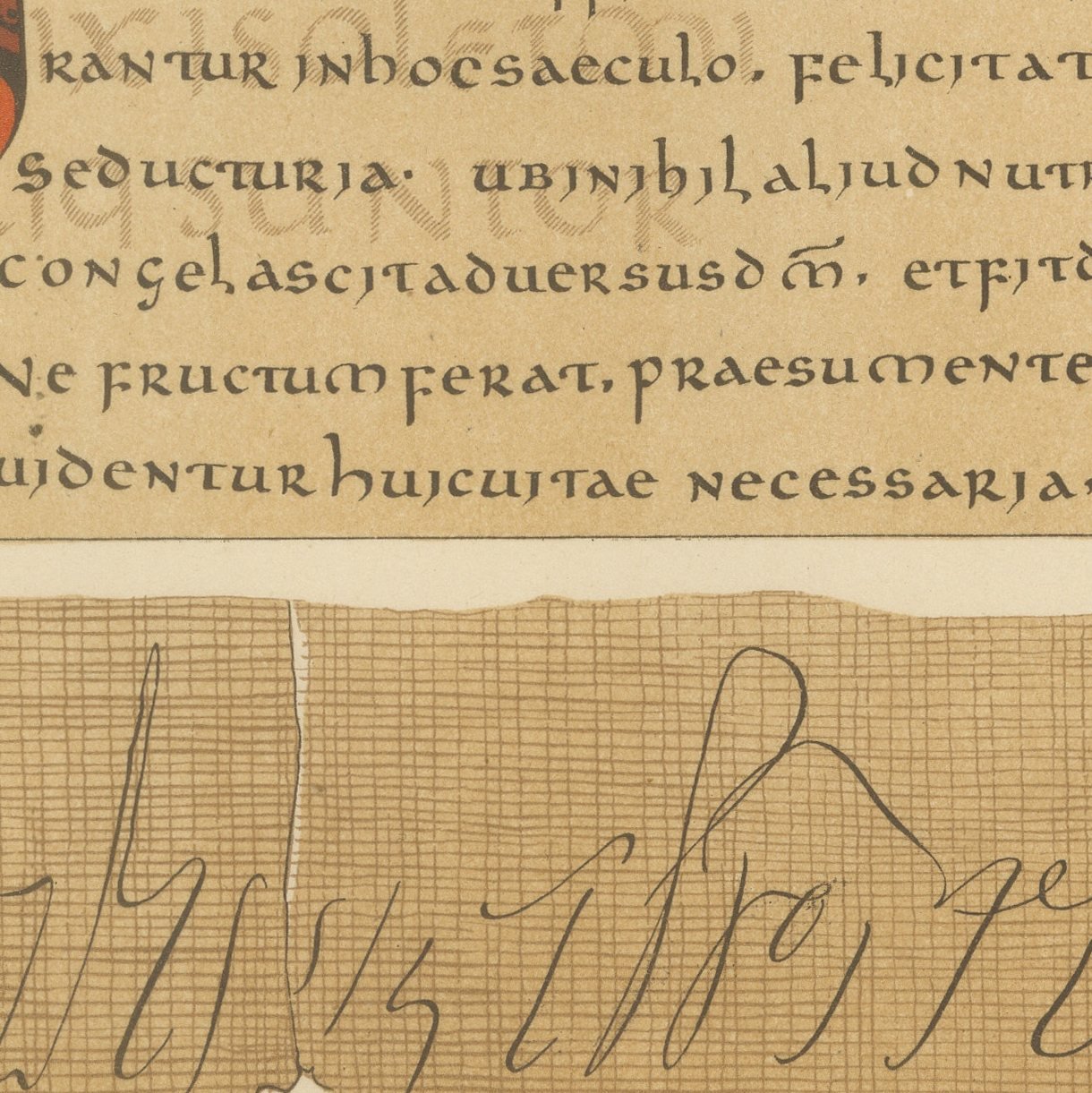
A set of three original antique chromolithographs of the earliest writing of Europe, sold together and not separately. All three were drawn and lithographed by A. Racinet and printed by Engelmann et Graf for Lacroix and Sere's Le Moyen Age et la Renaissance, Paris, 1849, and all three use the same device: the specimen is printed across a woven ochre ground that imitates the fiber of the original papyrus or parchment, with the losses and torn edges drawn exactly as they stood, and the sources lettered beneath. They are three original sheets sold together as one lot, and the set is never split.
One sheet gathers the stranger alphabets of early Europe: Slavonic writing of the eleventh century, Glagolitic of the fourteenth, Moldavian Slavonic of the sixteenth, the Gothic alphabet of Ulfilas of the sixth, and a band of runes with its Latin reading printed above it. A second carries three of the earliest Latin book hands with the damage of the originals left in: a palimpsest of Cicero's Republic bearing writing of the fourth and the ninth century, a Latin papyrus of the third, and an evangeliary of the seventh. The third shows two long bands of insular script, Anglo-Saxon writing of the sixth century and a papyrus of the same date carrying the Epistles of Saint Avitus, bishop of Vienne, breaking off at a ragged edge where the papyrus has perished.
Paul Lacroix, the bibliophile who wrote under the name Le Bibliophile Jacob, and the artist Ferdinand Sere produced Le Moyen Age et la Renaissance in Paris between 1848 and 1851. The present sheet is from Tome Second of 1849. The volume is remembered for the quality of its chromolithography, much of it printed by Lemercier of the rue de Seine, and for the care with which its draughtsmen copied originals that in several cases have since been damaged or lost. The three sheets together make a short history of how Europe learned to write, from runes and the Gothic alphabet of Ulfilas through the Latin papyri to the insular hands of the sixth century. They share a wide landscape format, a size and a palette, so they hang in a row above a bookcase or along a corridor without needing to be matched further. Calligraphers, letterers and type designers buy them as readily as collectors of manuscript material do.
Light uneven toning, browner towards the edges. Marked handling soiling along the edges of all three sheets. Scattered foxing in the margins of all three sheets. All corners complete on every sheet.
These are original antique prints, not modern reproductions. This item is sold unframed.