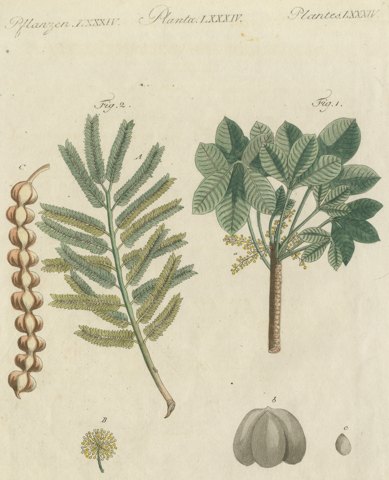
 The sheet, as you receive it
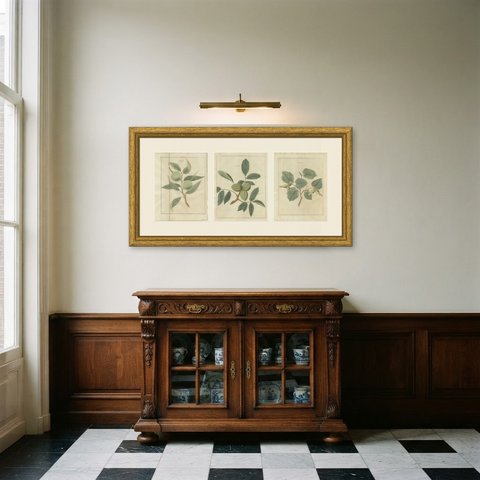
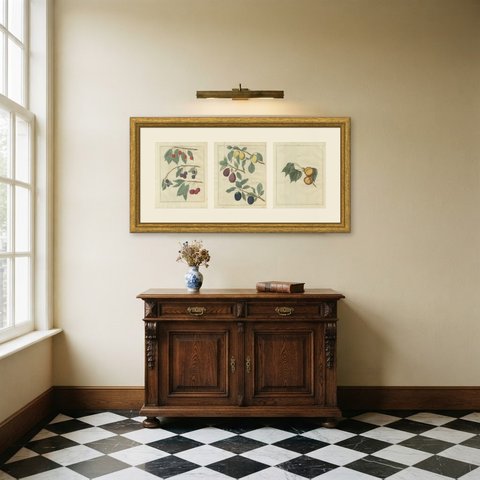
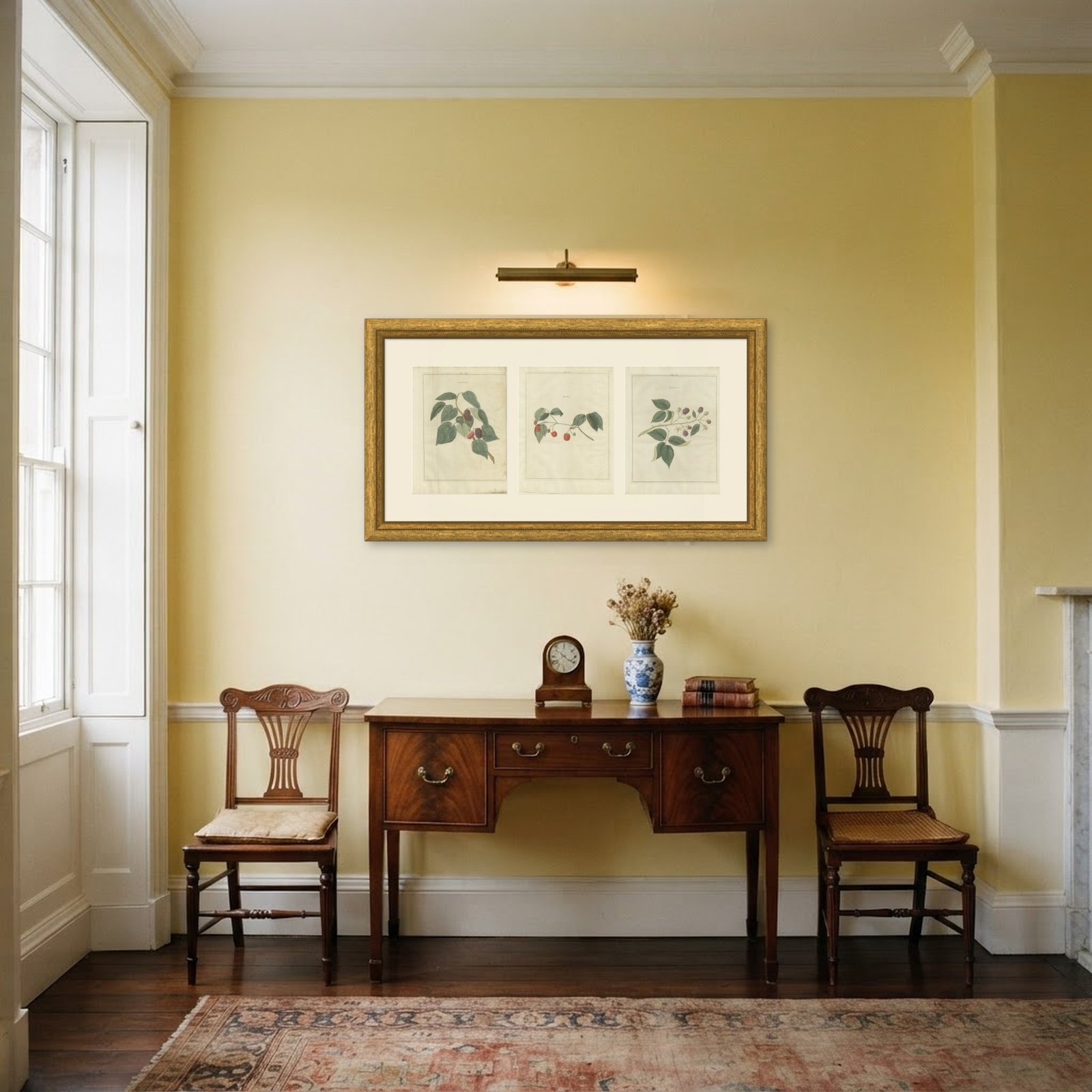 In the room 1





Interior designers: BarTrade members buy at their trade price. How it works
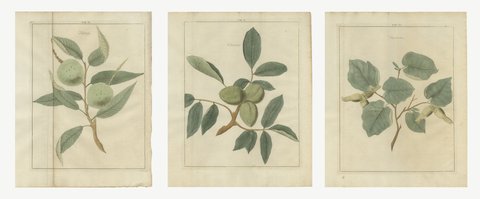
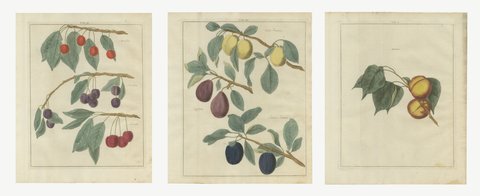
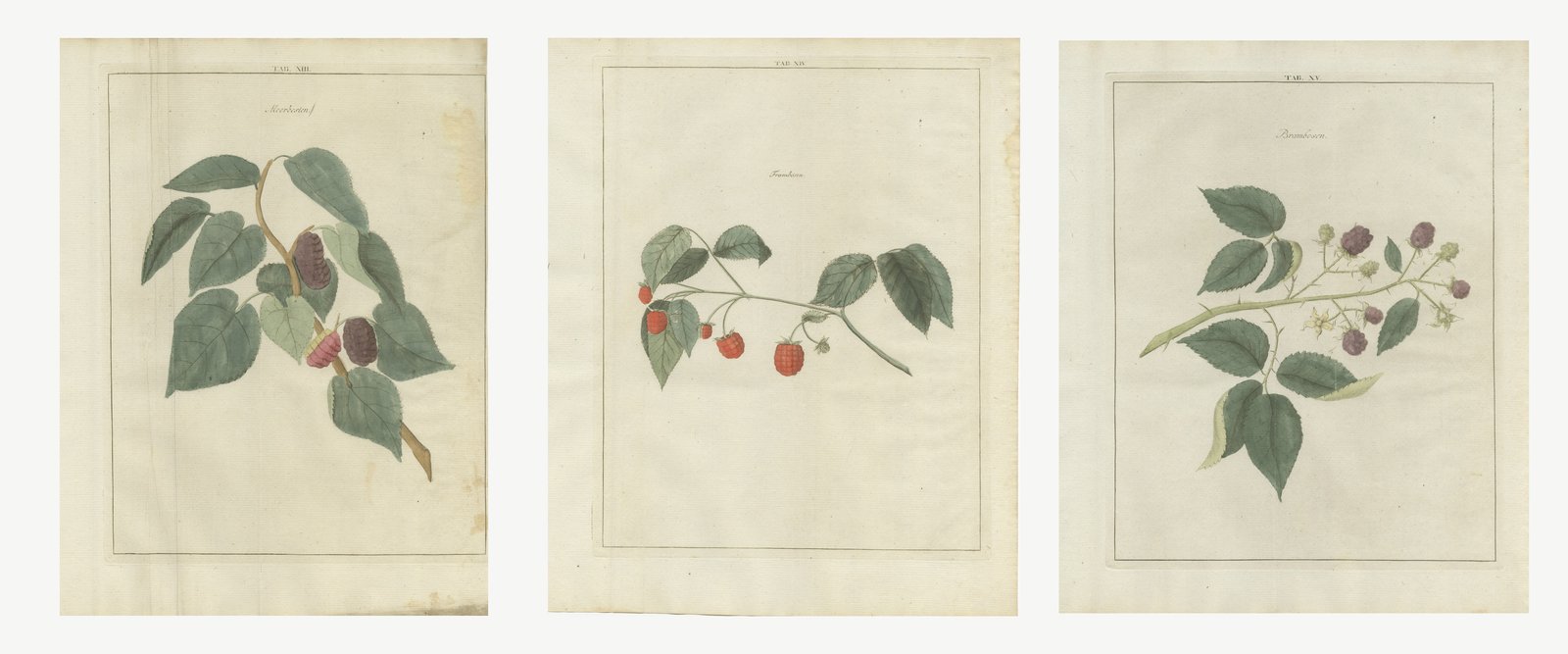
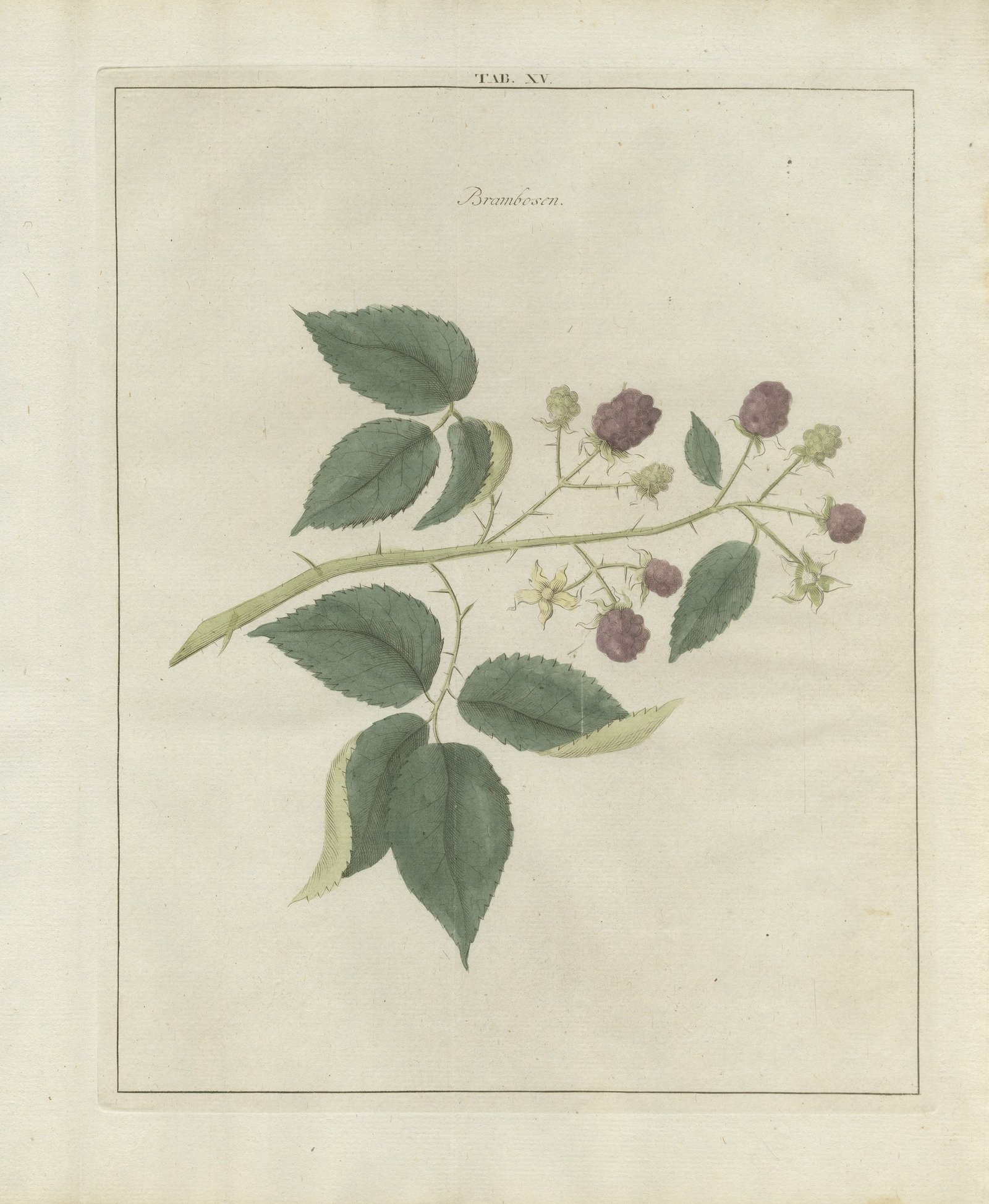
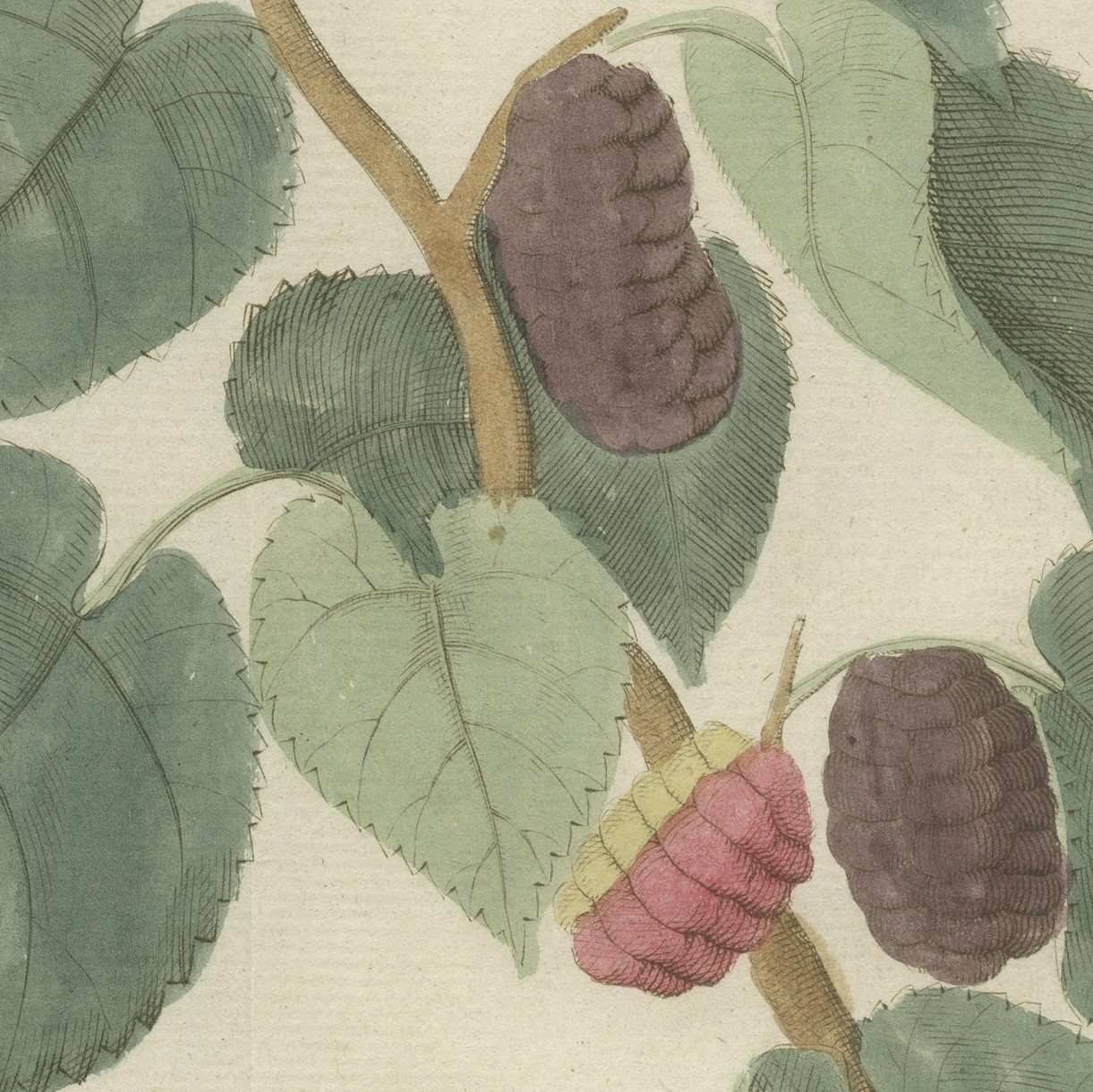
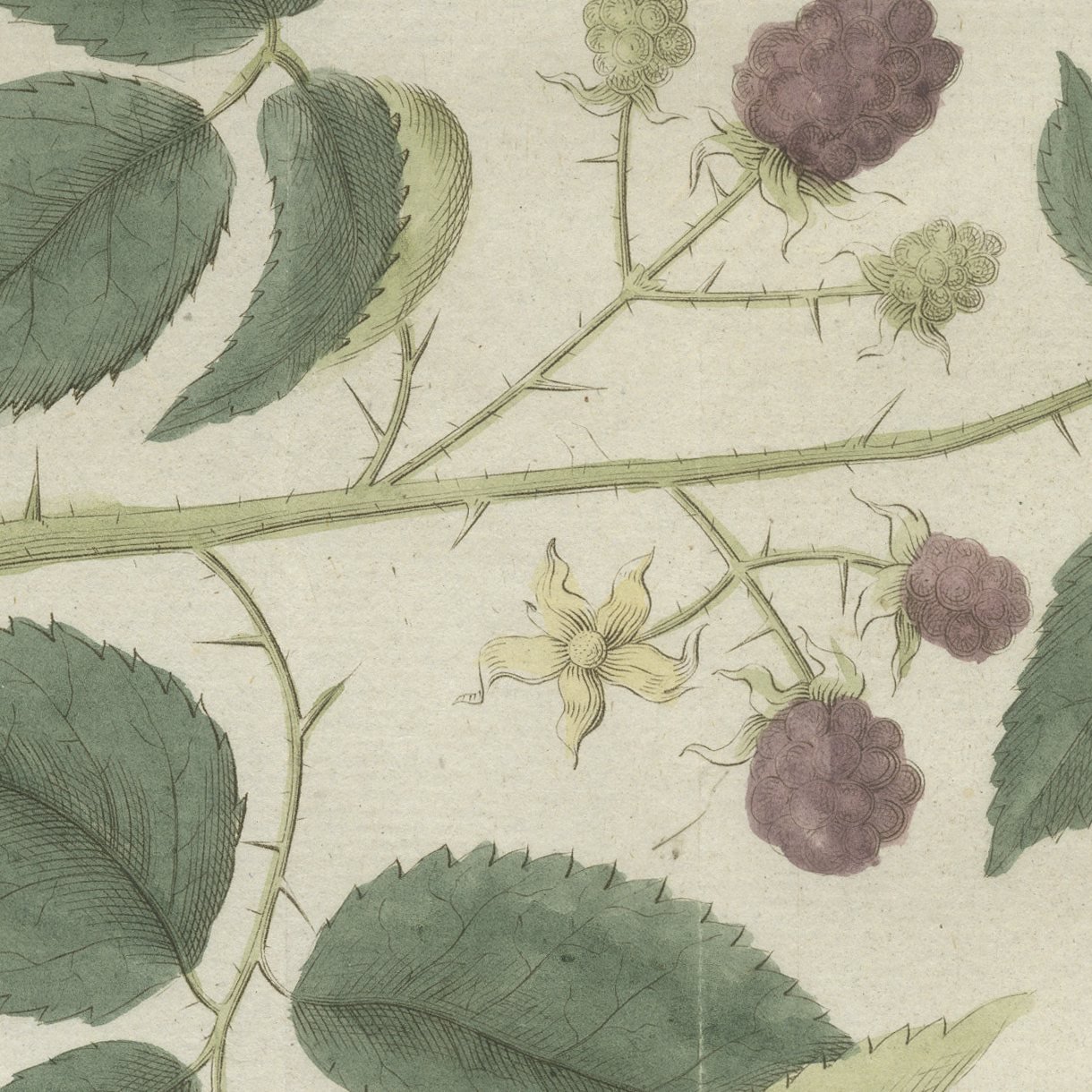
A set of three original hand-colored antique fruit plates: mulberries, raspberries and blackberries, the soft fruit sheets from Johann Hermann Knoop's Dutch pomological folio, sold as one group. The printed numbers are consecutive, "TAB. XIII", "TAB. XIV" and "TAB. XV", and the sheets come from a single copy of the book, so the paper and the original watercolor match throughout. Each plate carries one species on its own shoot or cane with the Dutch name lettered in engraved script, and each was drawn from the living plant. All three are compound berries, built up bead by bead in the engraving and then colored bead by bead by hand, which gives the group a shared texture a buyer notices at once. They are three original sheets sold together as one lot, and the set is never split.
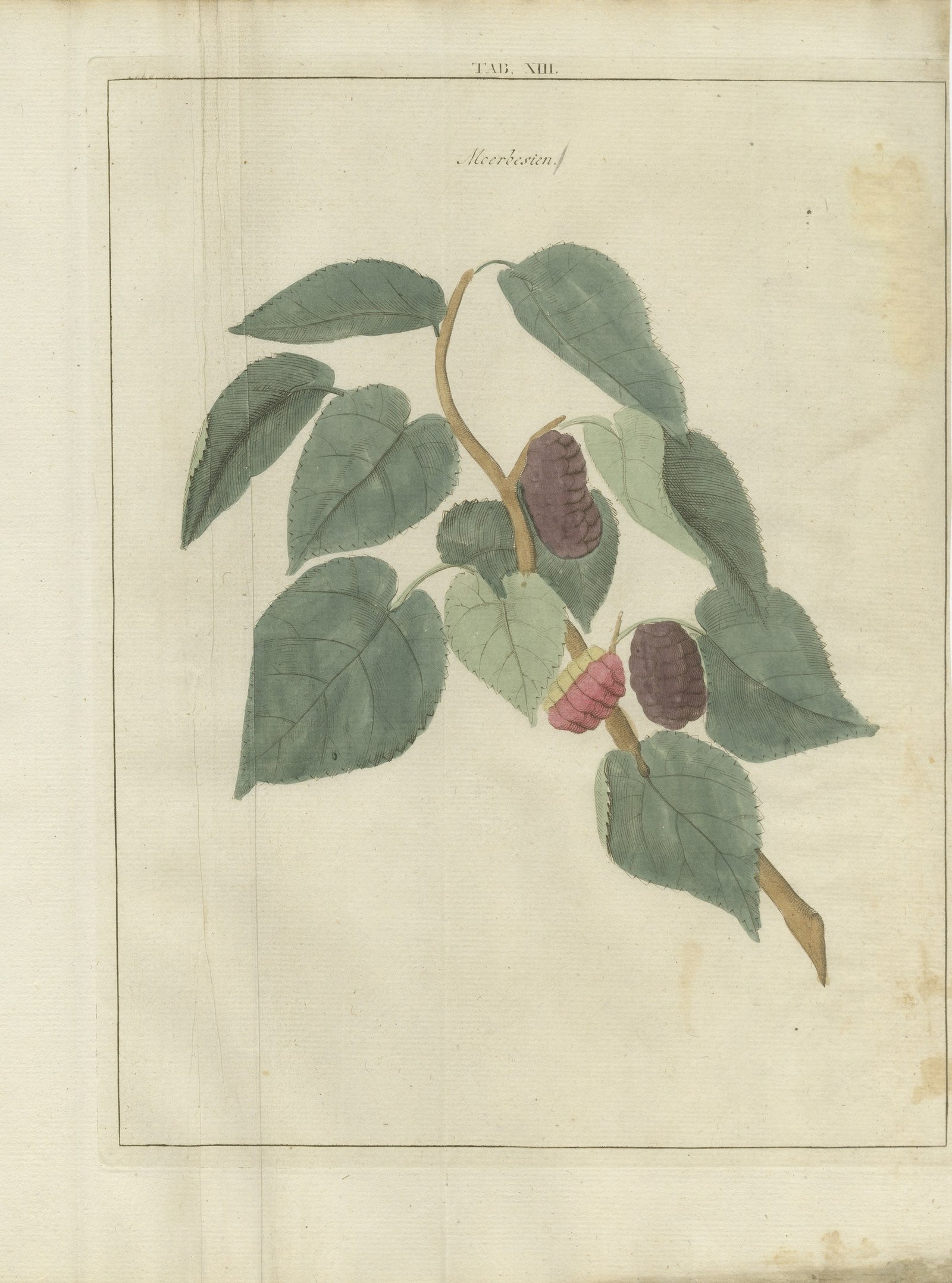
Mulberries open the group on plate "TAB. XIII", three berries caught at three stages on one shoot: a green fruit flushed with pink, a rose red one, and a third purple so deep that its separate beads survive only as reserved highlights. Broad heart-shaped leaves frame them. Reading left to right the sheet is a lesson in ripening, and it gives the trio its darkest and richest color. Raspberries sit in the middle of the group on plate "TAB. XIV", six fruits on a leafy cane, five ripe and one still green with a blush starting on one side. Each berry is engraved bead by bead and colored a clear rose red that lifts to coral in the light, and the pale undersides of the compound leaves keep the sheet airy. It is the lightest of the three, and it carries the eye from the dark mulberries onward. Blackberries close the group on plate "TAB. XV", eight fruits and two open pale pink flowers on one thorny cane, running from hard green through red to a glossy near-black, with hooked thorns tinted a dry reddish brown along the stem. Flower and fruit together is how a bramble really grows, and that busyness makes it the liveliest of the three, a full stop at the end of the sequence.
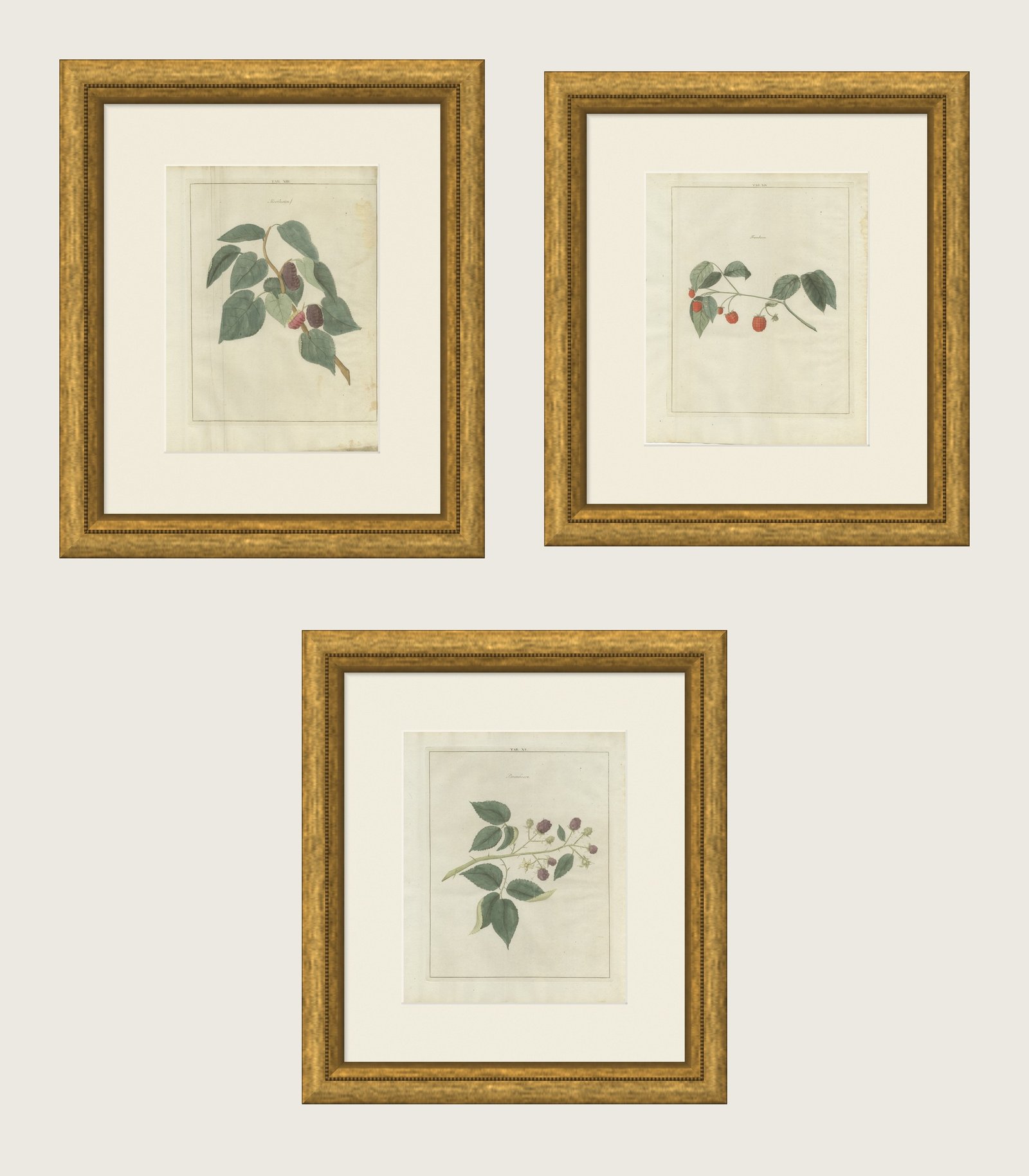
The plate comes from Johann Hermann Knoop's Beschrijving en Afbeeldingen van de beste soorten van Appelen en Peeren, published at Amsterdam and Dordrecht by Allart, Holtrop, de Leeuw and Krap in 1790, with a preface by the Zutphen minister and naturalist Johannes Florentius Martinet. Knoop was gardener to the widow of the Frisian stadtholder at Leeuwarden and the first systematic Dutch pomologist. He drew every fruit from the living specimen, and the plates are lettered ad vivum to say so. The engraving is on copper and the color is original hand color in watercolor, laid over the engraved hatching. Three sheets of compound soft fruit from one book make a more interesting group than any one of them alone, because the comparison is the point: the same engraving method and the same brush produce the deep purple of the mulberry, the clear rose of the raspberry and the glossy near-black of the bramble, and seeing them in a row shows how much the colorist could do with a narrow repertoire. The reds and purples are strong without being loud, so the group suits a kitchen, a breakfast room or a hallway, hung as a row of three in light frames with wide mounts. Soft fruit plates in original hand color are rarely found still together in a matched run.
Light uneven toning, browner towards the edges. Marked handling soiling along the edges of all three sheets. Scattered foxing in the margins of all three sheets. All corners complete on every sheet.
These are original antique plates, not modern reproductions. This item is sold unframed.