 The sheet, as you receive it
 In the room


Interior designers: BarTrade members buy at their trade price. How it works
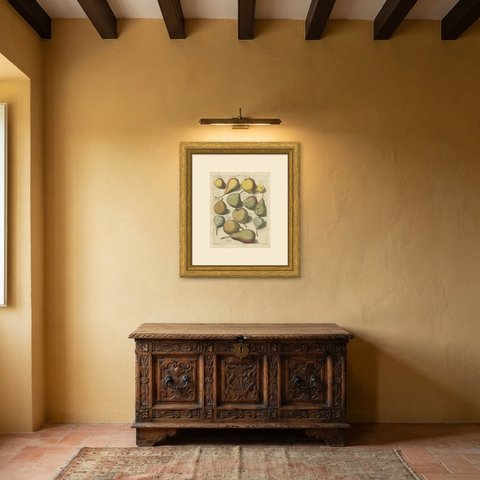
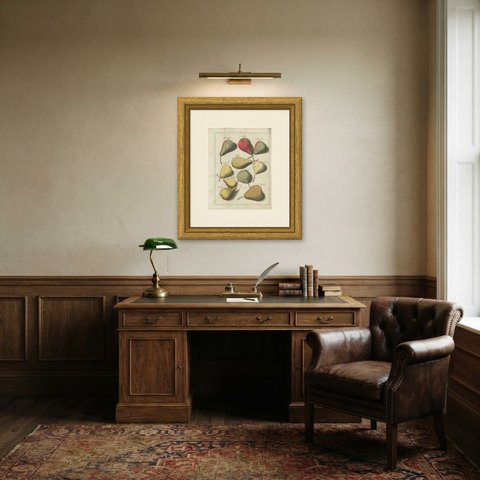
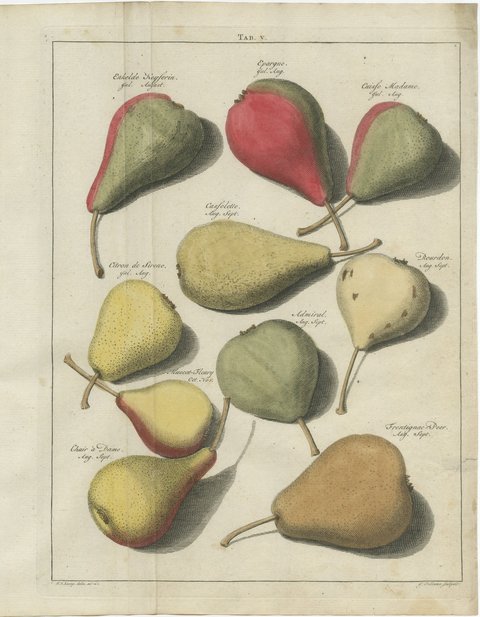
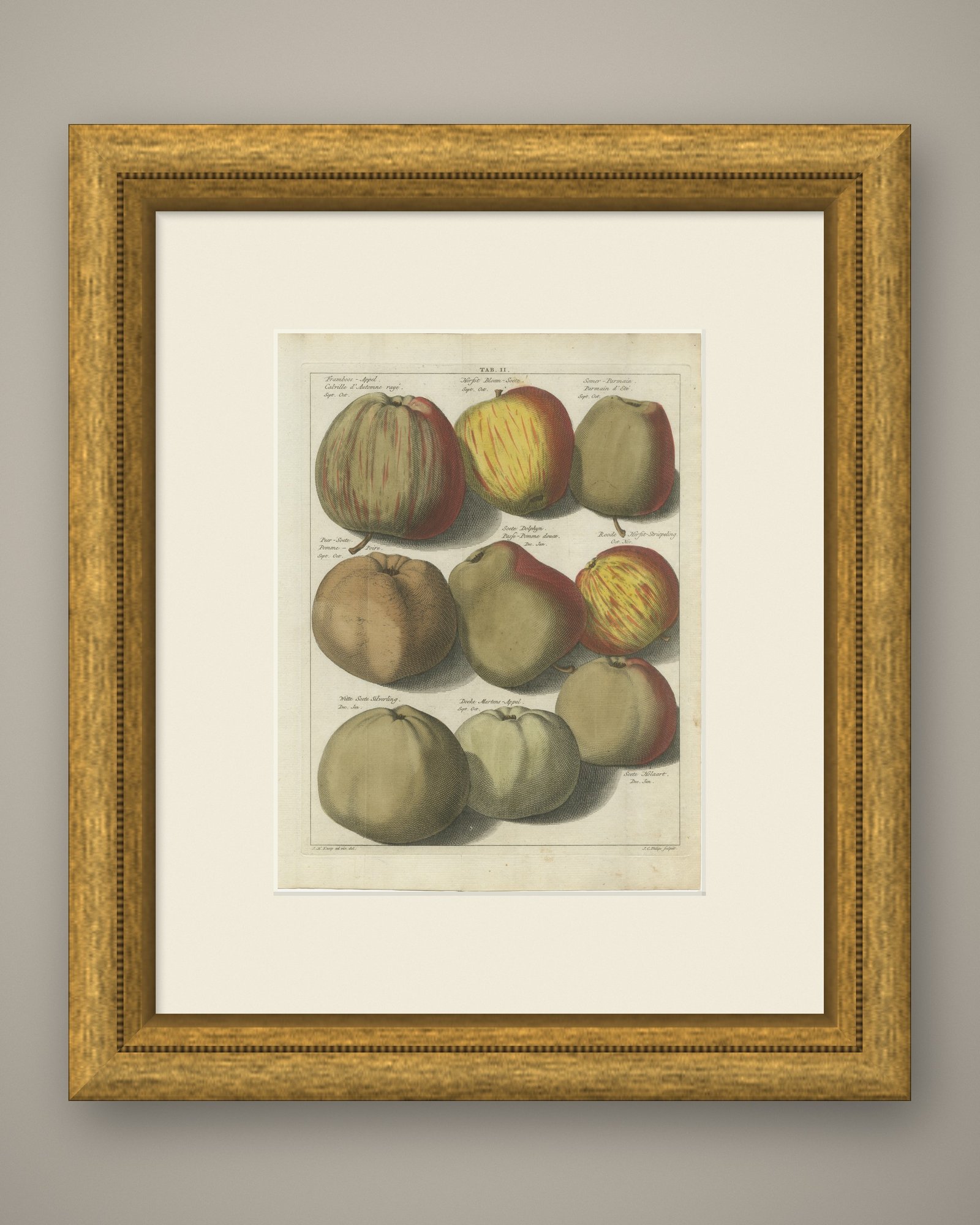
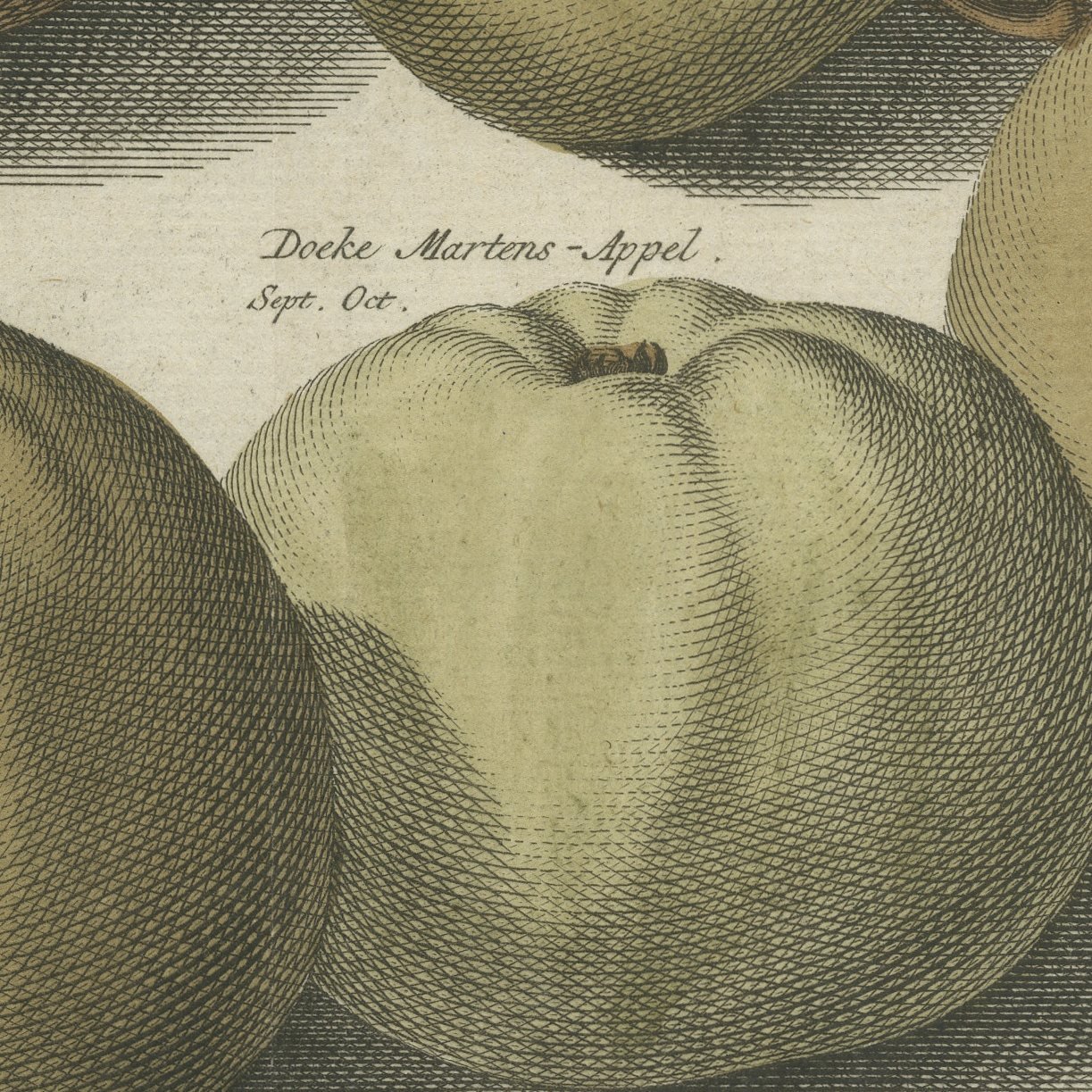
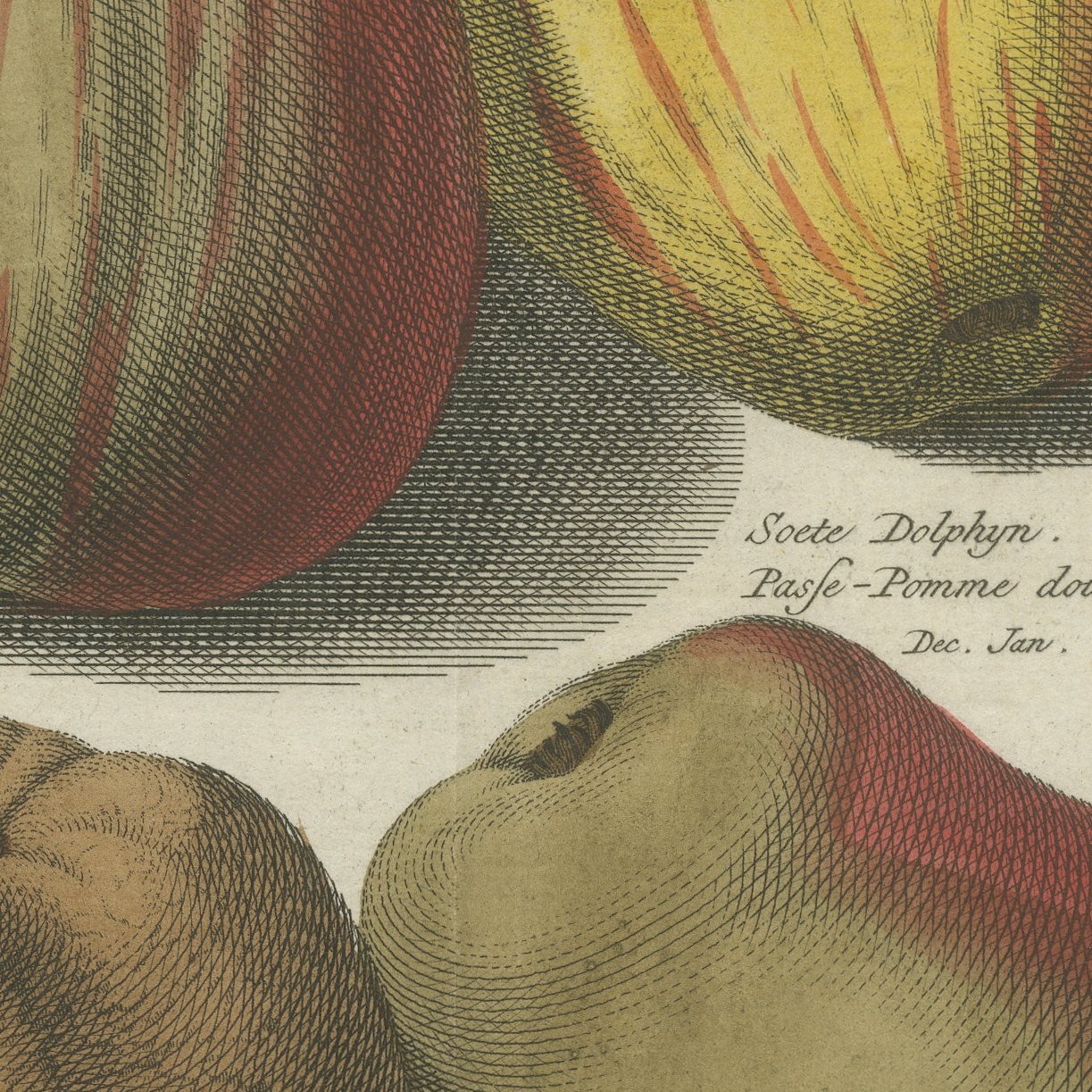
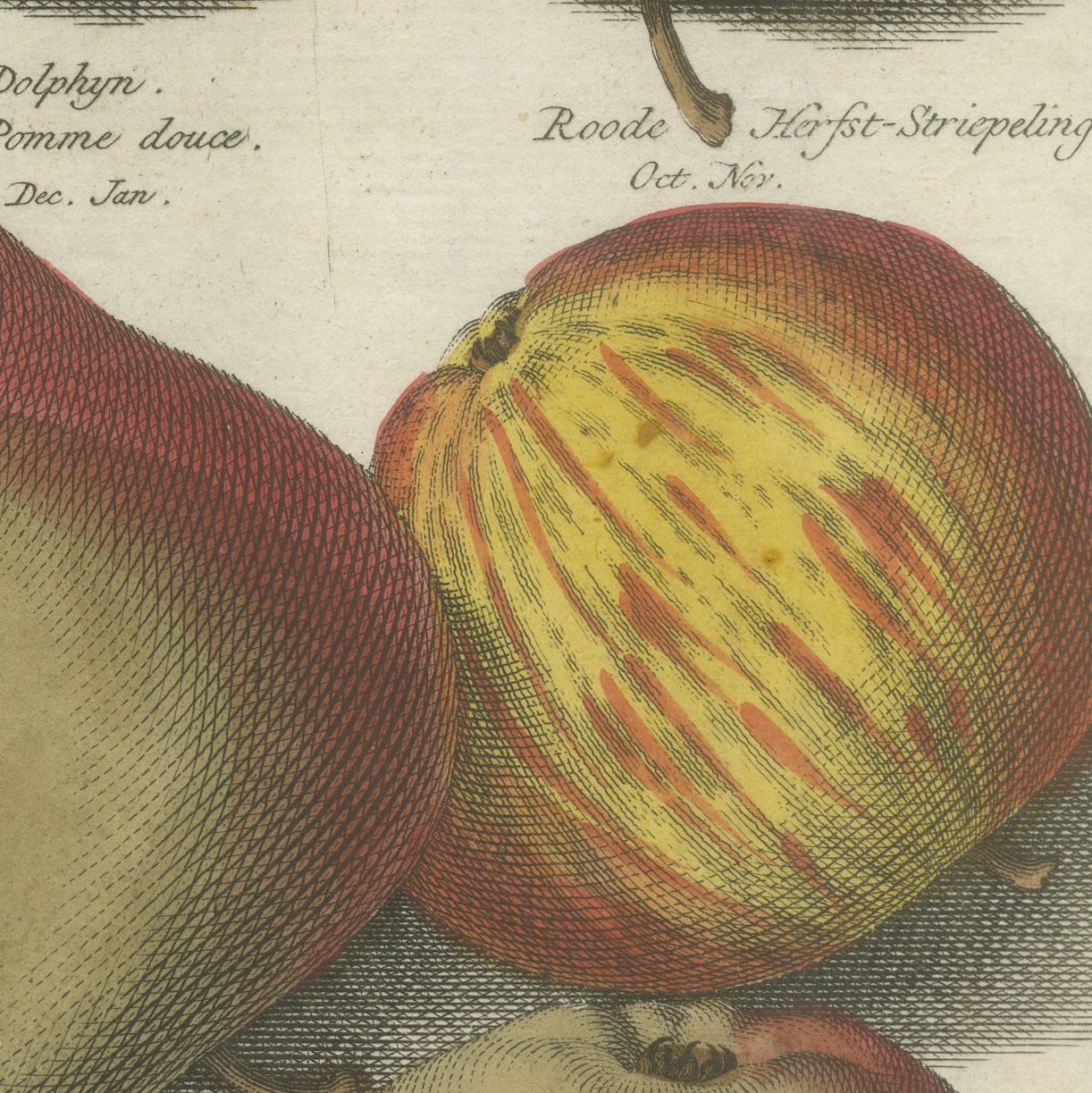
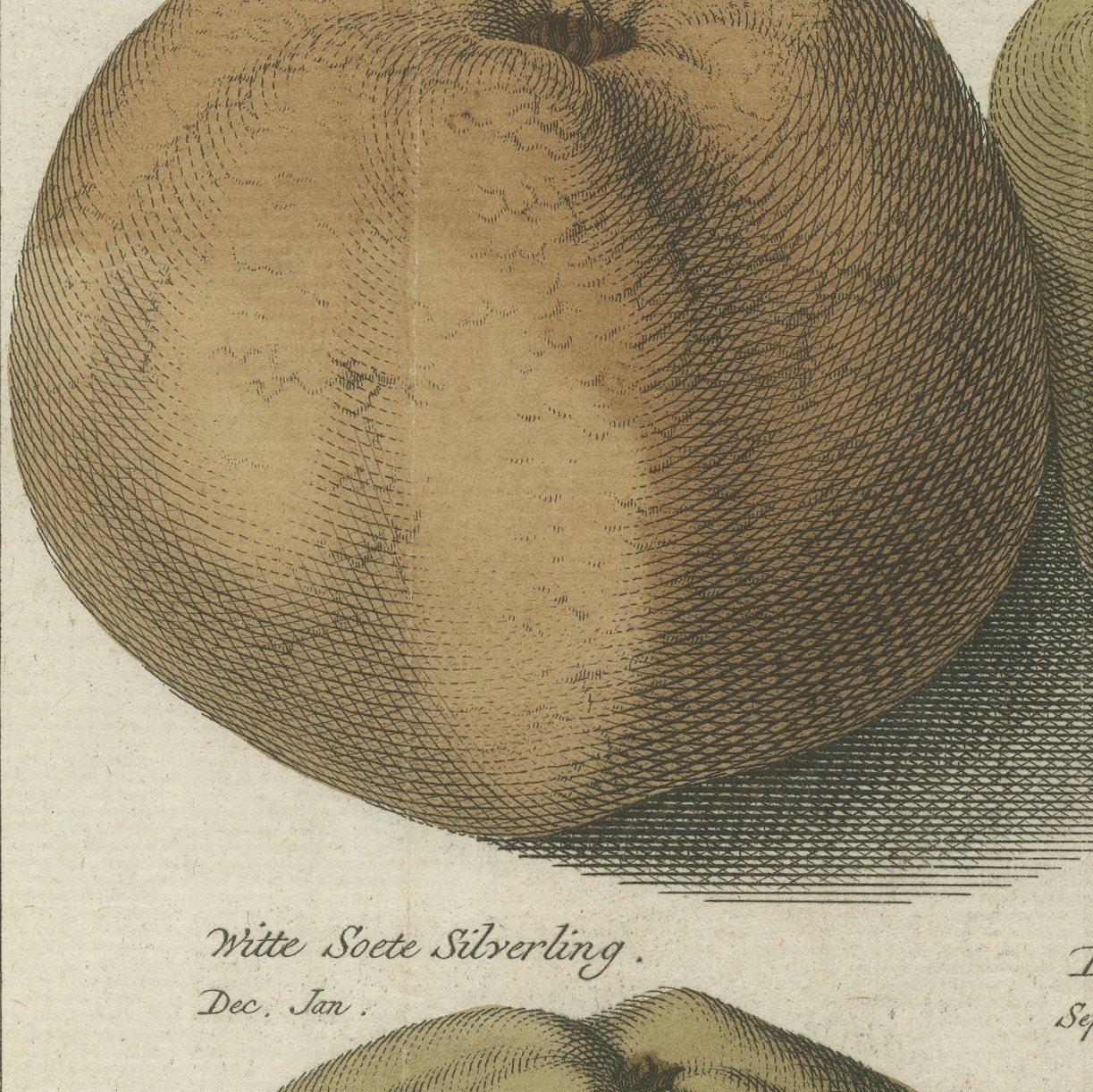
A hand-colored copper engraving of nine named Dutch apple varieties, lettered individually and dated by the months in which each fruit ripens. The plate carries Framboos-Appel or Calville d'Automne rayé, Herfst Bloem-Soete, Somer-Parmain, Peer-Soete or Pomme-Poire, Roode Herfst-Striepeling, Soete Dolphyn, Witte Soete Silverling, Doeke Martens-Appel and Soete Holaart. Knoop set the fruits across the sheet in rows, turning each apple to show what matters to an identifier: the striping of the Herfst-Striepeling, the elongated body that gave Peer-Soete its name, the pale silvered skin of the Silverling. The coloring is applied by hand in watercolor over the engraved lines, pooling a little where the brush paused and overrunning the outline here and there, the honest signature of eighteenth-century hand finishing.
This sheet was published at Amsterdam and Dordrecht in 1790 by Allart, Holtrop, de Leeuw and Krap, in Johann Hermann Knoop's description and figures of the best sorts of apples and pears, introduced by Johannes Florentius Martinet. Knoop had charge of the Mariënburg garden at Leeuwarden and knew his fruit as a working gardener rather than a compiler, which is why his plates are still consulted on old Dutch varieties. Each is a copper engraving finished by hand in watercolor, the washes sitting over the engraved line and varying in strength from fruit to fruit as only hand color does.
Nine varieties on one sheet, almost all of them long gone from any commercial orchard, make this a document as much as a decorative print. Knoop worked as gardener at the Mariënburg garden in Leeuwarden and knew these apples as trees rather than as names in a list, and the precision of the drawing shows it. Collectors of pomological material prize the multi-variety grids above the single-species sheets precisely because of this density of named fruit. The warm reds and greens read well against gray or off-white walls, and a pair of these plates hung together over a sideboard gives a dining room a quiet, scholarly character.
Light uneven toning, browner towards the edges. Handling soiling along the bottom and top edges. Scattered light foxing in the margin. All four corners complete.
This is an original antique plate, not a modern reproduction. This item is sold unframed.