 The sheet, as you receive it
 In the room


Interior designers: BarTrade members buy at their trade price. How it works
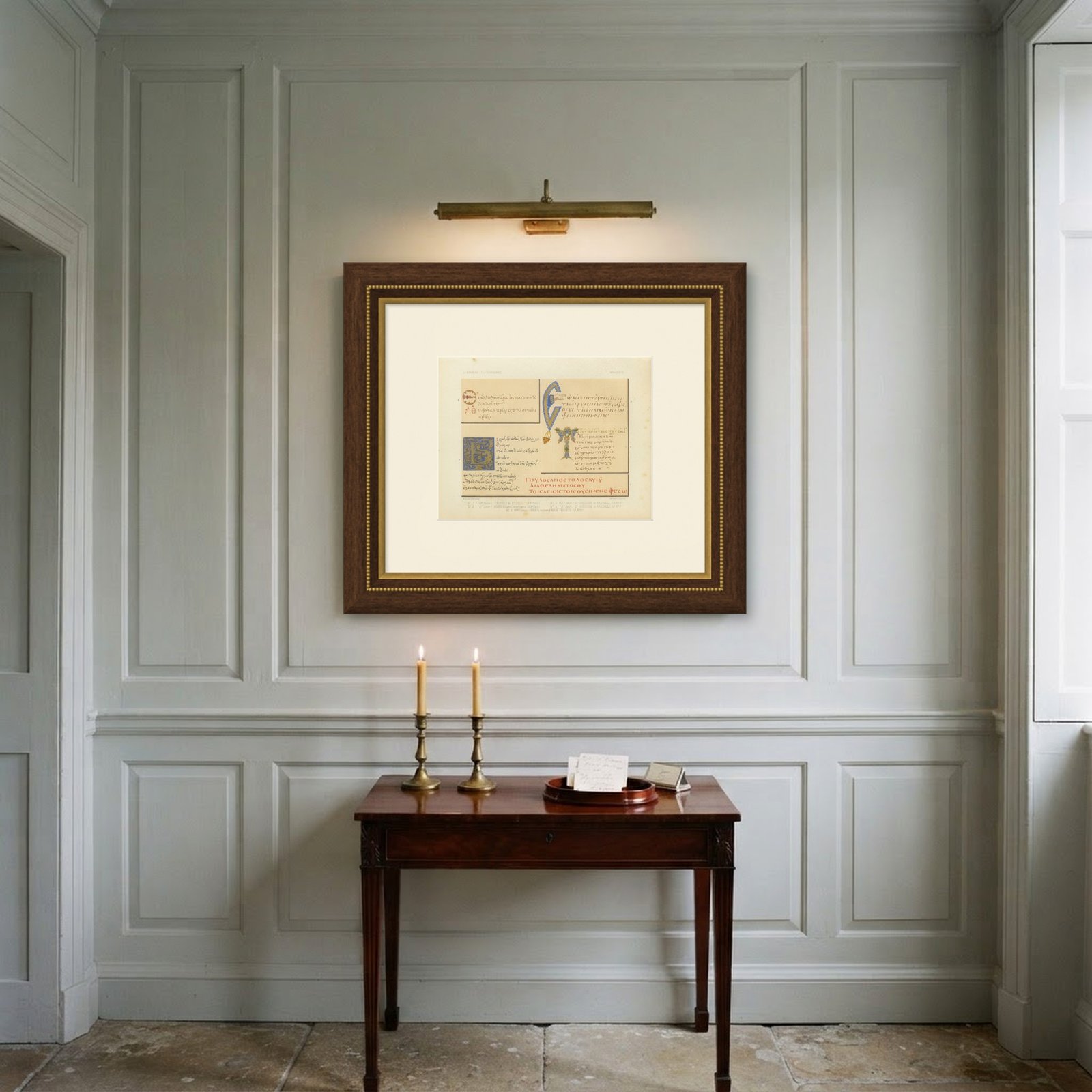
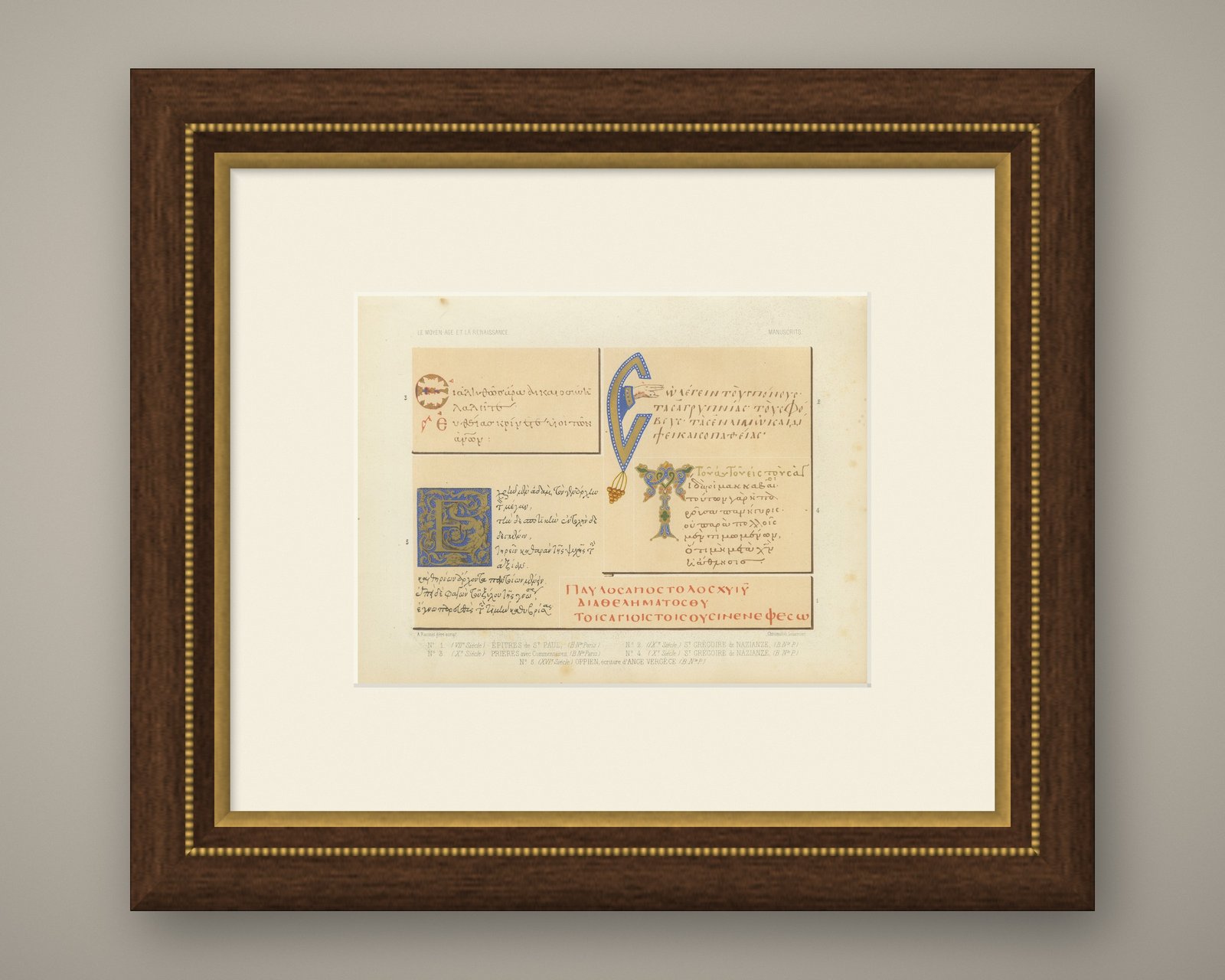
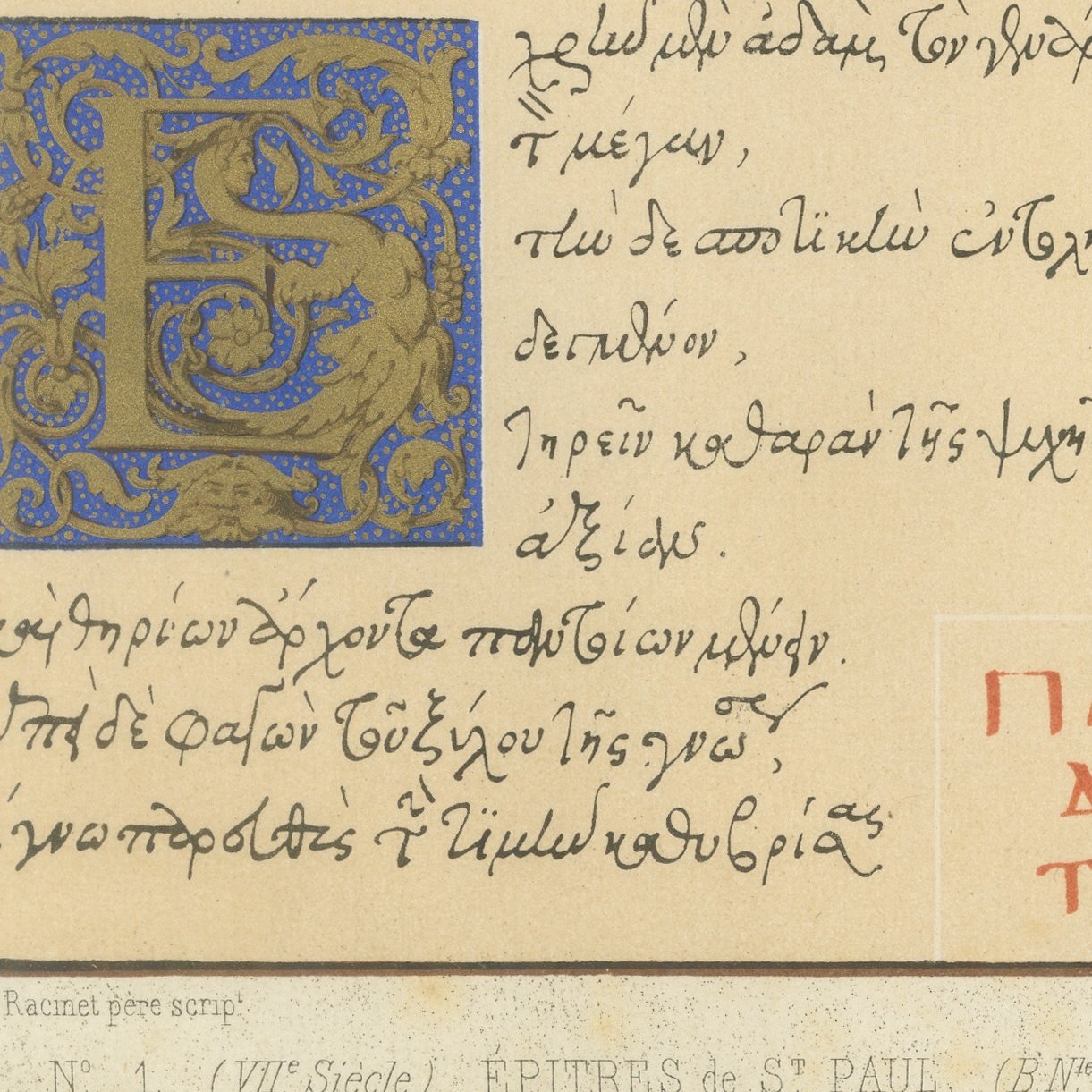
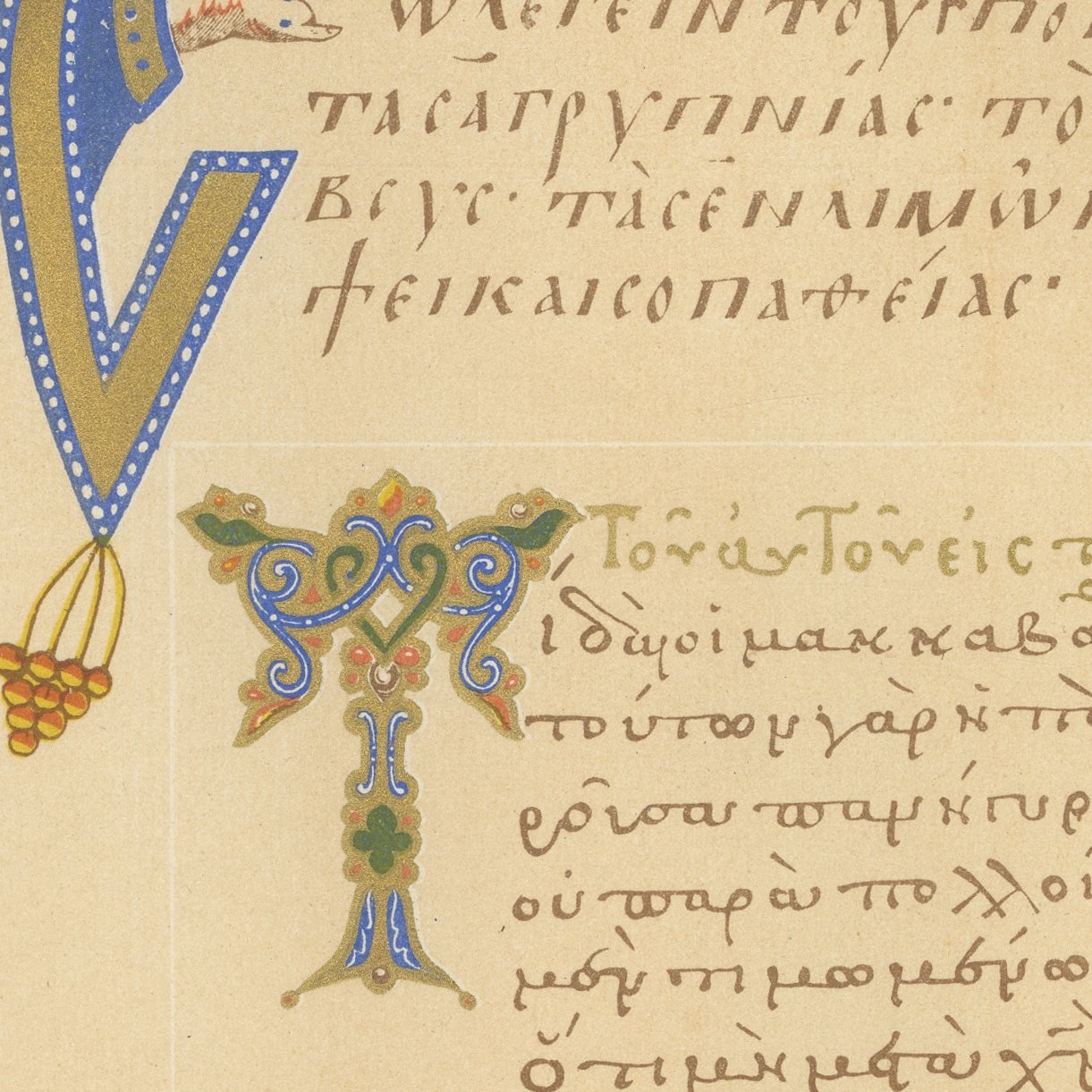
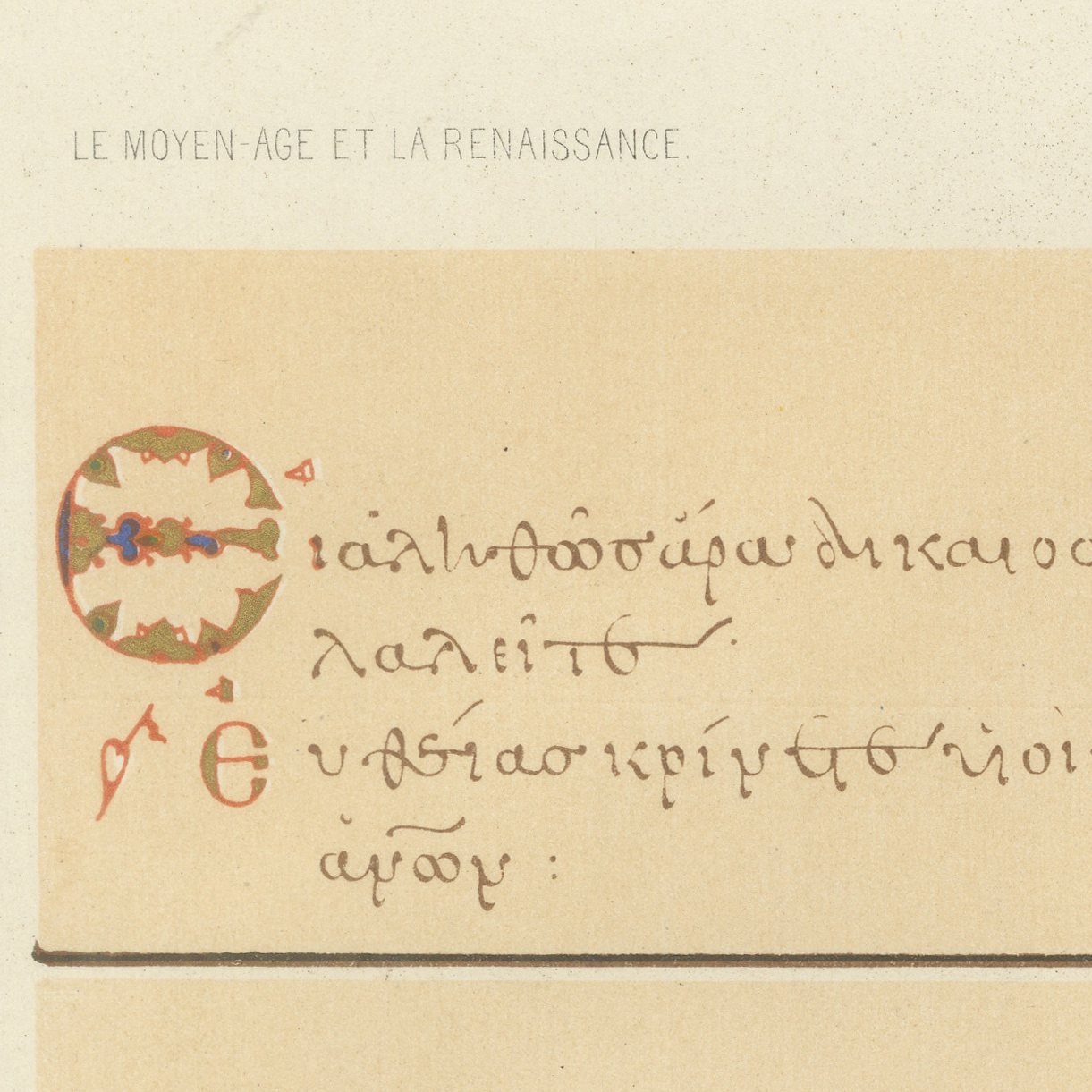
Five panels of Greek script, each cut from a different manuscript in the Bibliotheque nationale in Paris and reproduced letter for letter. The sheet is lettered with the sources: the Epistles of Saint Paul of the seventh century, two manuscripts of Saint Gregory of Nazianzus of the ninth and tenth, a book of prayers with commentaries of the tenth, and at the foot the hand of Angelos Vergikios, the Cretan calligrapher who wrote for Francis the First, in a sixteenth century Oppian. Scarlet uncials run across the upper panels against a ground of ochre.
The plate belongs to the second volume of Lacroix and Sere's Le Moyen Age et la Renaissance, Paris, 1849, a work that set out to describe the manners, trades, sciences, letters and fine arts of Europe between the fall of Rome and the end of the sixteenth century. Each sheet was drawn from the original object or manuscript and printed in chromolithography, a process still new in 1849 and here used with unusual richness.
Calligraphers and type designers buy these palaeographic plates for the lettering itself, and they hang unexpectedly well in a modern interior because the letterforms read as pure pattern from across a room. The sheet works alone above a desk, and it pairs naturally with any of the other script plates from the same volume.
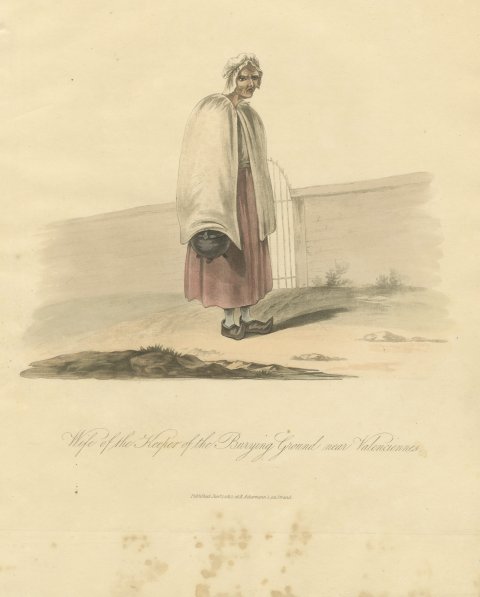
Light uneven toning, browner towards the edges. Marked handling soiling along the bottom, left and right edges. A few small foxing spots in the margin. All four corners complete.
This is an original antique print, not a modern reproduction. This item is sold unframed.