 The sheet, as you receive it
 In the room 1

Interior designers: BarTrade members buy at their trade price. How it works
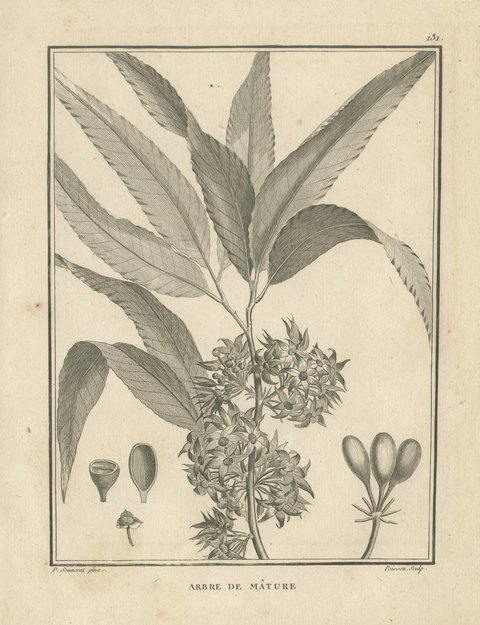
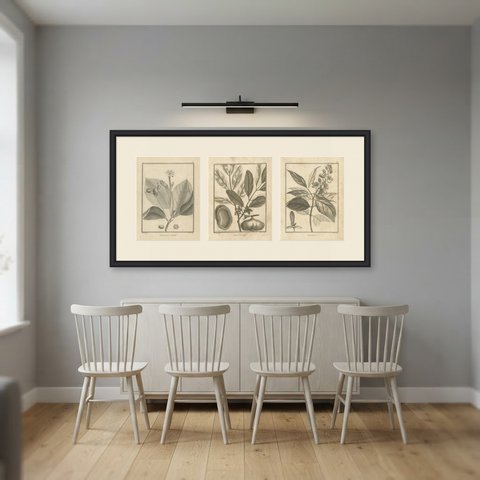
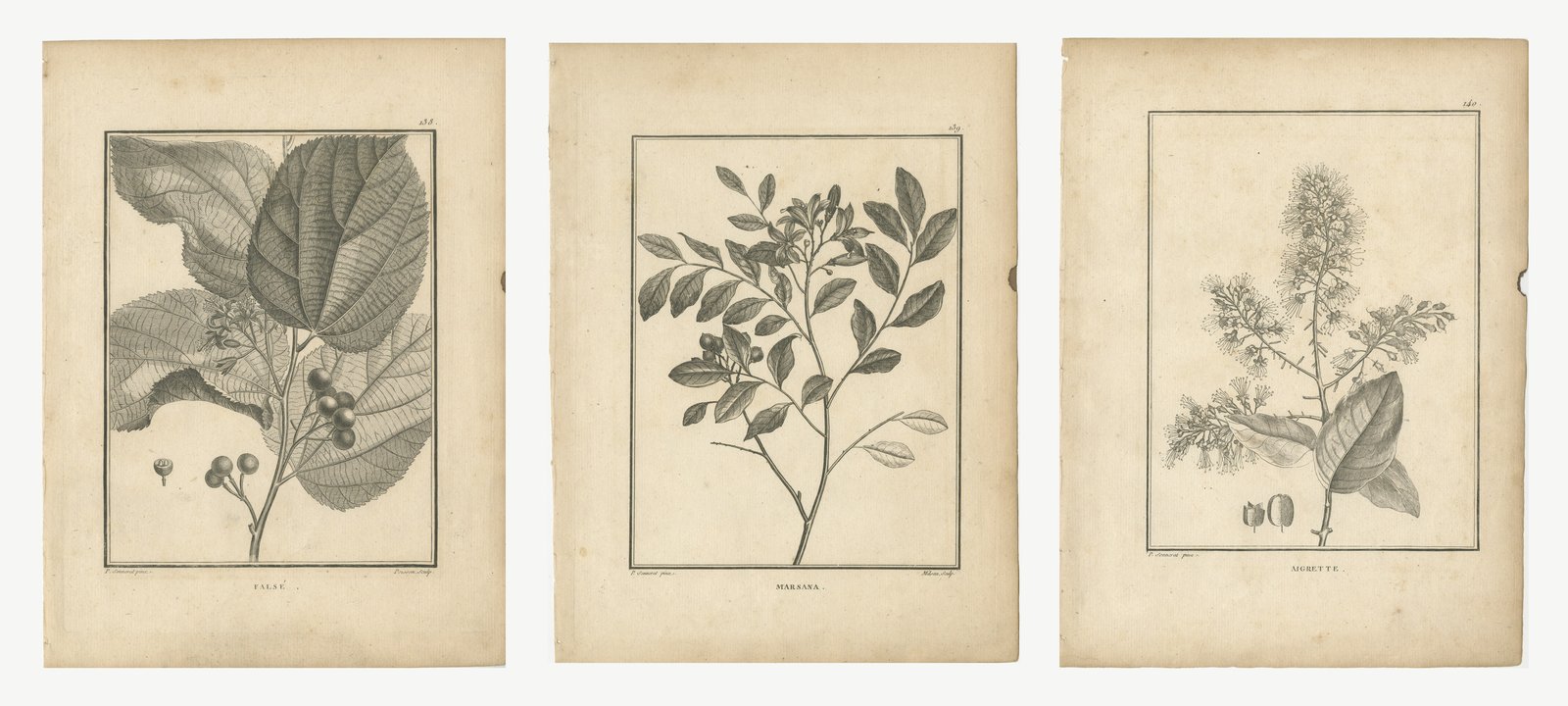
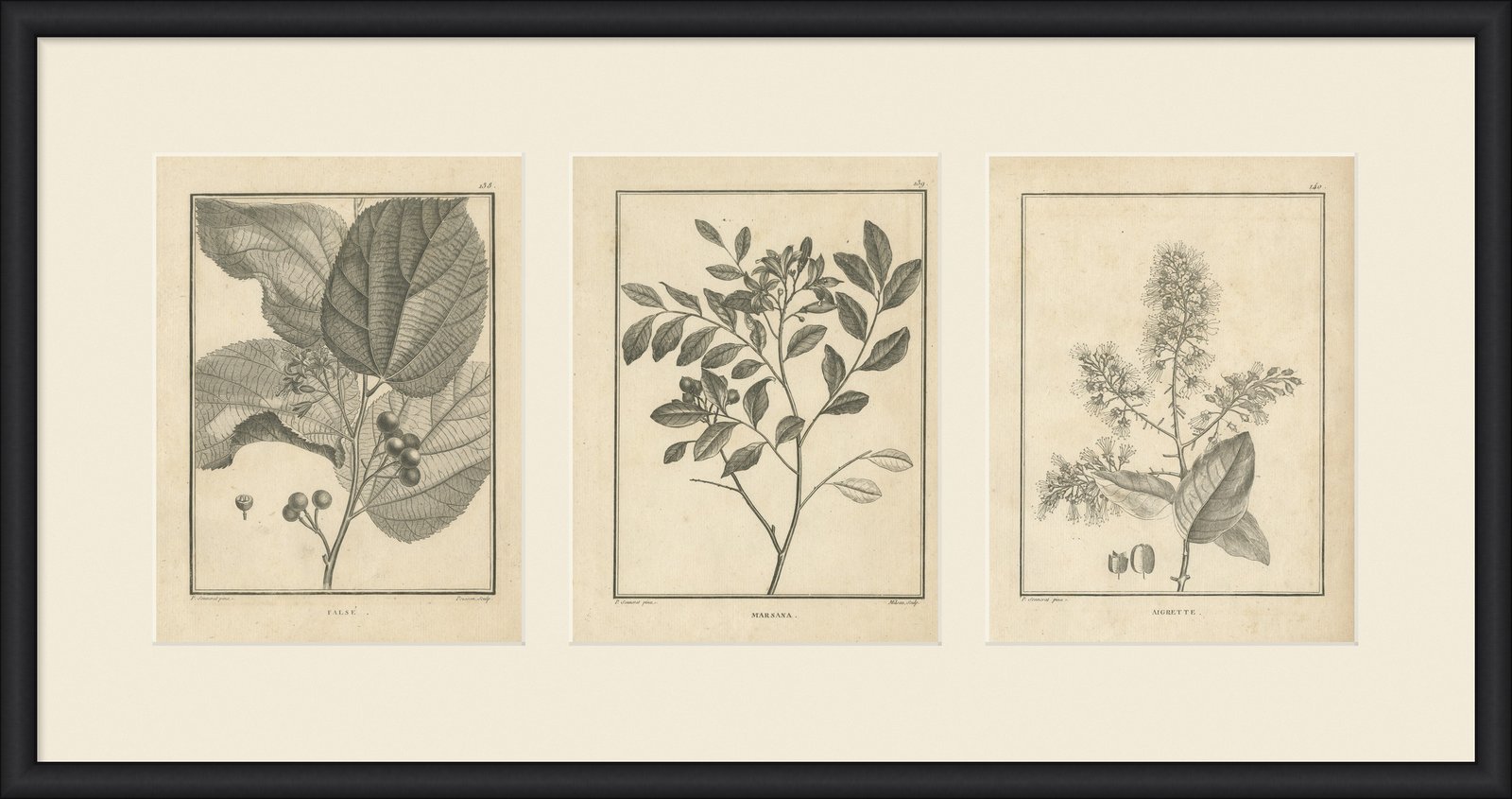
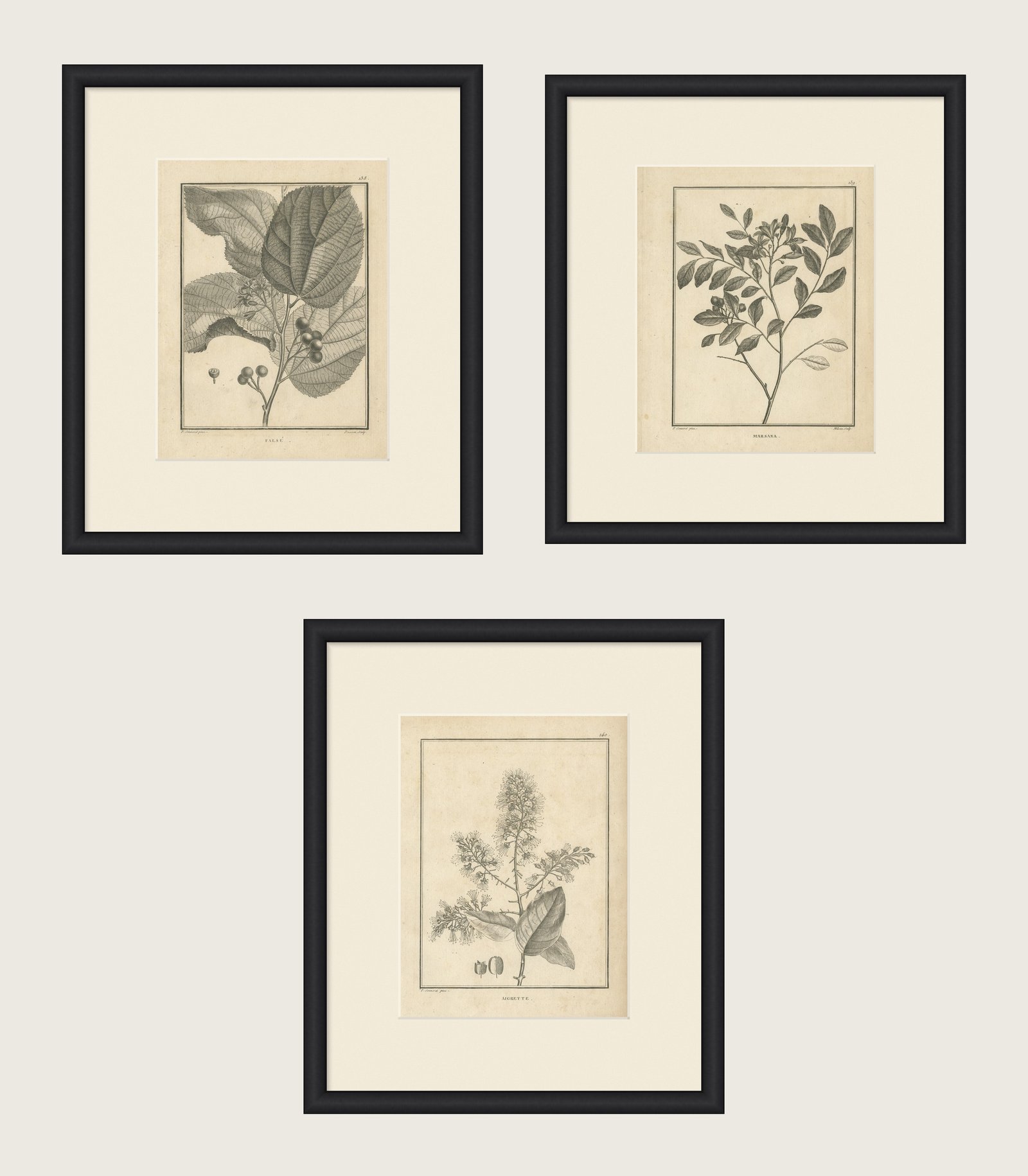
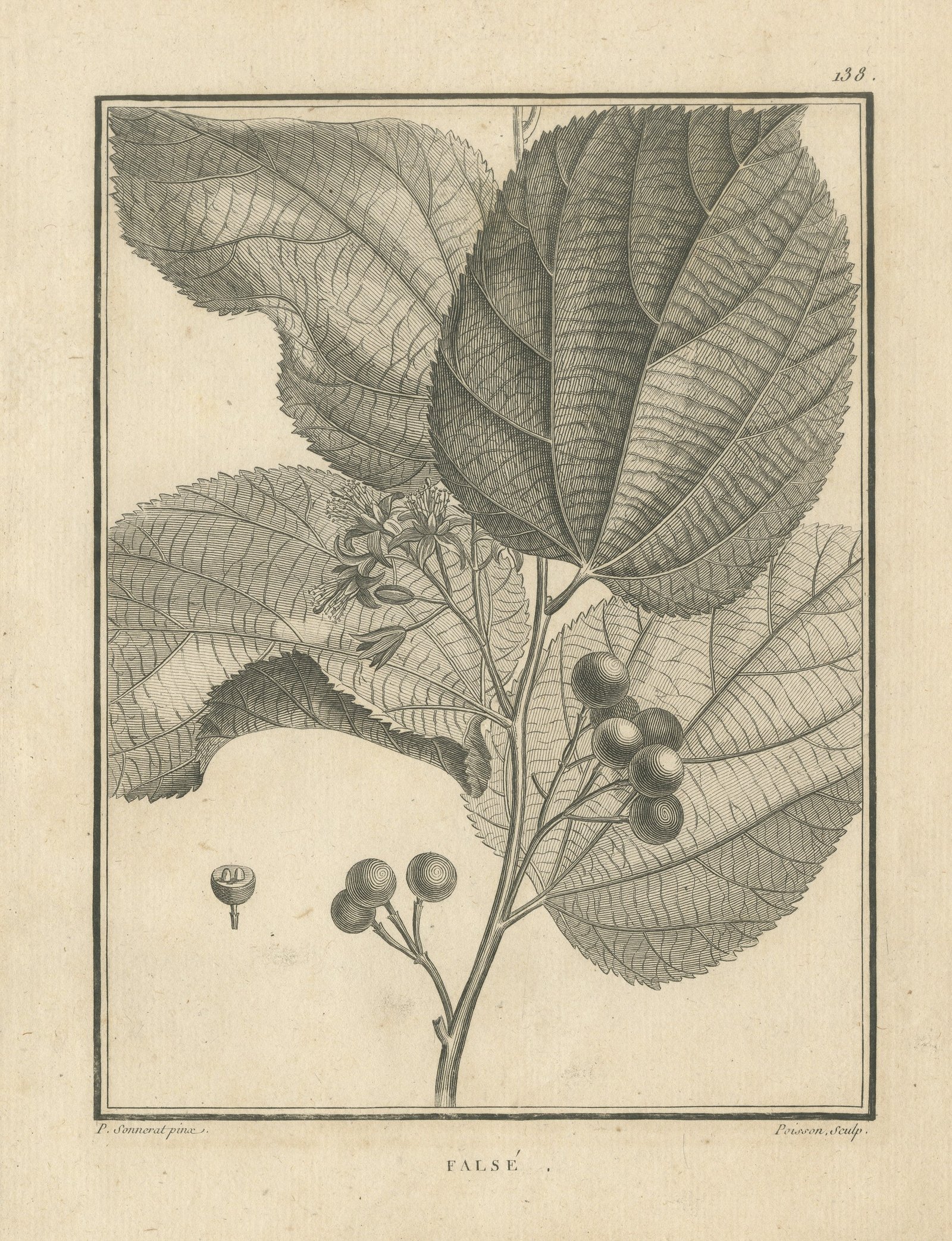
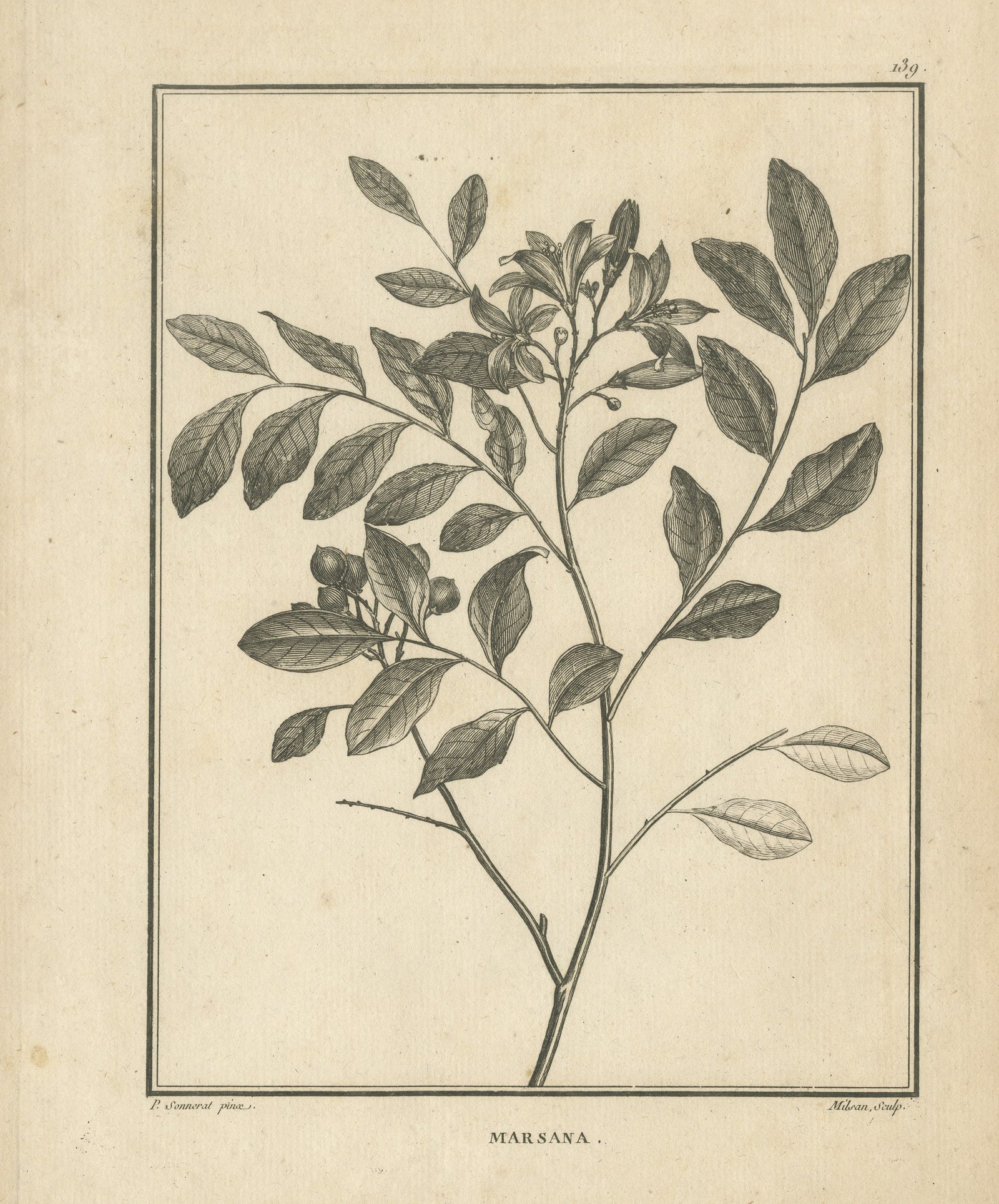
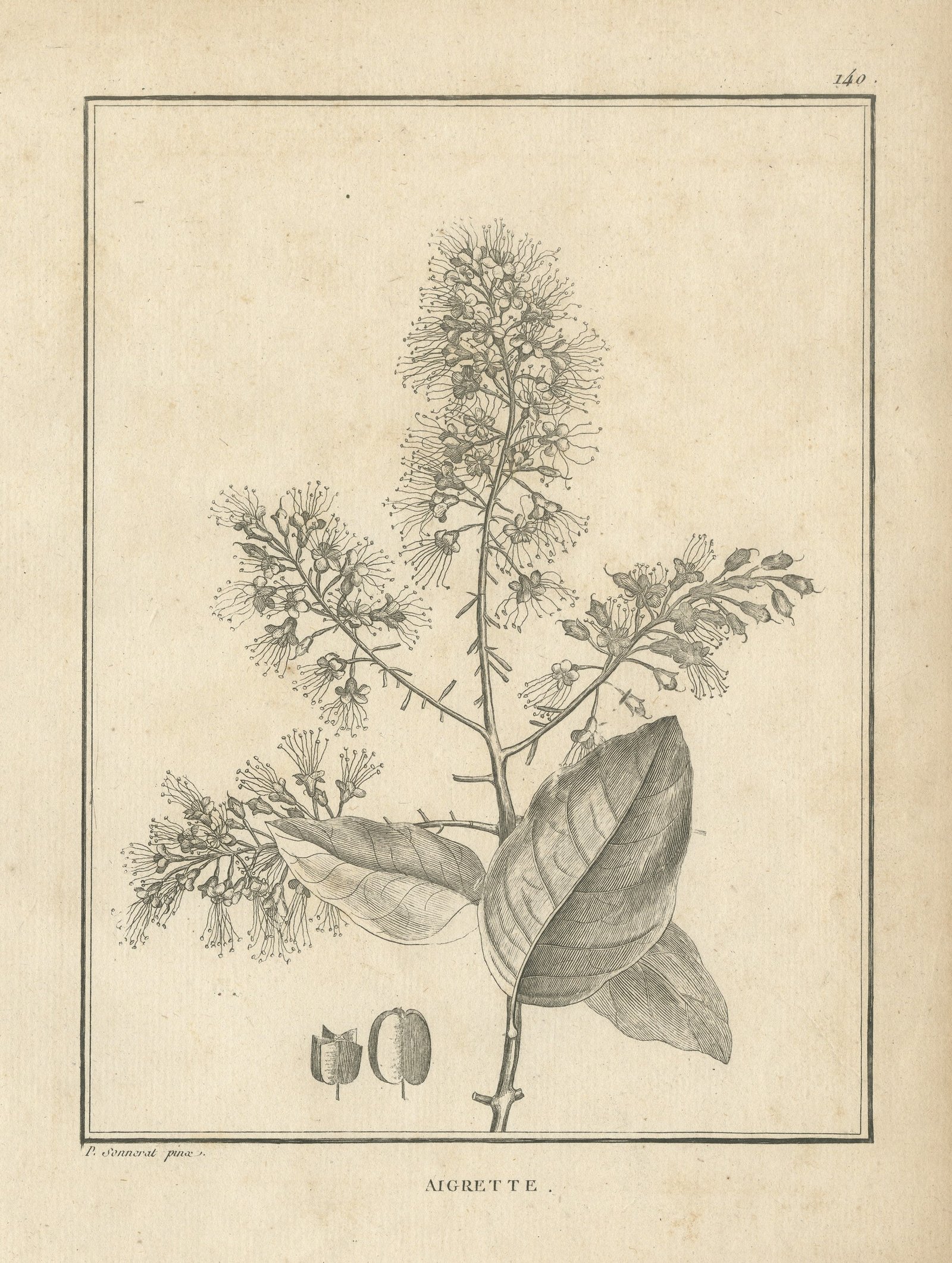
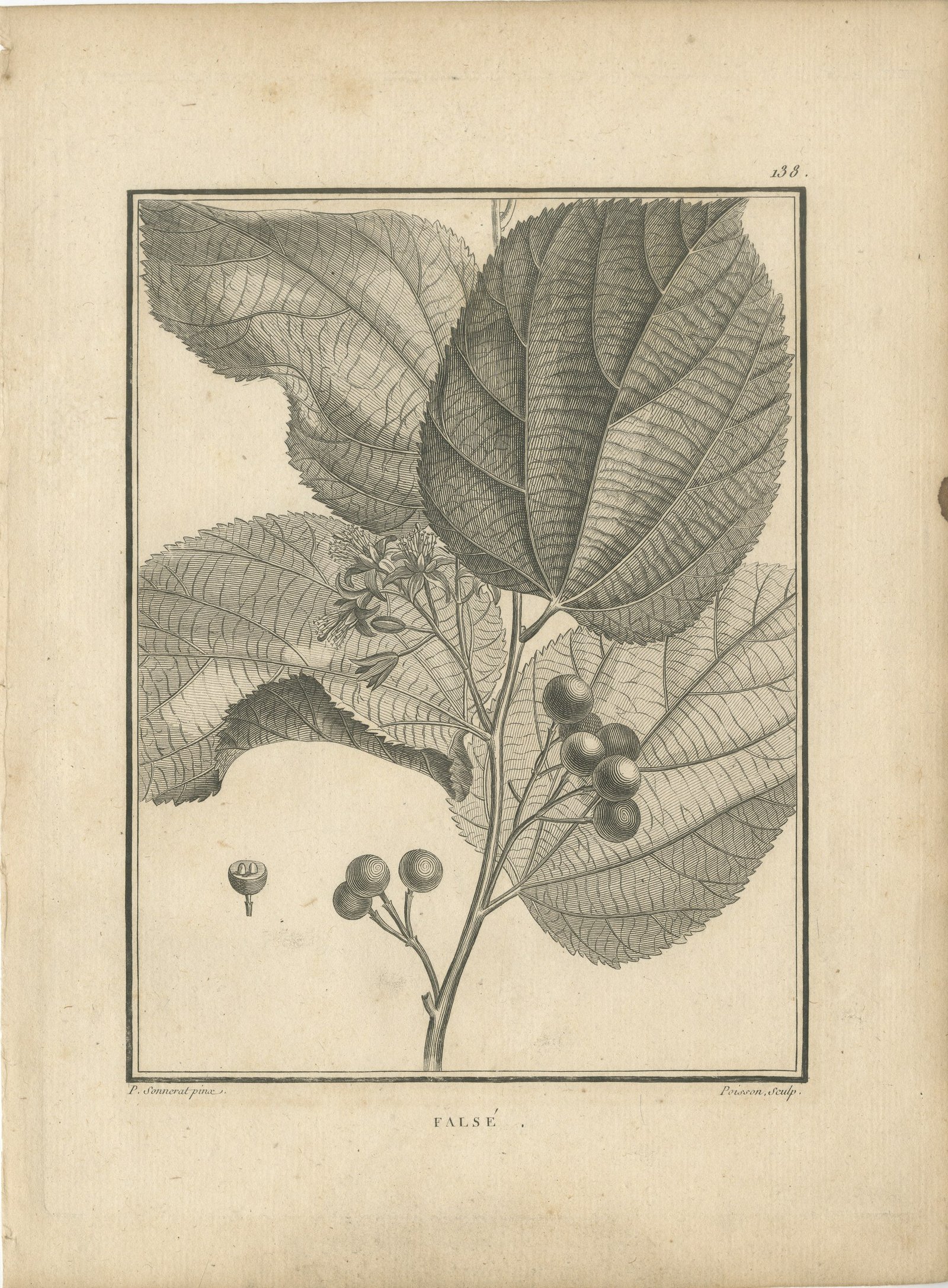
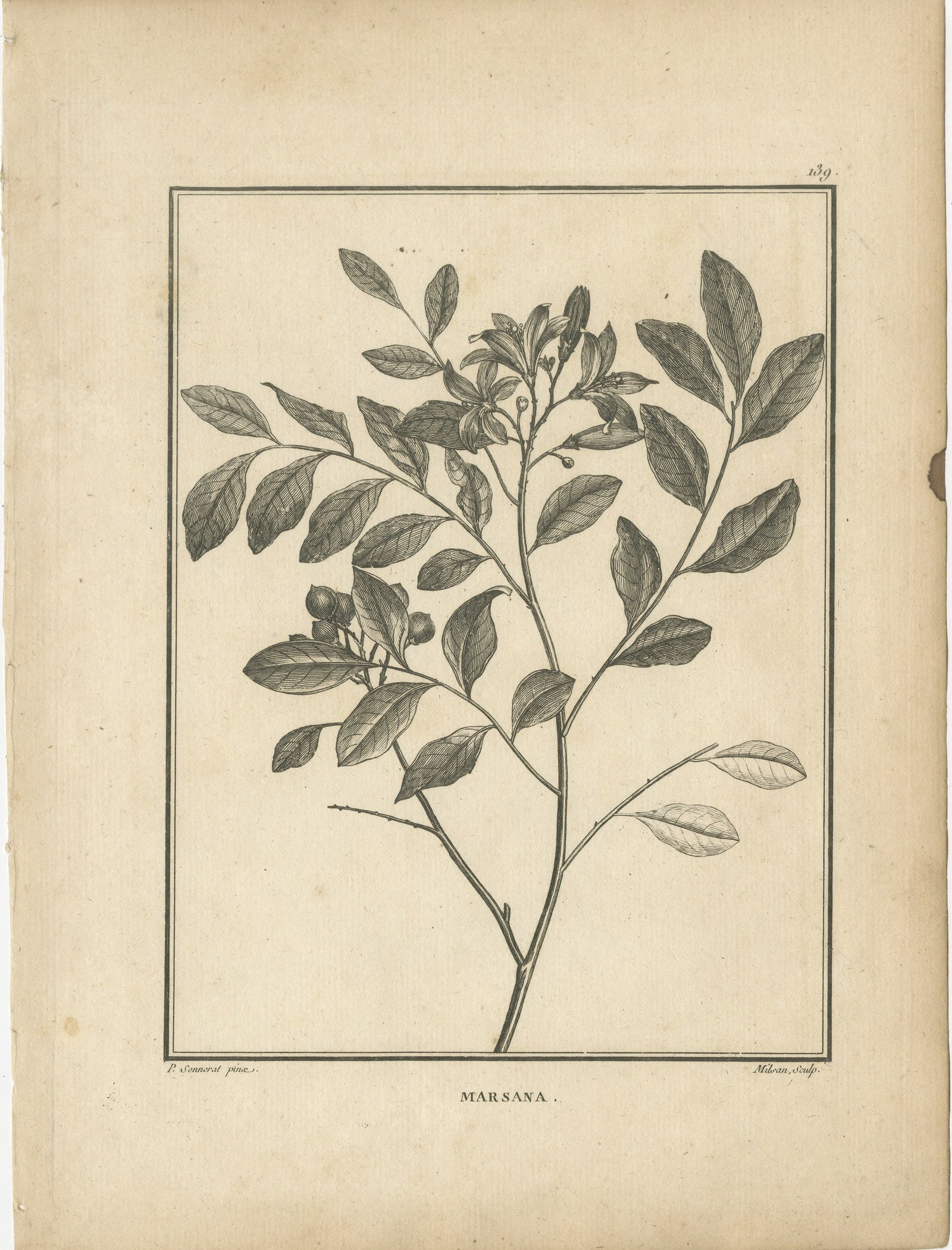
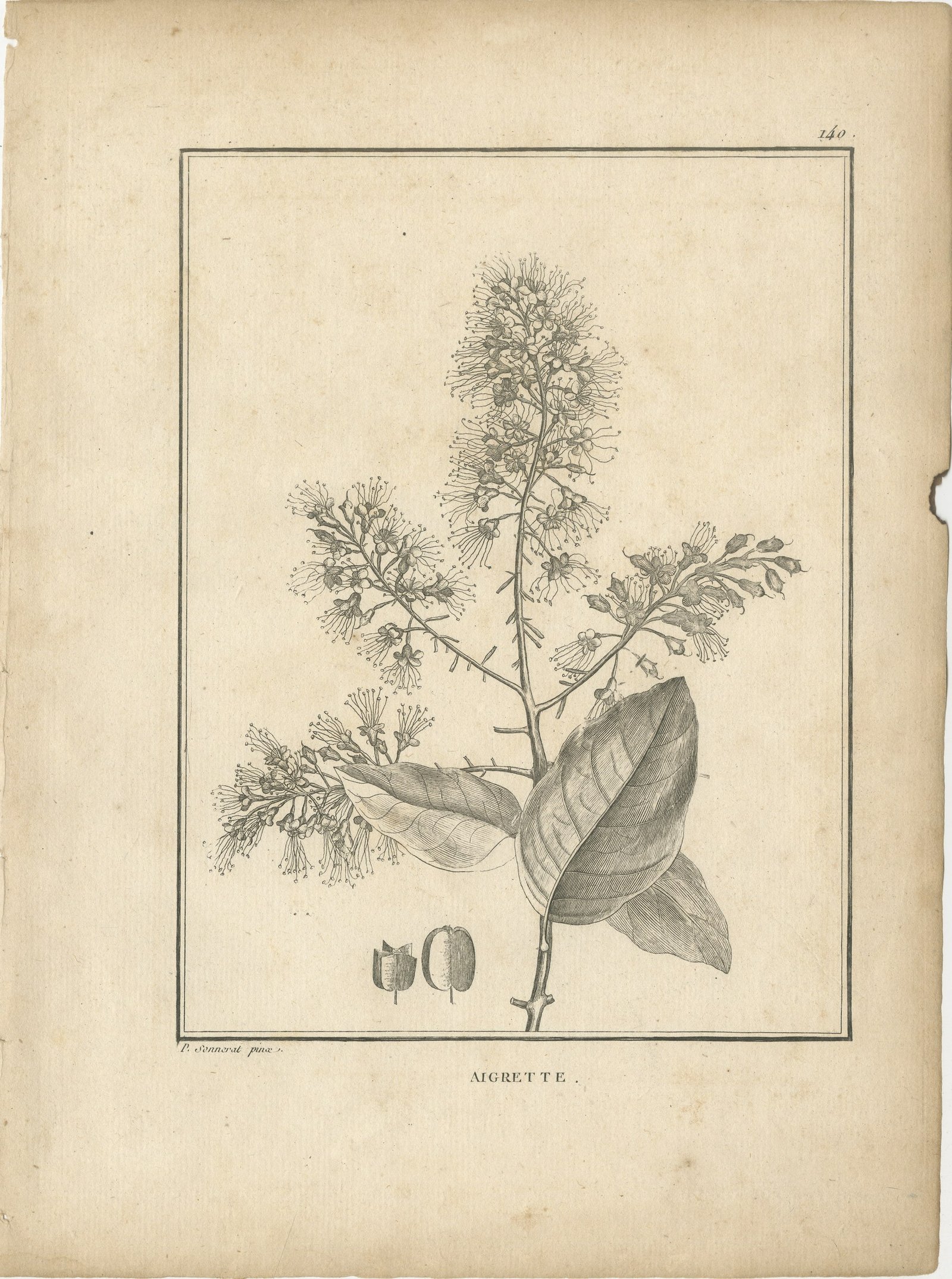
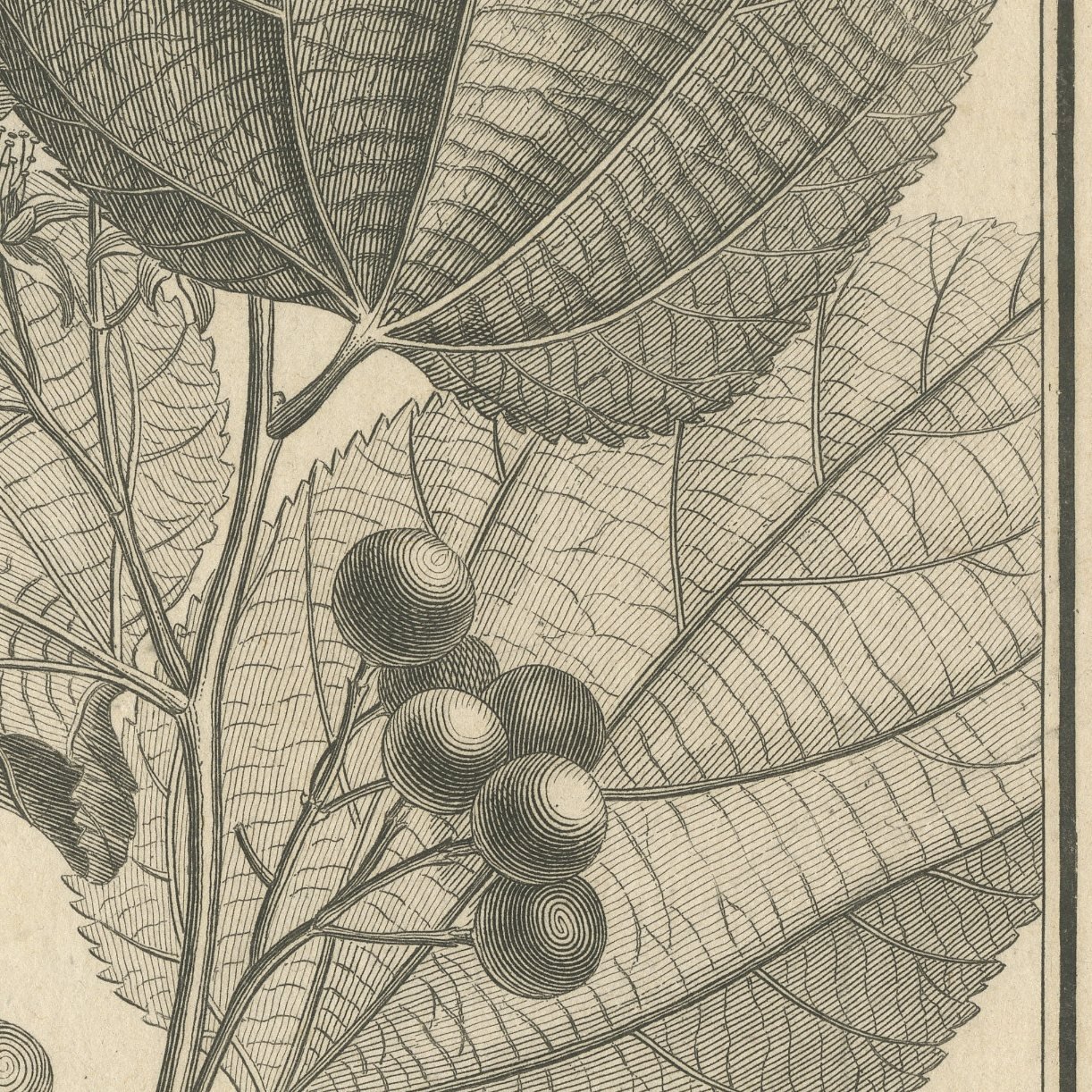
This set of three original antique copper engravings, Plates 138, 139 and 140 from Sonnerat's Voyage aux Indes Orientales et a la Chine, is sold as one set. They are three original sheets sold together as one lot, and the set is never split. Plate 138 shows the tree called false, a branch with broad toothed leaves, a cluster of small flowers and ribbed round fruits, with a fruit drawn in section below. Plate 139 shows the marsana, a slender branching spray with small oval leaves, scattered flowers and round berries. Plate 140 shows the tree called aigrette, a branch carrying long plumed spikes of flowers with projecting stamens above two broad leaves. Each sheet carries its engraved plate number at the upper right, the artist and engraver credits at the foot of the image and its caption lettered beneath.
The sheets come from the Collection de planches pour servir au Voyage aux Indes Orientales et a la Chine, the plate volume issued in Paris by Dentu, Imprimeur-Libraire of the quai des Augustins, in 1806. The plates were engraved on copper after drawings Pierre Sonnerat made in the field between 1774 and 1781, while he served the French crown as a naval commissary at Yanam and Pondicherry and traveled on from India to China, Malacca, Madagascar and the Cape of Good Hope. The images are copper engravings, printed in black on laid paper with a clear plate mark, the lettering cut below each image in the same plate. No color was applied, which is how the volume was issued.
The botanical plates close the volume and are the quietest sheets in it. Sonnerat drew the useful and the strange: the spice plants, the fruit trees and the flowering trees of the Indian Ocean, generally with a fruit or a flower taken apart and drawn separately so that the structure can be read. All three sheets are the same size and the same orientation and come from one volume of one book, which is why they are offered as a set and not one at a time. Pierre Sonnerat, born in Lyon in about 1748 and dead in Paris in 1814, was the nephew and private secretary of Pierre Poivre, the colonial administrator who broke the Dutch monopoly on the spice trade. Sonnerat traveled in the Philippines and the Moluccas, in Mauritius and Reunion, and then through India, China, Malacca, Madagascar and the Cape. He drew what he saw, which is why the plates have a directness that engravings worked up in Paris from other men's notes rarely have.
Light uneven toning, browner towards the edges. Marked handling soiling along the edges of all three sheets. Scattered light foxing in the margins of all three sheets. Slight wear at the corners of two of the three sheets.
These are original antique prints, not modern reproductions. This item is sold unframed.