 The sheet, as you receive it
 In the room

Interior designers: BarTrade members buy at their trade price. How it works
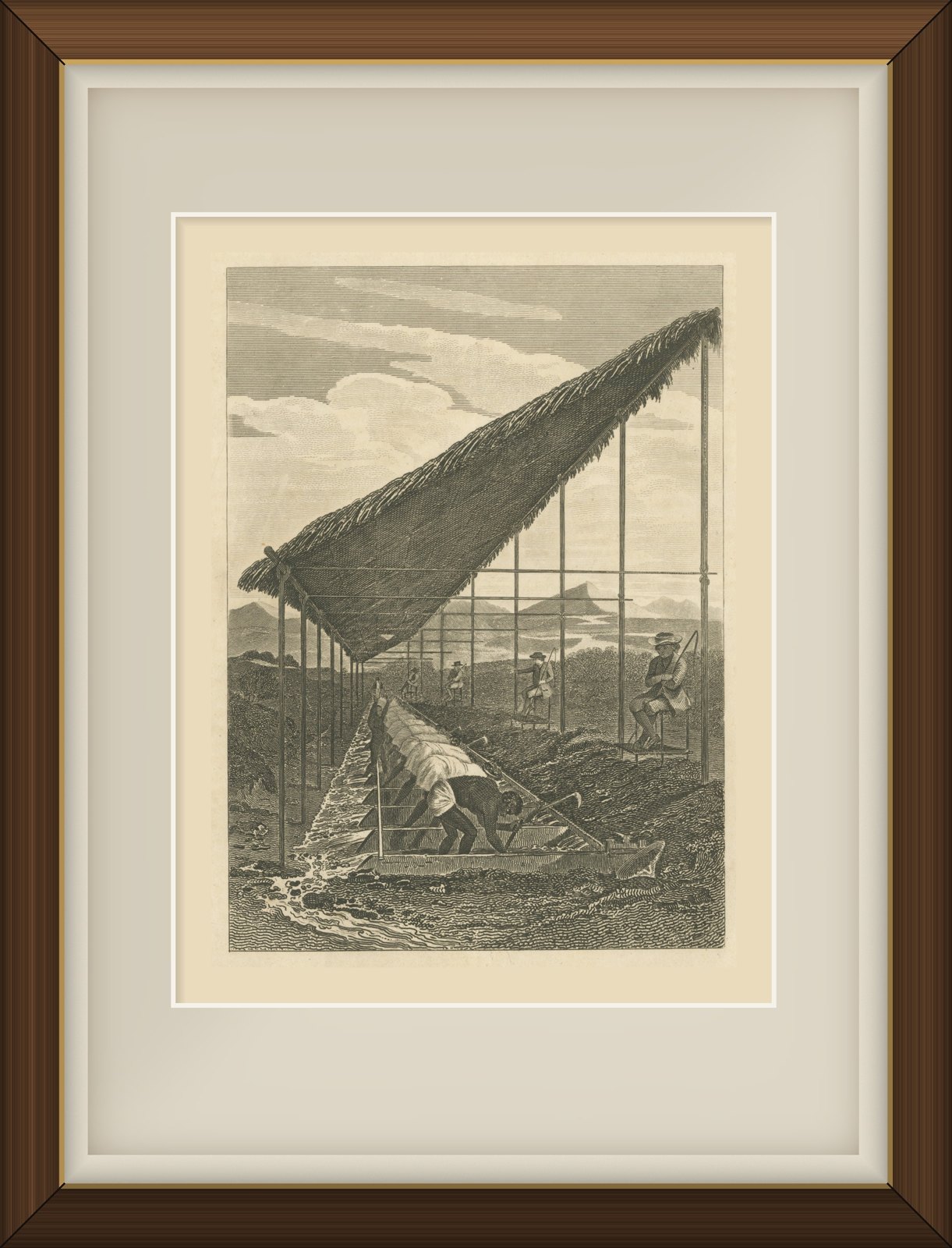
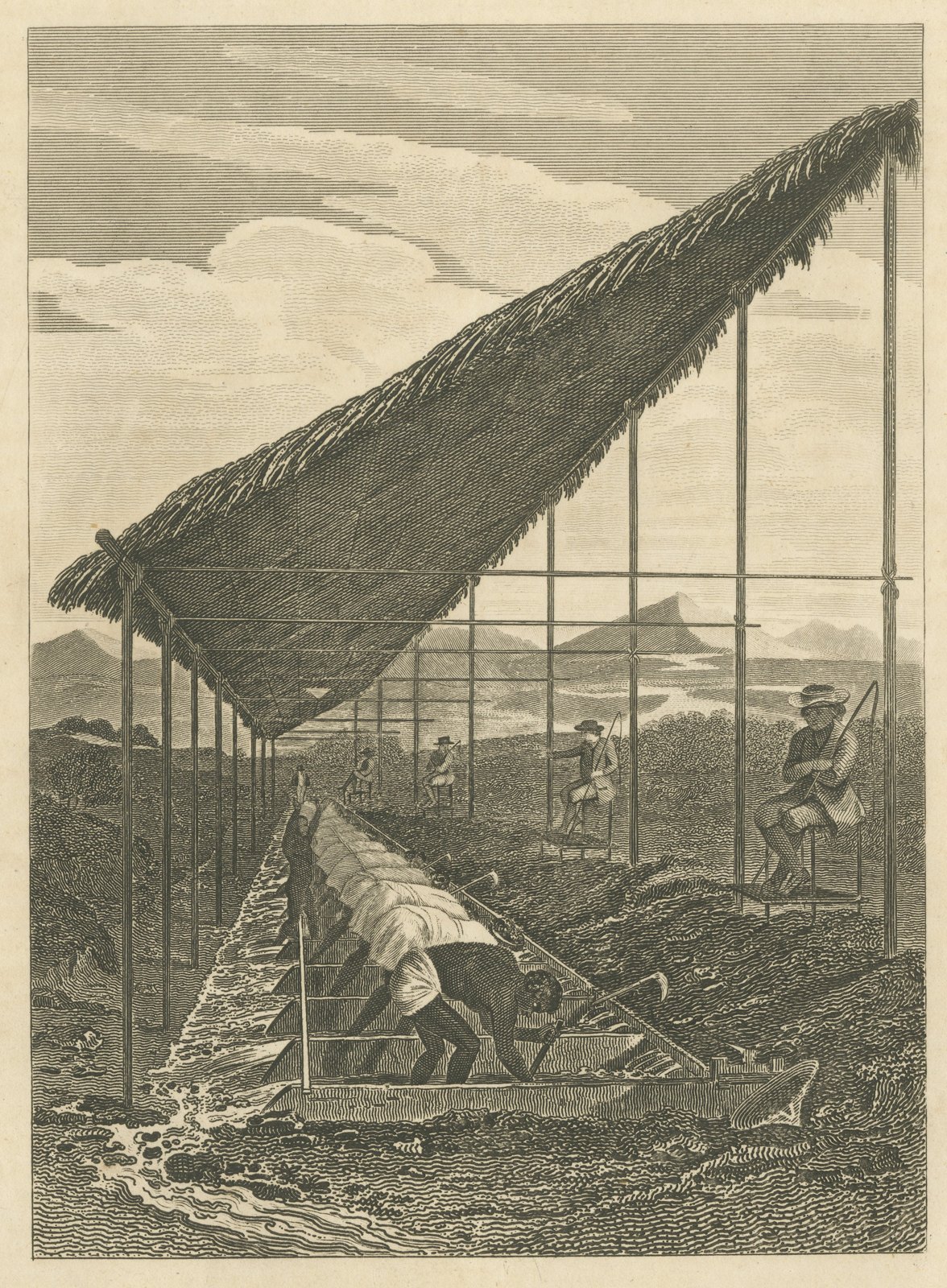
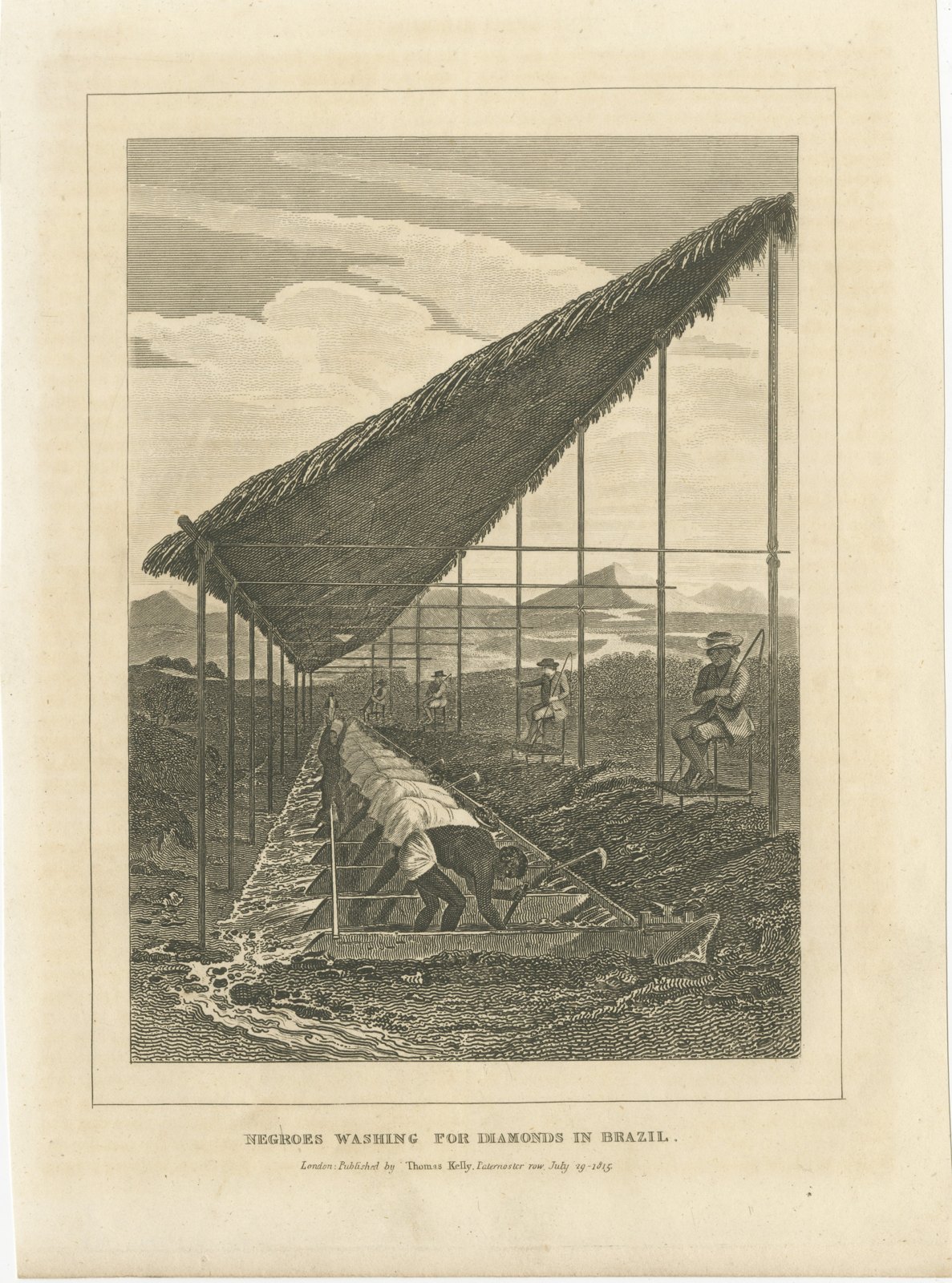
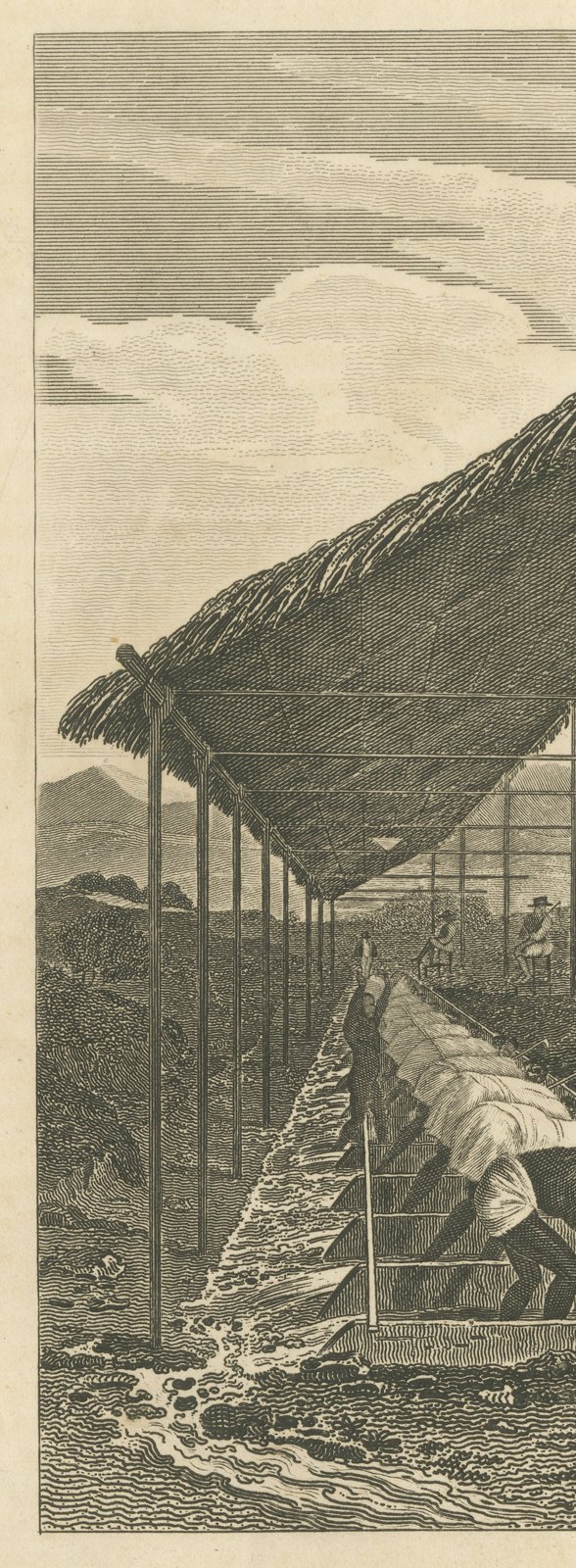
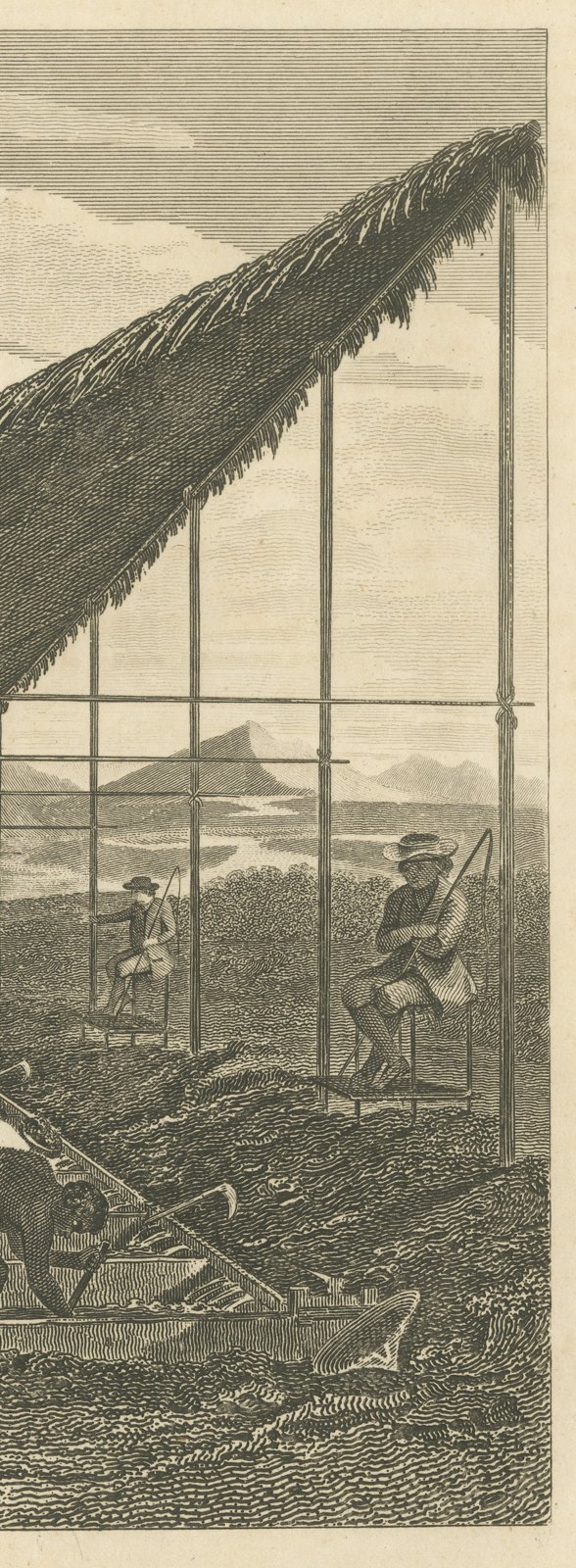
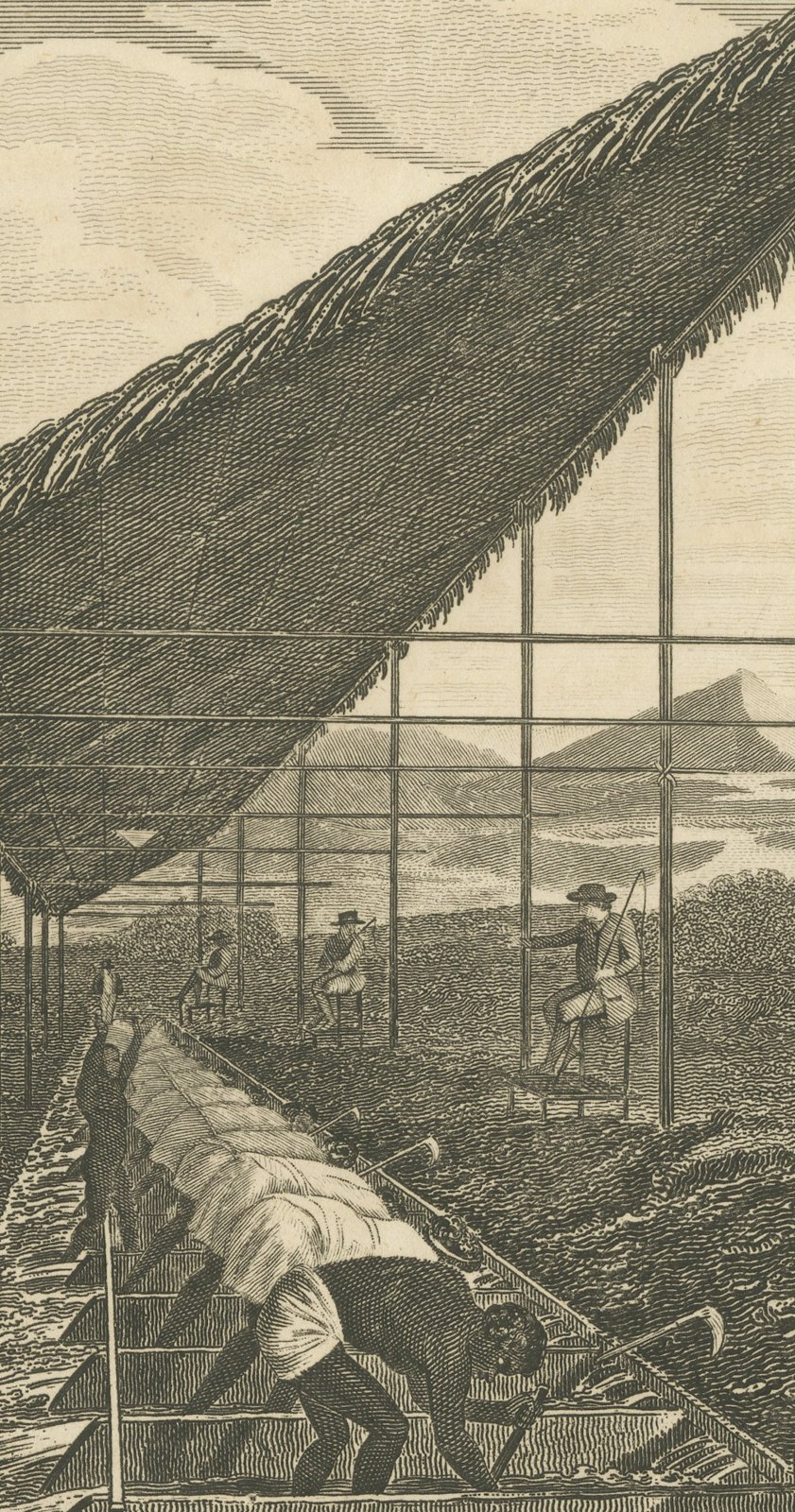
An original copper engraving published in London by Thomas Kelly in 1815, showing enslaved men washing gravel for diamonds in Brazil. The plate is lettered with the period title "Negroes washing for diamonds in Brazil," quoted here as printed, and beneath it the imprint "London: Published by Thomas Kelly, Paternoster row, July 29, 1815." No artist or engraver is named.
Under a long open shed with a steep thatched roof carried on slender poles, a row of men bend over a sloping wooden trough divided into compartments, working the gravel with short rakes as water runs out at its foot. Overseers in broad hats sit on high stools along the edge of the works, holding long sticks and watching every movement, and beyond them the low hills of the diamond country stretch to a line of mountains under a broad sky.
The scene follows the account of the English mineralogist John Mawe, who visited the diamond district around Tejuco, today Diamantina in Minas Gerais, in 1809 and published his Travels in the Interior of Brazil in 1812 with a plate of this very operation. Diamonds had been found in the district in the 1720s, and for most of the eighteenth century Brazil was the world's chief source of the stones. The washings were a Portuguese royal monopoly worked by enslaved Africans and their descendants under close guard, and the overseers here are placed to prevent any stone from being hidden.
Kelly reissued images of this kind in his popular part works on geography and travel, bringing them to a wide British readership. Today the plate is an important visual record of the diamond trade and of slavery in Brazil, which was not abolished until 1888.
This is an original antique print, not a modern reproduction. This item is sold unframed.