 The sheet, as you receive it
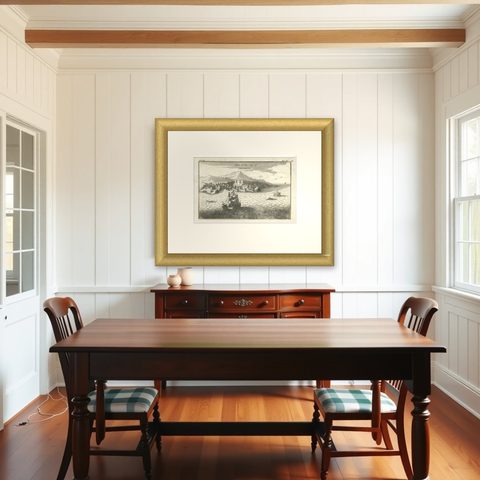
 In the room
Interior designers: BarTrade members buy at their trade price. How it works
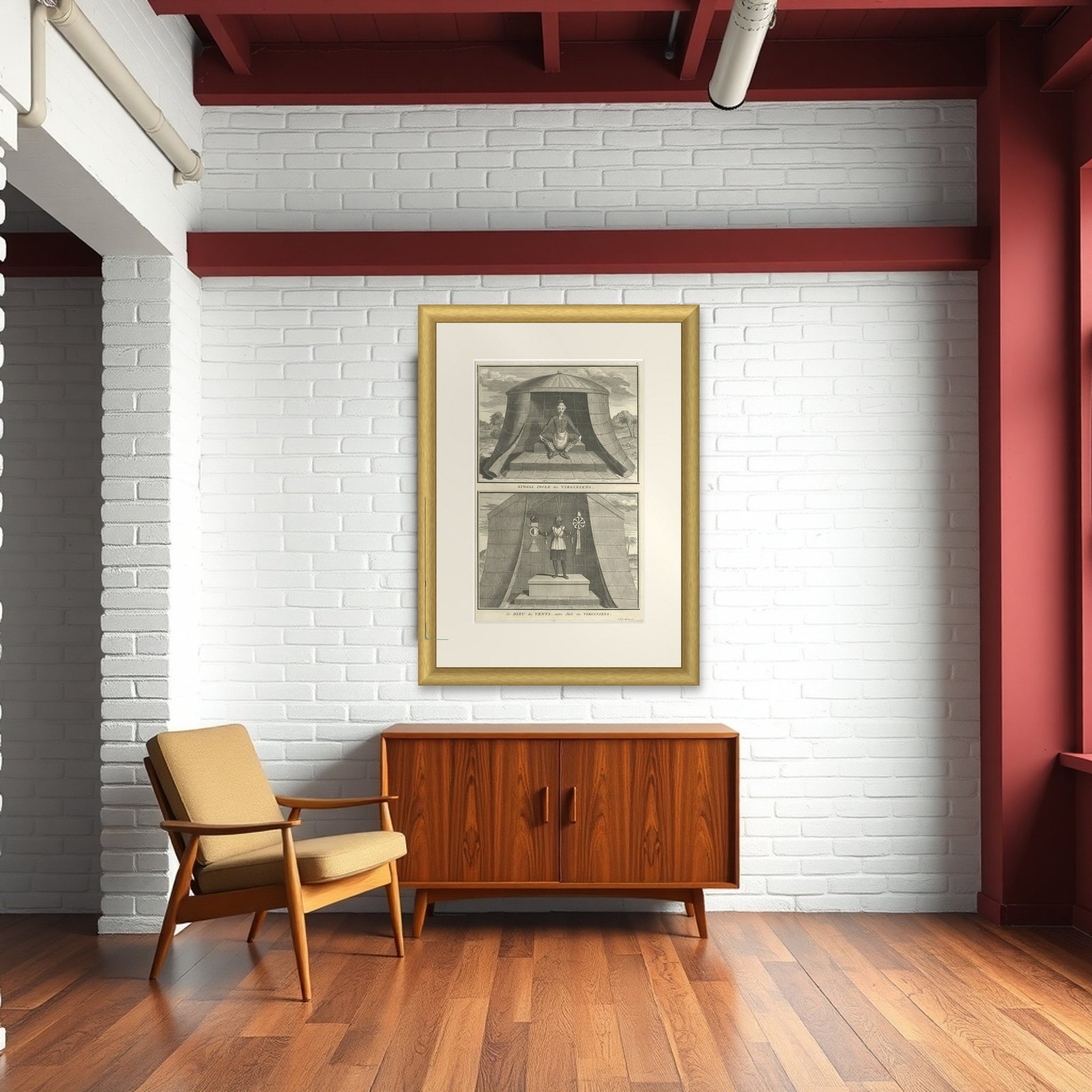
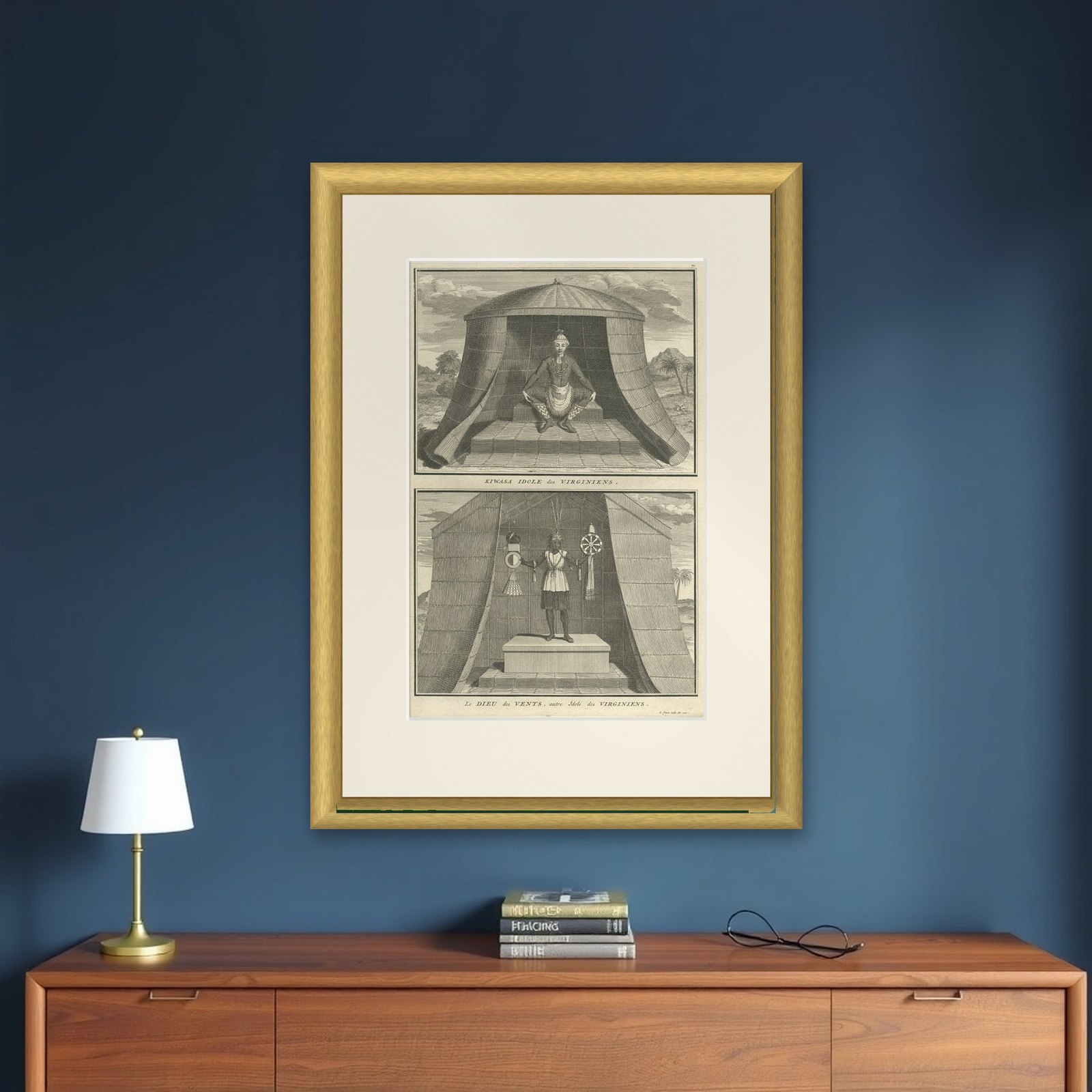
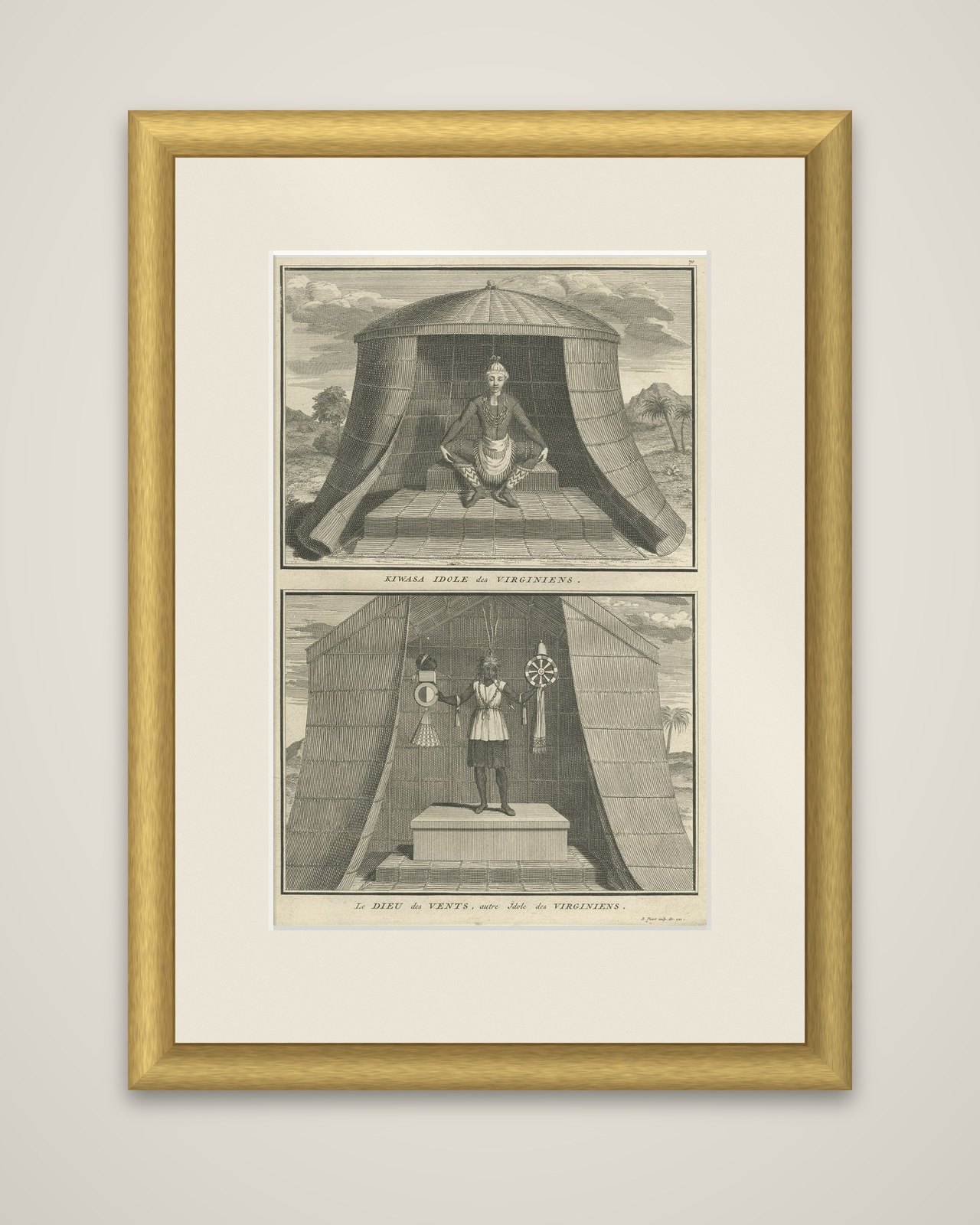
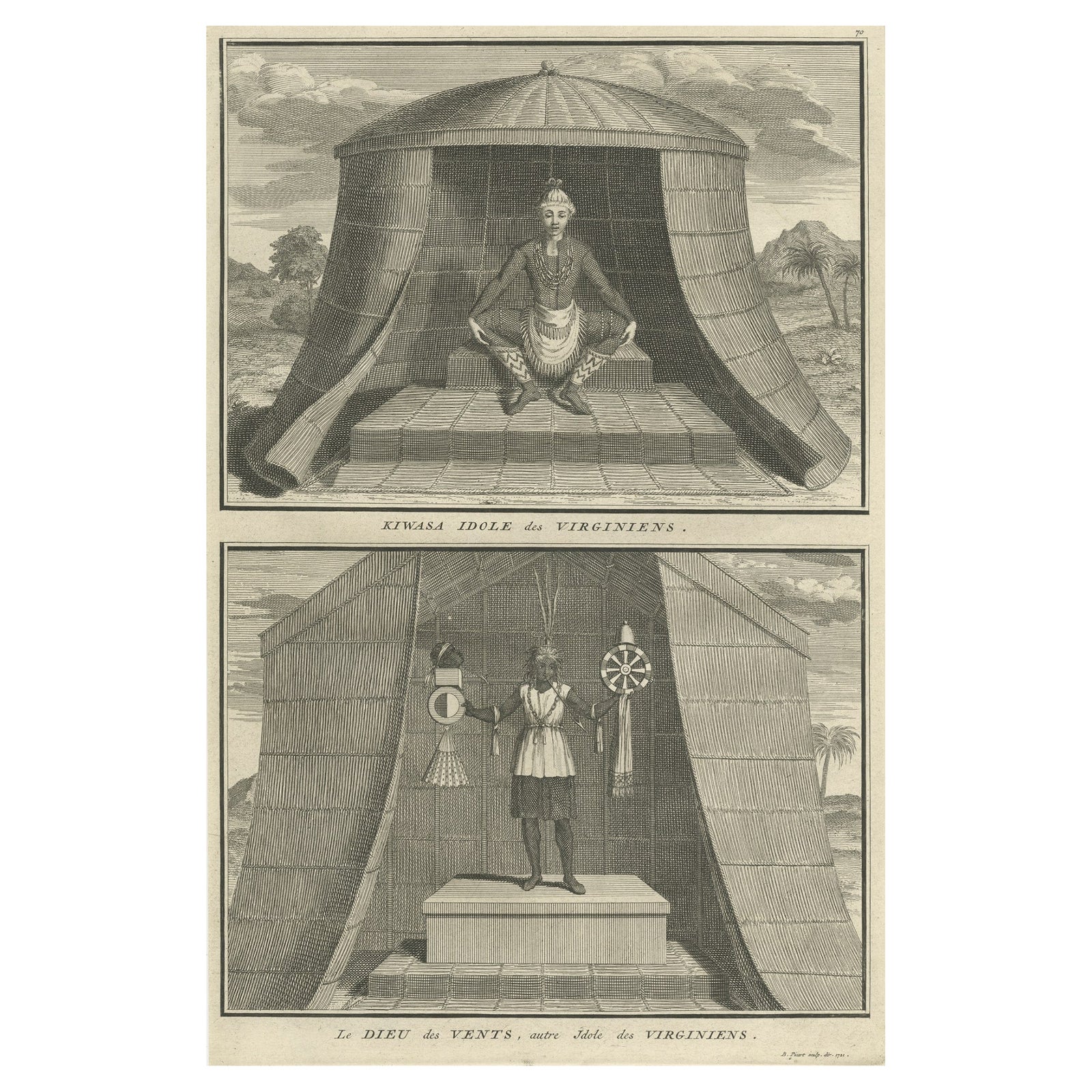
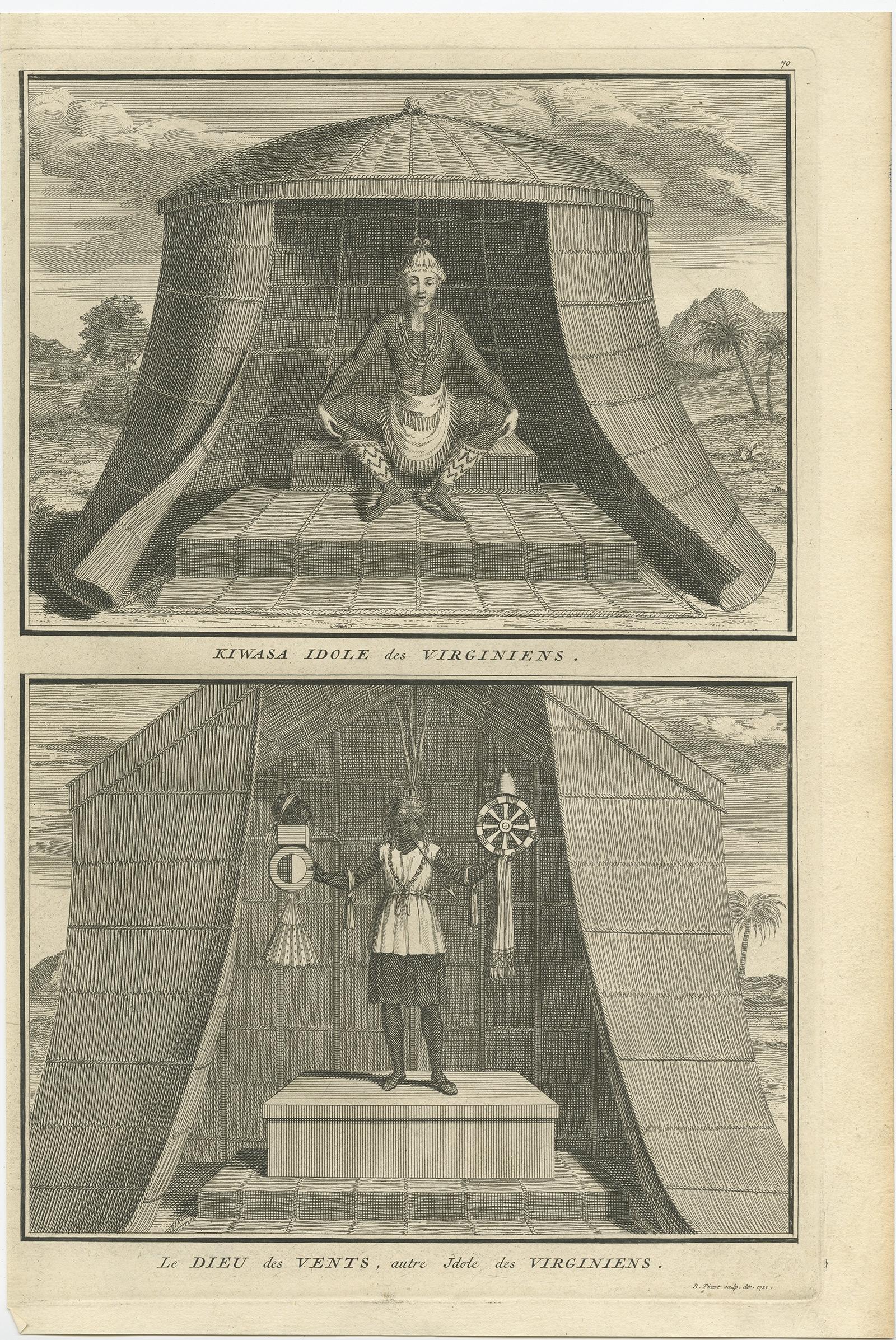
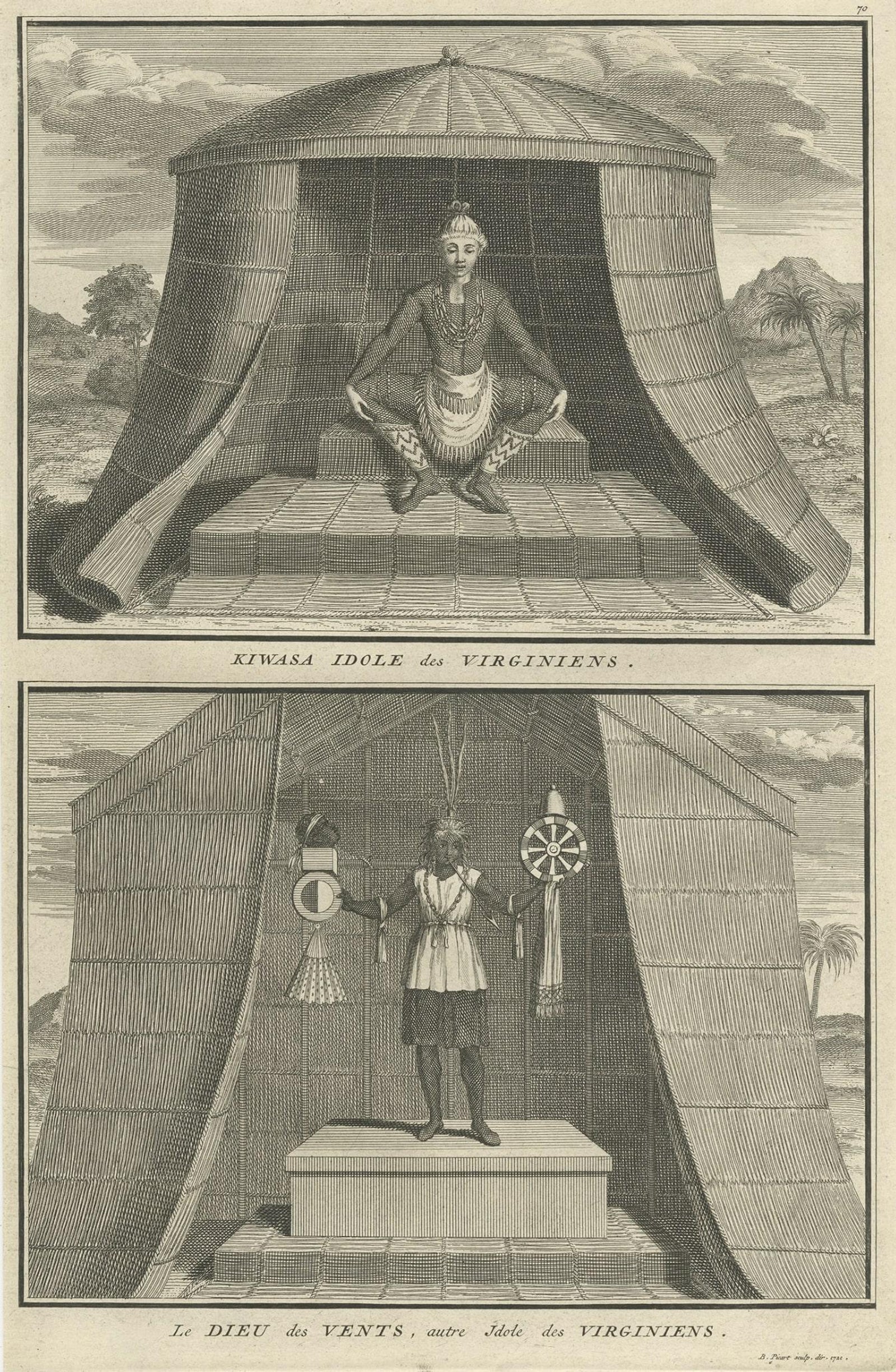
Kiwasa, idole des Virginiens, and Le Dieu des Vents, autre idole des Virginiens, two images of the religion of the Virginia Algonquians on one plate, an original copper engraving of 1721 by Bernard Picart from Ceremonies et coutumes religieuses. Each image is captioned beneath it.
In the upper image the idol Kiwasa is shown as a seated figure with crossed legs, decorated with a necklace and a girdle, set on a raised platform of mats within a woven round temple, its walls drawn aside to show him. The old caption states that the idol was placed in the temple of the town of Secotam as the keeper of the bodies of the dead kings. The lower image shows the god of the winds, a standing figure with plumed head, holding an emblem on a pole in each hand, on a plain pedestal inside a rectangular mat hut. Both subjects derive from early English accounts of the Roanoke colony of the 1580s.
Picart (1673 to 1733) was a French painter and engraver who worked in Amsterdam, and his illustrated survey of the world's religious ceremonies was widely read in the early eighteenth century.