 The sheet, as you receive it
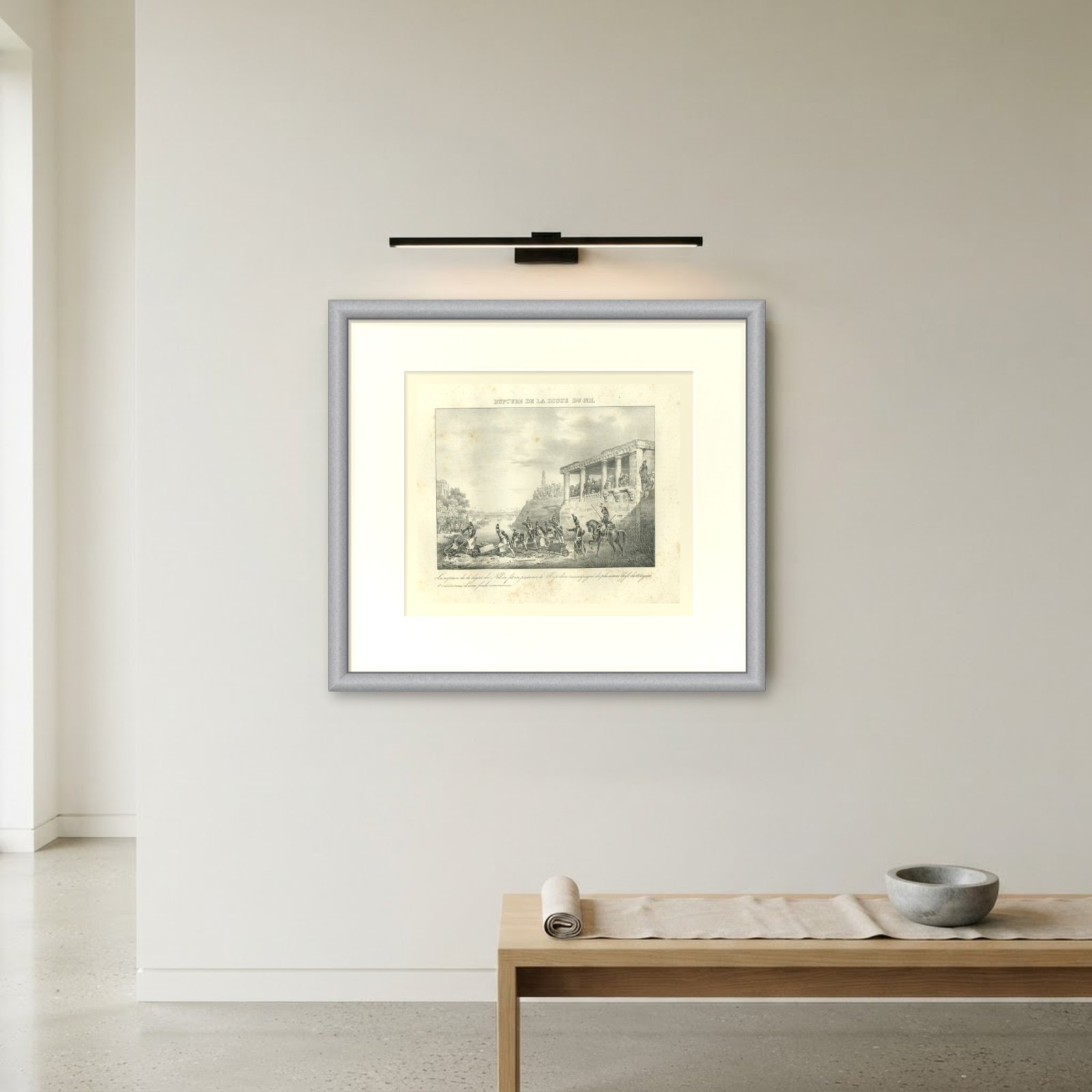
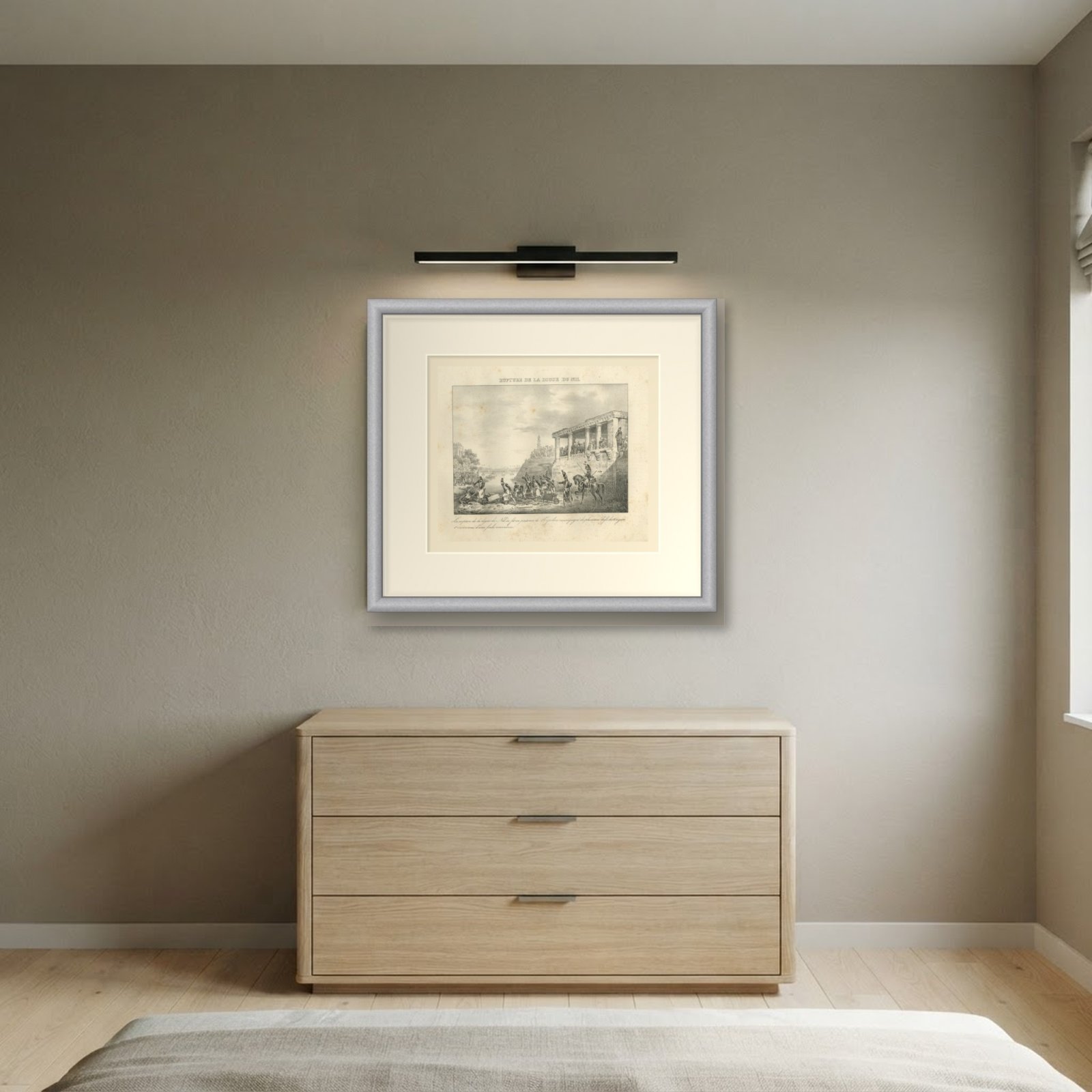 In the room
Interior designers: BarTrade members buy at their trade price. How it works
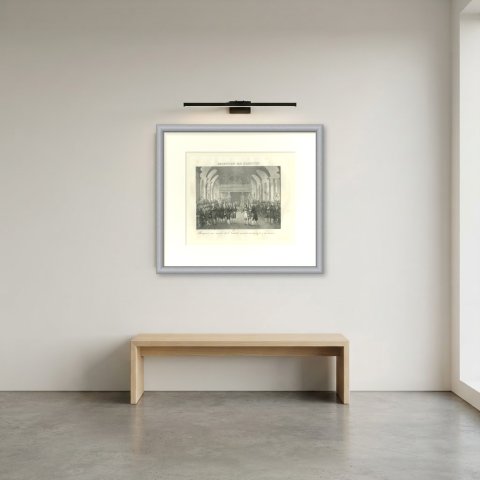
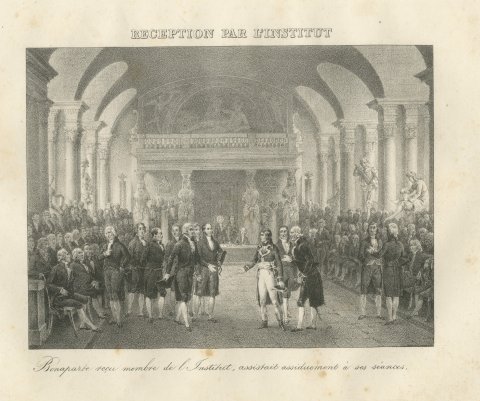
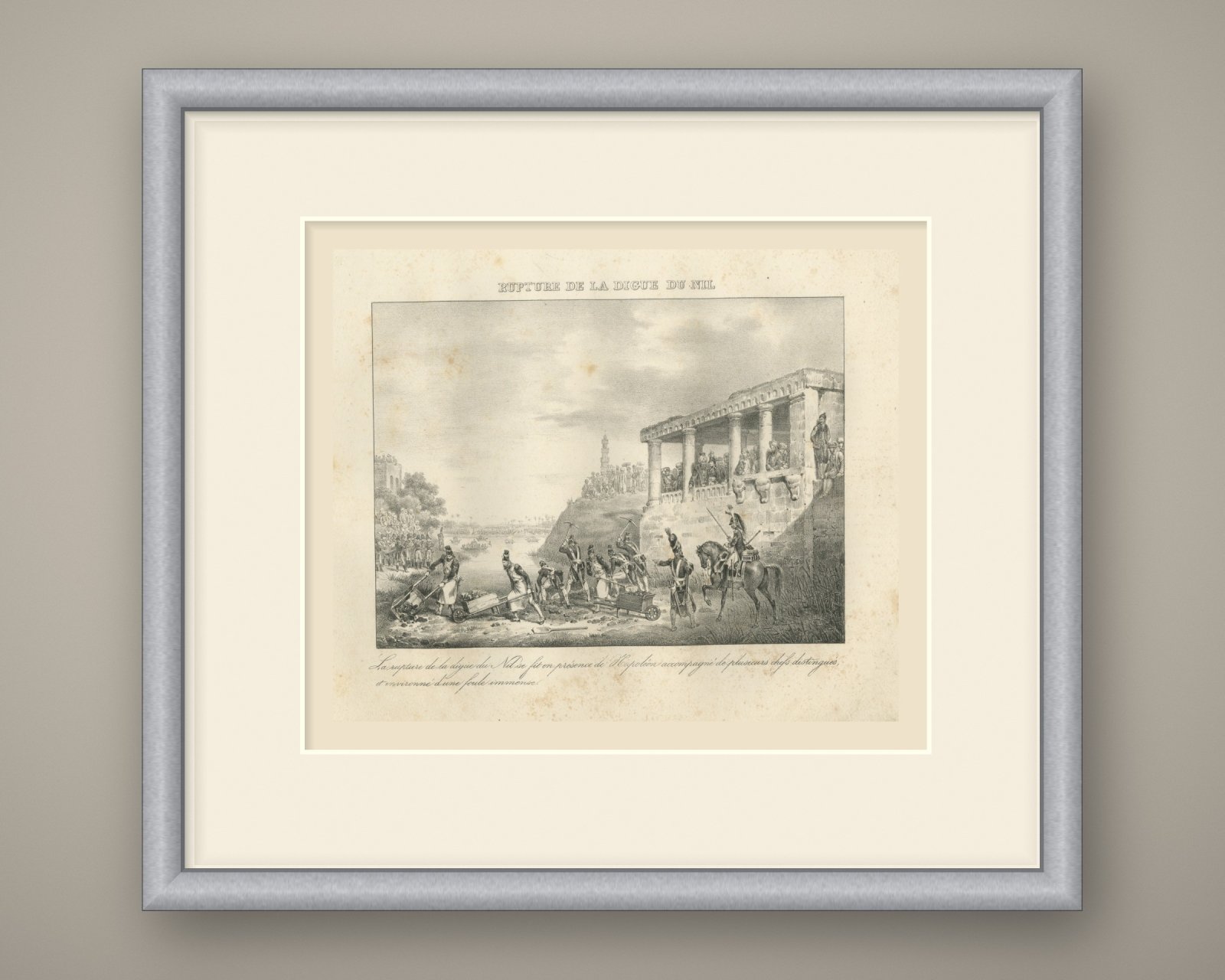
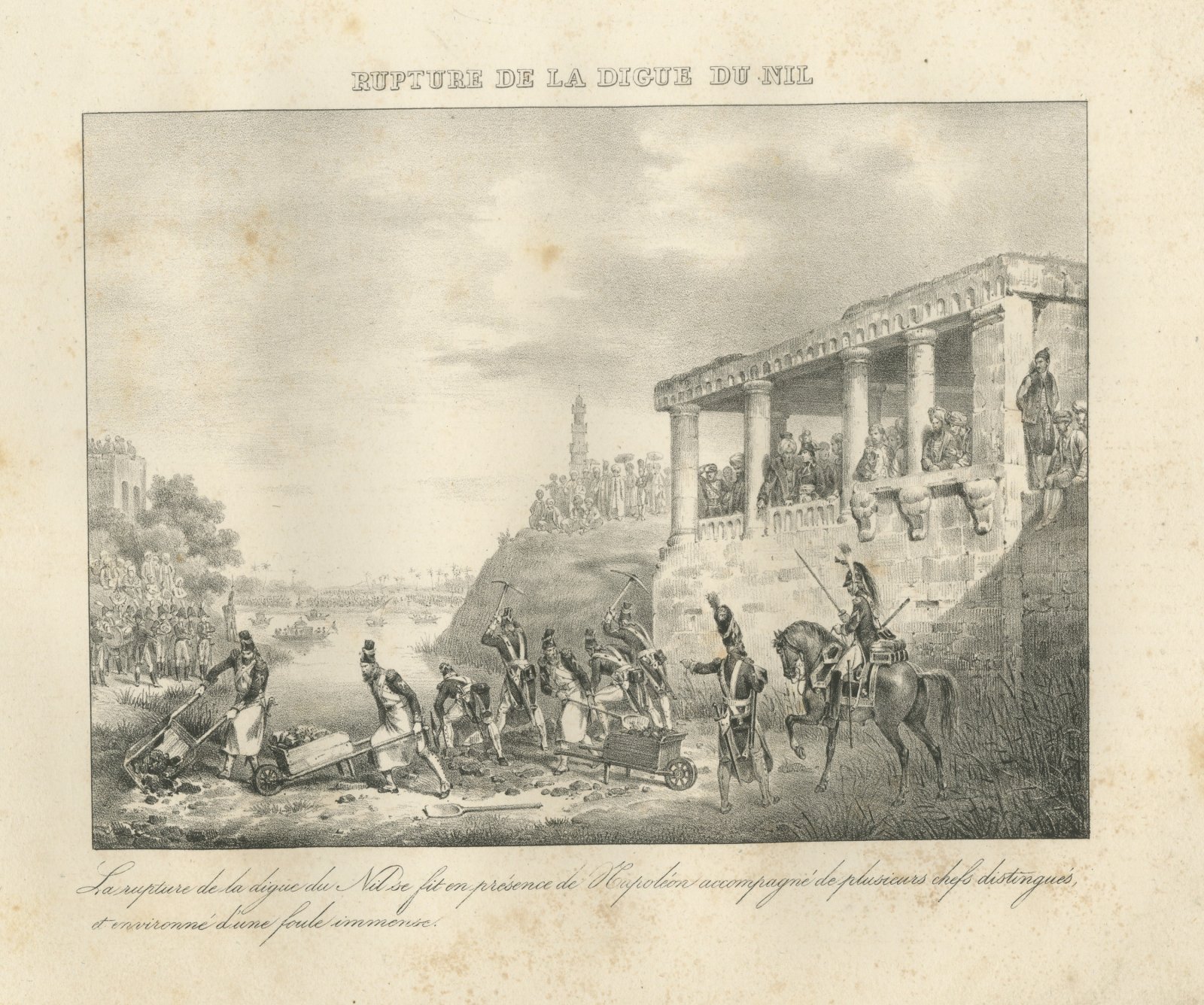
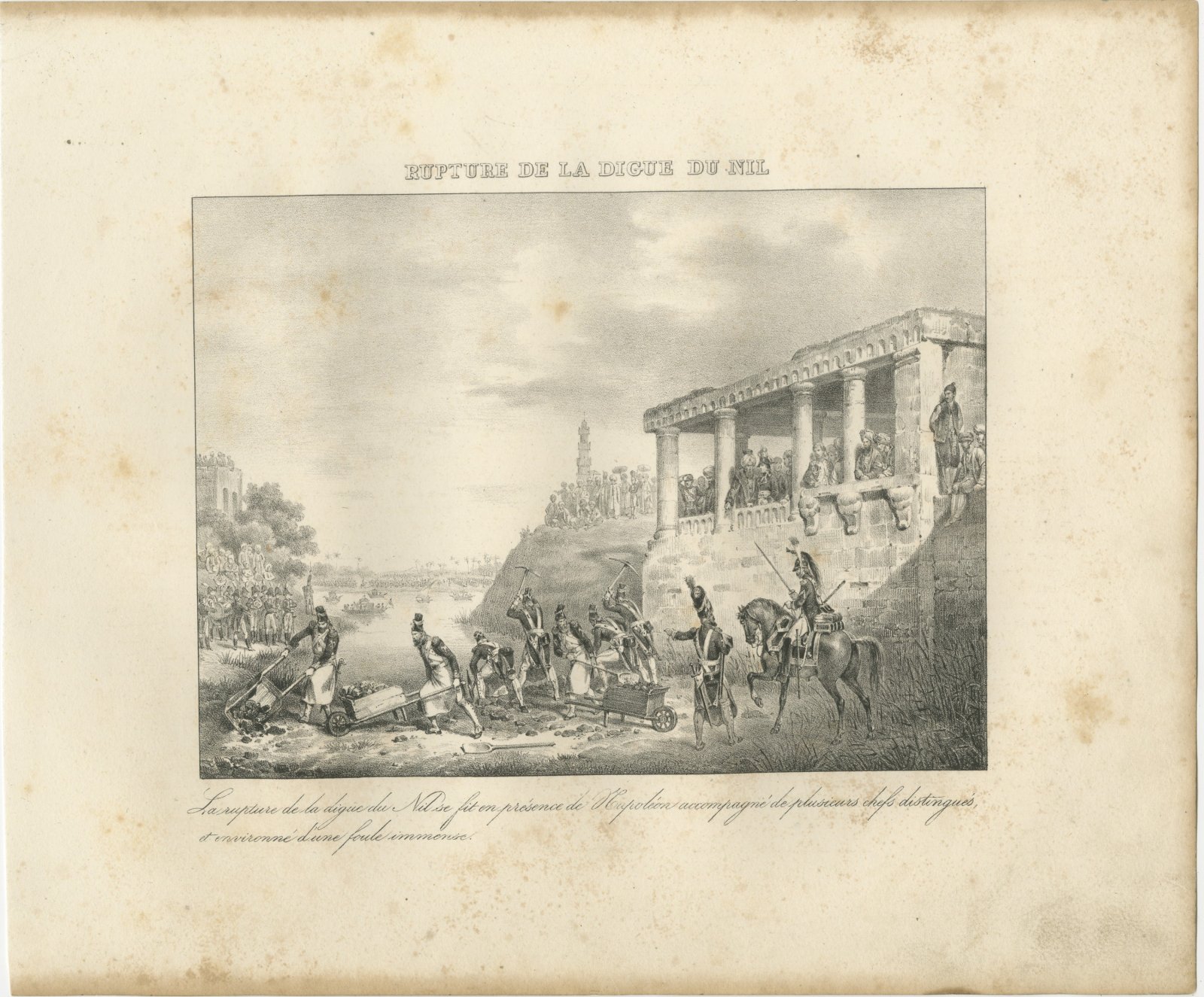
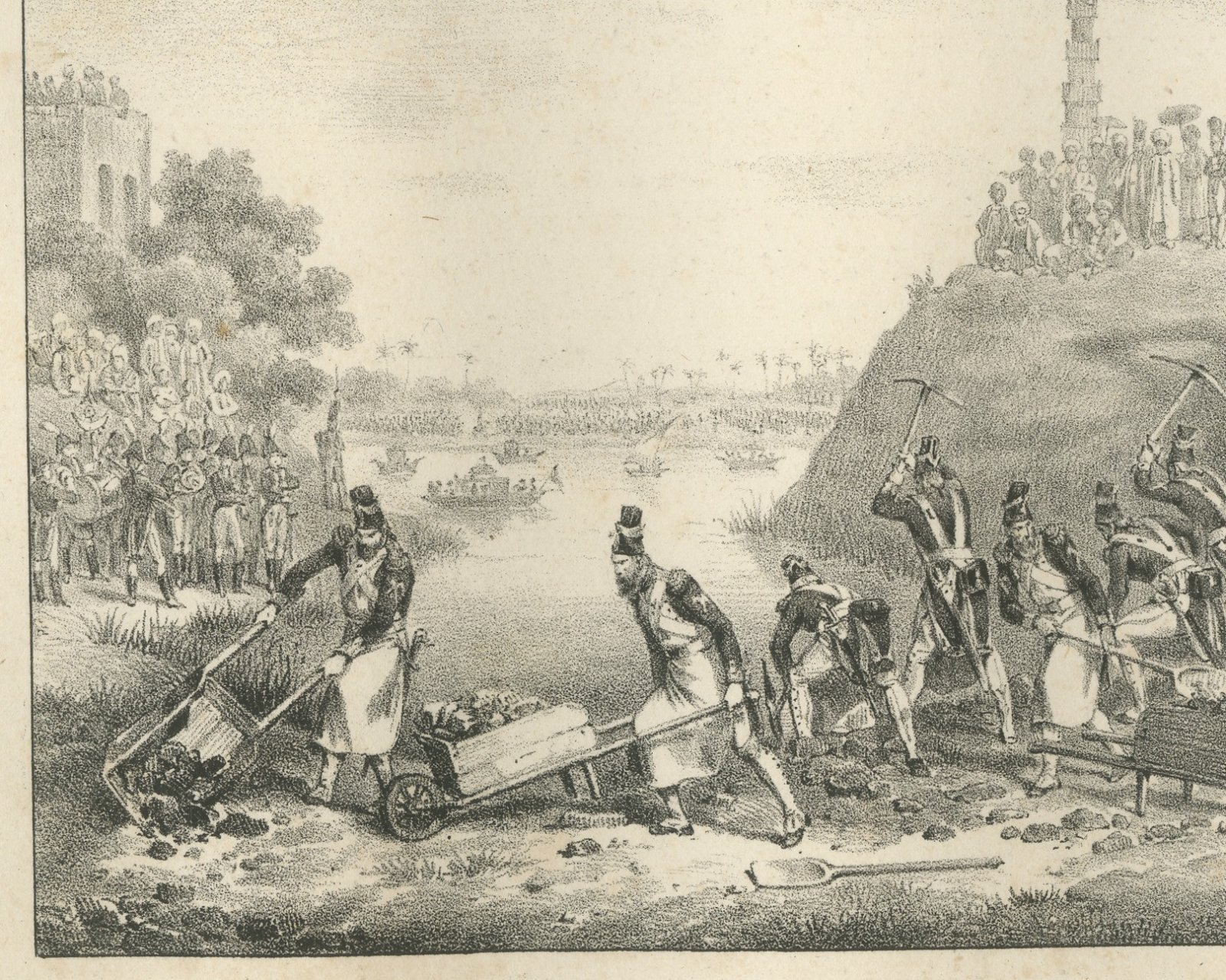
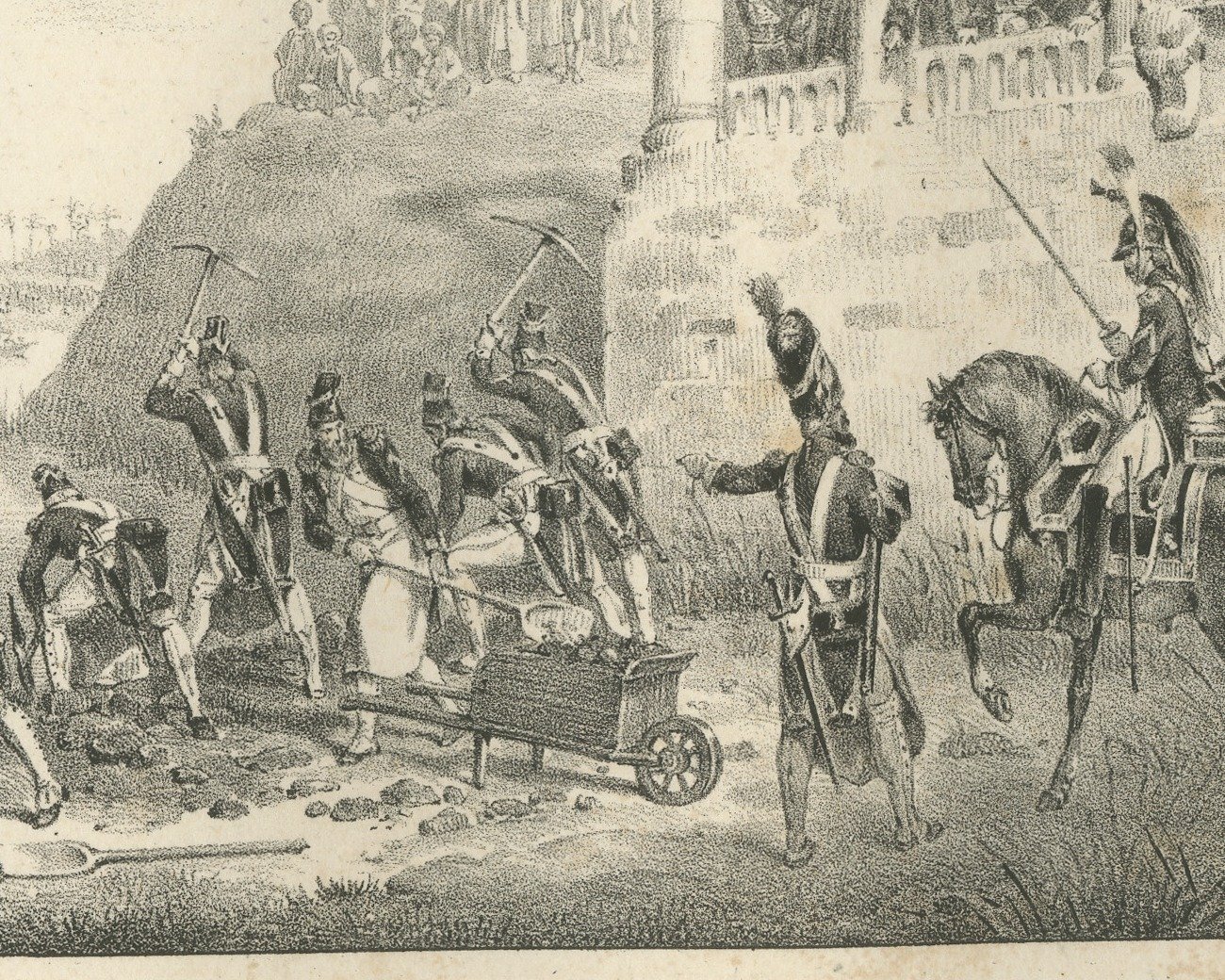
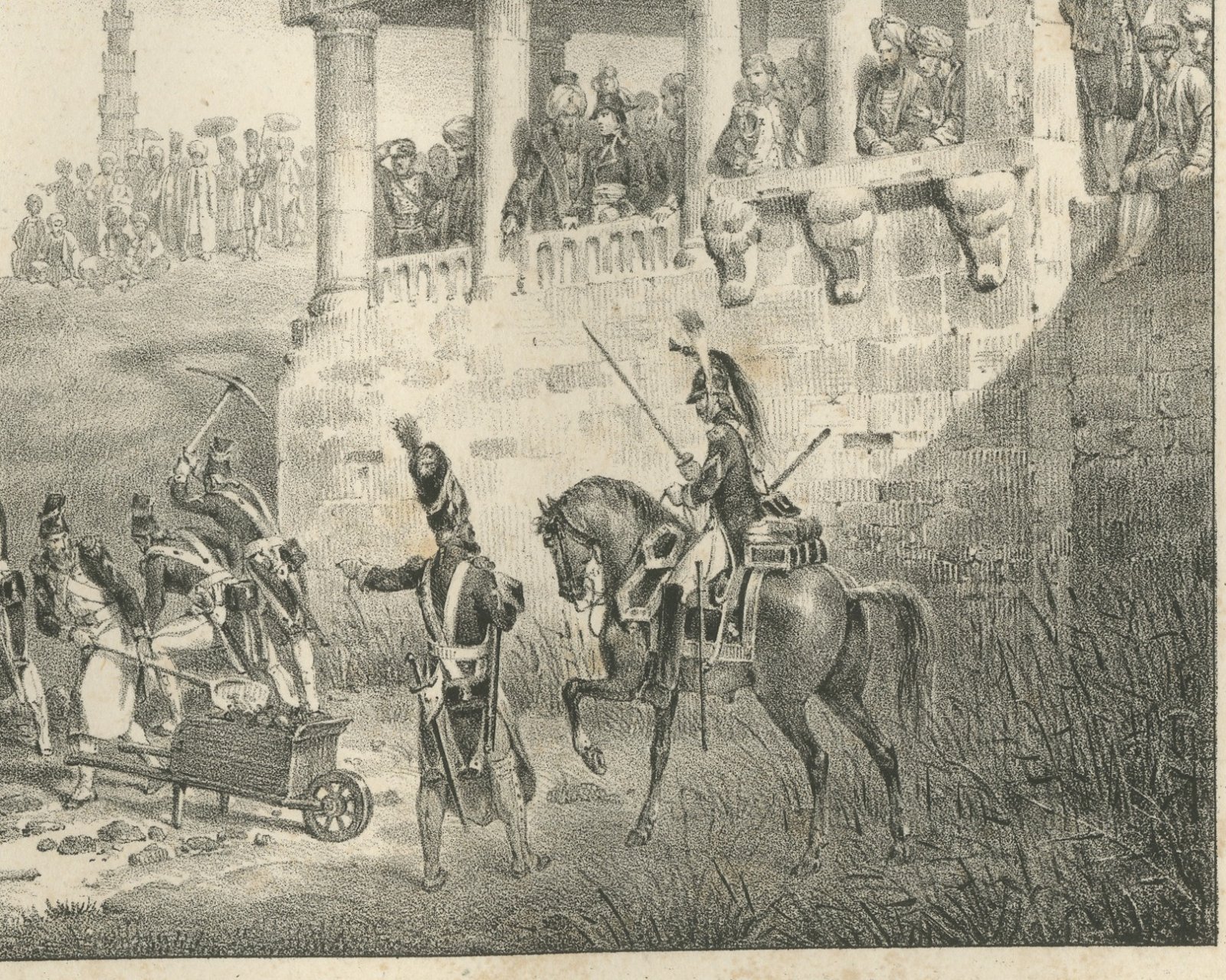
An original antique lithograph from Jean-Baptiste Madou's Vie de Napoléon, published at Brussels in 1827, lettered "RUPTURE DE LA DIGUE DU NIL" in open capitals above the image. In the foreground French soldiers break the earthen embankment with picks and carry the spoil away in wheelbarrows. Above them at the right, a columned pavilion on a stone platform is crowded with turbaned spectators and French officers looking down on the work, while a mounted dragoon with his saber raised and a soldier in a bearskin gesturing toward the diggers stand below it. At the left the water opens toward a distant shore with palms, boats and crowds, troops are drawn up on the bank, and a minaret rises above spectators on the ridge.
The caption below the image, in lithographic script, reads: "La rupture de la digue du Nil se fit en présence de Napoléon accompagné de plusieurs chefs distingués, et environné d'une foule immense." In English: The cutting of the Nile dyke took place in the presence of Napoleon, accompanied by several distinguished chiefs, and surrounded by an immense crowd.
The plate comes from the first volume of Vie de Napoléon, published at Brussels in 1827 by the Lithographie royale de Jobard, the press of Marcellin Jobard. Its title page describes a text written by a society of men of letters from the new documents dictated and corrected at Saint Helena by Napoleon himself, illustrated with lithographed plates by Jean-Baptiste Madou (1796 to 1877) after painters of the French school. Madou, a Belgian, later became known as a painter of genre scenes.
Each year, when the flood of the Nile reached its height, the earthen dam closing the Khalig, the canal that ran through Cairo, was cut in a public festival that marked the arrival of the waters. Bonaparte presided over the ceremony on 18 August 1798, less than a month after the French entered the city, as a gesture toward its people.
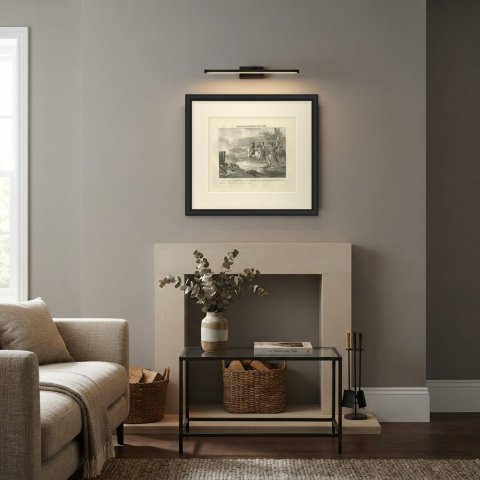
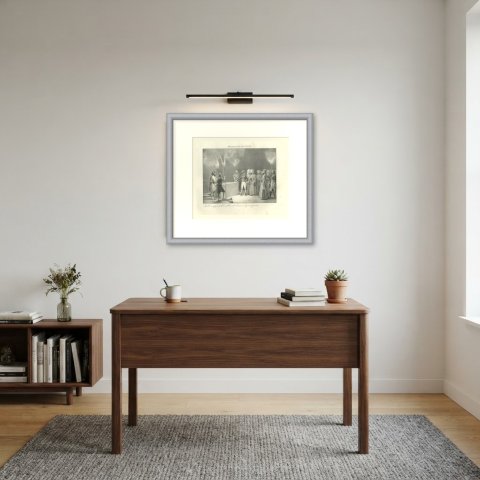
The oblong format hangs well over a desk or a mantelpiece.
This is an original antique print, not a modern reproduction. This item is sold unframed.