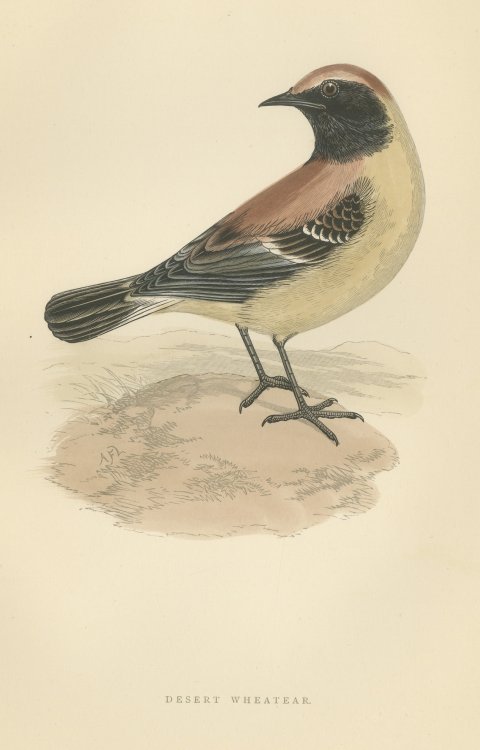
 The sheet, as you receive it
 In the room
Interior designers: BarTrade members buy at their trade price. How it works
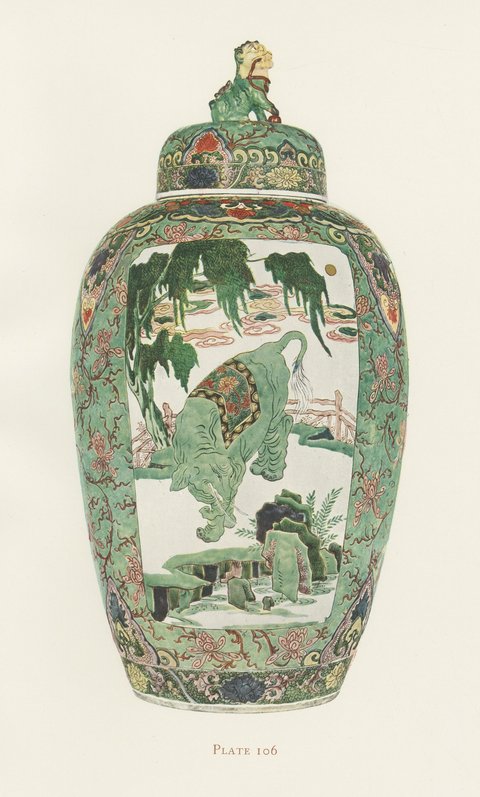
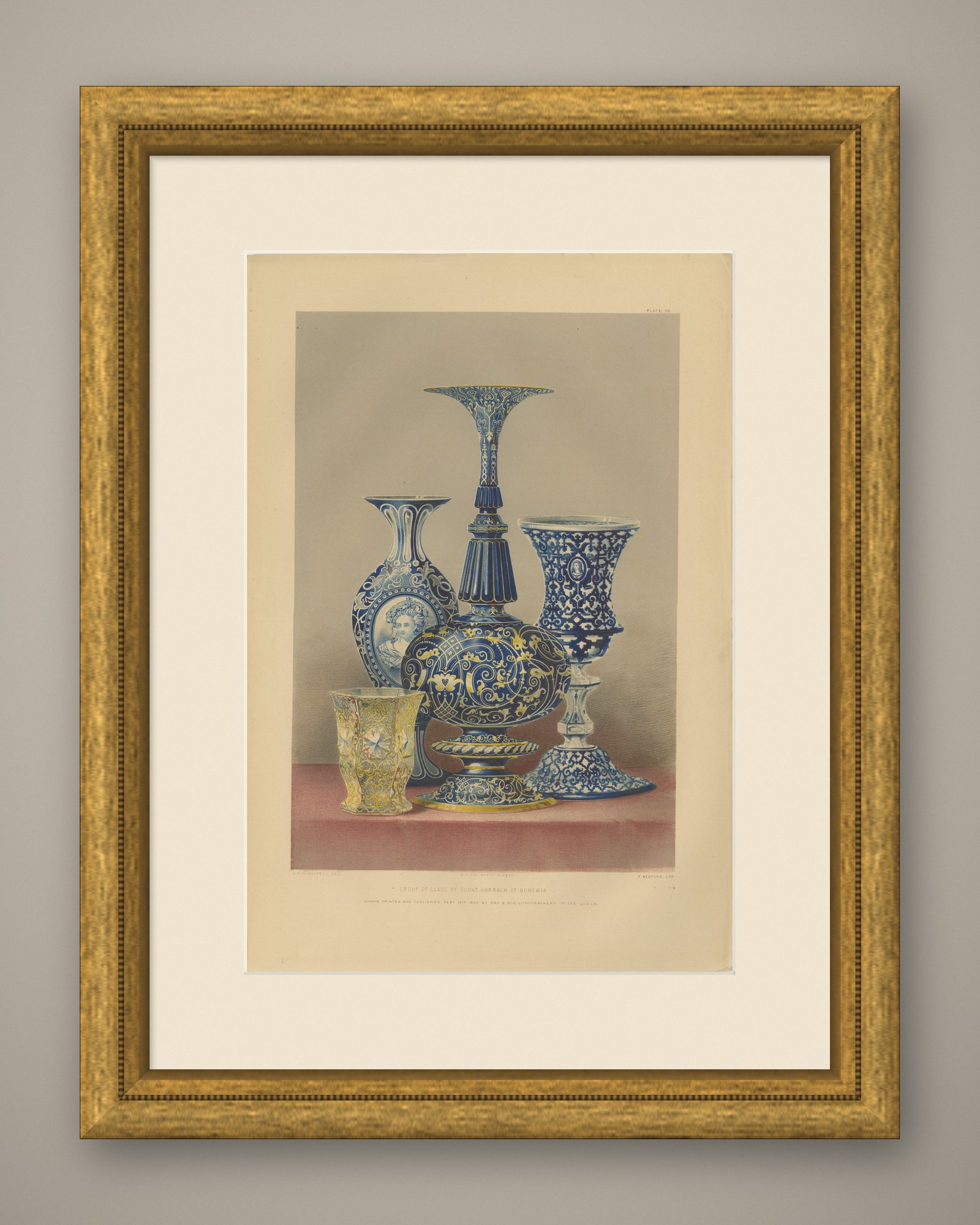
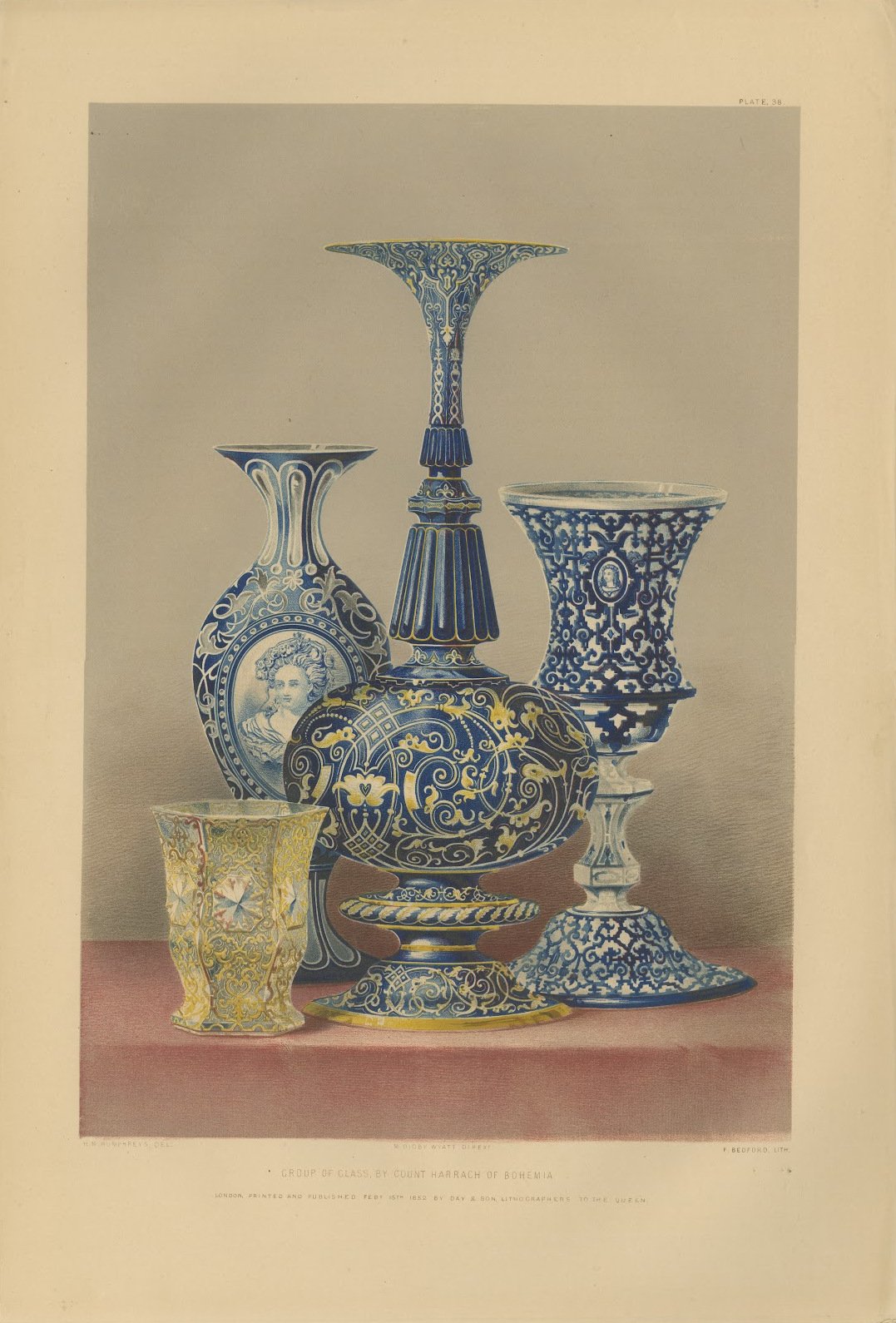
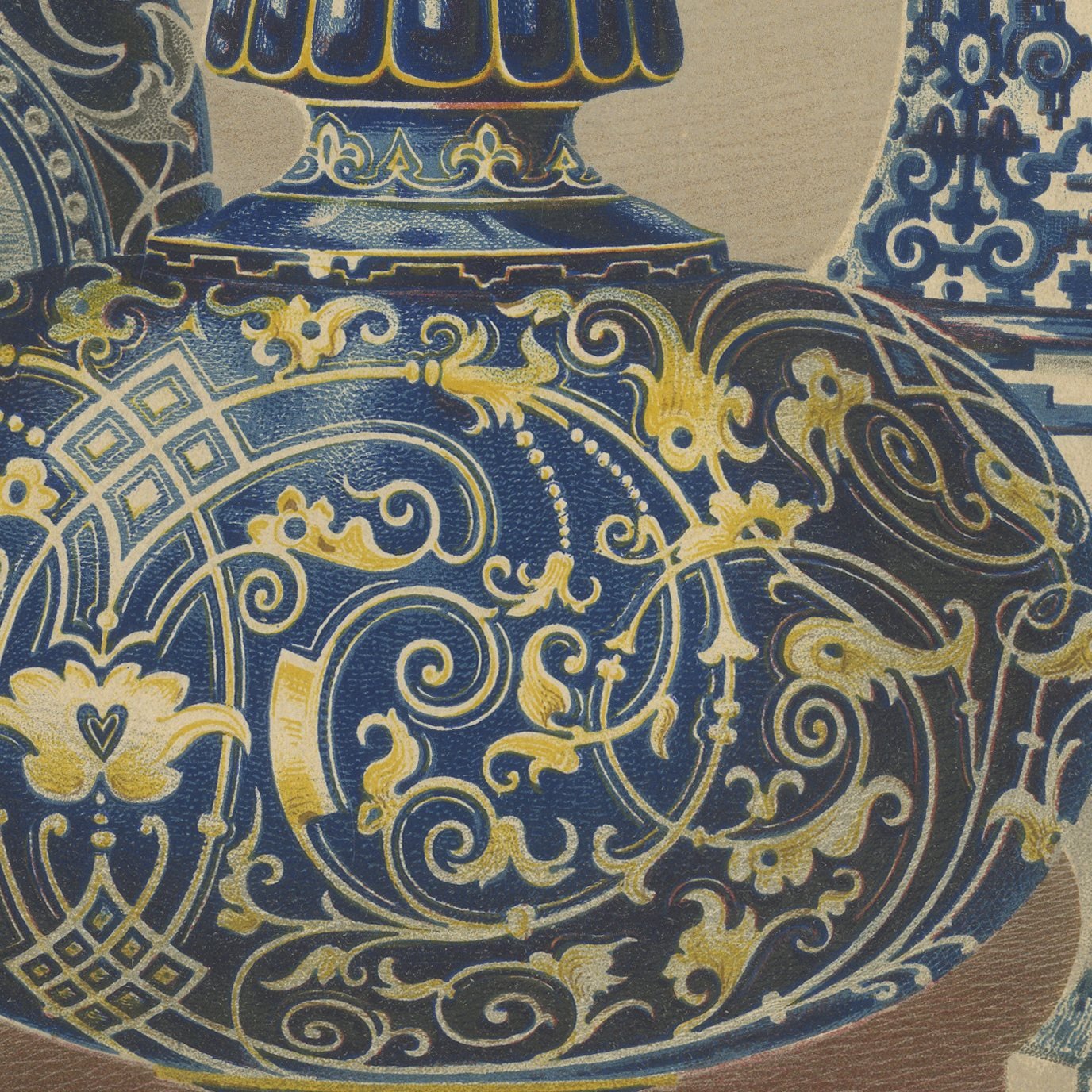
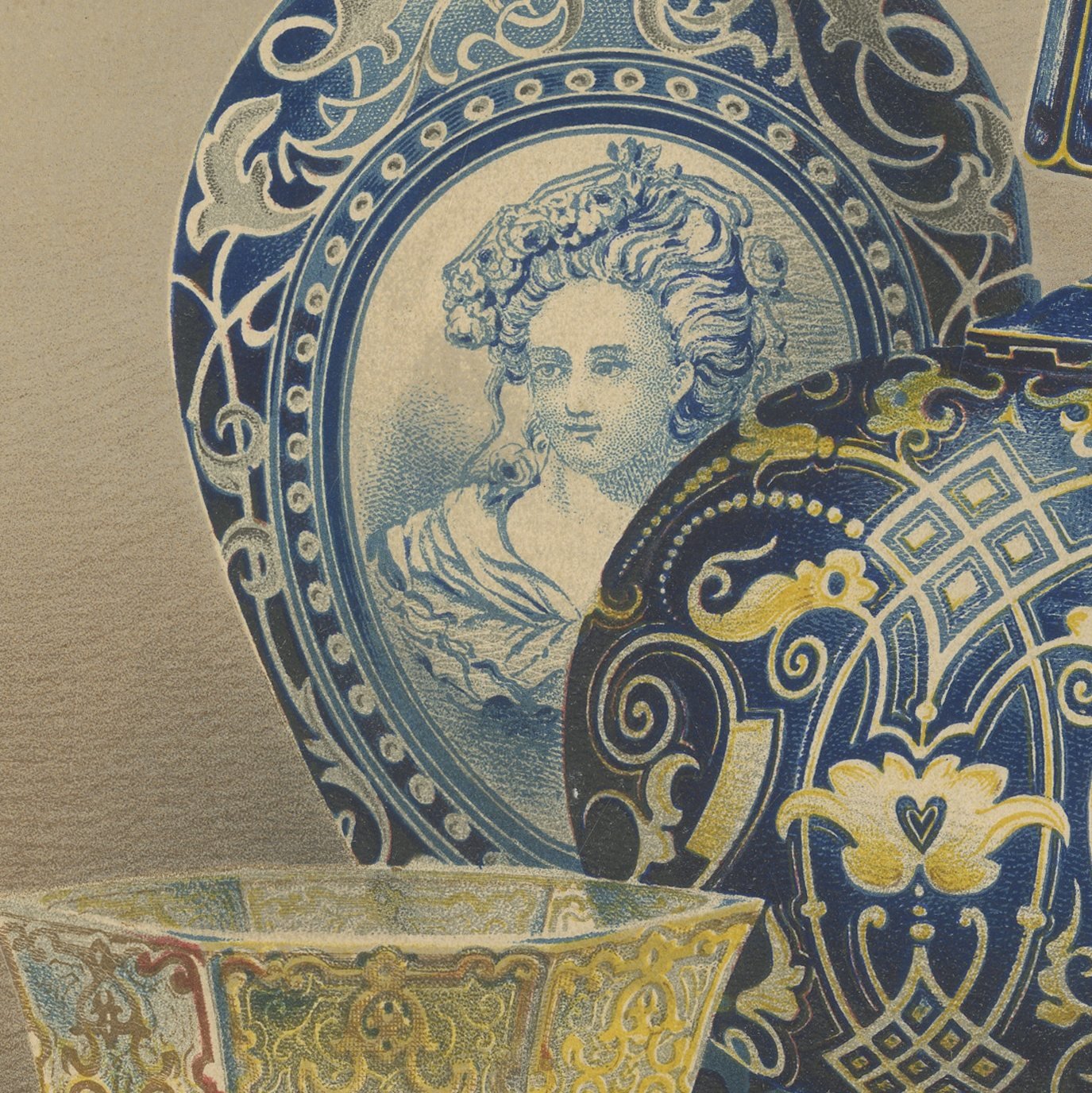
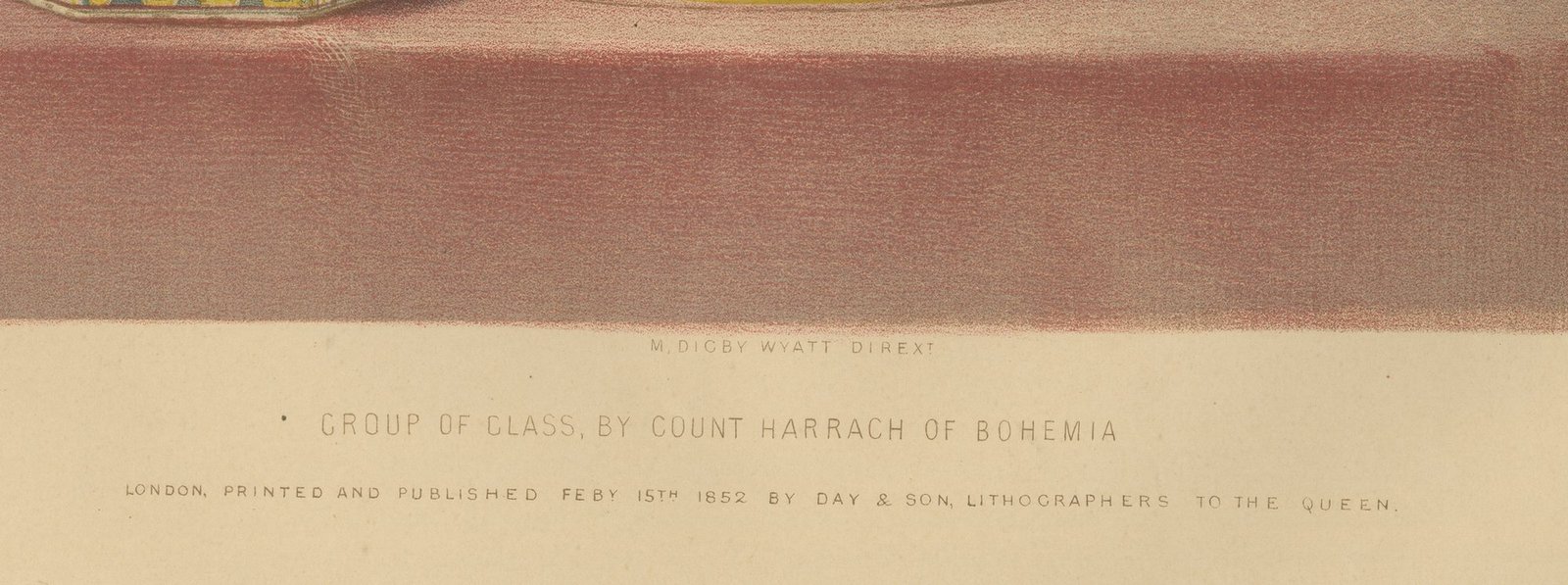
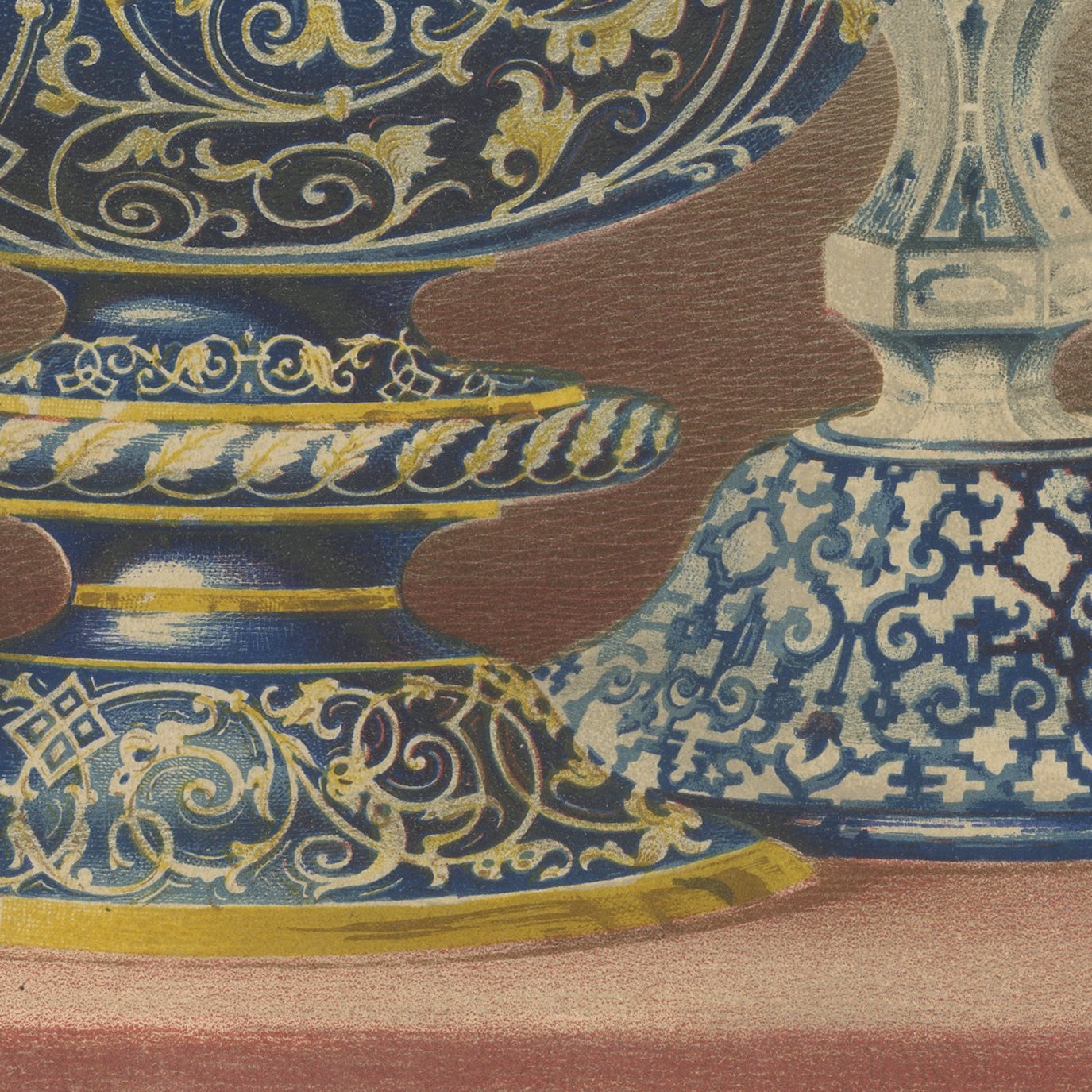
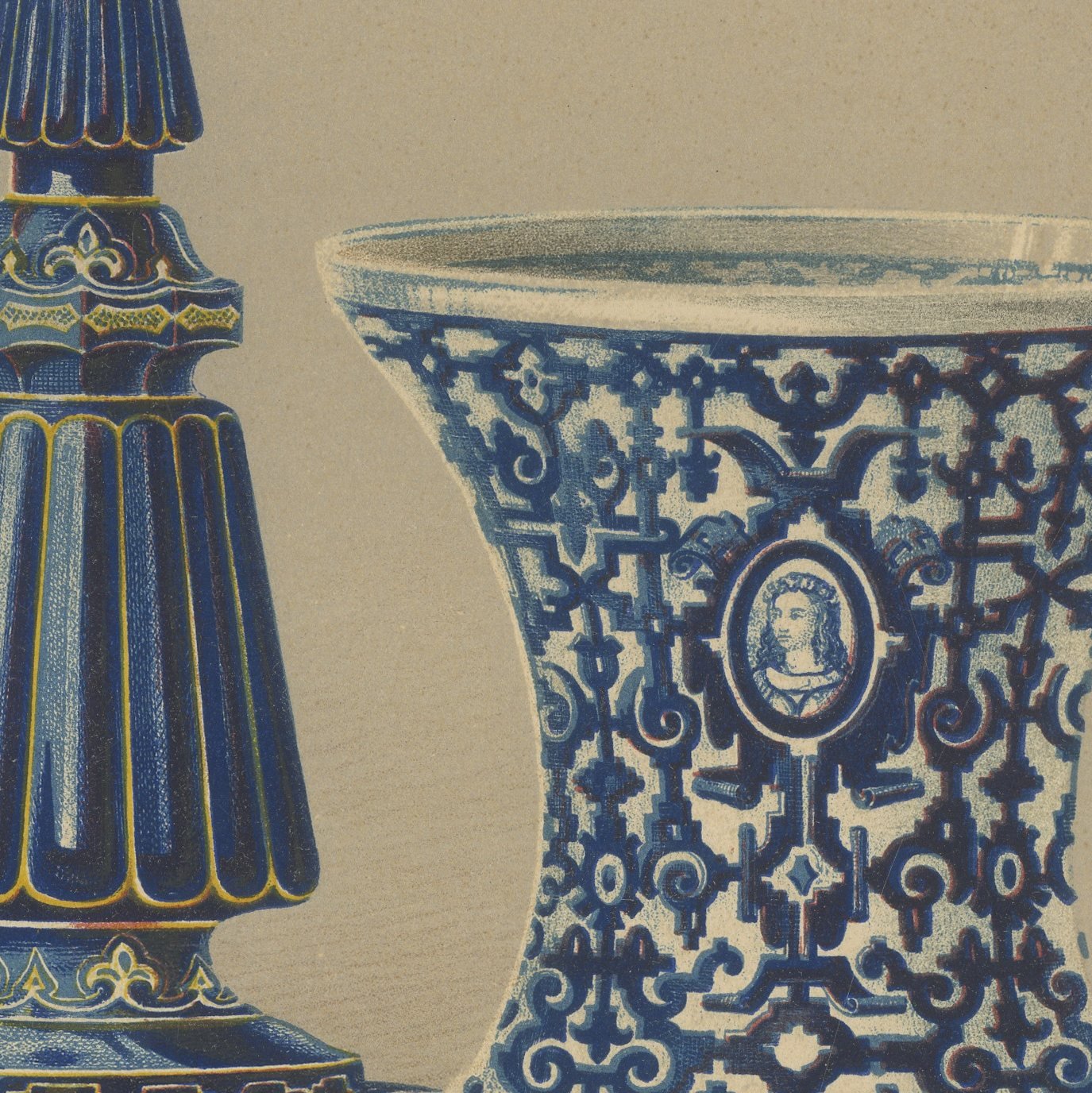
This is an original antique chromolithograph of Bohemian glass by Count Harrach, published in London by Day and Son on the fifteenth of February 1852. The glasses are grouped on a cloth of deep rose crimson that fills the lower half of the plate, the colored and cased glass printed so that the ruby, the gilding and the clear cut passages are all distinguishable, which is the particular difficulty of the subject. The drawing is by Henry Noel Humphreys.
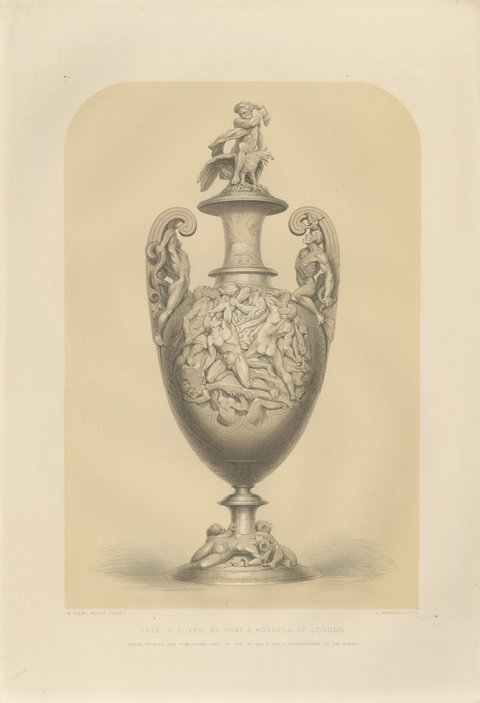
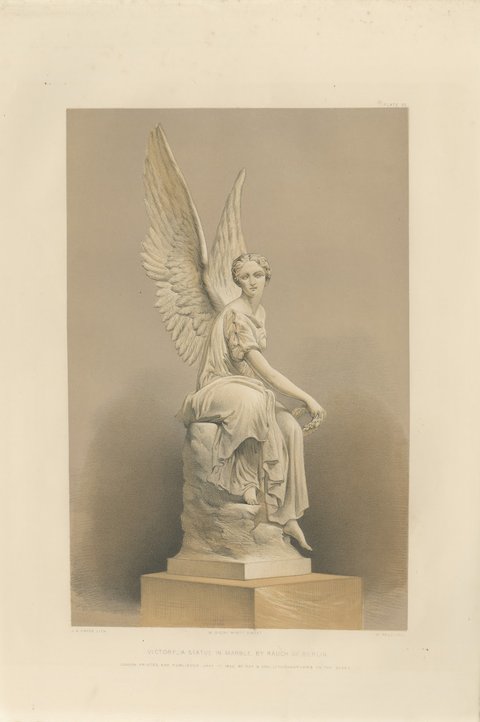
The plate comes from The Industrial Arts of the Nineteenth Century, Matthew Digby Wyatt's record of the Great Exhibition of 1851, issued in parts by Day and Son, lithographers to the Queen, between 1851 and 1853 and dedicated by permission to Prince Albert. Wyatt had been secretary to the executive committee of the Exhibition, and the work presents, in the words of its title, the choicest specimens produced by every nation, drawn by a team of artists and reproduced in chromolithography, then a new and costly process. Every plate carries its own publication date in the imprint at the foot, with the names of M. Digby Wyatt as director and of the artists who drew or lithographed it.
The glassworks at Neuwelt in Bohemia belonged to the Counts Harrach.
Strong age toning, the paper a warm buff, with a few foxing spots in the margins and one or two spots larger than the rest.
This is an original antique print, not a modern reproduction. This item is sold unframed.