 The sheet, as you receive it
 In the room

Interior designers: BarTrade members buy at their trade price. How it works
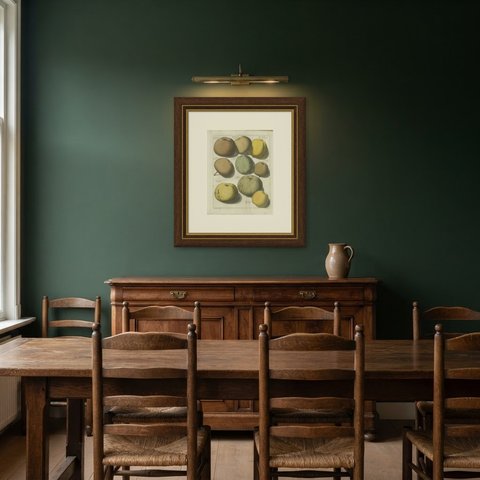
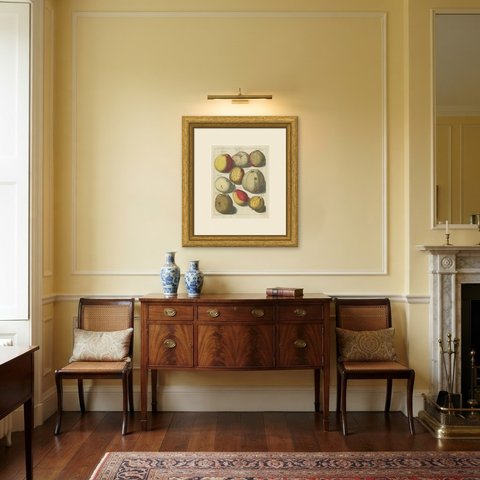
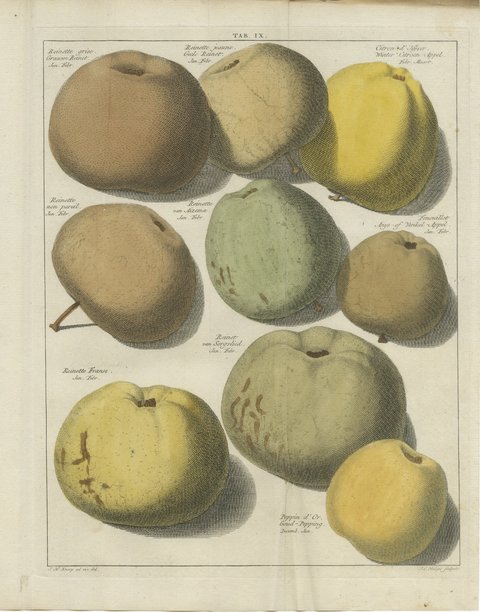
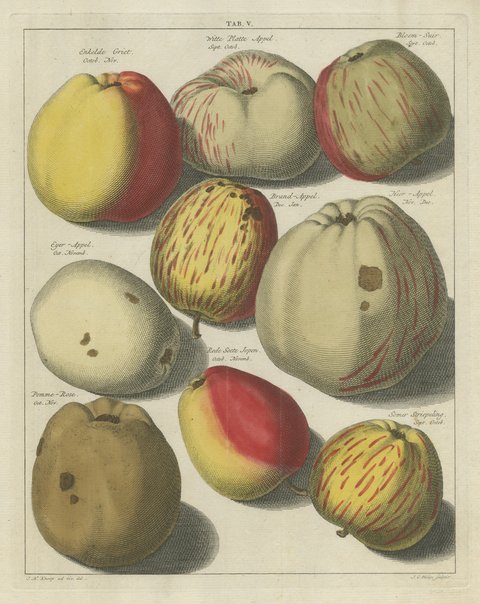
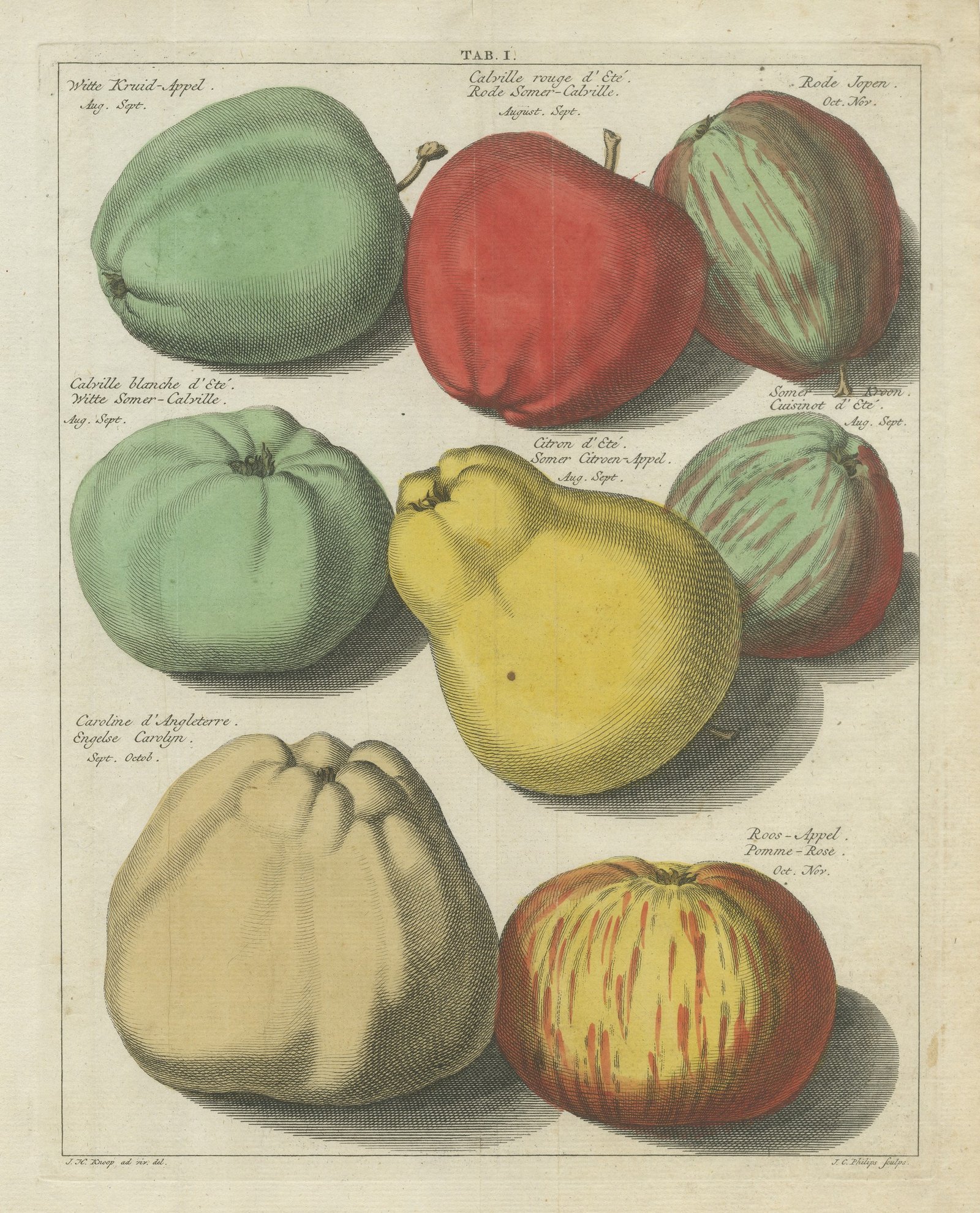
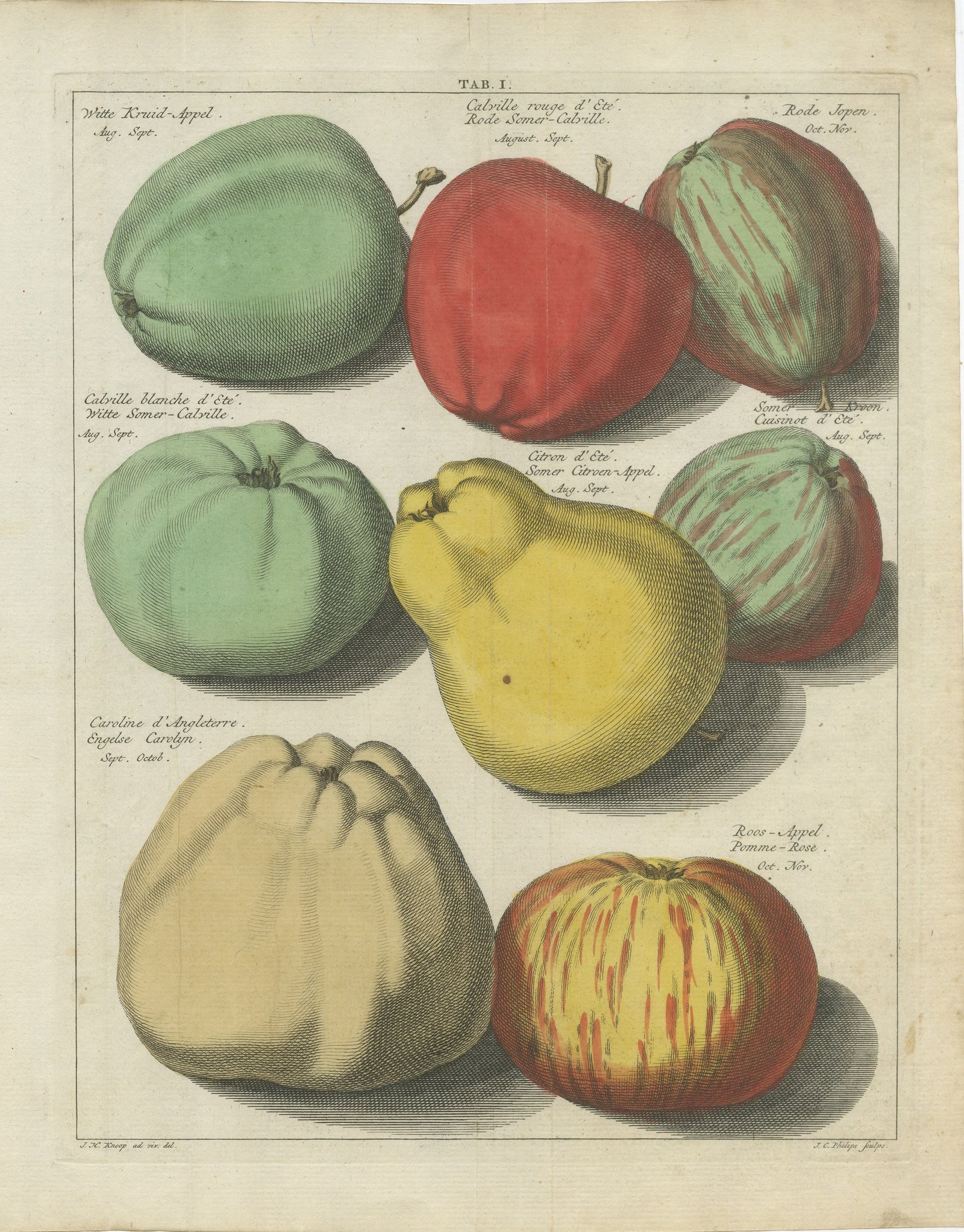
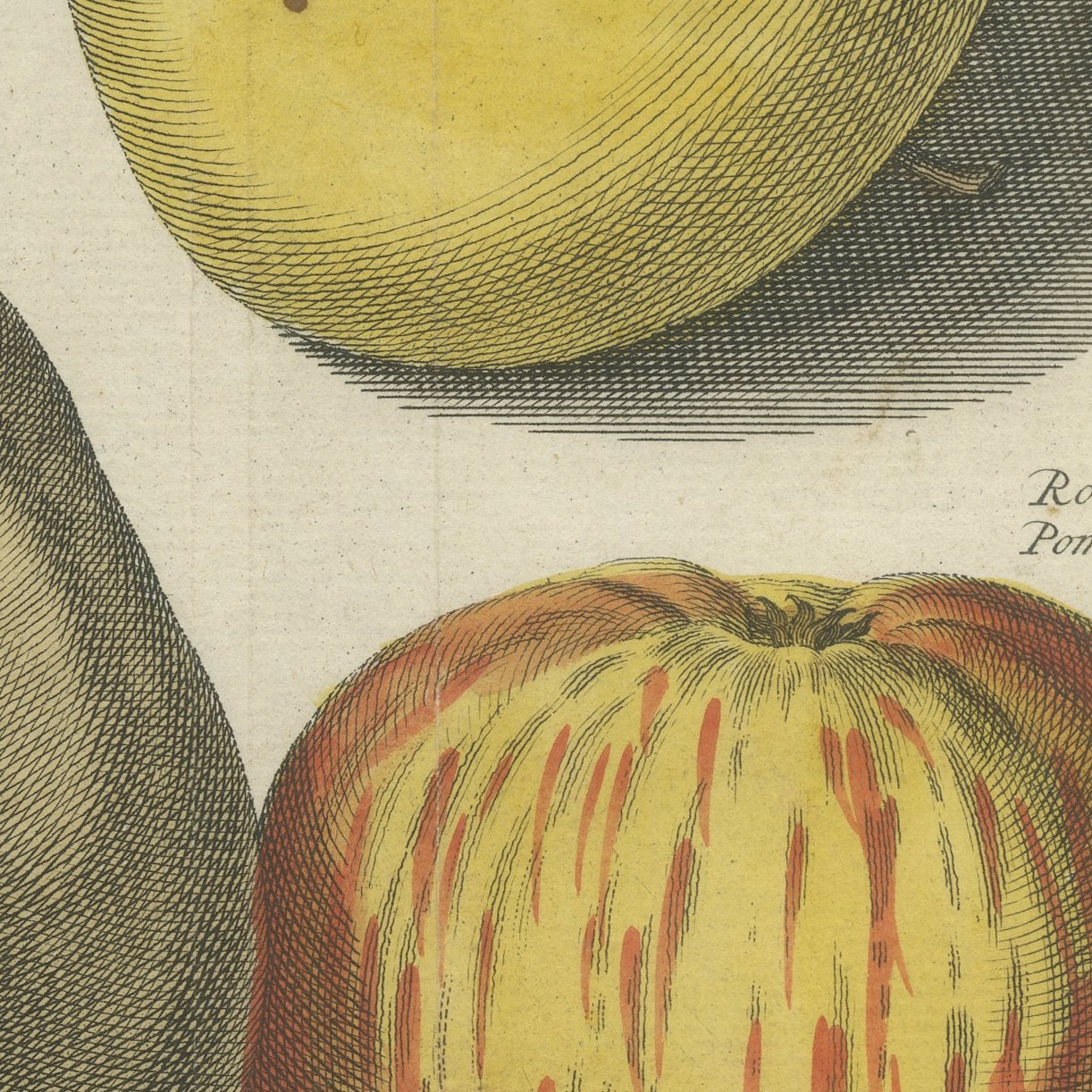
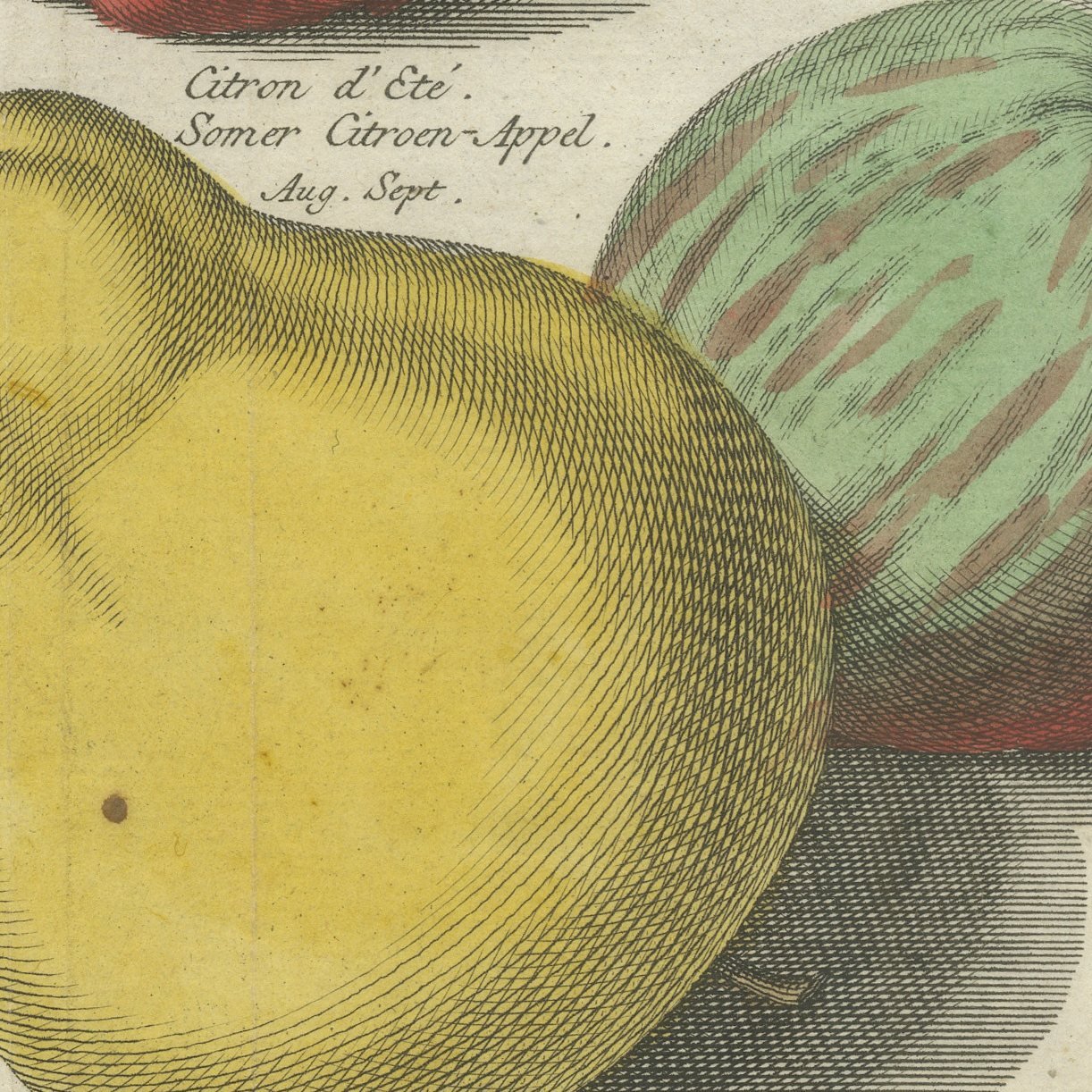
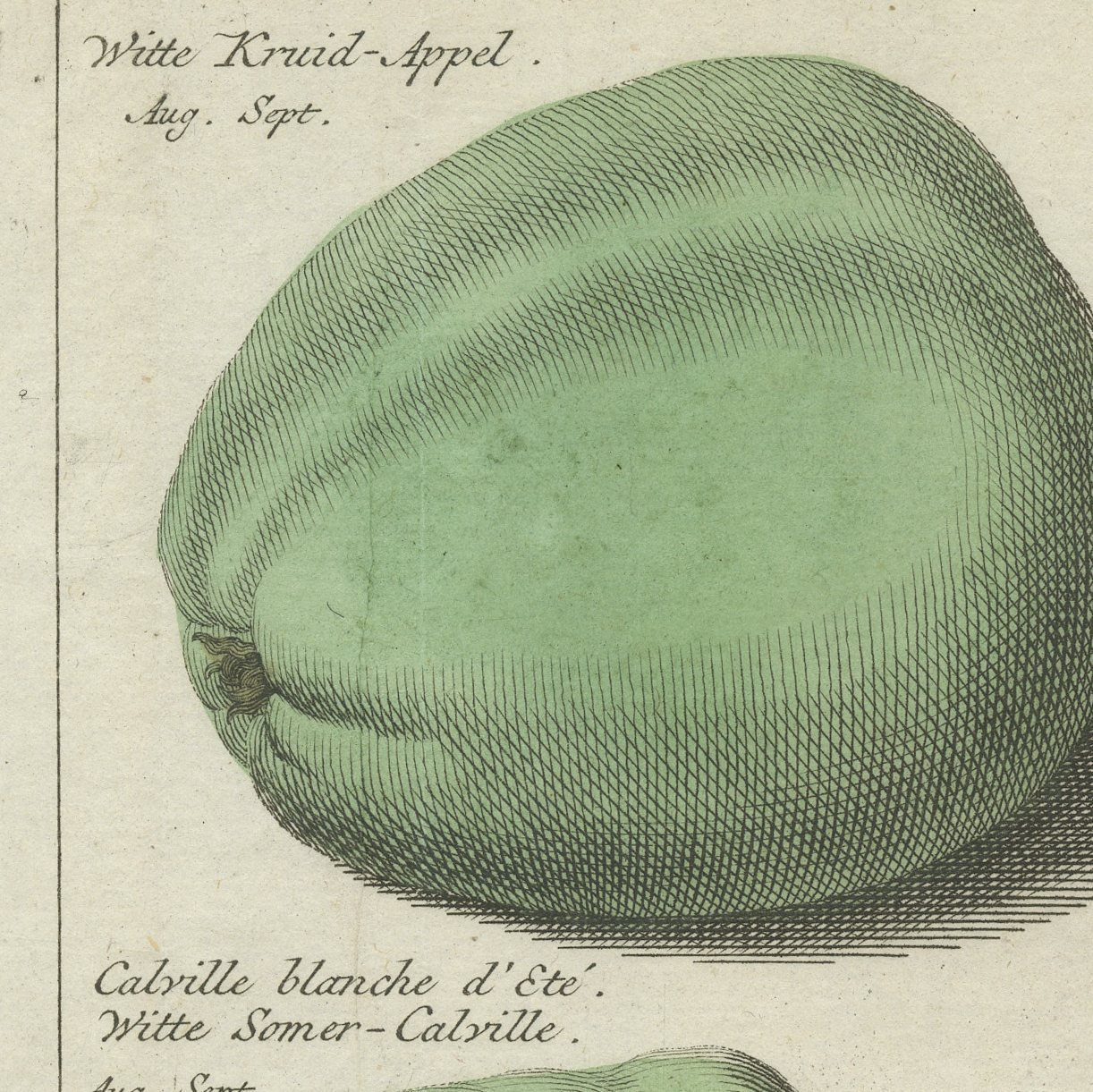
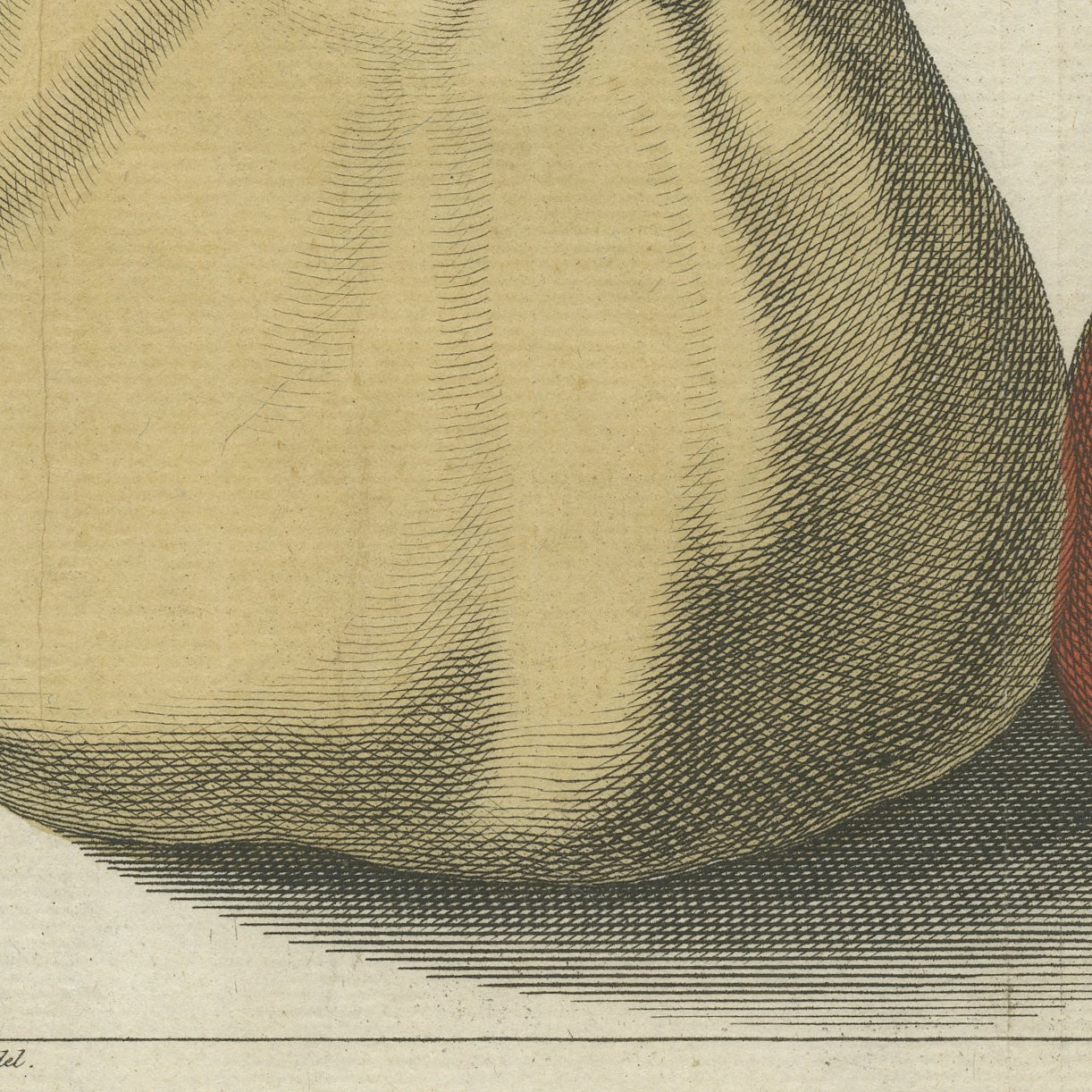
An original hand-colored copper engraving of eight named Dutch apple varieties, each one lettered with its name and its ripening months. The sheet opens the apple series and gathers the early sorts: Witte Kruid-Appel, Calville rouge d'Eté or Rode Somer-Calville, Rode Jopen, Calville blanche d'Eté, Citron d'Eté, Somer Kroon, Caroline d'Angleterre or Engelse Carolyn, and Roos-Appel. The fruits are arranged in a clear grid, each shown whole and at its own angle so that the shoulders, the ribbing and the set of the stalk can be compared side by side. The original watercolor washes sit over the engraved hatching, varying in density across a single apple and lapping over the engraved outline in places, which gives the greens, yellows and streaked reds a depth that printed color never has.
The plate comes from Johann Hermann Knoop's Beschrijving en Afbeeldingen van de beste soorten van Appelen en Peeren, published at Amsterdam and Dordrecht by Allart, Holtrop, de Leeuw and Krap in 1790, with a preface by the Zutphen minister and naturalist Johannes Florentius Martinet. Knoop was gardener to the widow of the Frisian stadtholder at Leeuwarden and the first systematic Dutch pomologist. He drew every fruit from the living specimen, and the plates are lettered ad vivum to say so. The engraving is on copper and the color is original hand color in watercolor, laid over the engraved hatching.
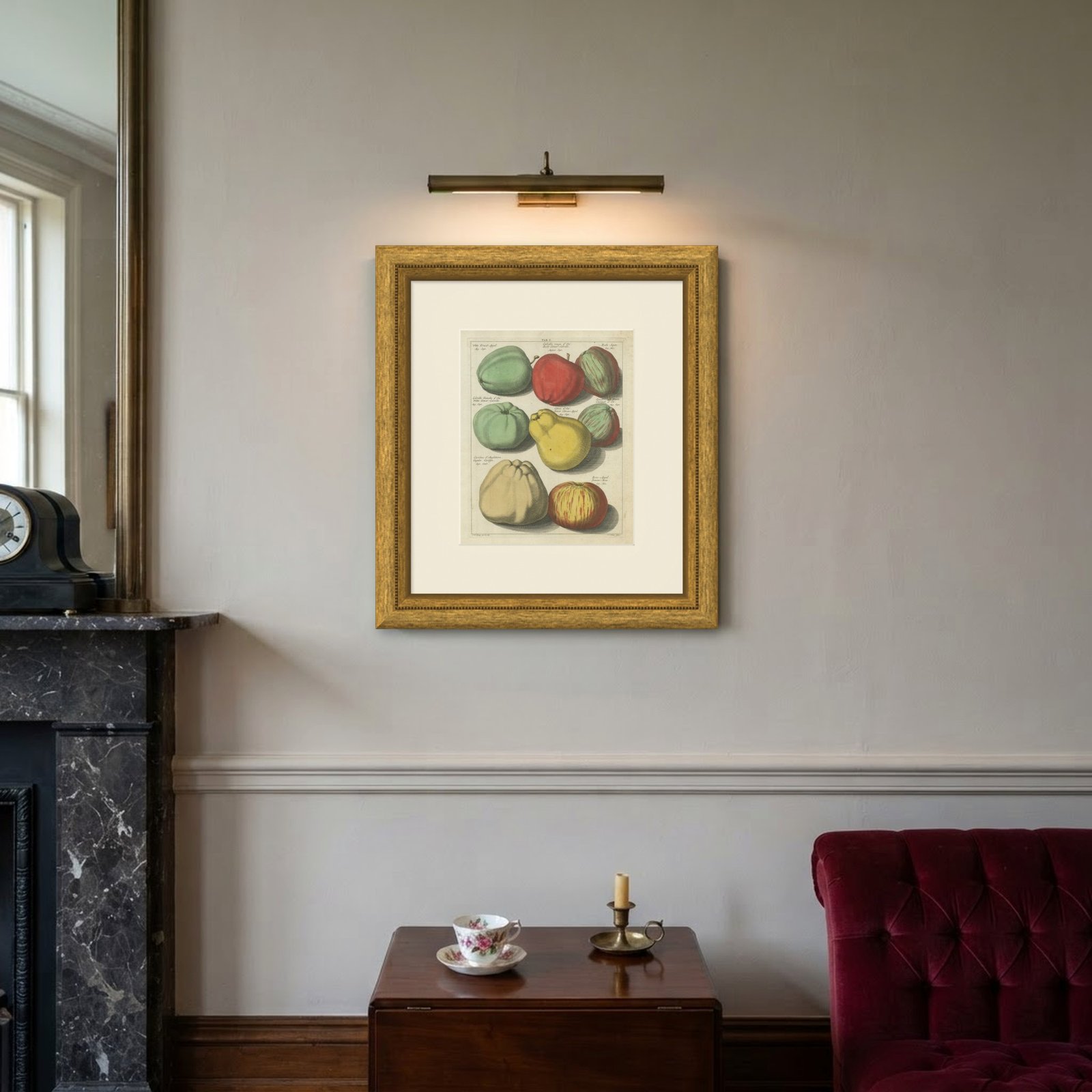
Knoop was the first Dutch writer to put pomology on a systematic footing, and he drew every fruit from the living specimen rather than from an earlier book, which is why the plates still work as an orchard reference. The small line of months under each name tells a grower when the variety comes in, so a single sheet reads as both a picture and a working calendar of the Dutch harvest. Most of these apples have vanished from commercial growing, which gives the plate real documentary value for heritage fruit collectors. Hung in a kitchen or a dining room, where the clear grid and the soft original coloring suit painted paneling, it makes an elegant and genuinely informative piece.
Light uneven toning, browner towards the edges. Marked handling soiling along the bottom and top edges. Scattered foxing in the margin. Slight wear at the top right corner. Minor edge wear, shallow nicks along the right.
This is an original antique plate, not a modern reproduction. This item is sold unframed.