The sheet, as you receive it
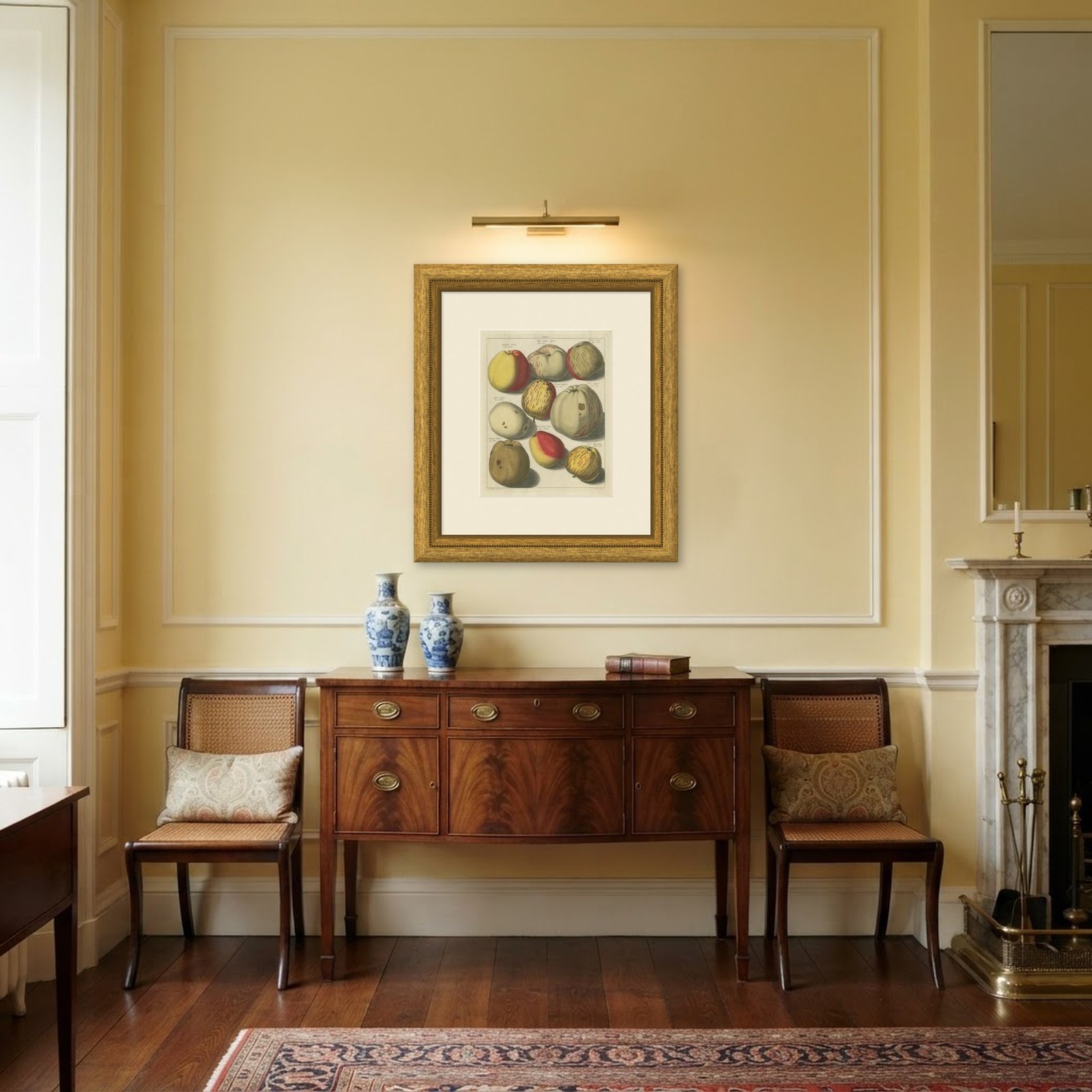 In the room
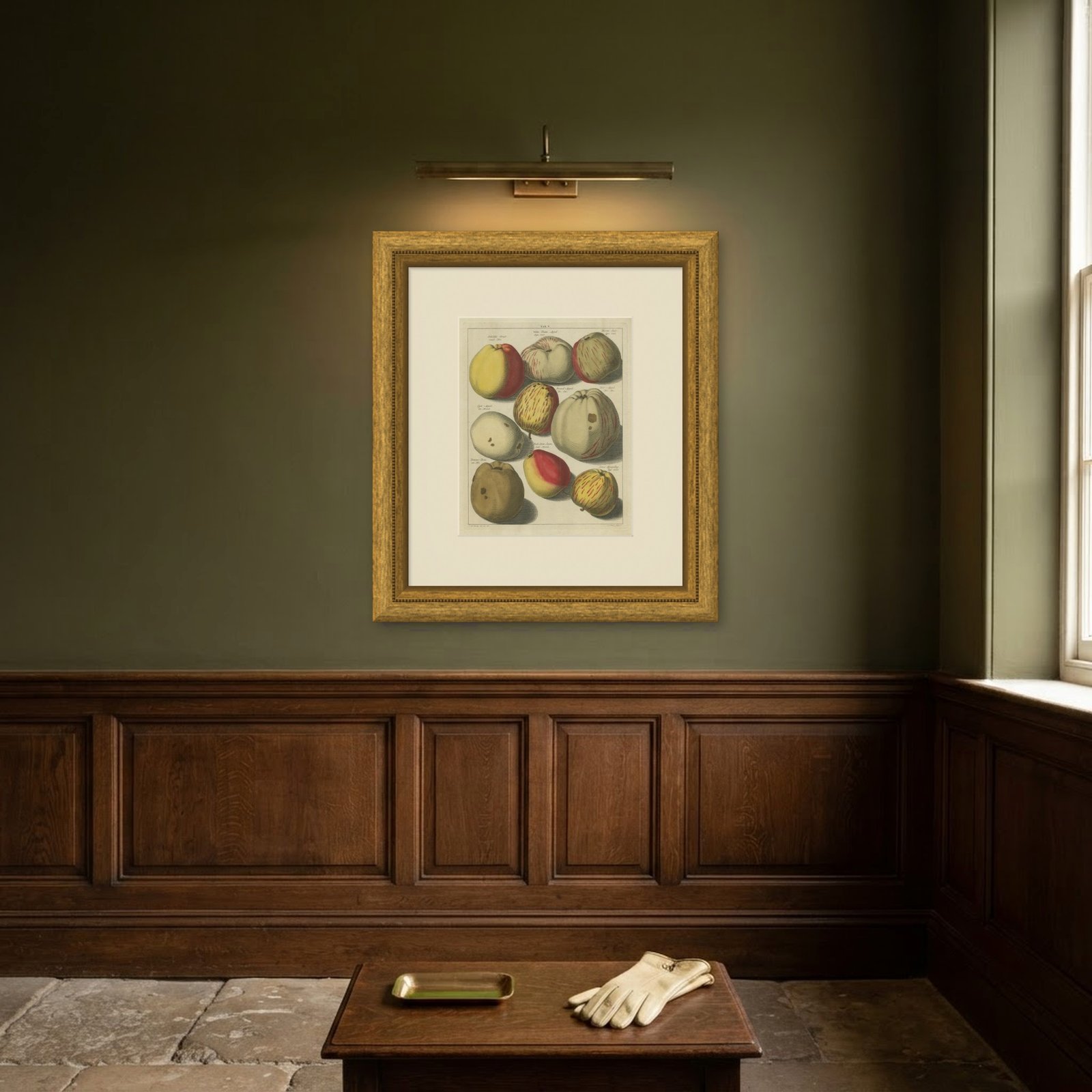

Interior designers: BarTrade members buy at their trade price. How it works
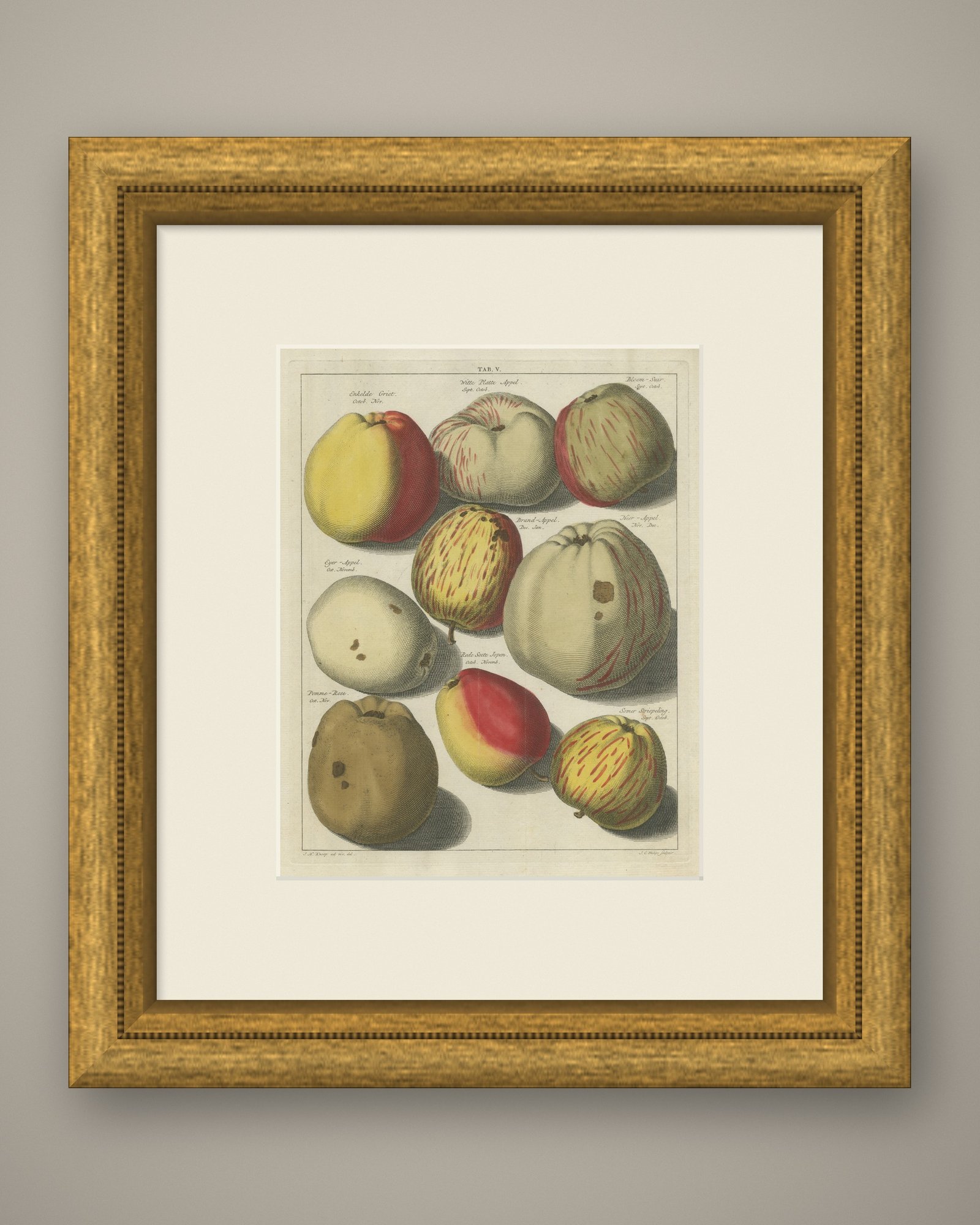
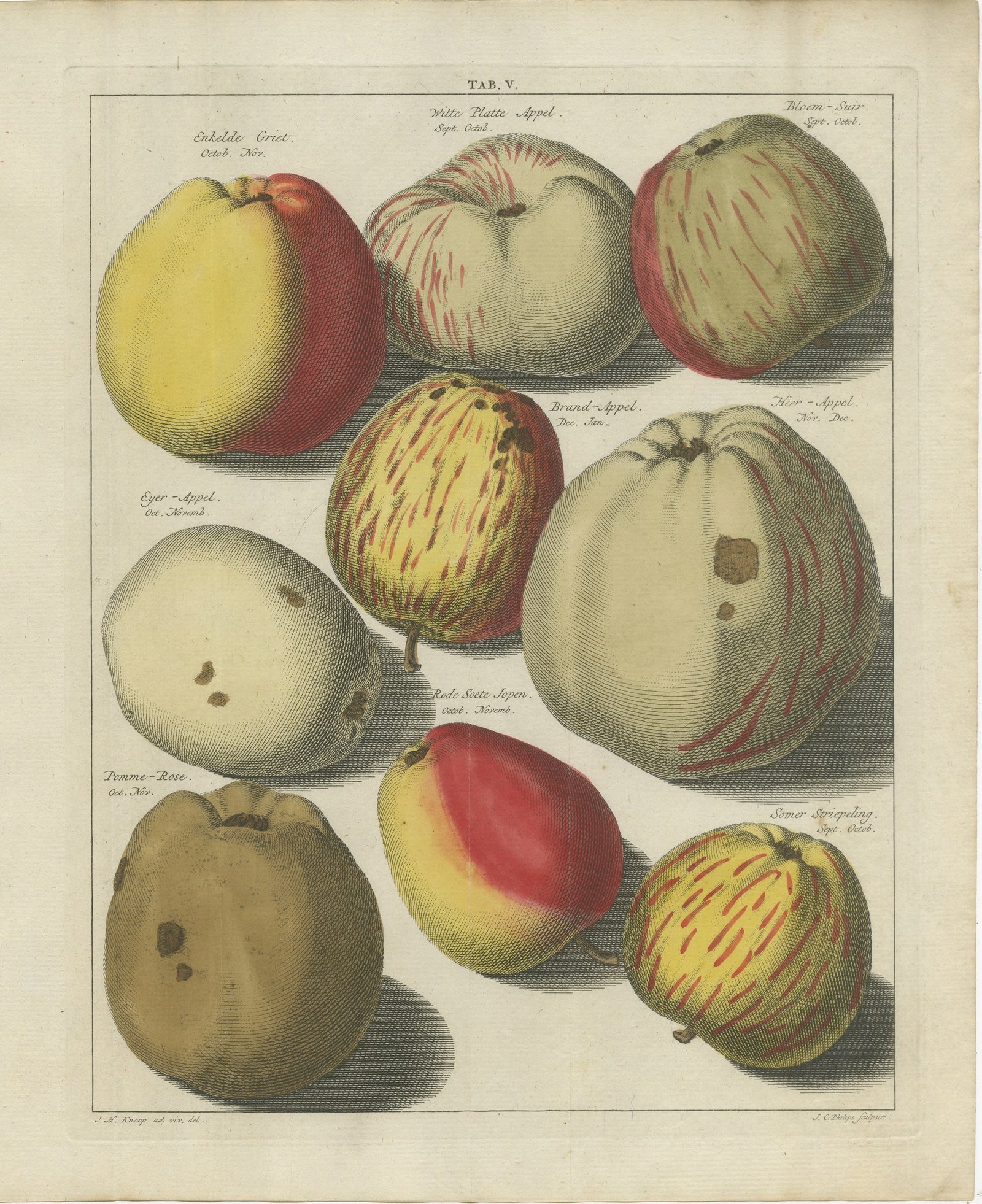
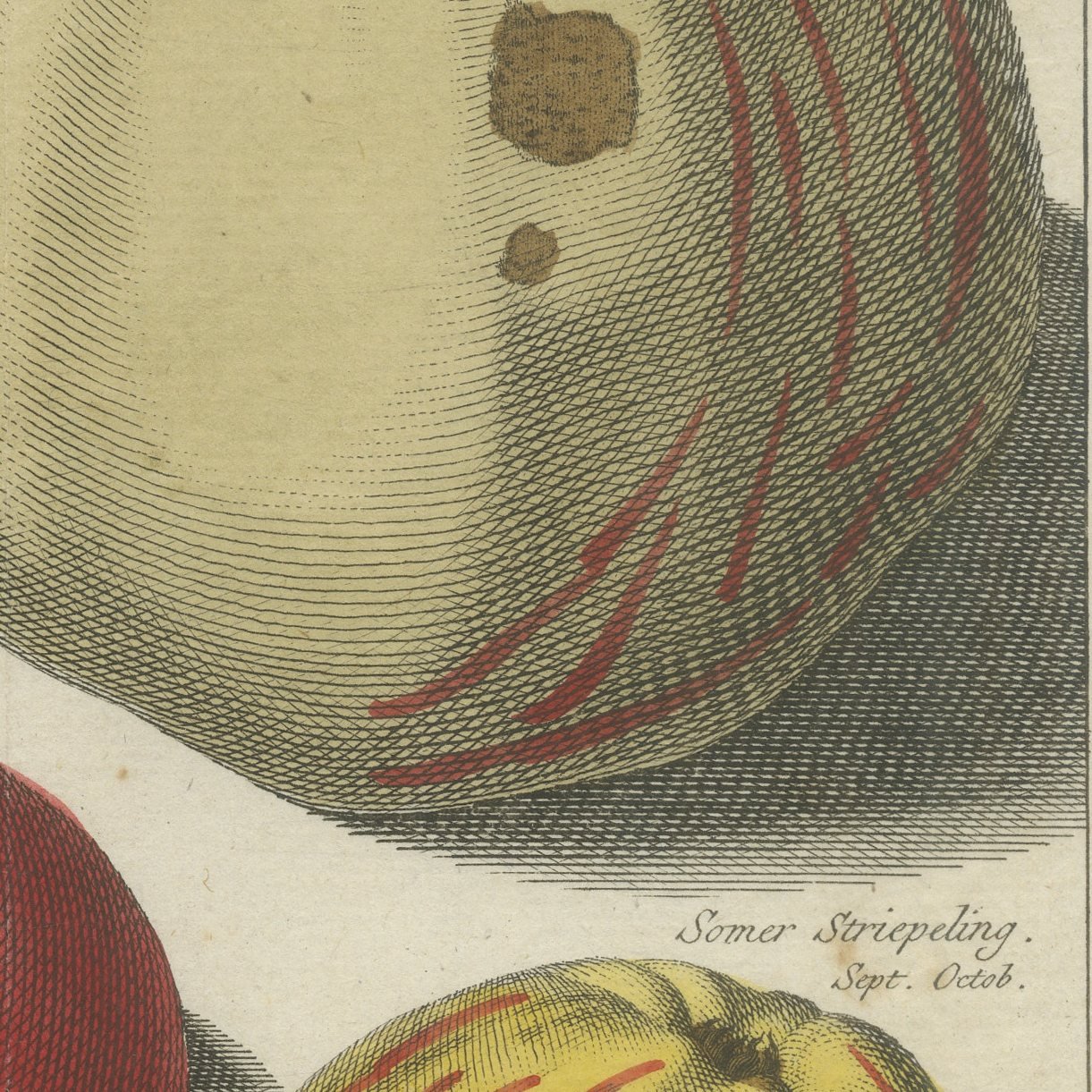
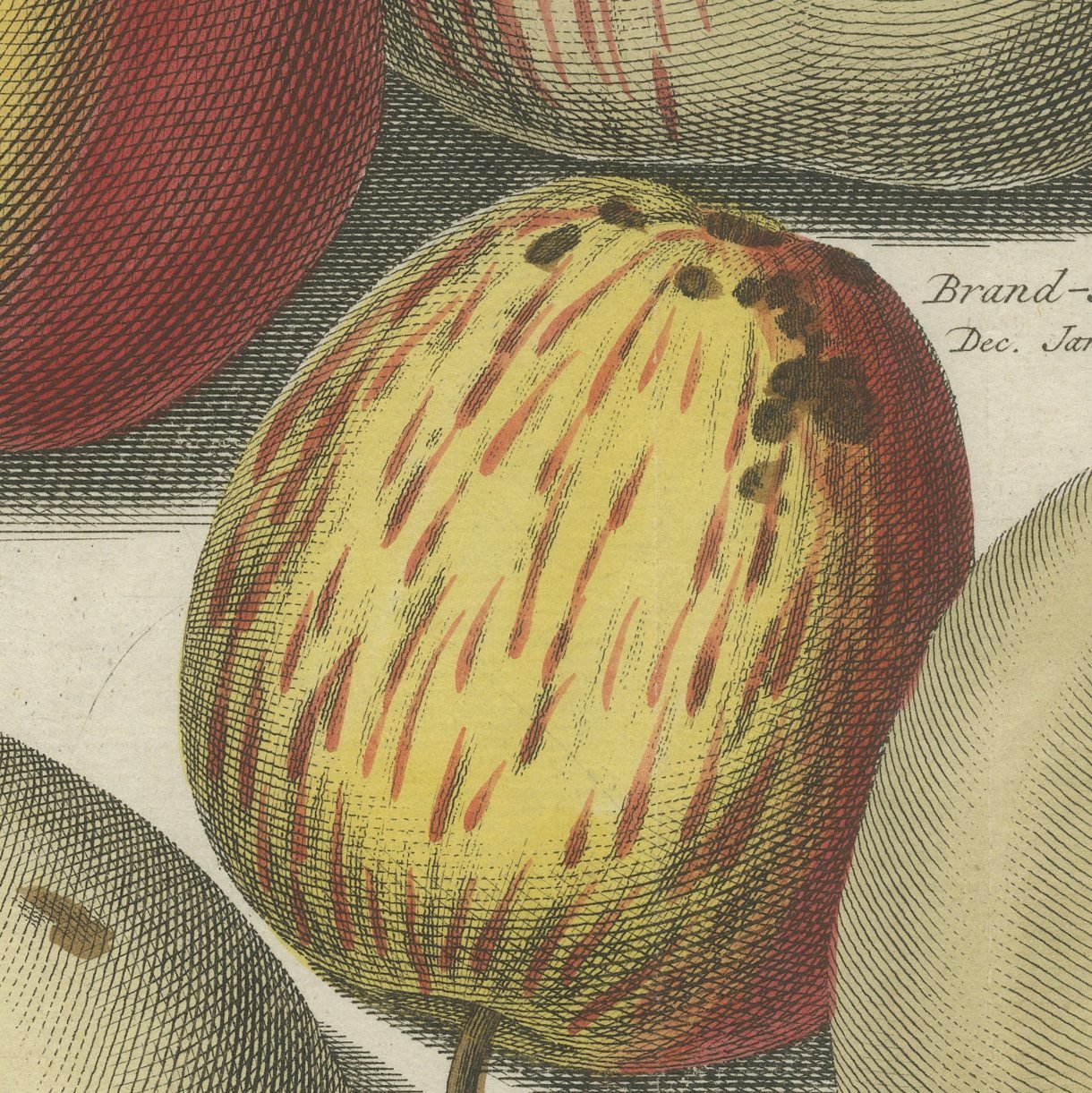
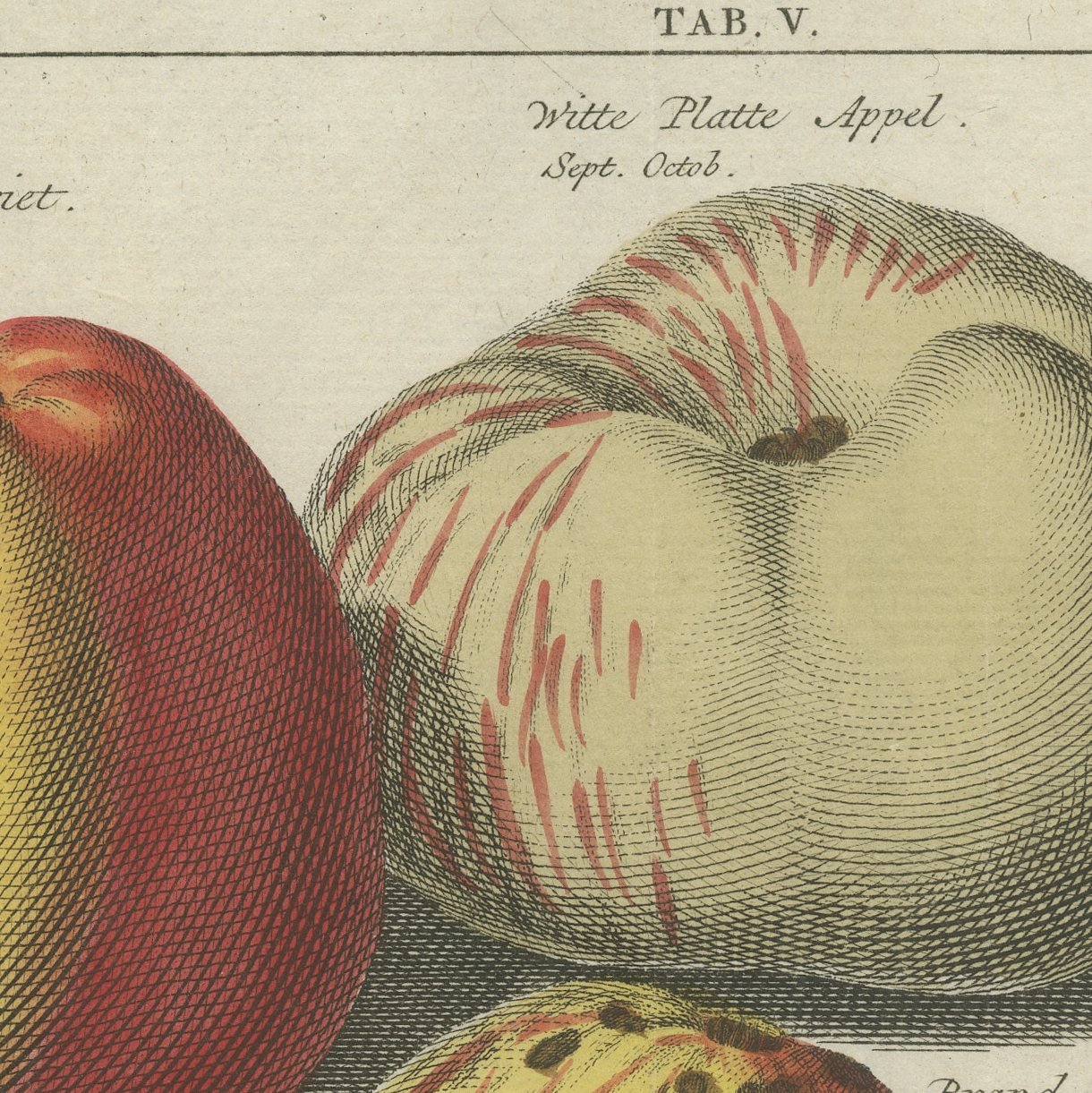
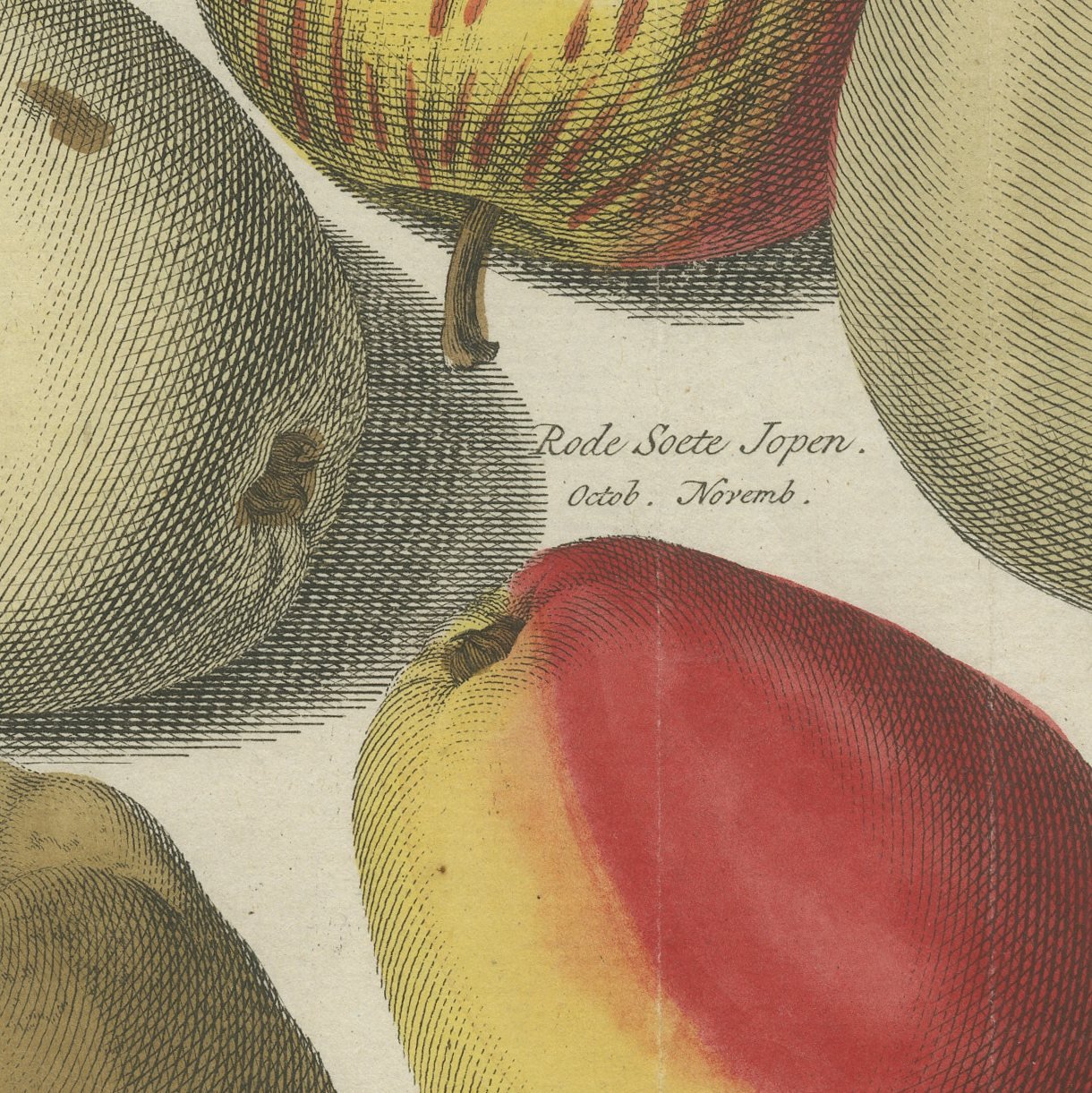
A hand-colored copper engraving presenting nine named Dutch apple varieties with their ripening months lettered below each fruit: Enkelde Griet, Witte Platte Appel, Bloem-Suir, Brand-Appel, Heer-Appel, Eyer-Appel, Rode Soete Jopen, Pomme-Rose and Somer Striepeling. The names are as descriptive as the drawings, the Eyer-Appel egg-shaped, the Witte Platte Appel flattened at both poles, the Pomme-Rose flushed rose across one cheek. Knoop arranged the nine in three loose tiers so that each outline stands clear of its neighbors, and he drew every one from the fruit in front of him rather than copying an earlier engraver. The original watercolor is laid over the engraved hatching with a light hand, dense in the streaked reds of the Striepeling and thin where the skin is meant to look pale and smooth.
This sheet was published at Amsterdam and Dordrecht in 1790 by Allart, Holtrop, de Leeuw and Krap, in Johann Hermann Knoop's description and figures of the best sorts of apples and pears, introduced by Johannes Florentius Martinet. Knoop had charge of the Mariënburg garden at Leeuwarden and knew his fruit as a working gardener rather than a compiler, which is why his plates are still consulted on old Dutch varieties. Each is a copper engraving finished by hand in watercolor, the washes sitting over the engraved line and varying in strength from fruit to fruit as only hand color does.
Among antique fruit prints the multi-variety grid is the sheet collectors chase, because it names and dates nine distinct apples in one image rather than showing a single branch. Knoop's work remains the foundation of Dutch pomology, and the varieties here, most of them now lost to commercial growing, are still cited by heritage orchard projects trying to identify surviving old trees. On a wall the plate is quietly cheerful, nine rounds of red, yellow and green in an orderly rhythm, which suits a kitchen, a breakfast room or the stair of a country house. It rewards close looking as much from a chair as from across the room.
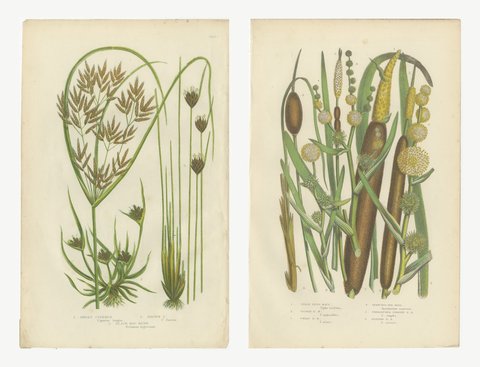
Light uneven toning, browner towards the edges. Marked handling soiling along the bottom, right and top edges. Scattered light foxing in the margin. All four corners complete.
This is an original antique plate, not a modern reproduction. This item is sold unframed.