 The sheet, as you receive it
 In the room
Interior designers: BarTrade members buy at their trade price. How it works
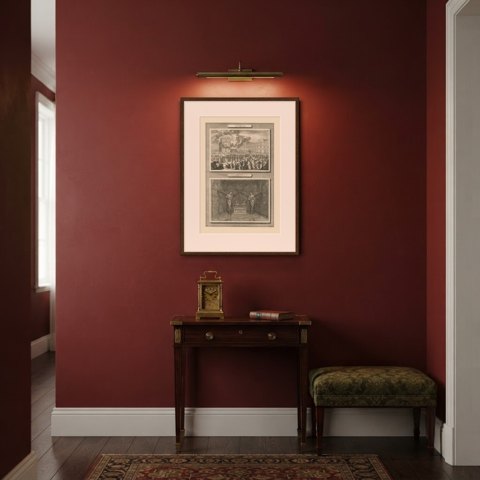
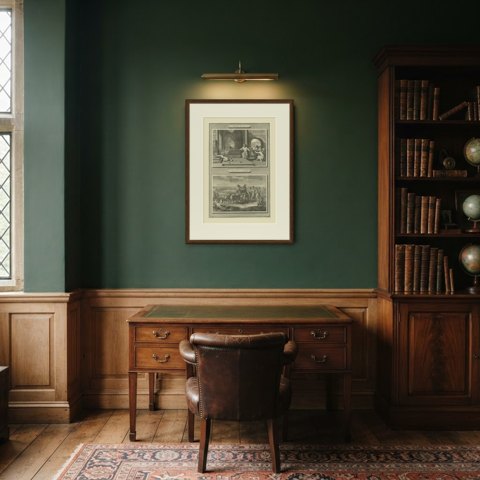
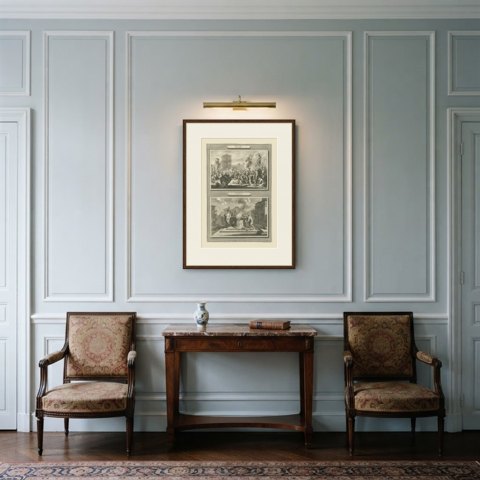
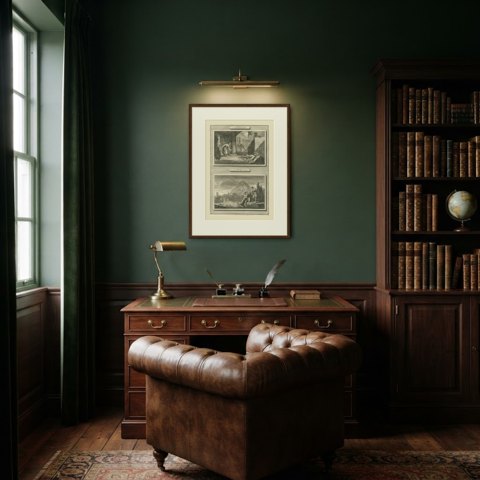
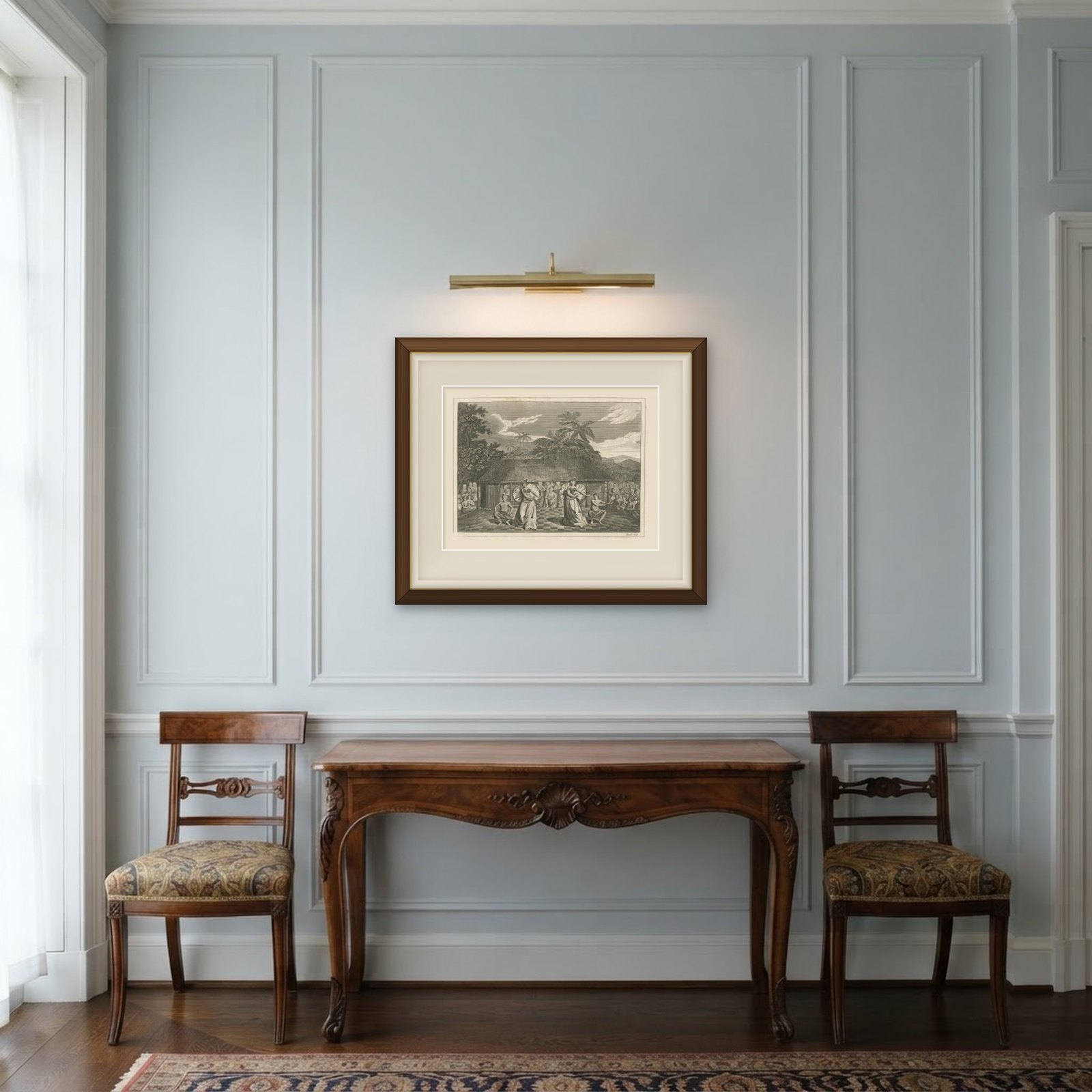
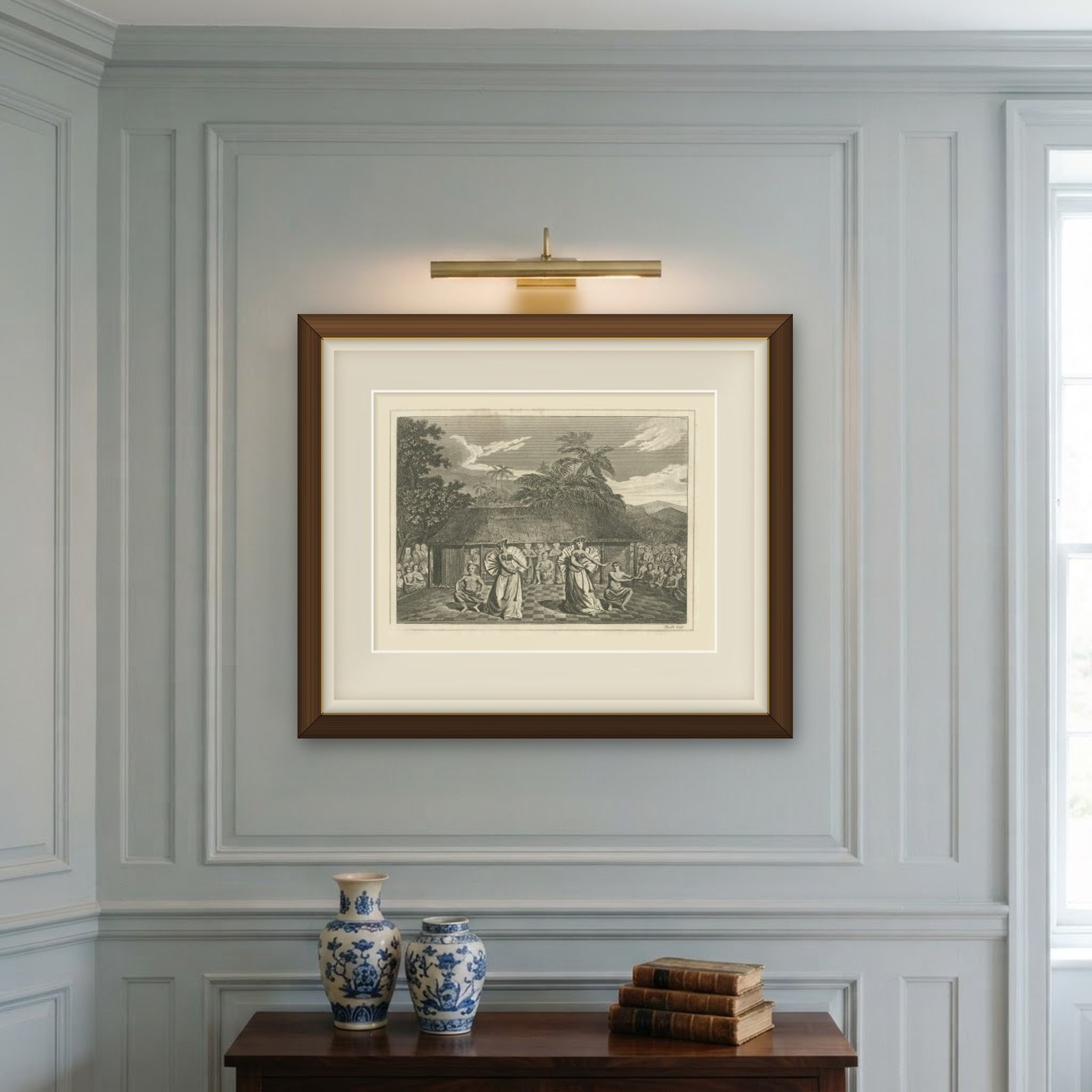
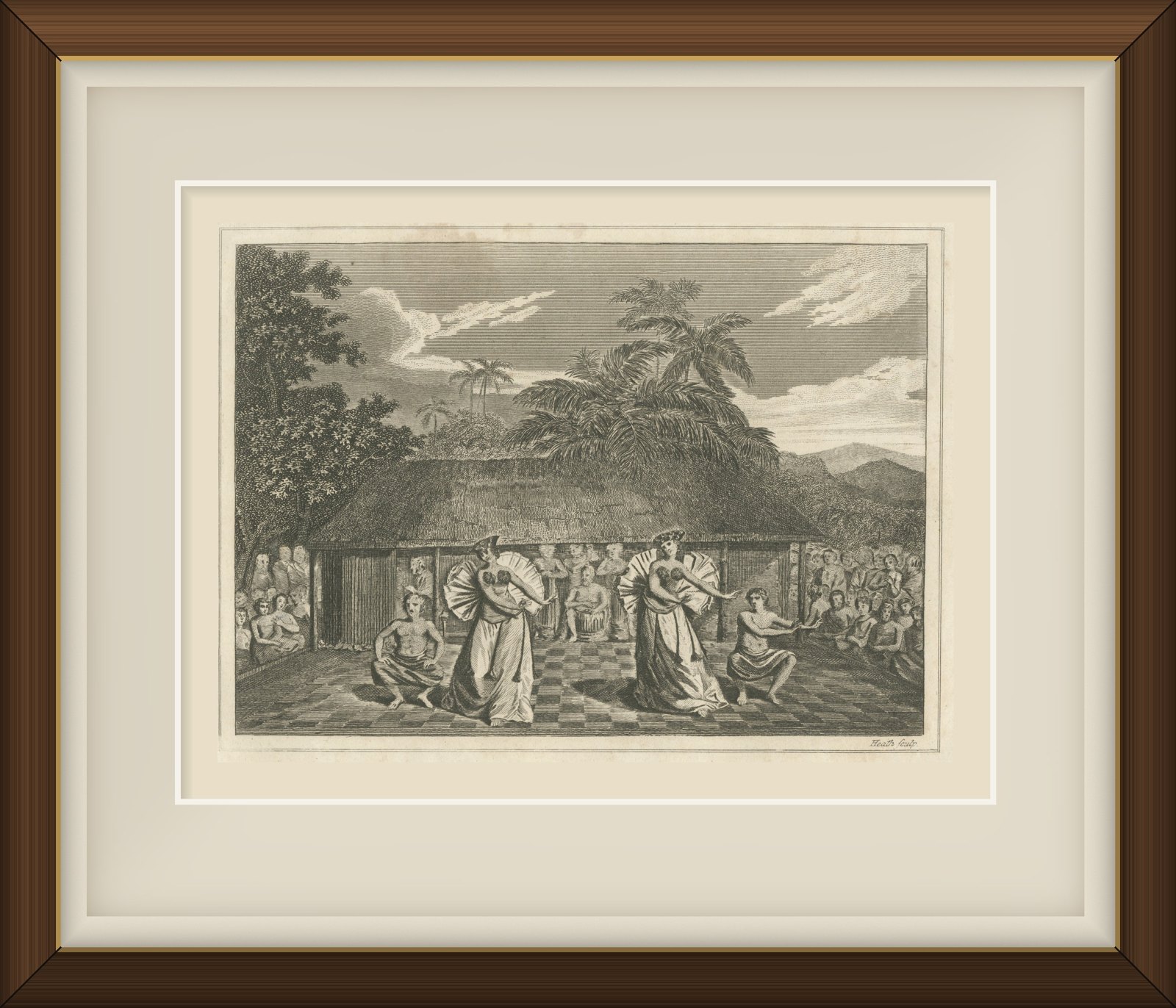
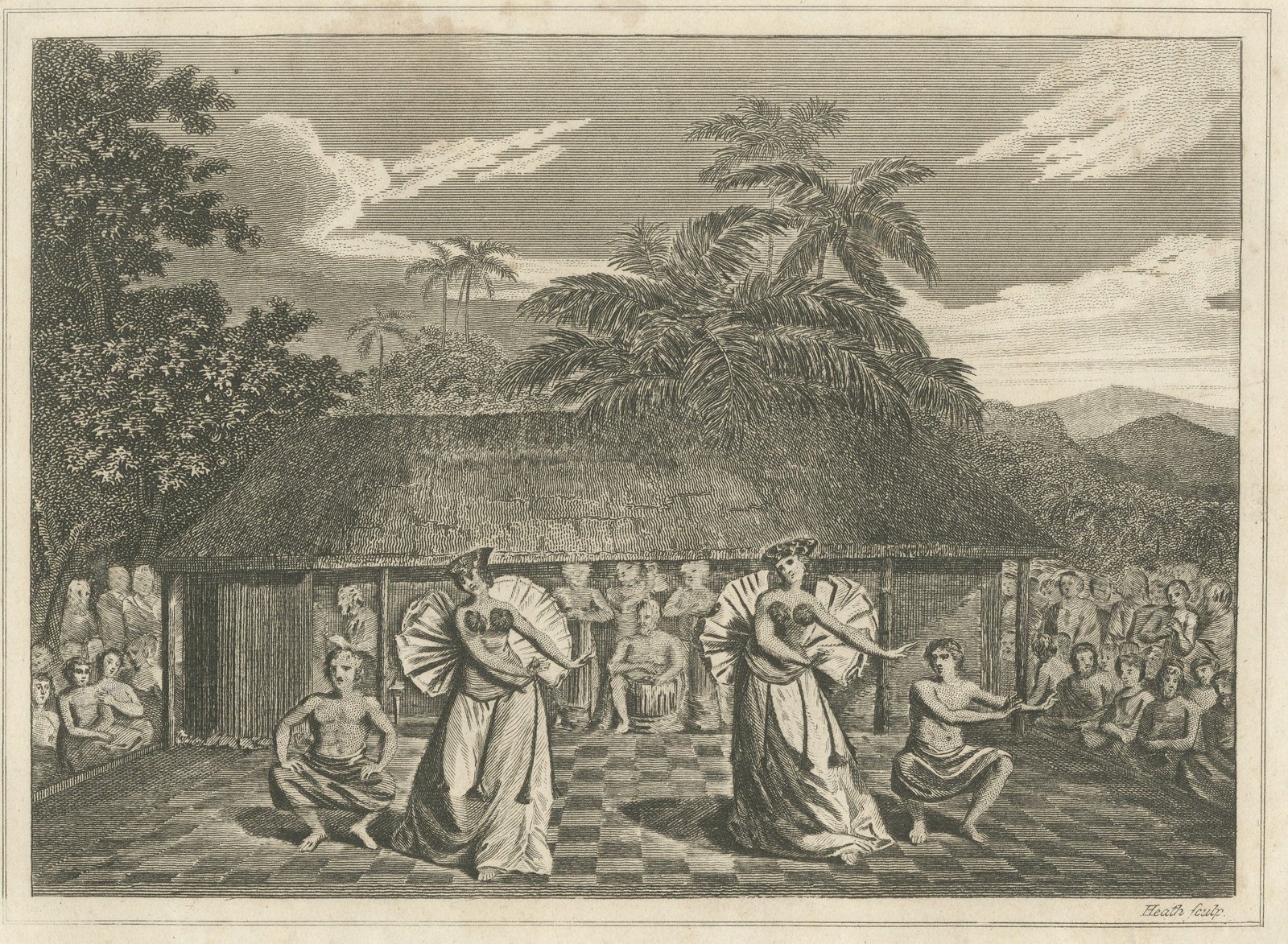
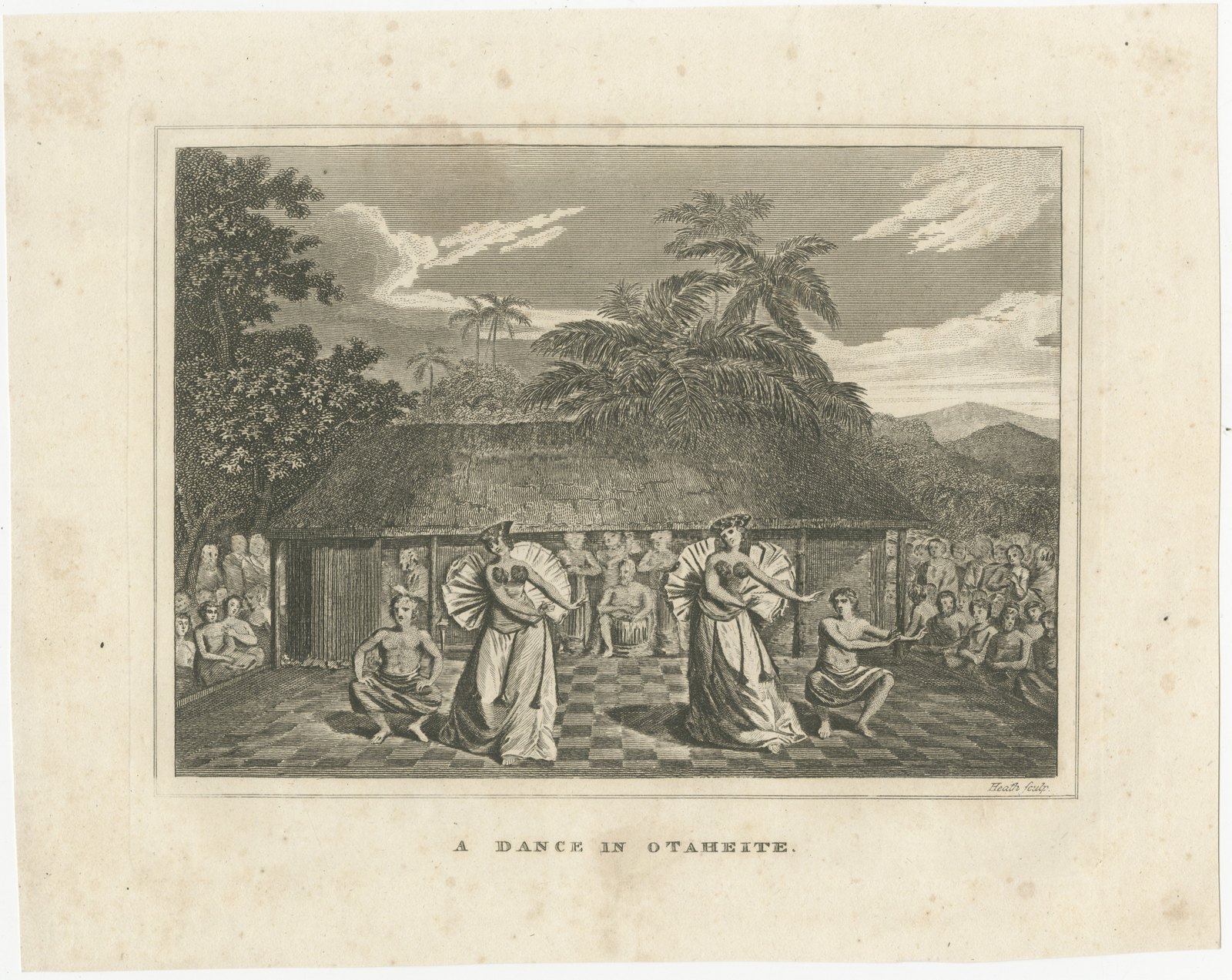
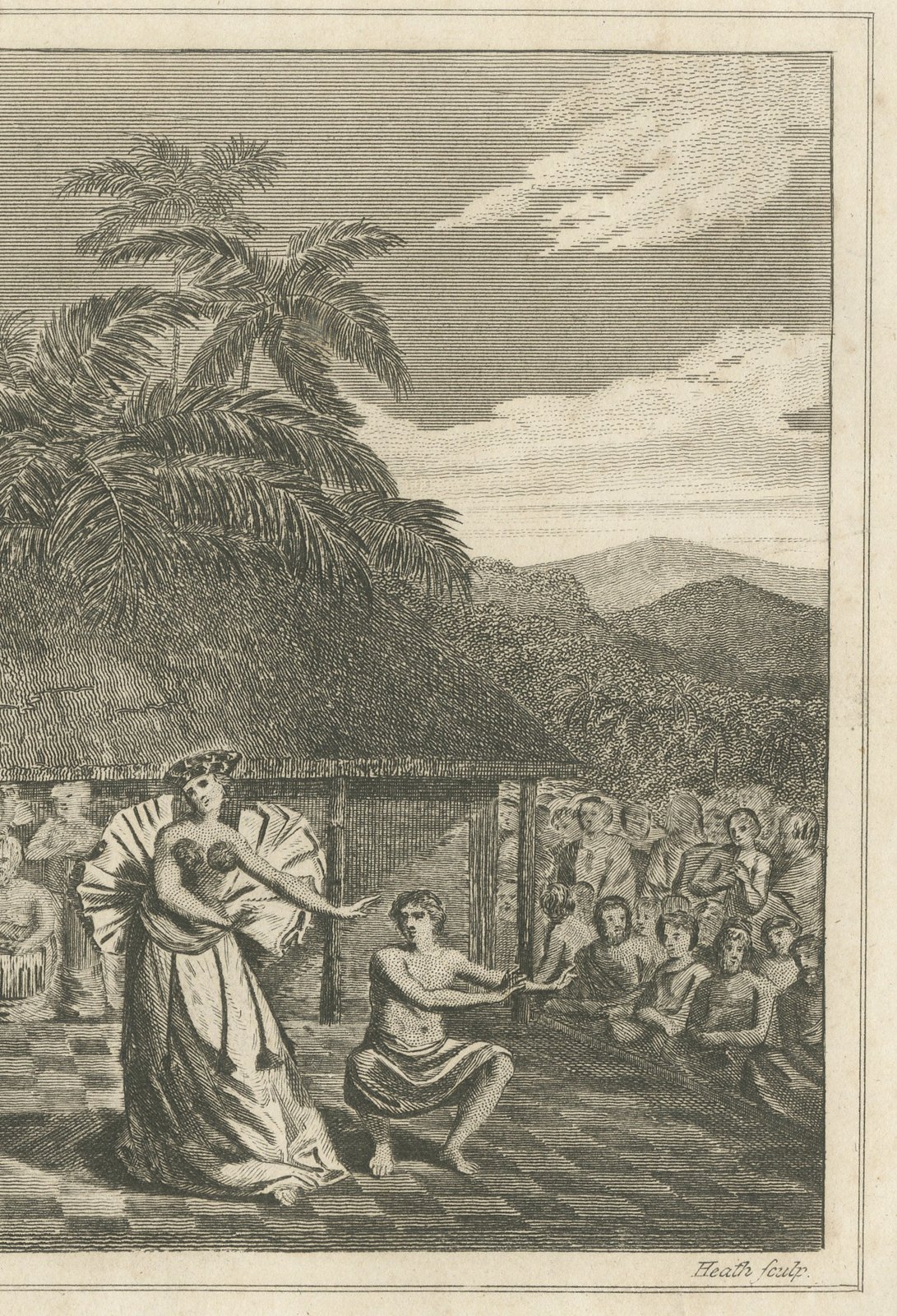
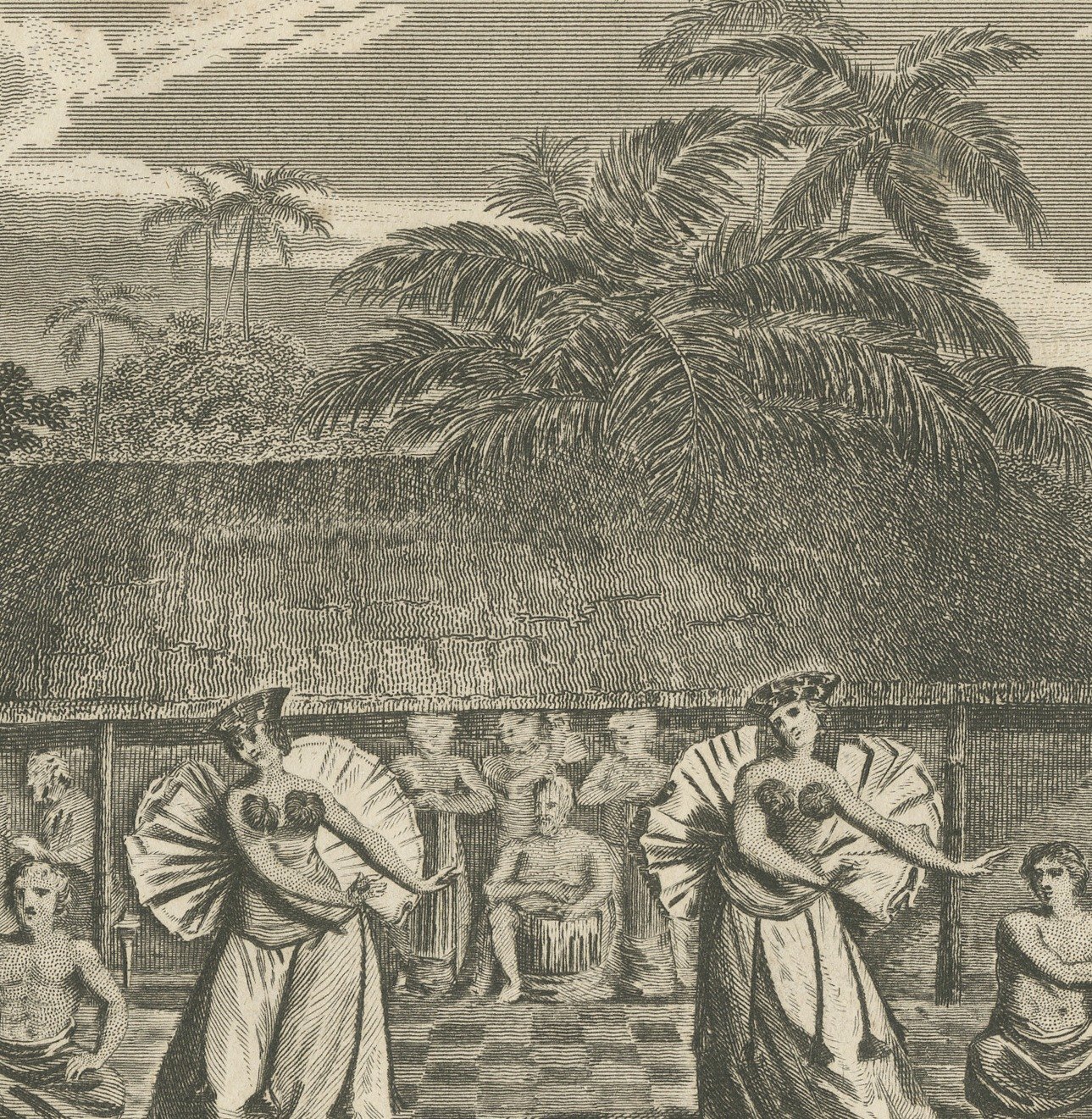
This original line engraving, lettered "A Dance in Otaheite", shows a dance in Tahiti from Captain Cook's voyages in the Pacific. Otaheite was the old English name for the island. The plate is signed "Heath sculp." at the lower right and carries no publisher's imprint.
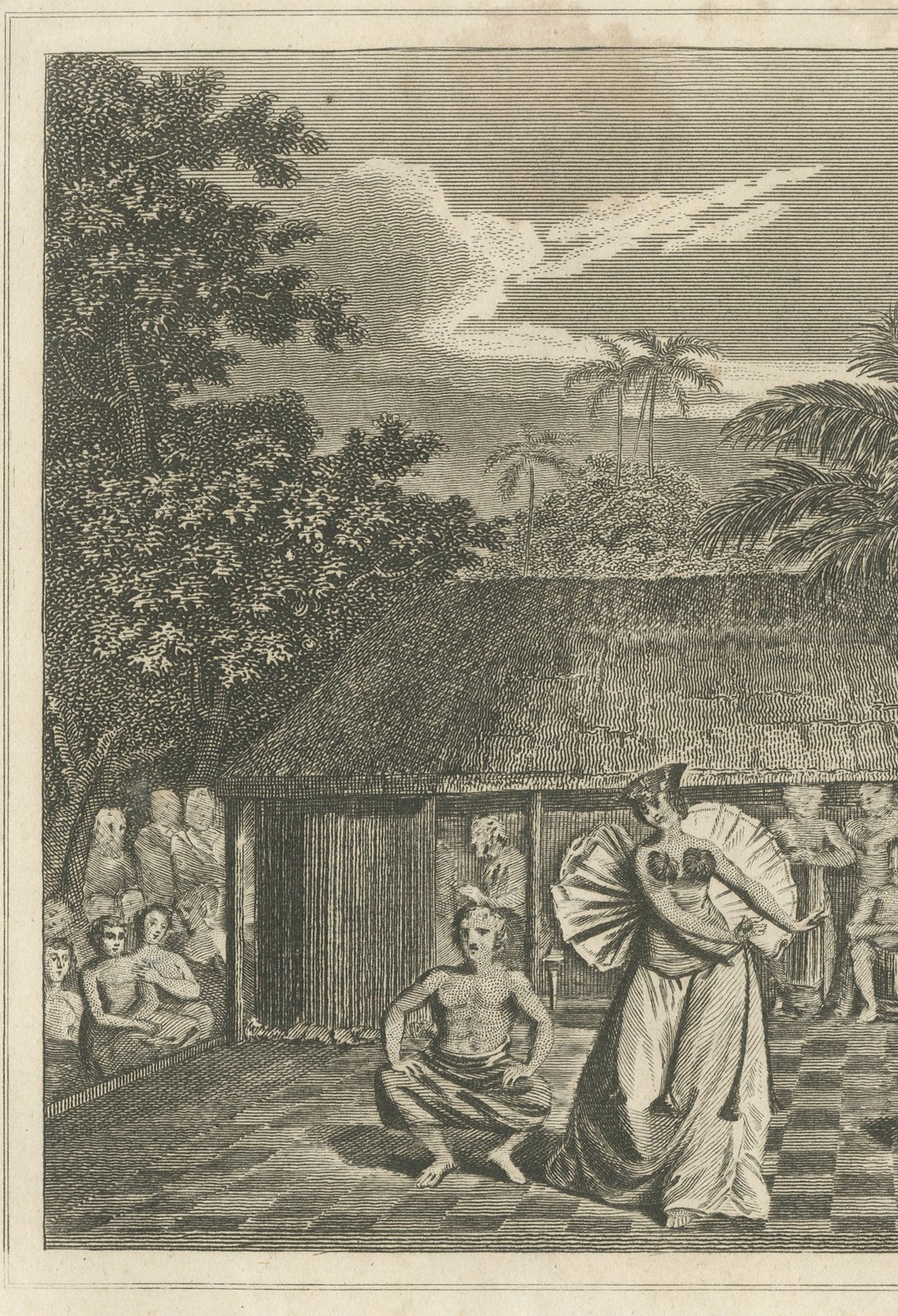
Two women dance in the center on a patterned mat, dressed in tall headdresses and the wide fan shaped costumes and layered skirts of the heiva, their arms extended in the graceful gestures of the dance. Two male dancers crouch at either side, and drummers and musicians sit beneath the eaves of a long thatched house behind them. A crowd watches from both sides, and tall palms and wooded hills rise against a sky of soft clouds.
The composition follows John Webber's drawing of a dance in Tahiti, made on Cook's third voyage in 1777 and engraved for the official account of the voyage in 1784. Webber's images were copied again and again in the popular collections of voyages and geographies that followed, and this smaller plate belongs to that tradition, engraved in London in the early nineteenth century.
The Heath family were the leading dynasty of London book engravers in this period, and the lettering gives only the surname. The plate is printed on wove paper within a ruled border, with fine detail in the costumes, the thatch and the foliage.
It is an elegant record of one of the best known scenes of Polynesian life from the age of exploration, and it would suit a collector of Pacific voyages, of Cook or of dance, framed for a study, a library or a coastal home.
This is an original antique print, not a modern reproduction. This item is sold unframed.