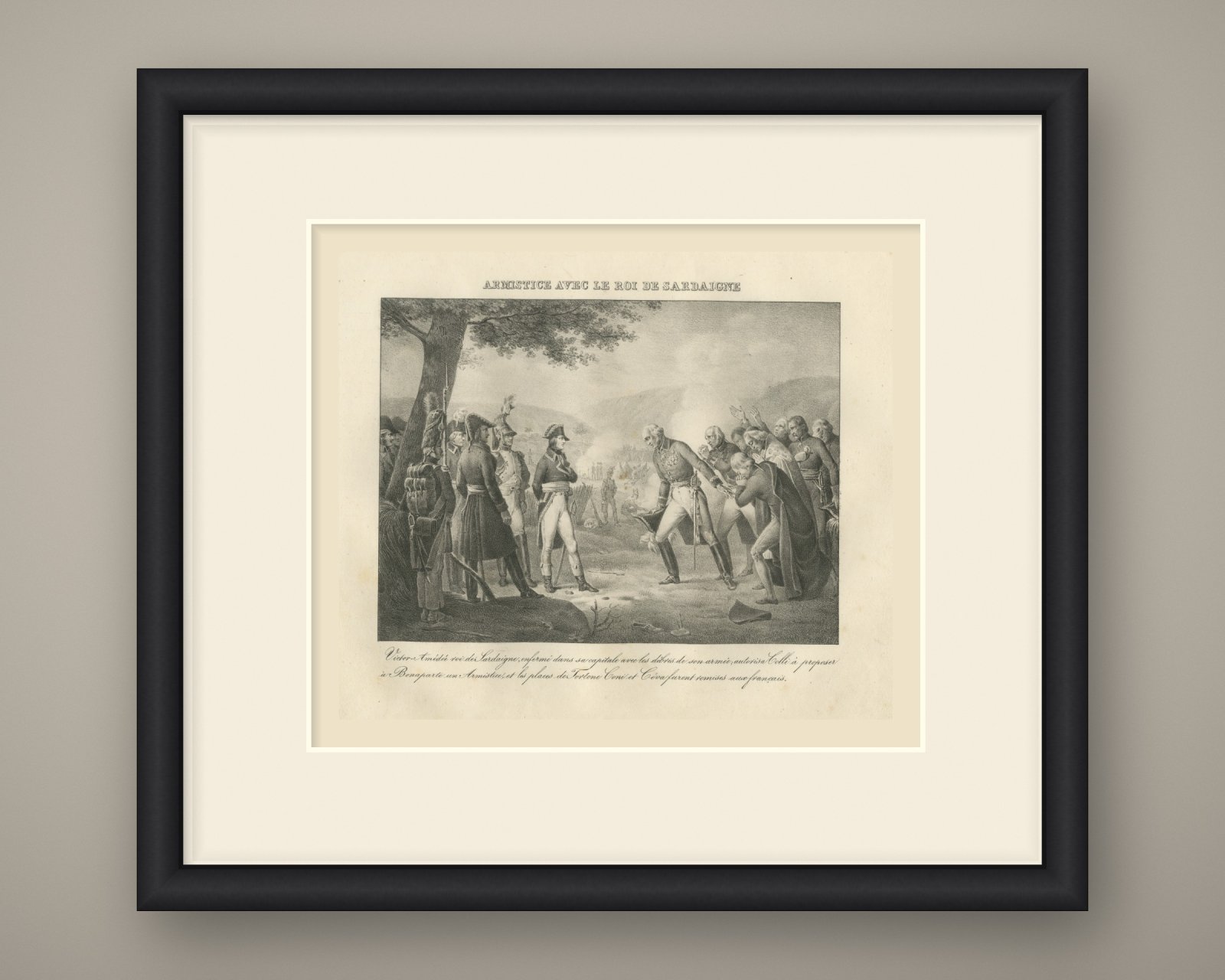
 The sheet, as you receive it
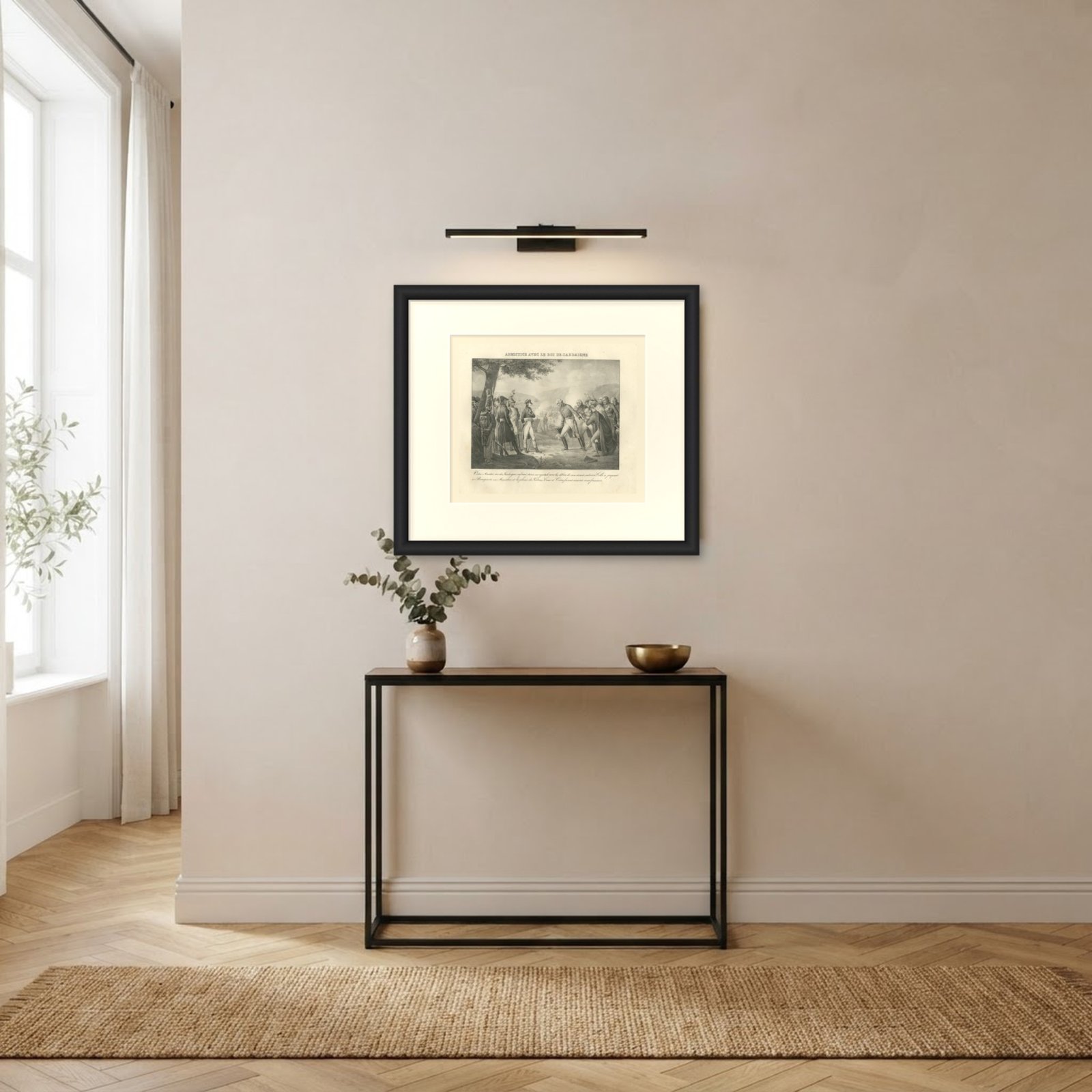 In the room
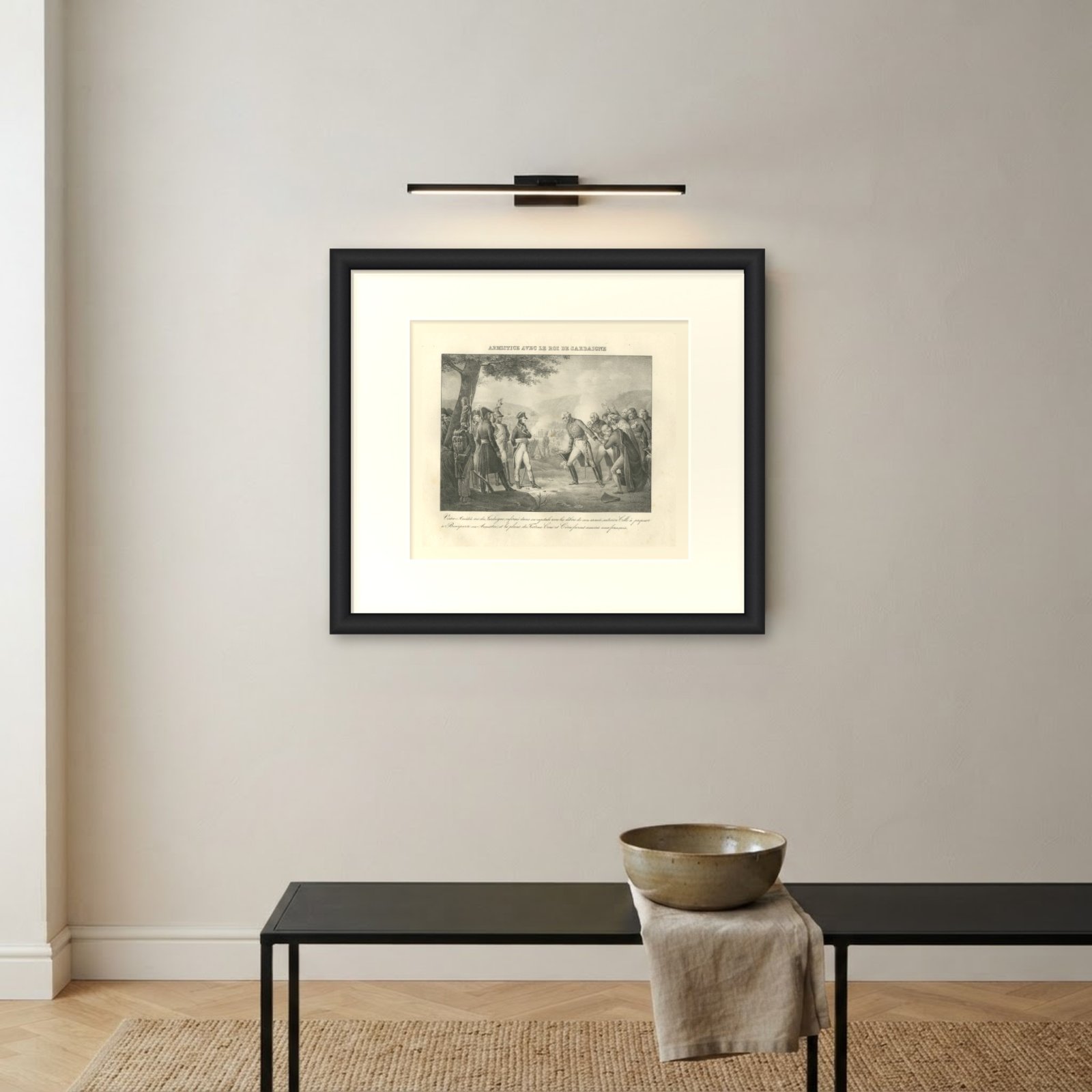
Interior designers: BarTrade members buy at their trade price. How it works
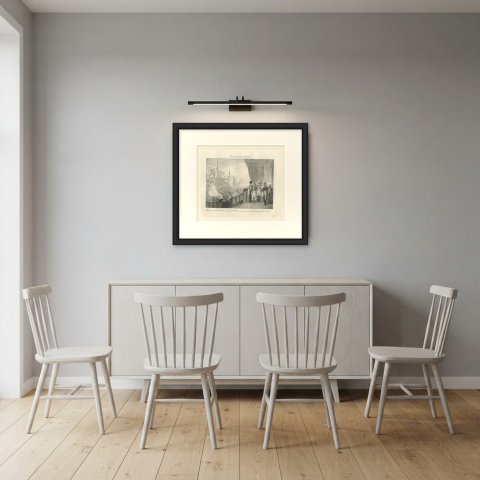
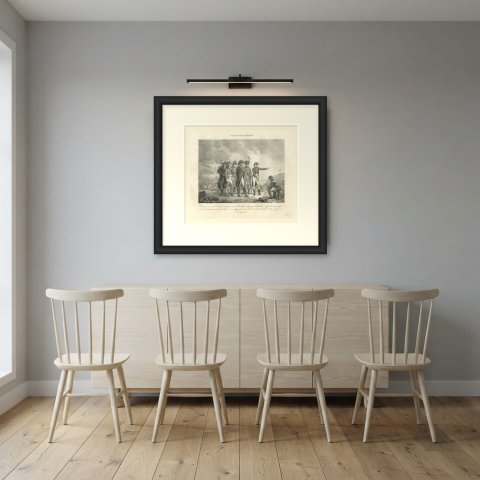
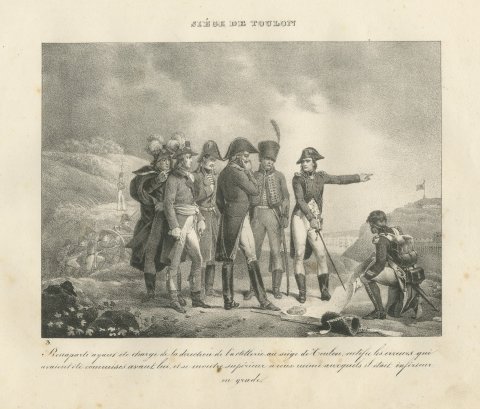
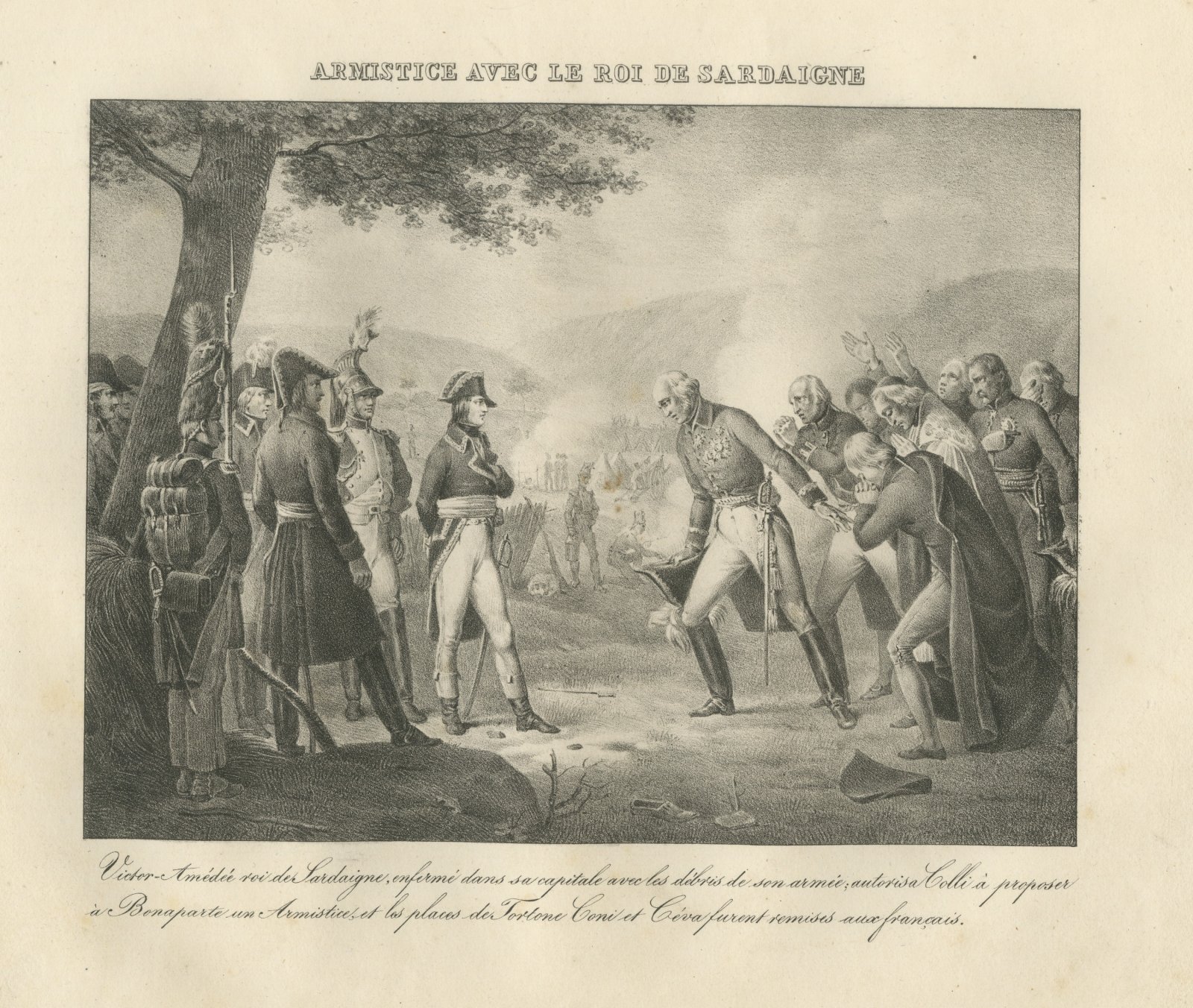
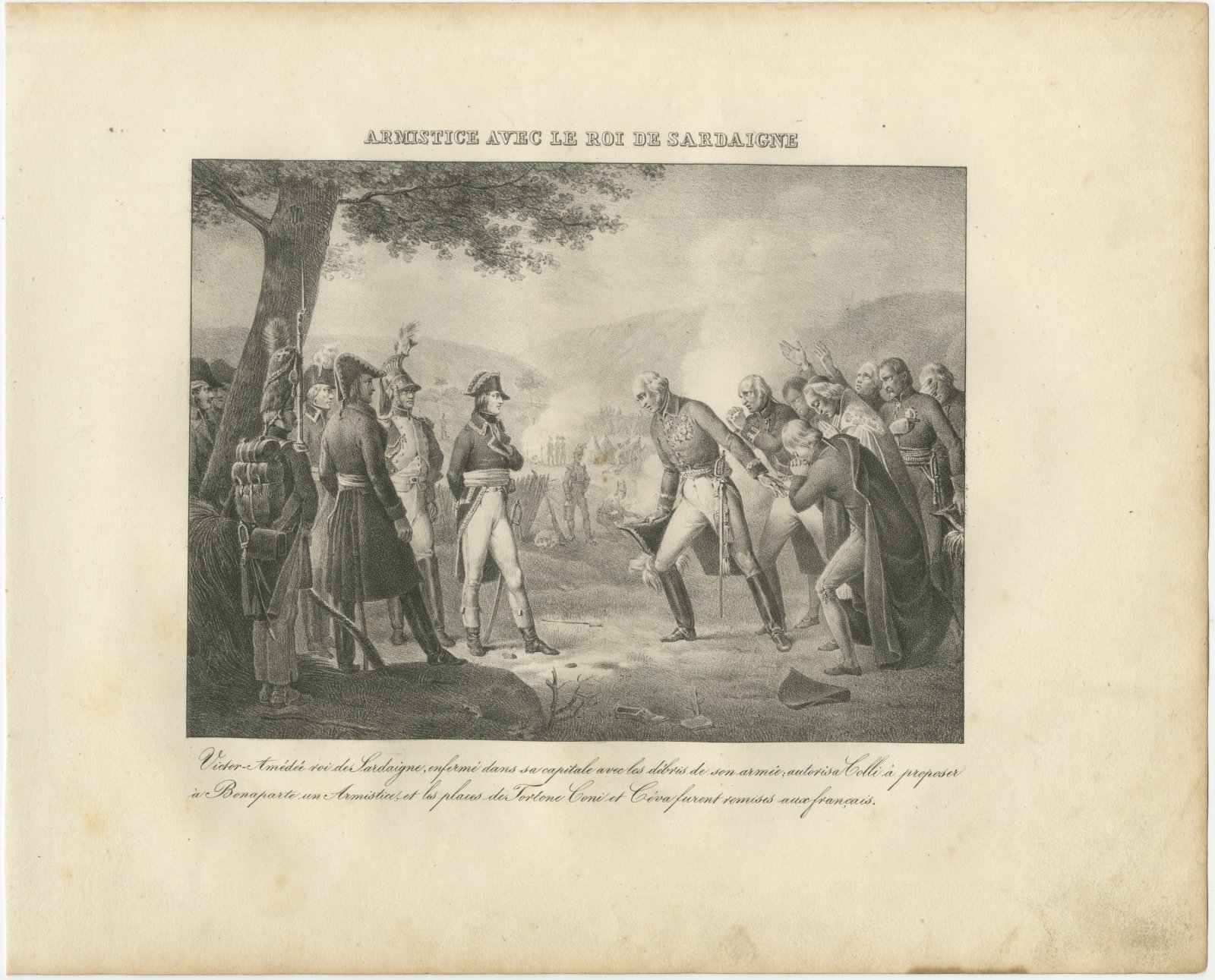
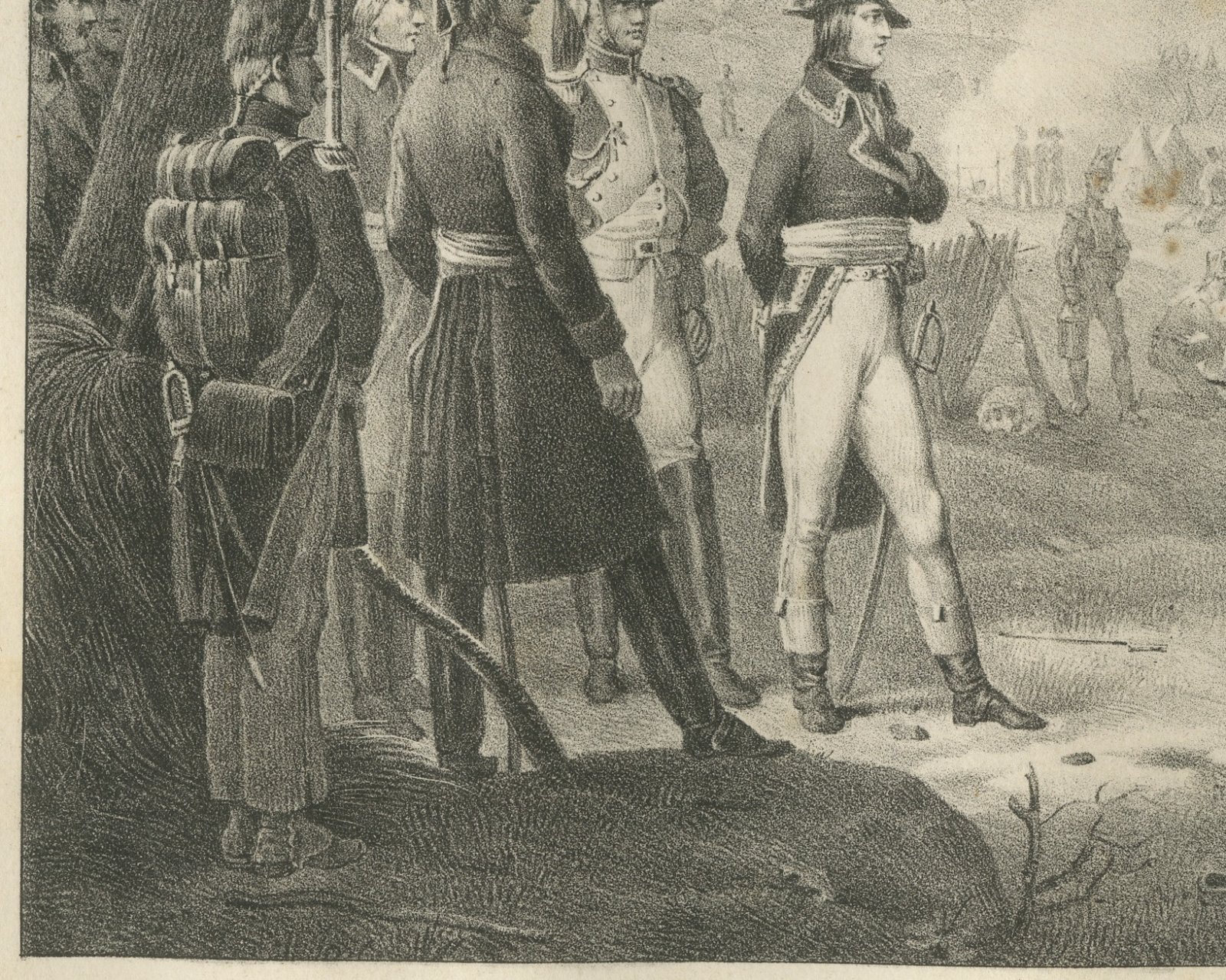
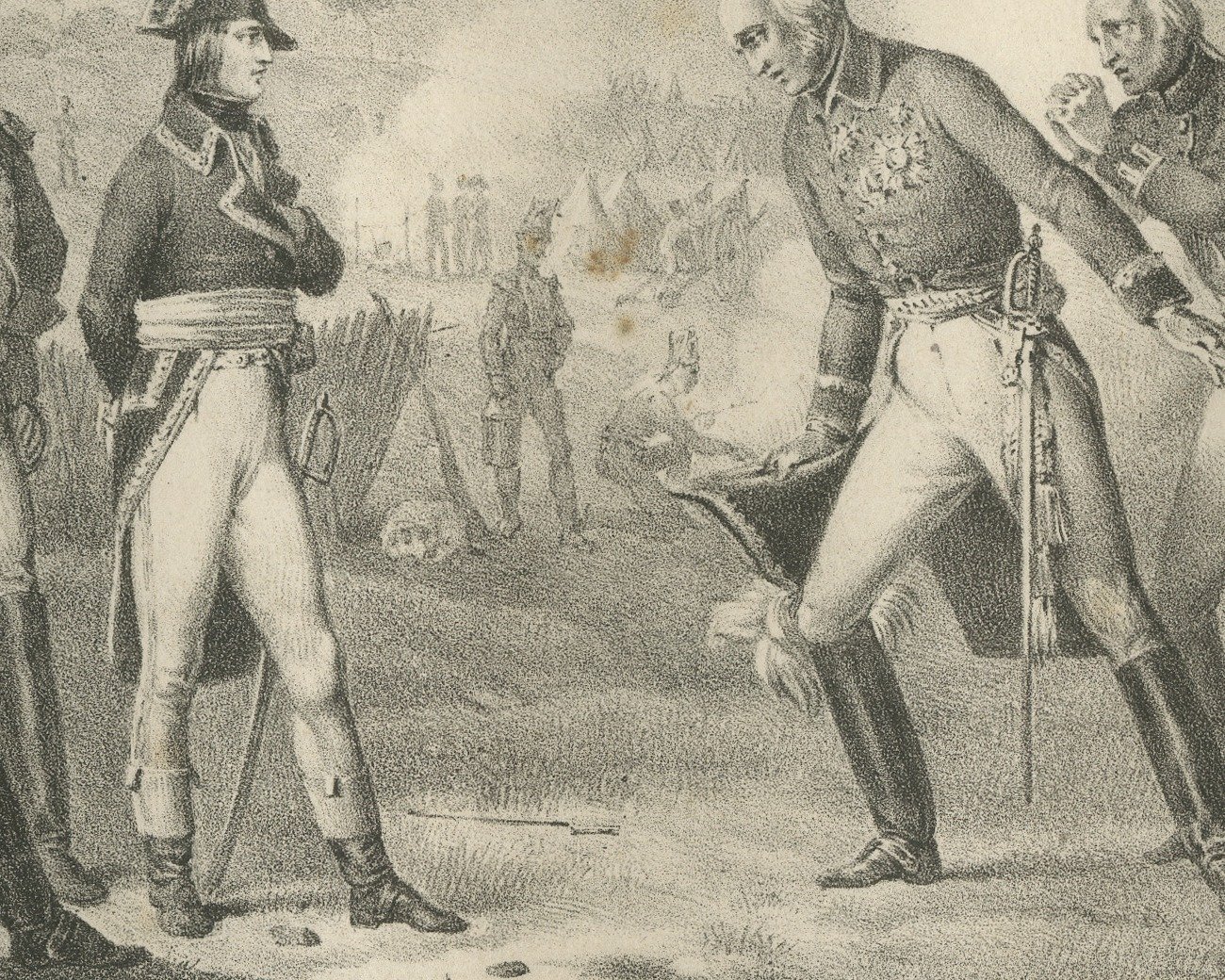
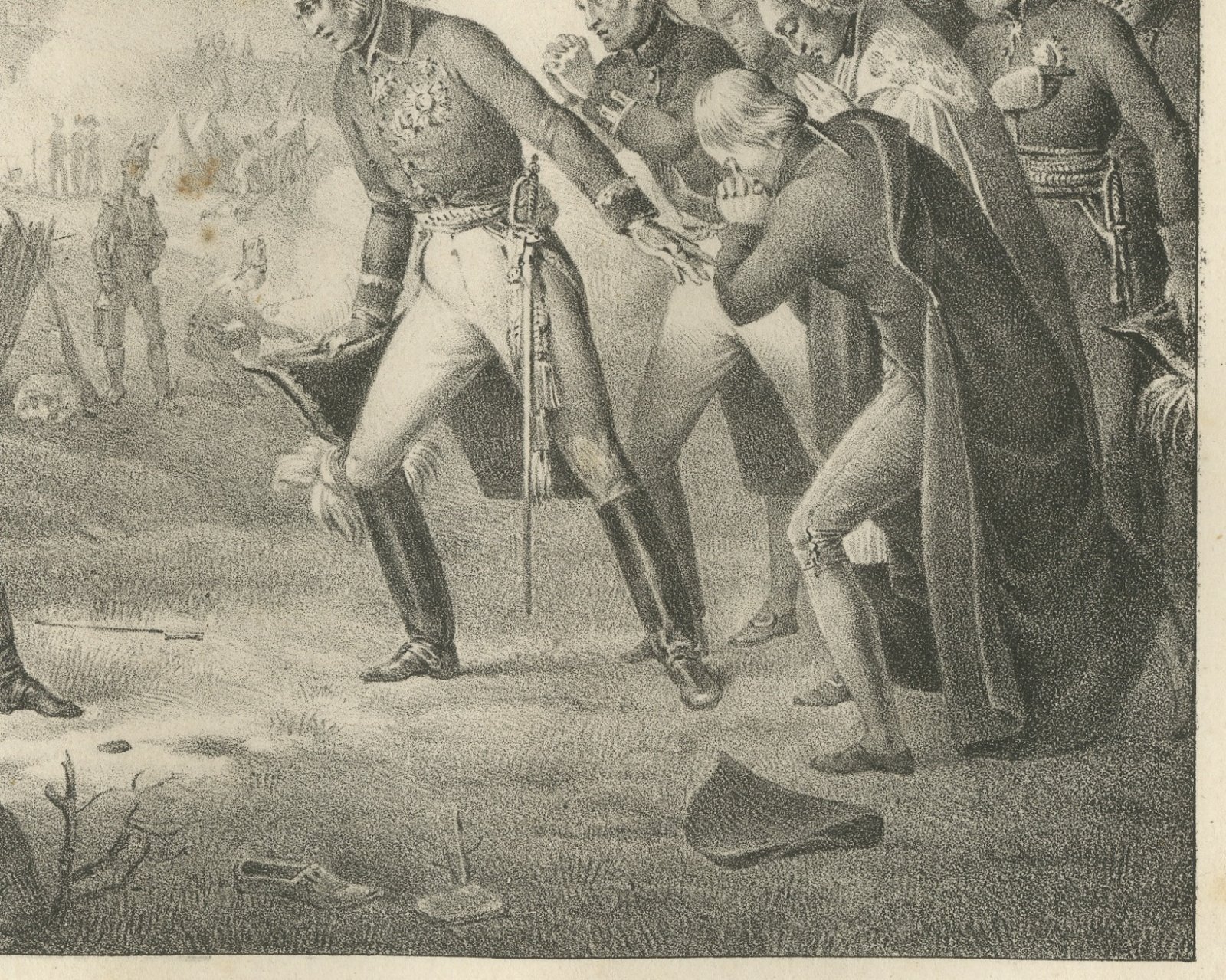
An original antique lithograph of the armistice between Bonaparte and the king of Sardinia, from Madou's Vie de Napoléon, published at Brussels in 1827. The title "ARMISTICE AVEC LE ROI DE SARDAIGNE" is lettered in open capitals above the image. Under a large tree at the left stand a grenadier with his pack, an officer in a long coat and a helmeted cavalryman, and in front of them Bonaparte stands with one hand at his chest. Facing him at the right, an elderly officer in a coat hung with orders bows low, his hat in his hand, and behind him a group of older men in court and military dress bow, raise their hands or cover their faces. Tents and smoke fill the valley between the two groups.
The script caption reads: "Victor-Amédée roi de Sardaigne, enfermé dans sa capitale avec les débris de son armée; autorisa Colli à proposer à Bonaparte un Armistice, et les places de Tortone Coni et Céva furent remises aux français." In English: Victor Amadeus, king of Sardinia, shut up in his capital with the remnants of his army, authorized Colli to propose an armistice to Bonaparte, and the fortresses of Tortona, Cuneo and Ceva were handed over to the French. There is no scene number or imprint on this sheet.
The book appeared at Brussels in 1827 from the Lithographie royale de Jobard, Marcellin Jobard's press. According to its title page, the text was written by a society of men of letters from new documents dictated and corrected at Saint Helena by Napoleon himself, and the plates were lithographed by the Belgian artist Jean-Baptiste Madou (1796 to 1877) after painters of the French school. This is a plate from the first volume.
After Mondovi, King Victor Amadeus III of Sardinia, whose capital was Turin, asked for terms. The armistice signed at Cherasco on 28 April 1796 handed the French the fortresses named in the caption and opened the way into Lombardy. The peace treaty that followed at Paris in May 1796 ceded Savoy and Nice to France.
This is an original antique print, not a modern reproduction. This item is sold unframed.