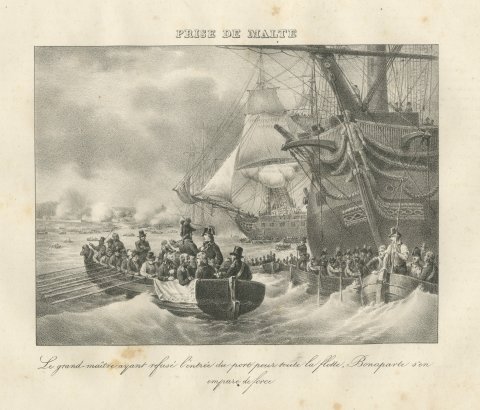
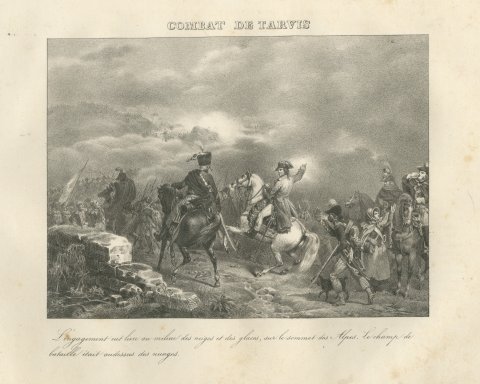
 The sheet, as you receive it
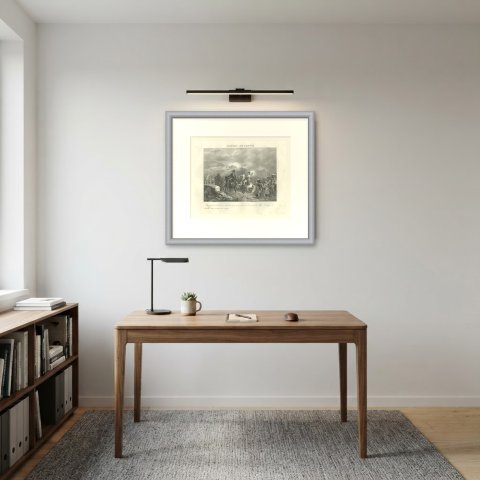
 In the room
Interior designers: BarTrade members buy at their trade price. How it works
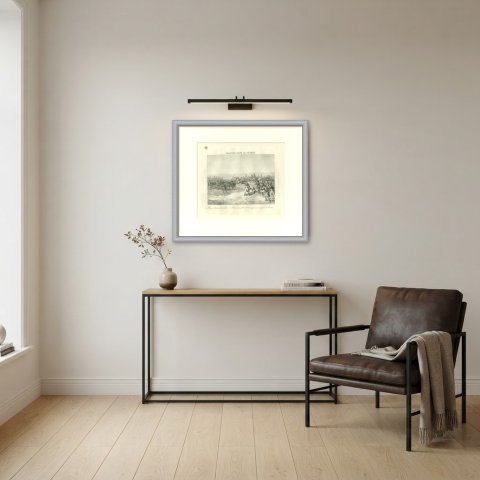
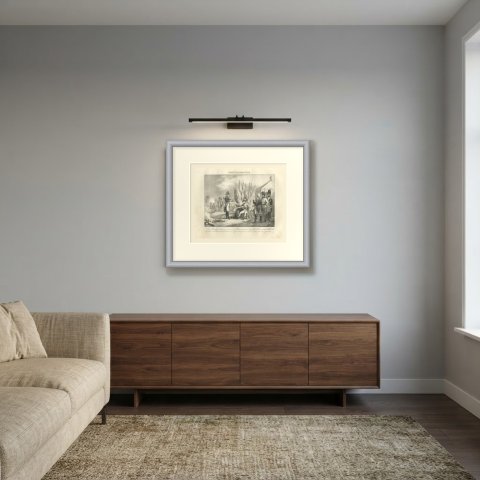
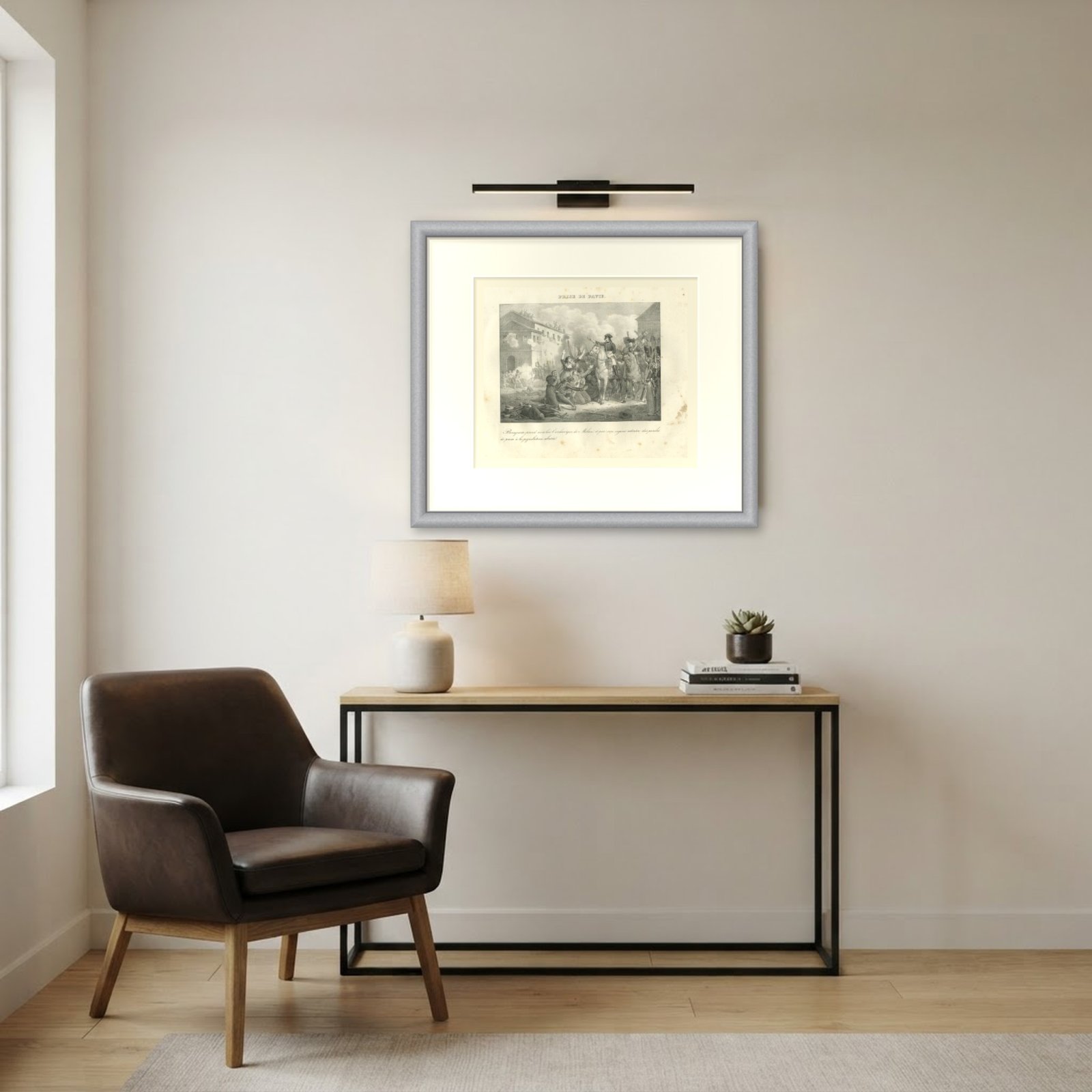
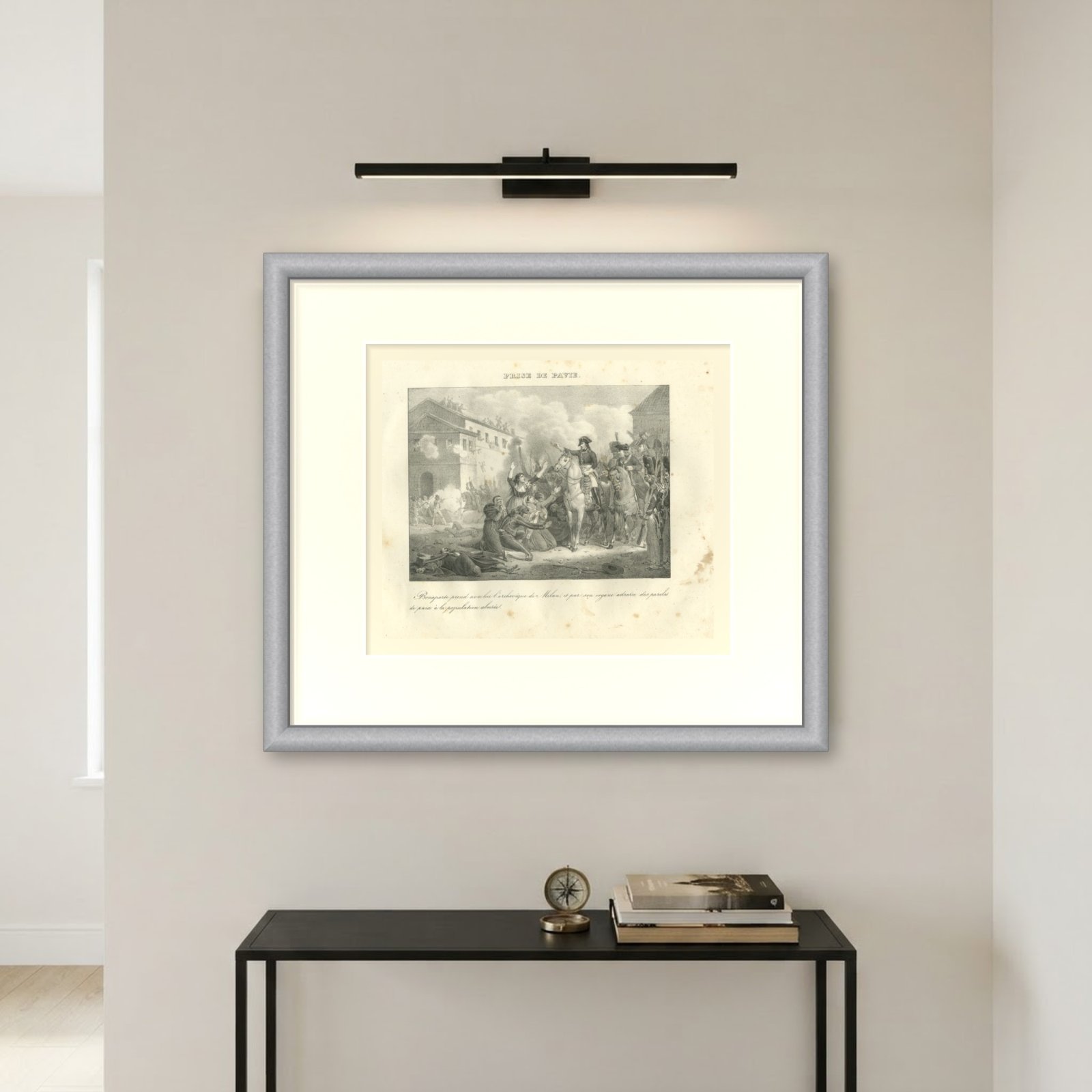
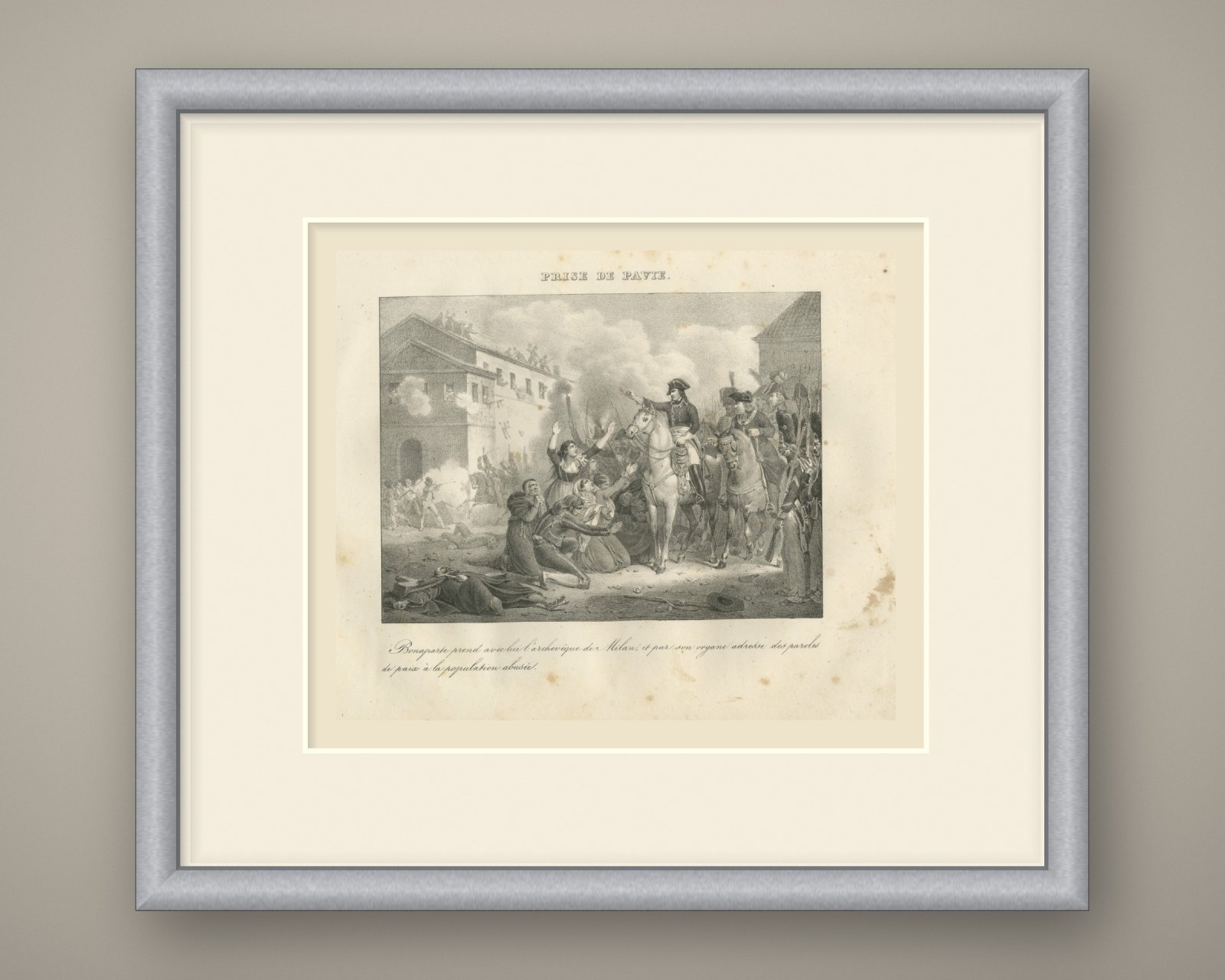
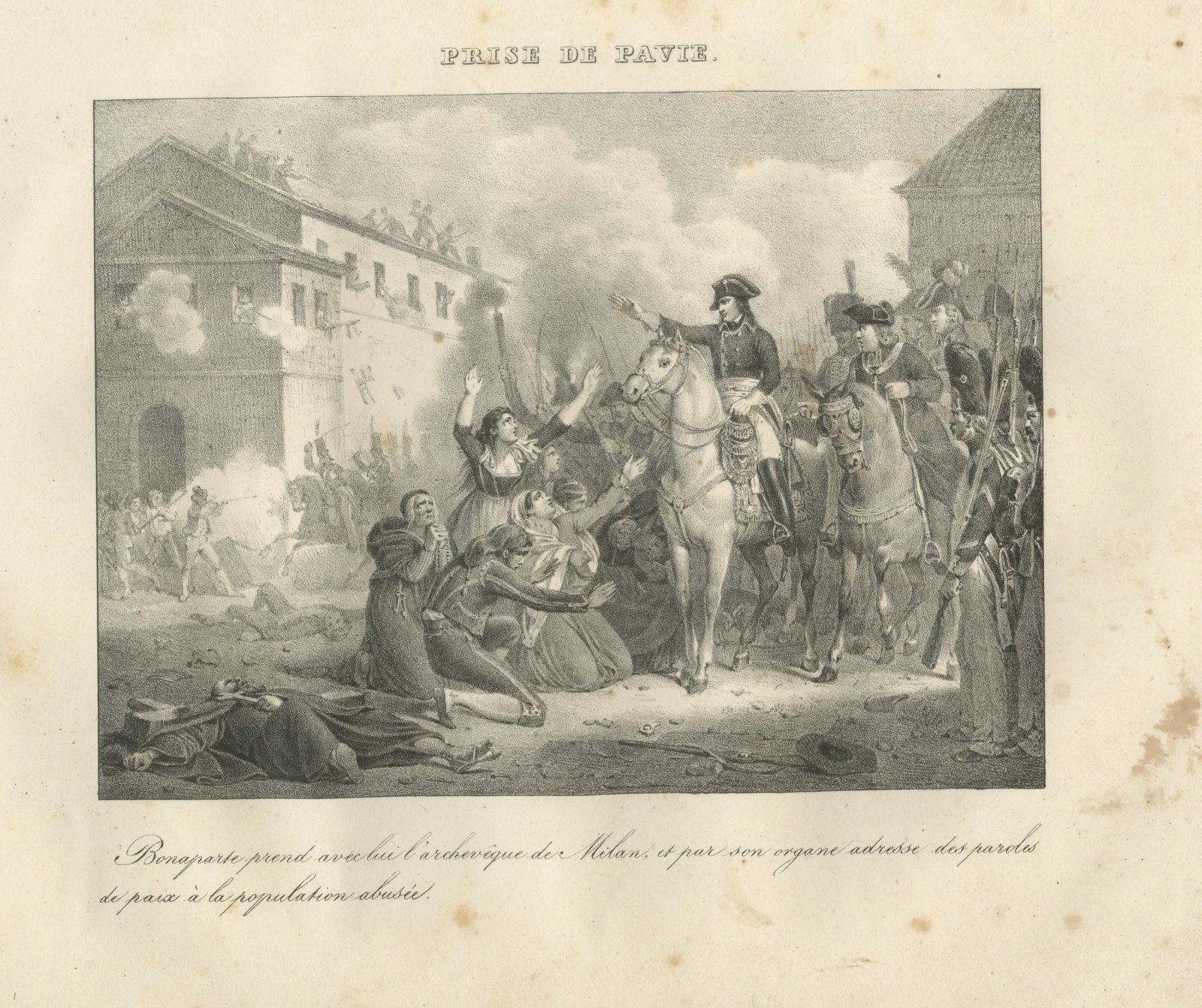
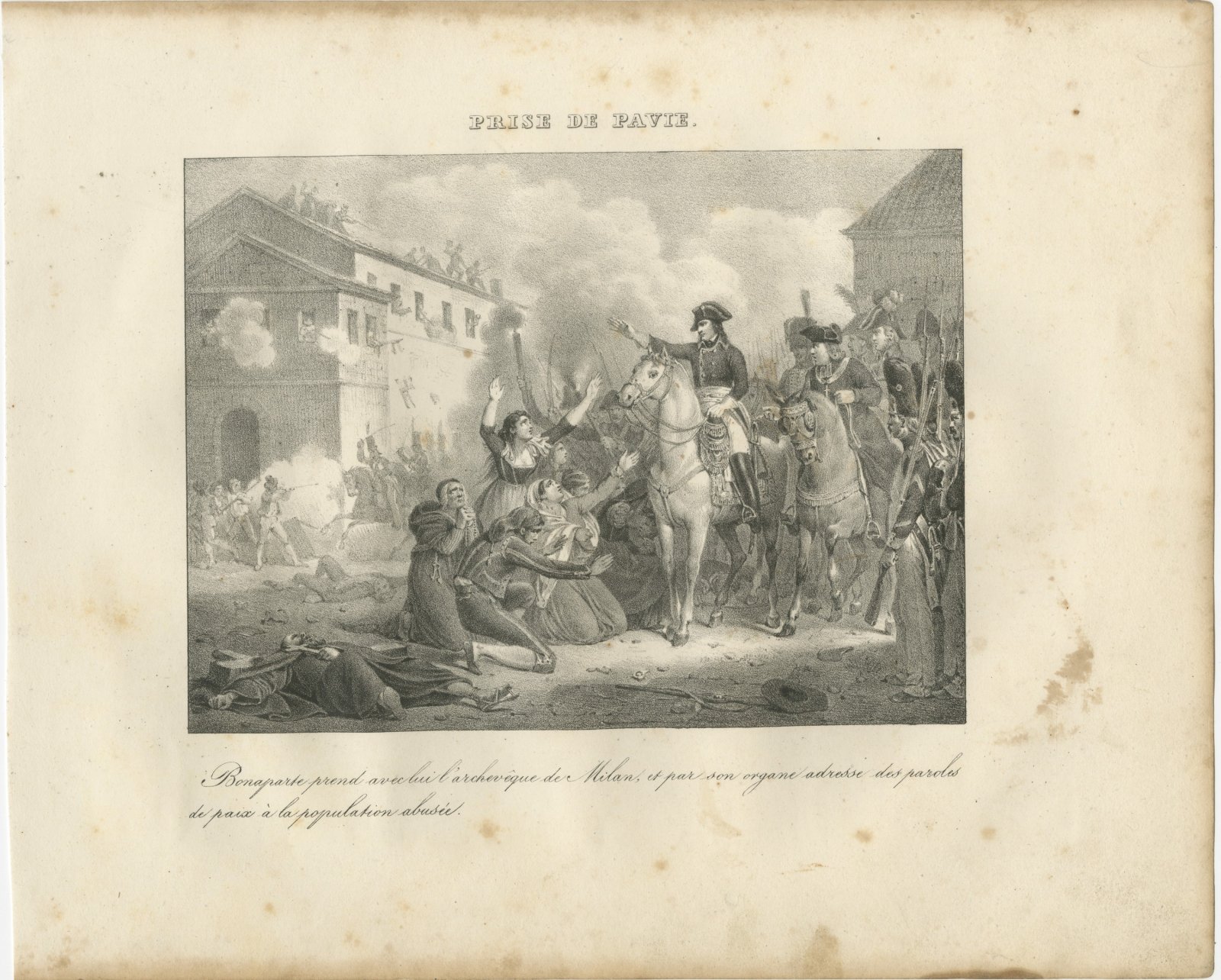
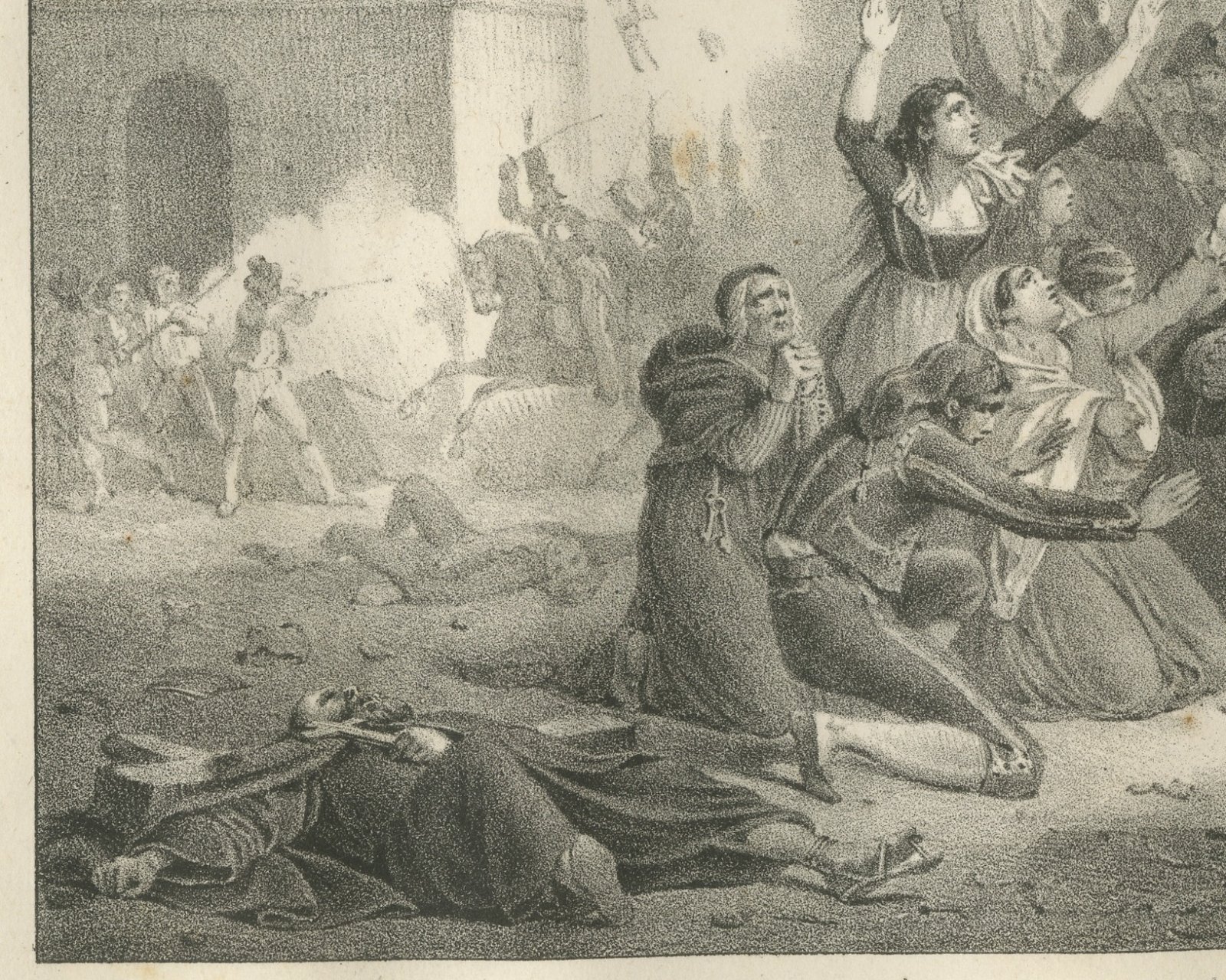
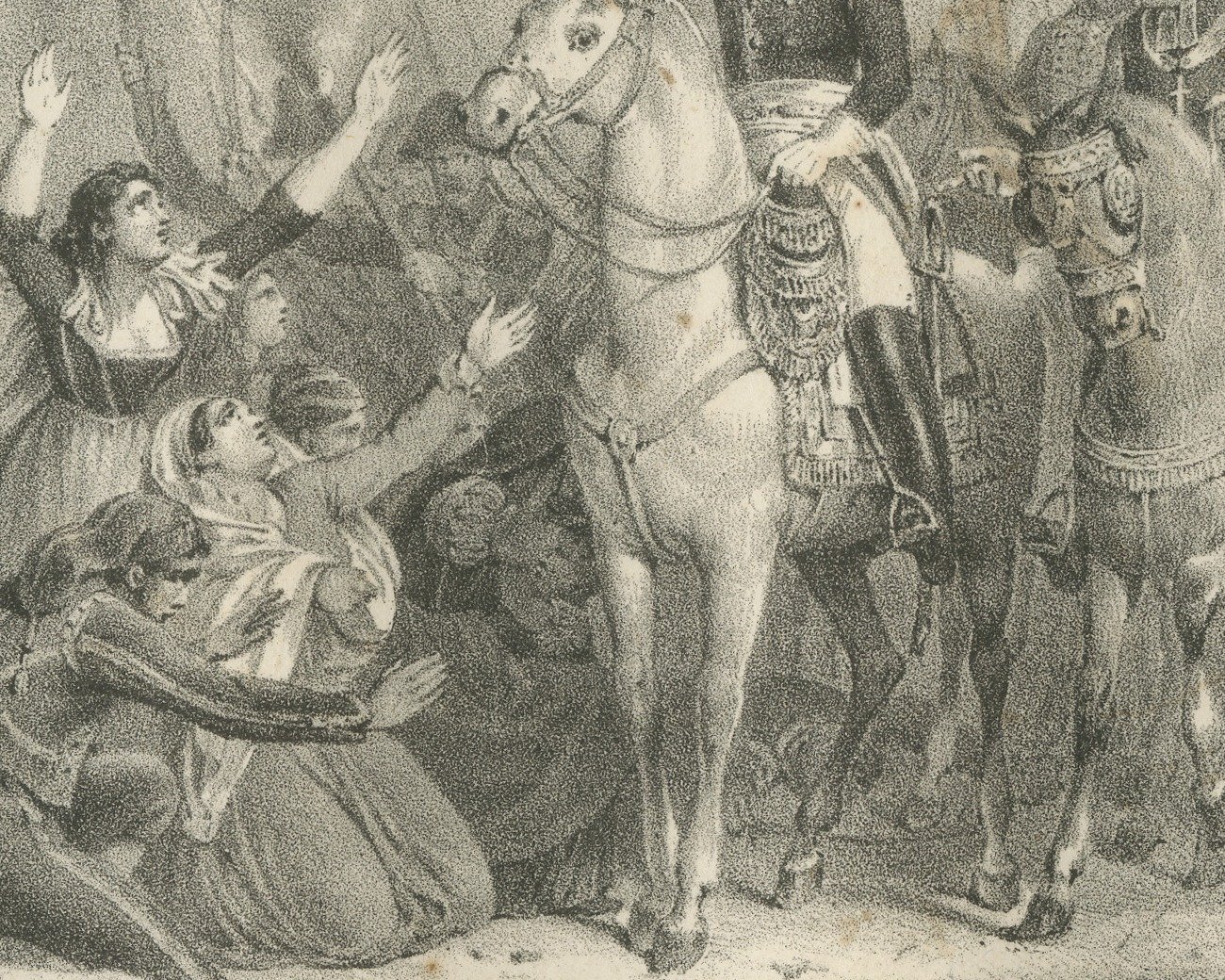
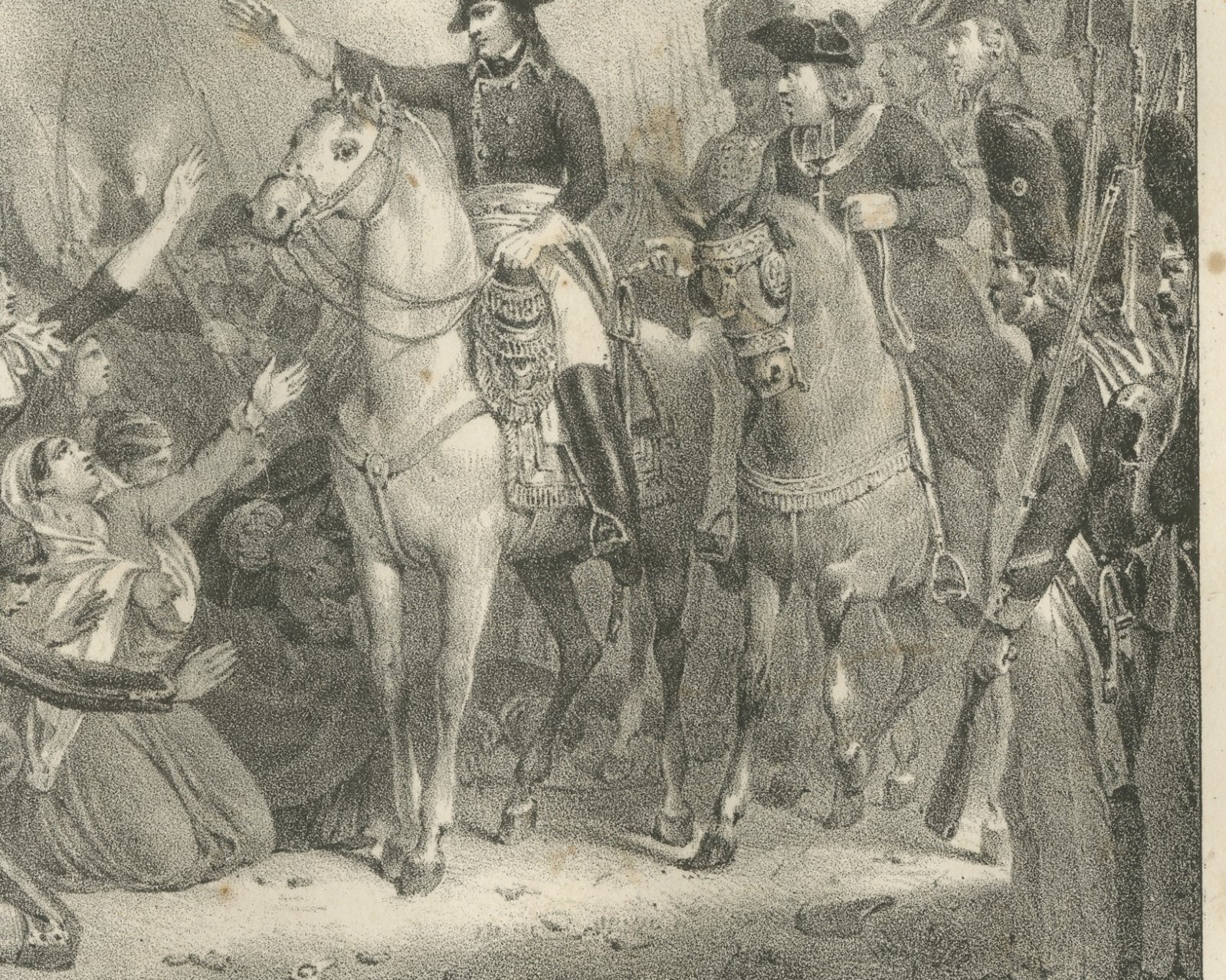
An original antique lithograph from Madou's Vie de Napoléon, published at Brussels in 1827. The sheet is lettered "PRISE DE PAVIE." in open capitals above the image. In a street under fire, Bonaparte sits a white horse at the center and raises his hand over a group of kneeling women and townsmen who lift their arms to him. A rider beside him and a file of grenadiers close in at the right. At the left, figures on the rooftops and at the windows of the houses throw objects down on soldiers fighting in the smoke of the street, and a dead man lies in the left foreground.
The caption below the image reads: "Bonaparte prend avec lui l'archevêque de Milan, et par son organe adresse des paroles de paix à la population abusée." In English: Bonaparte takes the Archbishop of Milan with him and, through him, addresses words of peace to the misled population.
The plate comes from the first volume of Vie de Napoléon, published at Brussels in 1827 by the Lithographie royale de Jobard, the press of Marcellin Jobard. Its title page describes a text written by a society of men of letters from the new documents dictated and corrected at Saint Helena by Napoleon himself, illustrated with lithographed plates after the first painters of the French school by Jean-Baptiste Madou (1796 to 1877), the Belgian lithographer and painter. This volume follows Napoleon from his schooling at Brienne to the camp of Boulogne.
Pavia and the surrounding countryside rose against the French in late May 1796, a few days after the entry into Milan. Bonaparte sent the Archbishop of Milan ahead to urge the insurgents to submit, burned the village of Binasco, and then stormed Pavia, which was given over to the troops before order was restored.
This is an original antique print, not a modern reproduction. This item is sold unframed.