 The sheet, as you receive it
 In the room
Interior designers: BarTrade members buy at their trade price. How it works
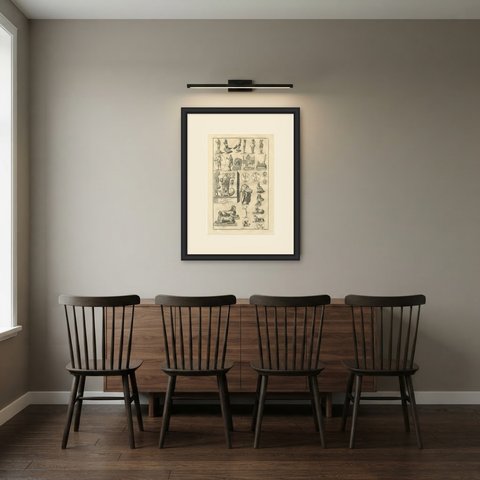
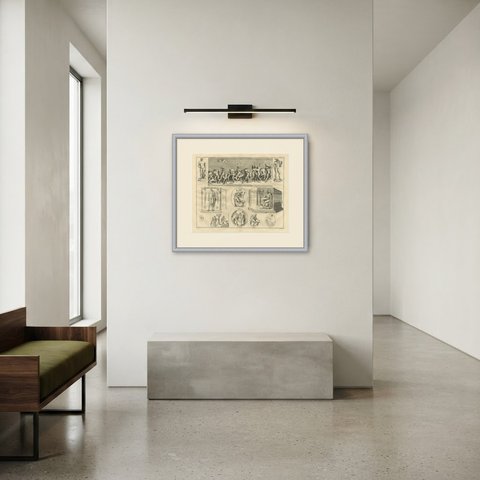
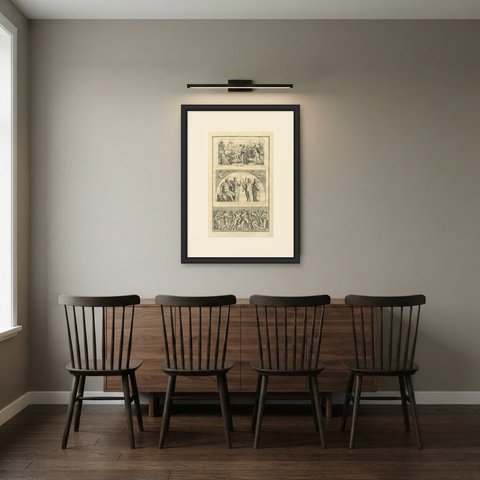
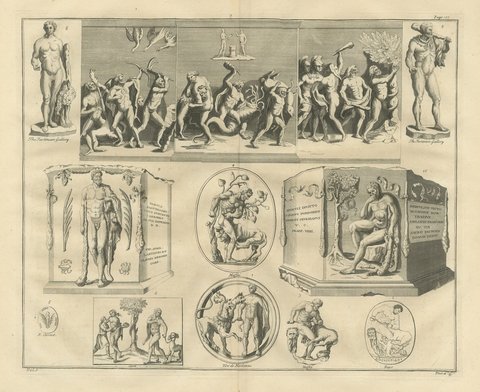
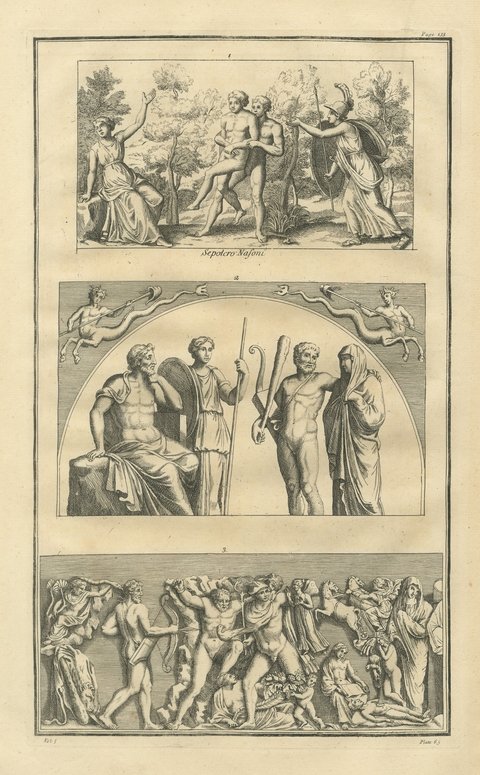
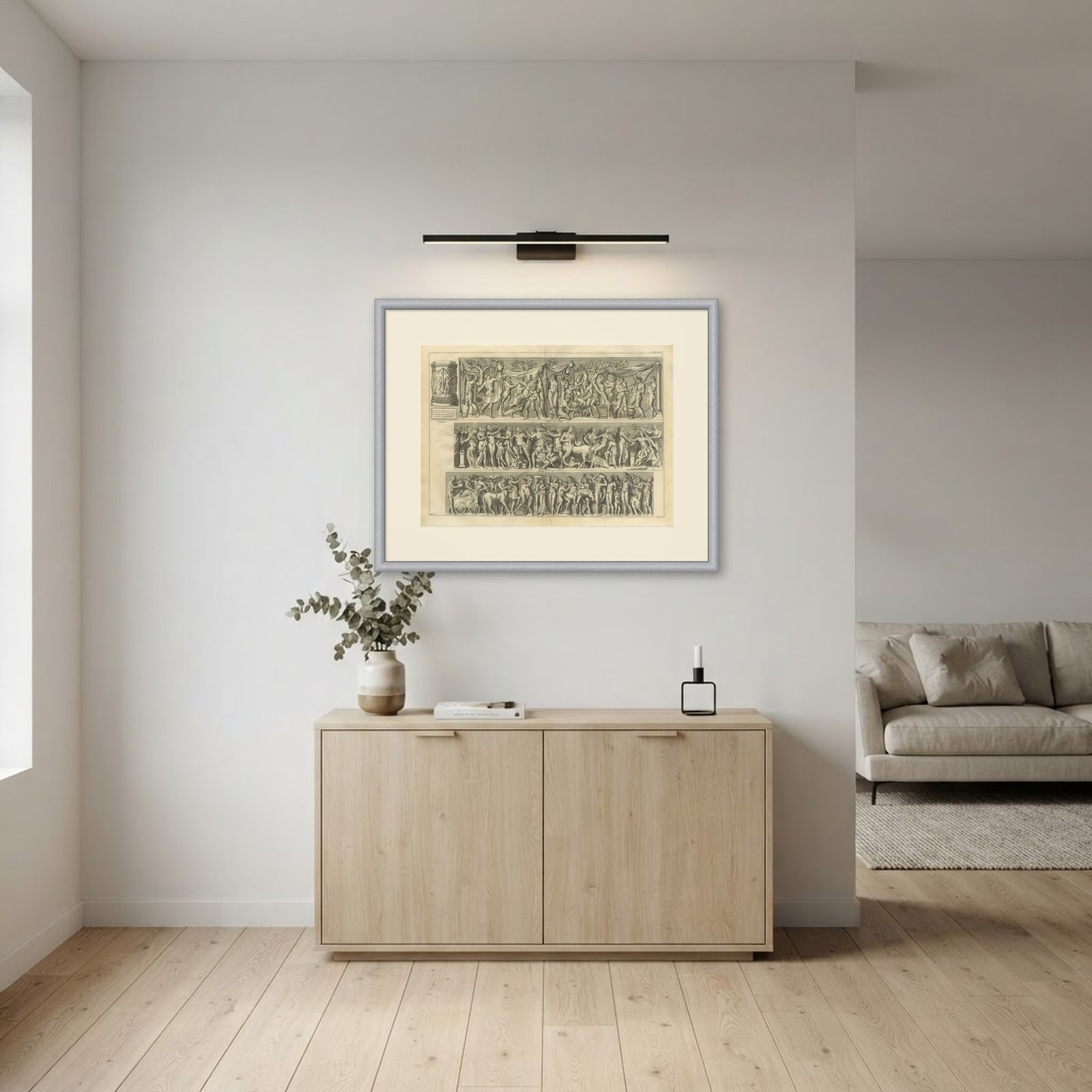
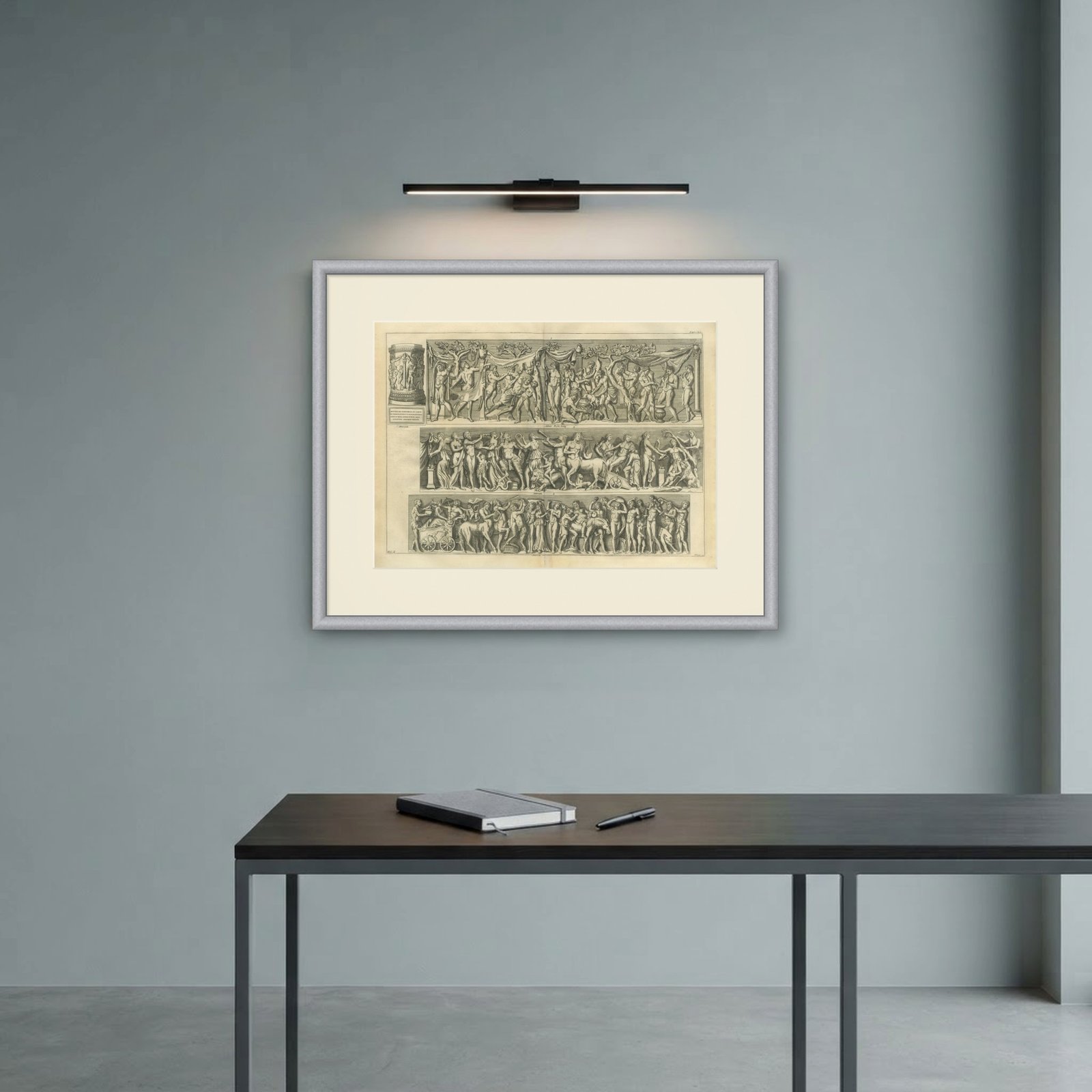
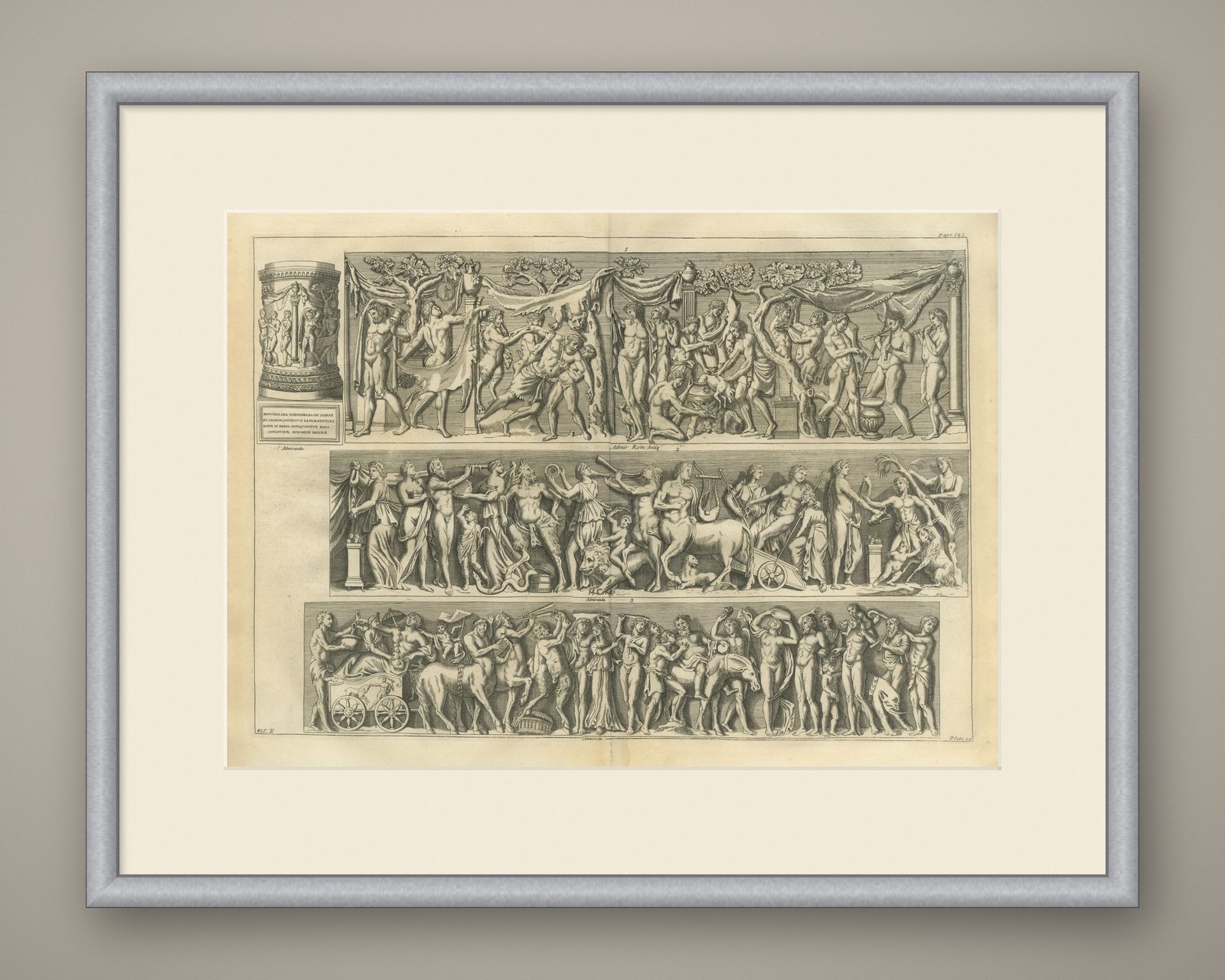
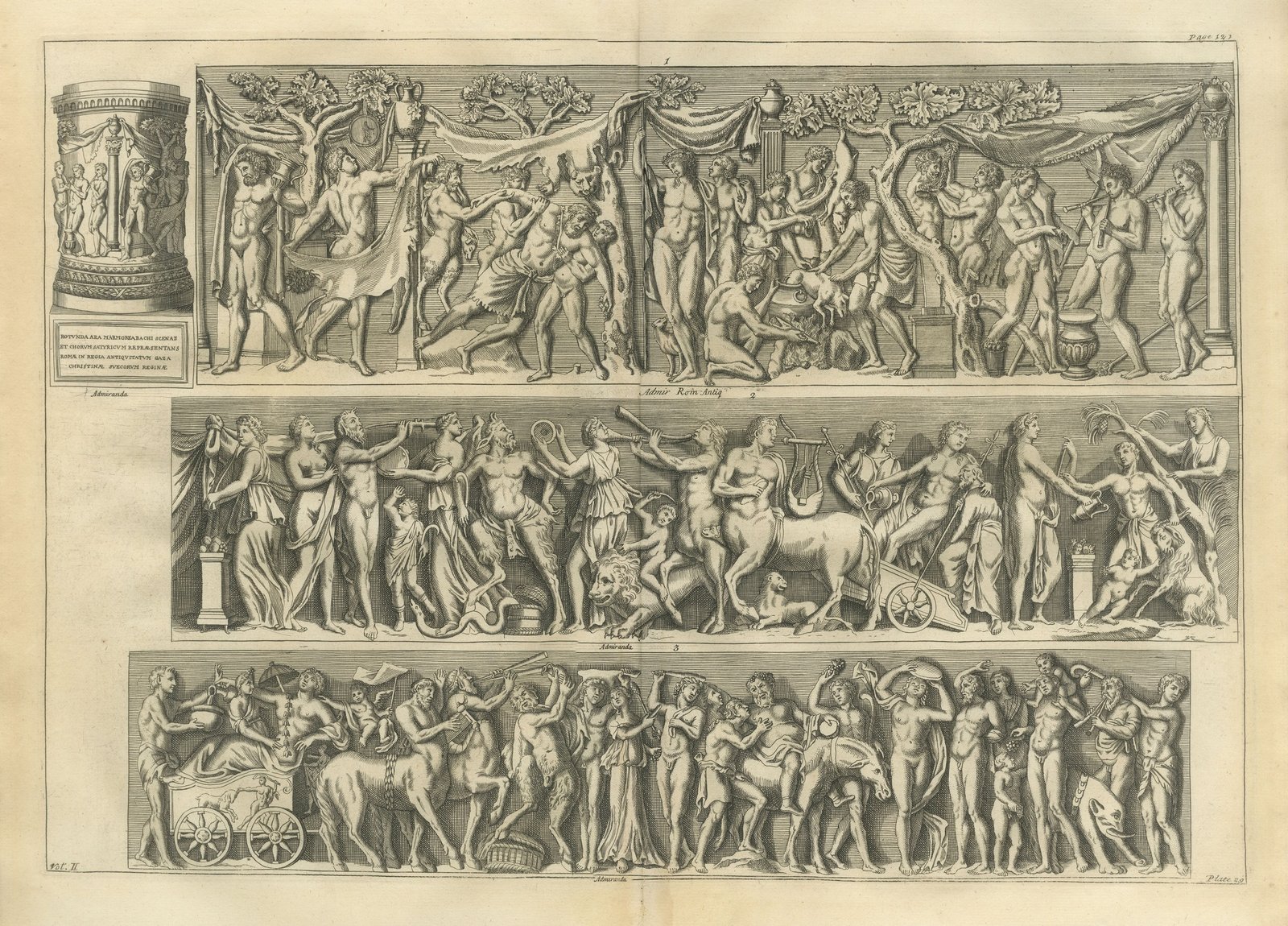
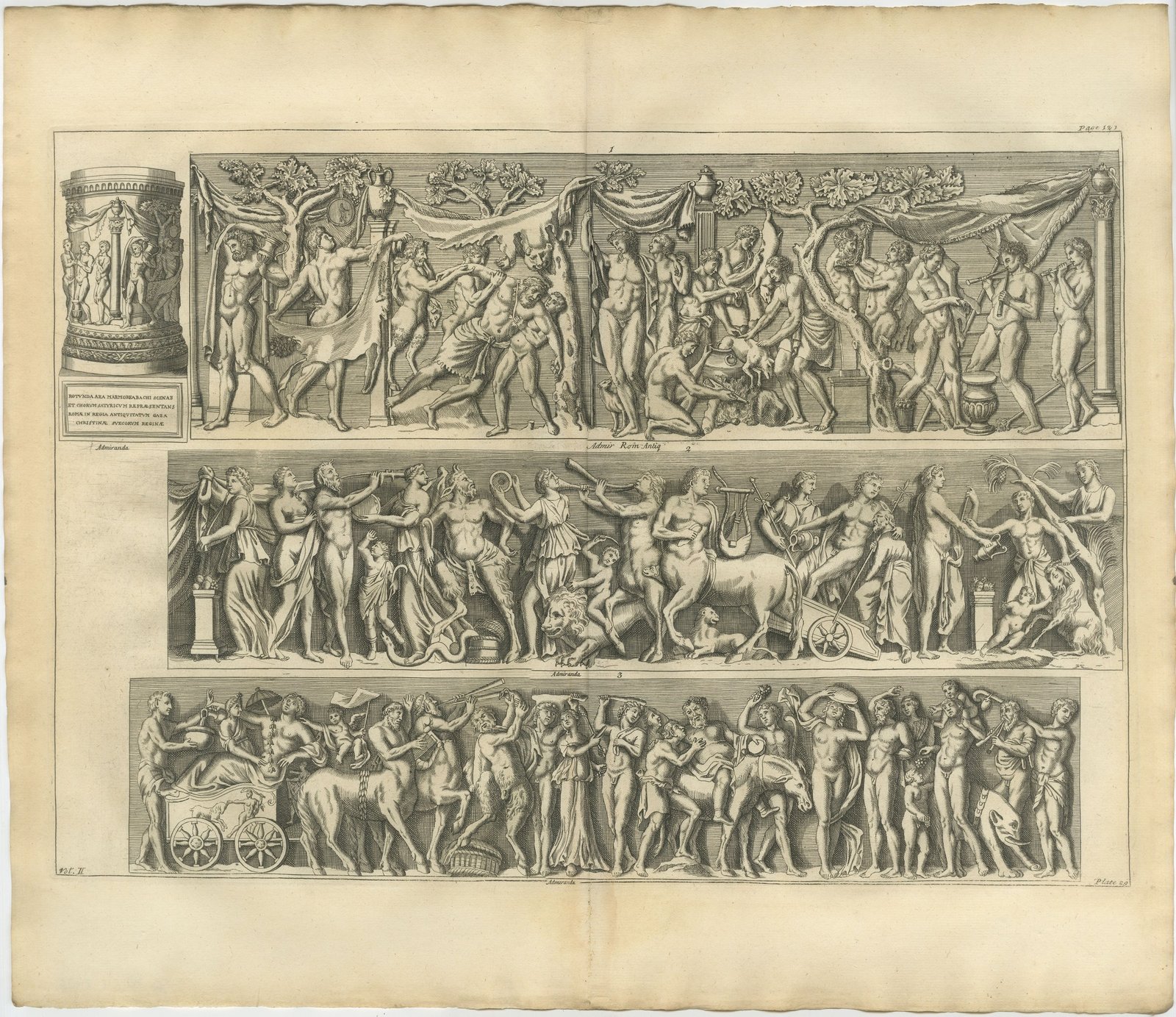
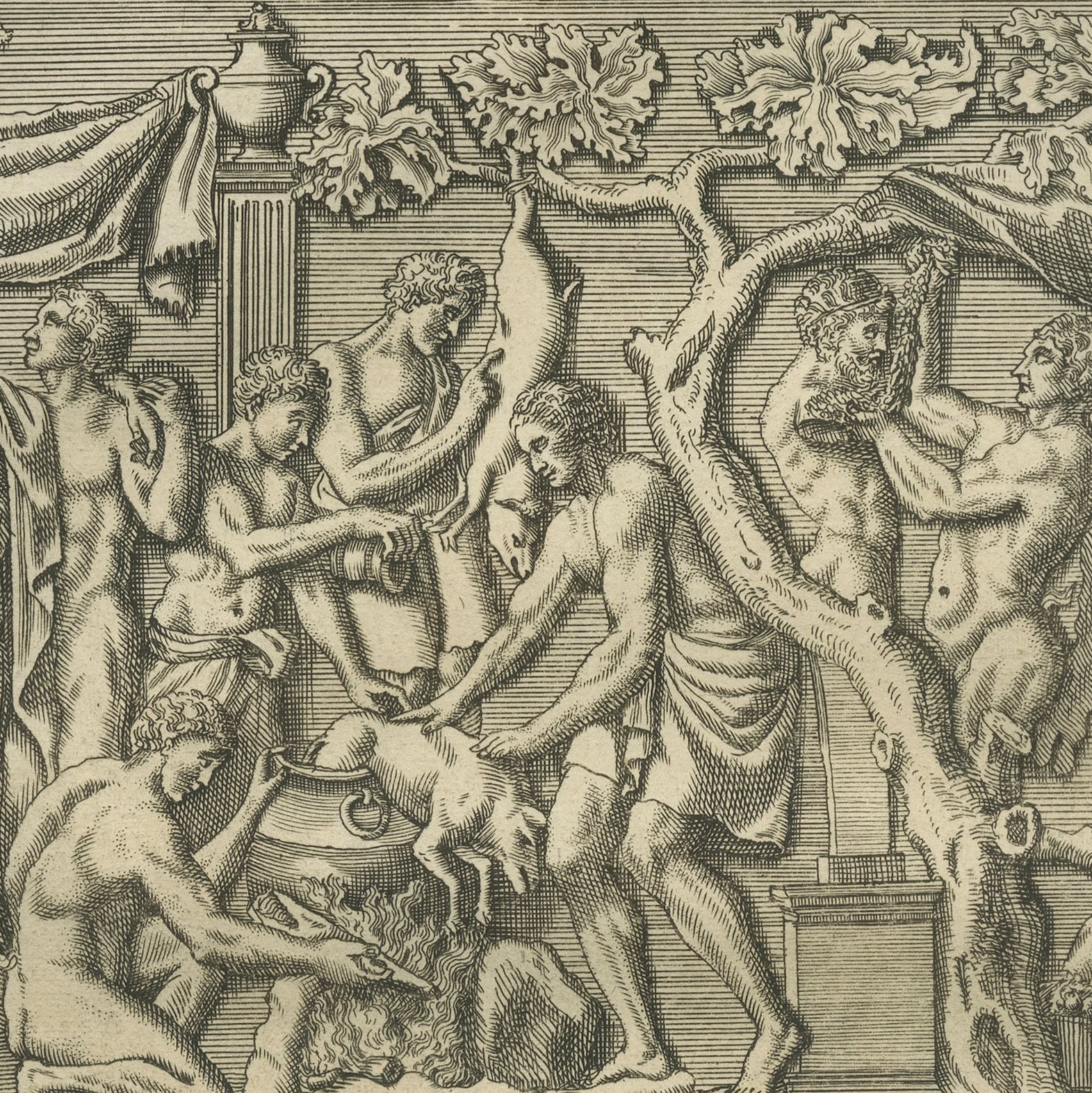
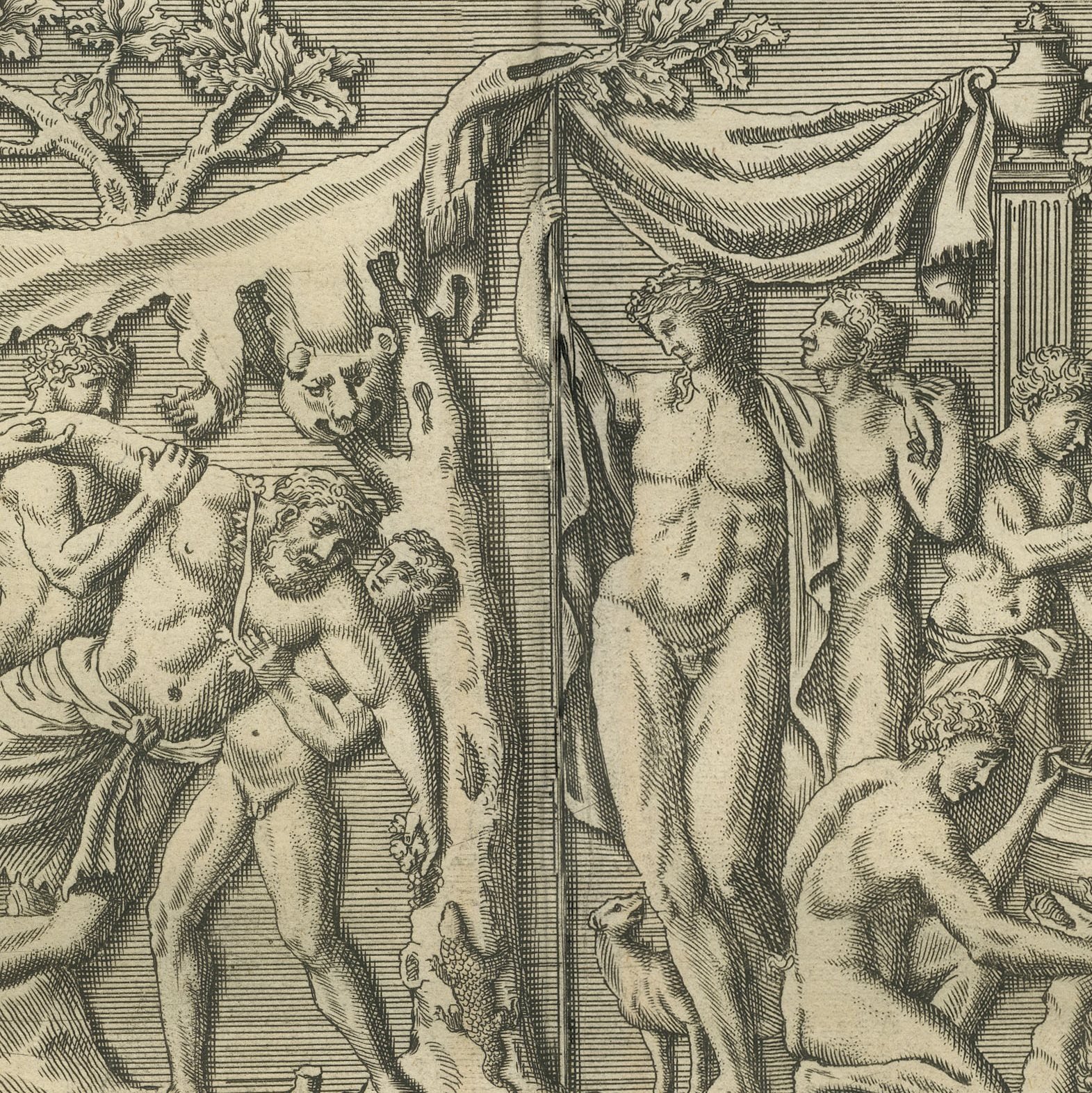
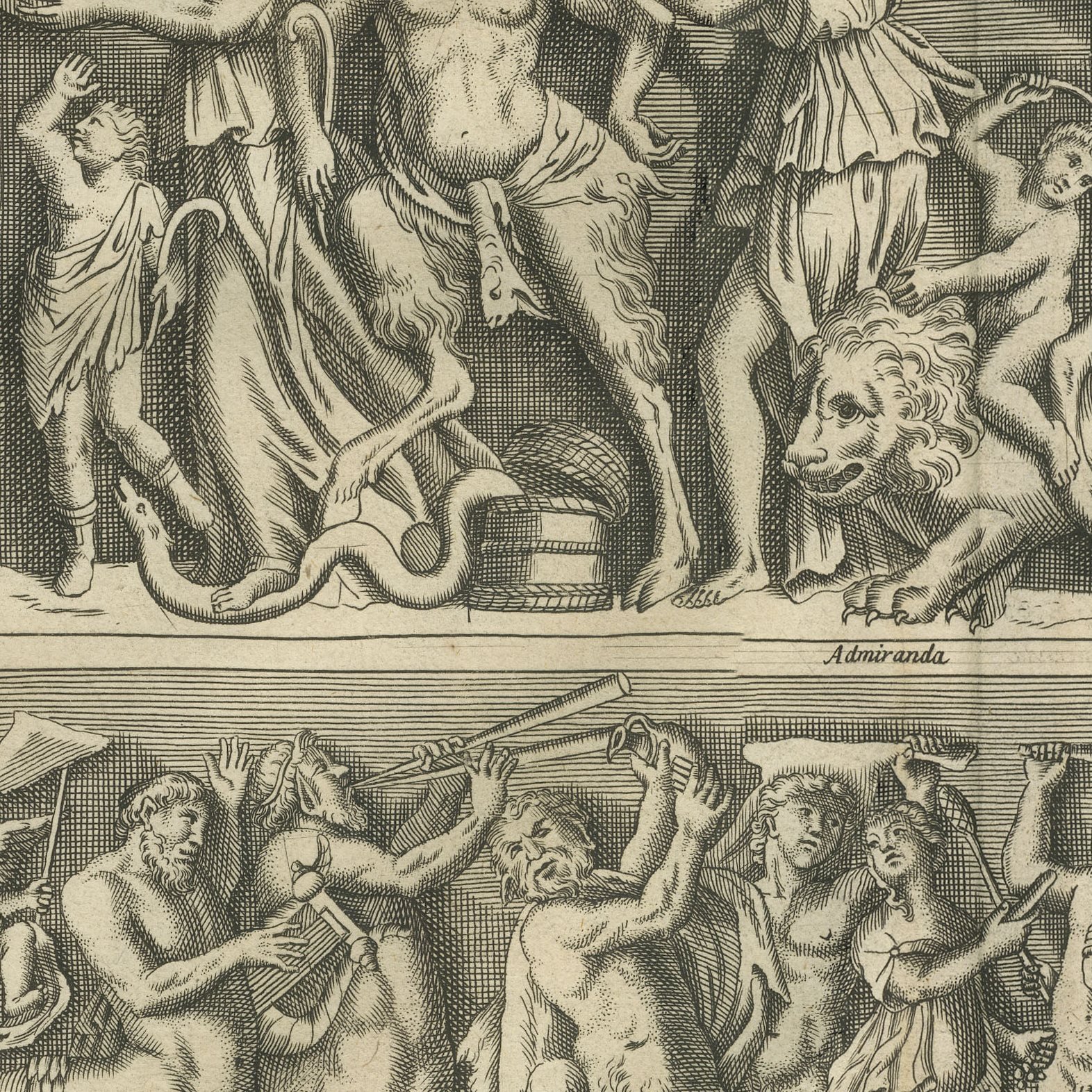
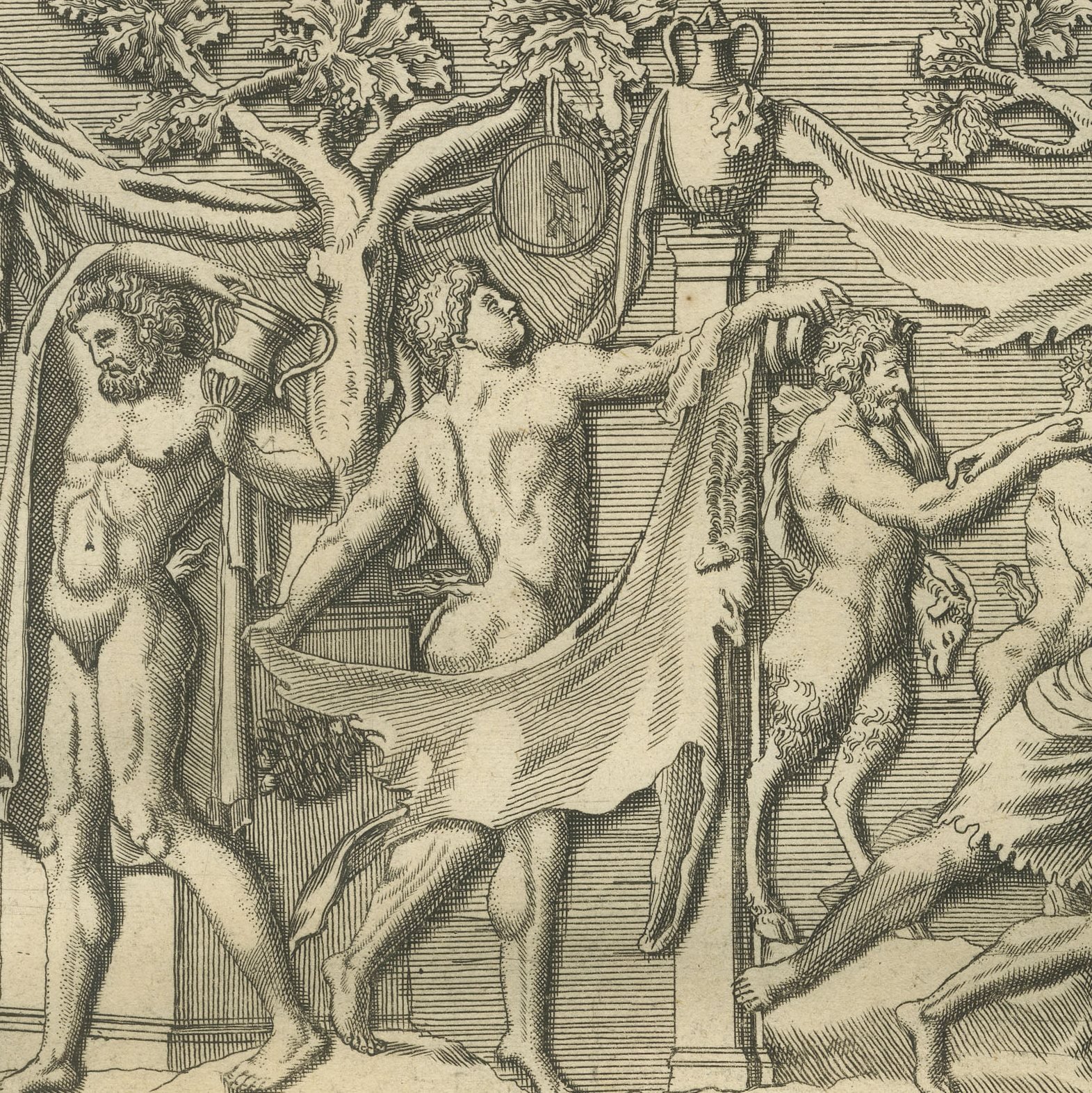
This original antique print of 1721 is built around one object and says so in its own lettering. Engraved across the plate is the legend ROTVNDA ARA MARMOREA BACCHI SCENAS ET CHORVM SATYRICVM REPRAESENTANS ROMAE IN REGIA ANTIQVITATVM GAZA CHRISTINAE SVECORVM REGINAE, a round marble altar of Bacchus showing scenes and a satyric chorus, in the royal treasury of antiquities of Christina, Queen of the Swedes, at Rome. The altar is unrolled across the sheet so that the whole of its carved band can be read at once, with satyrs, masked actors and dancing figures following one another around the drum. Two further long friezes from the Admiranda Romanarum Antiquitatum run above and below it, carrying processions of revellers with pipes, torches and thyrsi. The corners of the sheet are lettered Vol. II and Plate 29.
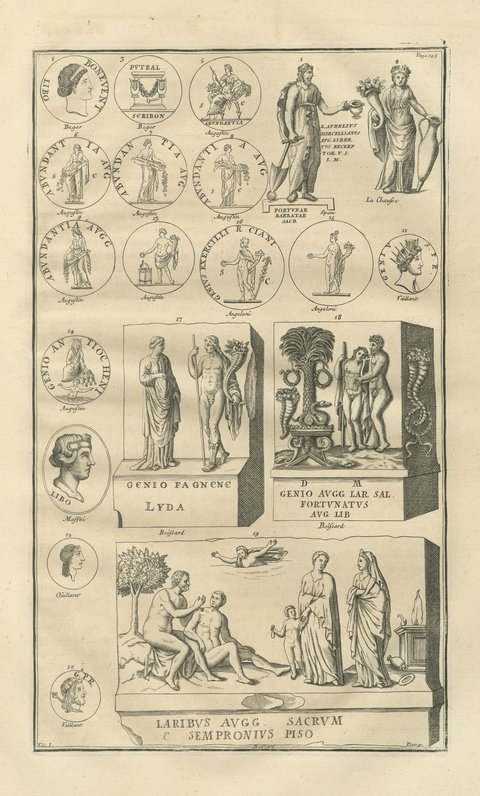
The plate comes from Volume the Second of Antiquity Explained, and Represented in Sculptures, the English translation of L'Antiquité expliquée et représentée en figures, published in Paris in 1719 by Bernard de Montfaucon (1655 to 1741), a French Benedictine monk of the Congregation of Saint Maur. The translation is by David Humphreys, fellow of Trinity College, Cambridge, and was printed in London by J. Tonson and J. Watts in five folio volumes, the first two dated 1721 and the other three 1722. The second volume deals with the worship of the Greeks and Romans and with the religions of other peoples, among them the Egyptians, Syrians, Persians, Germans and Gauls. Montfaucon arranged the surviving images of ancient monuments by subject, so that each plate gathers figures copied from statues, reliefs, altars, gems, coins and other objects, numbered to his commentary. The plates carry no engraver's name and no printed title.
The sheet is lettered with its volume and plate number, Vol. II and Plate 29, and with the page of Montfaucon's text that it faces.
Moderate overall age toning, with the paper darker along the top and bottom edges, foxing through the margins, one or two spots larger than the rest and a vertical fold down the middle where the sheet was folded into the book.
This is an original antique print, not a modern reproduction. This item is sold unframed.