 The sheet, as you receive it
 In the room
Interior designers: BarTrade members buy at their trade price. How it works
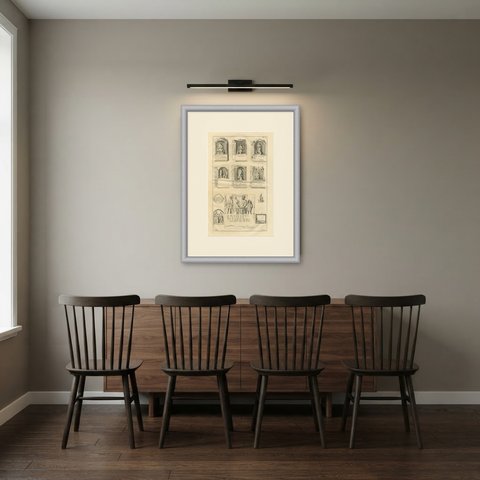
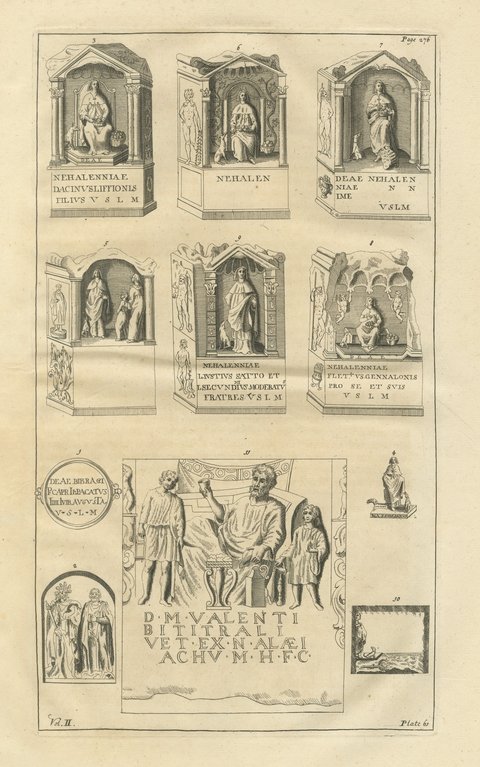
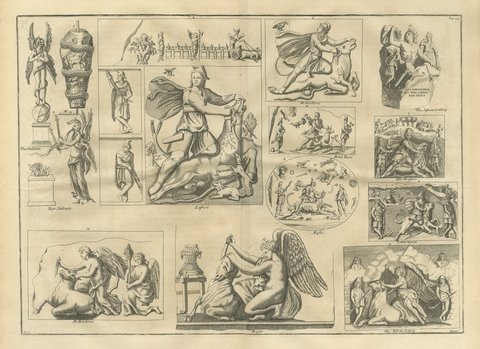
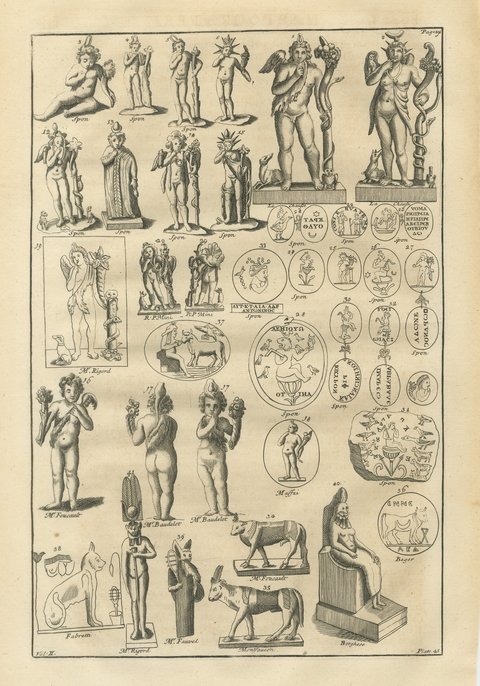
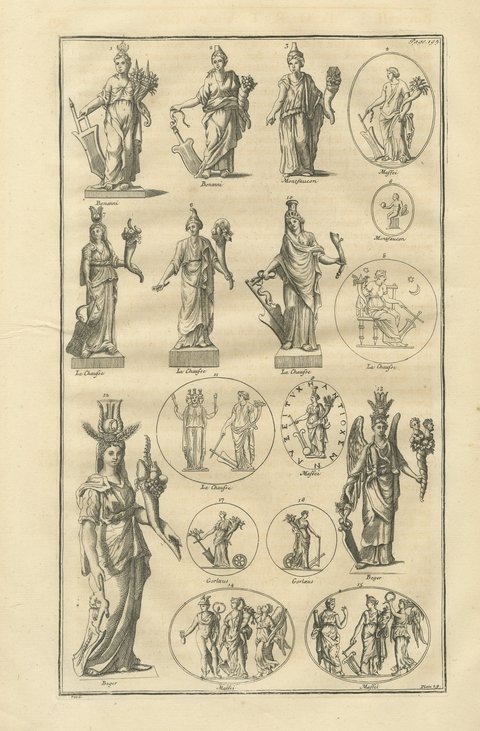
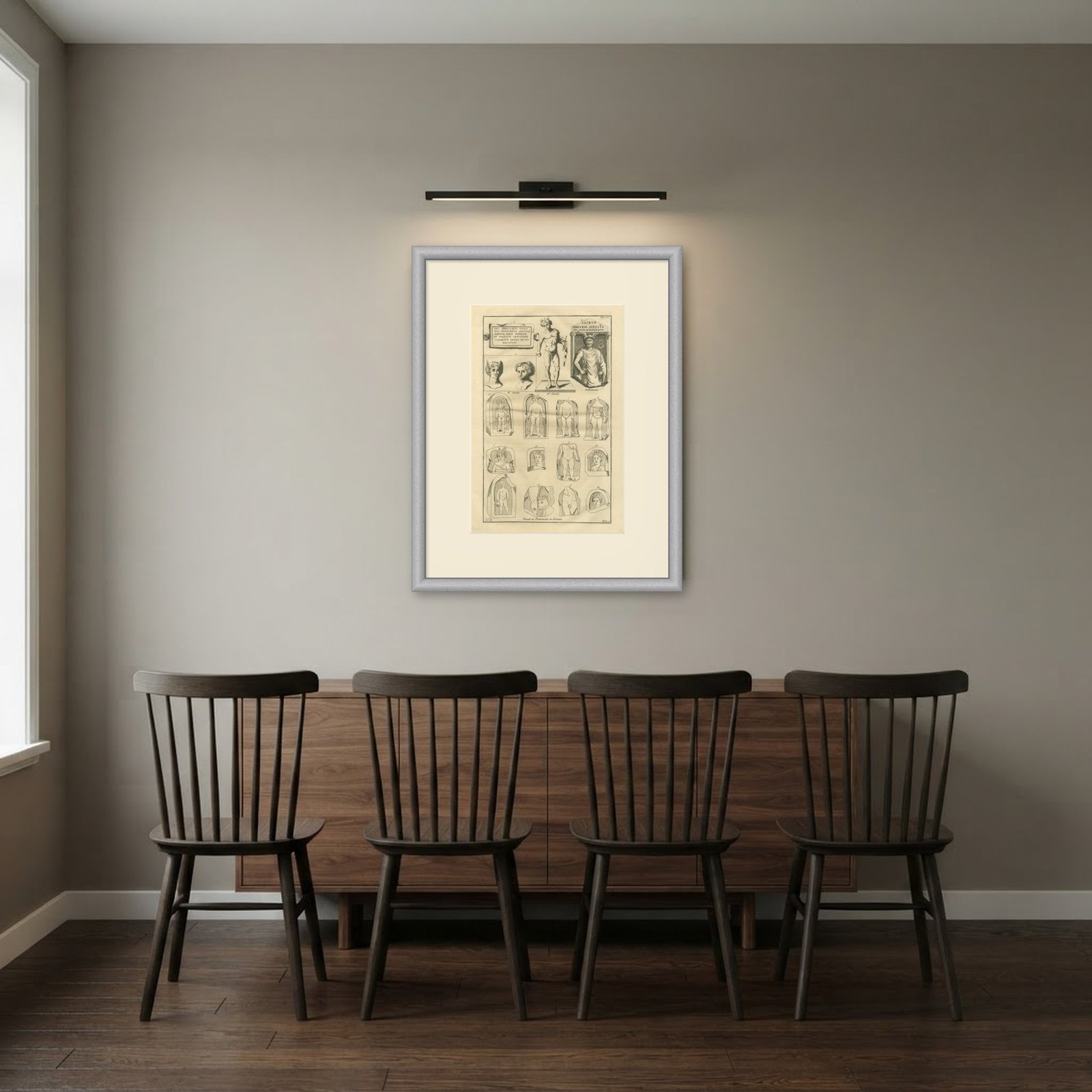
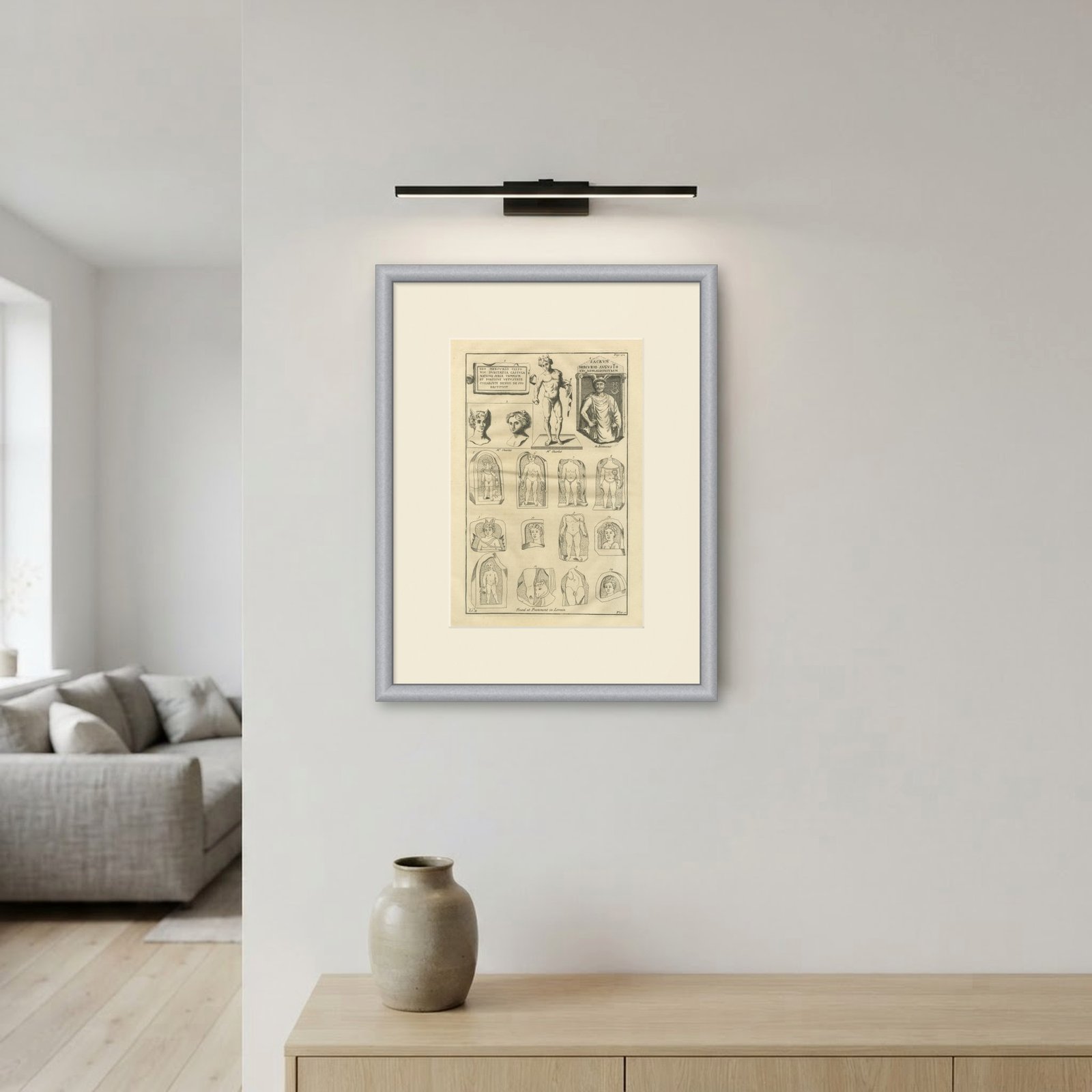
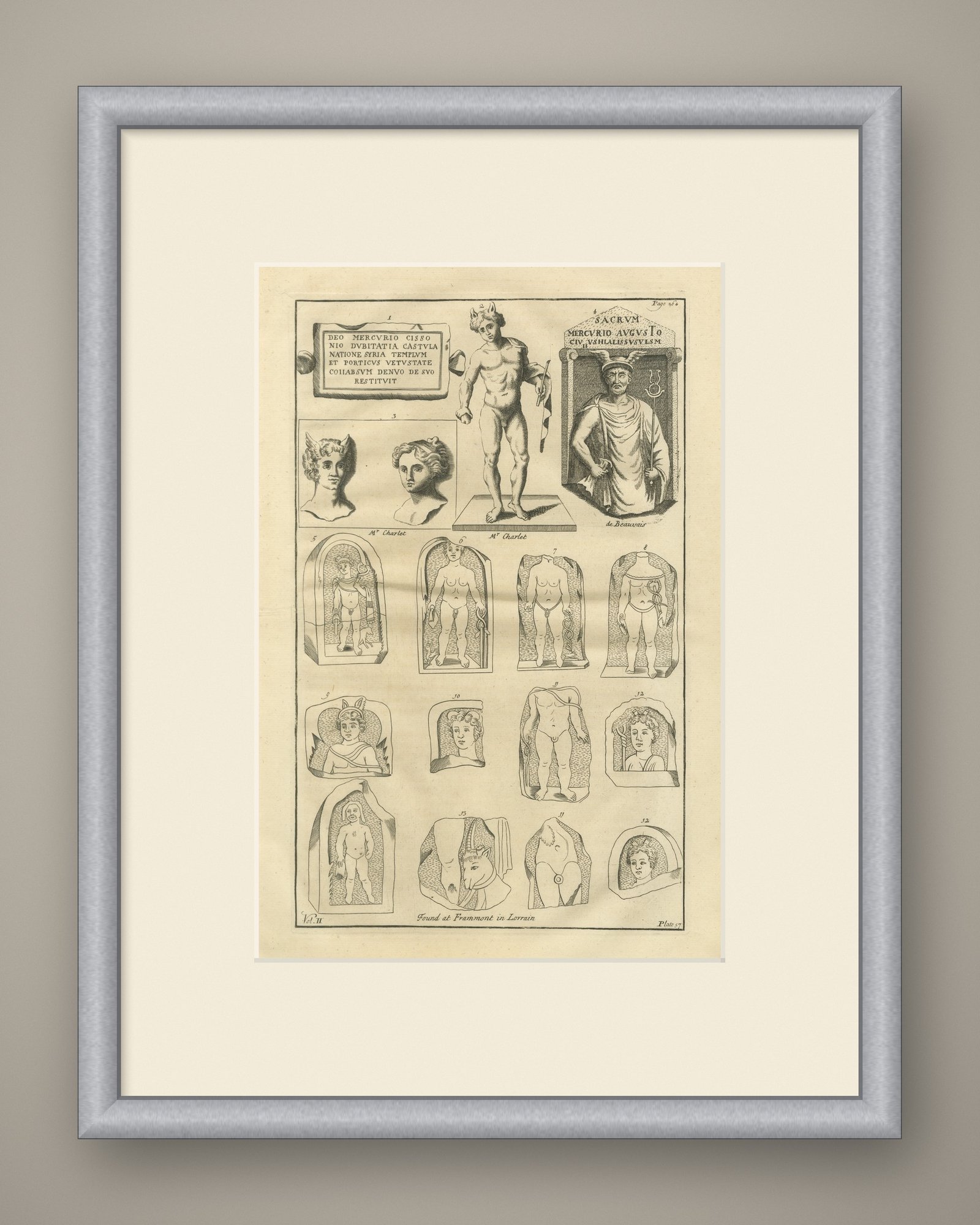
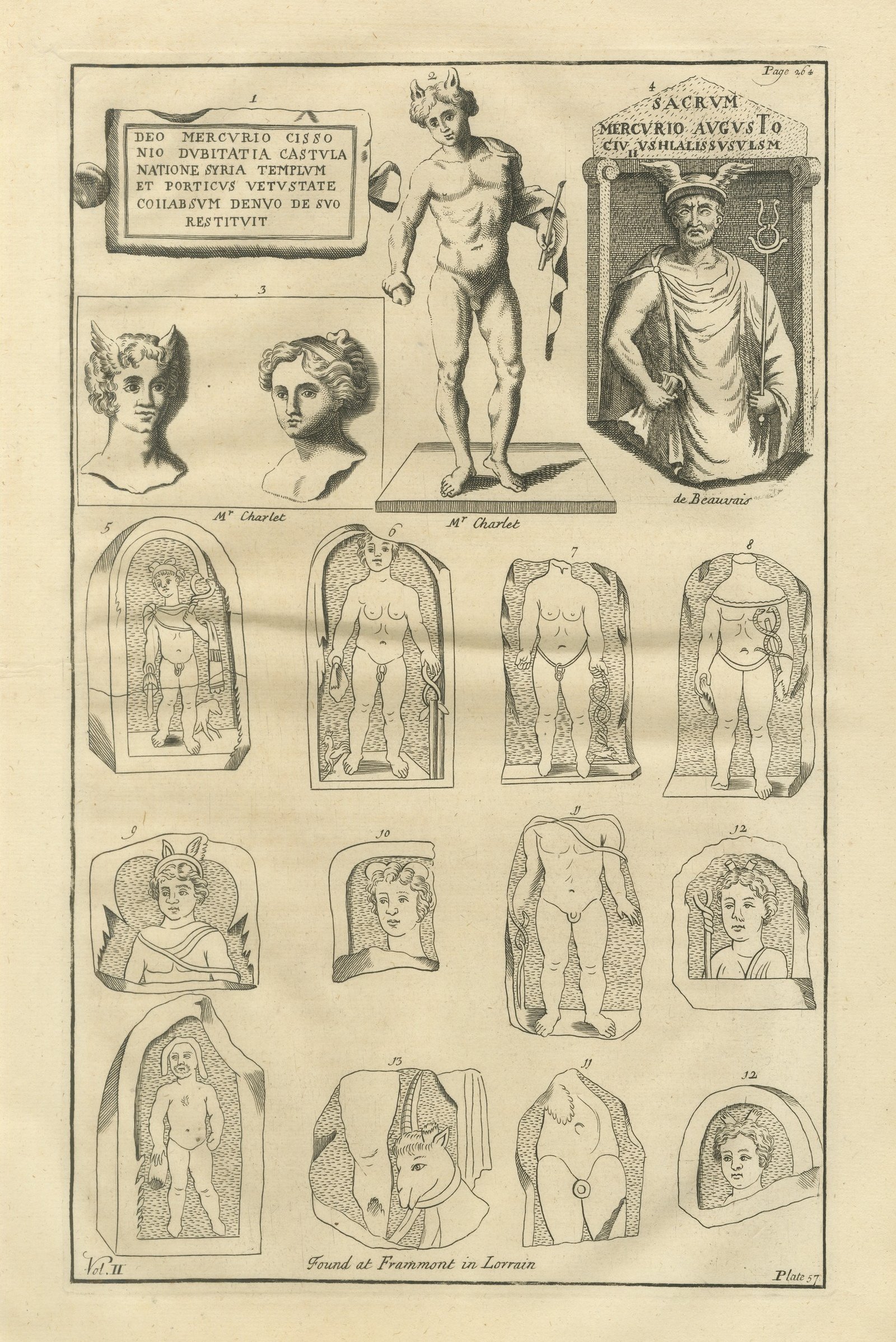
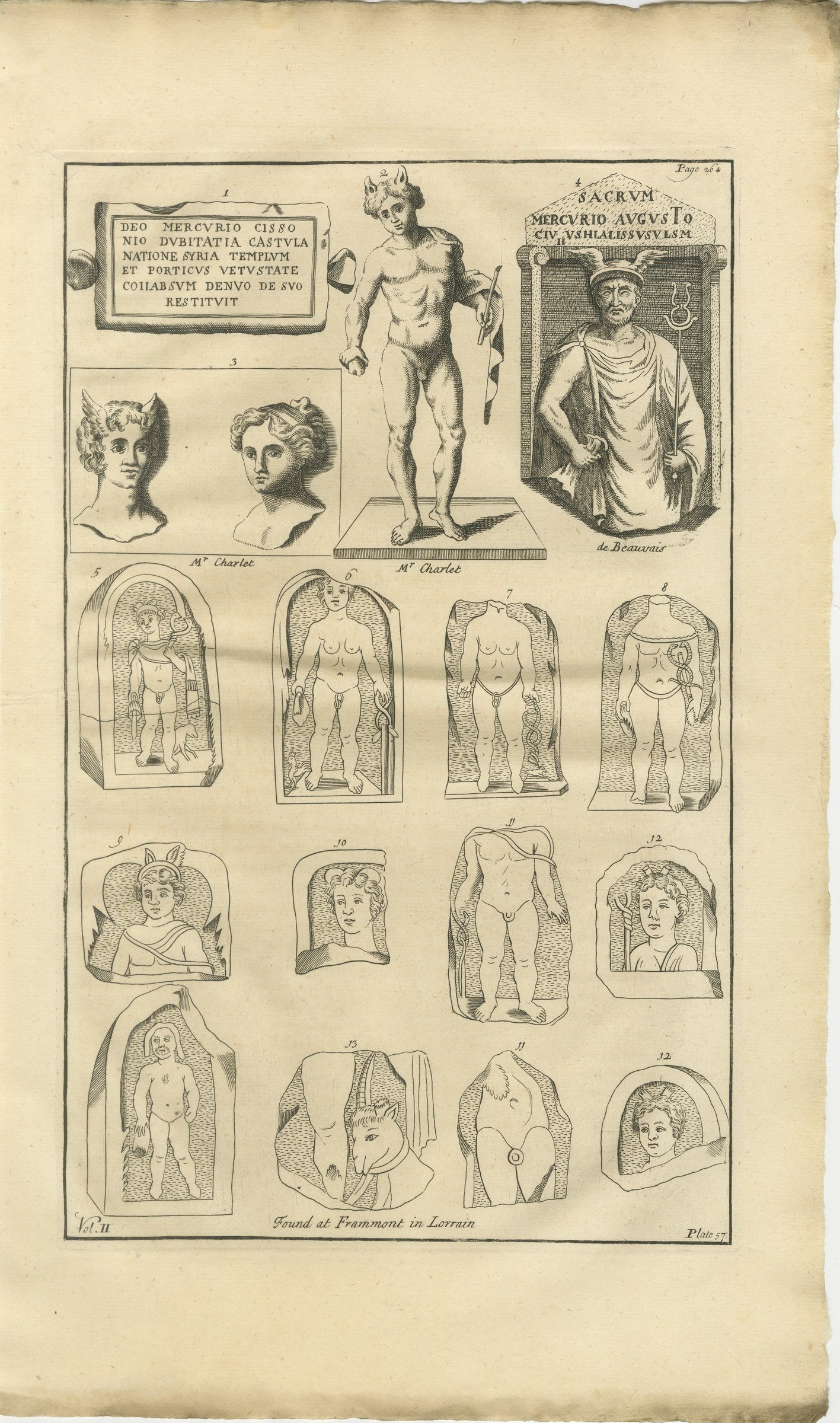
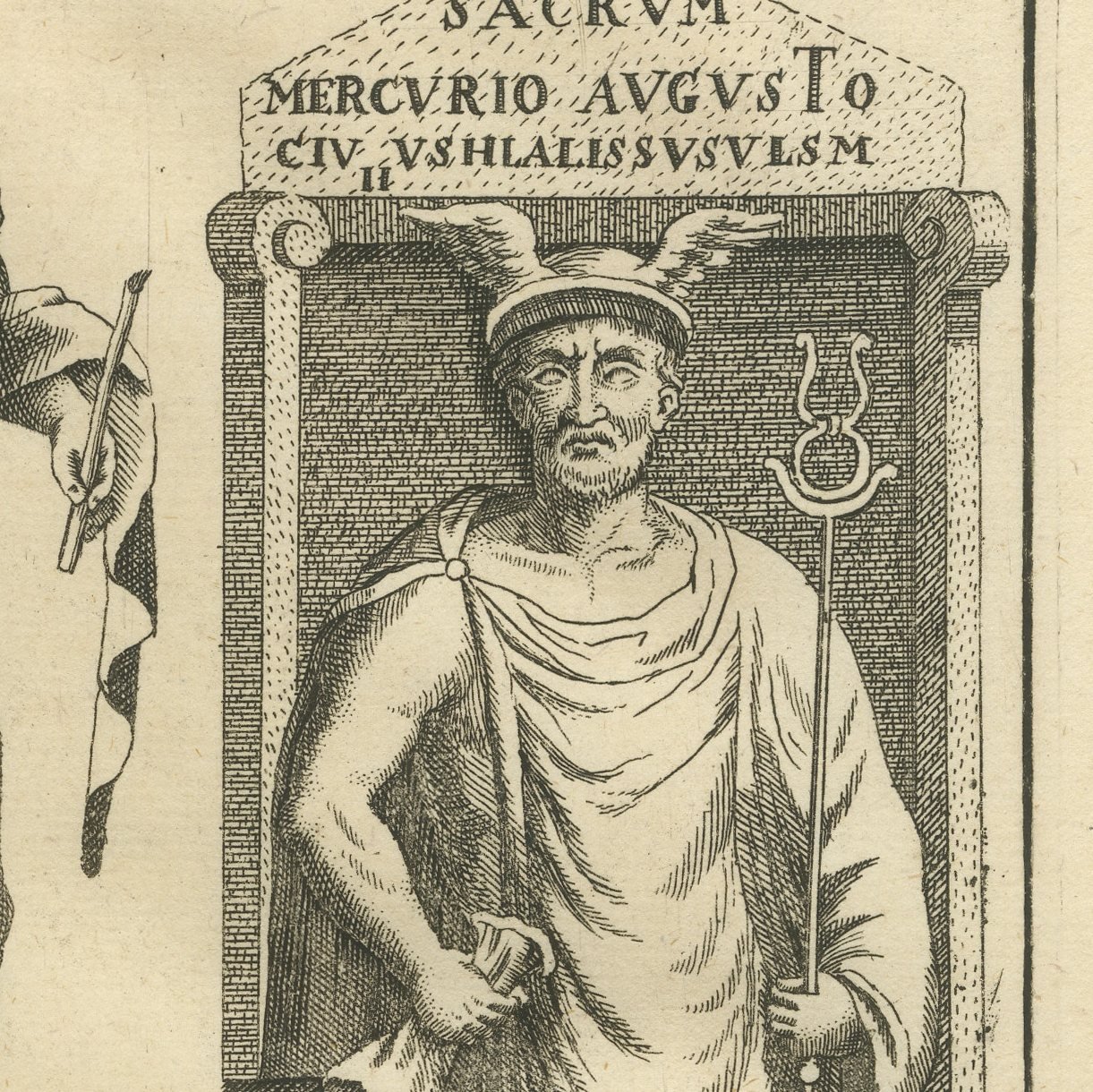
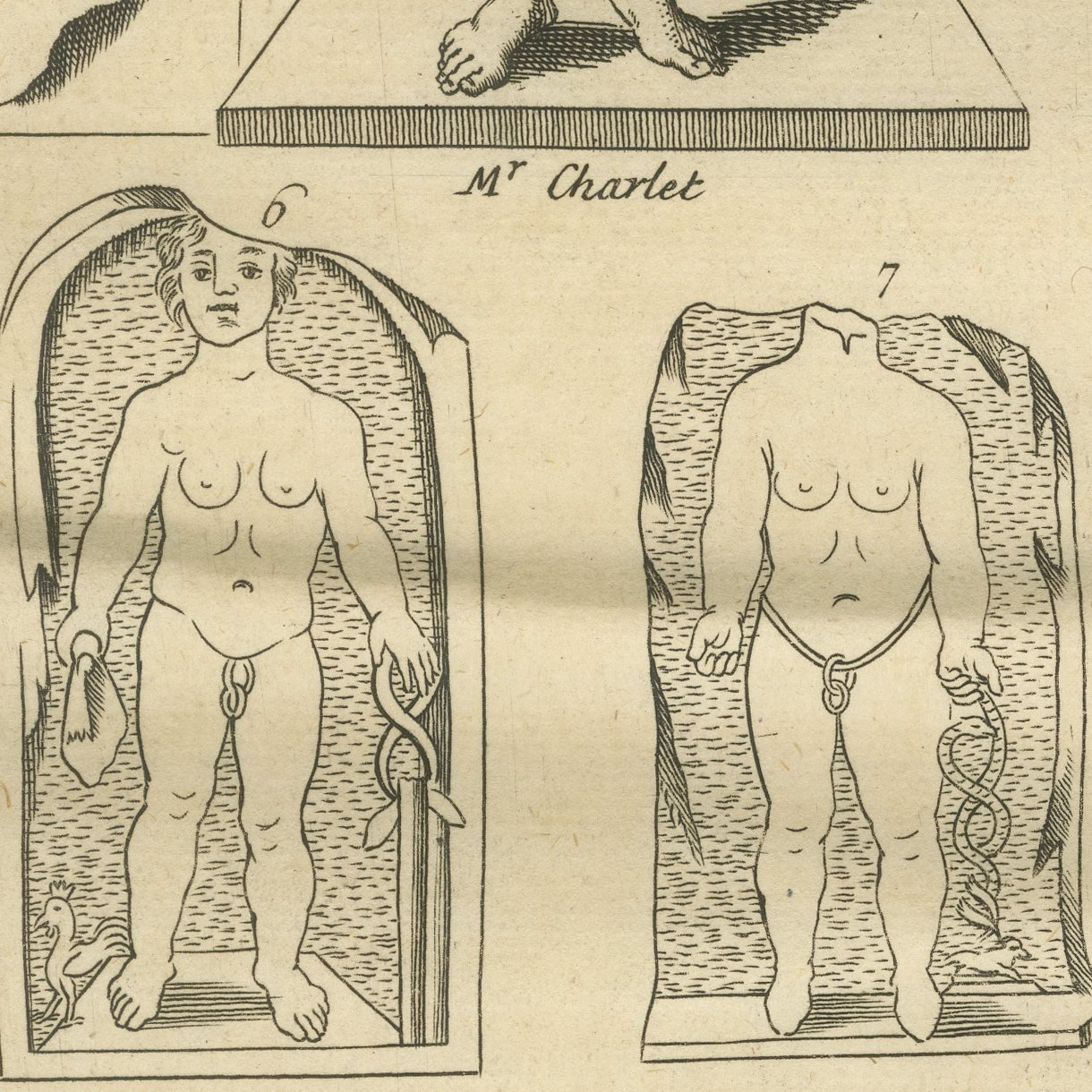
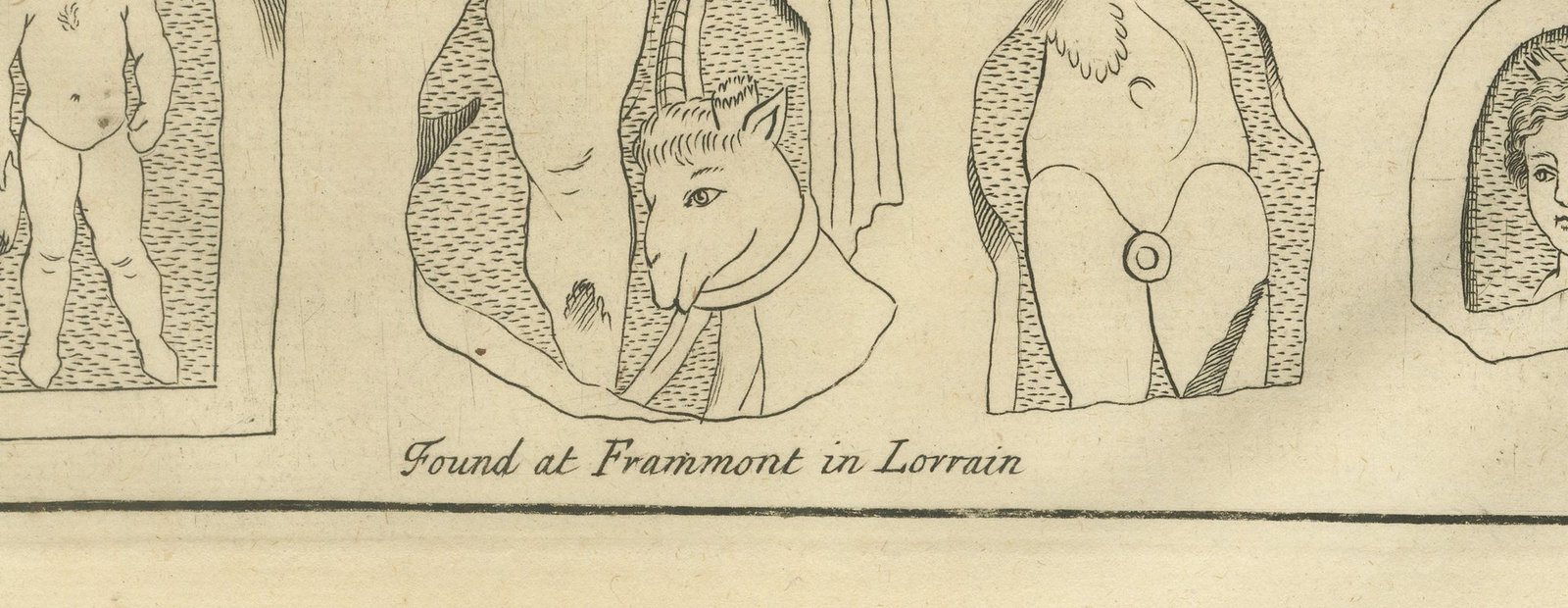
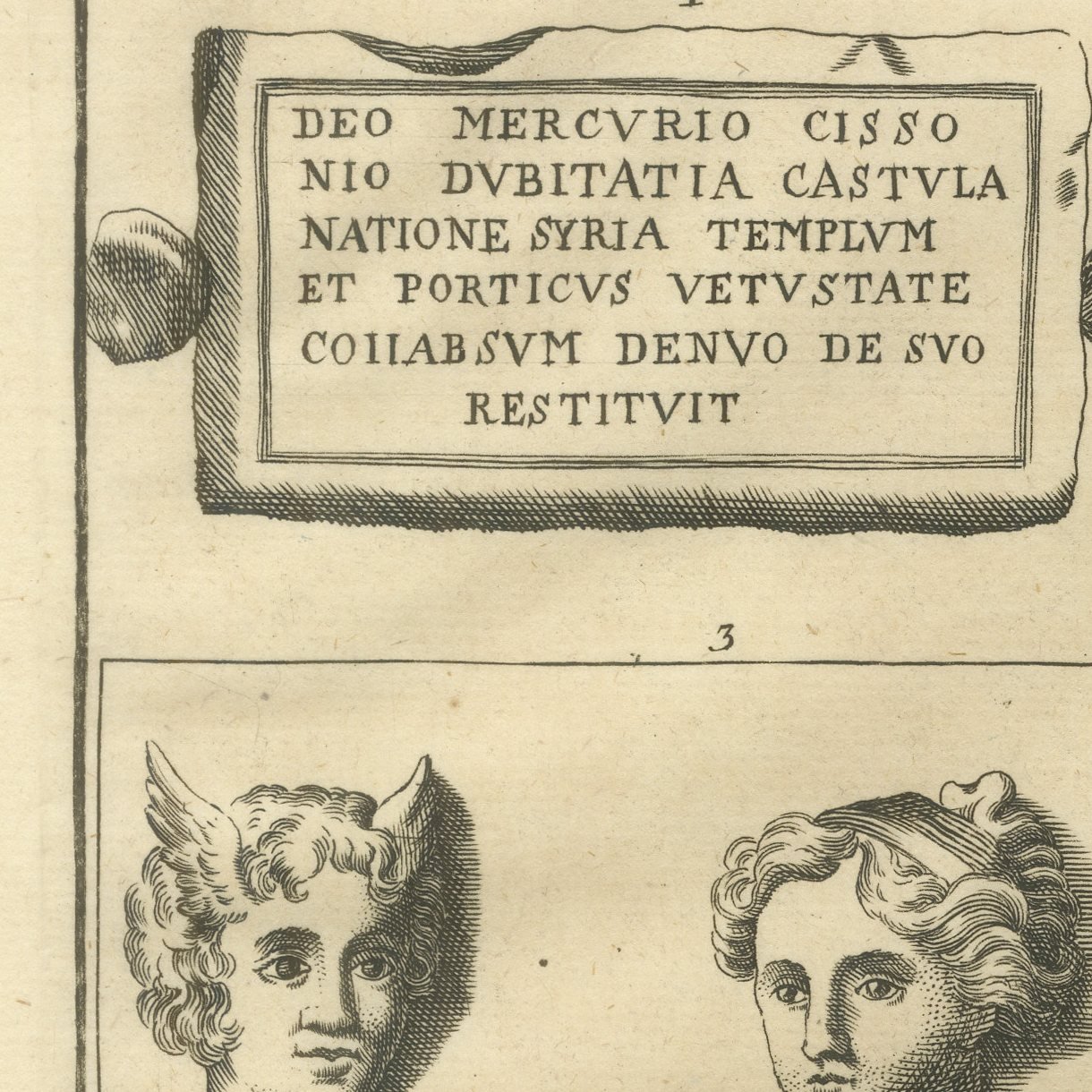
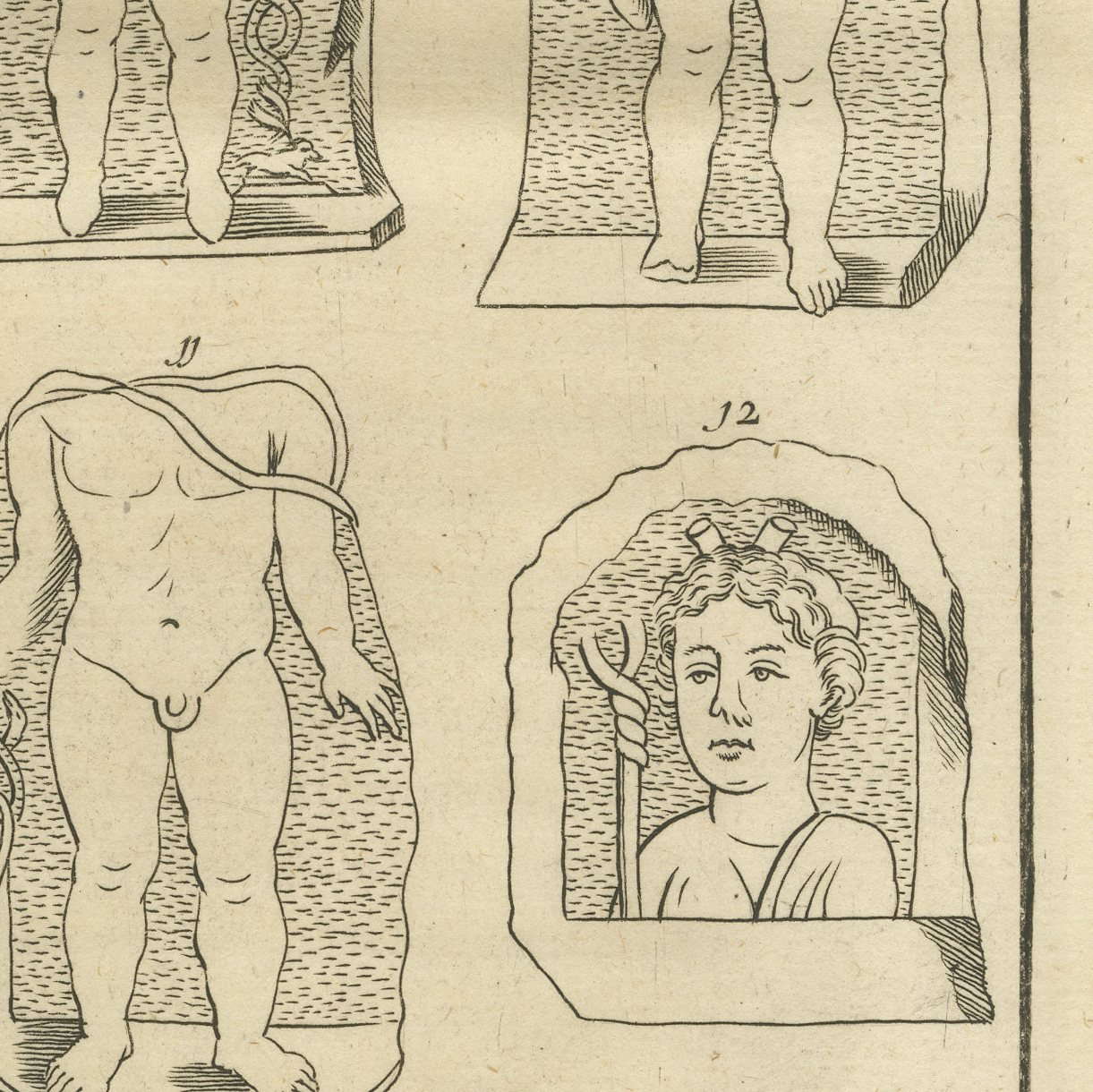
This original antique engraving of 1721 carries Mercury as the Gauls worshipped him. At the head of the sheet a tablet is lettered in full: DEO MERCVRIO CISSONIO DVBITATIA CASTVLA NATIONE SYRIA TEMPLVM ET PORTICVS VETVSTATE COLLABSVM DENVO DE SVO RESTITVIT, recording that Dubitatia Castula, a Syrian by birth, rebuilt at her own cost the temple and portico of the god Mercury Cissonius after they had fallen down with age. Beside it stands a naked Mercury with the winged cap, credited to Charlet, and a bearded figure with horns in a shrine lettered SACRVM MERCVRIO AVGVSTO, from Beauvais. The lower two thirds of the plate carry fifteen rough carved stones, standing figures and heads cut in shallow niches, lettered along the foot Found at Frammont in Lorrain. The corners read Vol. II and Plate 57.
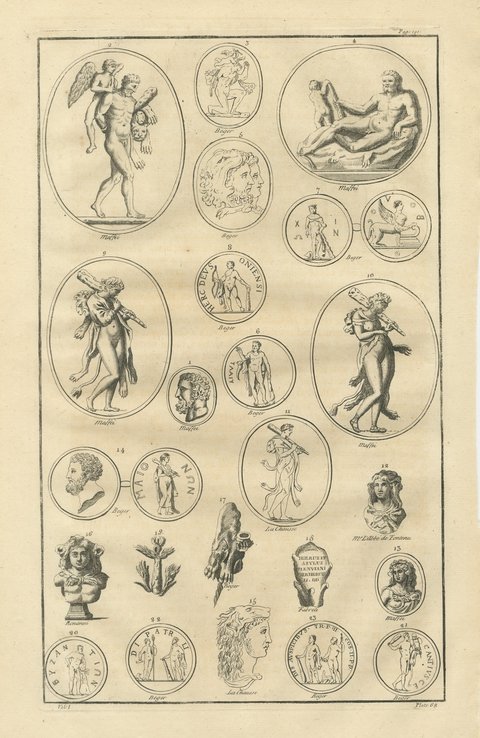
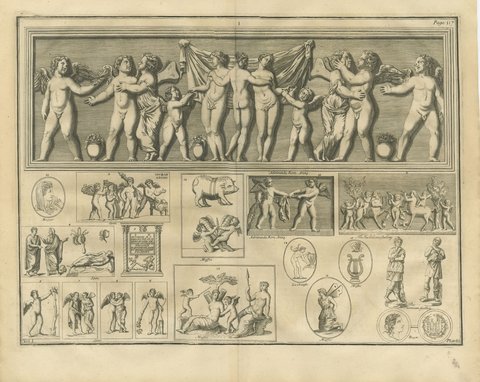
The plate comes from Volume the Second of Antiquity Explained, and Represented in Sculptures, the English translation of L'Antiquité expliquée et représentée en figures, published in Paris in 1719 by Bernard de Montfaucon (1655 to 1741), a French Benedictine monk of the Congregation of Saint Maur. The translation is by David Humphreys, fellow of Trinity College, Cambridge, and was printed in London by J. Tonson and J. Watts in five folio volumes, the first two dated 1721 and the other three 1722. The second volume deals with the worship of the Greeks and Romans and with the religions of other peoples, among them the Egyptians, Syrians, Persians, Germans and Gauls. Montfaucon arranged the surviving images of ancient monuments by subject, so that each plate gathers figures copied from statues, reliefs, altars, gems, coins and other objects, numbered to his commentary. The plates carry no engraver's name and no printed title.
The sheet is lettered with its volume and plate number, Vol. II and Plate 57, and with the page of Montfaucon's text that it faces.
Moderate overall age toning, with the paper darker along the bottom and top edges, foxing through the margins, one or two spots larger than the rest, stains in the margins and wear to the bottom right corner.
This is an original antique print, not a modern reproduction. This item is sold unframed.