 The sheet, as you receive it
 In the room
Interior designers: BarTrade members buy at their trade price. How it works
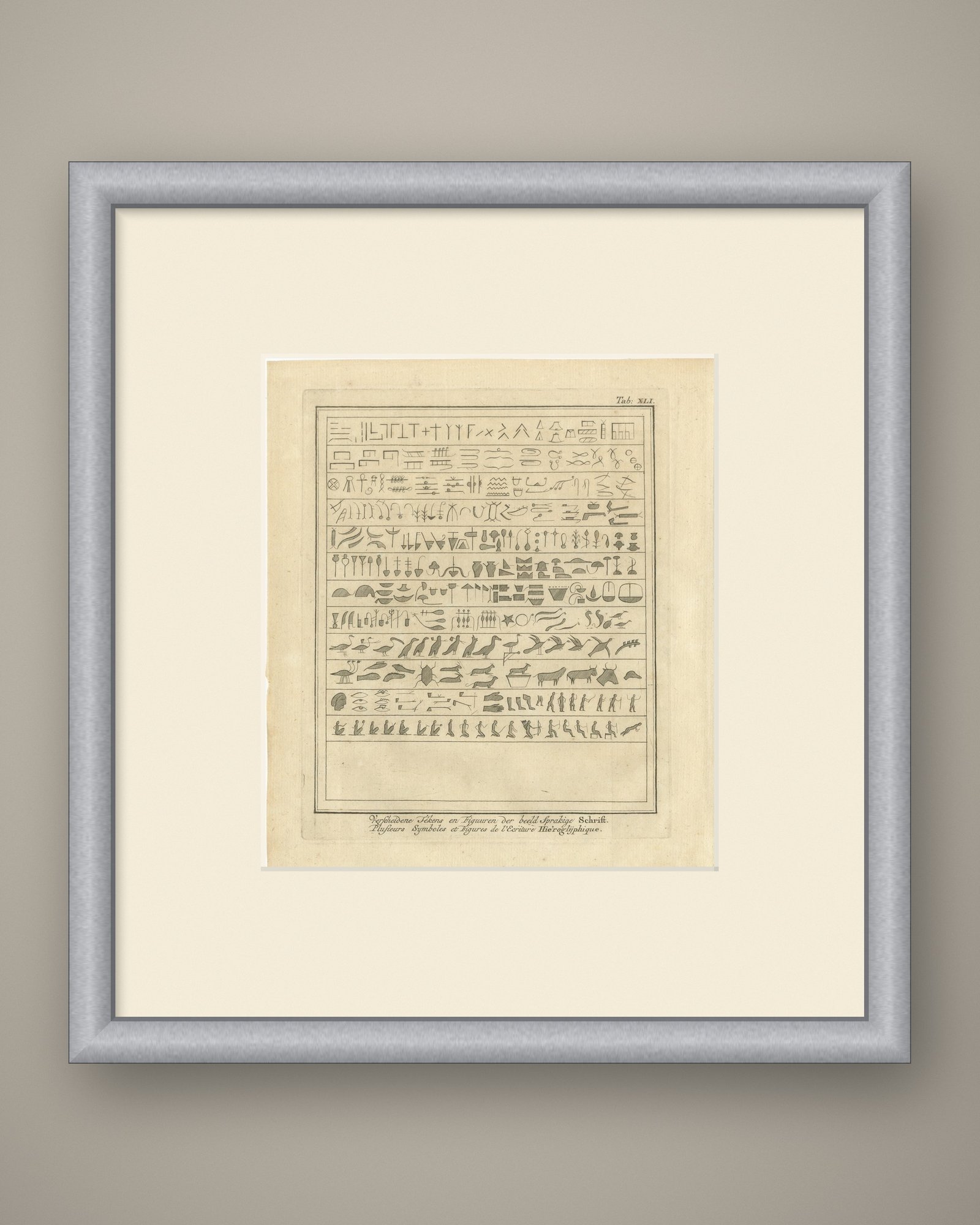
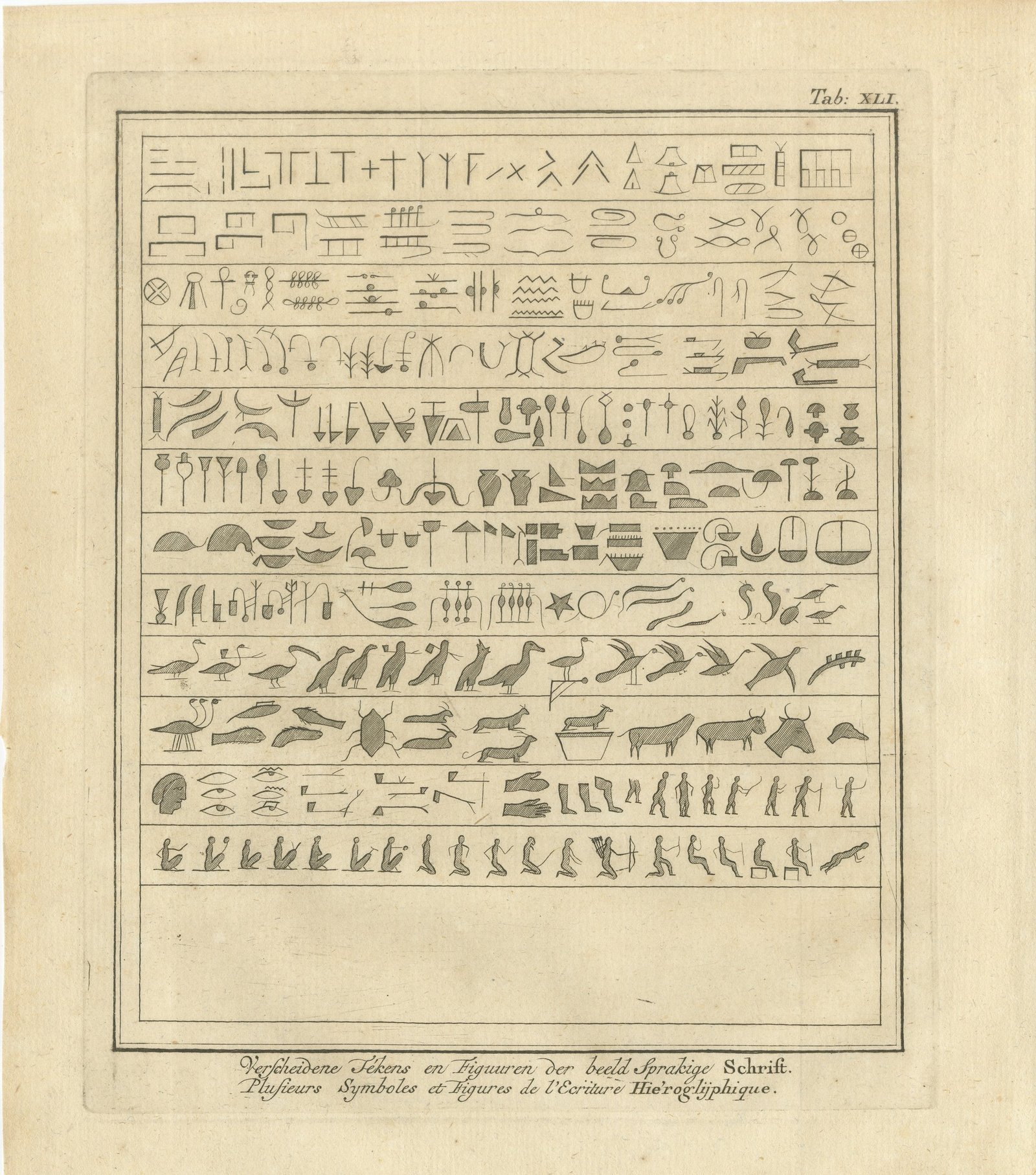
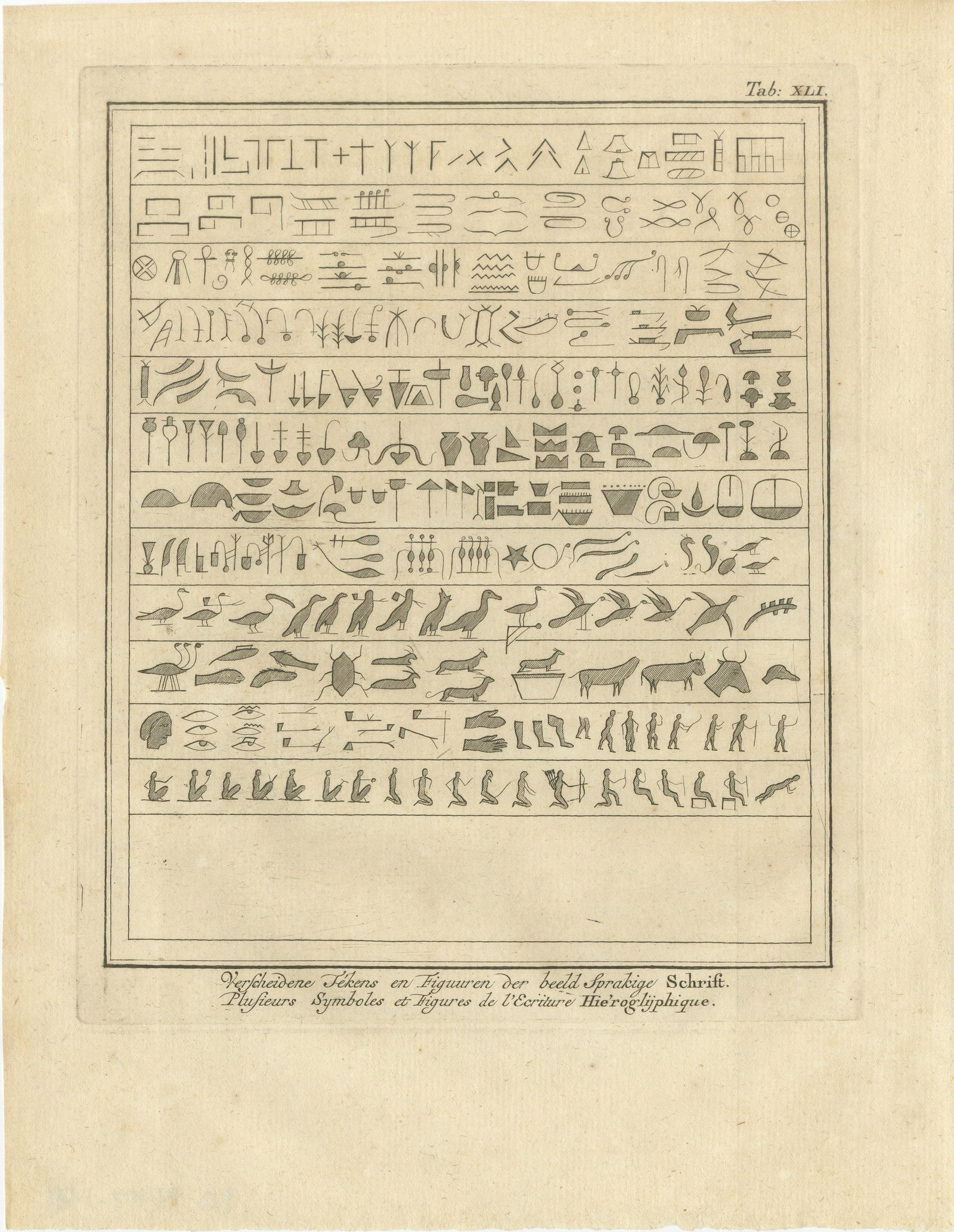
This is an original antique copper engraving from 1776, plate XLI of the first volume of Carsten Niebuhr's Voyage en Arabie. The caption engraved in the lower margin reads Verscheidene Tékens en Figuuren der beeld Sprakige Schrift. in Dutch and Plusieurs Symboles et Figures de l'Ecriture Hiéroglijphique. in French, meaning various signs and figures of hieroglyphic writing.
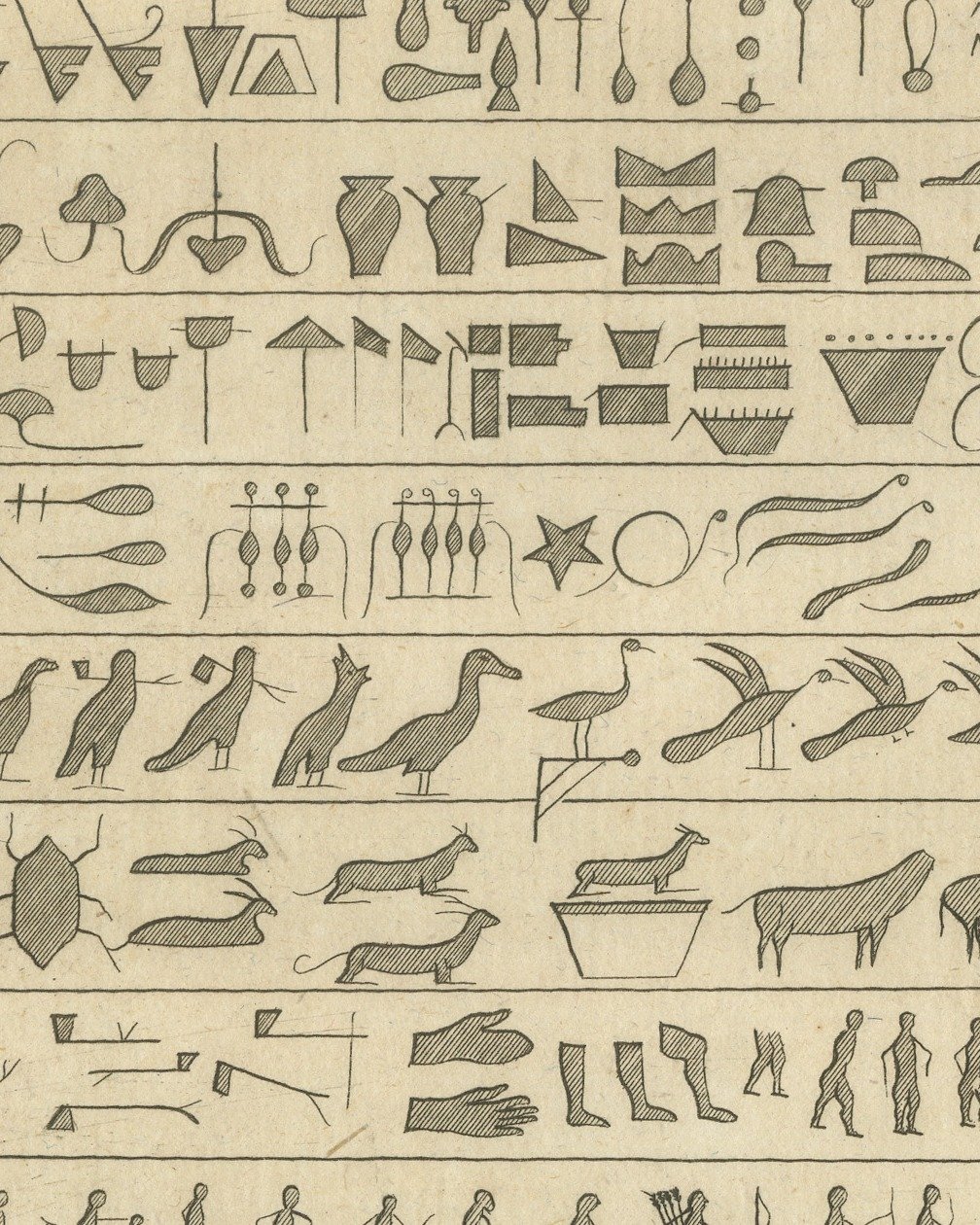
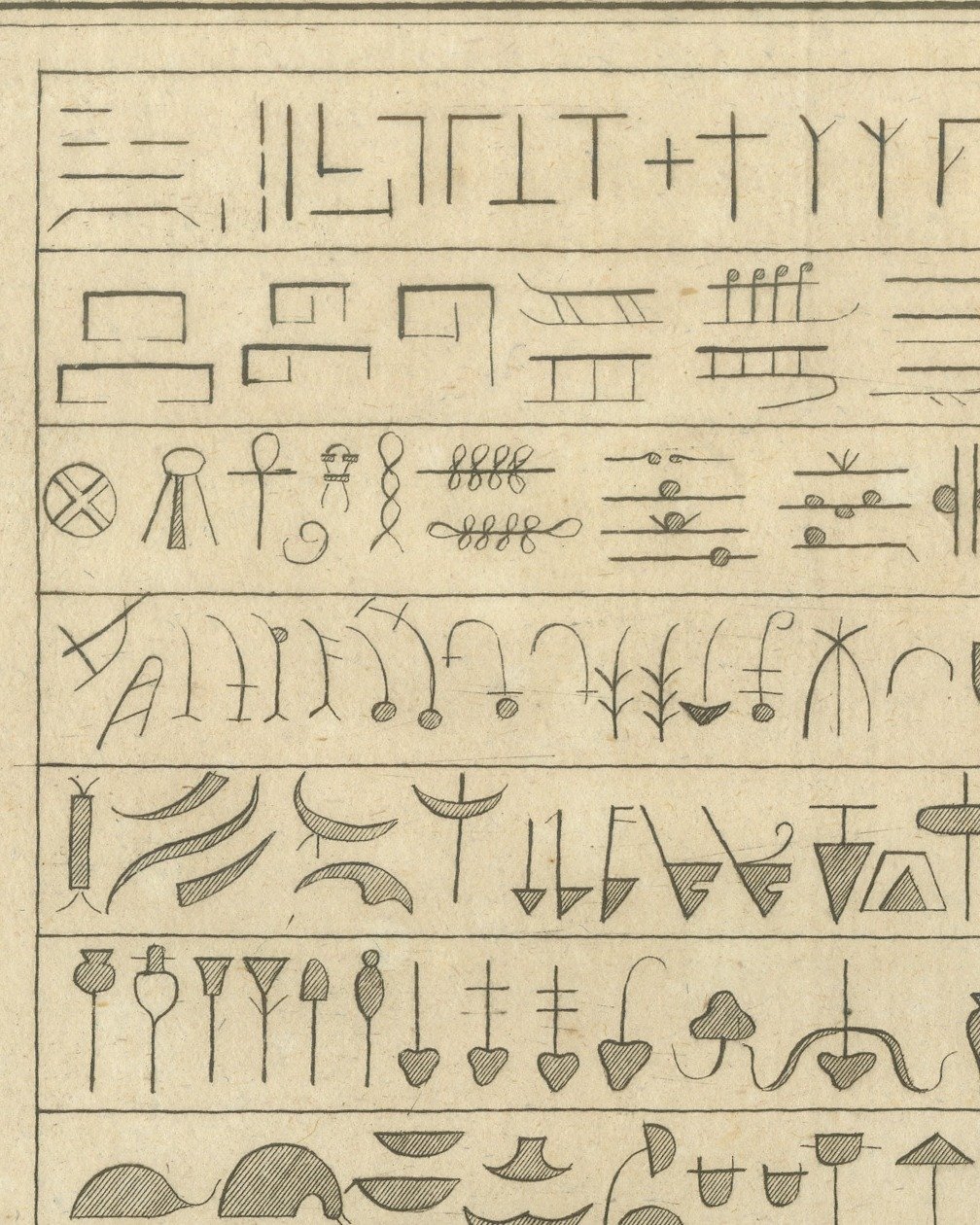
The plate is a table of individual signs, set in twelve ruled rows inside a double border, with a thirteenth row left empty at the foot. The upper rows hold linear and geometric signs: strokes, crosses, angles, rectangles, loops and coils, a circle with a cross, and zigzag water lines. The middle rows move to plants, stalks, vessels, bowls and domed shapes, then to snakes and a star. The lower rows hold living forms. One row is given over to birds, standing, perching and in flight. The next holds animals: a beetle, reclining and standing quadrupeds, an animal on a pedestal, cattle and the head of a horned beast. Below come a human head, eyes, arms and legs, then small standing figures, and the last filled row is a run of seated and kneeling figures, some holding staffs or bows, ending with a figure lying flat.
No artist's or engraver's name is lettered on the plate. The plate number Tab: XLI. is engraved at the upper right.
The plate belongs to the first volume of Niebuhr's Voyage en Arabie & en d'autres Pays circonvoisins, marked TOME PREMIER and Traduit de l'Allemand on its title page, which carries the imprint of S. J. Baalde at Amsterdam and J. van Schoonhoven and Comp. at Utrecht and the date MDCCLXXVI. Carsten Niebuhr (1733 to 1815) was a German born surveyor in Danish service and the only member of the Danish expedition to Arabia (1761 to 1767), sent by King Frederick V of Denmark, to return alive. The account was first published in German at Copenhagen; this is the French translation printed in Amsterdam and Utrecht.
Light uneven toning, browner toward the edges. Handling soiling along the left edge. A few small foxing spots in the margin. Slight wear at the top left corner and a small nick in the left edge.
This is an original antique print, not a modern reproduction. This item is sold unframed.