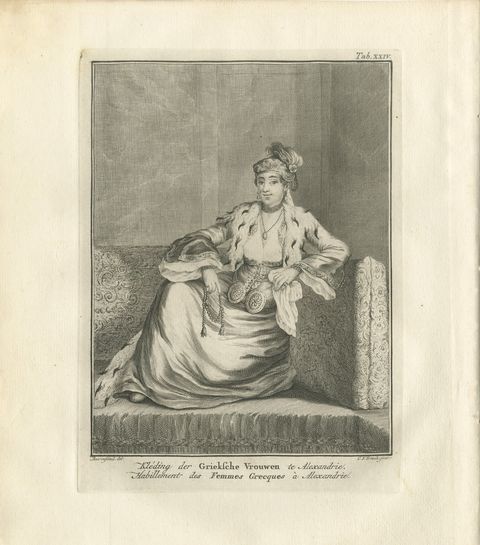
 The sheet, as you receive it
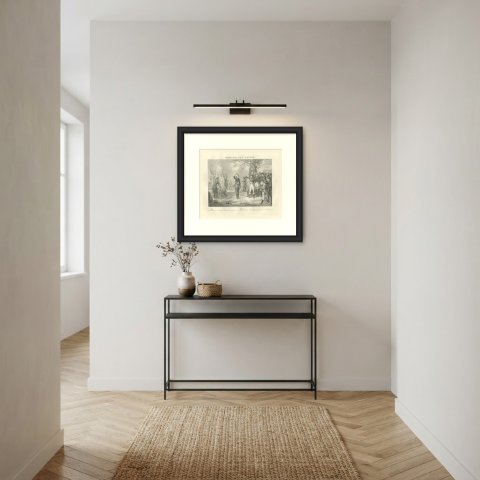
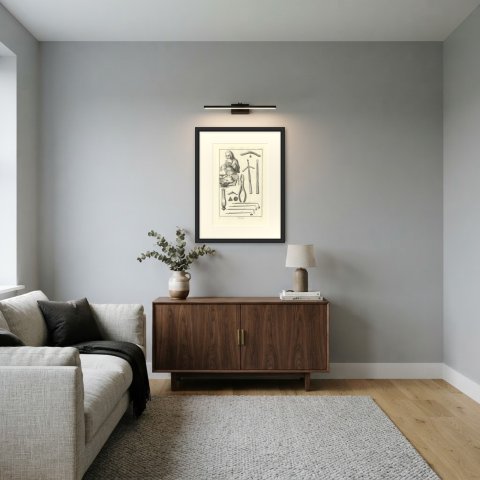
 In the room 1

Interior designers: BarTrade members buy at their trade price. How it works
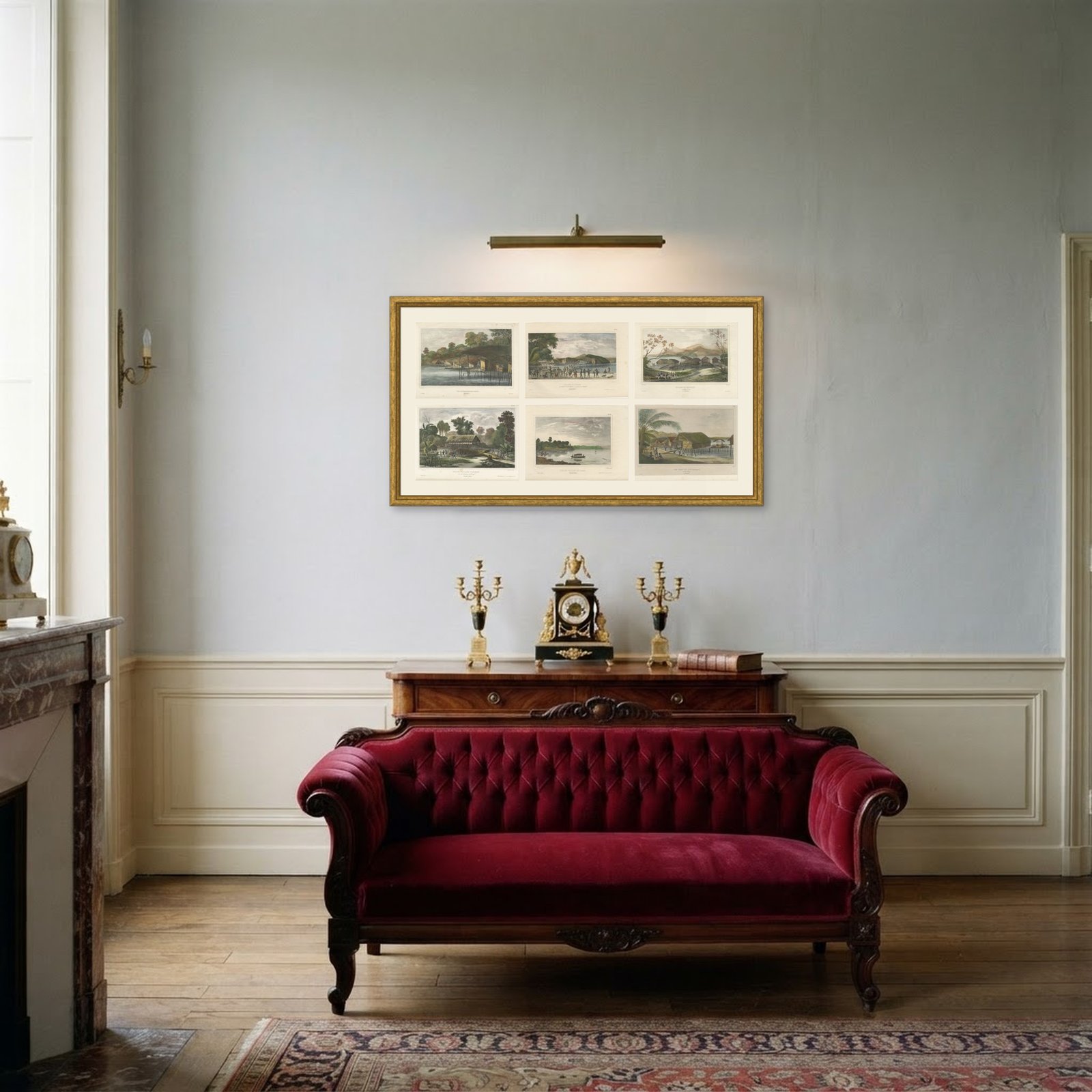
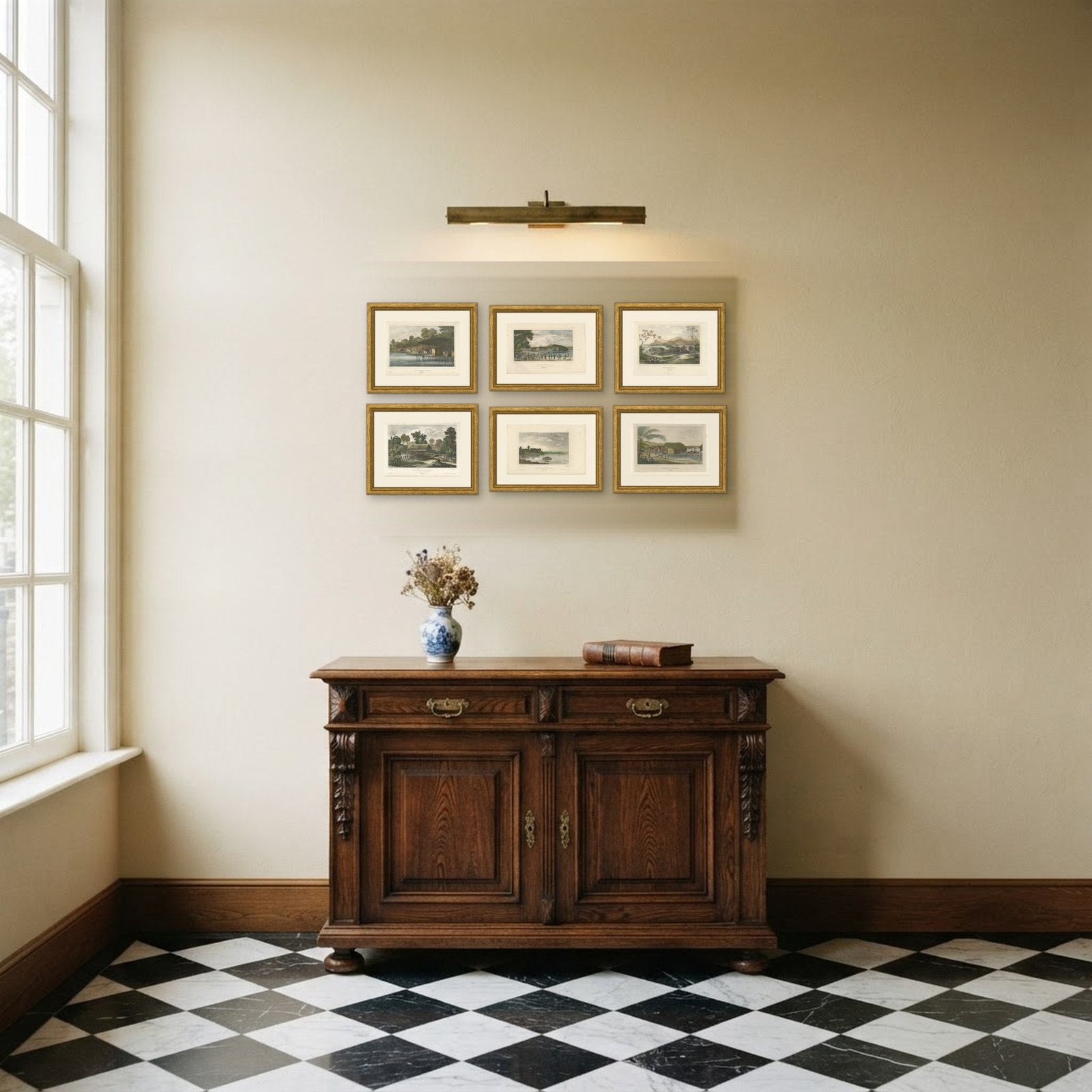
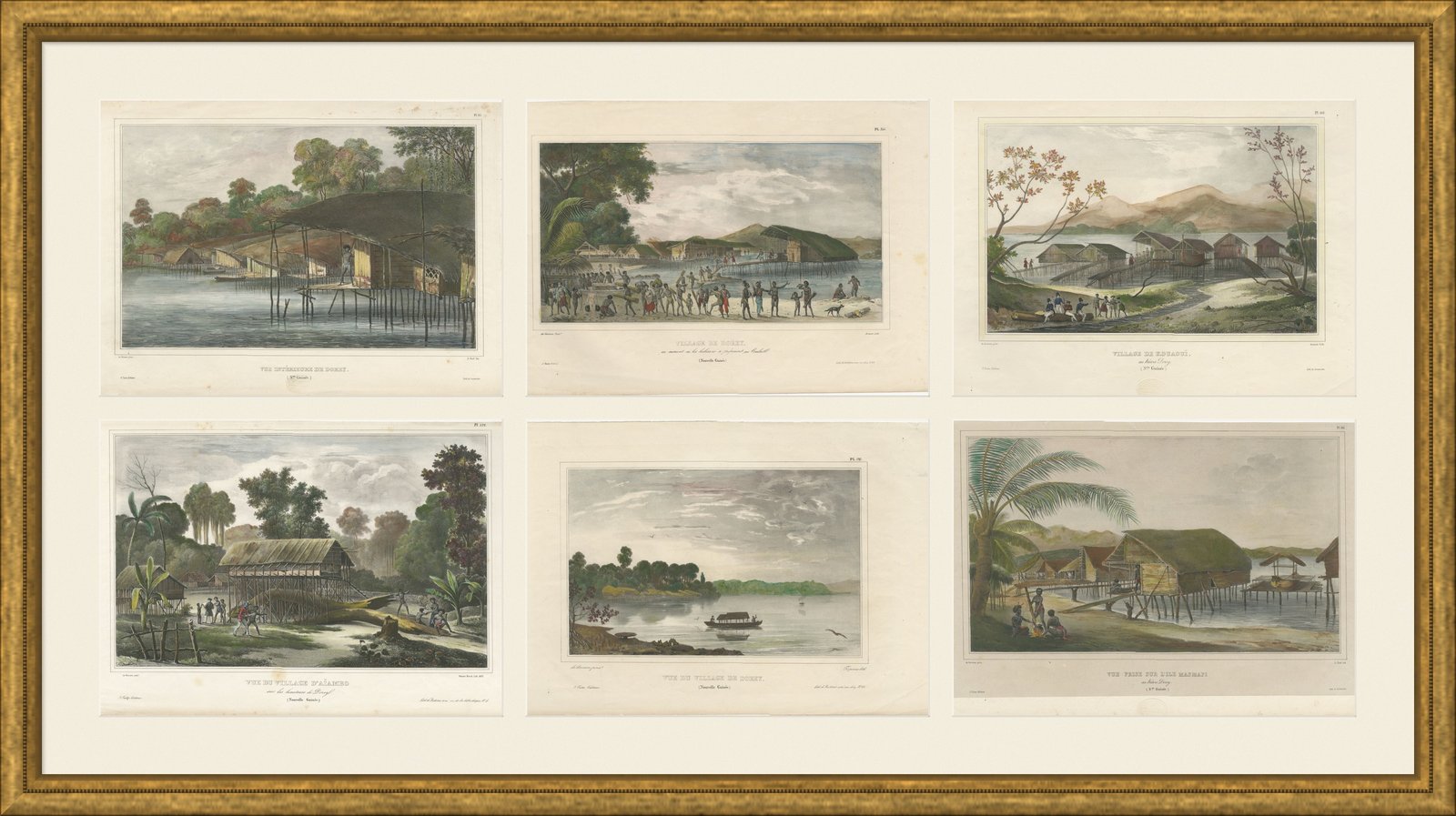
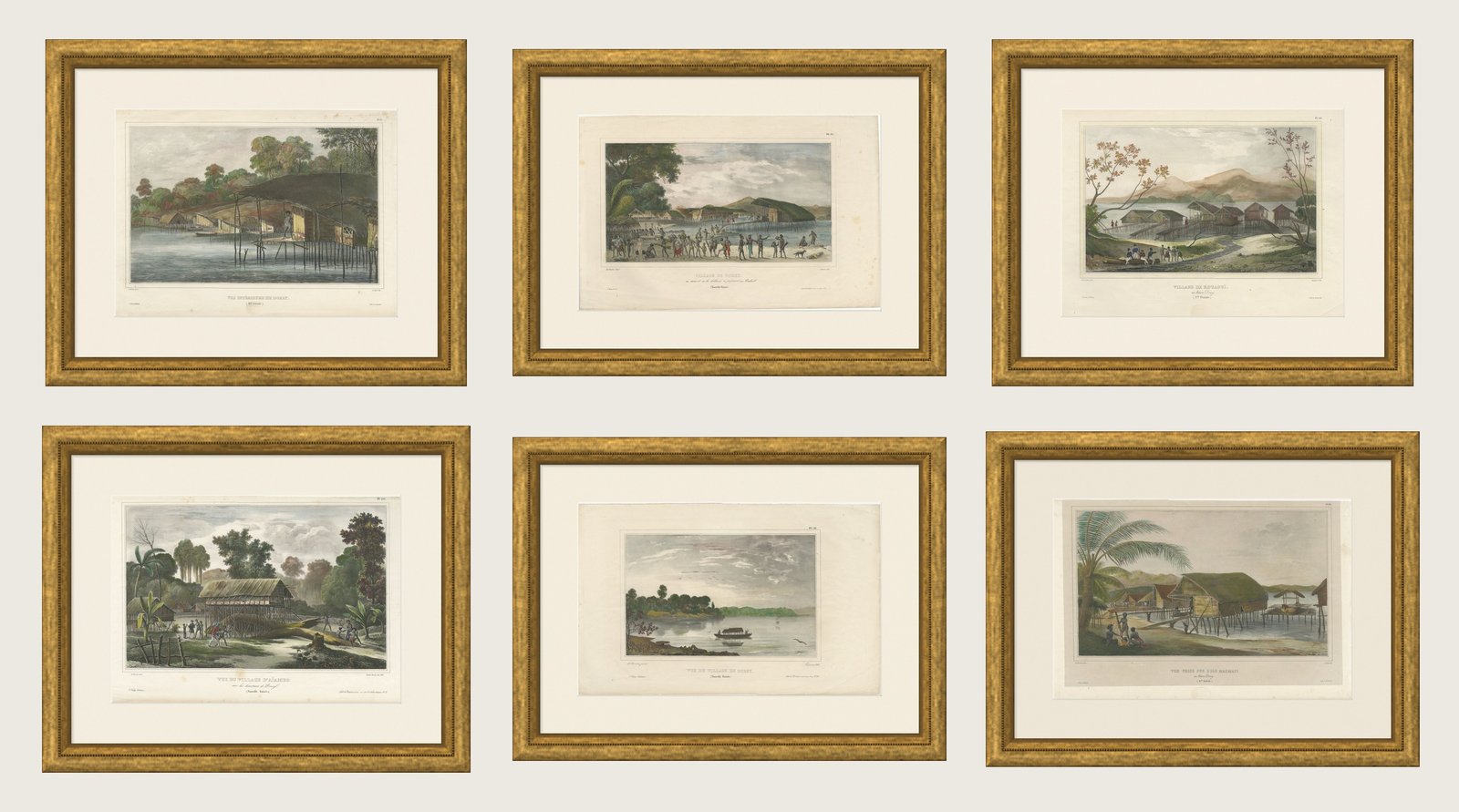
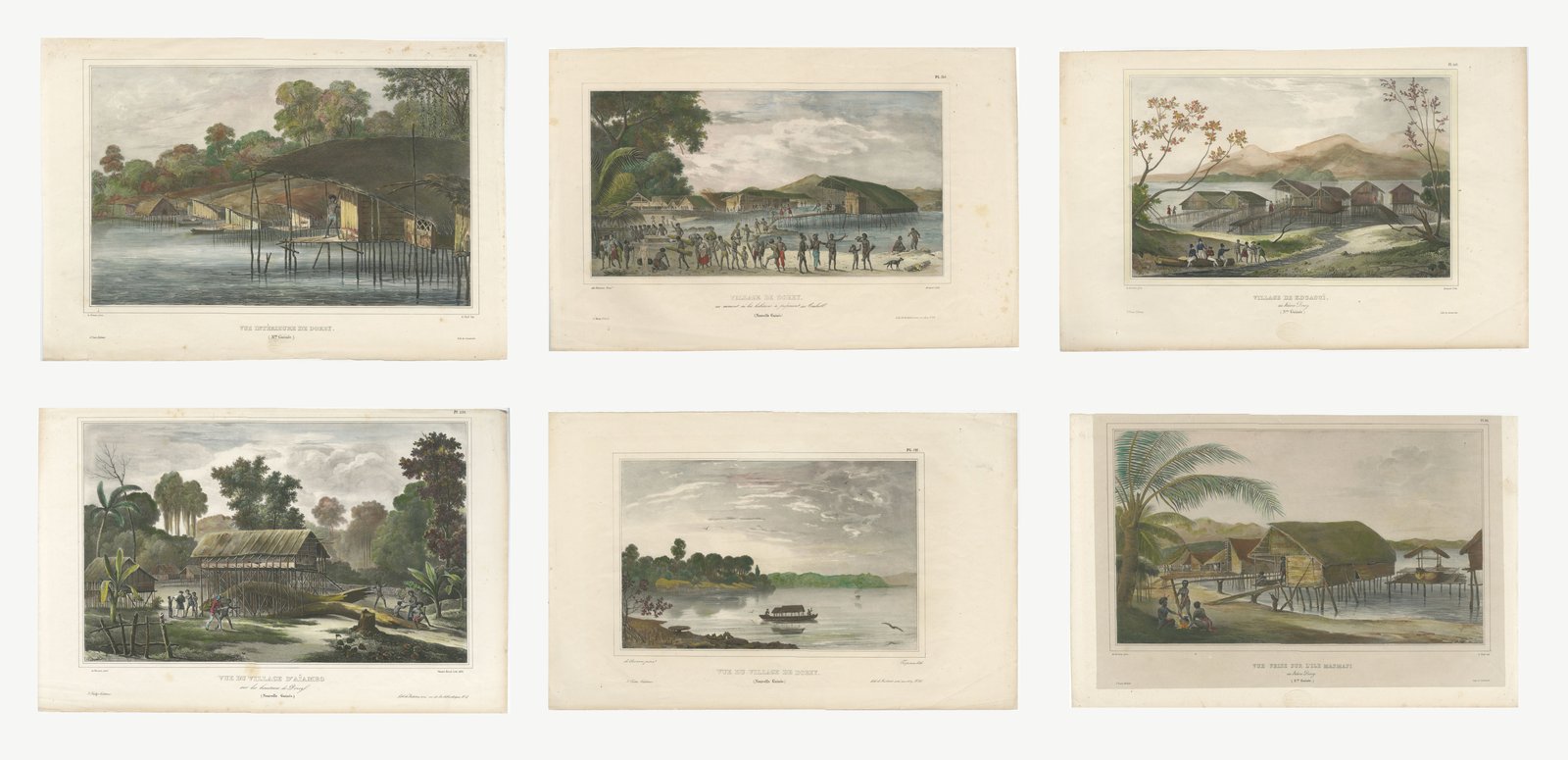
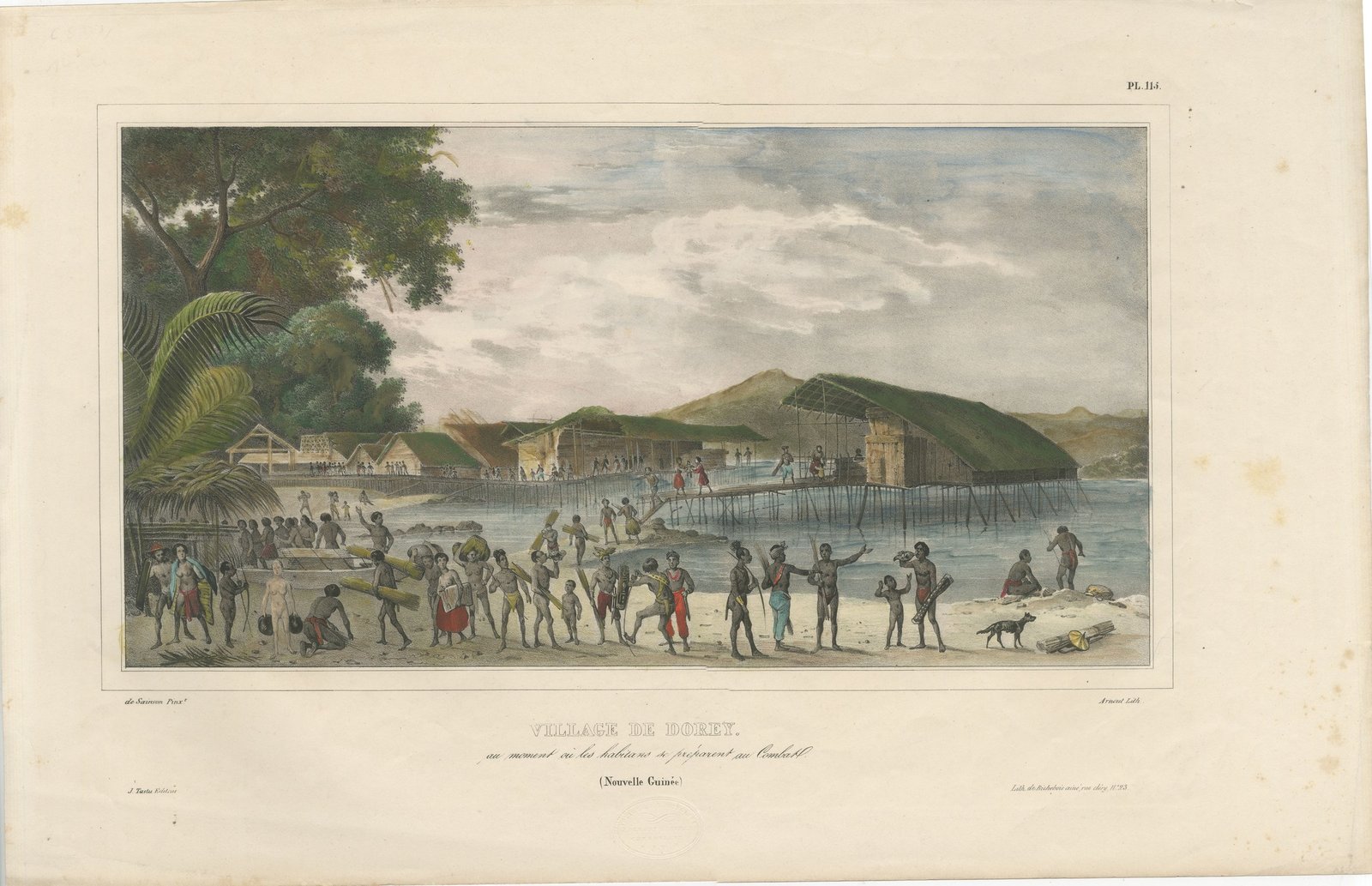
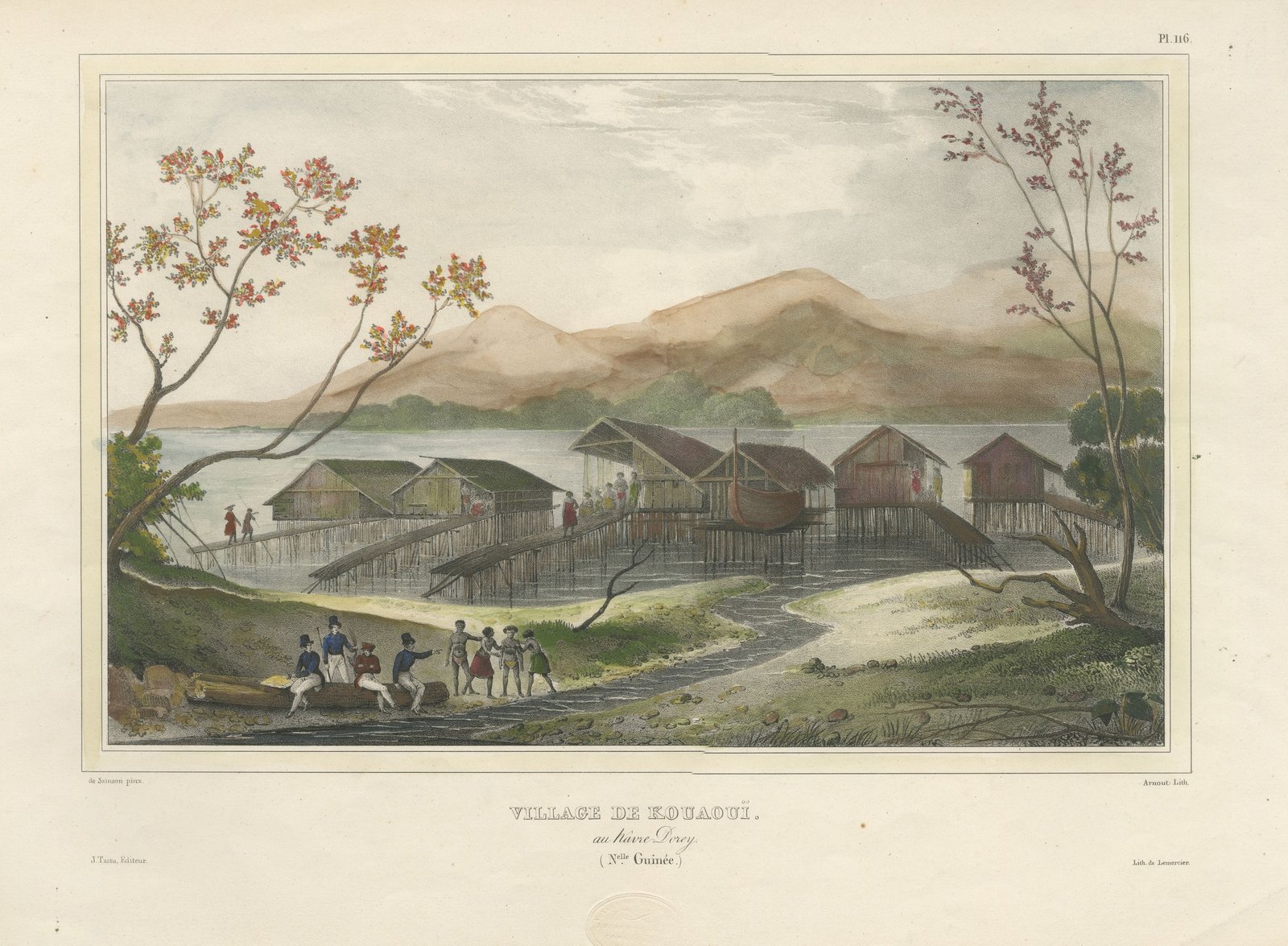
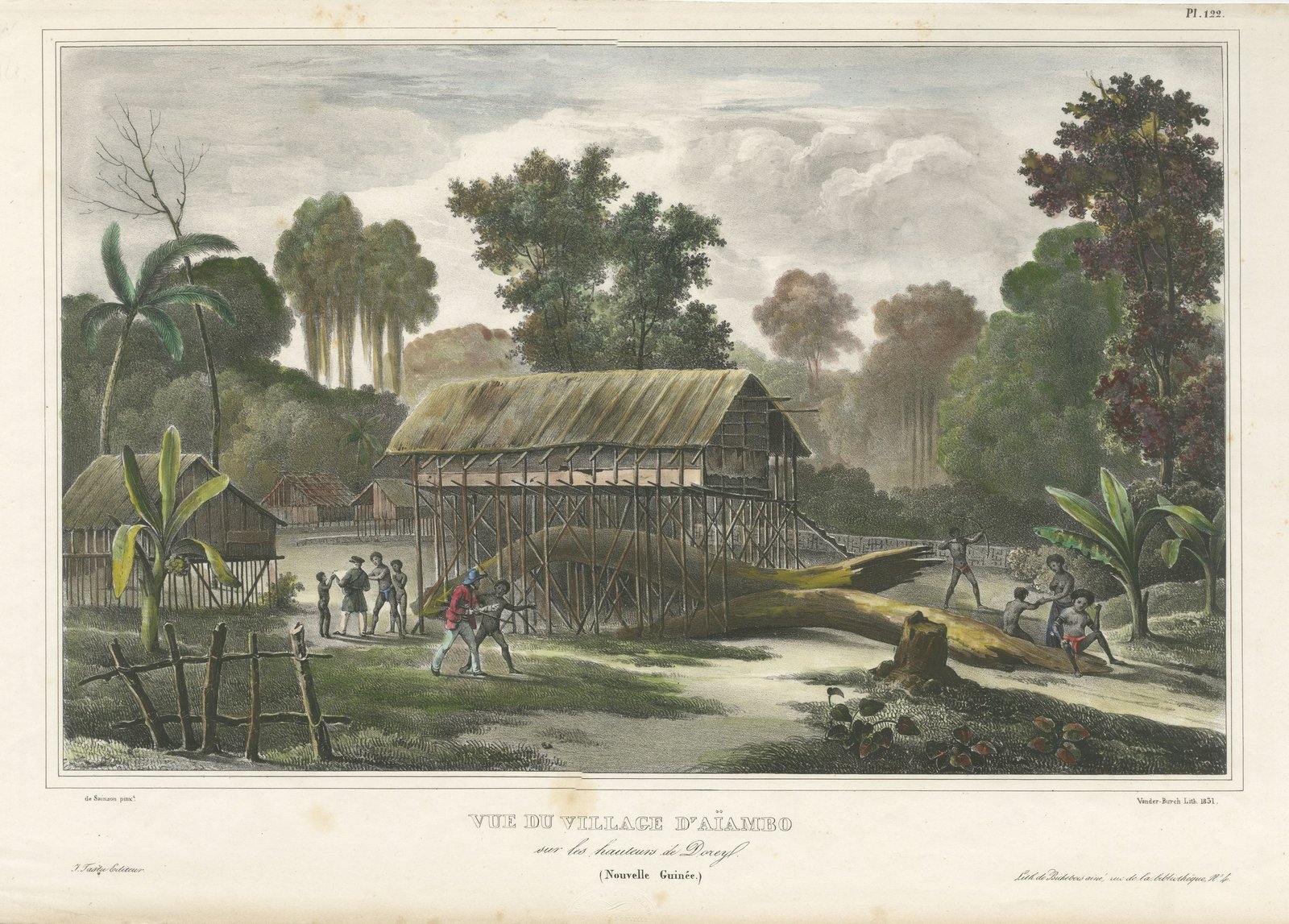
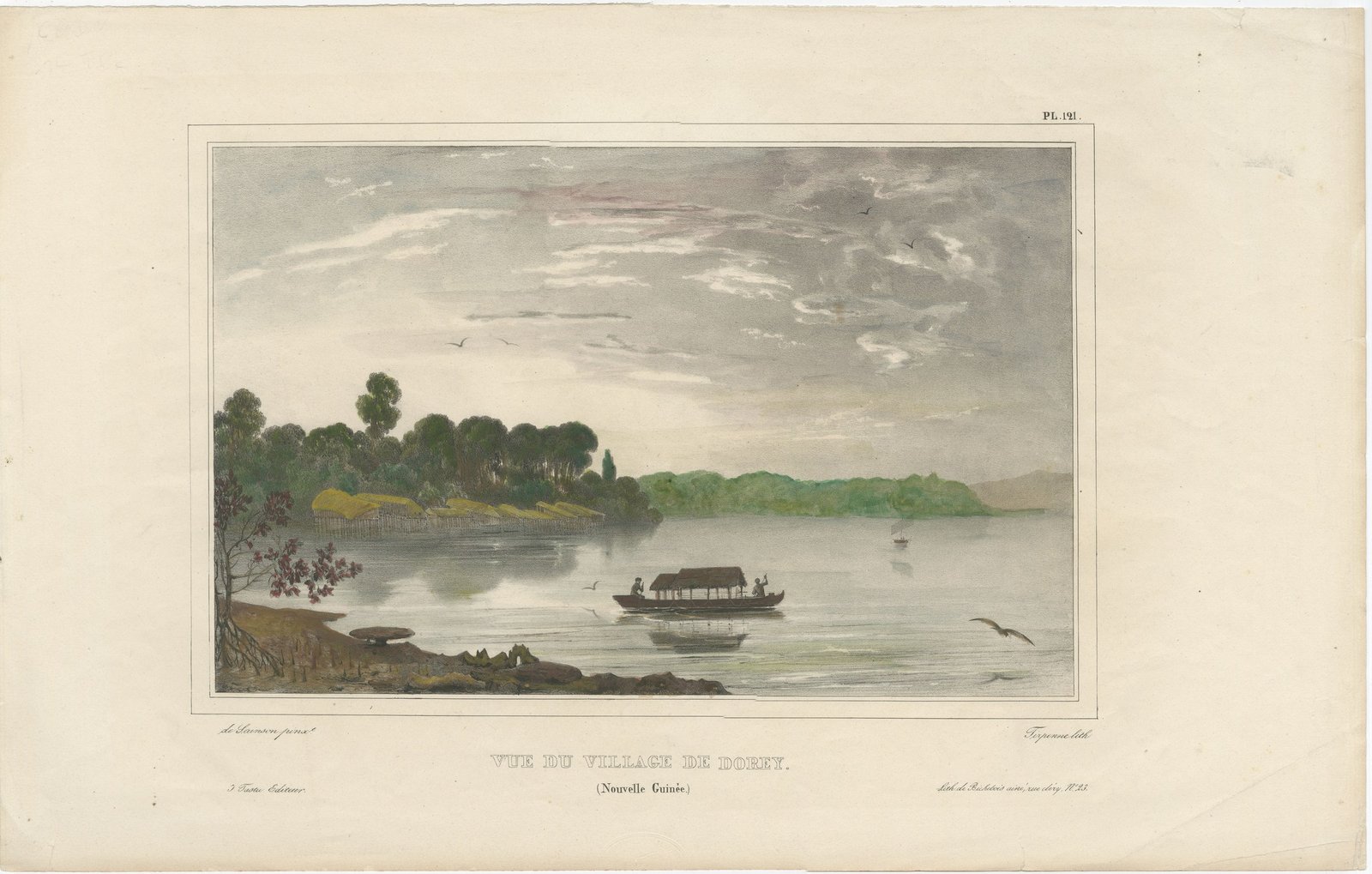
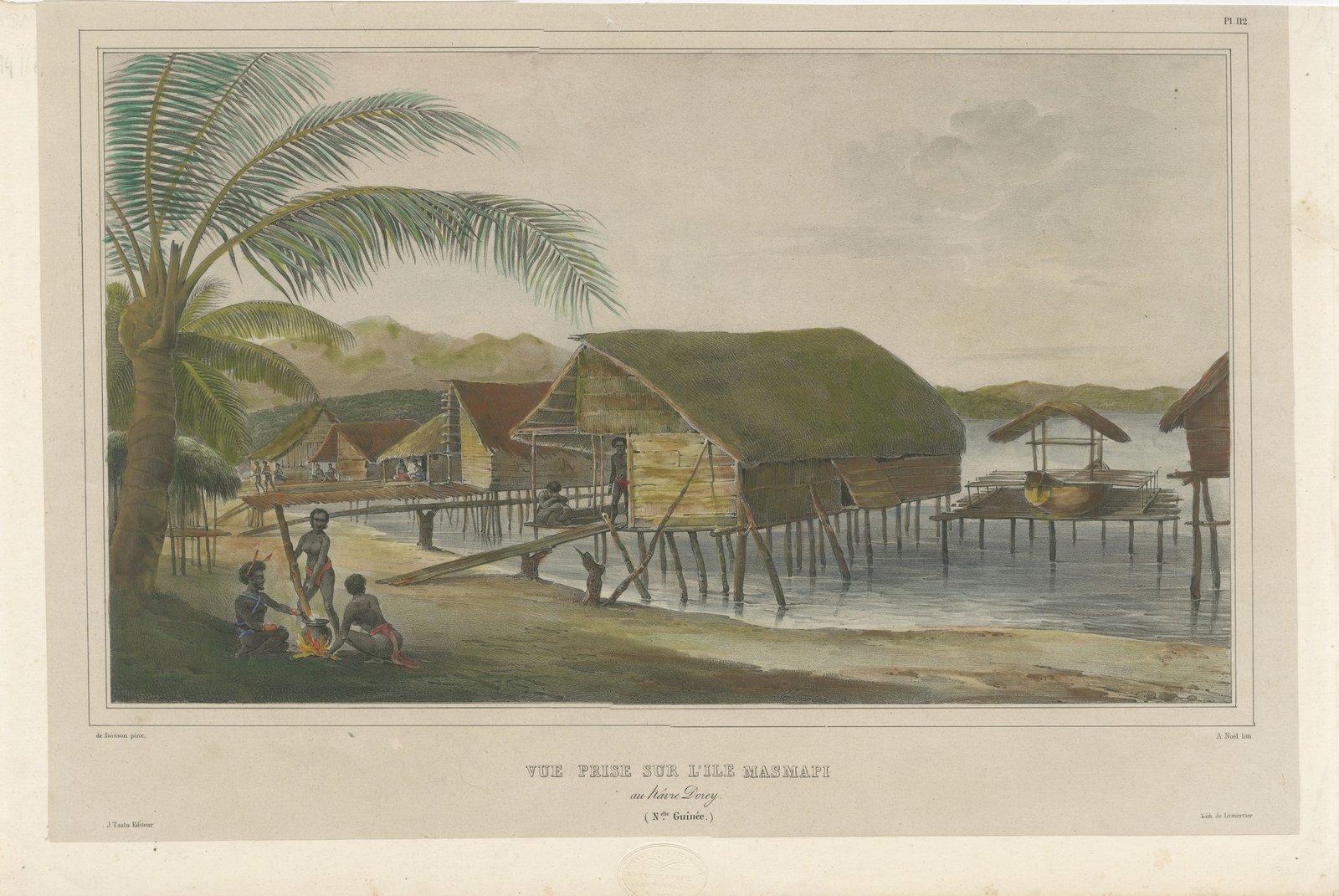
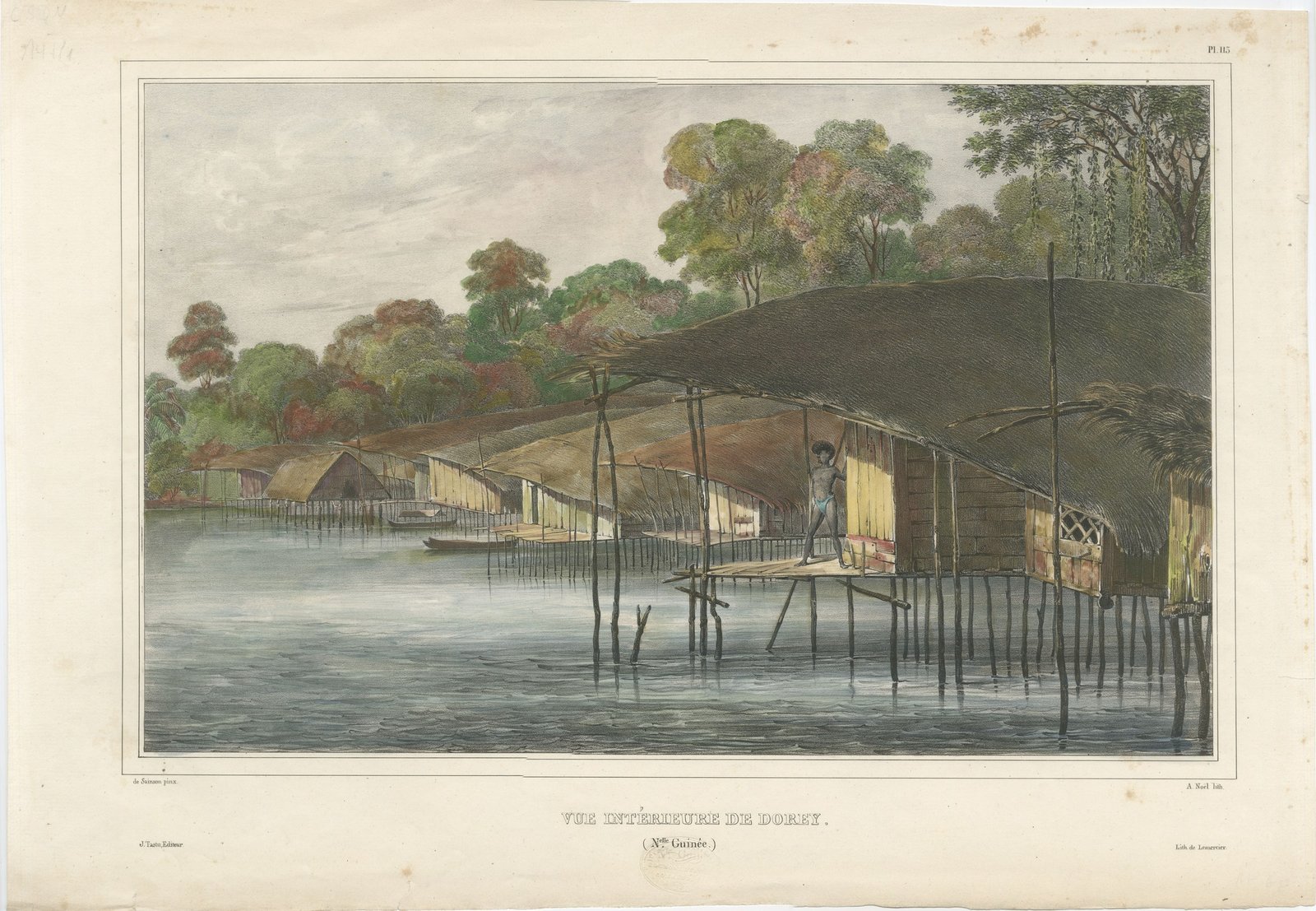
A set of six original hand-colored antique lithographs of Dorey harbor in New Guinea, now Manokwari in West Papua, sold together as one group. All six were drawn by Louis Auguste de Sainson, official artist of the corvette Astrolabe, and between them they cover the harbor completely: the interior of the pile village, the villagers gathering under arms, the neighboring settlement of Kouaoui, the hill village of Aiambo above the bay, the wide prospect of Dorey from the water, and the palm-shaded houses on the island of Masmapi. Four different lithographers worked the stones and two Parisian presses printed them, yet the sheets agree in size, in tone and in the hand coloring. Sold as a run of six they do what no single plate can: they describe one harbor from every side. They are six original sheets sold together as one lot, and the set is never split.
The interior of the village, seen from the water: a long thatched house on slender piles, a man in its doorway, canoes moored under the walkways and the reflection of the stilts in the shallows. A. Noel drew it on stone for the Lemercier press and the coloring stays in olives and straws. It is the quietest and most domestic of the six, and the best record of how the houses were actually built. A crowd of armed villagers on the shore below the stilt houses, spears upright, a dog crossing the sand and canoes pulled clear of the tide. Arnout lithographed it for the Bichebois press, and the color holds the warm figures against a cool gray-green bay. This is the one sheet of the six that records an event rather than a place, and it supplies the human drama that the other five deliberately leave out. Kouaoui, a second community on the same harbor, with its houses lifted on posts along a low sandy shore and figures moving on the timber causeway between them. Arnout lithographed it for Lemercier in sand tones, straw yellow and a thin blue wash. Set beside the main village it shows that de Sainson recorded each settlement around the bay separately, instead of inventing one composite view of the whole. Aiambo, the hill village on the heights above the harbor, among palms and bananas, with villagers resting beside a freshly felled tree and terraced clearings behind them. Vander-Burch drew and dated the stone in 1831 for the Bichebois press. It is the only one of the six taken inland, and it carries the group away from the waterline into cultivated country, which is what makes the run complete rather than repetitive. The wide prospect from out on the water, with the village flattened into a low band of thatch and piles, a canoe under paddle, a bird in flight and soft blue hills beyond. Terpenne lithographed it for Bichebois in the lightest coloring of the group. This is the sheet that establishes the shape of the bay and gives the other five their position within it. Masmapi island inside the same harbor, with a great palm leaning across the foreground, houses on piles beyond and villagers seated among their vessels and bundles. A. Noel lithographed it for Lemercier in the fullest coloring of the group, deep green, ochre and clear blue. It is the most decorative of the six and the sheet that would normally be sold first, which is exactly why the run is kept together here.
Every sheet is lettered "de Sainson pinx." and carries the imprint "J. Tastu, Editeur". The six are original hand-colored lithographs from the Atlas Historique to "Voyage de la corvette l'Astrolabe execute par ordre du Roi pendant les annees 1826, 1827, 1828, 1829", published by Joseph Tastu at Paris in 1833. Louis Auguste de Sainson sailed as official artist of the Astrolabe under Jules Dumont d'Urville from 1826 to 1829. A. Noel, Arnout, Vander-Burch and Terpenne drew the subjects on stone, and the sheets were printed in Paris by the Lemercier and Bichebois presses. Matched runs of six views of a single Papuan harbor do not come on the market. The Astrolabe atlas held about two hundred and forty plates and has been broken up for nearly two centuries, so the Dorey subjects are normally met one at a time, scattered between dealers and collections, and assembling these six again from separate sources would take years. Together they form the earliest systematic portrait of Dorey, now Manokwari, and one of the earliest of any Papuan community. Hung as a block of six, three above three, they make a wall of their own in a library, a hallway or a dining room, and they are equally effective split into two groups of three in adjoining rooms.
Light uneven toning, browner towards the edges. Marked handling soiling along the edges of all six sheets. Scattered foxing in the margins of all six sheets. Slight wear at the corners of five of the six sheets.
These are original antique prints, not modern reproductions. This item is sold unframed.