 The sheet, as you receive it
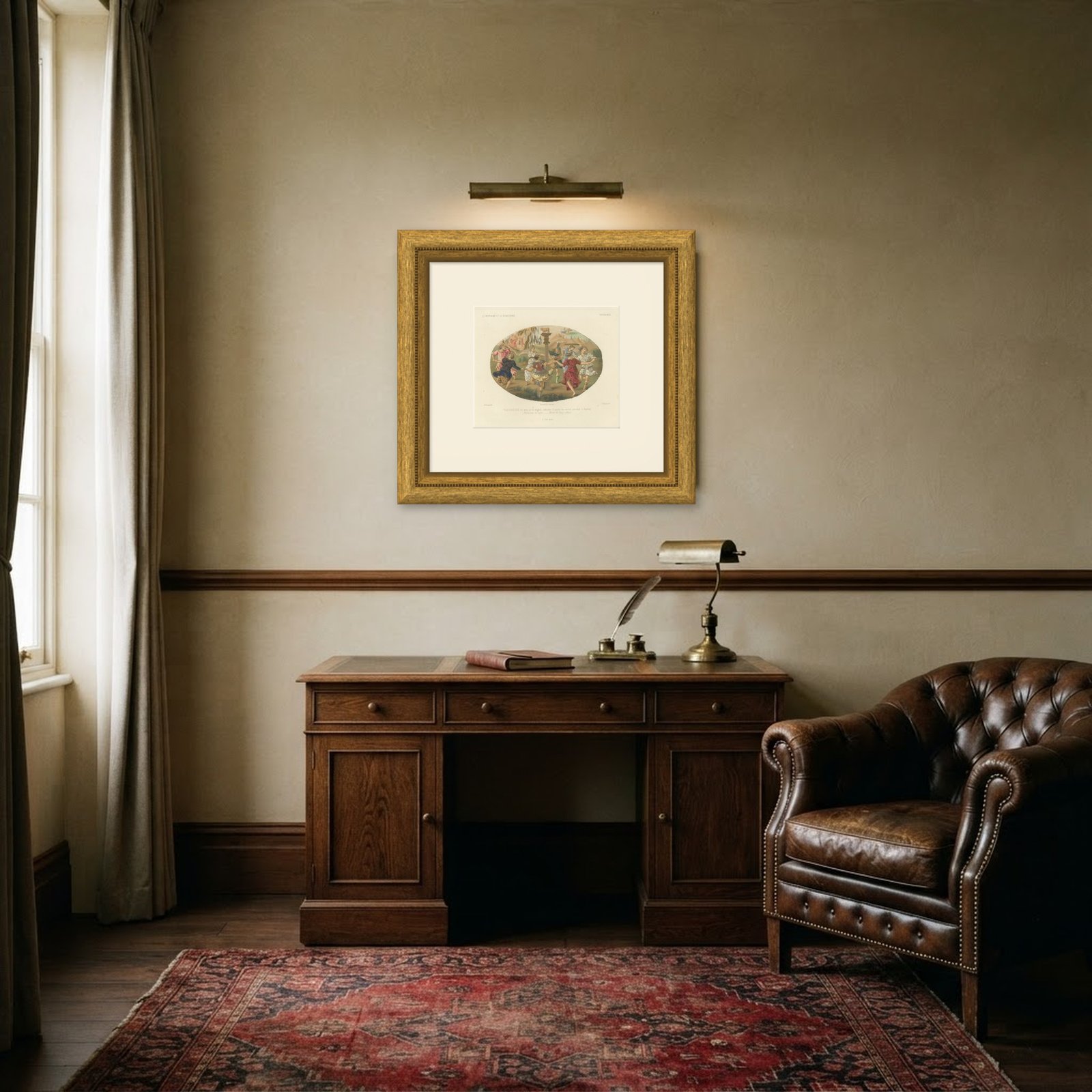 In the room


Interior designers: BarTrade members buy at their trade price. How it works
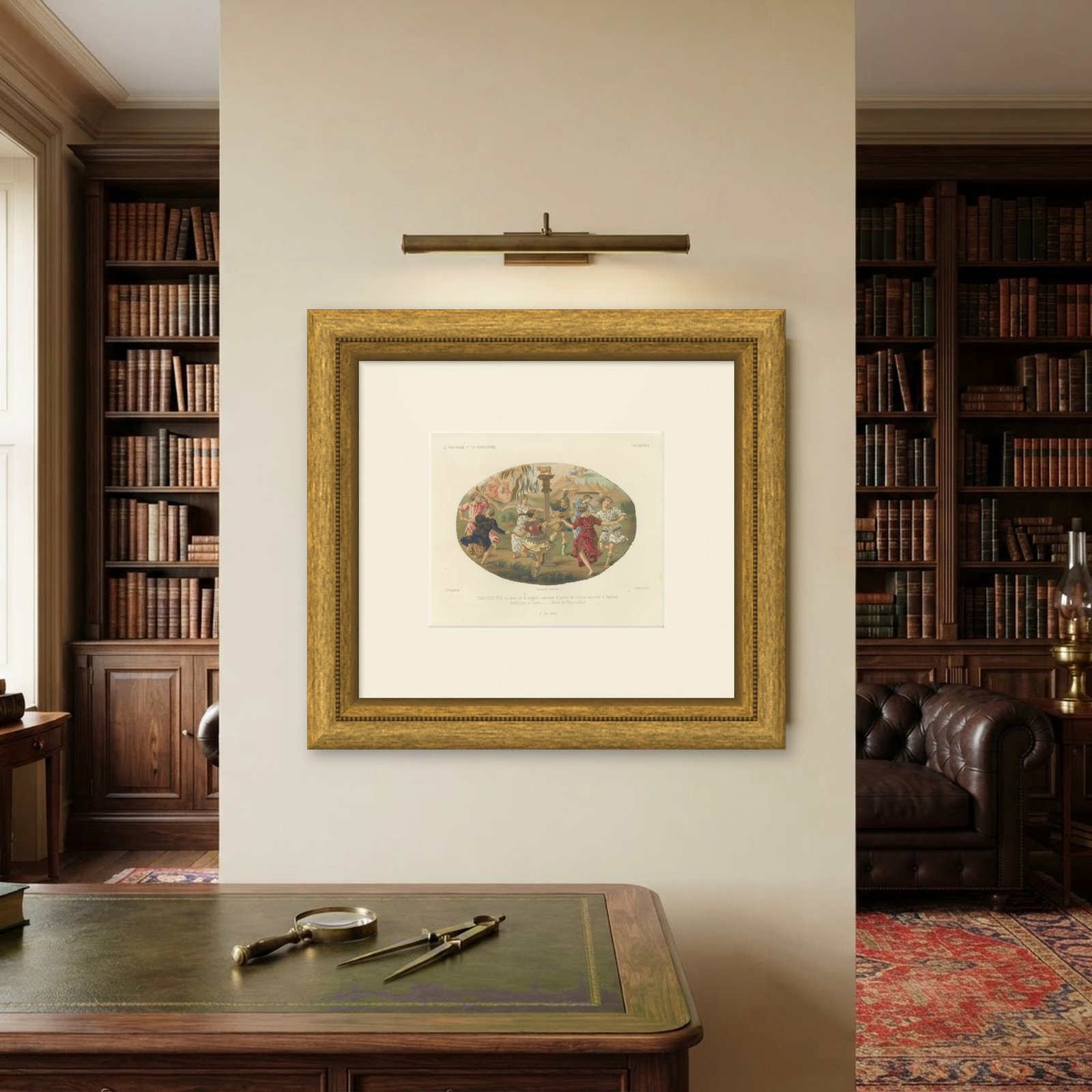
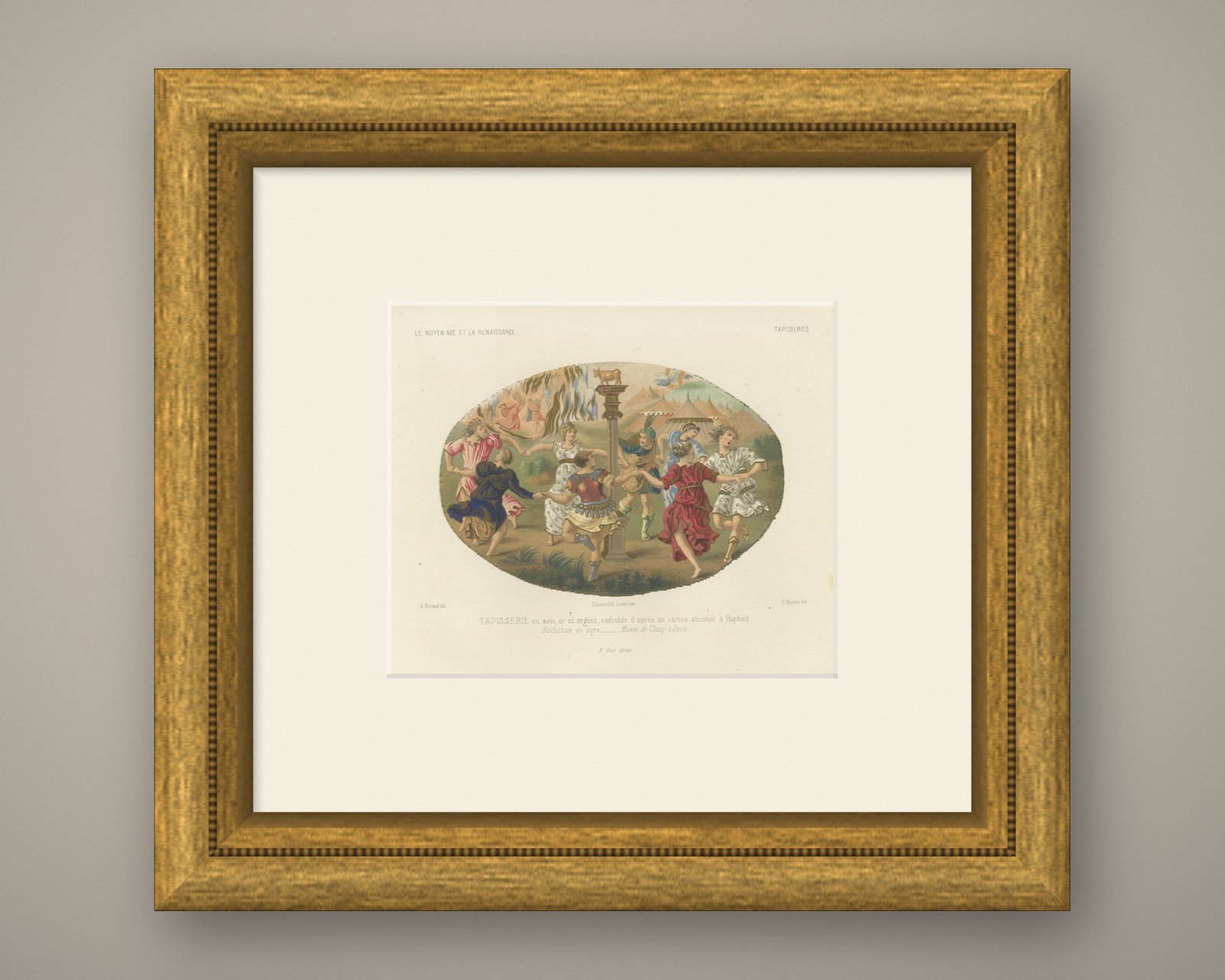
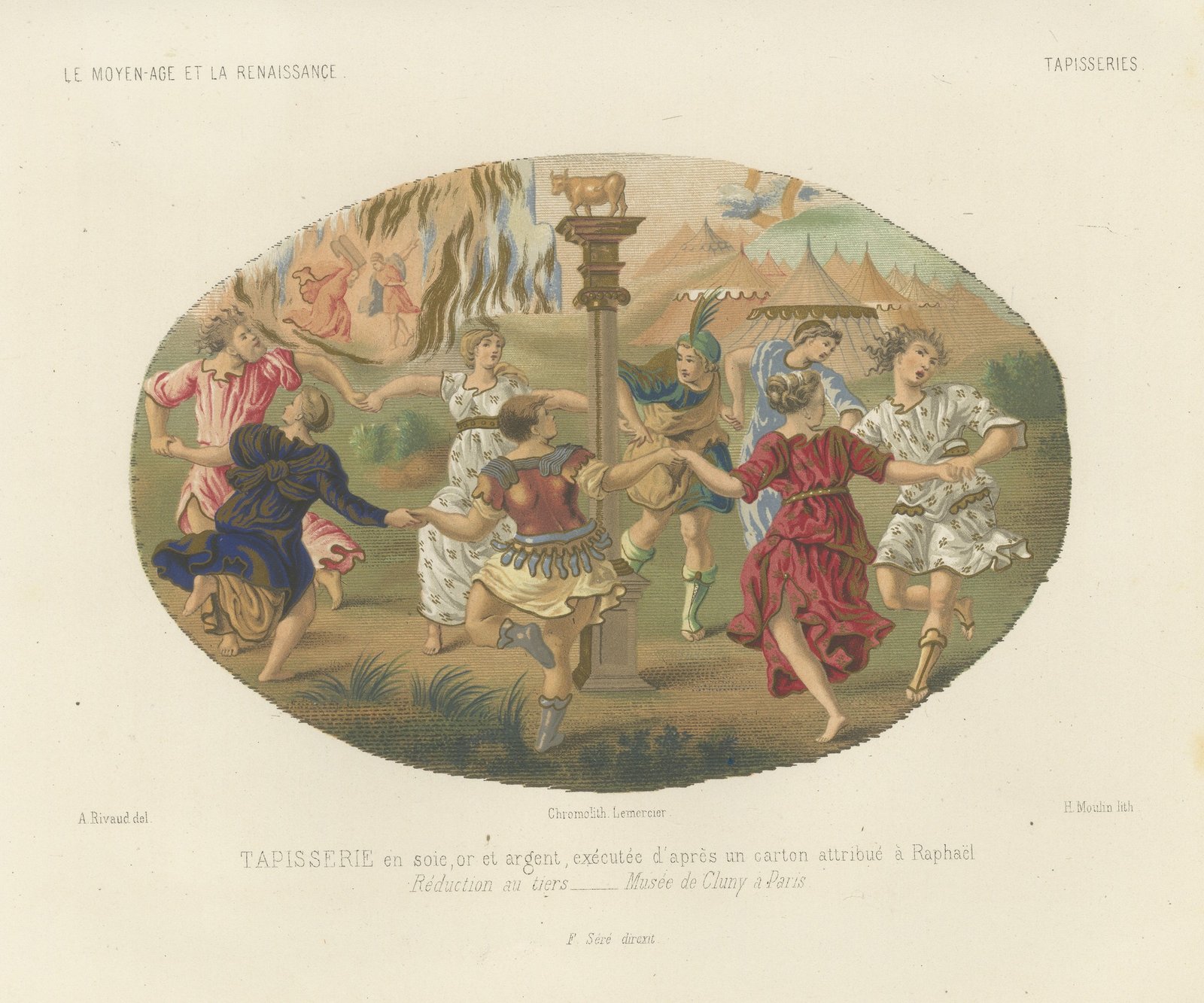
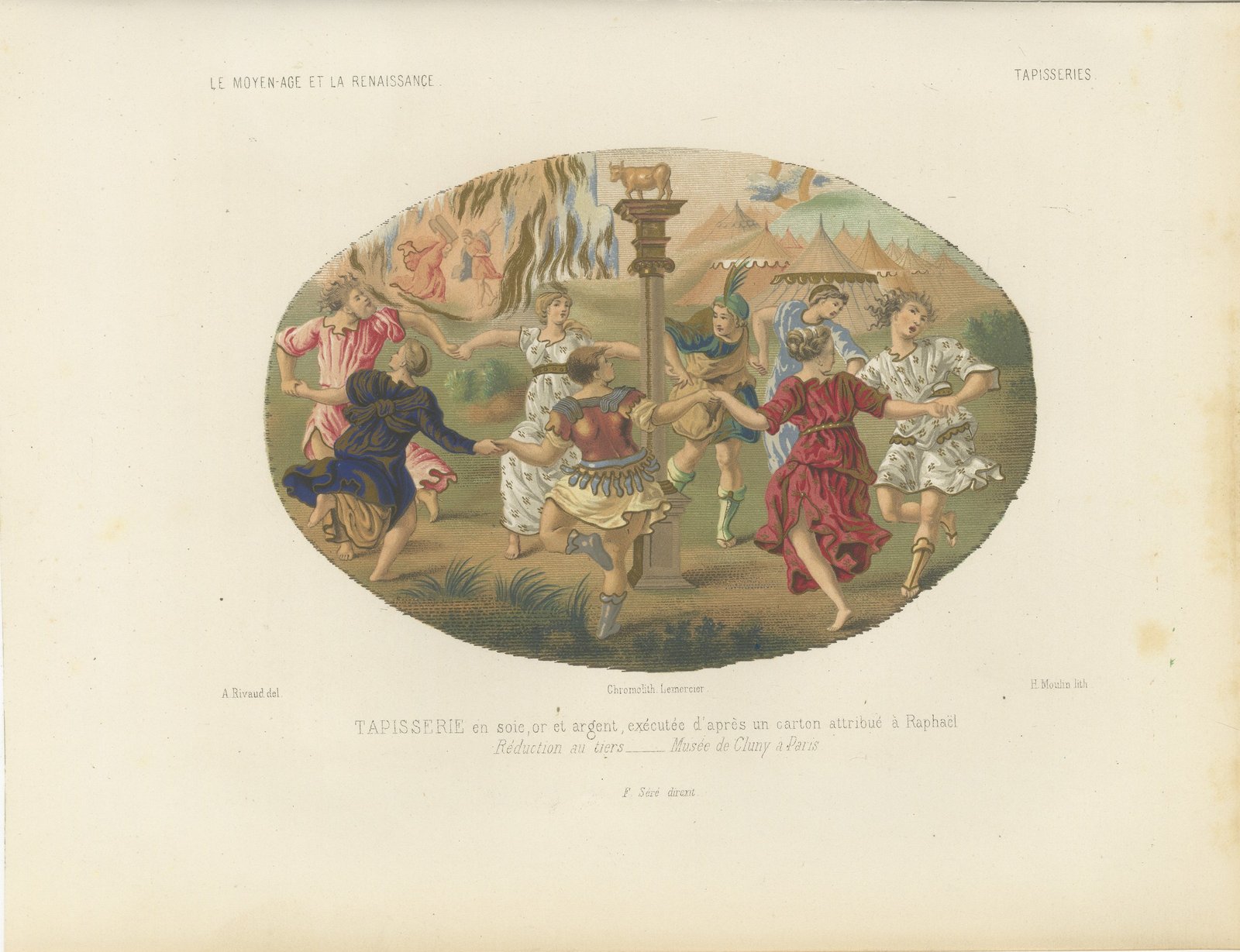
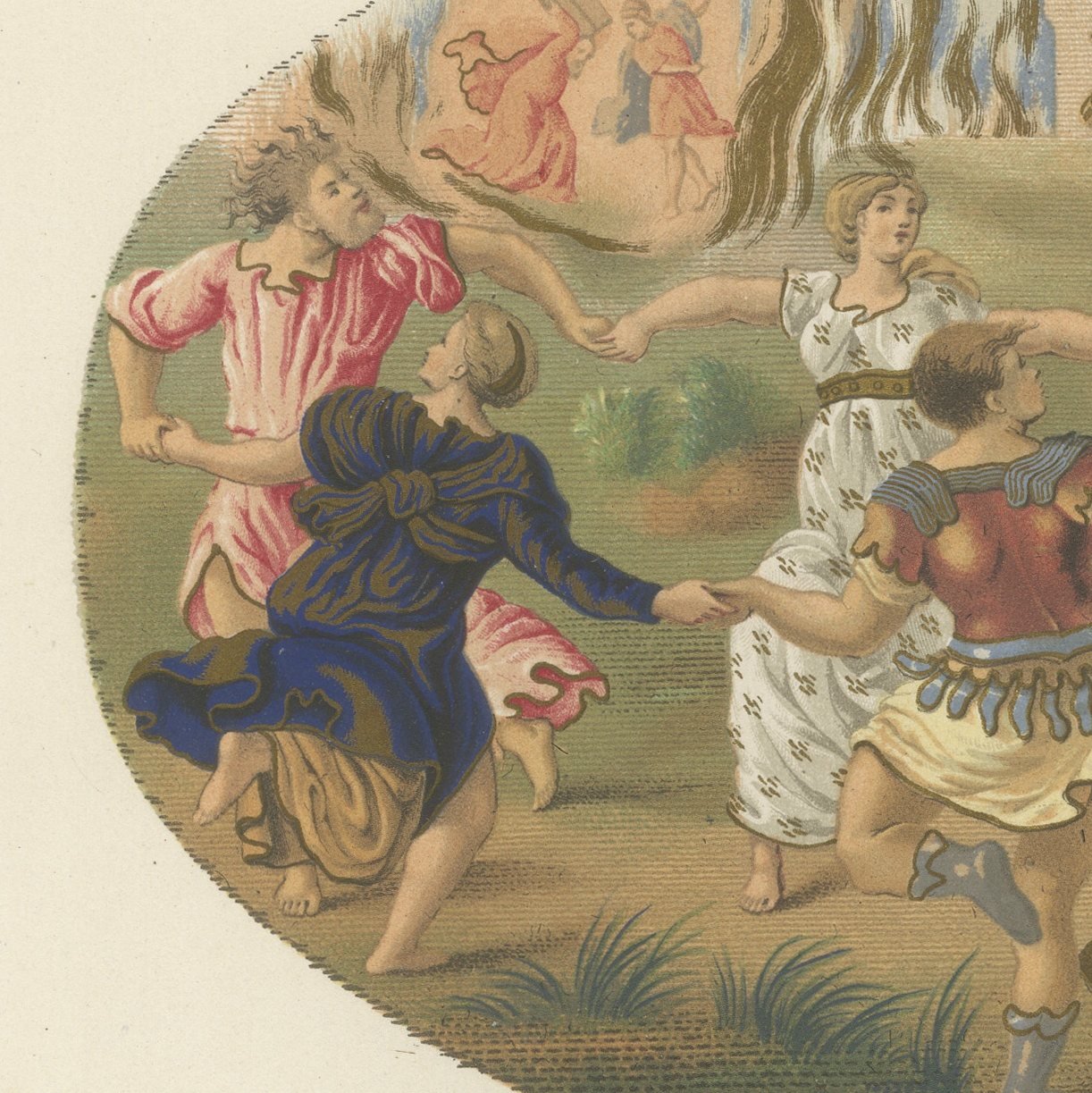
An oval medallion of dancing children in a wooded landscape, five or six of them joining hands in a ring around a tall column, woven in soft greens and reds with the whole scene fading into shadow at the edges of the oval. The sheet is lettered as a tapestry in silk, gold and silver executed after a cartoon attributed to Raphael, reduced to one third, in the Musee de Cluny in Paris.
Paul Lacroix, the bibliophile who wrote under the name Le Bibliophile Jacob, and the artist Ferdinand Sere produced Le Moyen Age et la Renaissance in Paris between 1848 and 1851. The present sheet is from Tome Second of 1849. The volume is remembered for the quality of its chromolithography, much of it printed by Lemercier of the rue de Seine, and for the care with which its draughtsmen copied originals that in several cases have since been damaged or lost.
A Raphael attribution, even a cautious one, carries weight in any saleroom, and the subject is as charming as the attribution is grand. The oval shape is unusual among these plates and frames beautifully; it is the obvious sheet for a child's room or a bedroom, where the dancing figures suit the scale. The reduction is stated on the sheet as one third, so a buyer can work out that the original medallion is about three times the size of the printed one. Tapestries woven with gold and silver thread were the most expensive furnishing of the Renaissance, worth many times a painting of the same subject, and the Cluny example is among the finest in France.
Even age toning. Marked handling soiling along the bottom, right and top edges. Scattered light foxing in the margin. All four corners complete.
This is an original antique print, not a modern reproduction. This item is sold unframed.