 The sheet, as you receive it
 In the room 1




Interior designers: BarTrade members buy at their trade price. How it works
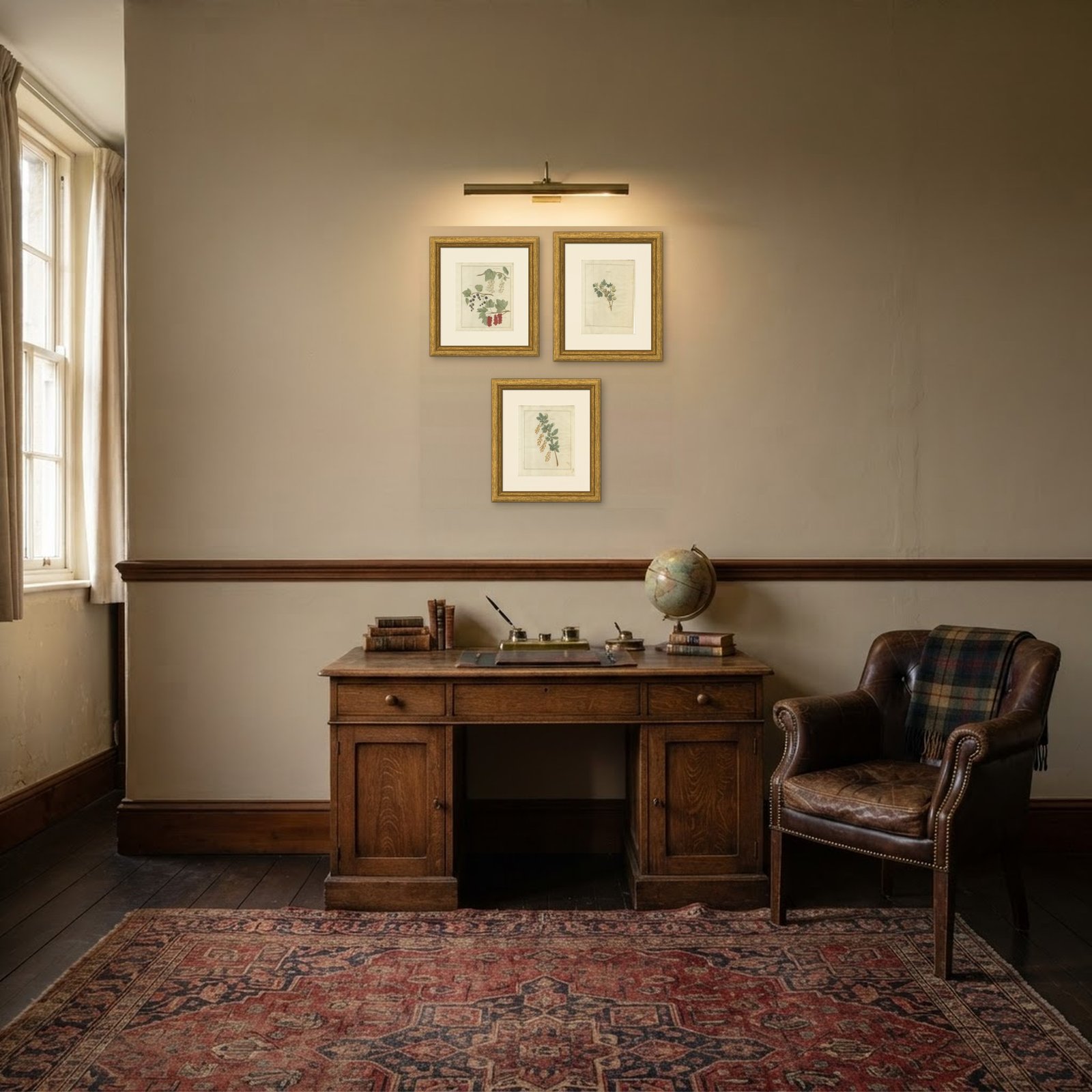
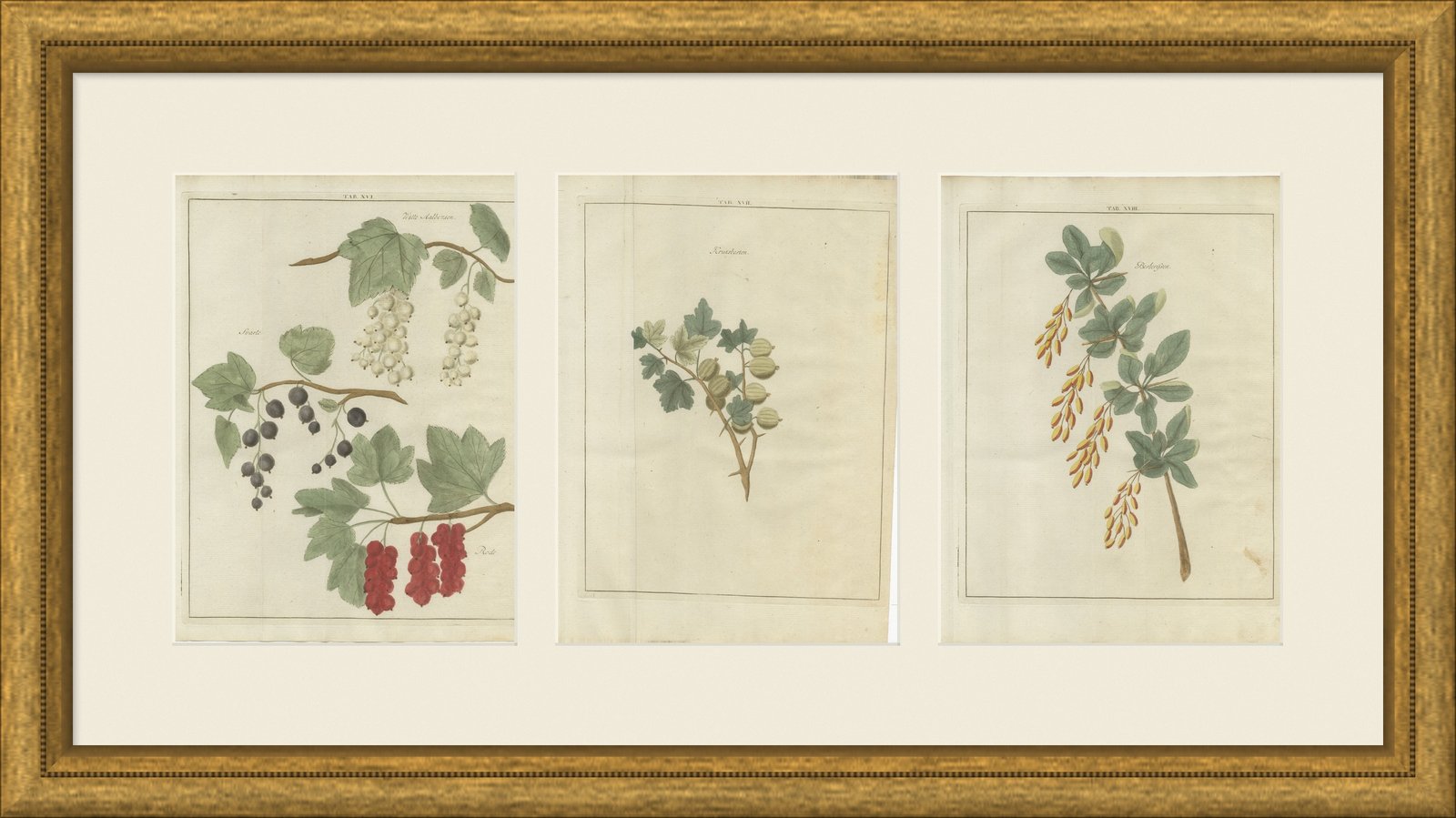
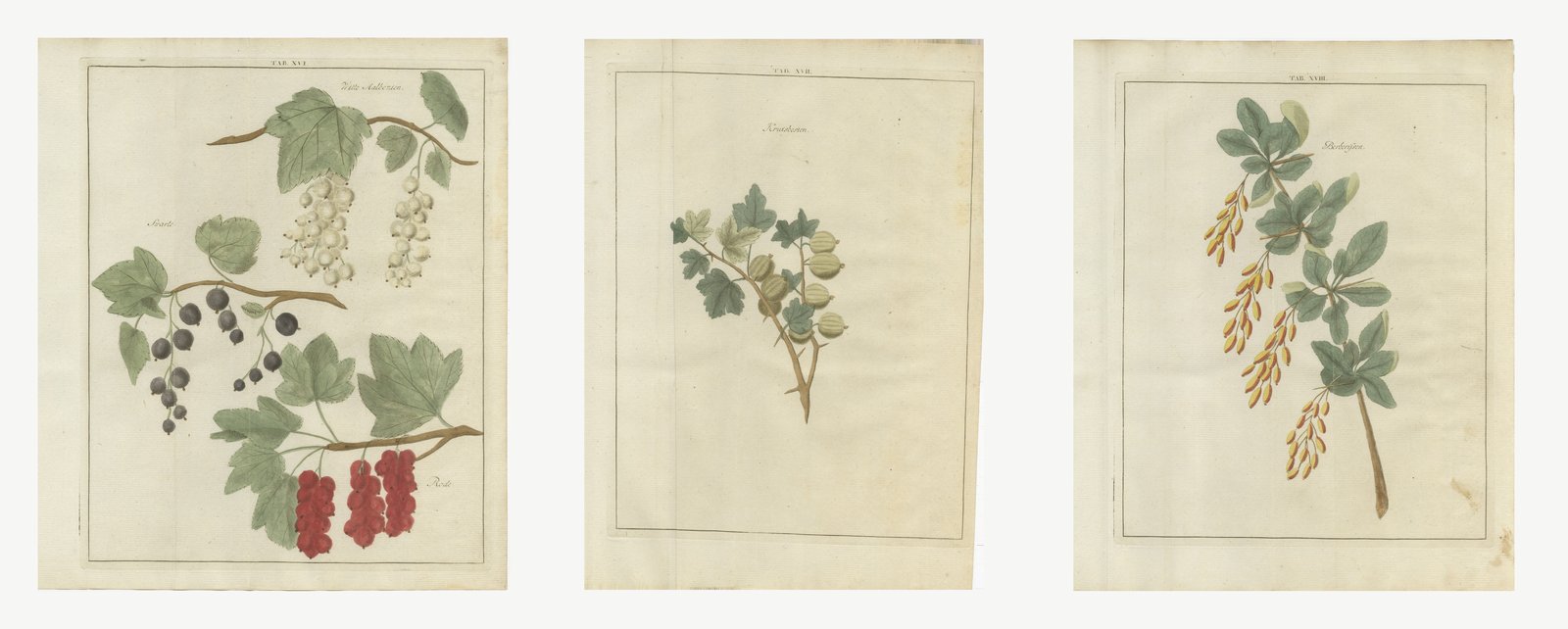
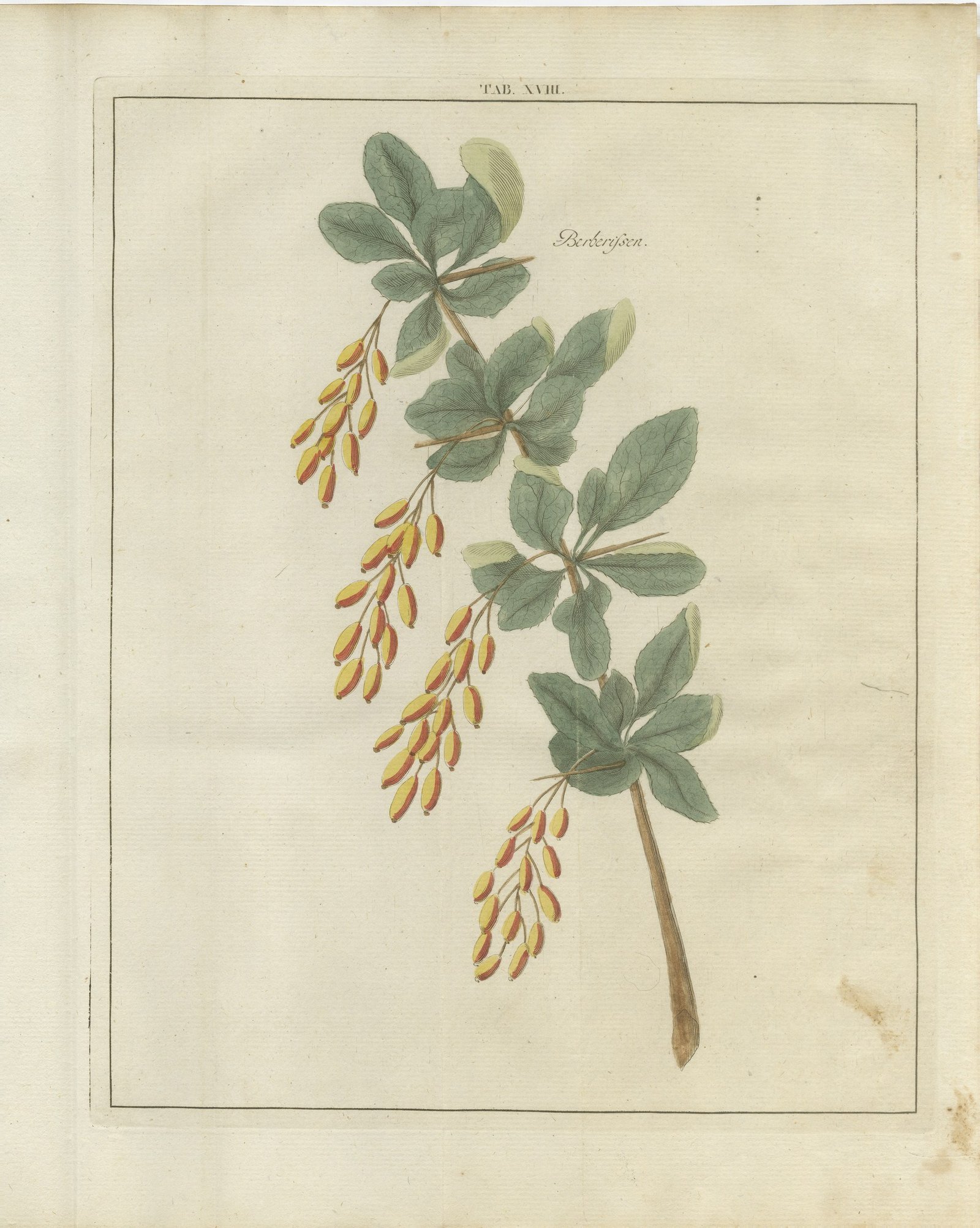
A set of three original hand-colored antique fruit plates: currants, gooseberries and barberries, the bush fruit sheets from Johann Hermann Knoop's Dutch pomological folio, offered together as a group. The printed numbers run in sequence, "TAB. XVI", "TAB. XVII" and "TAB. XVIII", and the three sheets came out of one copy of the book, so paper, engraved style and original coloring are consistent across them. Each plate gives a single kind of fruit on its own branch with the Dutch name lettered in engraved script, drawn from the living bush. All three turn on transparency: the colorist worked thin washes over engraved shading so that white currants, ribbed gooseberries and scarlet barberry strings all appear lit from within. They are three original sheets sold together as one lot, and the set is never split.
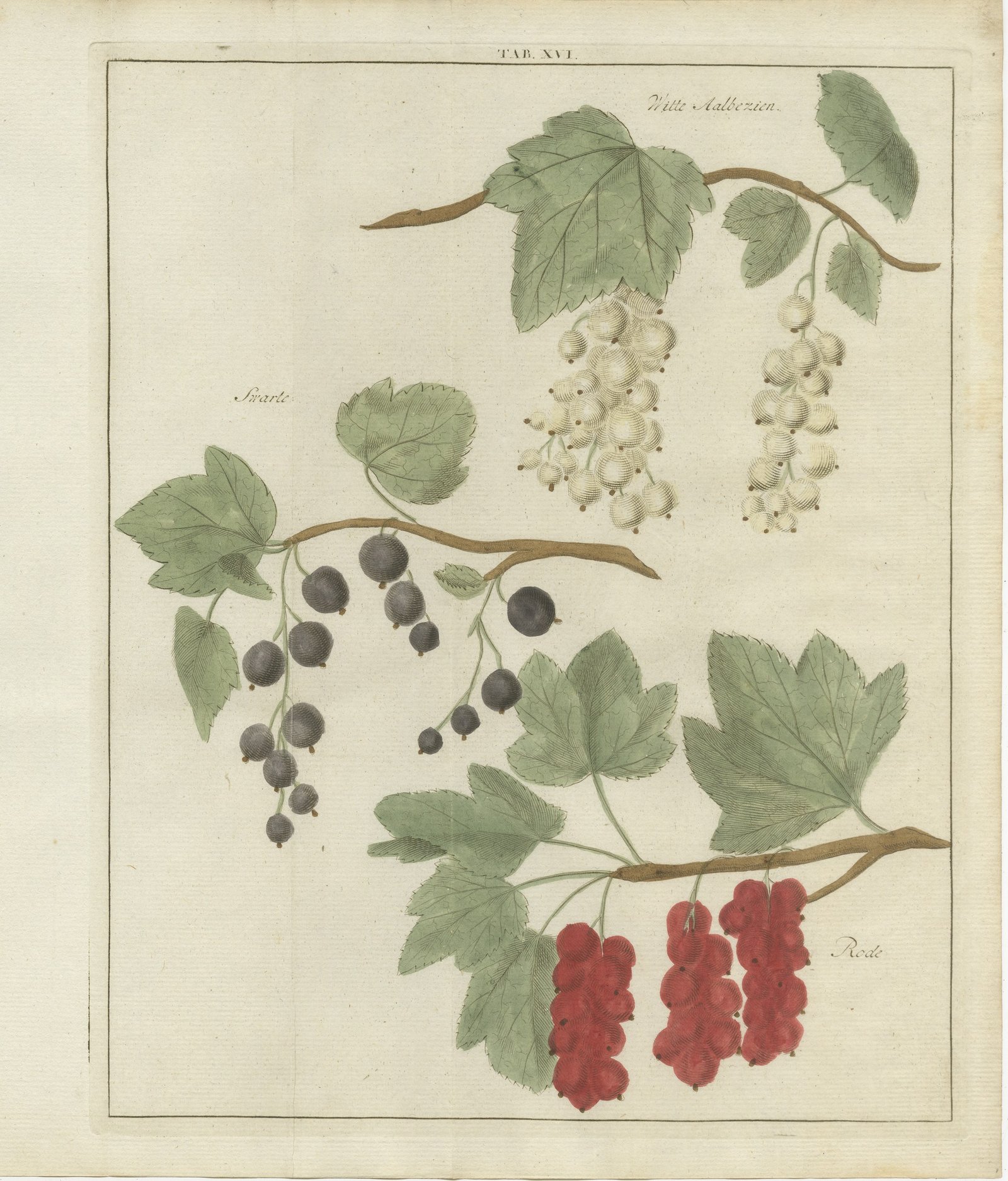
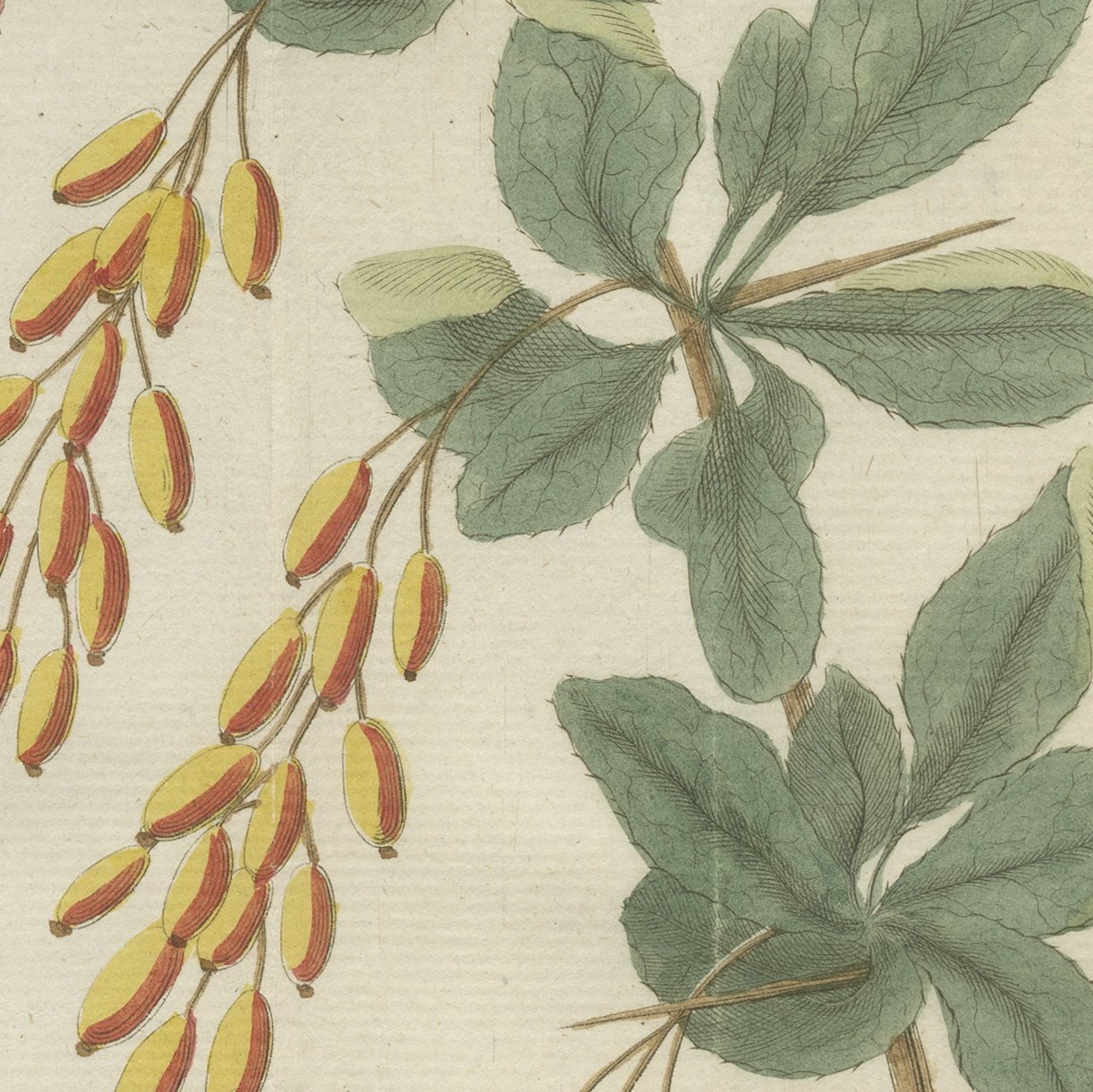
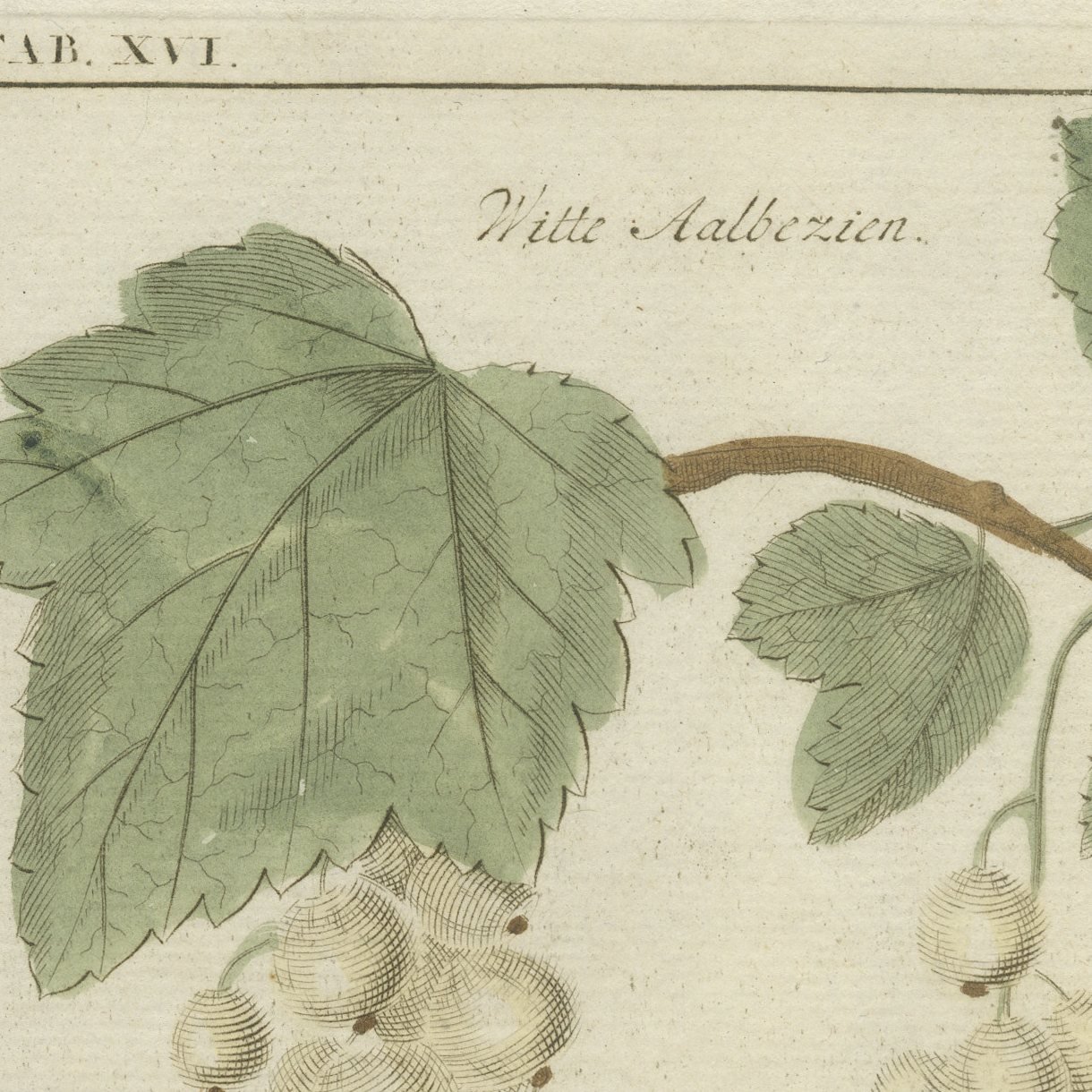
Currants open the group on plate "TAB. XVI", three sorts on three branches: the barely tinted "Witte Aalbezien.", a dense purple-black "Swarte" and a clear transparent "Rode", the noun carried over from the first label in the Dutch manner. The hanging strings of fruit and the translucency of the whites are the finest coloring in the series, and the sheet sets the pattern of comparison the other two follow. Gooseberries follow on plate "TAB. XVII", eight big translucent fruits hanging from a thorny branch, their pale ribs engraved and then left nearly uncolored so each berry looks lit from inside, the washes moving from greenish yellow to a dull rose. Triple spines are tinted dry brown at every leaf joint. It is the most tactile sheet of the three, and the fruit is drawn large enough to read across a room. Barberries close the group on plate "TAB. XVIII", four pendent racemes of small oblong fruit washed a transparent scarlet thin enough that the engraved shading still reads through it, so each string looks glassy. Cool spoon-shaped leaves with reddish stalks hang behind. It is the brightest note in the trio and the most unfamiliar fruit of the three, which is precisely why it earns its place on the wall.
This sheet was published at Amsterdam and Dordrecht in 1790 by Allart, Holtrop, de Leeuw and Krap, in Johann Hermann Knoop's description and figures of the best sorts of apples and pears, introduced by Johannes Florentius Martinet. Knoop had charge of the Mariënburg garden at Leeuwarden and knew his fruit as a working gardener rather than a compiler, which is why his plates are still consulted on old Dutch varieties. Each is a copper engraving finished by hand in watercolor, the washes sitting over the engraved line and varying in strength from fruit to fruit as only hand color does. These three hang together because the painting problem is the same on each sheet and the solutions sit side by side: thin, transparent washes that let engraved line and bare paper do the modeling, used for the glassy whites of the currants, the veined translucency of the gooseberries and the bright scarlet strings of the barberries. As a row of three the group is the freshest in the volume, and it reads as a deliberate study of the garden bush rather than as three unrelated prints. Light frames and wide mounts suit it, over a kitchen bench, in a garden room or along a conservatory wall. A matched trio of bush fruit sheets in original hand color is not something a buyer can put together to order.
Light uneven toning, browner towards the edges. Marked handling soiling along the edges of all three sheets. Light foxing in the margins of all three sheets. Slight wear at the corners of one of the three sheets.
These are original antique plates, not modern reproductions. This item is sold unframed.